BookYourData vs VC-Backed Data Tools: 2026 Comparison
BookYourData sells pay-as-you-go B2B contact lists. VC-backed platforms lock you into annual seats. Here's which model actually fits your 2026 pipeline.
BookYourData vs VC-backed is a choice between two philosophies, not just two products. Do you pay per record from a self-serve list vendor? Or sign an annual contract with a venture-funded platform like ZoomInfo, Apollo, or Lusha? The choice shapes what you spend, how fresh your data is, and how locked in you get.
TL;DR#
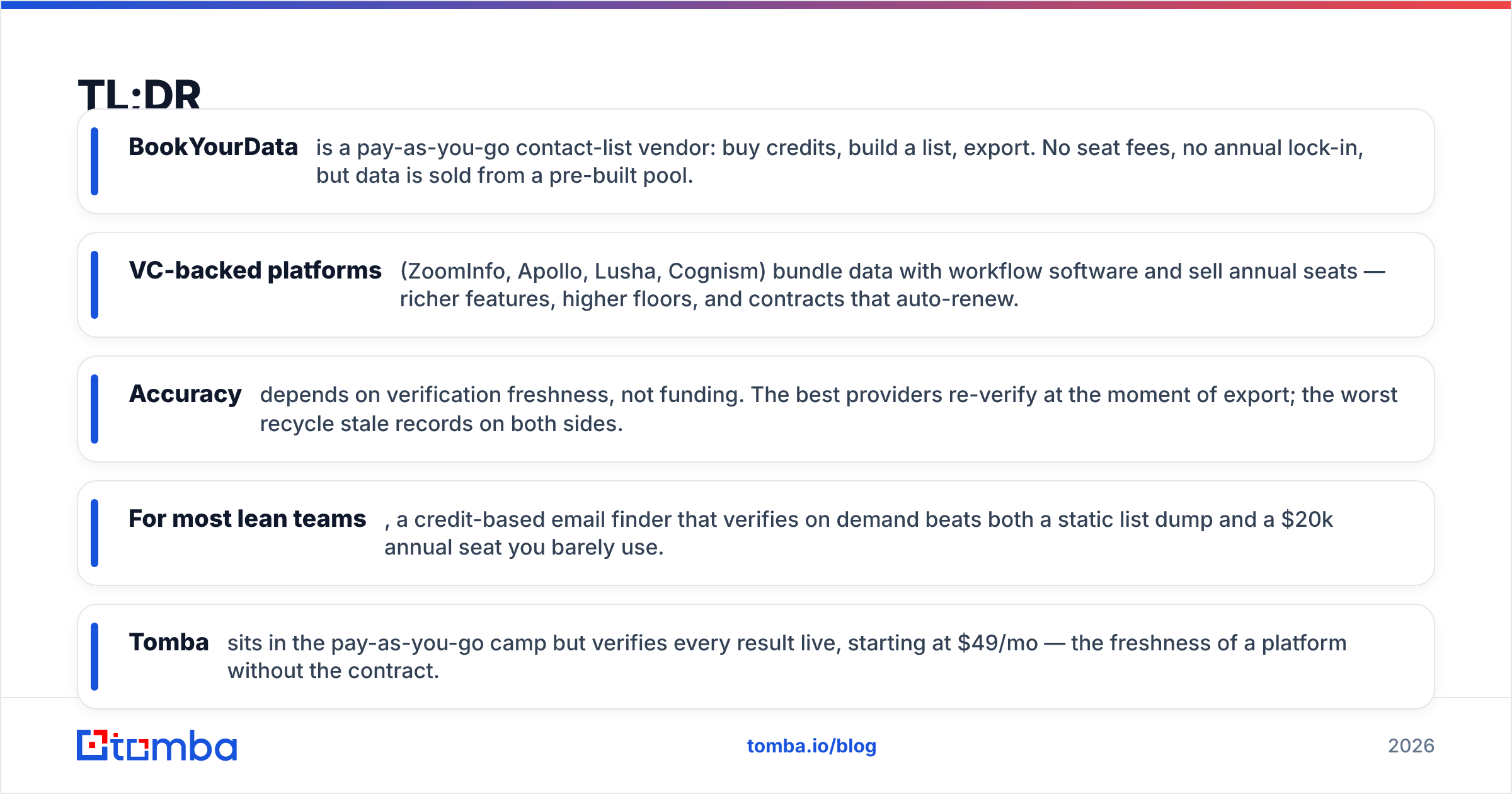
- BookYourData is a pay-as-you-go list vendor: buy credits, build a list, export. No seat fees and no annual lock-in. But the data comes from a pre-built pool.
- VC-backed platforms (ZoomInfo, Apollo, Lusha, Cognism) bundle data with workflow software and sell annual seats. You get richer features, higher price floors, and contracts that auto-renew.
- Accuracy depends on how fresh the verification is, not on funding. The best providers re-verify the moment you export. The worst recycle stale records on both sides.
- For most lean teams, a credit-based email finder that verifies on demand beats both a static list dump and a $20k annual seat you barely use.
- Tomba sits in the pay-as-you-go camp but verifies every result live, starting at $49/mo — the freshness of a platform without the contract.
What is BookYourData and how does its model work?#
BookYourData is a self-serve B2B database. You filter a pre-built pool of contacts by industry, title, location, and company size. Then you pay per record to download the list. Think of it like a wholesale market: you see the bin, you scoop what you want, you pay by the pound, and you walk out. No membership card. No annual fee.
That model has real upsides. You sign no contract. You do not pay for ten seats when only two reps prospect. And the price is clear — you know the cost before you export. BookYourData also offers a deliverability guarantee, which is more than many list vendors do.
The trade-off is the static pool. Each record was verified when it entered the database, not when you download it. B2B data decays fast. People change jobs, companies rebrand, and domains migrate. Industry estimates put B2B data decay at about 30% per year. So a list that looked clean in January can be badly wrong by summer.

When accuracy matters most, the real question is not "how big is the database." It is "when was this record last checked." A 200-million-contact pool that verifies once a year can be less reliable than a smaller provider that re-verifies the instant you request the email.
What does "VC-backed" mean for a data tool?#
VC-backed means the platform raised venture capital. As a result, it has to grow revenue fast — and that shapes how they sell to you. ZoomInfo, Apollo, Lusha, Cognism, and Seamless.AI all sit here. The funding buys you bigger datasets, intent signals, CRM integrations, dialers, and sequencing. But it also pushes you toward annual contracts with seat minimums and usage caps.
Here is the everyday version. A VC-backed platform is like a gym with a 12-month membership. The facility is nicer — more machines, a pool, classes. But you pay every month whether you show up or not. The cancellation terms are strict, and the "unlimited" plan has an asterisk. For a heavy user who lives in the product, that is a fair deal. For a two-person team running one quarterly campaign, you pay for gear you never touch.
The features are real and often excellent. The friction is the commitment. Many of these contracts auto-renew. They gate exports behind credit limits that reset once a year, and they price per seat instead of per result. If you have ever wanted a ZoomInfo alternative or an Apollo alternative just to escape the contract, you already feel the tension.
BookYourData vs VC-backed: how do they compare?#
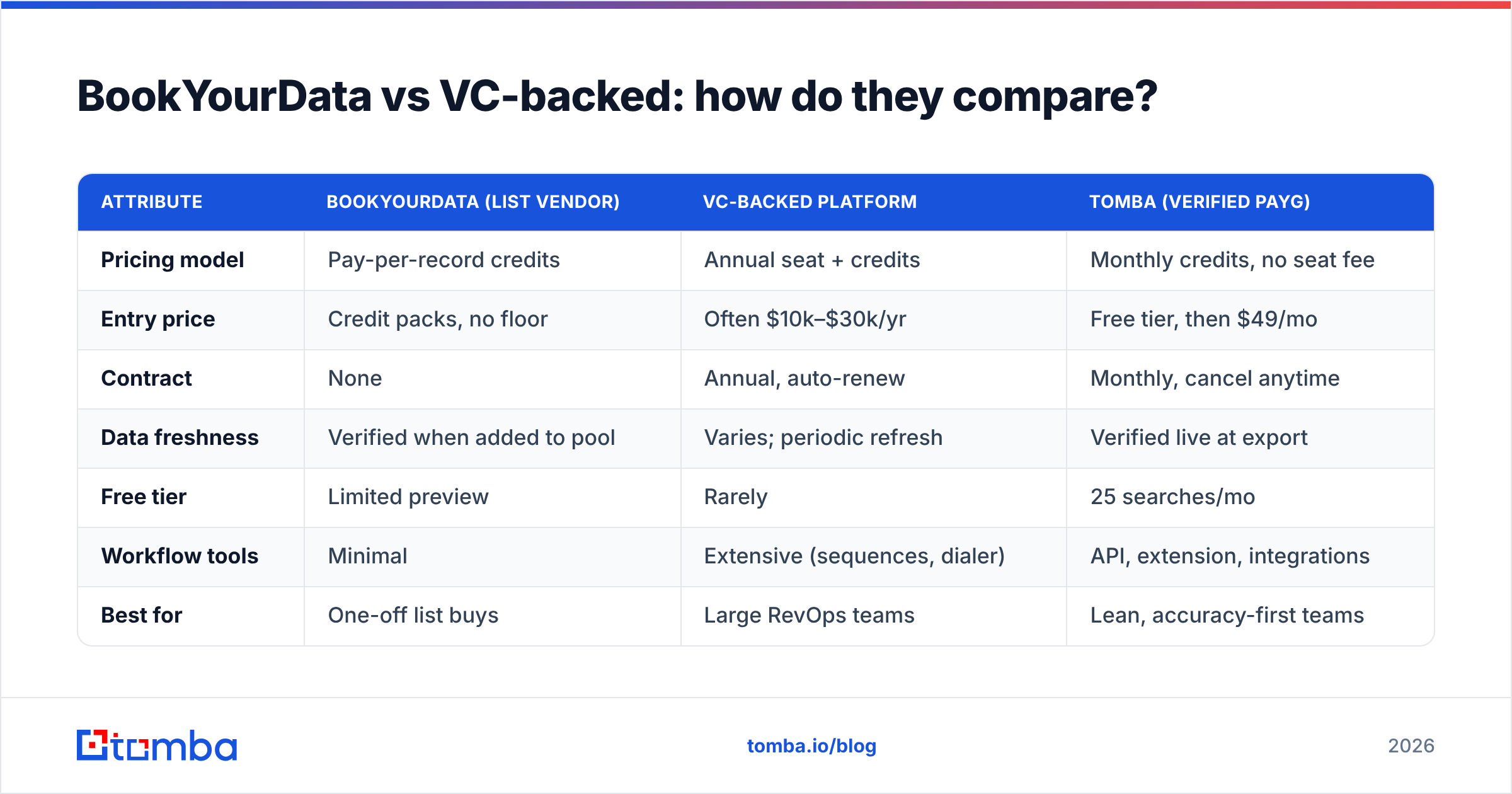
The honest comparison is not "cheap vs expensive." It is "rent the data vs lease the whole platform." Here is how the two models stack up on the things that actually affect a prospecting budget.
| Attribute | BookYourData (list vendor) | VC-backed platform | Tomba (verified PAYG) |
|---|---|---|---|
| Pricing model | Pay-per-record credits | Annual seat + credits | Monthly credits, no seat fee |
| Entry price | Credit packs, no floor | Often $10k–$30k/yr | Free tier, then $49/mo |
| Contract | None | Annual, auto-renew | Monthly, cancel anytime |
| Data freshness | Verified when added to pool | Varies; periodic refresh | Verified live at export |
| Free tier | Limited preview | Rarely | 25 searches/mo |
| Workflow tools | Minimal | Extensive (sequences, dialer) | API, extension, integrations |
| Best for | One-off list buys | Large RevOps teams | Lean, accuracy-first teams |
The pattern is clear. BookYourData wins on freedom and simplicity. VC-backed platforms win on feature depth for teams that need the whole stack. The gap both leave open is live verification at a low monthly price — and that is exactly the lane a credit-based finder fills.

Which model gives you more accurate data in 2026?#
Accuracy comes down to verification timing, and funding status does not guarantee it. A VC-backed giant with a 250M-record database still serves you whatever it last refreshed. A list vendor sells from a pool that was clean the day it was built. Both can hand you a bounced email if the contact changed jobs last week.
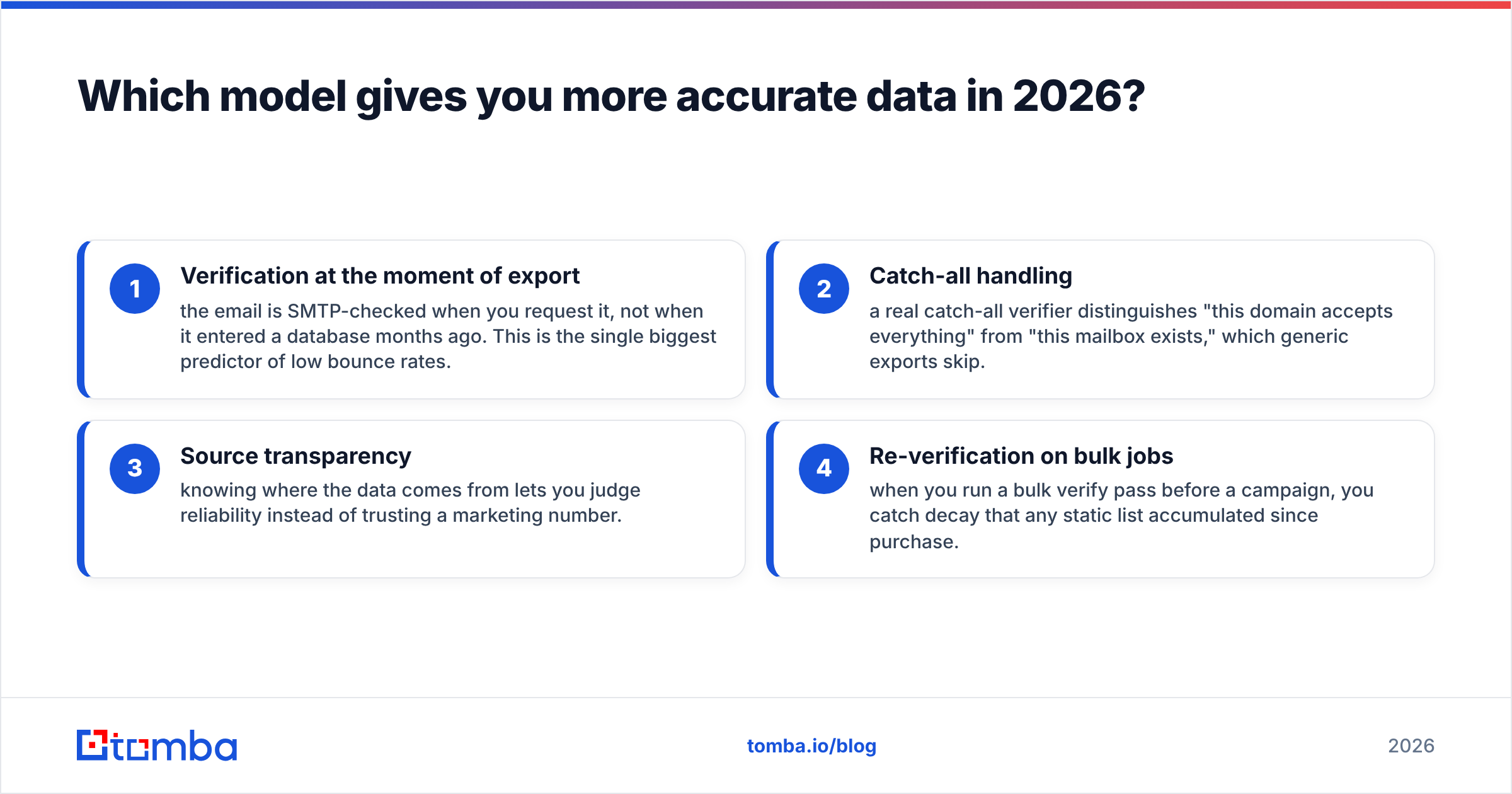
Here is what actually moves the needle:
- Verification at the moment of export — the email is SMTP-checked when you request it, not months ago. This is the biggest predictor of low bounce rates.
- Catch-all handling — a real catch-all verifier tells "this domain accepts everything" apart from "this mailbox exists." Generic exports skip that step.
- Source transparency — knowing where the data comes from lets you judge reliability instead of trusting a marketing number.
- Re-verification on bulk jobs — run a bulk verify pass before a campaign and you catch the decay a static list picked up since purchase.
The takeaway: do not pick based on the size of the database or the funding round. Pick based on whether the tool checks the address the moment you need it. Run anything you buy — from BookYourData, from a VC-backed platform, from anywhere — through an email verifier before you send. Your sender reputation depends on it more than on the vendor you chose.

What does each model actually cost?#
Cost is where the two philosophies split hardest, and where the marketing gets slippery. List vendors quote a per-record price that looks tiny — until you need 5,000 records across three campaigns. VC-backed platforms quote a "per credit" rate that hides the seat minimum and the annual commitment underneath.
Run the math on a real case: a two-person SDR team that needs about 2,000 verified contacts a month.
- BookYourData: You pay per record each time. The per-list cost is predictable, but every refresh is a new purchase, and you eat the cost of any decayed records you bought.
- VC-backed platform: You likely sign a four- or five-figure annual contract before you export a single usable lead, plus per-seat fees. Great value at high volume. Brutal at low volume.
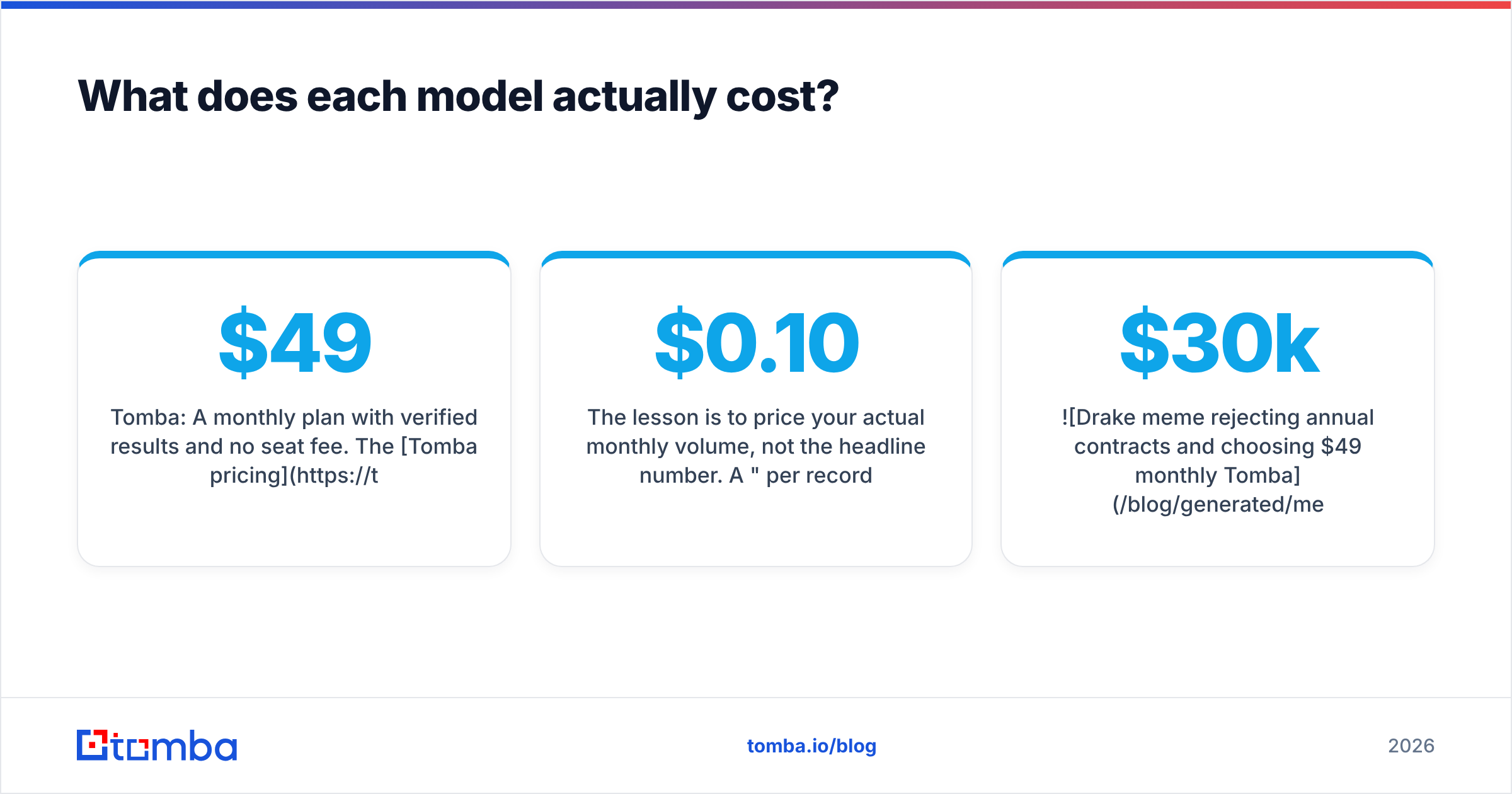
- Tomba: A monthly plan with verified results and no seat fee. The Tomba pricing ladder runs Free (25 searches), Starter $49/mo, Growth $99/mo, Pro $249/mo, and Enterprise custom. So a two-person team lands on Starter or Growth instead of an annual contract.
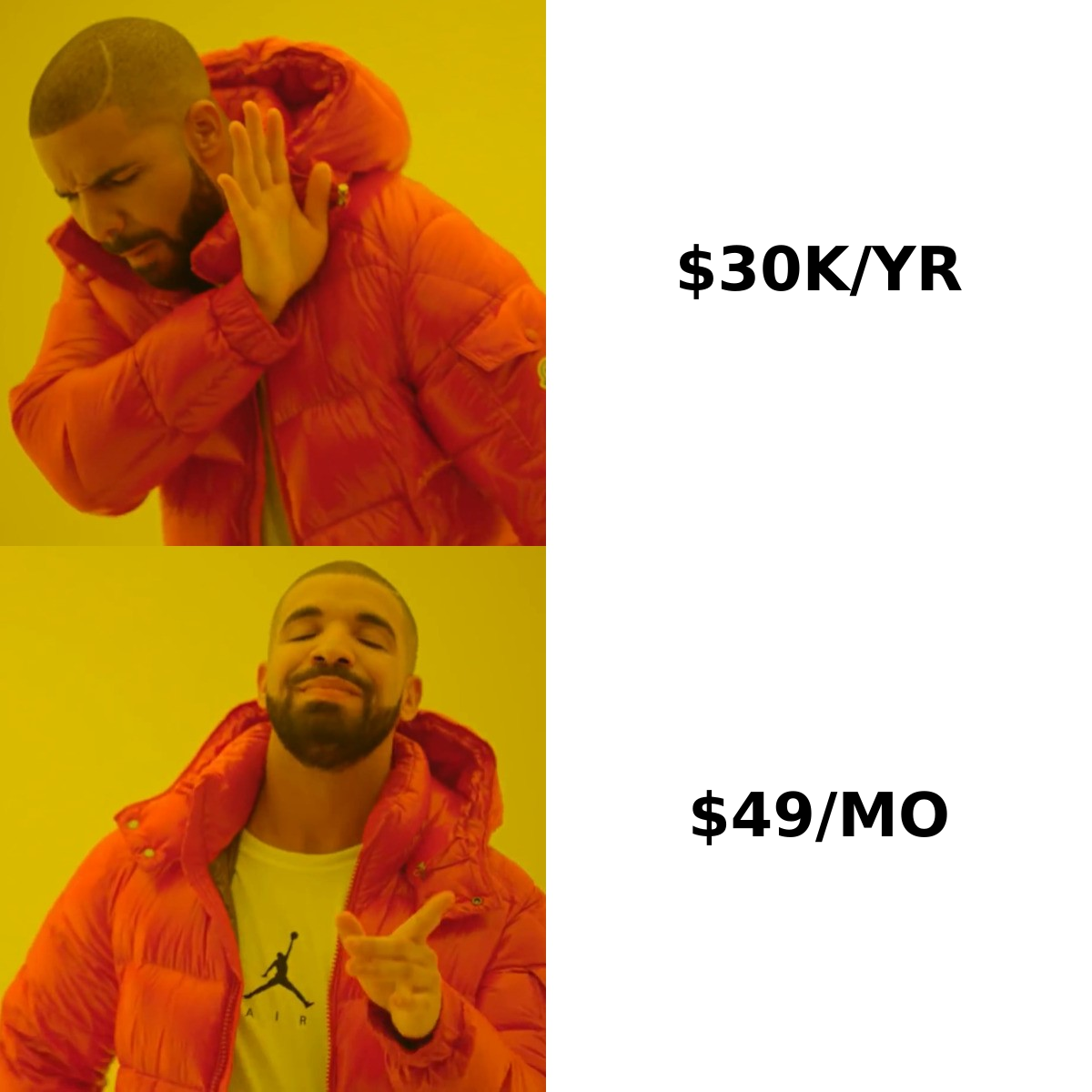
The lesson is to price your actual monthly volume, not the headline number. A "$0.10 per record" list and a "$30k per year" platform can cost the same in practice. And a $99/mo verified plan can beat both if your volume is moderate and you cannot afford stale data.
When should you choose each option?#
There is no universal winner. There is a winner for your situation. Match the model to how you actually work.
Choose a list vendor like BookYourData when:
- You need a one-time list for a single campaign and never want a subscription.
- Your targeting is broad (industry, title, geo) and you do not need niche enrichment.
- You are happy to verify the export yourself before sending.
Choose a VC-backed platform when:
- You run a large RevOps team that lives inside the tool every day.
- You need intent data, dialers, and native sequencing in one place.
- The annual cost is a rounding error against your pipeline, and seat lock-in does not scare you.
Choose a verified pay-as-you-go finder like Tomba when:
- You want fresh, SMTP-verified results without an annual contract.
- You prospect by domain or name and need a domain search to map a company's contacts on demand.
- You want to start free, scale monthly, and plug data into your stack through the Tomba API or a Chrome extension instead of buying a static file.
The middle option exists because the two ends leave a gap. Bootstrapped freedom plus platform freshness is not a contradiction. It is just a different design choice.
How does Tomba fit between the two models?#
Tomba takes the pay-as-you-go freedom of a list vendor and the live-verification habit of a serious platform — without the contract of either. You buy monthly credits, you verify every result at export, and you cancel whenever you want.
In practice, that means you can find an email by name and domain, confirm it is deliverable in the same step, enrich it with contact enrichment, and push it to your CRM through native integrations. All without signing anything annual. For teams escaping a renewal, Tomba works as a practical Apollo alternative or RocketReach alternative that keeps the data quality and drops the lock-in. You can check this yourself against third-party reviews on G2 before you commit a dollar.
It is worth being fair to both ends. BookYourData is a solid choice if you truly want a no-subscription list buy. And a VC-backed platform earns its price for a large team that needs the full GTM stack. Tomba is the answer when you want neither the stale-pool risk of a static list nor the annual handcuffs of a funded platform.
The bottom line#
The BookYourData vs VC-backed debate is a choice between renting data with no commitment and leasing a whole platform on contract. Both are valid. Both leave the same gap: live verification at a low monthly price. If you want fresh, deliverable contacts without an annual seat and without trusting a static pool, start with the Tomba Email Finder — 25 free searches a month, no contract, and every result verified the moment you pull it. Build one list, check your bounce rate, and let the data decide.
// get started
Find, verify and enrich your first contacts today
Start on the free plan with 25 searches a month, then scale when your team is ready.
Free plan · No credit card required · GDPR & CCPA
// about the author