CapitalConnectorAI vs Sparklane: 2026 B2B Data Showdown
CapitalConnectorAI vs Sparklane compared head-to-head: data coverage, predictive scoring, pricing, and accuracy. See which sales-intelligence platform fits your 2026 pipeline — and where a leaner stack wins.
Choosing between CapitalConnectorAI and Sparklane usually comes down to one question: do you want a signal-driven prospecting engine, or a predictive scoring layer bolted onto your CRM? Both promise warmer pipelines and less manual research. They get there in very different ways, and the gap matters once you put real budget behind it.
This is a neutral breakdown — features, data quality, pricing logic, and the trade-offs nobody puts on the pricing page. By the end you'll know which one fits your motion, and where pairing either tool with a dedicated email and data layer beats paying for an all-in-one you only half-use.
TL;DR — CapitalConnectorAI vs Sparklane#
- CapitalConnectorAI leans on AI-driven matching and intent signals to surface accounts and contacts that look ready to buy. Strong for outbound teams that want a "who should I talk to next" engine.
- Sparklane is a predictive lead-generation and account-intelligence platform with deep roots in European B2B data, automated scoring, and trigger alerts (funding, hiring, leadership changes).
- Data freshness and contact accuracy are the real differentiator — both platforms guess less than legacy databases, but neither replaces a dedicated verifier before you hit send.
- Pricing is quote-based and opaque on both sides; expect mid-to-high four figures annually once you add seats and credits.
- Best move for most teams: use one of these for account targeting and pair it with a focused email finder and email verifier so deliverability doesn't sink your campaigns.
What is CapitalConnectorAI?#
CapitalConnectorAI positions itself as an AI-first connection engine: feed it your ideal customer profile, and it ranks accounts and decision-makers by how likely they are to engage right now. The pitch is automation over research — instead of scrubbing LinkedIn and exports, you get a prioritized list with reasoning attached.
In practice, tools in this category combine firmographic data, technographic signals, and behavioral or intent data to score "readiness." The AI layer is the selling point: it learns from your closed-won patterns and nudges reps toward look-alikes. That works well when your historical data is clean and your ICP is stable. It works less well for brand-new segments where the model has nothing to learn from.
The catch with any black-box scoring tool is explainability. When a rep asks "why is this account a 92?", you want an answer better than "the model said so." The strongest implementations expose the underlying signals; the weakest ask you to trust the number.

What is Sparklane?#
Sparklane is a predictive lead-generation platform built around account intelligence and "smart signals." It's well known in the European B2B market for combining a large company database with event-based triggers — a prospect just raised funding, opened an office, posted ten new sales roles — and pushing those as actionable alerts to your reps.
Where CapitalConnectorAI markets the AI brain, Sparklane markets the signals. The platform watches public and licensed sources for buying triggers, then scores and routes accounts so your team reaches out at the moment something changed. You can read more about its approach on the official Sparklane site. For a buyer's-eye view of how peers rate it, G2 and Capterra carry verified reviews worth scanning before any demo.
Sparklane's strength is timing. A relevant trigger turns a cold email into a warm one. Its limitation is the same as every signals platform: a trigger tells you when and who at the account level, but you still need an accurate, verified email for the specific human you're targeting — and that's where a lot of "great list, bad delivery" stories begin.
How do CapitalConnectorAI and Sparklane compare?#
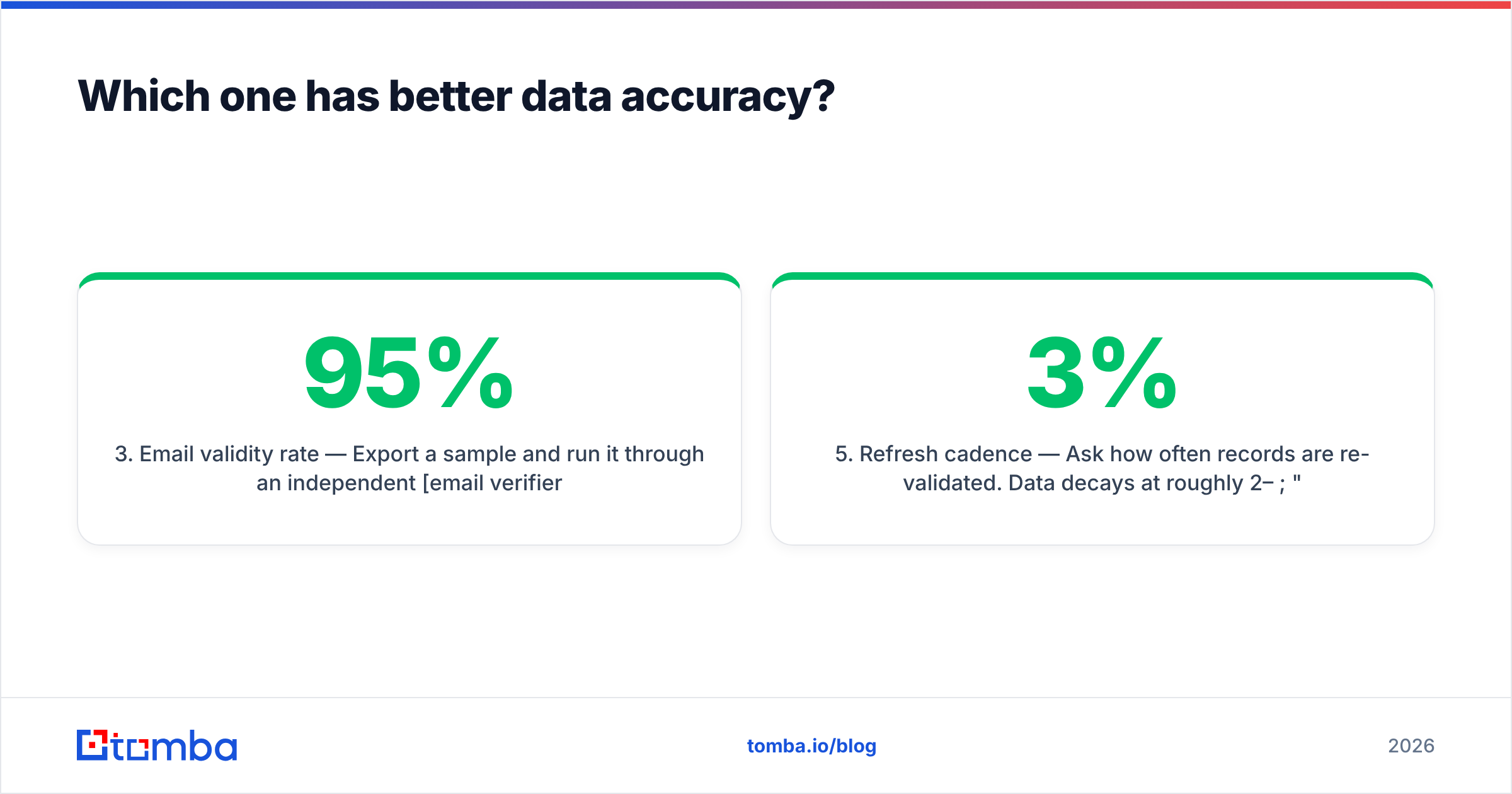
Here's the side-by-side. Treat the pricing rows as directional — both vendors quote per deployment and rarely publish hard numbers.
| Attribute | CapitalConnectorAI | Sparklane |
|---|---|---|
| Core model | AI matching + intent scoring | Predictive scoring + buying-signal triggers |
| Best for | Outbound teams wanting "next best contact" | Account targeting with timing-based triggers |
| Data region strength | Broad, North-America leaning | Strong EU/EMEA coverage |
| Contact-level email accuracy | Variable; verify before send | Variable; verify before send |
| Explainability of scores | Often black-box | Signal-based, more transparent |
| Native CRM sync | Salesforce/HubSpot (varies by plan) | Salesforce, HubSpot, MS Dynamics |
| Free tier | No public free tier | No public free tier |
| Pricing model | Quote-based, annual | Quote-based, annual |
| Typical entry cost | Mid four figures/yr | Mid four figures/yr |
A few things stand out. Neither tool publishes a self-serve free tier, so you can't kick the tires without a sales call. Both are account-centric, which is great for targeting but means contact data — the actual email you send to — is a secondary concern in their architecture. And both lean on "trust the platform" for accuracy rather than giving you a verification step inside the workflow.
Which one has better data accuracy?#
Neither wins outright — and that's the honest answer. Accuracy in B2B data isn't a single number; it splits into coverage (do they have the account?), depth (do they have the right contact?), and freshness (is the email still valid this quarter?).
Use this checklist when you evaluate either platform:
- Coverage match to your ICP — Run 50 known target accounts through a trial. Sparklane tends to win in EMEA; CapitalConnectorAI is often stronger across North America. Test your territory, not the demo's.
- Contact depth — Account data is easy; the right director-level contact with a real, current email is hard. Count how many records come with a usable, role-correct email.
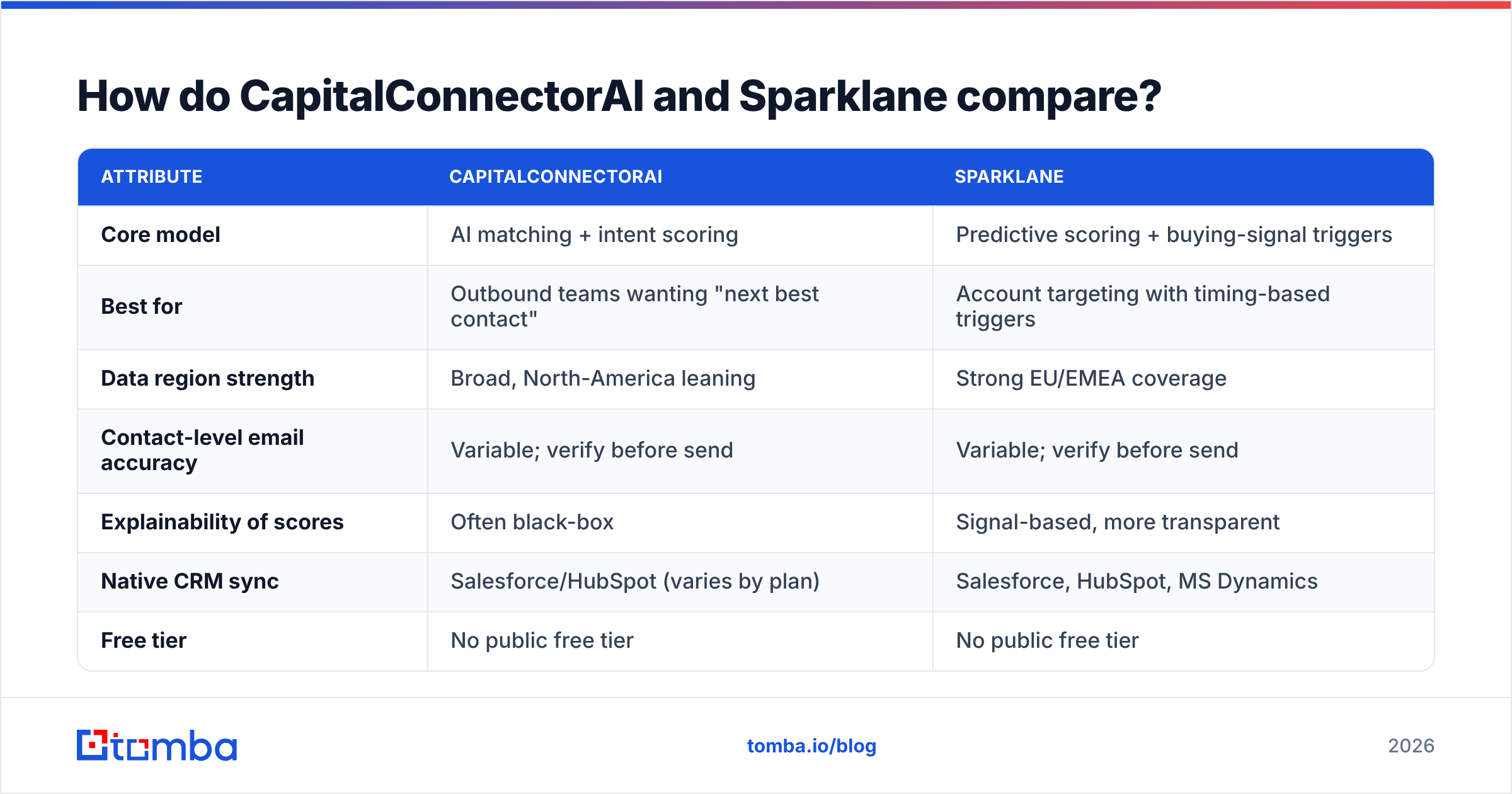
- Email validity rate — Export a sample and run it through an independent email verifier. A platform claiming 95% accuracy that bounces 12% of a real send is not 95% accurate for you.
- Catch-all handling — Many B2B domains are catch-all, which fools naive validators. A proper catch-all verifier tells you which "valid" addresses are actually risky.
- Refresh cadence — Ask how often records are re-validated. Data decays at roughly 2–3% per month; "verified at import" is worthless six months later.
The pattern is consistent across this whole category: targeting platforms are good at finding who, weaker at guaranteeing the deliverable email. That's not a knock — it's an architecture choice. It just means your stack needs a dedicated data-quality layer.

Which fits your sales motion?#
Match the tool to how you actually sell, not to the flashiest feature.
- You sell into EMEA and timing matters → Sparklane's trigger engine is a natural fit. Funding rounds, expansions, and hiring spikes are genuine reasons to reach out, and the platform surfaces them well.
- You run high-volume North-American outbound and want AI prioritization → CapitalConnectorAI's scoring can cut research time, provided your closed-won history is clean enough to train on.
- You're early-stage with a fuzzy ICP → Be cautious with both. Predictive models need data to predict; without it you're paying enterprise prices for educated guesses. A leaner domain search plus manual targeting often outperforms here.
- Your bottleneck is deliverability, not targeting → Neither platform fixes bounce rates. Fix the email layer first.
The expensive mistake is buying a six-figure intelligence platform to solve a problem that's actually a data-hygiene problem. If your reps have plenty of accounts but emails keep bouncing, no amount of predictive scoring helps.
What about pricing and total cost?#
Both CapitalConnectorAI and Sparklane use quote-based annual contracts, typically bundling seats plus a data/credit allowance. Expect onboarding fees, and expect the "per seat" number to climb fast as you add reps. Because neither publishes transparent tiers, your real leverage is a competitive trial — run both against the same account list and negotiate on measured results.
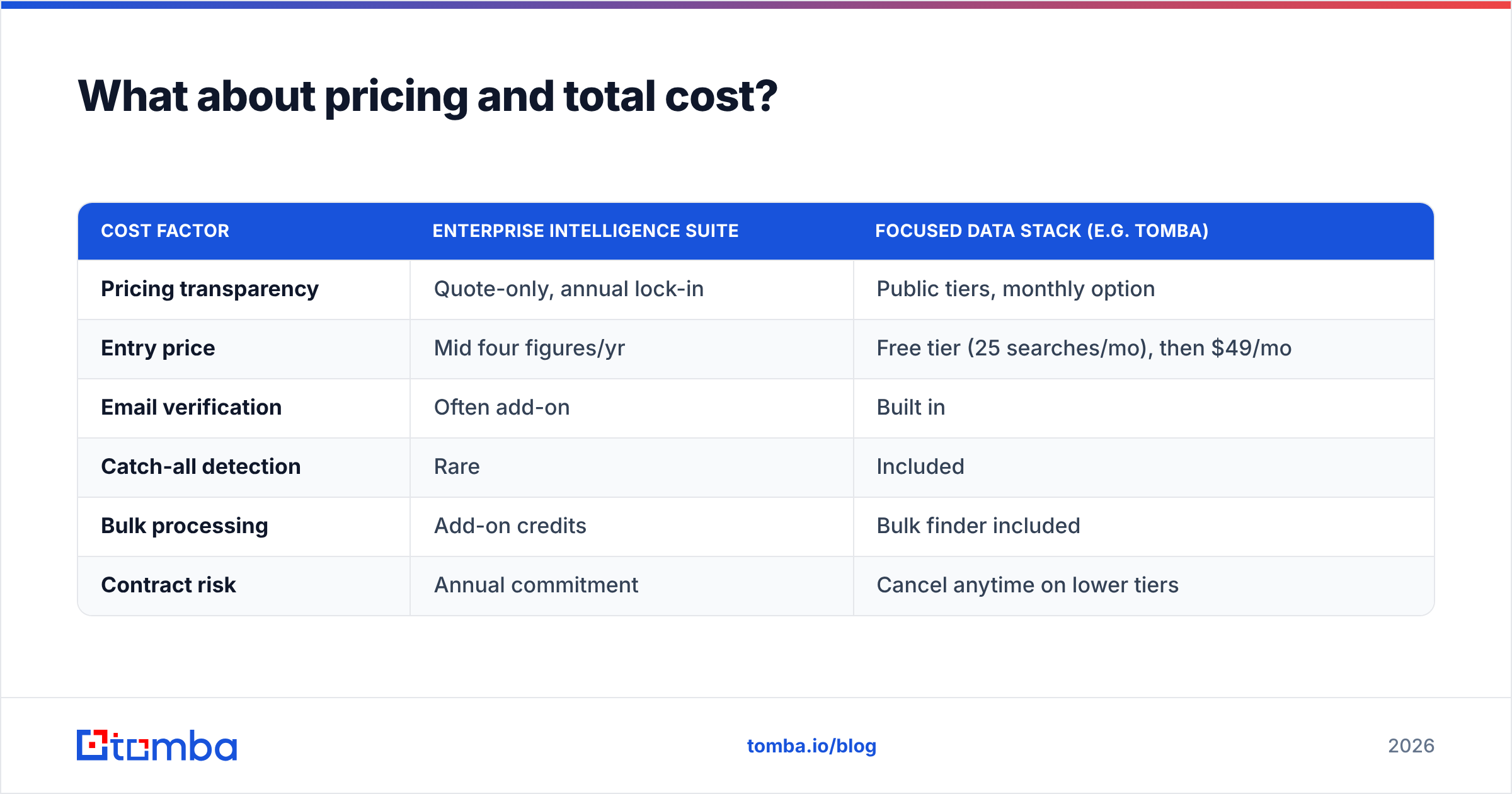
Here's where total cost of ownership gets interesting. A predictive platform that surfaces great accounts but delivers stale contact emails forces you to buy a second tool anyway — a verifier, an enrichment layer, or both. Compare that to a transparent, usage-based data stack.
| Cost factor | Enterprise intelligence suite | Focused data stack (e.g. Tomba) |
|---|---|---|
| Pricing transparency | Quote-only, annual lock-in | Public tiers, monthly option |
| Entry price | Mid four figures/yr | Free tier (25 searches/mo), then $49/mo |
| Email verification | Often add-on | Built in |
| Catch-all detection | Rare | Included |
| Bulk processing | Add-on credits | Bulk finder included |
| Contract risk | Annual commitment | Cancel anytime on lower tiers |
You can see full, public numbers on the Tomba pricing page — no sales call required. The point isn't that a finder/verifier replaces an intelligence platform; it's that you shouldn't pay enterprise rates for contact data when a purpose-built layer does it more accurately and more cheaply.
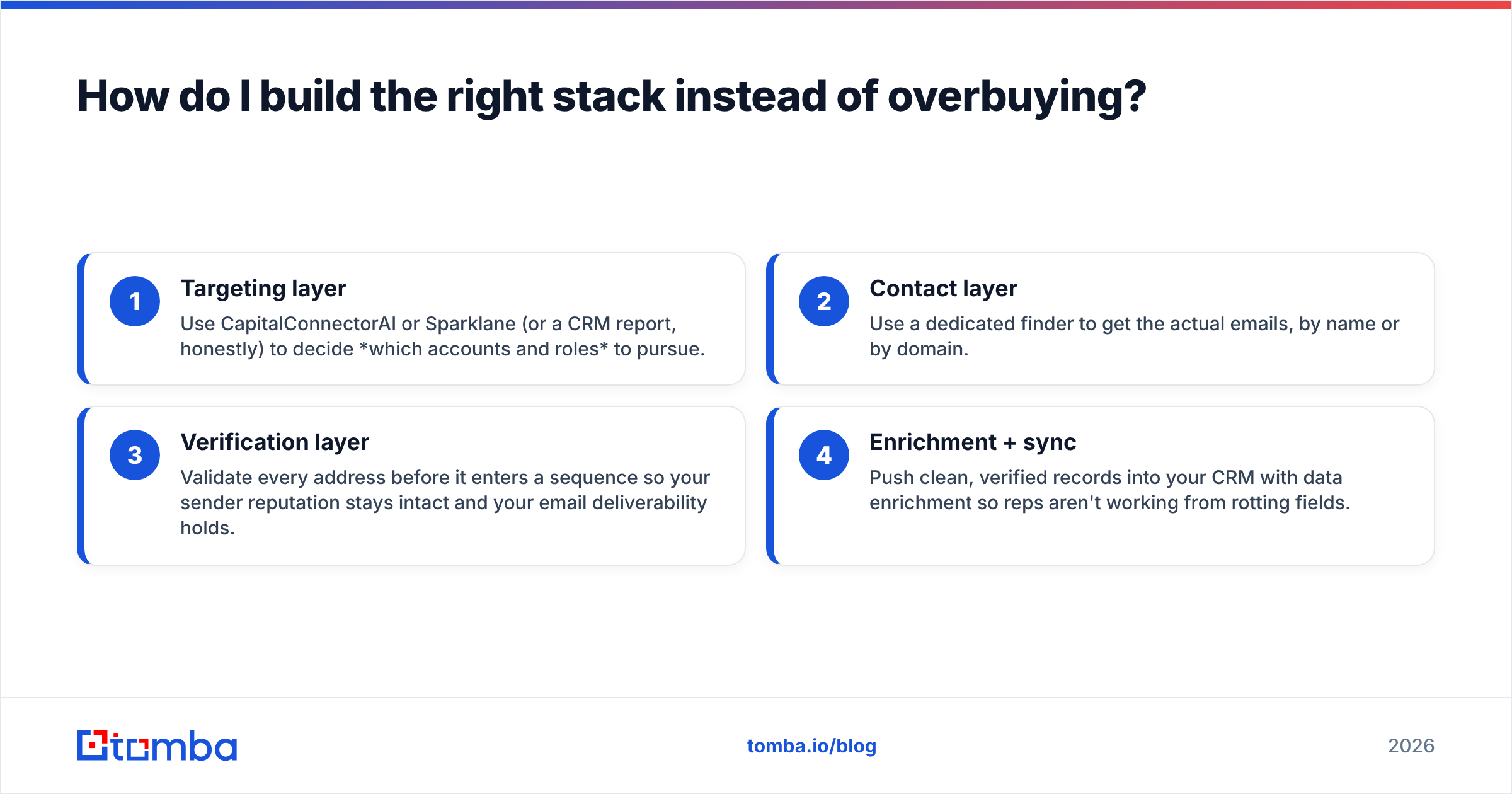
How do I build the right stack instead of overbuying?#
The smartest 2026 setups treat "intelligence" and "contact data" as two jobs:
- Targeting layer — Use CapitalConnectorAI or Sparklane (or a CRM report, honestly) to decide which accounts and roles to pursue.
- Contact layer — Use a dedicated finder to get the actual emails, by name or by domain.
- Verification layer — Validate every address before it enters a sequence so your sender reputation stays intact and your email deliverability holds.
- Enrichment + sync — Push clean, verified records into your CRM with data enrichment so reps aren't working from rotting fields.
This separation keeps you flexible. If Sparklane's signals stop earning their keep, you swap the targeting layer without rebuilding your contact pipeline. If you over-bought CapitalConnectorAI seats, you downgrade without losing your verified database. Vendor lock-in is the silent cost of all-in-one suites; a modular stack is cheaper to run and cheaper to leave.
For teams comparing the broader market, it's also worth looking at how these stack up against tools like an Apollo alternative or a Clearbit alternative — the feature overlap is larger than any single vendor admits, and the right pick depends on coverage in your exact territory.
The verdict#
There's no universal winner between CapitalConnectorAI and Sparklane — there's only the right fit for your region, motion, and data maturity. Pick Sparklane if EMEA coverage and timing triggers drive your outbound. Pick CapitalConnectorAI if you want AI prioritization across North America and have clean historical data to train it. Either way, run a head-to-head trial on your own account list, verify the exported emails independently, and negotiate hard against quote-based pricing.
And don't let a shiny scoring model distract you from the unglamorous truth: deliverable, verified contact data is what actually converts. The best account in the world is worthless if your email bounces.
Whichever targeting platform you choose, plug the contact gap with the Tomba Email Finder. Find professional emails by name, company, or domain, verify them in the same workflow, and start free with 25 searches a month — no annual contract, no sales call. Pair it with your intelligence layer and you get the warm targeting and the clean data that turns a good list into booked meetings.
// get started
Find, verify and enrich your first contacts today
Start on the free plan with 25 searches a month, then scale when your team is ready.
Free plan · No credit card required · GDPR & CCPA
// about the author