Clickback Alternatives: 7 Best Tools to Try in 2026
Clickback's purchased-list model isn't for everyone. Here are 7 Clickback alternatives that pair cleaner B2B data with better deliverability in 2026.
Clickback Alternatives: 7 Best Tools to Try in 2026
Clickback built its name on one promise: email cold prospects you have no prior relationship with, at scale, using purchased contact lists. That model still has fans, but it also carries real deliverability and compliance risk — and a lot of teams have outgrown it. If you're shopping for a replacement, you have better options than you did even two years ago.
TL;DR#
- Clickback is a "send to bought lists" tool. Its strength is volume; its weakness is that mass-emailing purchased data hurts sender reputation and runs into CAN-SPAM, CASL, and GDPR friction.
- The better 2026 playbook is find-then-verify-then-send: source accurate, opted-appropriate B2B contacts, verify them, then run targeted sequences.
- Top Clickback alternatives include Tomba, Apollo, Instantly, Lemlist, Saleshandy, Snov.io, and Hunter — each strong at a different slice of the funnel.
- For data quality and deliverability, pairing a precise email finder like Tomba Email Finder with a verifier beats blasting a rented list.
- Pricing matters less than bounce rate. A cheaper tool that tanks your domain reputation is the expensive option.
What is Clickback and why look for an alternative?#
Clickback is B2B email lead-generation software built around cold-emailing purchased or imported contact lists. You upload a list of people who never opted in, Clickback validates and "cleans" it, then sends marketing email at volume. The pitch is speed: turn a cold list into a pipeline without waiting for inbound.
That approach has three durable problems in 2026:
- Deliverability. Mailbox providers score senders on engagement. Cold lists generate low opens, high spam complaints, and bounces — exactly the signals that quietly route your future mail to junk. Once your domain reputation drops, even your warm emails suffer.
- Compliance. Mass-emailing people who never consented bumps against GDPR, Canada's CASL, and the spirit (if not always the letter) of CAN-SPAM. The legal exposure scales with your send volume.
- Data freshness. Bought lists decay fast. B2B contacts change roles every couple of years, so a list you mail today is partly wrong before you hit send.
The modern alternative isn't "a different blasting tool." It's a cleaner pipeline: find the right person, verify the address, personalize, and send in measured volume. That's the lens for everything below.
How should you evaluate a Clickback alternative?#
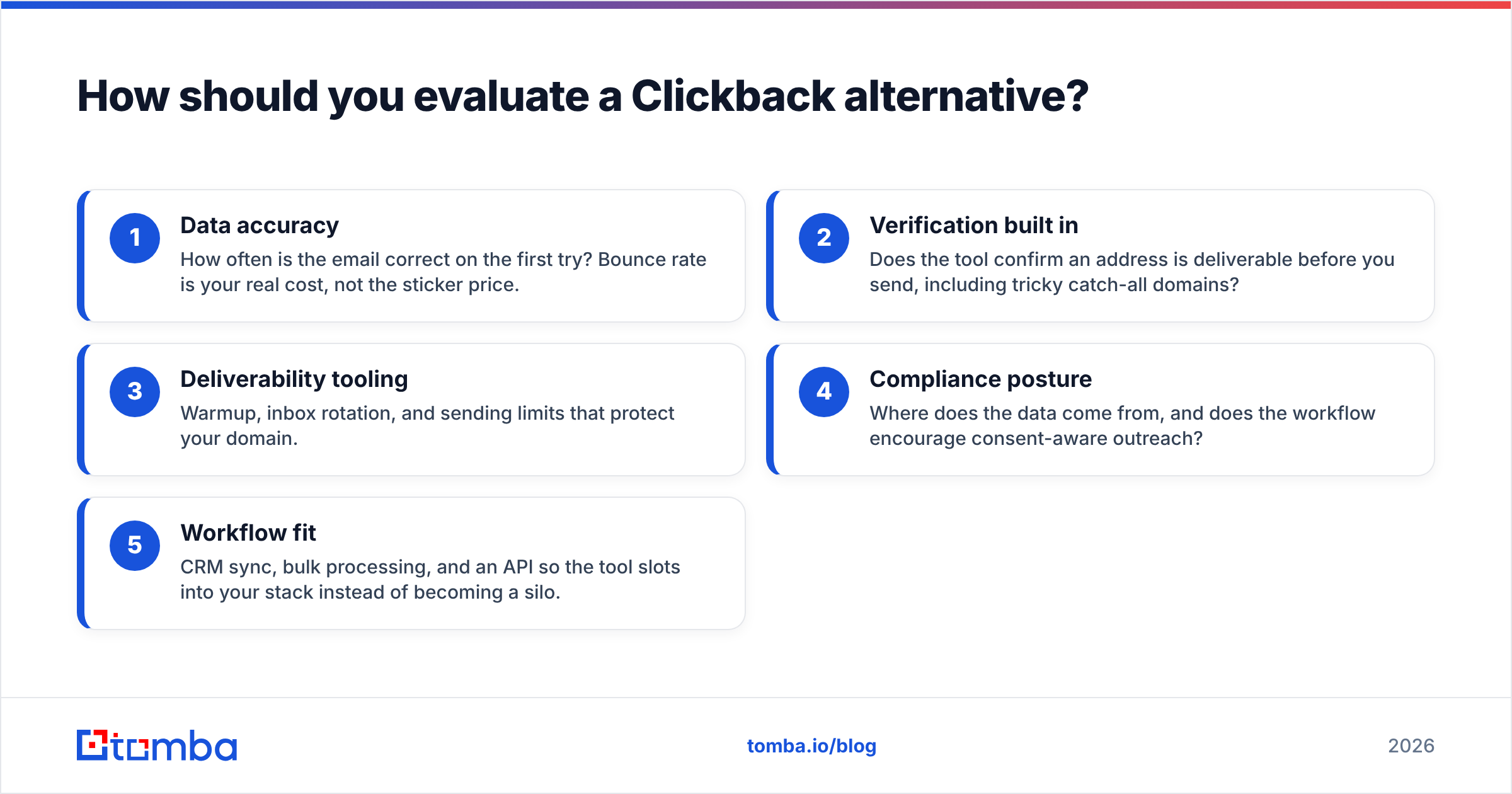
Before comparing logos, get clear on what actually moves your reply rate. Use these five criteria:
- Data accuracy — How often is the email correct on the first try? Bounce rate is your real cost, not the sticker price.
- Verification built in — Does the tool confirm an address is deliverable before you send, including tricky catch-all domains?
- Deliverability tooling — Warmup, inbox rotation, and sending limits that protect your domain.
- Compliance posture — Where does the data come from, and does the workflow encourage consent-aware outreach?
- Workflow fit — CRM sync, bulk processing, and an API so the tool slots into your stack instead of becoming a silo.
A tool can be excellent at one of these and mediocre at the rest. Match the strength to the gap in your funnel.
What are the 7 best Clickback alternatives in 2026?#
Here's the short version, then a full comparison table, then the detail on each.
1. Tomba — best for accurate B2B email data#
Tomba flips the Clickback model. Instead of renting a list and hoping, you find verified, current email addresses for the exact accounts you want. Its email finder, domain search, and built-in email verifier cover the whole "get a real address" problem, and the catch-all verifier handles the domains most tools choke on. You can work in bulk, through the Tomba API, or via a Chrome extension.
Best for: teams that want clean, compliant data as the foundation of outreach rather than a bought list.
2. Apollo — best all-in-one database + sequencer#
Apollo bundles a large B2B contact database with sequencing and basic dialer features. It's a reasonable one-stop shop, though data accuracy varies by region and seniority, and the all-in-one design can feel heavy if you only need data. See how teams weigh it in our Apollo alternative breakdown.
3. Instantly — best for cold-email sending at scale#
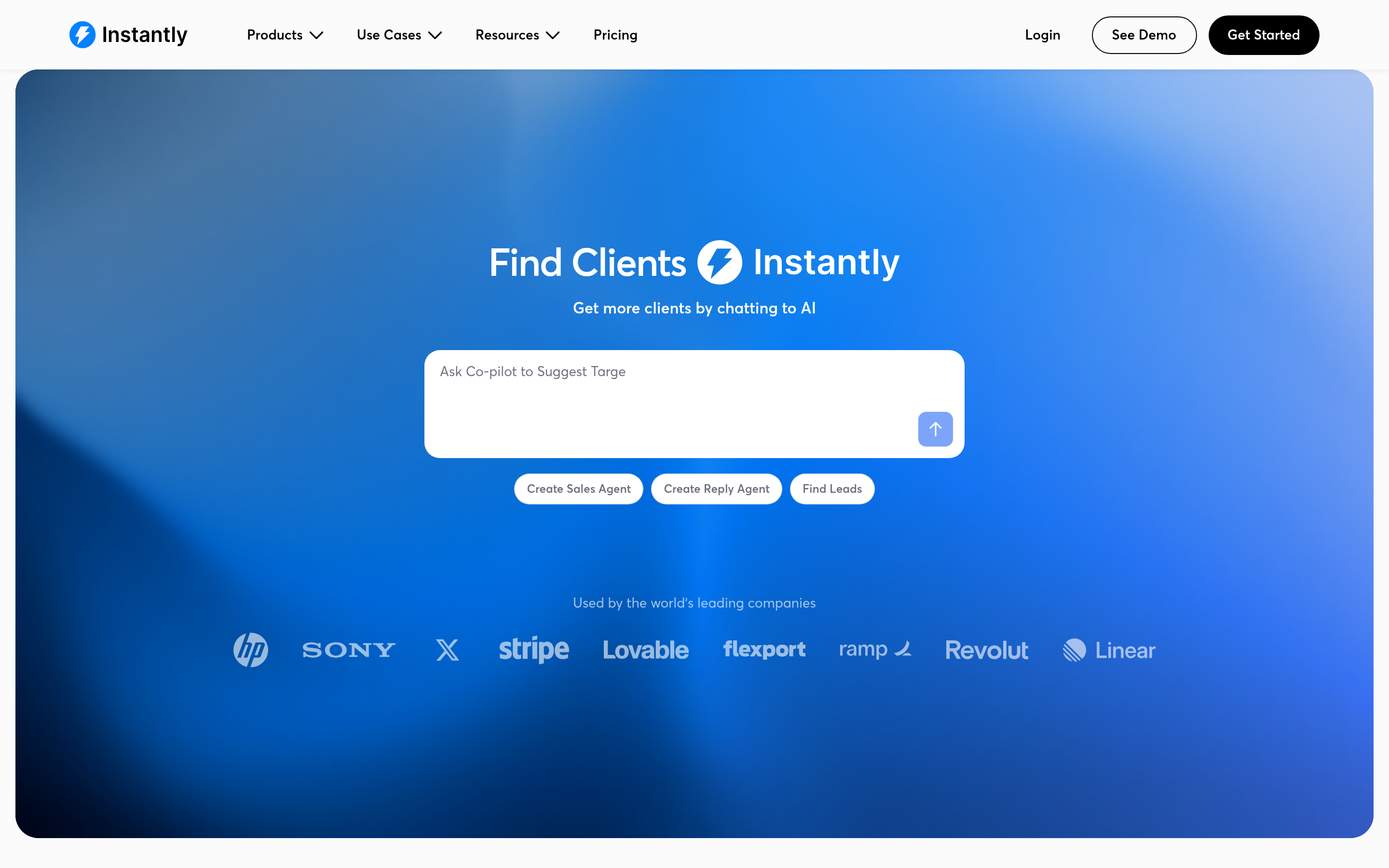
Instantly focuses on deliverability: unlimited inbox connections, automated warmup, and inbox rotation so you can send volume without burning one domain. It doesn't find data, so you pair it with a finder. Compare trade-offs in our Instantly alternative guide.
4. Lemlist — best for personalization#
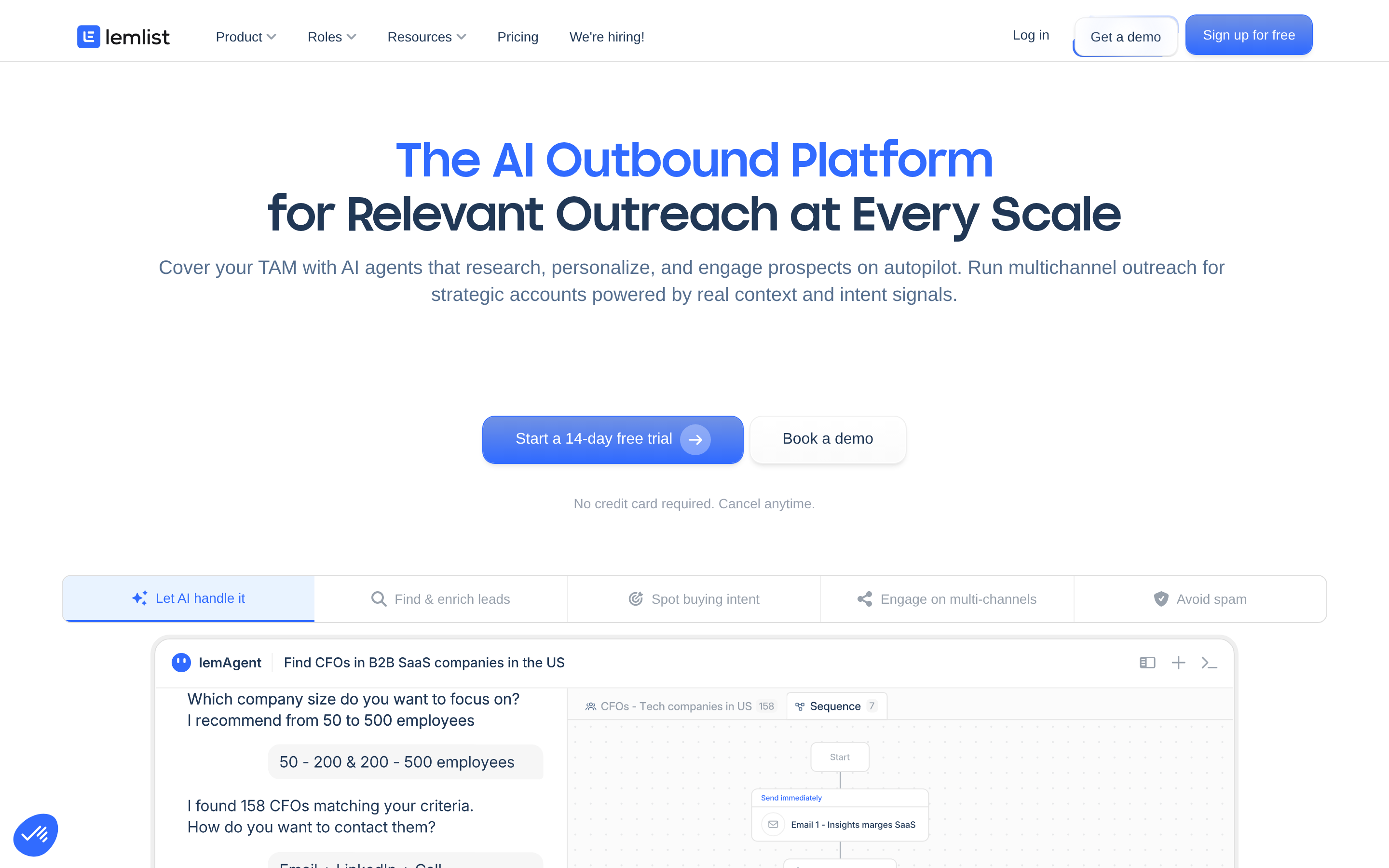
Lemlist leans into personalized images, dynamic landing pages, and multichannel touches. Great for low-volume, high-touch campaigns where each prospect deserves a custom angle.
5. Saleshandy — best budget sequencer#
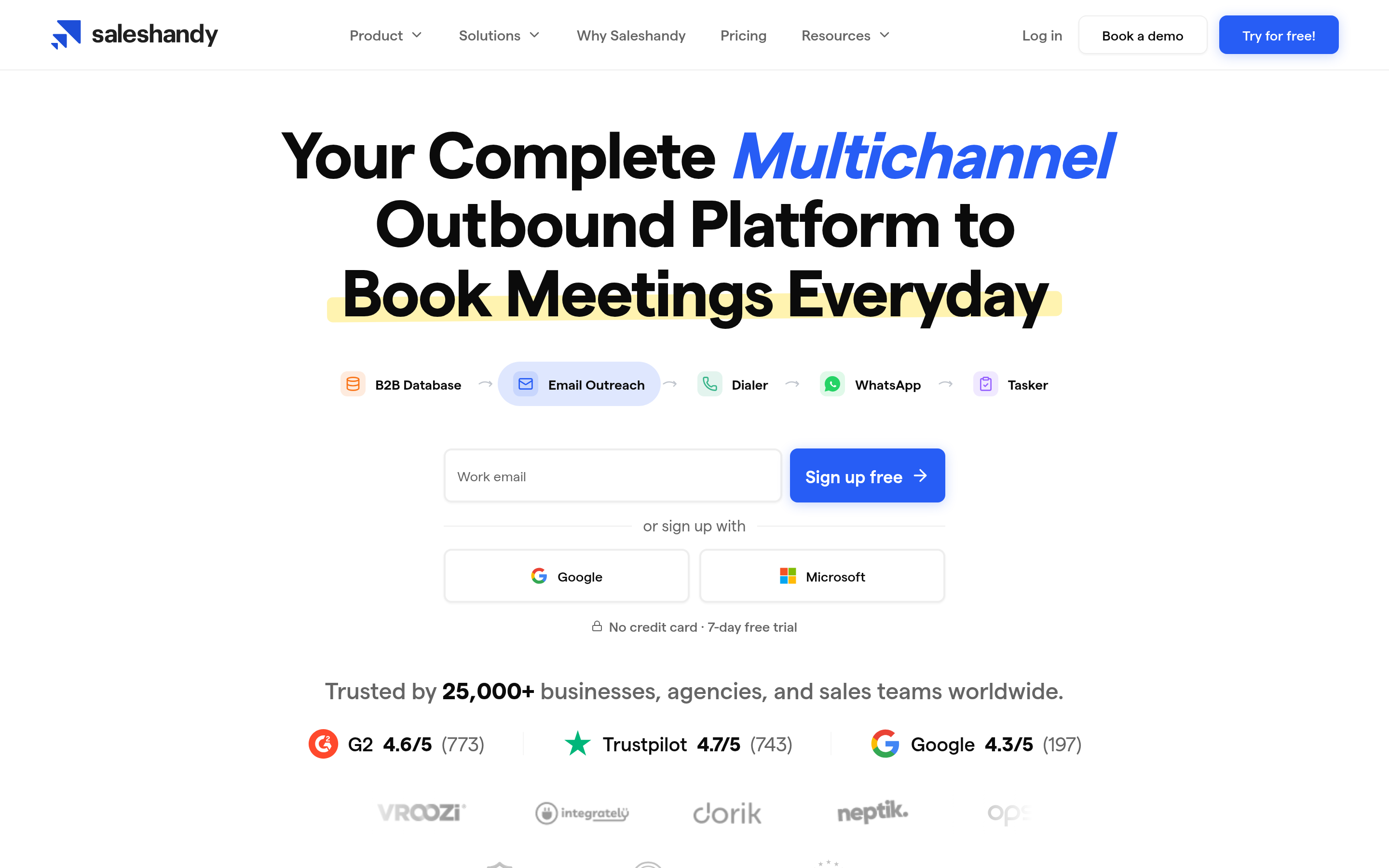
Saleshandy offers sequencing, email verification, and a lead database at an approachable price. A solid mid-market pick when you want sending and basic data under one roof. Details in our Saleshandy alternative comparison.
6. Snov.io — best lightweight CRM + outreach combo#
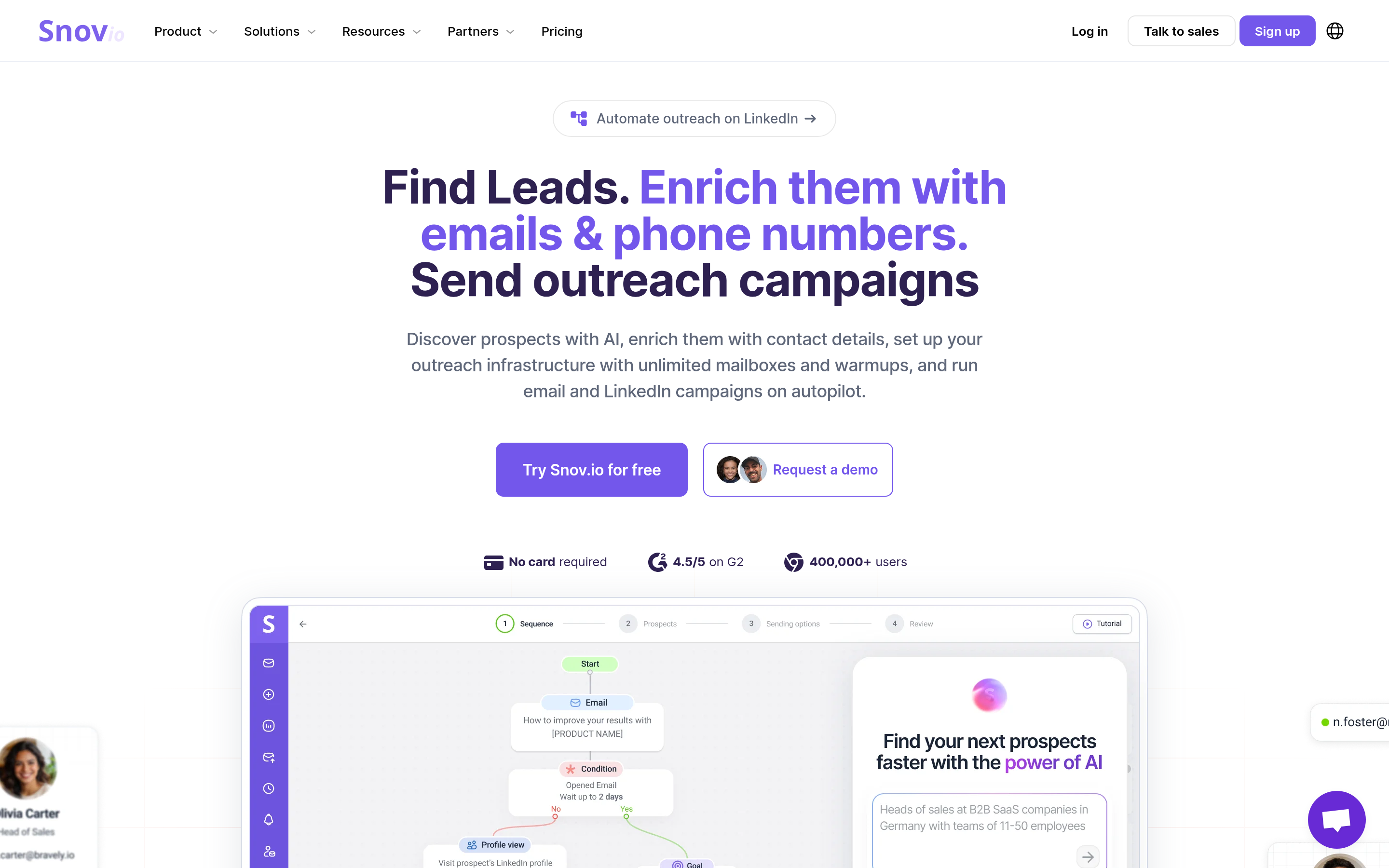
Snov.io blends an email finder, verifier, drip campaigns, and a small CRM. Good for solo founders and small teams who want a single inexpensive tool.
7. Hunter — best simple domain-to-email lookup#
Hunter is the classic, simple domain search and verifier. Easy to learn, but thinner on enrichment and sending features than the others here.
How do the top Clickback alternatives compare?#
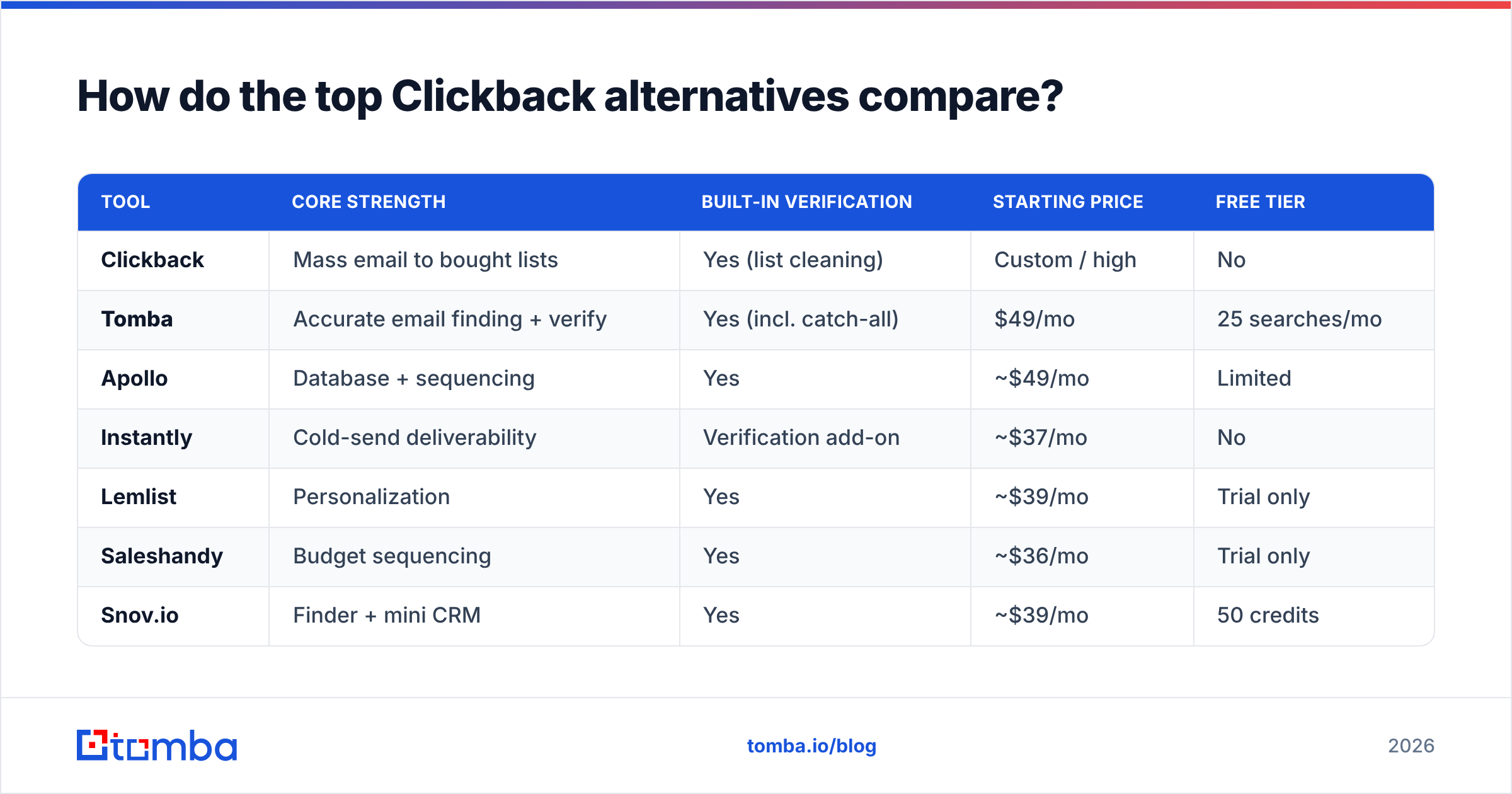
| Tool | Core strength | Built-in verification | Starting price | Free tier |
|---|---|---|---|---|
| Clickback | Mass email to bought lists | Yes (list cleaning) | Custom / high | No |
| Tomba | Accurate email finding + verify | Yes (incl. catch-all) | $49/mo | 25 searches/mo |
| Apollo | Database + sequencing | Yes | ~$49/mo | Limited |
| Instantly | Cold-send deliverability | Verification add-on | ~$37/mo | No |
| Lemlist | Personalization | Yes | ~$39/mo | Trial only |
| Saleshandy | Budget sequencing | Yes | ~$36/mo | Trial only |
| Snov.io | Finder + mini CRM | Yes | ~$39/mo | 50 credits |
Prices move, so confirm on each vendor's page before you buy. For Tomba, the current breakdown lives on the Tomba pricing page: a free tier with 25 searches a month, then Starter at $49/mo, Growth at $99/mo, and Pro at $249/mo.
The pattern in that table is the real lesson. Clickback is the only tool built around buying the list. Every modern alternative assumes you'll source and verify contacts instead — because that's what protects deliverability.
Why does data quality beat list volume?#
Because one bad send costs more than it looks. Picture two campaigns of 1,000 emails. Campaign A uses a bought list with a 12% bounce rate. Campaign B uses verified data with a 1% bounce rate. After one send, Campaign A has told every major mailbox provider that you're a careless sender — and that reputation hit follows you into your next campaign, your renewal emails, even your one-to-one replies. Campaign B keeps your domain trusted.
Think of sender reputation like a credit score. A list blast is a maxed-out card: it works once, then every future "loan" costs more. Verified, targeted sending is paying your balance in full — boring, but your score climbs.
This is why the verification layer matters so much. A good email verifier catches dead addresses, role accounts, and spam traps before they ever touch your sender score. And catch-all domains — where the server accepts everything, so a normal check can't tell real from fake — need a dedicated catch-all verifier to avoid silent bounces. Bought lists rarely get this treatment with any rigor.
Which alternative fits your use case?#
- You need accurate contacts for targeted outreach. Start with Tomba. Find and verify the exact people at your target accounts, then send through whatever sequencer you like.
- You want one database plus a sequencer. Apollo, if you accept variable data quality in exchange for breadth.
- You already have data and just need to send safely. Instantly, for warmup and inbox rotation at volume.
- You run high-touch, low-volume campaigns. Lemlist, for deep personalization.
- You're price-sensitive and small. Saleshandy or Snov.io.
- You just need quick domain lookups. Hunter.
Most strong teams use two tools, not one: a data layer (find + verify) and a sending layer (sequence + warmup). Trying to do both with a single bought-list product is exactly the corner Clickback paints you into.
How do you migrate off Clickback without losing momentum?#
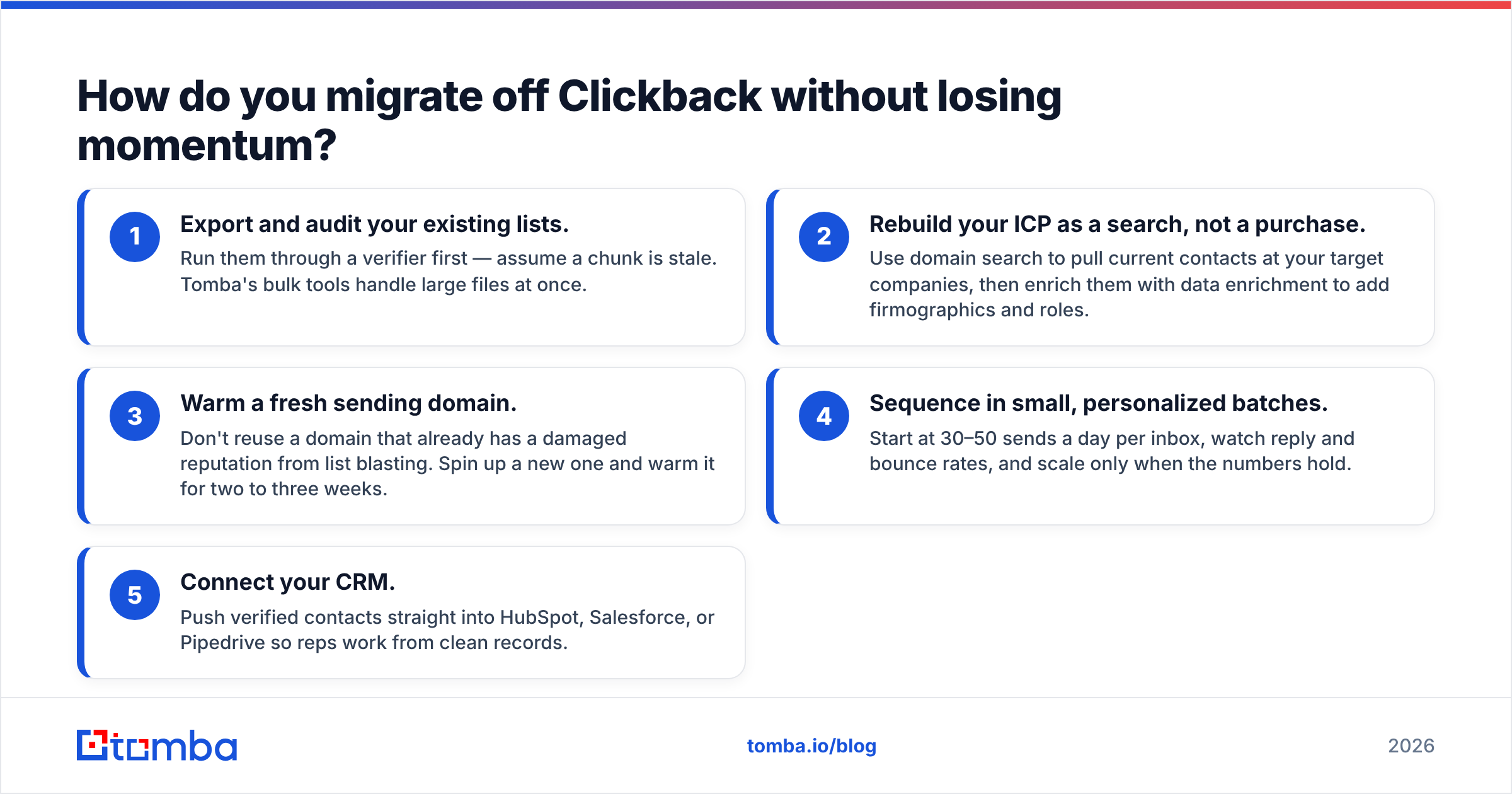
A clean switch takes about a week:
- Export and audit your existing lists. Run them through a verifier first — assume a chunk is stale. Tomba's bulk tools handle large files at once.
- Rebuild your ICP as a search, not a purchase. Use domain search to pull current contacts at your target companies, then enrich them with data enrichment to add firmographics and roles.
- Warm a fresh sending domain. Don't reuse a domain that already has a damaged reputation from list blasting. Spin up a new one and warm it for two to three weeks.
- Sequence in small, personalized batches. Start at 30–50 sends a day per inbox, watch reply and bounce rates, and scale only when the numbers hold.
- Connect your CRM. Push verified contacts straight into HubSpot, Salesforce, or Pipedrive so reps work from clean records.
The mindset shift is the hard part. Clickback rewards thinking in list size. The alternatives reward thinking in match quality. Once you optimize for the right person at the right account, your volume can be a fraction of what it was and your pipeline still grows.
Is a cheaper tool ever the right call?#
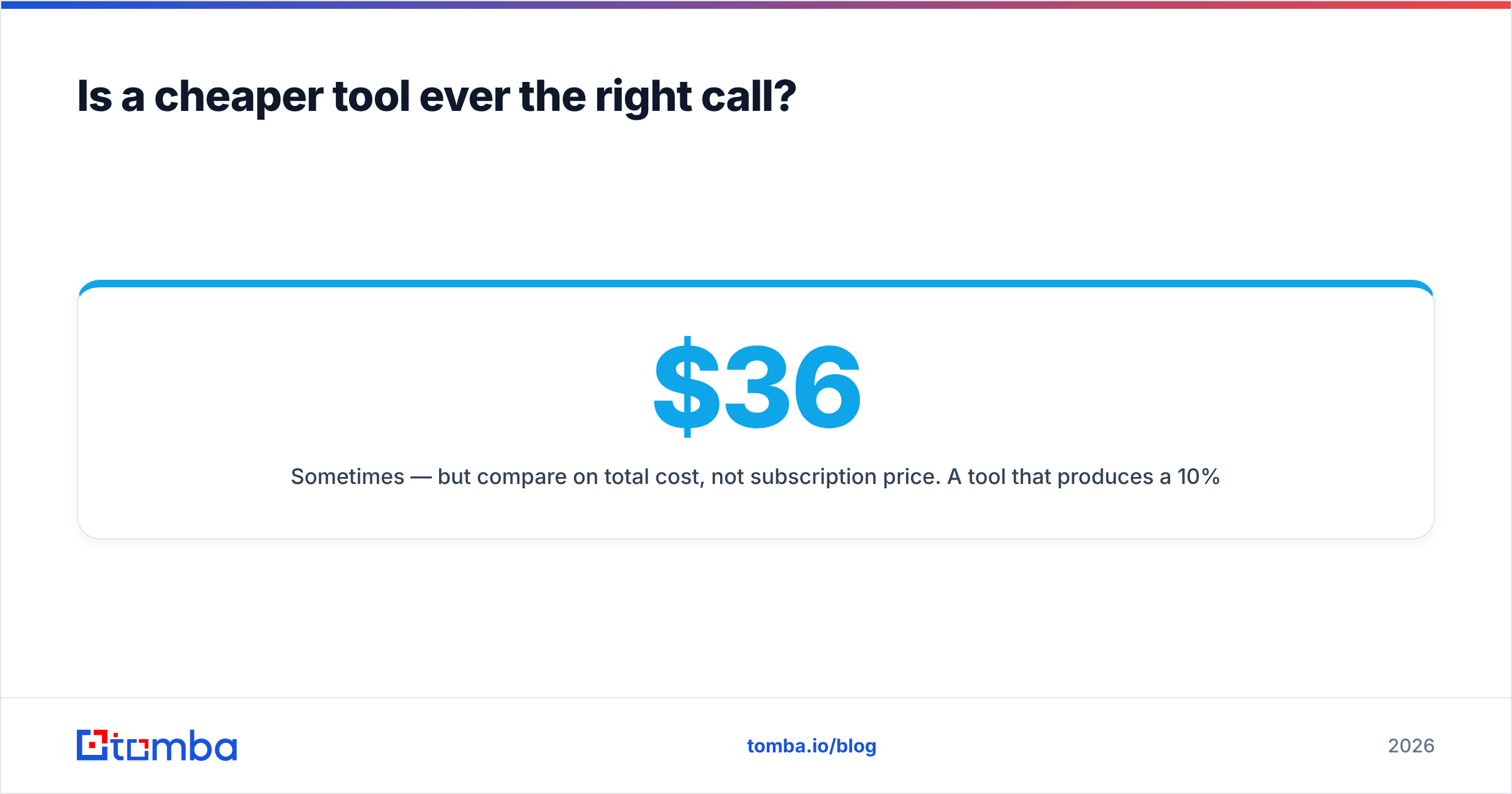
Sometimes — but compare on total cost, not subscription price. A $36/mo tool that produces a 10% bounce rate and a junk-foldered domain is more expensive than a $49/mo tool that keeps you in the inbox. The cost lives in deliverability, not the invoice.
If budget is tight, the smart move is to spend on the data layer (where accuracy compounds) and economize on the sending layer (where free warmup and a cheap sequencer get you far). A free email finder tier plus a low-cost sender beats a single mid-priced blasting suite for most early teams.
For a sanity check on any vendor's reputation before you commit, read recent reviews on G2 and Capterra — pay special attention to comments about data accuracy and support, since those are the two things screenshots never show.
The bottom line#
Clickback solves a problem fewer teams want solved the old way: mass-emailing people who never asked to hear from you. In 2026, the durable strategy is the opposite — fewer, better, verified contacts sent with care. Every alternative on this list assumes that, and the ones that win for you will be the ones that match your specific gap: data, sending, or personalization.
If your weak link is data — and for most teams replacing Clickback, it is — start there. Tomba's email finder gives you accurate, verified B2B addresses with catch-all handling, bulk processing, and an API, starting free with 25 searches a month. Build your outreach on contacts you can trust, and the rest of your funnel gets easier. Try Tomba's Email Finder and see the difference clean data makes before your next campaign goes out.
// get started
Find, verify and enrich your first contacts today
Start on the free plan with 25 searches a month, then scale when your team is ready.
Free plan · No credit card required · GDPR & CCPA
// about the author