Clodura.ai vs Startup Tracker (2026): Which B2B Tool Wins?
Clodura.ai and Startup Tracker solve different halves of the same problem. Here's an honest, side-by-side breakdown of data depth, pricing, and prospecting features so you buy the right one.
Clodura.ai vs Startup Tracker (2026): Which B2B Tool Wins?
The Clodura.ai vs Startup Tracker choice feels harder than it should. That's because they only look like rivals. One is a full sales prospecting platform. The other is a signal tool built to watch startups move. Pick wrong and you pay for seats no one uses — or you miss the trigger data you needed.
This is a neutral, side-by-side look. It helps you match the tool to your real sales motion, not the louder marketing page.
TL;DR#
- Clodura.ai is a broad B2B prospecting suite. It bundles a contact database, org charts, email checks, and sequences in one login. Best if you want to find and reach buyers end to end.
- Startup Tracker is a monitoring tool. It watches funding rounds, hiring spikes, product launches, and other buying signals. Best if you time outreach around events.
- They overlap less than the "vs" implies. Many teams run a tracker for signals and a separate finder for contacts.
- Pricing: Clodura.ai leans toward a per-seat SaaS suite. Startup Tracker is lighter and signal-focused. Always confirm current tiers on each vendor's site.
- Is your real problem accurate contact data? Then a dedicated finder like the Tomba Email Finder often beats a bundled database on verification.
What is Clodura.ai?#
Clodura.ai is an AI sales prospecting platform. Think of it as a Swiss Army knife for outbound. You get a large B2B contact database, direct dials and email discovery, org-chart mapping, email checks, and built-in sequencing. Reps go from "who do I target" to "message sent" in one tool.
Its pitch is simple: one tool instead of many. You skip stitching together a database, a verifier, and a cadence tool. That helps small teams who don't want a five-tool stack. The trade-off is the classic all-in-one problem. Each module is good, but rarely the best. Database coverage and email accuracy can vary by region and job level, so test them before you commit a full team.
What is Startup Tracker?#
Startup Tracker is a monitoring tool with one focus: what startups are doing right now. Funding news, new hires, leadership changes, and product launches roll into a feed. You filter it and act on it.
Think of it as a news alert built for sellers. It won't hand you a verified email and a sequence. It tells you when a company just became a good prospect. If you sell into fast-moving startups — dev tools, fintech, infra, agencies — that timing edge is the whole point. A well-timed "congrats on the Series A" email beats a cold blast every time.
Where it stops is contact data. Knowing a startup just raised is only half the job. You still need the right person and a working address. Most teams fill that gap with a separate finder.
Clodura.ai vs Startup Tracker: the core difference#
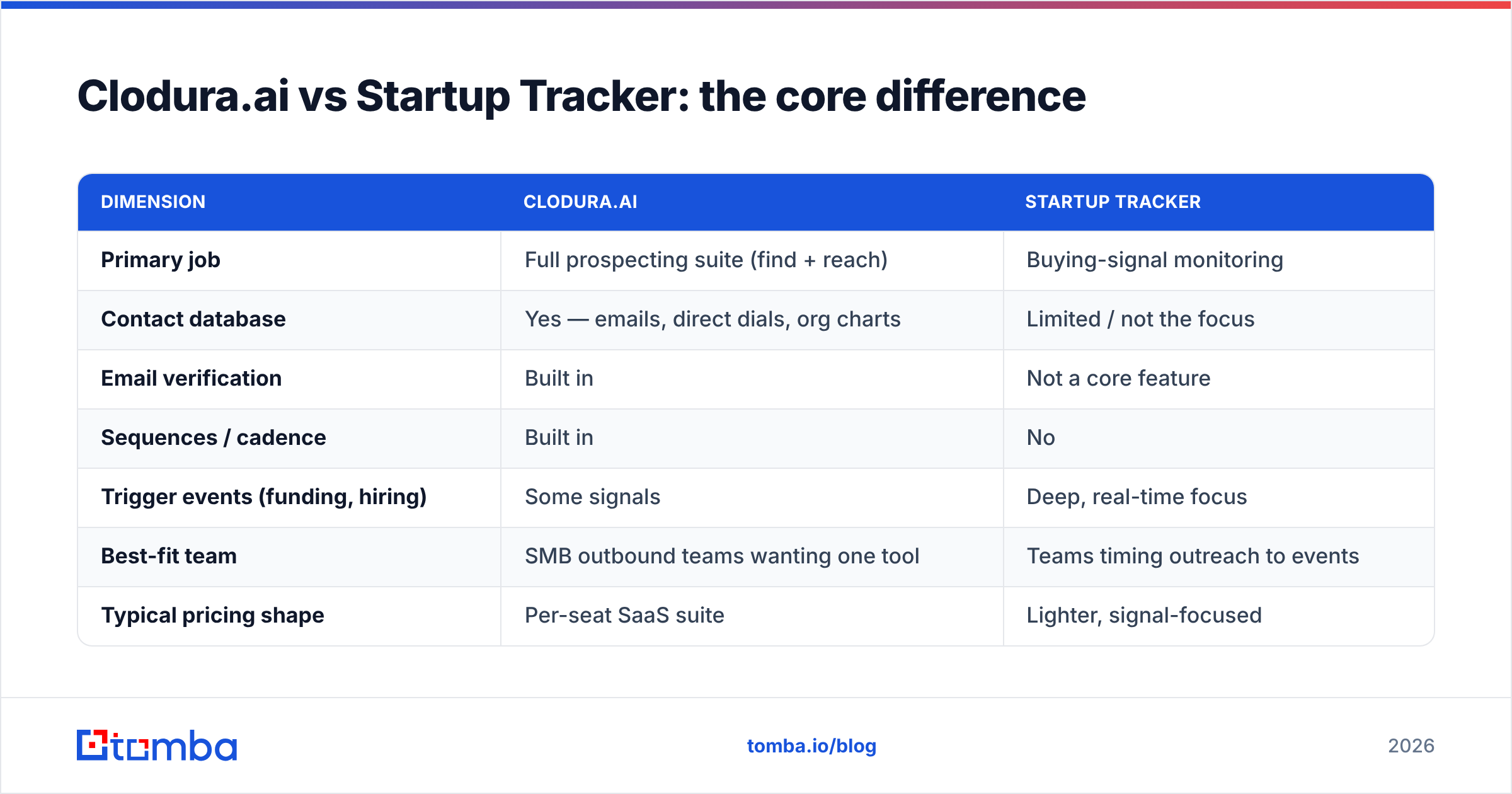
The honest summary: Clodura.ai answers "who and how." Startup Tracker answers "when."
| Dimension | Clodura.ai | Startup Tracker |
|---|---|---|
| Primary job | Full prospecting suite (find + reach) | Buying-signal monitoring |
| Contact database | Yes — emails, direct dials, org charts | Limited / not the focus |
| Email verification | Built in | Not a core feature |
| Sequences / cadence | Built in | No |
| Trigger events (funding, hiring) | Some signals | Deep, real-time focus |
| Best-fit team | SMB outbound teams wanting one tool | Teams timing outreach to events |
| Typical pricing shape | Per-seat SaaS suite | Lighter, signal-focused |
| Learning curve | Higher (more modules) | Lower (single feed) |
They solve different halves of one workflow. So the smart question is rarely "which one." It's "which one plus what." A signal with no contact is a missed deal. A contact with no timing is a cold email.
Which one fits your sales motion?#
Use this quick decision guide instead of a feature count:
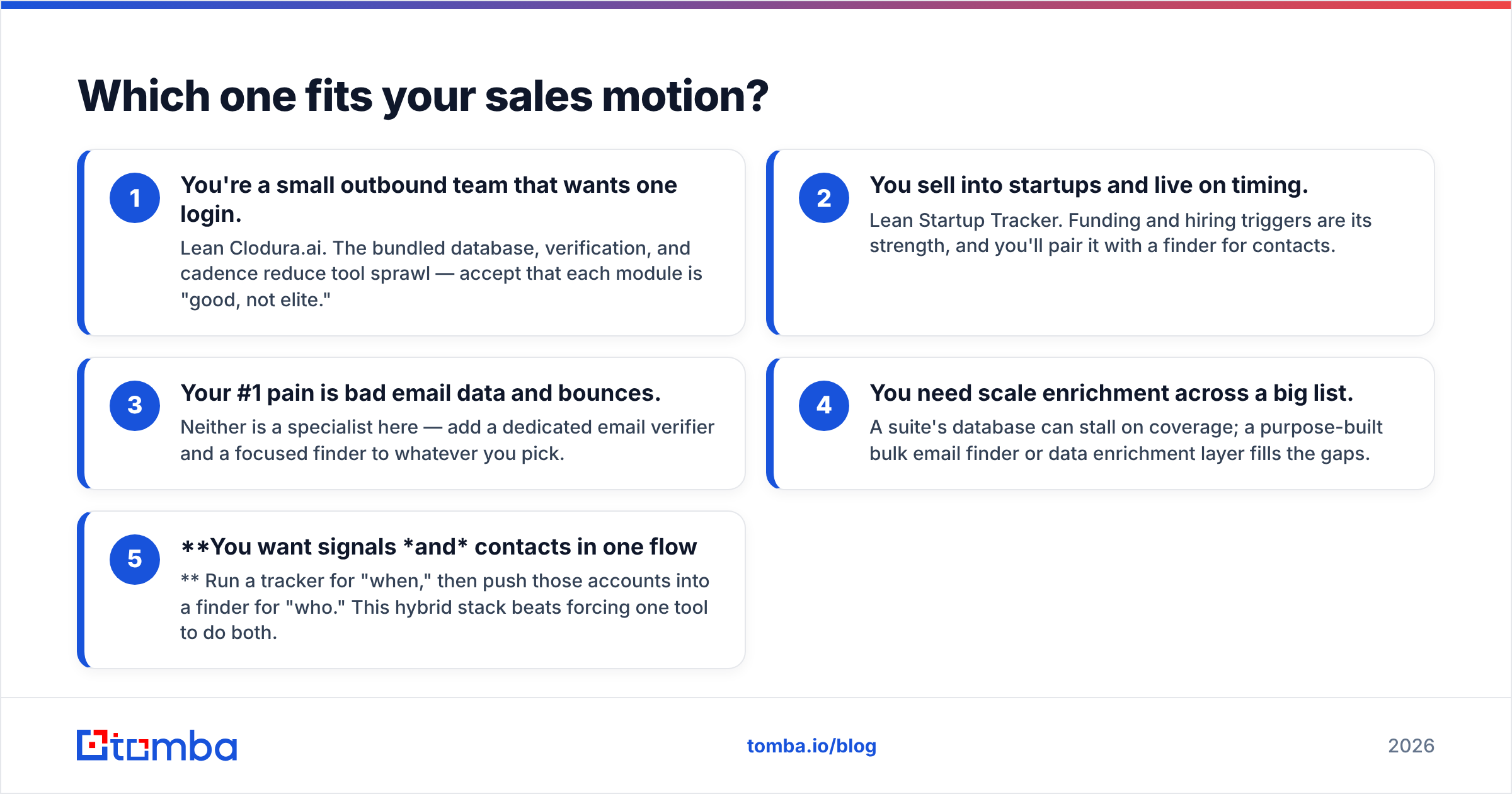
- You're a small outbound team that wants one login. Lean Clodura.ai. The bundled database, verification, and cadence cut tool sprawl. Just accept that each module is "good, not elite."
- You sell into startups and live on timing. Lean Startup Tracker. Funding and hiring triggers are its strength. You'll pair it with a finder for contacts.
- Your #1 pain is bad email data and bounces. Neither tool is a specialist here. Add a dedicated email verifier and a focused finder to whatever you pick.
- You need scale enrichment across a big list. A suite's database can stall on coverage. A purpose-built bulk email finder or data enrichment layer fills the gaps.
- You want signals and contacts in one flow. Run a tracker for "when." Then push those accounts into a finder for "who." This hybrid stack beats forcing one tool to do both.
How accurate is the contact data?#
This is where most "vs" posts skip the number that decides your reply rate. A prospecting suite lives or dies on email accuracy. A clean-looking address that bounces still burns your sender reputation and hurts your email deliverability.
Clodura.ai includes verification, which helps. But bundled databases tend to trade freshness for breadth. Coverage is wide, and some records lag. Startup Tracker isn't in this race at all, since contact data isn't its job. In practice, teams that care about bounce rates re-check found emails before they send — no matter which tool surfaced them.
A few habits protect your numbers with any tool:
- Re-verify before every send, not just at import. Data decays about 2–3% per month.
- Handle catch-all domains on purpose with a catch-all verifier instead of guessing.
- Confirm the pattern at each company with a company email pattern checker before you scale a domain.
Is accuracy your real bottleneck? Then the finder you bolt on matters more than the suite you start from. Tools built only for discovery — with public benchmarks and clear data sources — usually beat a database module fighting for a suite's roadmap time.
How does pricing compare?#
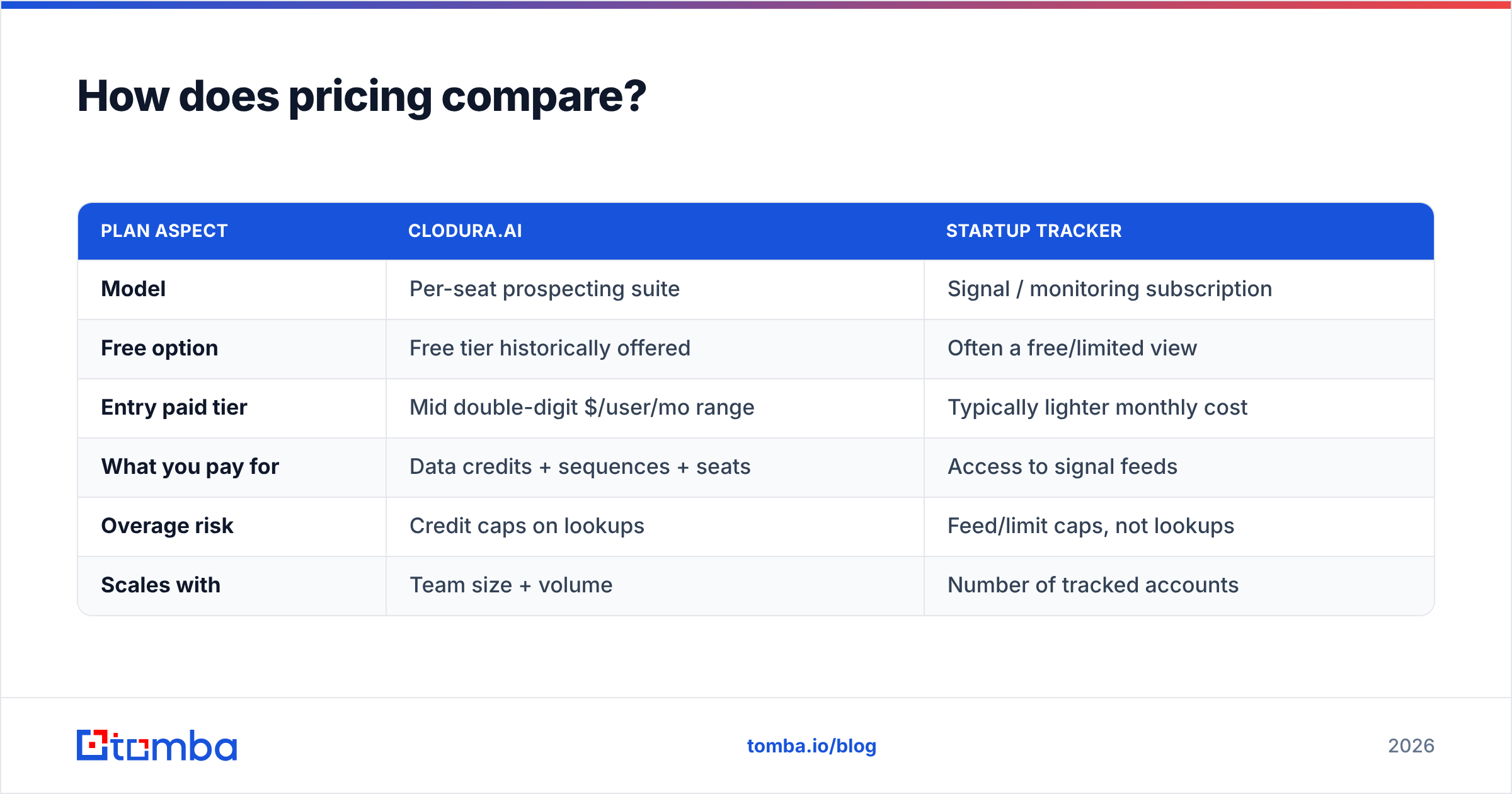
Both vendors change pricing often. So treat the shape as the takeaway, not the exact digits. Confirm live numbers on each site and on a marketplace like G2 before you buy.
| Plan aspect | Clodura.ai | Startup Tracker |
|---|---|---|
| Model | Per-seat prospecting suite | Signal / monitoring subscription |
| Free option | Free tier historically offered | Often a free/limited view |
| Entry paid tier | Mid double-digit $/user/mo range | Typically lighter monthly cost |
| What you pay for | Data credits + sequences + seats | Access to signal feeds |
| Overage risk | Credit caps on lookups | Feed/limit caps, not lookups |
| Scales with | Team size + volume | Number of tracked accounts |
The point is simple. A suite bills you for breadth — seats, credits, cadences. A tracker bills you for access to signals. If you'd use only one module of the suite, you overpay. A specialist tool plus a tracker can cost less and give better data. To see how a focused finder prices lookups, compare transparent Tomba pricing rather than assuming the bundle is the deal.
What do real reviews say?#
Pull from primary sources, not vendor copy. On directories like Capterra and G2, the same patterns repeat:
- Clodura.ai gets praise for value and for putting tools in one place. The common caveat: data accuracy and coverage vary by geography and job level. That's what you'd expect from a broad database.
- Startup Tracker-style tools score well on timeliness and signal quality. The honest limit: you still need a separate way to get contacts and reach them.
Neither critique is a dealbreaker. Both are easy to predict from each tool's design. The real failure mode is expecting a signal tool to hand you clean contacts. Or expecting a suite's database to match a verification specialist.
Can you use both together?#
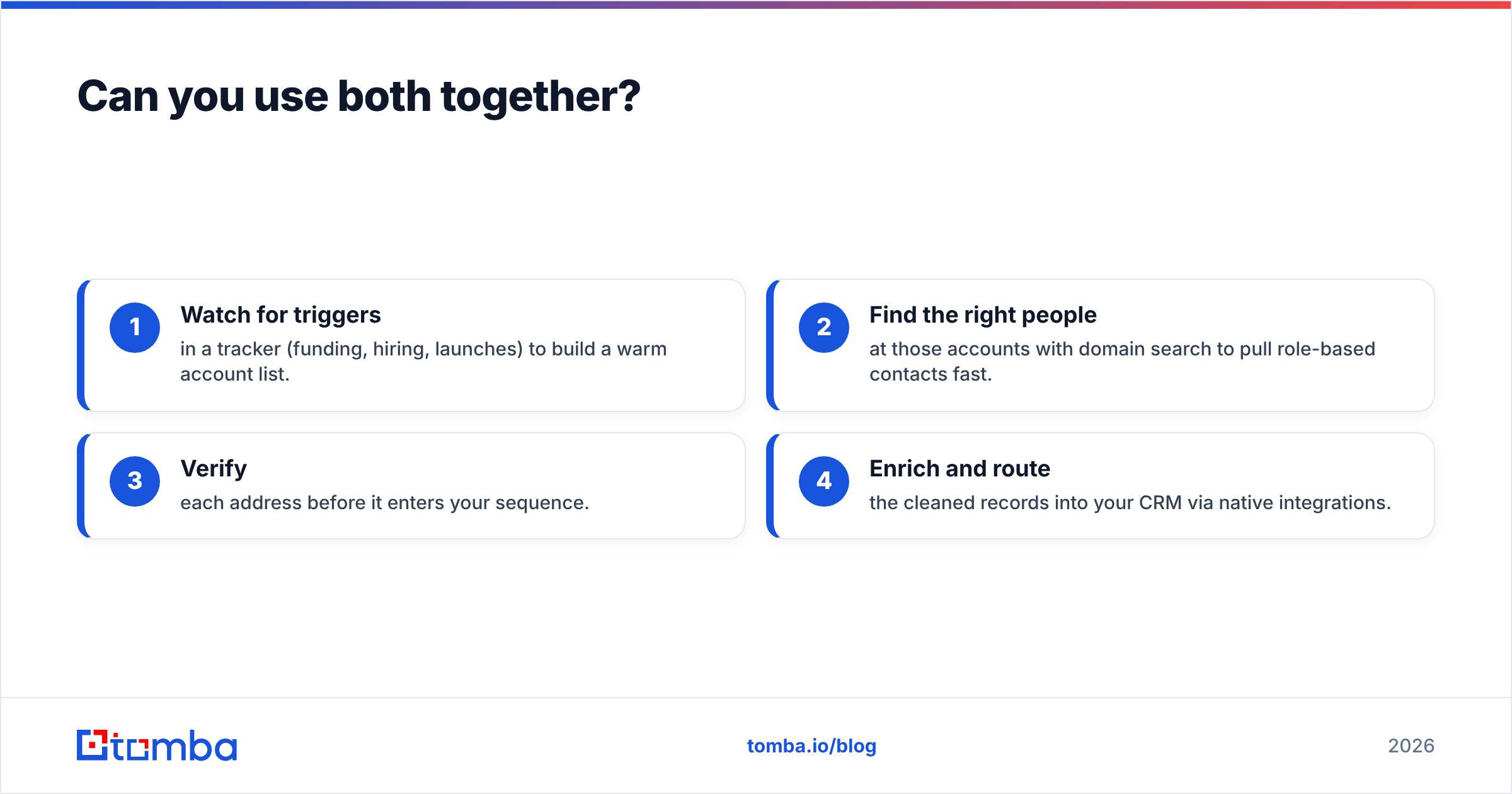
Yes. For many teams that's the strongest setup. The workflow looks like this:
- Watch for triggers in a tracker — funding, hiring, launches — to build a warm account list.
- Find the right people at those accounts with domain search to pull role-based contacts fast.
- Verify each address before it enters your sequence.
- Enrich and route the clean records into your CRM through native integrations.
This stack lets each tool do its best job. It's also more resilient. If one vendor changes pricing or coverage, you swap that layer instead of rebuilding your whole motion.
The verdict#
Pick Clodura.ai if you're a lean outbound team that values one login over best-in-class. Just test data accuracy before you roll it out to reps.
Pick Startup Tracker if timing is your edge and you sell into fast-moving startups. Budget for a separate finder to turn signals into contacts.
Pick neither as your data layer if bounce rates and reply rates are what hold you back. In that case, the best move is a dedicated finder and verifier. Pair it with whichever tool matches your signal or suite needs.
Get contact data you can actually send to#
Whatever you decide on signals and sequencing, the emails still have to land. The Tomba Email Finder is built for that one job. It finds and verifies professional email addresses by name, domain, or company. So the prospects your tracker or suite surfaces become deliverable contacts, not bounces. Start on the free tier (25 searches/month). Scale through Starter at $49/mo. Then plug the results straight into your stack with the Tomba API. Timing and coverage matter, but accurate data is what closes the loop.
Vendor names, features, and pricing here belong to their owners and change often. Verify current details on each official site before you buy.
Related guides#
Ready to find emails that actually work?
Join 150,000+ professionals who stopped guessing and started sending. Free credits on signup — no credit card required.
Get the Tomba newsletter
Practical outbound tactics and product updates — once every two weeks.
About the author