Clodura.ai vs The Data City (2026): Which B2B Data Tool Wins?
Clodura.ai and The Data City both sell B2B data, but they solve very different problems. Here's an honest, side-by-side breakdown of coverage, freshness, pricing, and who each one actually fits in 2026.
Clodura.ai vs The Data City is a match-up many teams get wrong. One tool books meetings. The other maps markets. They sound alike, but they solve different jobs. This guide shows which one fits yours.
TL;DR
- Clodura.ai is an all-in-one outbound sales platform: a B2B contact database, email finder, verified emails and direct dials, plus built-in sequences and buyer-intent signals.
- The Data City is a UK-focused market-intelligence engine that classifies companies in real time to map industries, emerging sectors, and economic trends — it's built for researchers and policy teams, not SDRs.
- They overlap only on the word "data." If you want to book meetings, Clodura is the closer match. If you want to size a market or find every company in a niche, The Data City wins.
- Neither is a pure email-finding specialist. If contact accuracy is your bottleneck, a focused tool like Tomba often beats a bundled database on deliverability and price.
- Pick by job-to-be-done: prospecting motion, market research, or clean verified contact data. This guide maps each tool to the right one.
What are Clodura.ai and The Data City?#
Short answer: they aren't really competitors. They're two different products that both happen to sell "B2B data." A head-to-head only makes sense at a fork in the road, when you're unsure whether you need a prospecting engine or a market-research engine.
Clodura.ai is a sales-intelligence and outbound platform. Think of it as a Swiss Army knife for an SDR team: a database of company and contact records, an email finder, verified business emails and mobile numbers, organizational charts, technographic filters, buyer-intent data, and a sequencing tool to run the campaign. Its whole reason for existing is to move a rep from "I have a target account" to "I sent the email."
The Data City is something else entirely. It's a UK-headquartered data company that uses machine learning to read what companies actually do — from their websites and filings. It then classifies them into real-time industrial sectors. Instead of static SIC codes, it builds live taxonomies (think "quantum computing" or "net zero" sectors). That lets economists, universities, investors, and government bodies measure emerging industries. It's a telescope for markets, not a dialer for reps.
Here's the everyday analogy: Clodura is a fishing rod and a map of where the fish are biting today. The Data City is a marine biologist's survey of the whole ocean's ecosystem. Both involve water and fish. You'd never confuse the two once you're holding them.
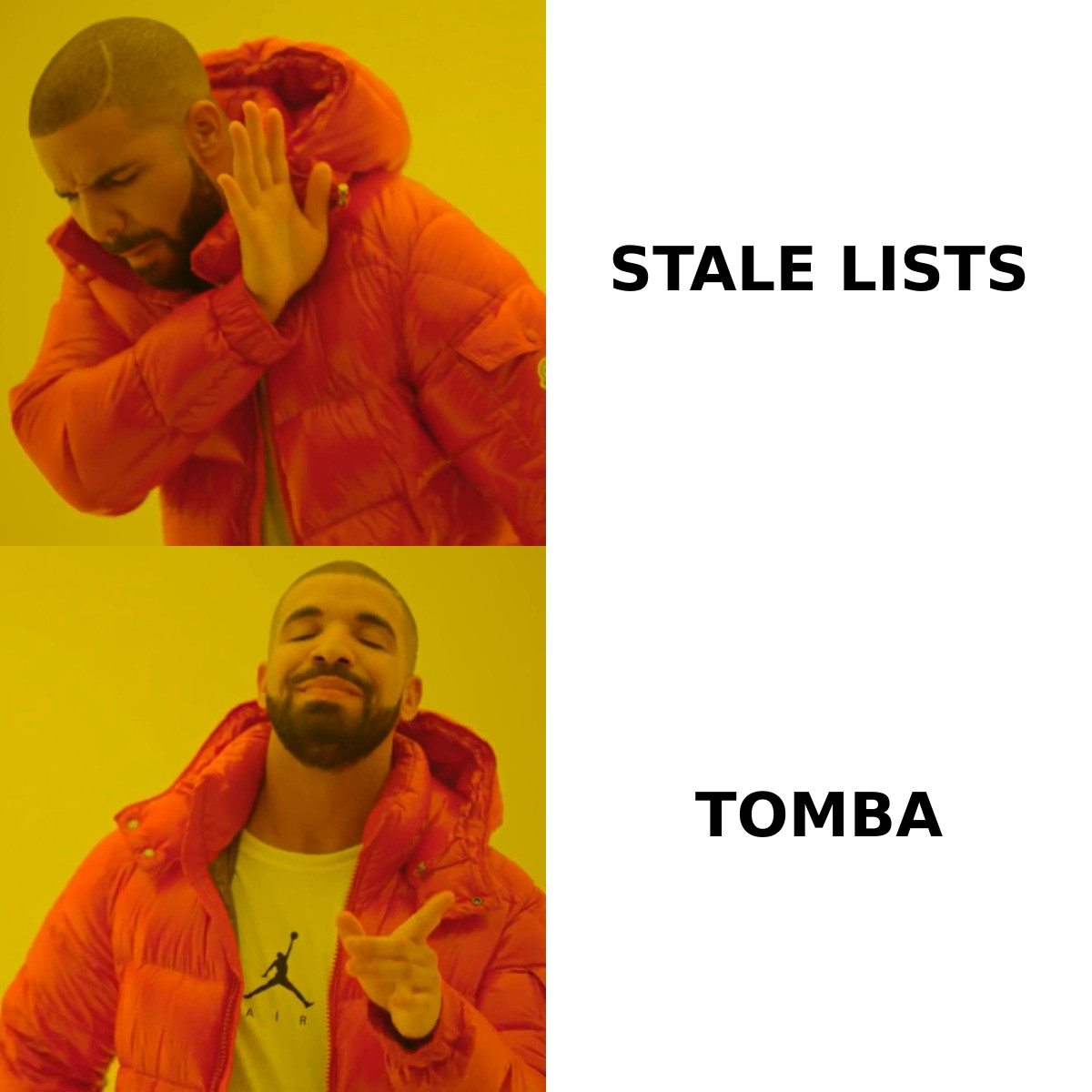
Clodura.ai vs The Data City: how do they compare at a glance?#
The fastest way to see the gap is a side-by-side. Notice how few rows the two tools actually share — that's the real story.
| Attribute | Clodura.ai | The Data City |
|---|---|---|
| Primary job | Outbound sales prospecting | Market & economic intelligence |
| Core users | SDRs, AEs, demand gen | Analysts, economists, gov, investors |
| Data shape | Company + contact records | Company classification & sector maps |
| Contact emails / dials | Yes (verified emails + mobiles) | No — company-level, not contact-level |
| Geographic strength | Global, US-heavy | UK-first, expanding |
| Built-in outreach | Yes (sequences, cadences) | No |
| Buyer-intent signals | Yes | No (macro trends instead) |
| Entry pricing | Free tier + paid plans from ~$39–$99/user/mo | Custom / enterprise & institutional quotes |
| Best for | Booking meetings | Sizing and mapping industries |
If your goal is anything to do with finding, verifying, and emailing decision-makers, only one column is relevant — and it isn't The Data City. If your goal is understanding where an industry is heading, the reverse is true.
Which one is better for outbound prospecting?#
Clodura.ai, without much argument. The Data City doesn't produce contact-level records with emails and phone numbers. So it can't power a cold email or cold-call motion on its own. Clodura is purpose-built for exactly that.
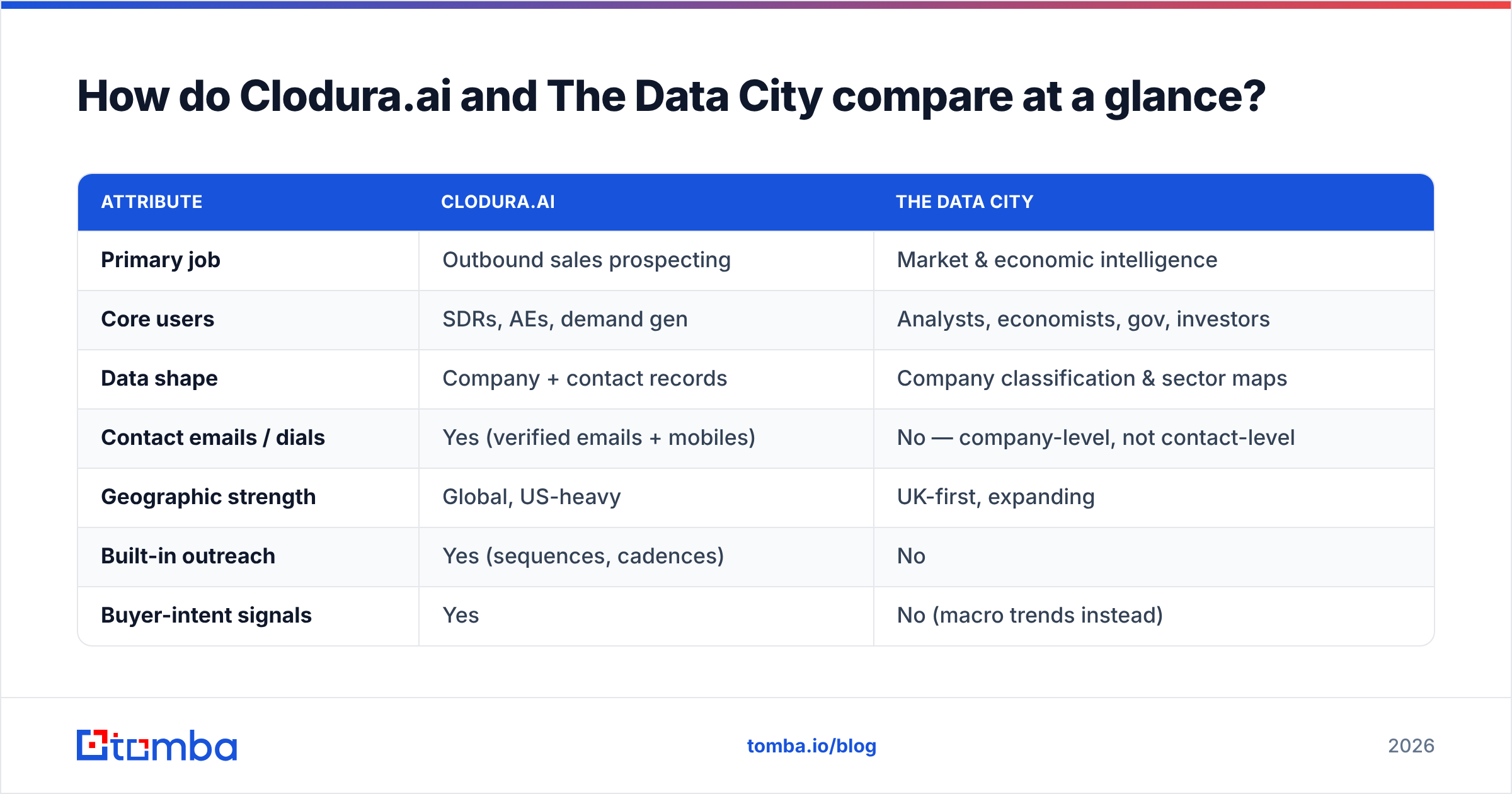
For a prospecting team, evaluate Clodura on the four things that actually determine pipeline:
- Contact coverage — Does it have the right people at your target accounts, not just the company record? Clodura advertises a large global contact database with org charts. That helps you find the actual buyer rather than a generic info@ inbox.
- Email accuracy — This is where bundled databases historically wobble. A record can exist and still bounce. Always run new lists through independent email verification before you send, regardless of vendor promises.
- Direct dials — Mobile-number accuracy varies enormously by region. Test a sample against your own known-good contacts before trusting the count.
- Intent + sequencing — Clodura folds buyer-intent and cadences into one login, so a lean team doesn't stitch together three tools.
The catch with all-in-one platforms is that "does everything" often means "nothing is best in class." Bundled email data tends to trail specialist finders on bounce rate. A database vendor optimizes for record volume, while an email specialist optimizes for deliverability. That's not a knock on Clodura specifically. It's the structural trade-off of any suite.
Which one is better for market research and analysis?#
The Data City, and it isn't close. Say your question sounds like "how many UK companies work on green hydrogen?" or "which regions are growing fastest in AI?" Clodura simply doesn't answer that. The Data City's real-time sector classification exists precisely to answer it. That's why its customer base skews toward universities, economic-development agencies, investors, and consultancies.
Where The Data City shines:
- Emerging-sector mapping — Static industry codes miss new categories. The Data City reads live company activity to build sectors that don't exist in official taxonomies yet.
- Whole-population data — Instead of a sample, it aims to classify entire company populations in its coverage area. That matters for policy and economic modeling.
- Defensible methodology — For research you'll publish or present to a board or a minister, transparent classification beats a black-box lead list.
But if you tried to run outbound off it, you'd be reverse-engineering contacts by hand — which is where a dedicated finder earns its keep.
Where does a dedicated email finder fit in?#
Right in the gap both tools leave. Clodura bundles contact data into a broad suite. The Data City doesn't do contacts at all. Neither is a specialist at the one job that quietly kills more campaigns than any other: getting a correct, deliverable email for a specific person.
This is the case for pairing either platform with a focused tool. You might use The Data City to build a target list of every company in an emerging sector. Then you'd use an email finder to attach a verified decision-maker email to each one. Or you might run Clodura for the workflow, then route your final list through a specialist verifier to shave your bounce rate before it damages your sender reputation.

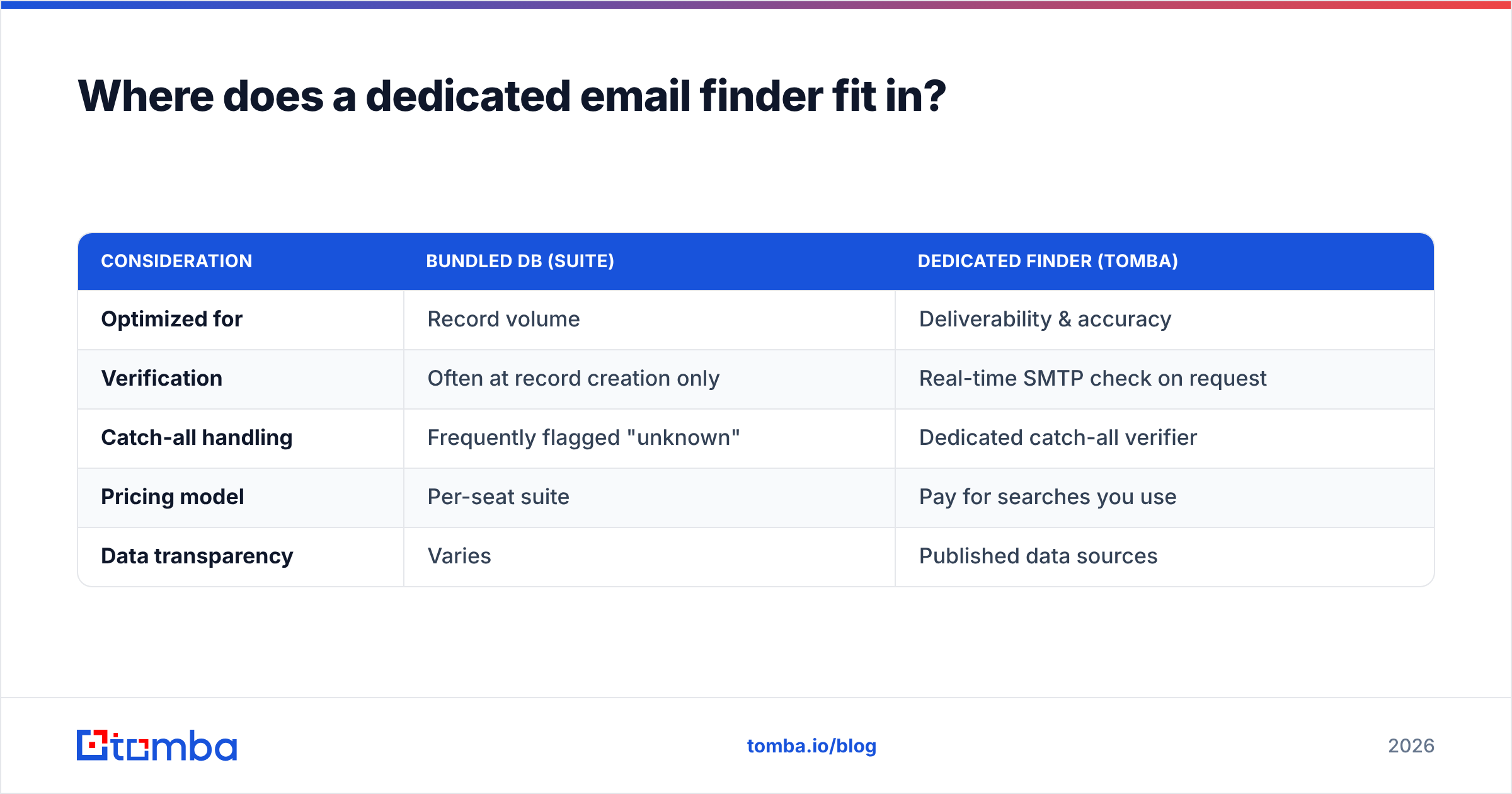
Here's how a specialist stacks up against a bundled database on the metrics that matter for deliverability:
| Consideration | Bundled DB (suite) | Dedicated finder (Tomba) |
|---|---|---|
| Optimized for | Record volume | Deliverability & accuracy |
| Verification | Often at record creation only | Real-time SMTP check on request |
| Catch-all handling | Frequently flagged "unknown" | Dedicated catch-all verifier |
| Pricing model | Per-seat suite | Pay for searches you use |
| Data transparency | Varies | Published data sources |
The point isn't that suites are bad. It's that the email is the highest-risk field in your whole list. It deserves a tool that treats it as the main event, not a bonus column.
How do Clodura.ai and The Data City price?#
Clodura is transactional and per-seat. The Data City is institutional and quote-based. That difference alone tells you who each is built for.
Clodura offers a free tier and paid plans that generally scale by seat and credits. A small sales team can trial it without a procurement process. Pricing changes, so confirm current numbers on their site before you commit.
The Data City typically sells through custom or institutional agreements — the kind a university department, investor, or government body signs. It's not a self-serve credit card checkout. That's normal for research-grade data, but it means budget and buying cycles look completely different.
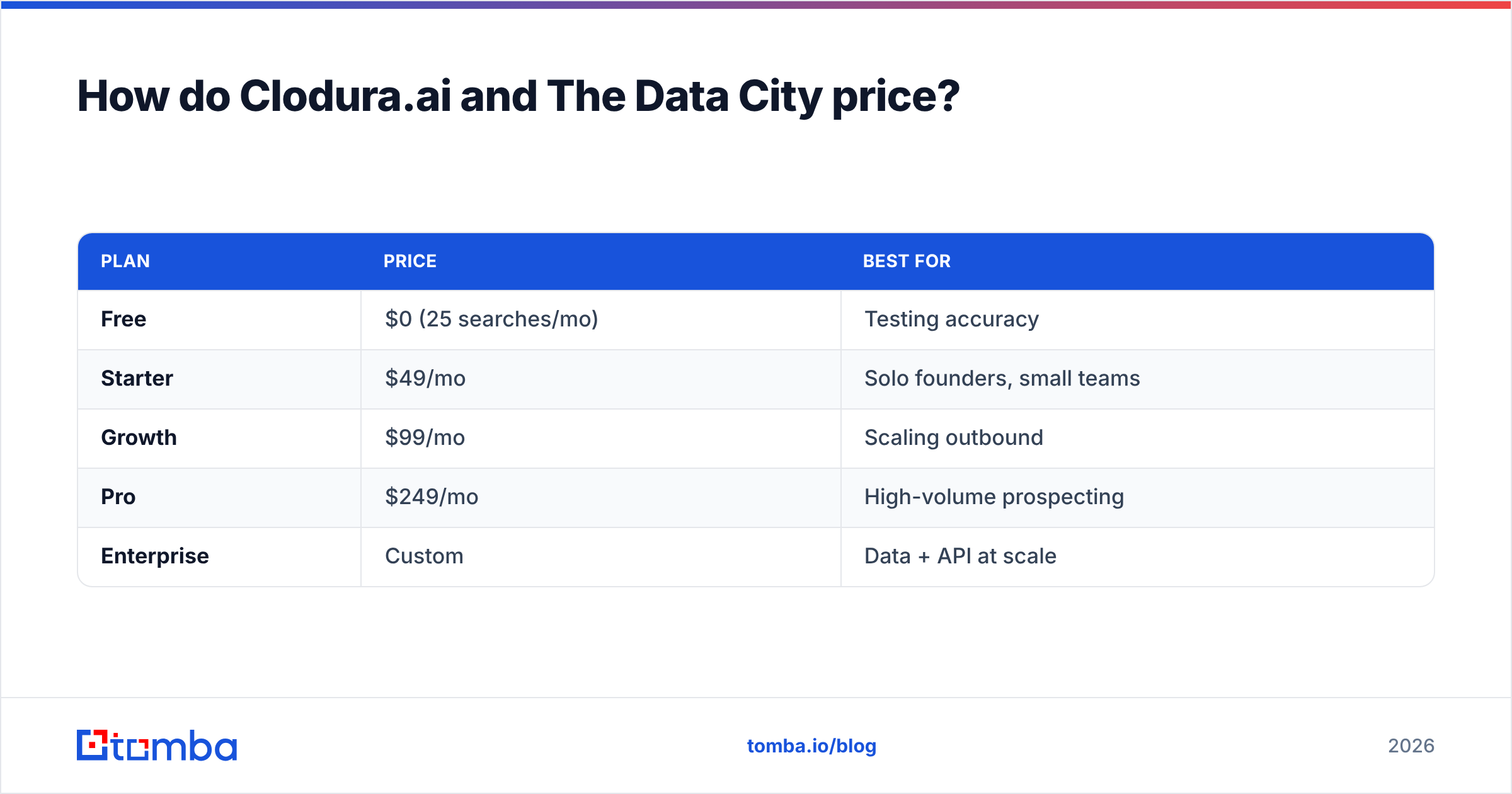
For comparison, a specialist finder like Tomba keeps it simple and usage-based:
| Plan | Price | Best for |
|---|---|---|
| Free | $0 (25 searches/mo) | Testing accuracy |
| Starter | $49/mo | Solo founders, small teams |
| Growth | $99/mo | Scaling outbound |
| Pro | $249/mo | High-volume prospecting |
| Enterprise | Custom | Data + API at scale |
You can review the full Tomba pricing breakdown, but the model is the takeaway. You pay for searches, not a seat license or an enterprise contract. That makes it easy to bolt onto whichever platform you already run.
Which tool should you actually choose?#
Decide by the job in front of you, not by the marketing:
- You run outbound and need contacts, emails, dials, and sequences in one place → Clodura.ai. Just verify the email data independently before you send at scale.
- You do market research, economic analysis, or sector mapping (especially UK) → The Data City. Nothing on the sales side replaces it.
- Your real bottleneck is bounce rate and finding the right person's email → a dedicated finder. Pair it with either platform above.
- You want one clean, transparent source for verified B2B contact data and enrichment → look at a specialist B2B database plus data enrichment rather than forcing a research tool or a broad suite to do it.
The mistake teams make is buying one tool and expecting it to cover research, prospecting, and deliverability. Those are three different jobs. The most cost-effective 2026 stack usually mixes a workflow tool with a specialist data source — not a single do-everything subscription.
For deeper reading, you can compare vendor claims against third-party reviews on G2. Then check each product's own documentation at Clodura.ai and The Data City before you buy.
The bottom line#
The Clodura.ai vs The Data City choice is easier than it looks. One books meetings. The other maps markets. They rarely belong on the same shortlist. Once you've named your job-to-be-done, the choice makes itself. What both leave open is the most fragile part of any campaign: a verified, deliverable email for the exact person you want to reach.
That's the job Tomba is built for. Use the Tomba Email Finder to attach an accurate, verified email to every company on your target list — whether that list came from a sales suite, a research platform, or your own spreadsheet. Start your free tier with 25 searches before you commit a cent. Fewer bounces, cleaner data, and a stack that plays nicely with whatever else you already run.
Related guides#
// get started
Find, verify and enrich your first contacts today
Start on the free plan with 25 searches a month, then scale when your team is ready.
Free plan · No credit card required · GDPR & CCPA
// about the author