7 Best CloudTalk Alternatives in 2026: Cheaper Call Software
CloudTalk is solid, but the pricing, minimums, and integration gaps push many teams to look elsewhere. Here are 7 CloudTalk alternatives compared on price, features, and best-fit use case for 2026.
CloudTalk does one thing well: it drops a cloud phone system on top of your CRM without a hardware closet. But "well" gets expensive fast once you count seat minimums, per-number fees, and the features locked behind higher tiers. If you are here, you have probably already hit one of those walls.
This guide compares the seven strongest CloudTalk alternatives for 2026 — by real pricing, dialer power, integrations, and the type of team each one actually fits. No vendor spin. Where CloudTalk still wins, we say so.
TL;DR: The Fastest Answer#
Cheapest solid replacement: JustCall and Ringover both start lower than CloudTalk and drop the aggressive seat minimums.
Best for high-volume outbound: Kixie and Dialpad, thanks to power dialing plus native CRM click-to-call.
Best all-in-one UCaaS: RingCentral and Nextiva if you want phone, meetings, and messaging in one contract.
Best for scaling support teams: Aircall, the closest feature-for-feature CloudTalk competitor.
The gap none of them fill: a call tool only dials numbers you already have. Accurate contact data — direct-dial numbers and verified emails — comes from a data layer like Tomba's phone finder, not from the dialer itself.
Why Look for a CloudTalk Alternative at All?#
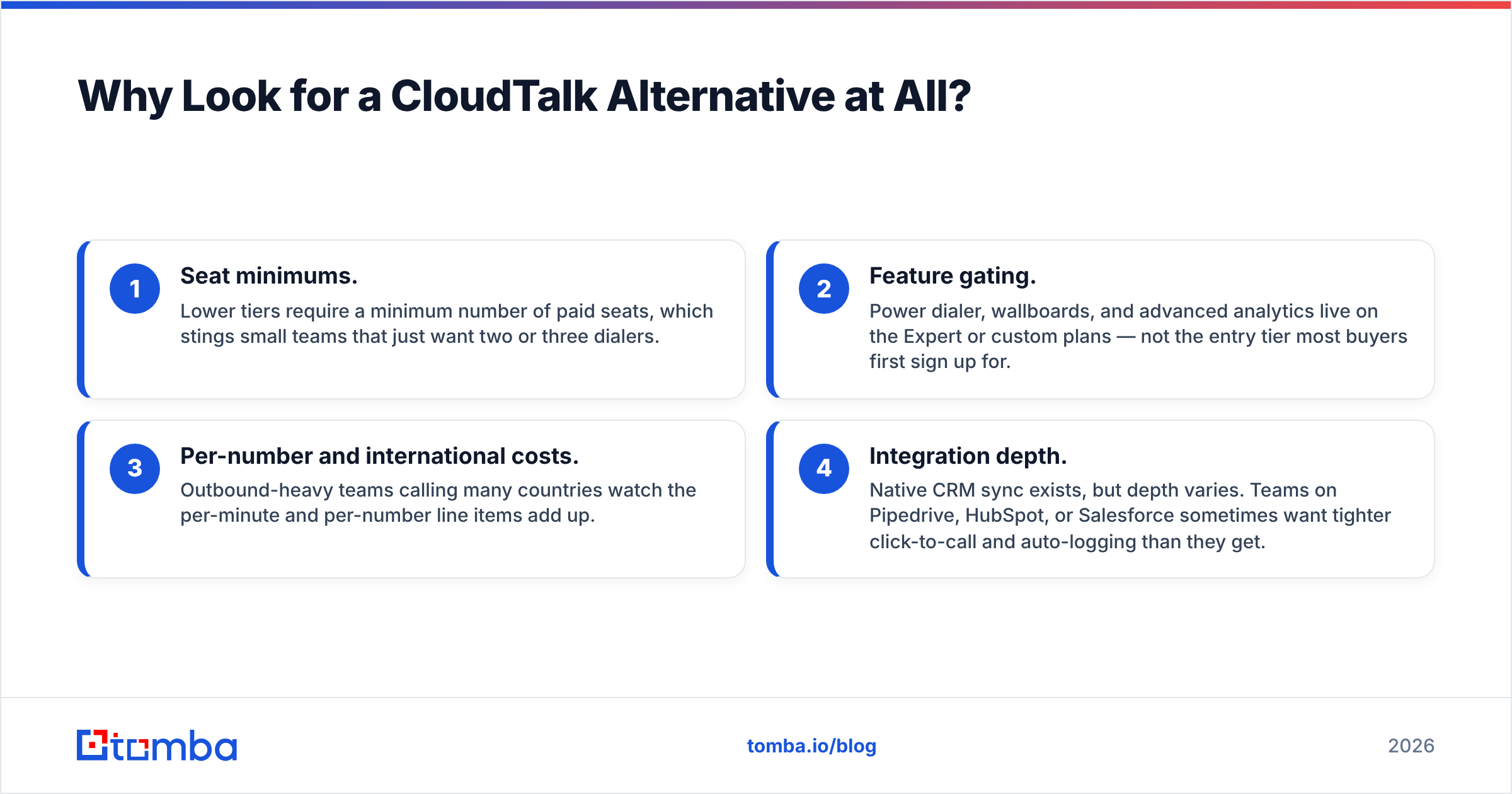
CloudTalk is a legitimate product with 4,000+ customers and strong reviews on G2. Teams still leave for four recurring reasons:
Seat minimums. Lower tiers require a minimum number of paid seats, which stings small teams that just want two or three dialers.
Feature gating. Power dialer, wallboards, and advanced analytics live on the Expert or custom plans — not the entry tier most buyers first sign up for.
Per-number and international costs. Outbound-heavy teams calling many countries watch the per-minute and per-number line items add up.
Integration depth. Native CRM sync exists, but depth varies. Teams on Pipedrive, HubSpot, or Salesforce sometimes want tighter click-to-call and auto-logging than they get.
None of these make CloudTalk bad. They make it a specific fit — and if you are outside that fit, one of the tools below will cost less or do more.

What Should a CloudTalk Alternative Actually Do?#
Before comparing logos, get clear on the four capabilities that separate a real business phone system from a glorified softphone. When you evaluate any option, score it on these:
Dialer type. Manual click-to-call is table stakes. Power, predictive, and parallel dialers multiply connect rates for outbound teams — but you only need them if you dial in volume.
CRM integration depth. "Integrates with HubSpot" can mean a one-way contact push or full bidirectional sync with auto-logged call recordings. Confirm which.
Global coverage and cost. Local numbers in the countries you sell into, plus transparent per-minute rates, decide your true monthly bill more than the sticker price does.
Analytics and coaching. Call recording, live listen, whisper, and wallboards turn a phone into a management tool. Support and sales leaders live in these.
A tool can nail dialing and still leave you stuck, because the phone system is only half the equation. The other half is the data feeding it — which we come back to at the end.
The 7 Best CloudTalk Alternatives in 2026#
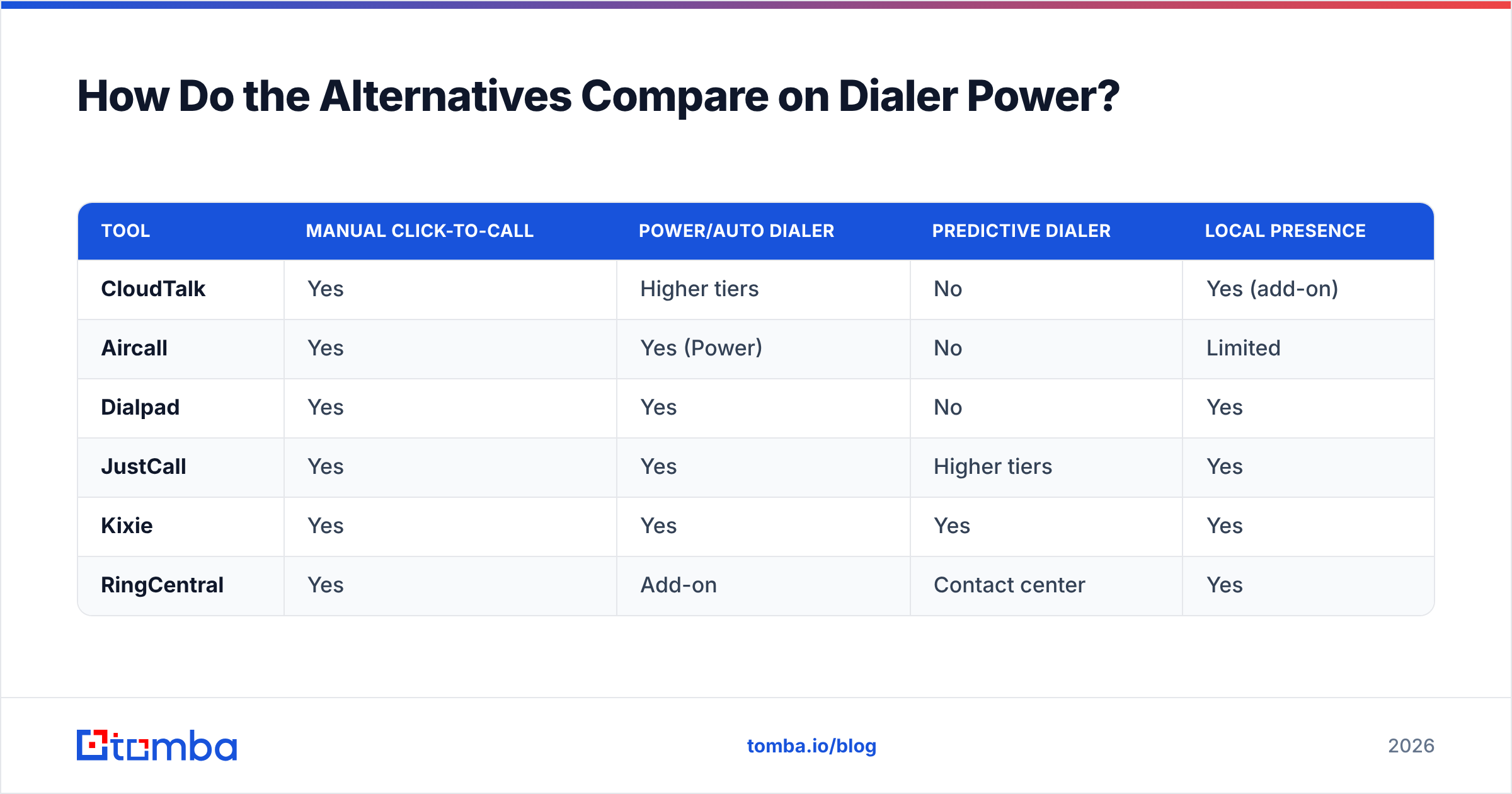
Here is the shortlist, then a detailed breakdown of each.
Tool
Starting price (per user/mo)
Best for
Standout feature
Free trial
CloudTalk
$25 (annual, min seats)
SMB support + sales
Deep call analytics
14 days
Aircall
$30
Support teams
Shared inbox + tags
7 days
Dialpad
$27
AI call coaching
Real-time AI transcription
14 days
JustCall
$19
Outbound SMB
SMS + dialer combo
14 days
Kixie
$35
High-volume outbound
PowerCall + auto-dialer
7 days
RingCentral
$30
All-in-one UCaaS
Phone + meetings + chat
14 days
Ringover
$21
Global teams
Unlimited calls to 110+ countries
7 days
Nextiva
$30
Larger orgs
Unified CX platform
7 days
Prices are entry-tier annual rates and shift often — always confirm on the vendor's own pricing page before you buy.
1. Aircall — The Closest Head-to-Head Rival#
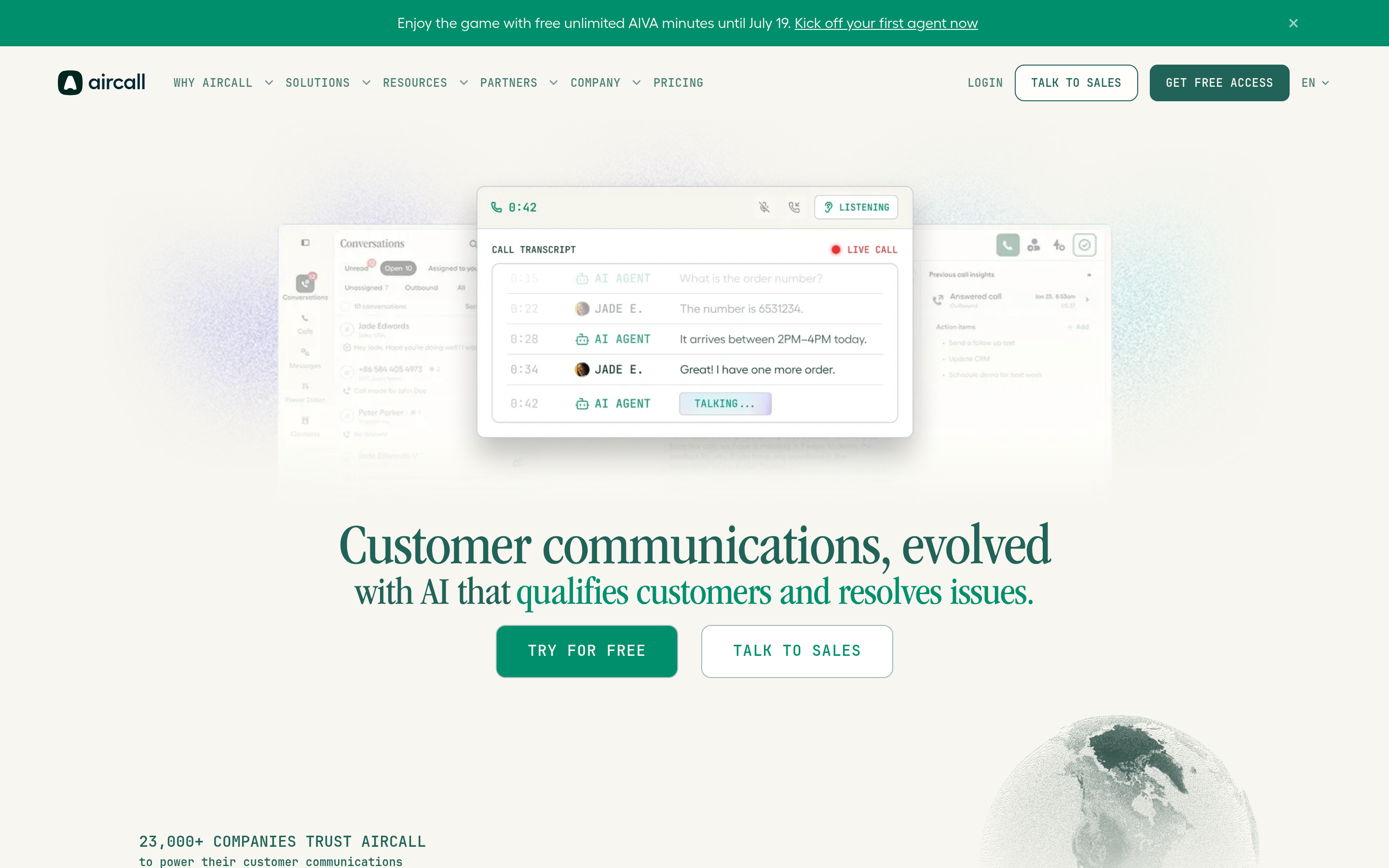
Aircall is the alternative most CloudTalk shoppers compare against, and for good reason: it targets the same SMB support-and-sales buyer. Its shared inbox, call tagging, and clean IVR builder make it a favorite for support teams that treat calls like tickets.
Pros: Polished UI, 100+ integrations, strong team collaboration features.
Cons: Starts higher than CloudTalk, and the analytics are shallower than CloudTalk's on the top tiers.
Best for: Support and success teams that want simplicity over raw dialer horsepower.
2. Dialpad — The AI-First Pick#

Dialpad's edge is AI sales technology baked into the call itself: real-time transcription, live sentiment, and automatic call summaries. For managers who coach reps, seeing the transcript and sentiment score seconds after a call ends is genuinely useful.
Pros: Best-in-class native AI, generous unlimited-calling tiers in the US/Canada.
Cons: AI features shine mostly in English; international coverage is thinner than Ringover's.
Best for: Teams that want coaching and QA automation without bolting on a separate conversation-intelligence tool.
3. JustCall — The Budget Outbound Workhorse#

JustCall undercuts CloudTalk on entry price and bundles SMS, calling, and a sales dialer in one plan. It is popular with small outbound teams that want to text and call from the same thread and log everything to the CRM automatically.
Pros: Low starting price, strong SMS, 100+ integrations.
Cons: Advanced dialer modes and analytics require higher tiers.
Best for: Lean SDR teams that live in Pipedrive or HubSpot and want call-plus-text in one seat.
4. Kixie — The High-Volume Dialer#
If your reps grind through hundreds of dials a day, Kixie's PowerCall dialer and local presence (matching your caller ID to the prospect's area code) push connect rates up. It is built for outbound velocity, not support queues.
Pros: Fast auto-dialer, excellent Salesforce/HubSpot click-to-call, connection-rate features.
Cons: Priciest entry tier on this list; overkill for support-only teams.
Best for: Outbound SDR floors chasing dial volume and connect rates.
5. RingCentral — The All-in-One Platform#
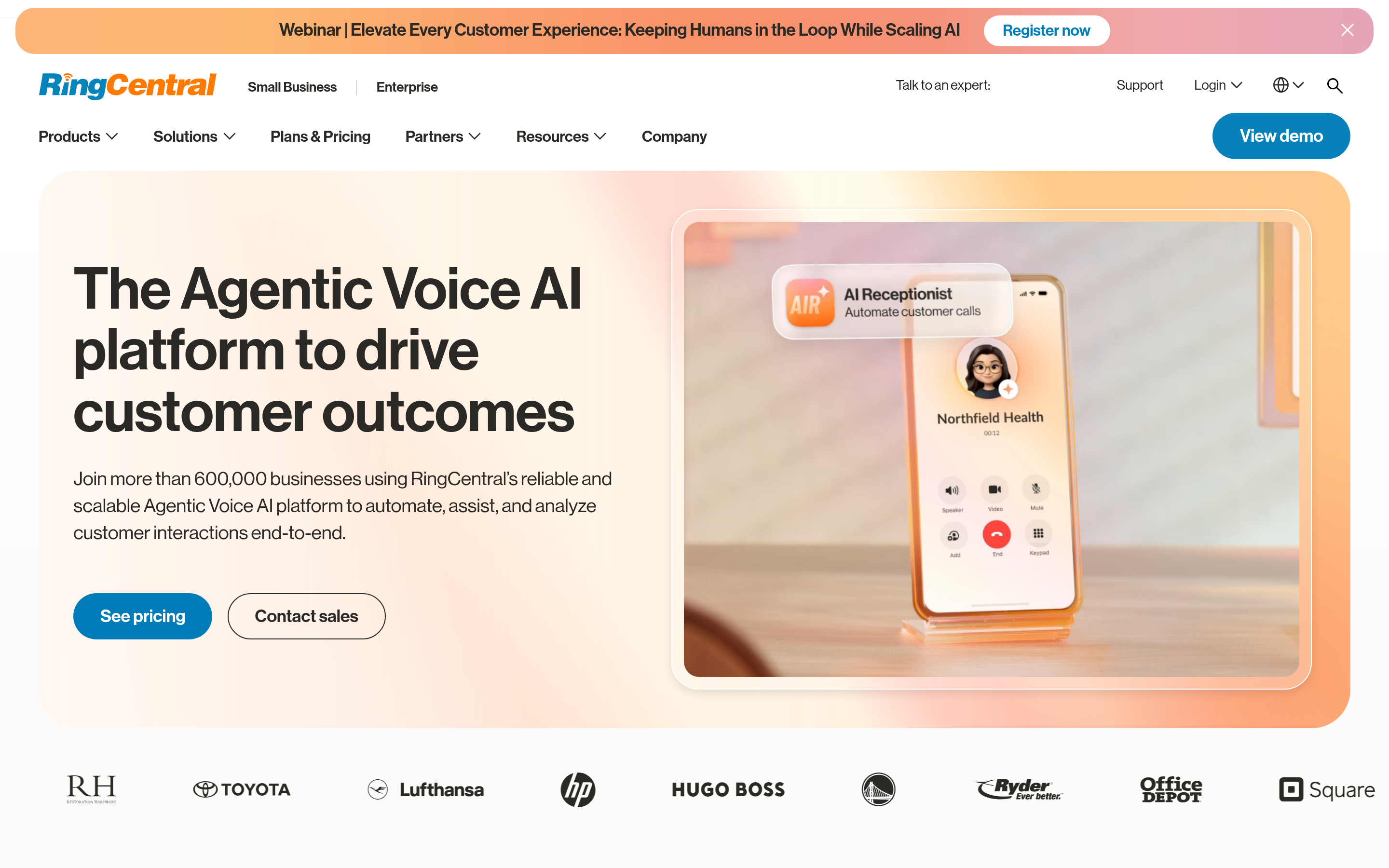
RingCentral (RingEX) is a full UCaaS suite — phone, video meetings, team messaging, and SMS in one contract. If you are consolidating vendors and want the phone system to also replace Zoom and Slack-lite, it is the safe enterprise choice.
Pros: Massive integration marketplace, rock-solid uptime, unified comms.
Cons: More platform than a pure call center needs; contact-center features cost extra.
Best for: Organizations that want one vendor for all real-time communication.
6. Ringover — The Global-Coverage Value Play#
Ringover pairs a low entry price with unlimited calls to 110+ destinations, which makes it a standout for teams selling across borders. Setup is fast and the interface is refreshingly uncluttered.
Pros: Great international value, unlimited calling, quick onboarding.
Cons: Smaller integration catalog than RingCentral or Aircall.
Best for: Distributed and international teams watching per-minute costs.
7. Nextiva — The Larger-Org CX Suite#
Nextiva has grown from a VoIP provider into a broader customer-experience platform, spanning voice, chat, and workflow automation. It fits larger orgs that want CX tooling around the phone, not just the phone.
Pros: Reliable, strong support reputation, scales to contact-center use.
Cons: Entry tier is basic; the interesting features live upmarket.
Best for: Mid-market and larger teams standardizing on one CX vendor.
How Do the Alternatives Compare on Dialer Power?#
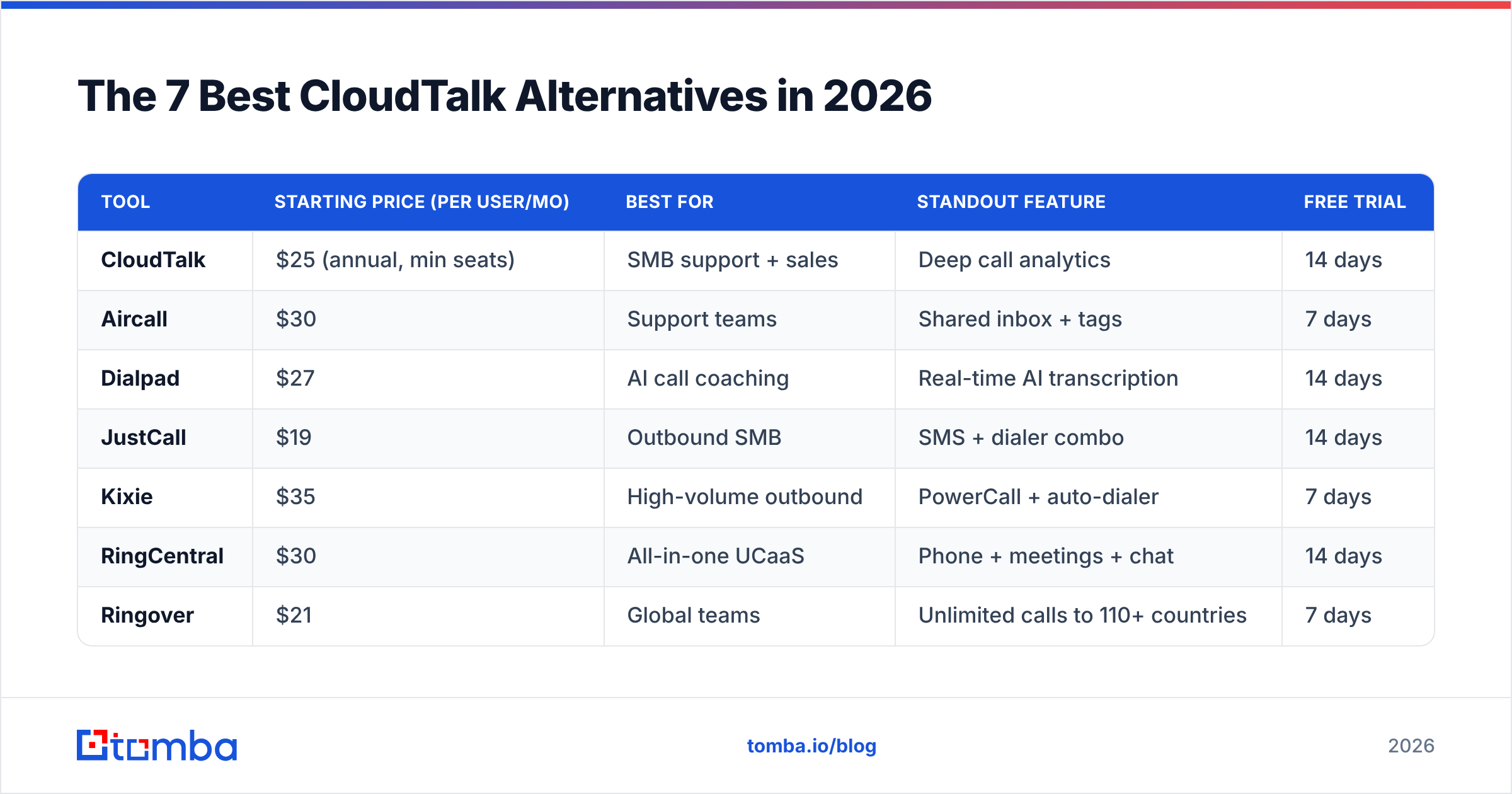
Sticker price hides the feature that matters most for outbound teams: the dialer. Here is how the list stacks up where it counts.
Tool
Manual click-to-call
Power/auto dialer
Predictive dialer
Local presence
CloudTalk
Yes
Higher tiers
No
Yes (add-on)
Aircall
Yes
Yes (Power)
No
Limited
Dialpad
Yes
Yes
No
Yes
JustCall
Yes
Yes
Higher tiers
Yes
Kixie
Yes
Yes
Yes
Yes
RingCentral
Yes
Add-on
Contact center
Yes
For pure outbound velocity, Kixie and JustCall give you the most dialer for the money. For blended support-plus-sales, Aircall and CloudTalk stay competitive. Match the dialer to your motion, not the marketing page.
Is CloudTalk Still the Right Choice for Some Teams?#
Yes. Do not switch just because a list told you to. CloudTalk keeps the edge when:
You want deep, granular call analytics out of the box — its wallboards and reporting are among the best in this bracket.
Your team is support-heavy and values a mature IVR and queue setup.
You already run CloudTalk and the switching cost (porting numbers, retraining, rebuilding integrations) outweighs the monthly savings.
The honest rule: if your complaint is price or dialer power, switch. If your complaint is a single missing integration, check the roadmap first — porting numbers is a real project, not a weekend task.
The Real Bottleneck Isn't the Dialer — It's the Data#
Here is what every "best CloudTalk alternative" list skips. A phone system, no matter how good, can only dial numbers you already have. If half your list is wrong numbers, gatekeepers, or dead lines, a faster dialer just helps you fail faster.
Think of it like a sports car with an empty tank. Kixie's predictive dialer, Dialpad's AI, Aircall's tagging — none of it moves a deal if the contact record is stale. The connect rate you actually get is capped by data quality long before it is capped by dialer features.
That is the layer to fix first, and it sits upstream of whichever phone system you pick:
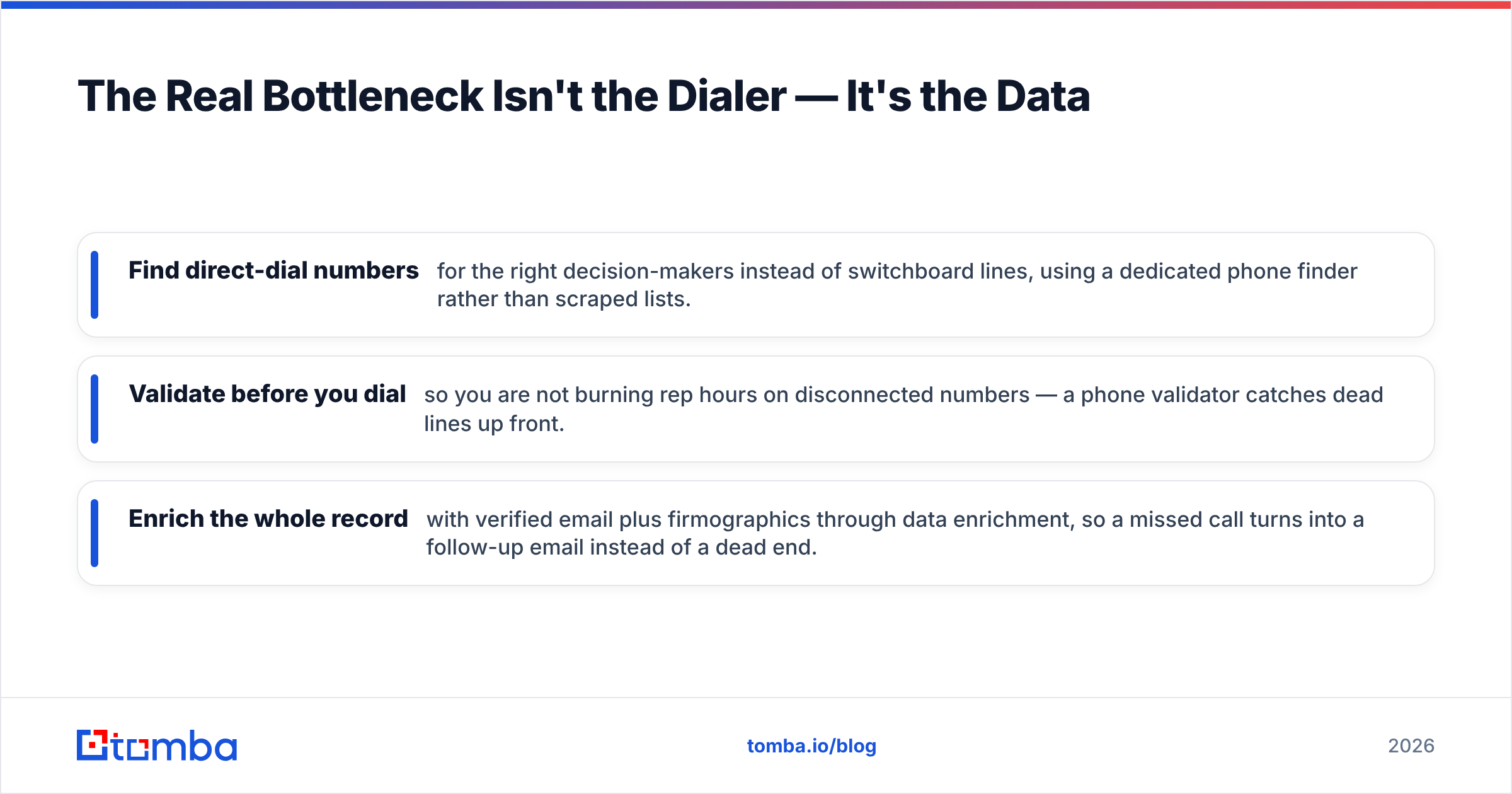
Find direct-dial numbers for the right decision-makers instead of switchboard lines, using a dedicated phone finder rather than scraped lists.
Validate before you dial so you are not burning rep hours on disconnected numbers — a phone validator catches dead lines up front.
Enrich the whole record with verified email plus firmographics through data enrichment, so a missed call turns into a follow-up email instead of a dead end.
Your dialer and your data are two separate purchases. Buy the phone system that fits your motion — then feed it accurate contacts so those dials actually connect.
How to Choose Your CloudTalk Alternative in 3 Steps#
Name your motion. Outbound velocity → Kixie or JustCall. Support → Aircall. All-in-one → RingCentral or Nextiva. International → Ringover. AI coaching → Dialpad.
Price the real bill. Add seat minimums, per-number fees, and per-minute international rates — not just the headline per-seat price. Confirm every figure on the vendor's own pricing page and its competitors'.
Fix the data feeding it. Whichever dialer you choose, make sure the numbers going into it are verified and current. The best phone system on a bad list still loses.
The Bottom Line#
CloudTalk is a strong cloud phone system, but it is not the only good one — and it is rarely the cheapest. For outbound velocity, look at Kixie or JustCall. For support, Aircall. For all-in-one, RingCentral or Nextiva. For global value, Ringover. For AI coaching, Dialpad.
But remember the tank, not just the car. Before you commit to any dialer, get your contact data right. Use Tomba's Email Finder and phone finder to source verified direct emails and numbers, validate them before they hit your dialer, and enrich the records your reps actually call. Start on the free tier (25 searches a month), and if it earns its keep, plans scale from $49/mo — check current Tomba pricing for the tier that matches your outbound volume. Pick the phone system that fits your team; feed it data that fits reality.
Related guides#
Ready to find emails that actually work?
Join 150,000+ professionals who stopped guessing and started sending. Free credits on signup — no credit card required.
Get the Tomba newsletter
Practical outbound tactics and product updates — once every two weeks.
About the author