Cognism vs Coresignal (2026): Which B2B Data Platform Wins?
Cognism sells ready-to-call contacts; Coresignal sells raw web data at scale. This 2026 breakdown compares pricing, coverage, compliance, and fit so you buy the right one.
Cognism and Coresignal both sell B2B data, but they are not the same product and they are rarely bought by the same person. Cognism is a go-to-market sales intelligence platform that hands your reps ready-to-call contacts. Coresignal is a data-as-a-service provider that pipes raw, machine-readable company and employee records to data teams. Picking between them is less "which is better" and more "which problem do you actually have."
This guide breaks down the real differences in 2026 — coverage, pricing model, compliance, delivery, and use cases — so you spend on the platform that matches your workflow instead of paying enterprise money for the wrong shape of data.
TL;DR: Cognism vs Coresignal at a glance#
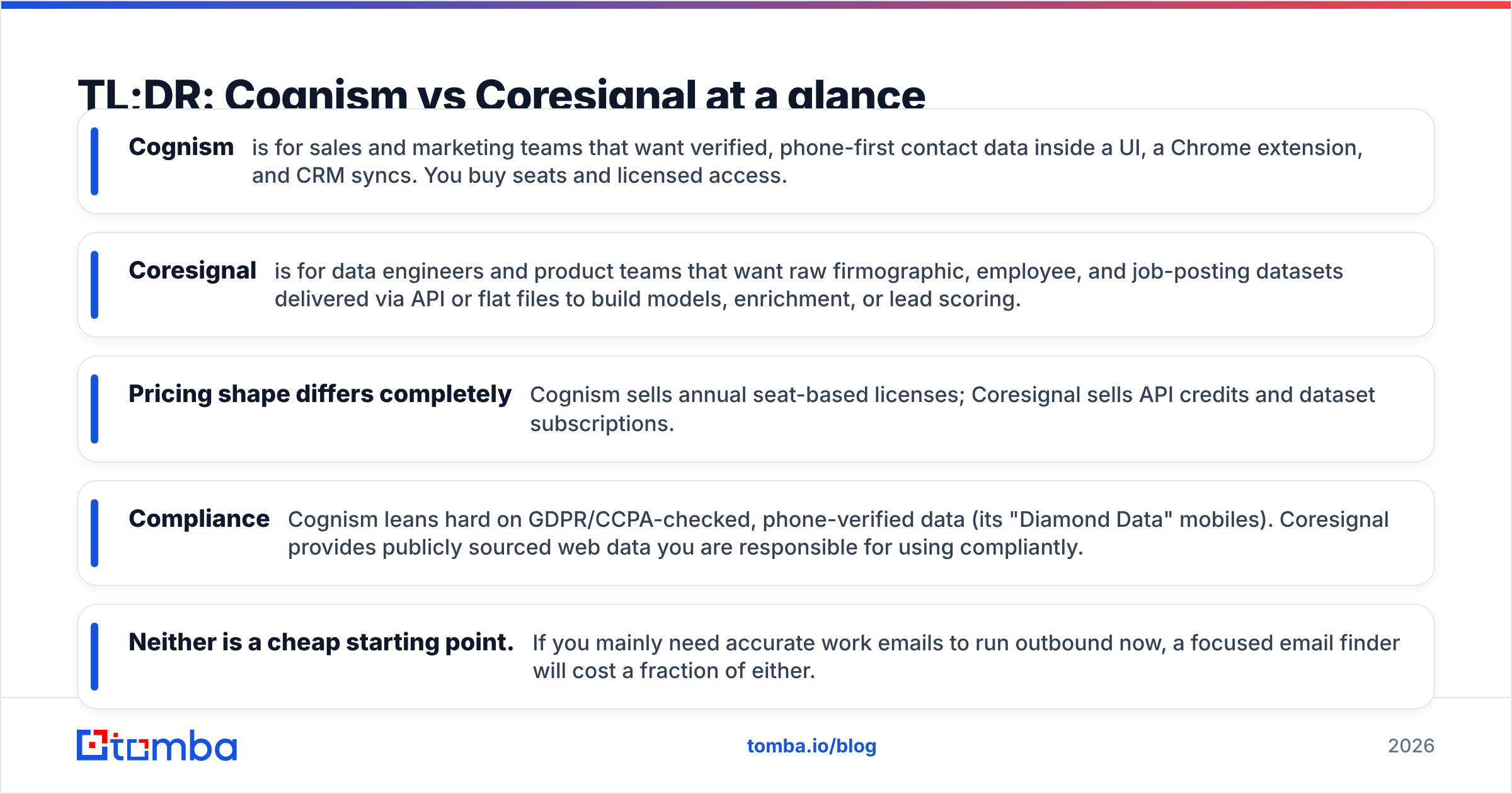
- Cognism is for sales and marketing teams that want verified, phone-first contact data inside a UI, a Chrome extension, and CRM syncs. You buy seats and licensed access.
- Coresignal is for data engineers and product teams that want raw firmographic, employee, and job-posting datasets delivered via API or flat files to build models, enrichment, or lead scoring.
- Pricing shape differs completely: Cognism sells annual seat-based licenses; Coresignal sells API credits and dataset subscriptions.
- Compliance: Cognism leans hard on GDPR/CCPA-checked, phone-verified data (its "Diamond Data" mobiles). Coresignal provides publicly sourced web data you are responsible for using compliantly.
- Neither is a cheap starting point. If you mainly need accurate work emails to run outbound now, a focused email finder will cost a fraction of either.
What is Cognism?#
Cognism is a sales intelligence platform aimed at revenue teams. Think of it as a pre-built contact database with a salesperson-friendly front end: you search by persona, company, or trigger event, then export verified contacts straight into your sequencer or CRM.
Its headline feature is phone-verified mobile numbers — marketed as "Diamond Data" — where numbers are human-checked so reps waste less time on dead dials. Cognism also emphasizes coverage in EMEA, an area where many US-built databases thin out, and it applies GDPR and CCPA checks against do-not-call lists. You can read their positioning directly on cognism.com.
Cognism fits when the buyer is a VP of Sales who wants reps calling and emailing verified humans today, not a data pipeline.
What is Coresignal?#
Coresignal is a data-as-a-service company. Instead of a polished search UI for reps, it delivers large-scale, structured datasets — company firmographics, employee records, and job postings — refreshed frequently and sourced from public web data. Delivery happens through APIs, datasets, or an Elasticsearch-style search interface for developers. Their catalog is documented at coresignal.com.
The analogy: Cognism is a bottled, ready-to-drink product; Coresignal is the water supply you plumb into your own machine. Coresignal customers are usually building something — a lead-scoring model, a competitive-intelligence product, an enrichment layer, or a recruiting tool — where they need raw records at volume and want to control transformation themselves.
Coresignal fits when the buyer is a data engineer or product manager who says "give me the records, we'll handle the rest."
Cognism vs Coresignal: side-by-side comparison#
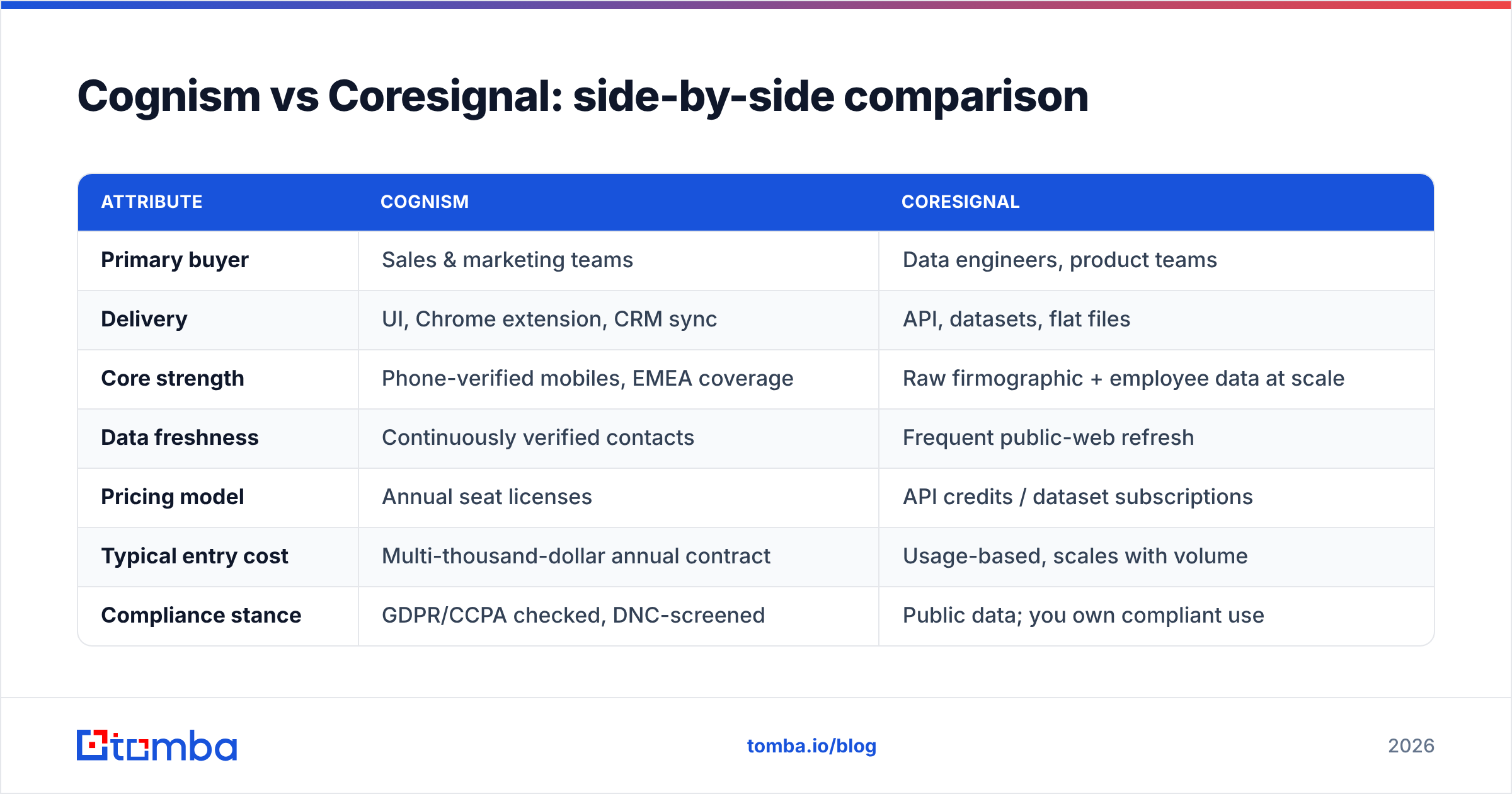
| Attribute | Cognism | Coresignal |
|---|---|---|
| Primary buyer | Sales & marketing teams | Data engineers, product teams |
| Delivery | UI, Chrome extension, CRM sync | API, datasets, flat files |
| Core strength | Phone-verified mobiles, EMEA coverage | Raw firmographic + employee data at scale |
| Data freshness | Continuously verified contacts | Frequent public-web refresh |
| Pricing model | Annual seat licenses | API credits / dataset subscriptions |
| Typical entry cost | Multi-thousand-dollar annual contract | Usage-based, scales with volume |
| Compliance stance | GDPR/CCPA checked, DNC-screened | Public data; you own compliant use |
| Best for | Reps who need to call/email now | Teams building models or products |
The table makes the split obvious: these tools rarely compete for the same dollar. Where they overlap is the moment a growth team asks, "Do we buy contacts or build our own enrichment?" That decision hinges on whether you have engineering capacity and volume to justify raw data.
Is Cognism better than Coresignal?#
Neither is universally better — they solve different problems. Use this rule of thumb:
- Choose Cognism if you need turnkey, verified contacts your reps can act on immediately, with strong European coverage and human-checked phone numbers. You are paying for licensing, verification, and a UI so nobody has to write code.
- Choose Coresignal if you need raw records at scale to power a product, an internal model, or a custom enrichment pipeline, and you have the engineering muscle to transform and maintain it.
- Choose neither (yet) if your real bottleneck is simply finding and verifying work emails for outbound. That is a narrower, cheaper problem — and both platforms are overkill for it.
That third case is more common than vendors admit. Many teams sign a five-figure sales-intelligence contract when what they actually needed was accurate email discovery plus a good sequencer. Before you commit, map your workflow honestly: are you acting on contacts, or building with data?
How does pricing compare?#
Pricing is where the two diverge most sharply, and where buyers get surprised.
Cognism uses annual, seat-based contracts. You typically talk to sales, get scoped by team size and data access tier, and sign for a year. Public per-seat numbers are scarce because deals are custom, but expect a meaningful annual commitment — this is not a swipe-your-card, start-today tool. Reviews on G2 frequently mention that pricing is opaque until you book a demo.
Coresignal uses usage-based pricing: API credits or dataset subscriptions that scale with how many records you pull and how fresh they need to be. That is flexible for a data team that can forecast volume, but it can climb fast at scale, and you carry the cost of building on top of it.
The hidden cost in both cases is the surrounding stack. Cognism still needs a sequencer and CRM. Coresignal needs engineers, storage, and a verification layer before the data is outbound-ready. Neither price tag is the full price.

What about data accuracy and verification?#
Accuracy is the metric that actually determines ROI, because a cheap-but-stale record costs you deliverability and rep time.
Cognism's differentiator is verification — its phone data is human-checked, and it screens against do-not-call registries, which matters most for calling motions and regulated regions. For email, like every provider, freshness decays and you should still verify before a big send.
Coresignal's data is sourced from the public web and refreshed frequently, but because it is raw, verification is your job. Records are structured and plentiful; whether a given email still resolves is something you confirm downstream. That is the trade-off of buying supply instead of a finished product.
Whichever you use, run contacts through an email verifier before you send. Catch-all domains, role addresses, and stale mailboxes slip through every dataset, and a single spike in bounces can tank your sender reputation for weeks. Verification is not optional insurance — it is the difference between landing in the inbox and landing in spam.
Which tool fits which use case?#
Match the platform to the job:
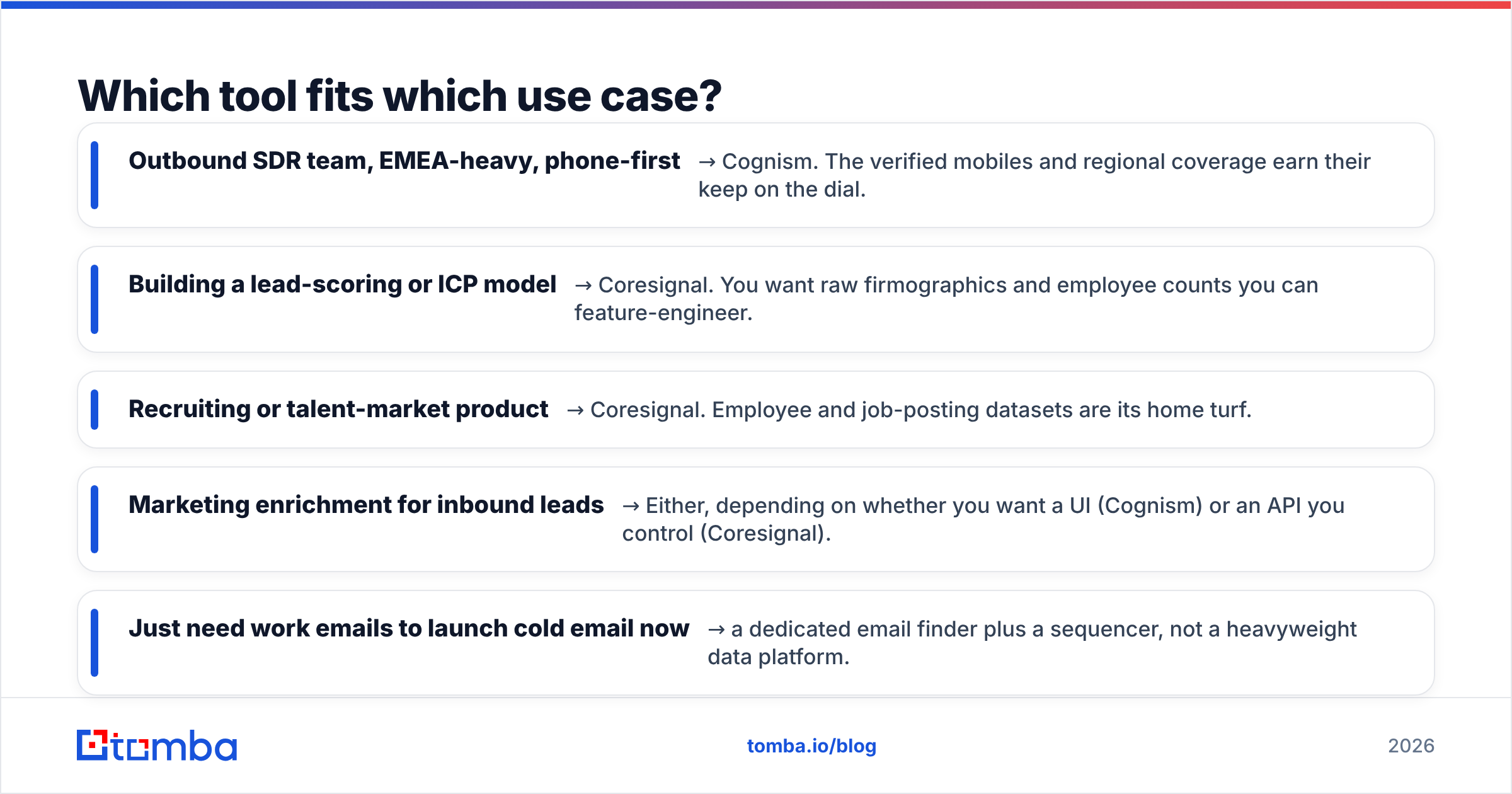
- Outbound SDR team, EMEA-heavy, phone-first → Cognism. The verified mobiles and regional coverage earn their keep on the dial.
- Building a lead-scoring or ICP model → Coresignal. You want raw firmographics and employee counts you can feature-engineer.
- Recruiting or talent-market product → Coresignal. Employee and job-posting datasets are its home turf.
- Marketing enrichment for inbound leads → Either, depending on whether you want a UI (Cognism) or an API you control (Coresignal).
- Just need work emails to launch cold email now → a dedicated email finder plus a sequencer, not a heavyweight data platform.
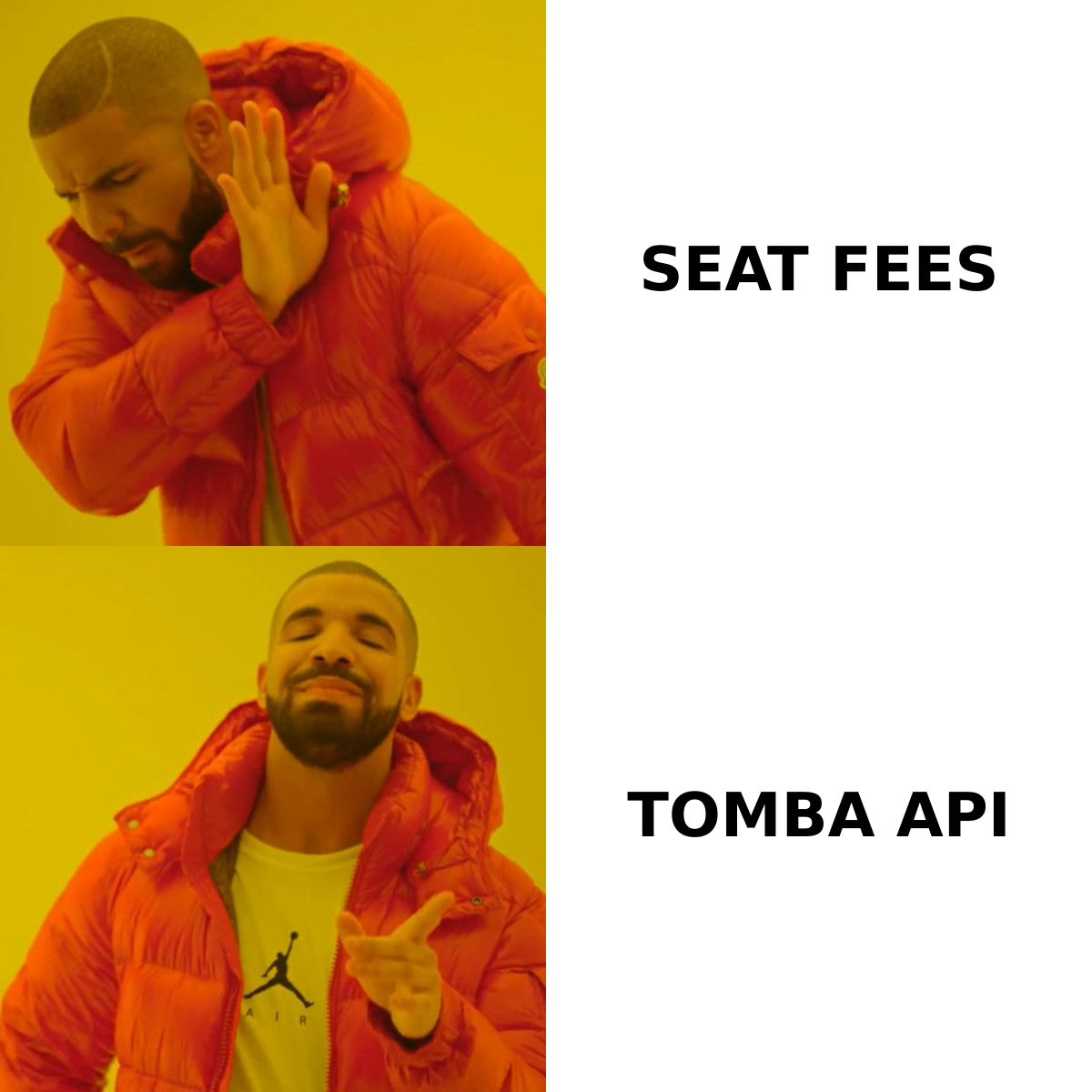
If you fall into that last bucket — and a lot of early-stage and mid-market teams do — the fastest path is a tool built specifically to find and confirm addresses. Tomba's domain search pulls every discoverable email on a company domain with sources attached, and its Tomba pricing starts free at 25 searches a month, with paid plans from $49/mo — a rounding error next to an annual sales-intelligence contract.
Do you even need Cognism or Coresignal?#
Be honest about scale and workflow before signing anything.
You genuinely need Cognism when you have a funded sales team, a calling motion, European targets, and no appetite to build data infrastructure. You need Coresignal when you have engineers, real volume, and a product or model that consumes structured records continuously. Both make sense at that altitude.
But if you are running outbound as a founder, a small team, or a growth pod, the honest answer is often "not yet." The core job — find the right person, get a valid email or phone, load it into a sequence — can be done with lighter, cheaper, faster tooling. You can always graduate to a full data platform once volume and headcount justify the contract.
The bottom line#
Cognism and Coresignal are not really rivals; they are two answers to two different questions. Cognism sells finished, verified contacts to sales teams who want to act now. Coresignal sells raw, scalable data to builders who want to control the pipeline. Pick based on whether you are consuming data or constructing with it — and don't overbuy just because a platform looks impressive in a demo.
If your actual need is accurate email discovery to fuel outbound today, skip the enterprise contract for now. Start with the Tomba Email Finder — find professional emails by name, company, or domain, verify them in the same workflow, and export straight to your sequencer. It is free to try, transparent on pricing details, and you can be running verified outreach in minutes instead of waiting on a quarter-long procurement cycle. Scale to a full data platform when — and only when — your volume genuinely demands it.
Related guides#
// get started
Find, verify and enrich your first contacts today
Start on the free plan with 25 searches a month, then scale when your team is ready.
Free plan · No credit card required · GDPR & CCPA
// about the author