Cognism vs Mattermark: B2B Sales Data Compared (2026)
One platform still ships fresh B2B data; the other quietly shut down years ago. Here's an honest Cognism vs Mattermark breakdown — plus what to actually use in 2026.
Cognism vs Mattermark: B2B Sales Data Compared (2026)
If you're researching cognism vs mattermark in 2026, here's the blunt truth up front: this isn't really a fair fight. Cognism is a live, growing B2B sales-intelligence platform. Mattermark — the once-loved startup-and-company database — was acquired years ago and no longer operates as the standalone product most people remember. So the real question isn't "which one wins," it's "what do I actually use now?"
This post gives you the honest history, a feature-by-feature look at where each stood, and a practical framework for picking a modern data stack that won't leave you stranded again.
TL;DR#
- Cognism is an active enterprise B2B sales-intelligence platform known for phone-verified mobile numbers ("Diamond Data") and strong EU/GDPR coverage.
- Mattermark was a company-and-funding intelligence tool popular with VCs and startup sellers; it was acquired (FullContact, then later resold) and is effectively defunct as the product buyers remember.
- If you're comparing the two today, you're really choosing between Cognism and a category of modern alternatives — not Mattermark.
- Cognism is powerful but priced for enterprise; most teams overpay for coverage they never use.
- For accurate, affordable contact data — verified emails and phone numbers on demand — a lean tool like Tomba often beats both on cost per usable record.

What is Cognism?#
Cognism is a B2B sales intelligence platform built for outbound and demand-gen teams. Its pitch centers on data compliance and mobile-number accuracy. The headline feature, "Diamond Data," is a set of phone numbers that have been human-verified, which pushes connect rates higher than scraped or inferred numbers.
Cognism's strengths:
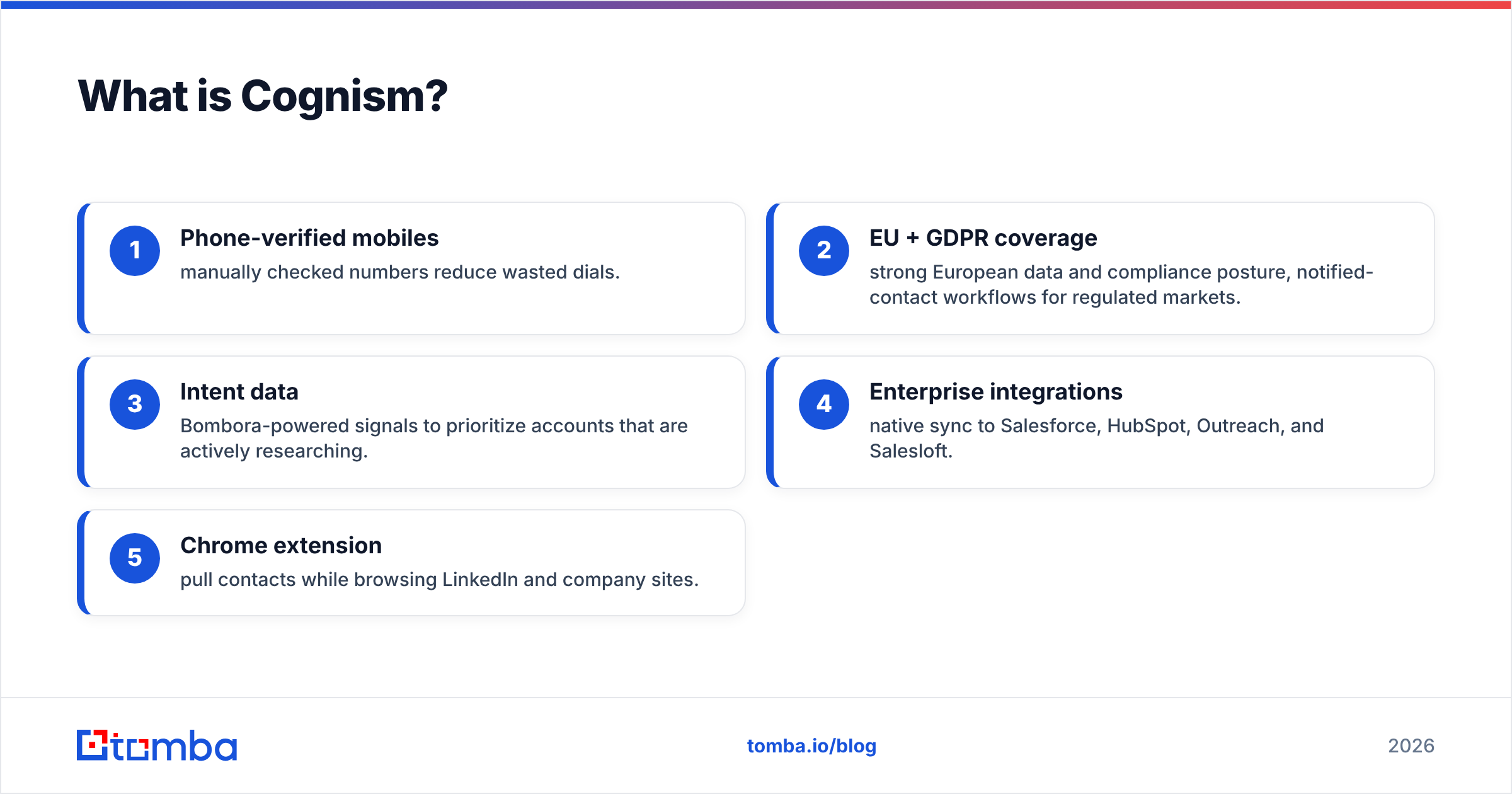
- Phone-verified mobiles — manually checked numbers reduce wasted dials.
- EU + GDPR coverage — strong European data and compliance posture, notified-contact workflows for regulated markets.
- Intent data — Bombora-powered signals to prioritize accounts that are actively researching.
- Enterprise integrations — native sync to Salesforce, HubSpot, Outreach, and Salesloft.
- Chrome extension — pull contacts while browsing LinkedIn and company sites.
The catch is price and packaging. Cognism sells annual contracts, often gates features by tier, and quotes are custom. For a well-funded revenue org it's defensible. For a small team that just needs valid emails and phones, it's a lot of platform to pay for.
What was Mattermark?#
Mattermark was a company-intelligence and deal-signal database that launched in the early 2010s and became a favorite among venture capitalists, startup researchers, and founders selling into the tech ecosystem. It tracked funding rounds, growth signals, headcount trends, and web traffic to help you spot fast-rising companies before everyone else did.
Then the business side happened. Mattermark was acquired by FullContact in 2017, and the product was later sold again and wound down as a standalone offering. If you visit looking for the tool you used in 2016, you won't find the same thing. That's the single most important fact in any cognism vs mattermark comparison: one competitor isn't really in the ring anymore.
This matters beyond nostalgia. It's a reminder that in the B2B data world, vendor continuity is a feature. A cheaper tool that disappears costs you more than a slightly pricier one that keeps shipping.
Cognism vs Mattermark: side-by-side comparison#
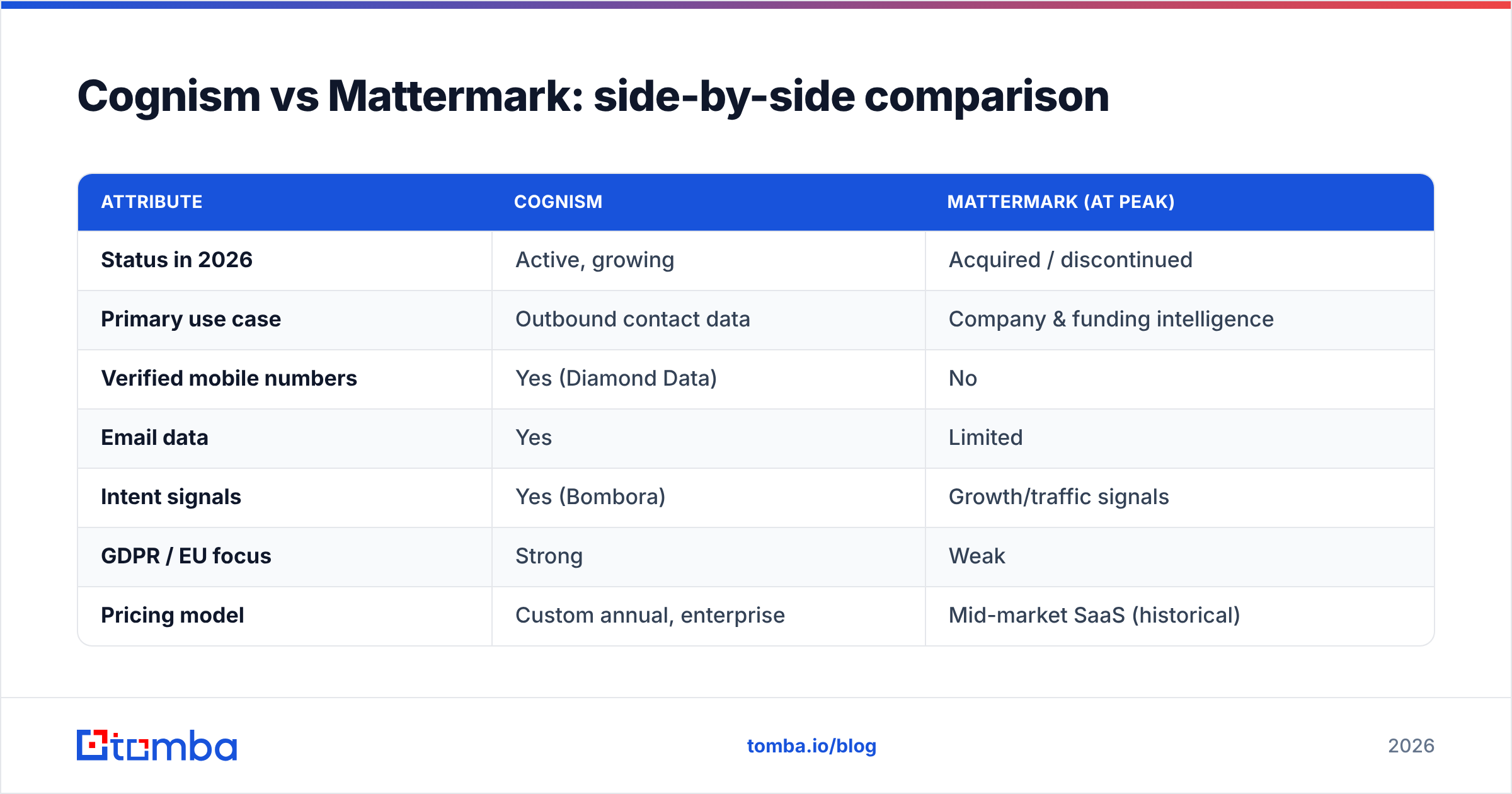
Here's how the two stack up on the attributes buyers actually care about. Mattermark is evaluated as the product at its peak, since that's what people remember.
| Attribute | Cognism | Mattermark (at peak) |
|---|---|---|
| Status in 2026 | Active, growing | Acquired / discontinued |
| Primary use case | Outbound contact data | Company & funding intelligence |
| Verified mobile numbers | Yes (Diamond Data) | No |
| Email data | Yes | Limited |
| Intent signals | Yes (Bombora) | Growth/traffic signals |
| GDPR / EU focus | Strong | Weak |
| Pricing model | Custom annual, enterprise | Mid-market SaaS (historical) |
| Best fit | Enterprise SDR teams | VCs, startup research |
The takeaway: these tools solved different problems. Cognism is a contact-and-outreach data engine. Mattermark was a market-mapping and signal tool. If your goal is finding and reaching decision-makers, Cognism is the closer comp — but it isn't your only option, and it's rarely the cheapest.
Is Cognism worth it in 2026?#
Cognism is worth it if you're an enterprise team dialing EU mobiles at scale and you'll actually use intent data and CRM enrichment. The verified-phone accuracy is real, and compliance-heavy industries value the GDPR workflows.
It's overkill if you're a startup, a solo founder, an agency, or a lean SDR pod that mainly needs:
- Valid work emails for a target list
- Occasional phone numbers
- Data enrichment on inbound leads
- Pay-as-you-go pricing without a sales call
That's where the market has shifted. Buyers increasingly assemble a stack from focused tools instead of paying a single platform tax. You can pair a precise email finder with an email verifier and a phone finder and cover 90% of Cognism's day-to-day value at a fraction of the cost — while keeping the flexibility to swap any component out.

What should you use instead of Mattermark?#
Since Mattermark is off the table, you need a replacement plan, not a rival. Split the job Mattermark used to do into two:
- Company/market intelligence — Crunchbase, PitchBook, or G2 buyer-intent data cover the funding-and-signals side.
- Contact data (the part sales actually runs on) — a modern email-and-phone finder covers reaching the people inside those companies.
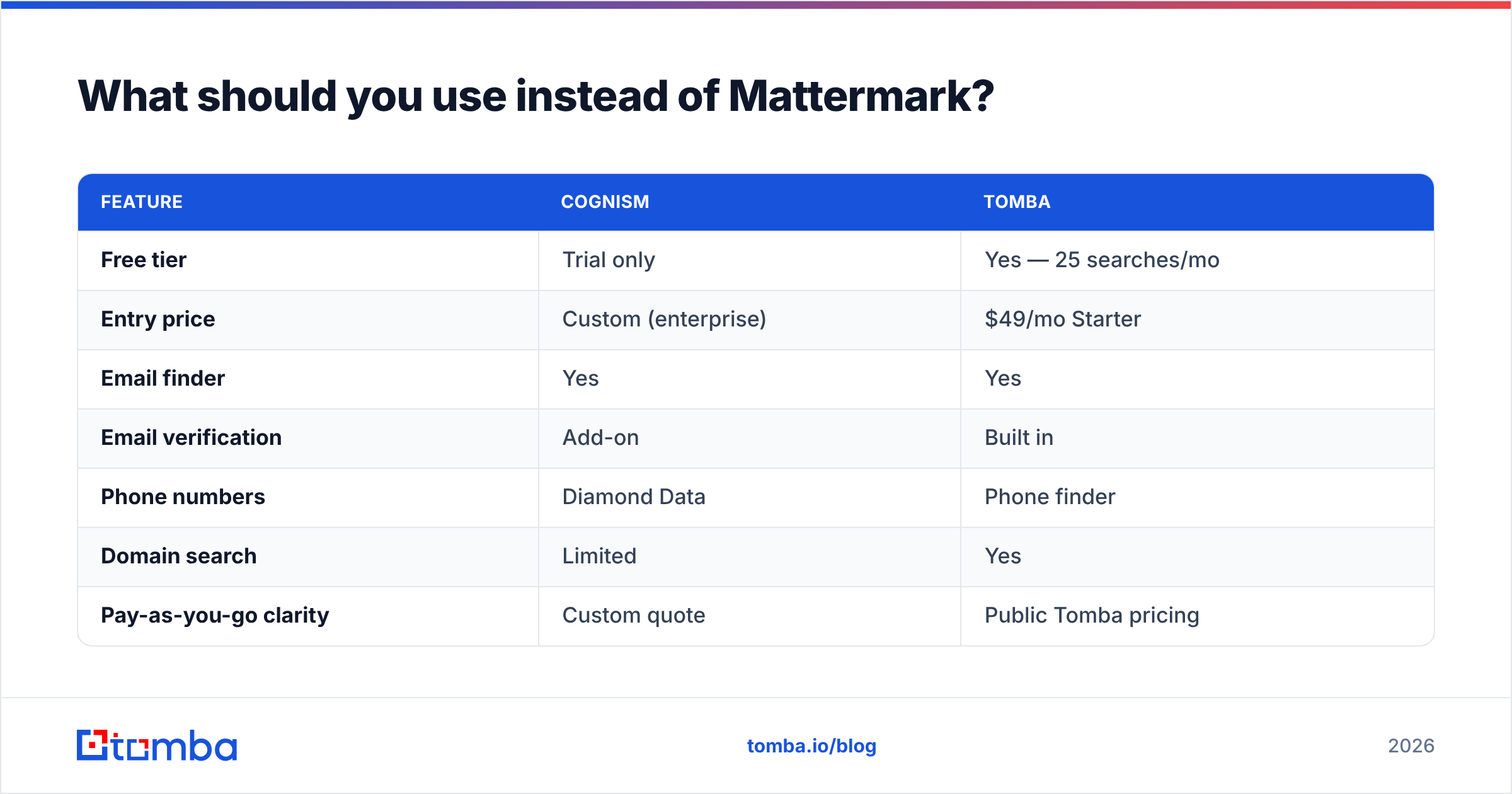
For the contact-data half, the buying criteria are simple: accuracy, price transparency, verification, and a free way to test before you commit. Here's how a lean modern stack compares to Cognism on the metrics that decide cost per usable contact.
| Feature | Cognism | Tomba |
|---|---|---|
| Free tier | Trial only | Yes — 25 searches/mo |
| Entry price | Custom (enterprise) | $49/mo Starter |
| Email finder | Yes | Yes |
| Email verification | Add-on | Built in |
| Phone numbers | Diamond Data | Phone finder |
| Domain search | Limited | Yes |
| Pay-as-you-go clarity | Custom quote | Public Tomba pricing |
| Contract | Annual | Monthly or annual |
The point isn't that Tomba does everything Cognism does — it doesn't ship enterprise intent-data suites. The point is that for the core outbound job, transparent pricing and self-serve verification usually win on ROI. You can run a domain search to map a company's contacts, verify each address, and export — no annual commitment.
How accurate is the data, really?#
Data accuracy is the whole ballgame, and it decays fast. People change jobs, companies rebrand, inboxes get deactivated. Cognism invests heavily in re-verification, which is a large part of why it charges what it does. Any tool that stops re-checking its database — the way a discontinued product does — rots quietly until it's actively harmful to send to.
Three habits protect you regardless of vendor:
- Verify before every send. Even fresh data should pass a real-time check. Run lists through an email verification step to strip invalids and protect your sender reputation.
- Handle catch-all domains deliberately. Many corporate domains accept everything, which masks bad addresses. A dedicated catch-all verifier gives you a real confidence signal instead of a false "valid."
- Enrich, don't just append. Pull fresh title, company, and contact fields at the moment of outreach with data enrichment rather than trusting a months-old record.
Do those three things and the accuracy gap between a premium platform and a focused finder narrows dramatically — because you're validating at the point of use, not trusting a static export.
Cognism vs Mattermark: which is right for you?#
Decide by what you're actually trying to do:
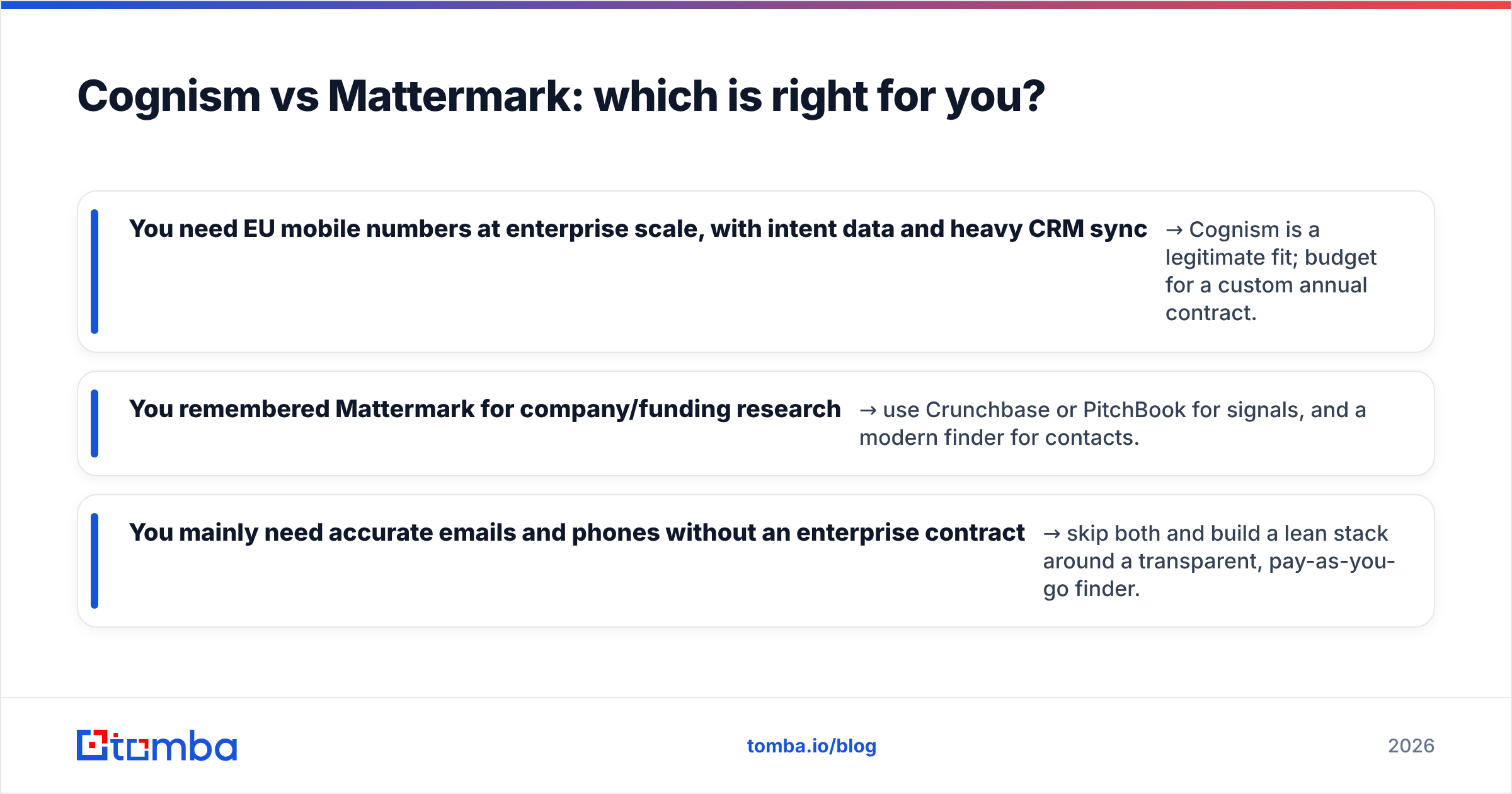
- You need EU mobile numbers at enterprise scale, with intent data and heavy CRM sync → Cognism is a legitimate fit; budget for a custom annual contract.
- You remembered Mattermark for company/funding research → use Crunchbase or PitchBook for signals, and a modern finder for contacts.
- You mainly need accurate emails and phones without an enterprise contract → skip both and build a lean stack around a transparent, pay-as-you-go finder.
Most teams reading a "vs" post like this fall into the third bucket. They don't need a platform; they need reliable contact data they can trust and afford. Chasing the biggest logo usually means paying for coverage you'll never touch.
If you want broader context on category leaders and pricing, Cognism's own site and third-party reviews on Capterra are worth a look before you commit to any annual deal.
The bottom line#
The cognism vs mattermark matchup is really a lesson: pick vendors that will still exist next year, and don't overpay for a platform when a focused tool does the job. Cognism is strong for enterprise outbound; Mattermark is a cautionary tale about betting on a single tool that can vanish.
If your real goal is finding and reaching decision-makers without an enterprise contract, start with the Tomba Email Finder. Find professional emails by domain, name, or company, verify them in the same workflow, and layer in phone numbers when you need them — on a free tier that lets you test before you spend a cent. Transparent pricing, monthly billing, and data you re-verify at send time. That's a stack that won't leave you stranded.
Related guides#
Ready to find emails that actually work?
Join 150,000+ professionals who stopped guessing and started sending. Free credits on signup — no credit card required.
Get the Tomba newsletter
Practical outbound tactics and product updates — once every two weeks.
About the author