10 Best Commsor Alternatives in 2026 for Warm B2B Outreach
Commsor's warm-intro network is powerful, but it isn't the only way to turn relationships and signals into pipeline. Here are 10 alternatives worth testing in 2026.

Commsor has become shorthand for "community-led growth" and, more recently, the warm-intro network that helps go-to-market teams reach buyers through trusted relationships instead of cold blasts. It's a strong idea. But it isn't the only way to build pipeline from relationships, signals, and clean contact data — and depending on your motion, it may not even be the best fit for your budget or your stack.
This guide breaks down 10 Commsor alternatives worth testing in 2026, what each one is actually good at, and how to combine a signal or intro layer with reliable contact data so your outreach lands.
TL;DR#
- Commsor excels at warm intros and community-led GTM, but teams often want cheaper, more data-forward, or more automated options.
- The best alternative depends on your motion: warm intros (The Swarm, Champify), buyer/community signals (Common Room, Warmly, UserGems), or data + enrichment (Clay, Tomba).
- No intro network works without accurate contact data underneath it — that's the layer most teams underinvest in.
- Tomba pairs well with any of these as the email-finding and verification engine, starting free and scaling to $49/mo.
- Skip the "one tool to rule them all" trap. Pick a signal source, a data source, and a sequencing tool that fit together.
What is Commsor and why look for alternatives?#
Commsor started as a community management platform and evolved into a warm-intro network: it maps the relationships across your team, investors, and advisors, then surfaces who can introduce you to a target account. The pitch is simple — a warm intro converts far better than a cold email, so mine your collective network before you ever send outreach.
That model works, but there are real reasons teams shop around:
- Coverage gaps — a warm-intro network only helps when someone in your extended graph actually knows the buyer. For net-new segments, you still need cold-but-smart outreach.
- Pricing and seats — relationship-intelligence and community tools can get expensive as you add seats and data.
- Motion mismatch — if you're running signal-based outbound (job changes, funding, website visits), a pure intro network isn't the right primary engine.
- Data quality — intros get you a name; you still need a verified email or phone to follow up when the intro stalls.
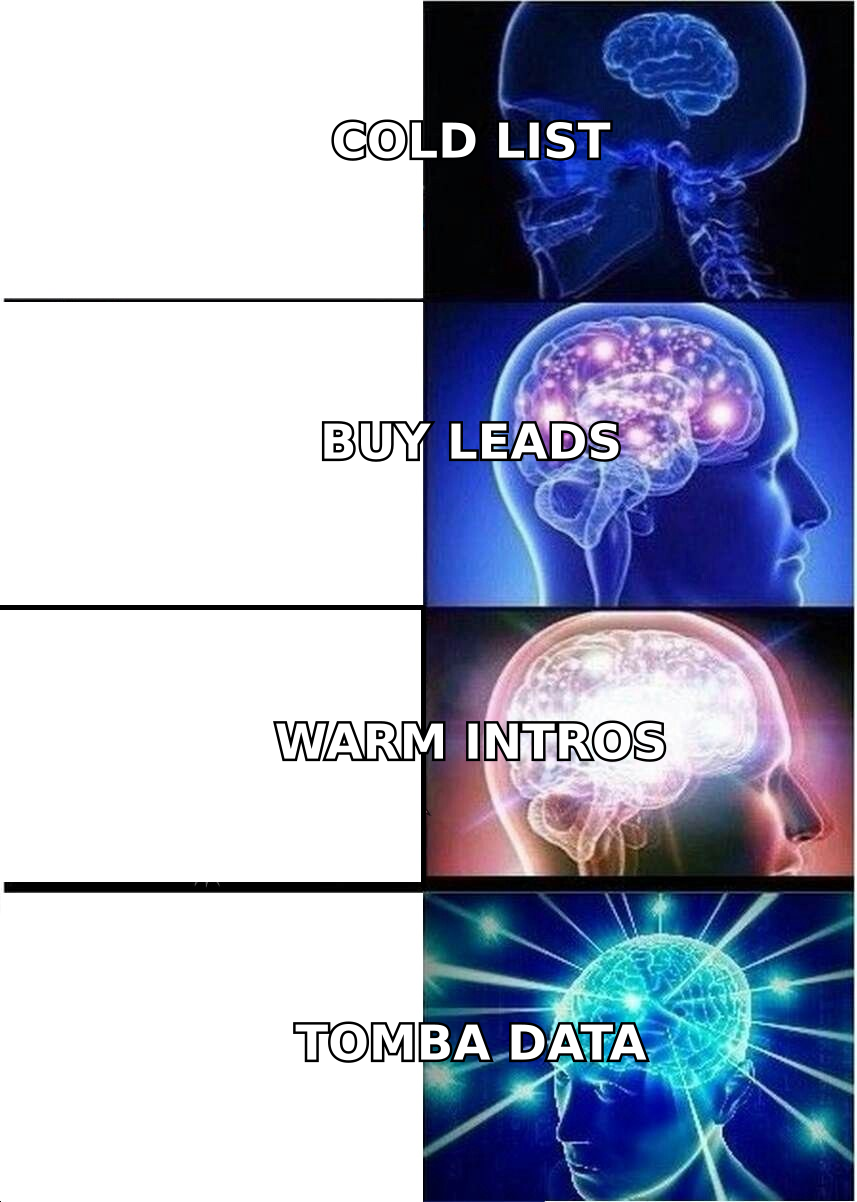
If any of those hit home, the alternatives below cover the three jobs Commsor touches: warm intros, buyer signals, and contact data.
How do the top Commsor alternatives compare?#
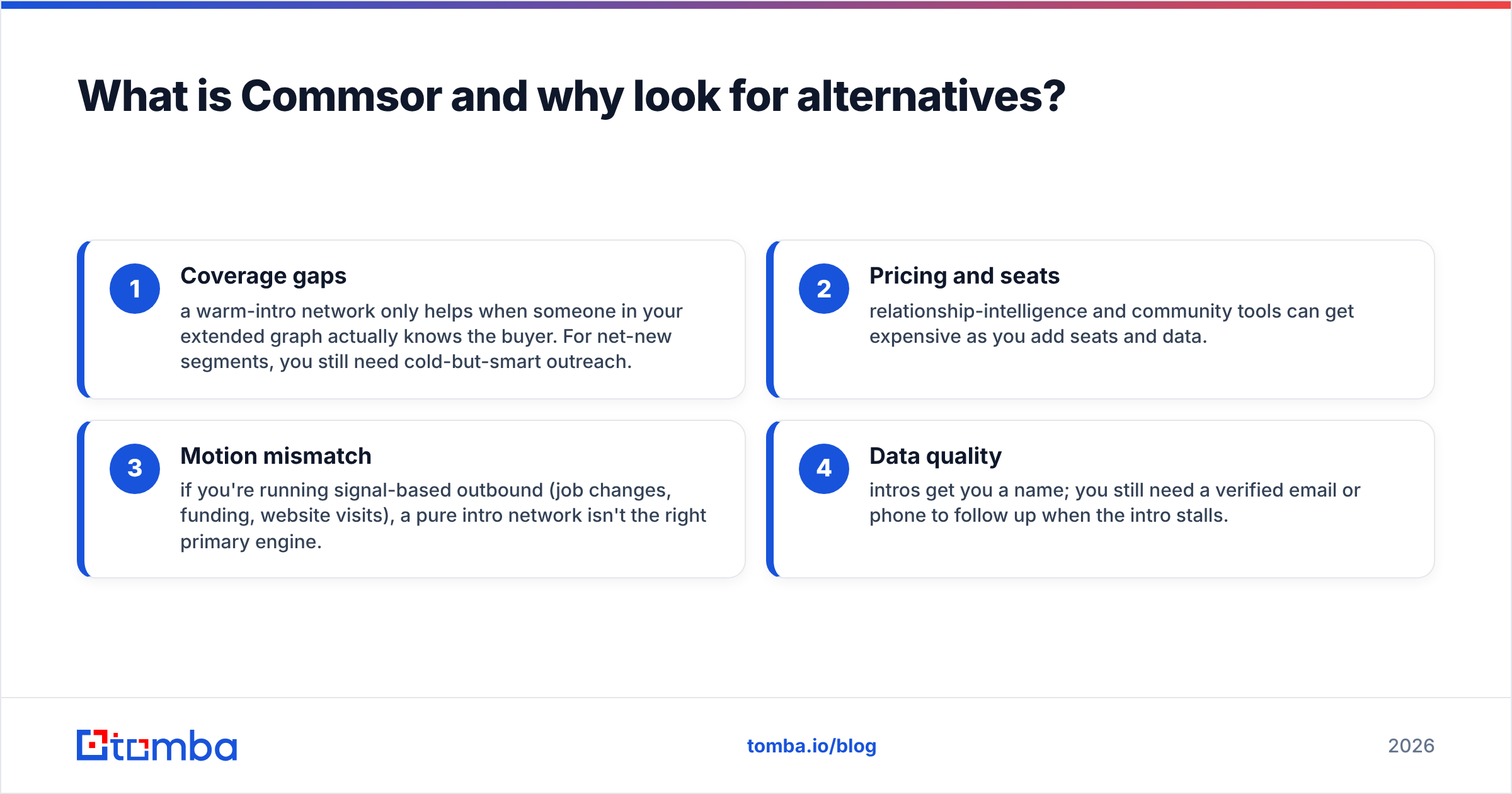
Here's a side-by-side of the main contenders by primary job, starting price, free option, and best-fit use case. Prices are the publicly listed entry points and change often — always confirm on the vendor's own pricing page.
| Tool | Primary job | Starting price | Free option | Best for |
|---|---|---|---|---|
| Commsor | Warm-intro network | Custom | Limited | Community-led GTM, intros |
| The Swarm | Warm-intro / relationship graph | Custom | Free tier | Mapping team + investor network |
| Champify | Champion / job-change signals | Custom | No | Selling to past champions |
| Common Room | Community + intent signals | Free / custom | Yes | Product-led + community signals |
| Warmly | Website de-anonymization | ~$700/mo | Free tier | Warm inbound + visitor reveal |
| UserGems | Job-change + buying signals | Custom | No | Tracking contacts across moves |
| Clay | Data orchestration | $149/mo | Free tier | Enrichment + workflow automation |
| Tomba | Email finding + verification | $49/mo | 25 free/mo | Verified contact data at scale |
The key takeaway: these tools aren't strict substitutes. Commsor is a relationship layer; Clay and Tomba are data layers; Warmly and Common Room are signal layers. Most high-performing teams stack one from each category rather than betting on a single platform.
Which alternative fits a warm-intro motion?#
If what you love about Commsor is the intro graph itself, look at The Swarm and Champify first.
The Swarm builds a relationship graph from your team, advisors, and investors, then tells you the warmest path into a target account. It's the closest structural match to Commsor's network angle, and its free tier makes it easy to test whether your collective network actually covers your ICP before you commit budget.
Champify takes a narrower but high-converting angle: it tracks when your past customers and champions change jobs, so you can reach out to someone who already trusts your product at their new company. That's arguably the highest-intent warm signal in B2B, and it complements — rather than replaces — a broad intro network.
Both share Commsor's weakness: they light up when a relationship exists and go quiet when it doesn't. That's why the data layer matters. When there's no intro path, you fall back to finding and verifying the buyer's email directly with a tool like Tomba Email Finder, then running a personalized cold sequence.
Which alternative fits a signal-based motion?#
If you care less about intros and more about timing — reaching accounts exactly when they show intent — three tools stand out.
- Common Room aggregates product usage, community activity, and intent signals into a single view of "who's warm right now." It's especially strong for product-led and community-driven companies where signals live across Slack, GitHub, docs, and your app.
- Warmly focuses on de-anonymizing website traffic and firing real-time alerts when a target account is browsing. Pair it with a website visitor reveal workflow and you can act on inbound interest within minutes instead of days.
- UserGems monitors your existing contacts and surfaces job changes, new buying-committee members, and champion moves so no relationship goes stale.
Signal tools answer when and which account. They rarely give you a clean, deliverable email for the specific person you now want to reach. That handoff — signal to verified contact — is where an email verifier keeps your bounce rate low and your sender reputation intact.

Which alternative fits a data-and-automation motion?#
For teams that treat GTM as a data problem, Clay and Tomba are the workhorses.
Clay is a spreadsheet-meets-automation canvas that chains together dozens of data providers, waterfalls enrichment, and pushes results into your CRM or sequencer. It's incredibly flexible, but it's a builder's tool — you're wiring workflows, managing credits across providers, and paying $149/mo before add-ons. The power is real; so is the learning curve.
Tomba solves the narrower but universal problem underneath every one of these tools: finding and verifying the right email address. You can search by domain, by name, or by company, verify addresses in bulk, and check catch-all domains before you send. Where Commsor gives you an intro and Warmly gives you a signal, Tomba gives you the deliverable contact you actually reach out to.
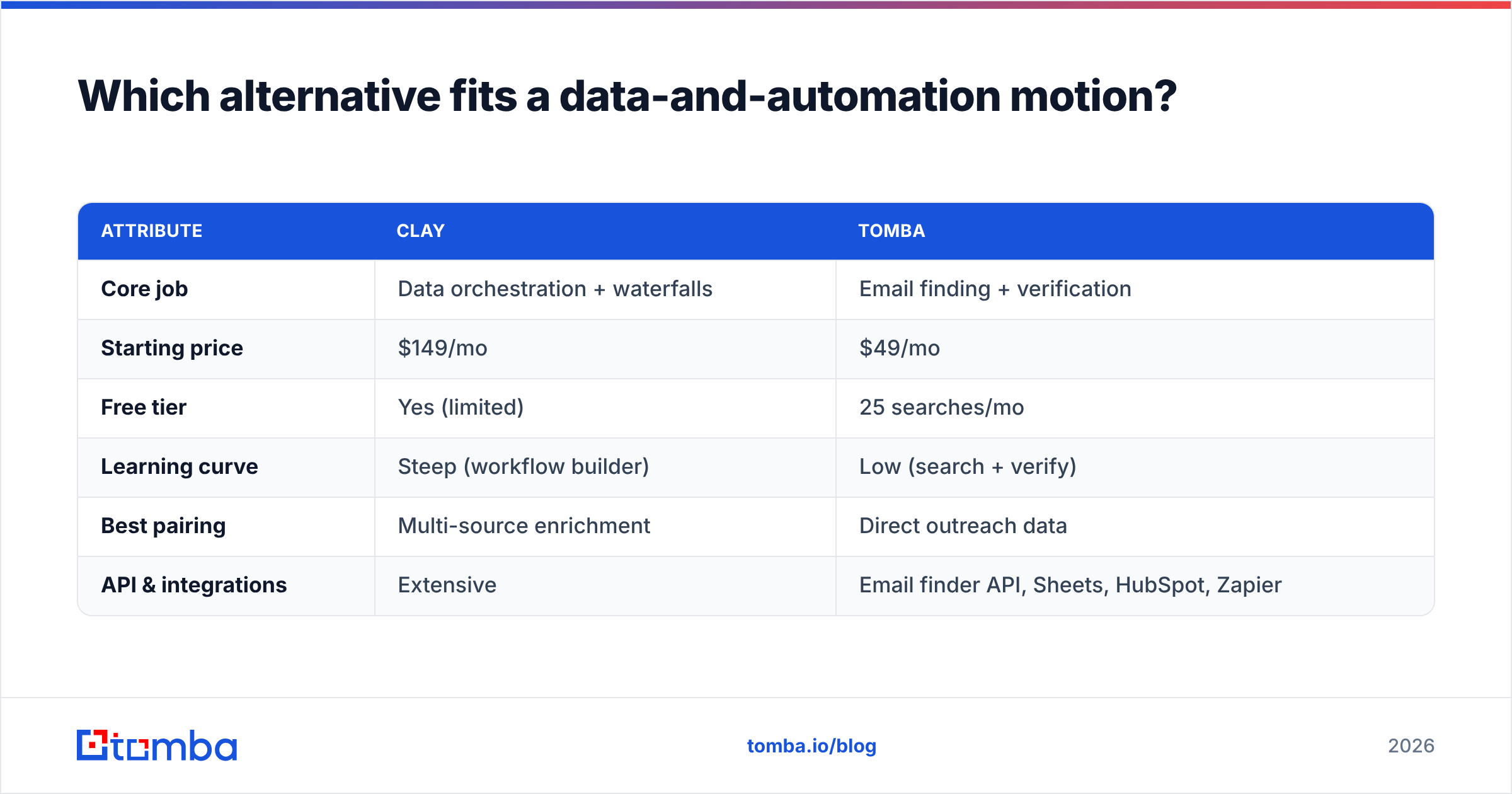
A quick view of how the two data-layer options differ:
| Attribute | Clay | Tomba |
|---|---|---|
| Core job | Data orchestration + waterfalls | Email finding + verification |
| Starting price | $149/mo | $49/mo |
| Free tier | Yes (limited) | 25 searches/mo |
| Learning curve | Steep (workflow builder) | Low (search + verify) |
| Best pairing | Multi-source enrichment | Direct outreach data |
| API & integrations | Extensive | Email finder API, Sheets, HubSpot, Zapier |
Neither is strictly better — Clay is a platform, Tomba is a precision tool. Many teams run both: Clay to orchestrate, Tomba as one of the reliable data sources feeding it. You can see the full Tomba pricing breakdown to weigh it against Clay's credit model.
Is a free Commsor alternative any good?#
Yes — with a caveat. Free tiers are excellent for validating a motion before you spend, but each caps something that matters at scale.
- The Swarm free tier lets you map a portion of your network graph.
- Common Room offers a genuinely usable free plan for early signal work.
- Warmly has a free tier for basic visitor reveal.
- Tomba gives you 25 verified searches per month free, no card required.
The honest read: free plans prove the concept, then volume forces an upgrade. That's fine — the goal is to confirm the motion converts for your ICP before committing. Start free, measure reply and meeting rates, then scale the tool that actually moved the number. For contact data specifically, you can pressure-test accuracy with a free email checker before paying for anything.
How should you choose between these Commsor alternatives?#
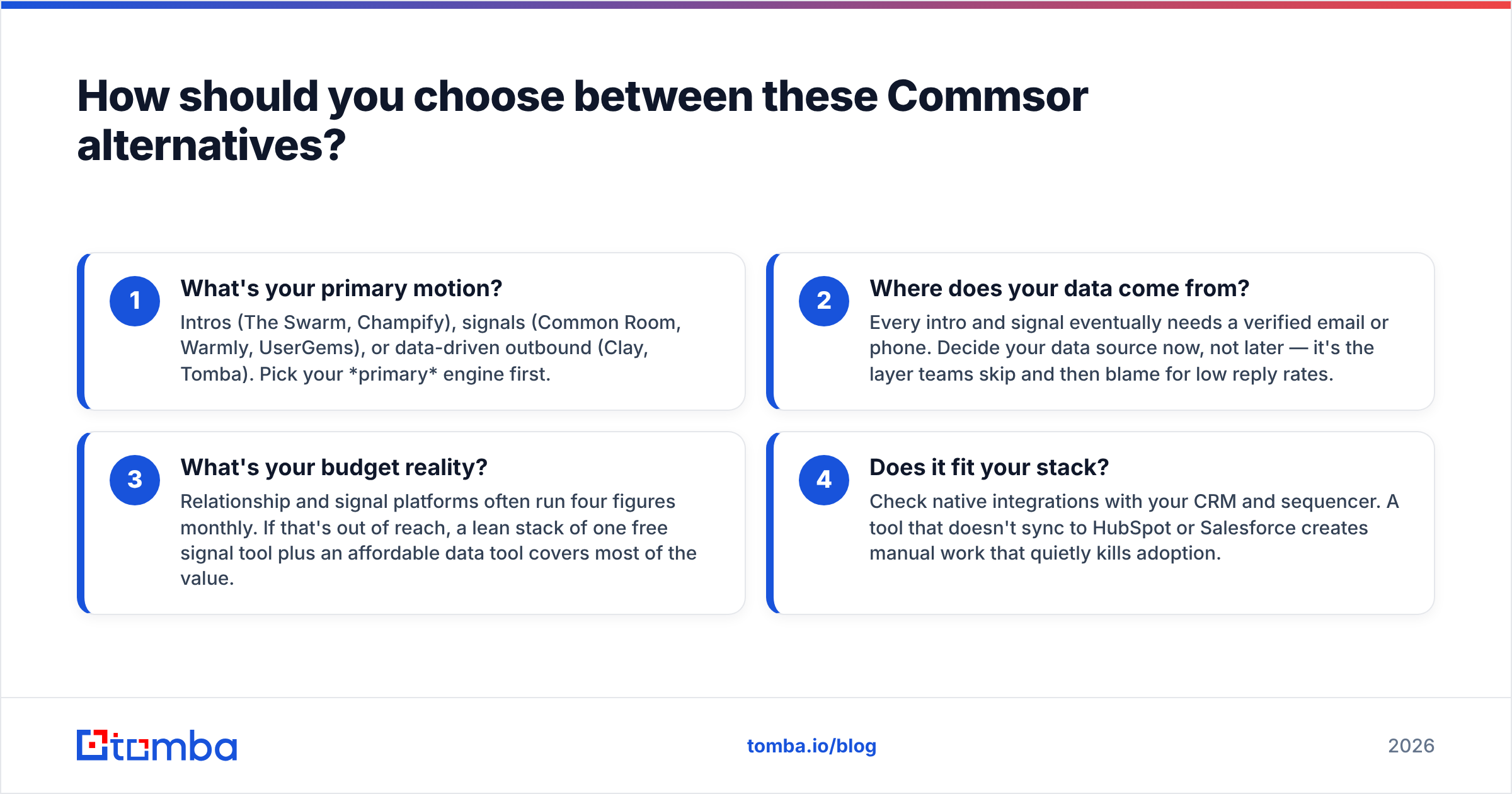
Work through four questions in order:
- What's your primary motion? Intros (The Swarm, Champify), signals (Common Room, Warmly, UserGems), or data-driven outbound (Clay, Tomba). Pick your primary engine first.
- Where does your data come from? Every intro and signal eventually needs a verified email or phone. Decide your data source now, not later — it's the layer teams skip and then blame for low reply rates.
- What's your budget reality? Relationship and signal platforms often run four figures monthly. If that's out of reach, a lean stack of one free signal tool plus an affordable data tool covers most of the value.
- Does it fit your stack? Check native integrations with your CRM and sequencer. A tool that doesn't sync to HubSpot or Salesforce creates manual work that quietly kills adoption.
If you're unsure, validate demand with reviews from real buyers on G2 and cross-check each vendor's claims against its own docs — for Commsor itself, start at commsor.com. Then run a two-week test with free tiers before signing an annual contract.
What's the smartest Commsor alternative stack for 2026?#
Conclusion first: combine one signal or intro layer with one strong data layer, and keep your sequencer separate. Don't force a single tool to do all three jobs — that's where teams overpay and underperform.
A pragmatic, budget-aware stack looks like this:
- Signal/intro layer: The Swarm (intros) or Common Room (signals), on a free or entry plan.
- Data layer: Tomba for finding and verifying emails, plus bulk lead generation when you need volume.
- Sequencer: whatever you already run — most integrate cleanly with both layers.
This keeps each tool doing what it's best at, holds your monthly spend down, and — critically — makes sure every warm intro and buyer signal ends in an outreach that actually reaches a real inbox.
Commsor is a genuinely good product for community-led teams, and several tools on this list are respected peers, not knock-offs. The point isn't to replace one platform with another identical one. It's to assemble the layers your motion actually needs.
The bottom line#
Commsor's strength is turning relationships into pipeline. But intros and signals are only half the equation — none of them convert without accurate, deliverable contact data underneath. Whichever alternative you choose for the intro or signal layer, make the data layer non-negotiable.
Start with the Tomba Email Finder to find and verify the exact emails behind every warm intro, job-change alert, and website visitor. It's free for your first 25 searches a month and $49/mo when you're ready to scale — so you can validate the motion before you commit, and never let a warm lead die on a bounced email.
Related guides#
Ready to find emails that actually work?
Join 150,000+ professionals who stopped guessing and started sending. Free credits on signup — no credit card required.
Get the Tomba newsletter
Practical outbound tactics and product updates — once every two weeks.
About the author