Five9 Alternatives: 9 Best Contact Center Platforms in 2026
Five9 is a solid cloud contact center, but per-seat pricing, long contracts, and heavy admin overhead push a lot of teams to look elsewhere. Here are nine alternatives ranked by who they actually fit.
TL;DR
- Five9 is a mature cloud contact center (CCaaS) built for support-heavy orgs with 50+ seats — it is overkill and overpriced for a 5-15 rep outbound sales team.
- The real cost driver is not the list price. It is per-seat licensing, annual contracts, professional services fees, and telephony usage billed on top.
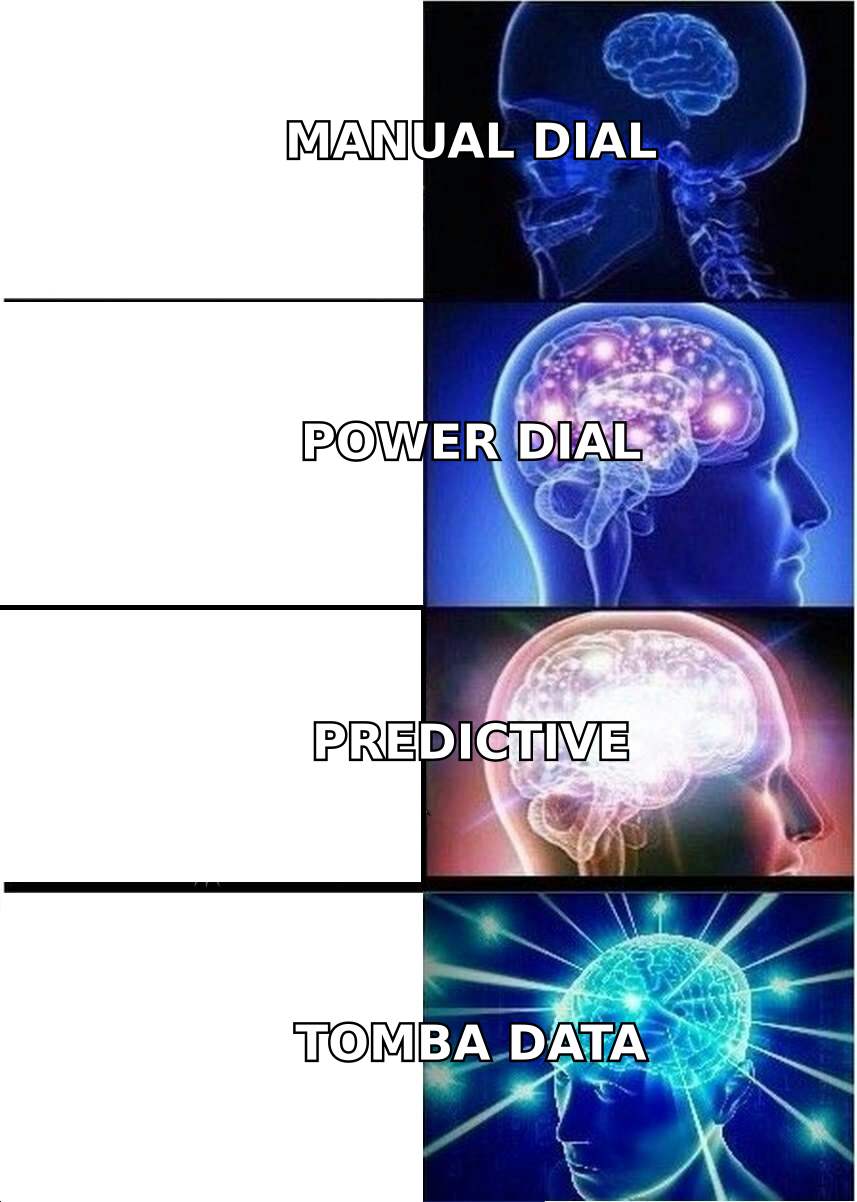
- If you want outbound dialing only, look at Aircall, JustCall, Kixie, or Orum. If you want full omnichannel CCaaS, look at Genesys Cloud, NICE CXone, Talkdesk, or Dialpad.
- Twilio Flex is the escape hatch for engineering teams who want to build exactly what they need and pay per usage instead of per seat.
- No dialer fixes bad phone data. Whichever platform you pick, the connect rate is decided upstream by contact accuracy.
What is Five9 and who is it actually built for?#
Five9 is a cloud contact center platform. It bundles inbound routing (ACD), IVR, outbound dialing modes (preview, progressive, power, predictive), workforce engagement, quality management, and an AI layer for agent assist and summarization. It sells into companies running 50 to several thousand agents — BPOs, insurance carriers, healthcare payers, financial services, and large support orgs.
That heritage explains the friction. Five9 was architected for the contact center manager, not the SDR manager. You get supervisor dashboards, adherence tracking, and compliance controls that a 10-person outbound team will never touch — and you pay for the surface area regardless.
The published entry point sits in the $175-$229 per user per month range for the Digital and Core bundles, with Premium, Optimum, and Ultimate tiers climbing past $300. Telephony minutes are usually separate. Implementation is typically a paid professional-services engagement, and contracts are annual with limited monthly flexibility.
Five9 also completed its transition to a heavier AI positioning over the last two years, which is genuinely useful for large support teams but pushes the effective price further from what a sales team needs. Their official product pages list capabilities honestly; the question is whether you need 80% of them.
When Five9 is genuinely the right call:
- You run 50+ agents across voice, chat, email, and SMS — the omnichannel routing engine earns its keep at that scale.
- You have compliance obligations — TCPA, HIPAA, PCI-DSS, and call-recording retention are handled natively rather than bolted on.
- You need workforce management — forecasting, scheduling, and adherence are first-party, not a third-party integration.
- You have a dedicated contact center admin — someone whose job is running the platform full-time.
- Your CRM is Salesforce or ServiceNow — the deep integrations are legitimately mature.
If fewer than three of those are true for you, you are shopping for a dialer, not a contact center, and the alternatives below will cost you a lot less.
Why do teams look for Five9 alternatives?#
Four reasons come up repeatedly in G2 reviews and in procurement conversations.
Per-seat economics punish small teams. At roughly $200/seat/month, a 12-person team is spending $28,800 a year before a single minute of telephony. A dedicated sales dialer at $50-$90/seat cuts that by 60-70% with no meaningful loss of function for outbound-only work.
Contract rigidity. Annual terms with seat minimums make seasonal ramping painful. If you hire 10 SDRs for Q1 and half don't stick, you're paying for empty seats until renewal.
Implementation weight. A typical Five9 rollout is measured in weeks, involves a partner or professional-services team, and requires someone to own the config. Aircall or JustCall can be live the same afternoon.
Admin complexity. The IVR builder, routing rules, and skill assignments are powerful and correspondingly fiddly. Teams without a dedicated admin end up with a half-configured system that nobody trusts.
None of that makes Five9 bad. It makes Five9 specific. The fix is to match the tool to your actual shape.
Which Five9 alternatives are worth comparing in 2026?#
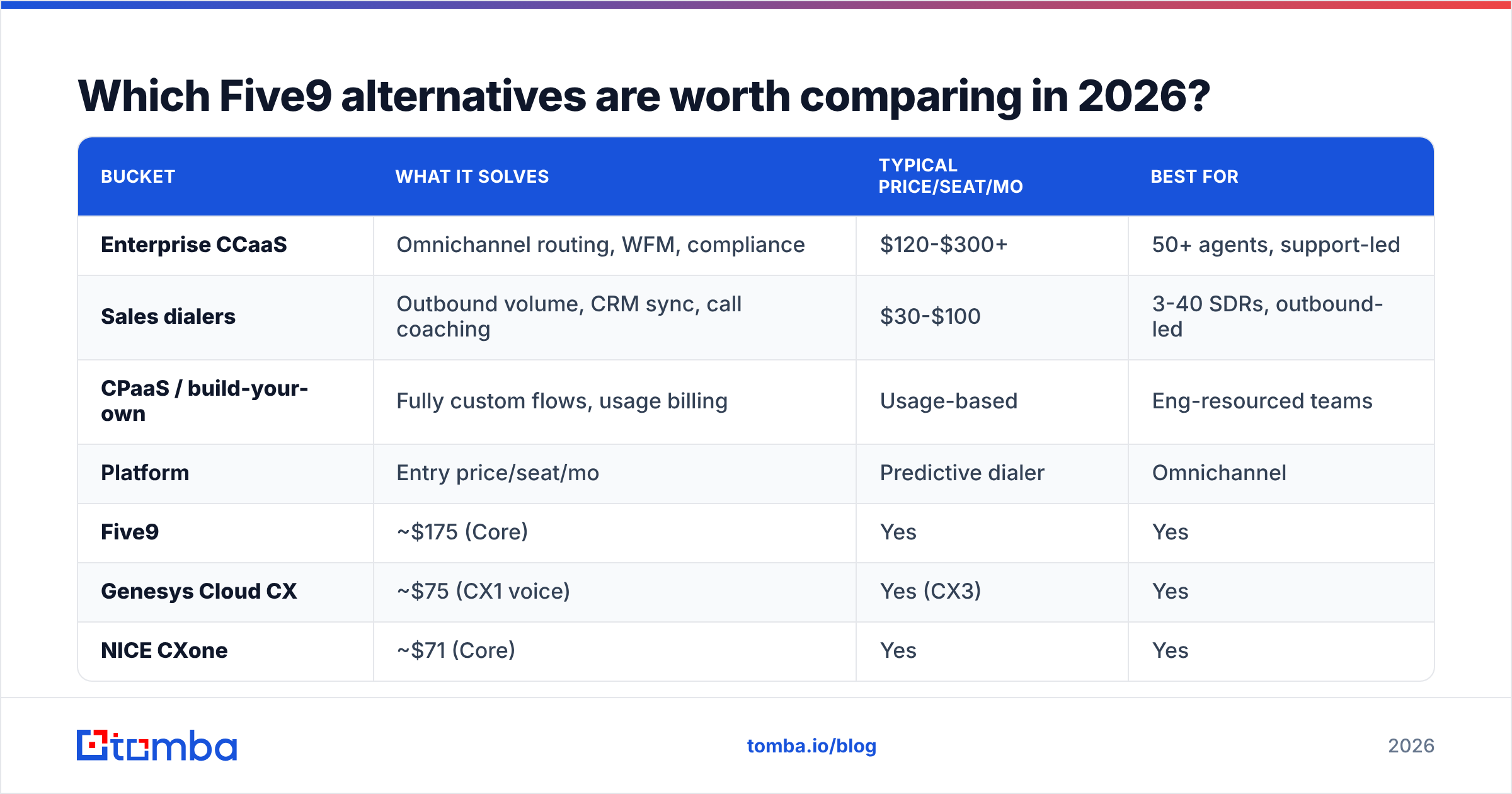
Split the market into three buckets before you shortlist anything:
| Bucket | What it solves | Typical price/seat/mo | Best for |
|---|---|---|---|
| Enterprise CCaaS | Omnichannel routing, WFM, compliance | $120-$300+ | 50+ agents, support-led |
| Sales dialers | Outbound volume, CRM sync, call coaching | $30-$100 | 3-40 SDRs, outbound-led |
| CPaaS / build-your-own | Fully custom flows, usage billing | Usage-based | Eng-resourced teams |
Now the head-to-head. Prices below are published list rates as of early 2026 and move with annual commitments and volume discounts — treat them as directional, and always ask for the telephony line item separately.
| Platform | Entry price/seat/mo | Predictive dialer | Omnichannel | Contract | Best for |
|---|---|---|---|---|---|
| Five9 | ~$175 (Core) | Yes | Yes | Annual | 50+ agent support orgs |
| Genesys Cloud CX | ~$75 (CX1 voice) | Yes (CX3) | Yes | Annual | Enterprise, WFM-heavy |
| NICE CXone | ~$71 (Core) | Yes | Yes | Annual | Large-scale QA + analytics |
| Talkdesk | ~$85 (Essentials) | Yes (higher tiers) | Yes | Annual | Mid-market omnichannel |
| Dialpad | $95 (Ai Contact Center) | Power/progressive | Yes | Monthly or annual | Teams wanting native AI notes |
| Aircall | $30 (Essentials) | Power dialer add-on | Voice + SMS | Monthly or annual | SMB sales + support |
| JustCall | $29 (Essentials) | Yes (Pro+) | Voice, SMS, WhatsApp | Monthly or annual | Outbound SMB, SMS-heavy |
| Kixie | $35 (Integrated) | Multi-line power dialer | Voice + SMS | Monthly | SDR teams on HubSpot/Pipedrive |
| Orum | ~$99+ (quote) | Parallel AI dialer | Voice only | Annual | High-volume cold calling |
| Twilio Flex | Usage-based (~$1/active user hr) | Build it | Build it | Pay-as-you-go | Engineering-led custom builds |
Genesys Cloud CX#
The most direct enterprise substitute. Genesys matches Five9 feature-for-feature on routing and beats it on workforce management depth. The pricing model is more granular — you can start on a voice-only CX1 tier and add digital channels later — which makes it friendlier if you want to phase a rollout. The tradeoff is the same admin burden. See Genesys' own pricing page for current tiers.
Pick it if: you're replacing Five9 like-for-like at 100+ seats and want stronger WFM.
NICE CXone#
Strongest analytics and quality management in the category. If your motivation for leaving Five9 is that you can't get the reporting granularity you want, CXone is the upgrade. It is not cheaper in practice — the entry tier looks lower but the features you actually want live in higher bundles.
Pick it if: QA, speech analytics, and compliance reporting drive your buying decision.
Talkdesk#
Positions between Five9 and the SMB dialers. Faster to deploy than Genesys or NICE, with a cleaner admin UI and a genuinely good app marketplace. Vertical editions (healthcare, financial services, retail) ship with pre-built flows that cut implementation time meaningfully.
Pick it if: you're 30-150 seats and want omnichannel without a six-week implementation.
Dialpad#
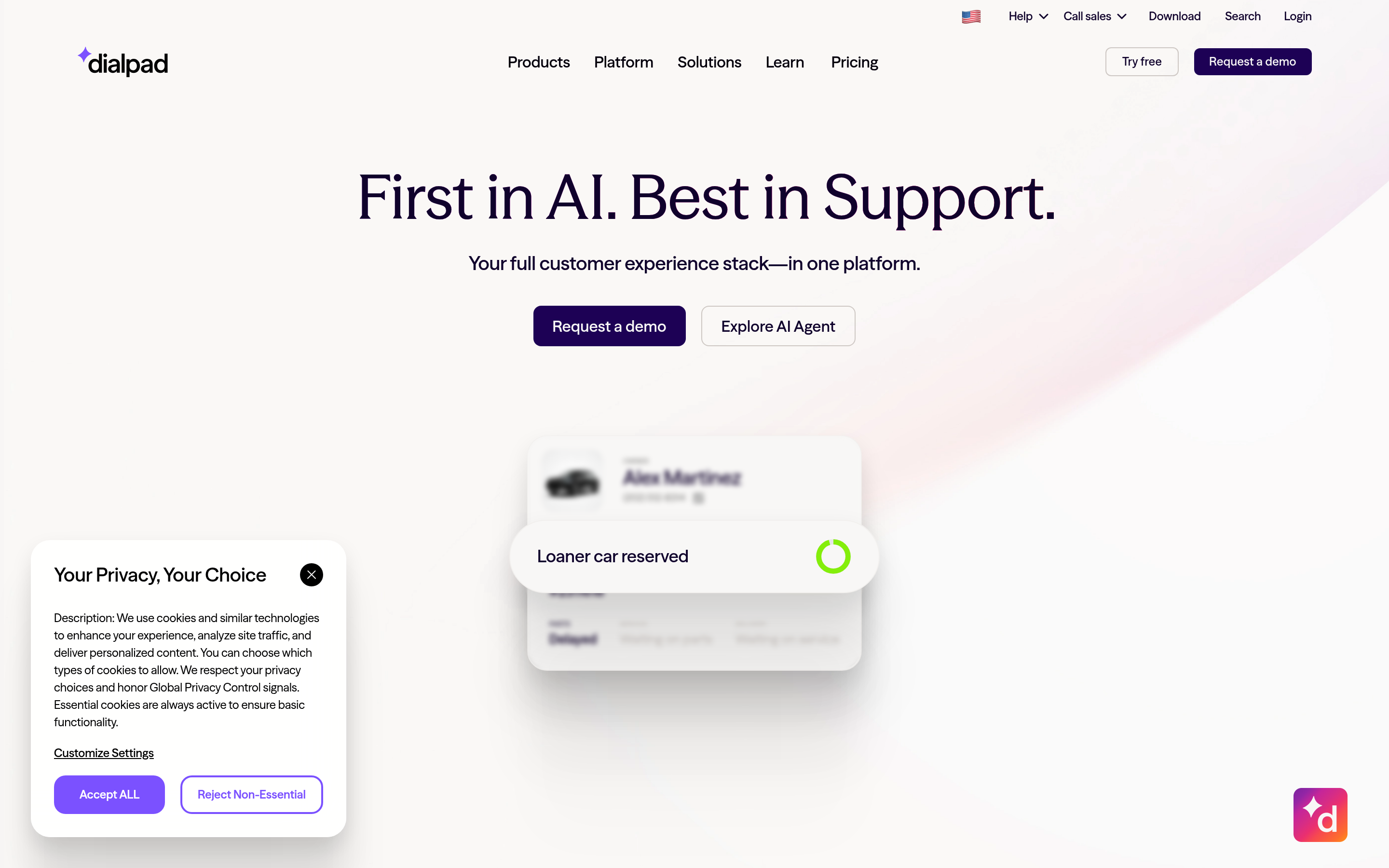
The AI-native option. Real-time transcription, live coaching cards, and automatic call summaries are built into the core product rather than sold as an add-on tier. It also doubles as your business phone system, which collapses two line items into one.
Pick it if: you want AI call intelligence without buying Gong separately.
Aircall#
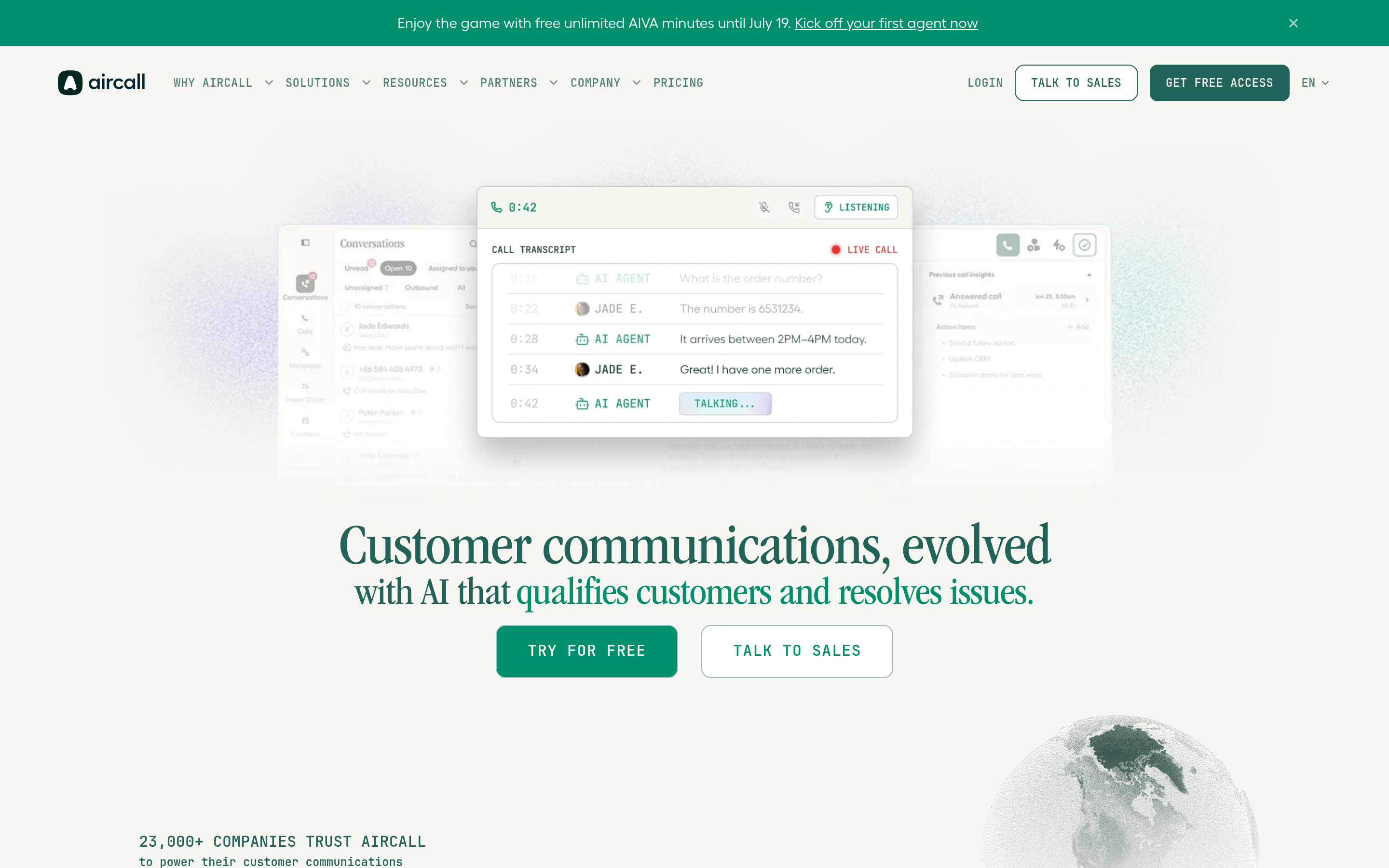
The most popular SMB answer to "we just need phones that sync to the CRM." Setup takes an afternoon, the integration catalog is broad, and the interface doesn't require training. The power dialer is an add-on and it is not a predictive dialer — for high-volume cold calling you'll outgrow it.
Pick it if: you're under 30 seats and split between sales and support.
JustCall#

Aircall's closest competitor, with a stronger SMS and WhatsApp story and a predictive dialer on higher tiers. The AI suite (call scoring, coaching, sentiment) is included further down the pricing ladder than most rivals. Support quality is the most common complaint.
Pick it if: SMS is a real channel for you, not an afterthought.
Kixie#
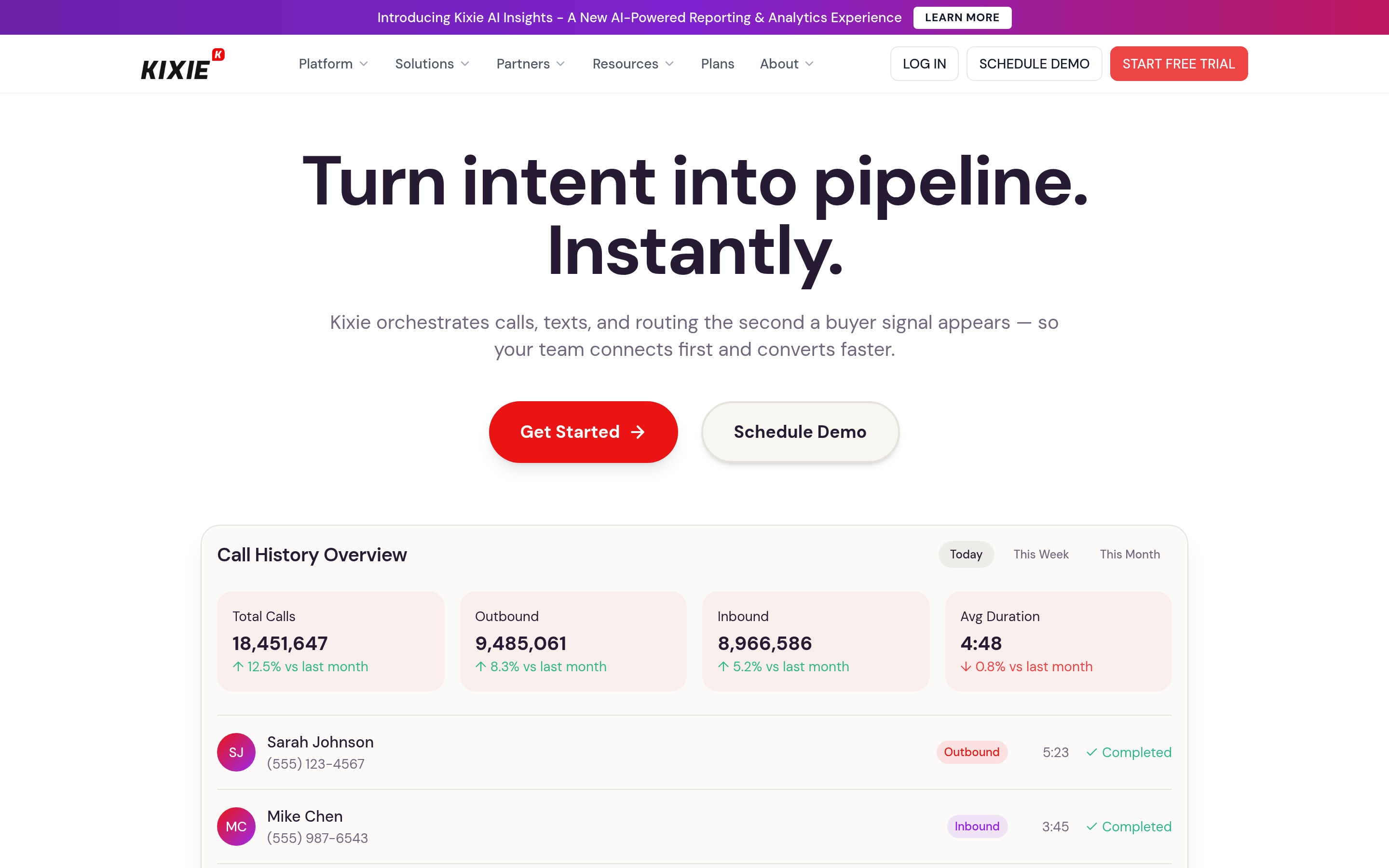
Purpose-built for outbound SDR teams on HubSpot, Pipedrive, or Zoho. The multi-line power dialer, local presence, and connection-rate optimization are the whole product — there is no pretense of being a contact center. That focus is why teams love it.
Pick it if: your reps live in HubSpot and dial 100+ numbers a day.
Orum#
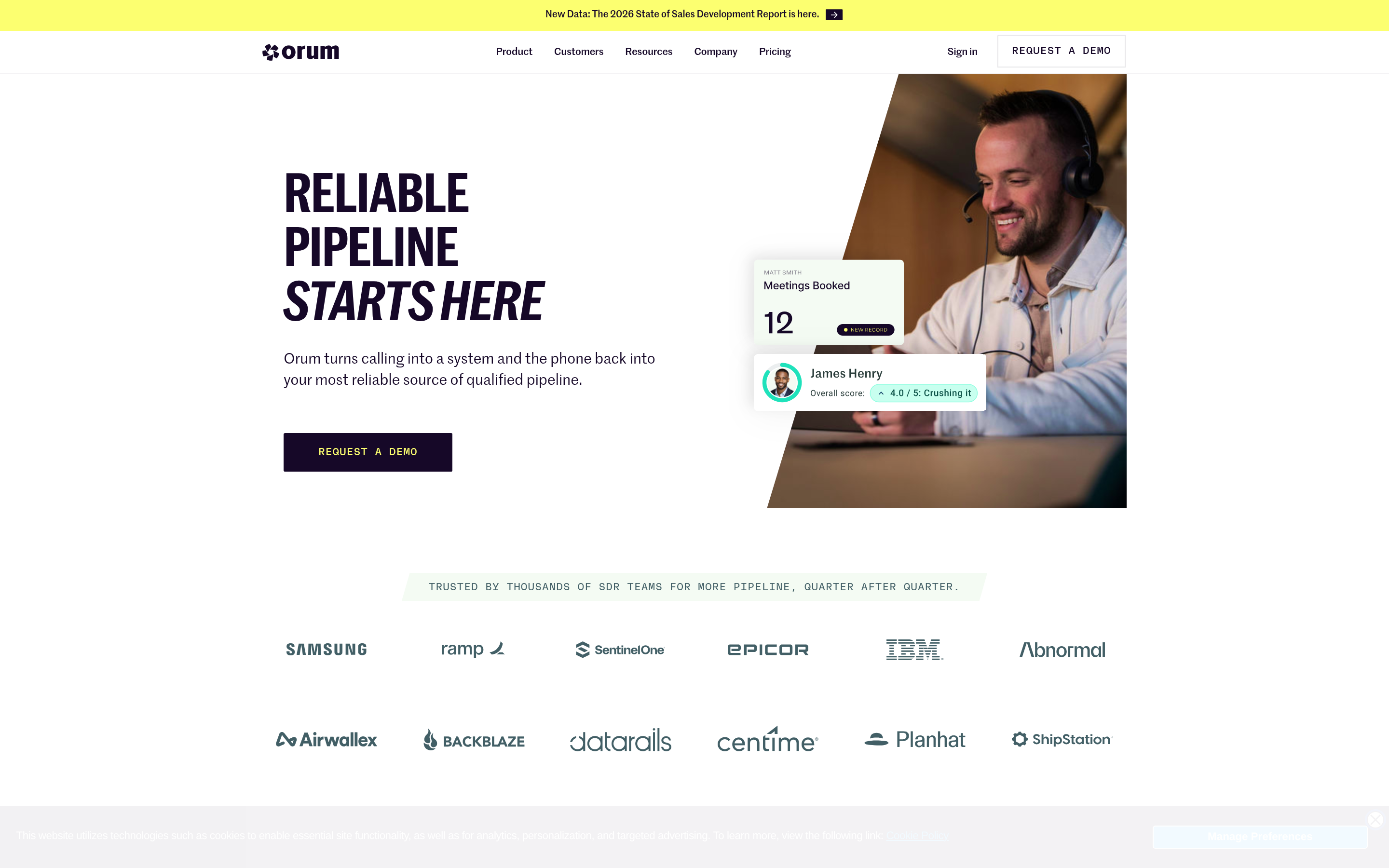
Parallel dialing with AI navigation of phone trees and voicemail detection. Reps talk to more humans per hour than any other tool on this list. It is a layer on top of your existing stack, not a replacement phone system — budget accordingly.
Pick it if: connect rate per hour is your single tracked metric.
Twilio Flex#
Not a product so much as a contact center construction kit. You get the primitives — routing, telephony, task management — and build the agent experience yourself. Usage-based billing means you never pay for idle seats. You do pay in engineering time.
Pick it if: you have developers and unusual requirements that no packaged product fits.
Is a sales dialer better than a full contact center?#
For outbound teams, usually yes — and the math is not close.
Take a 15-rep SDR team. Five9 Core at roughly $175/seat is $31,500/year in licensing. Kixie at $65/seat (Professional tier) is $11,700. That's a $19,800 annual delta, before telephony, before implementation fees, before the internal cost of an admin.
What do you give up? IVR sophistication you don't use, skills-based inbound routing for calls you don't take, workforce scheduling for a team small enough to run on a spreadsheet, and compliance tooling you may or may not need. What do you keep? Local presence, CRM logging, call recording, dispositions, click-to-dial, and power dialing.
The honest counterpoint: if you handle meaningful inbound volume — renewals, support escalations, a published support line — the dialer will let you down. Inbound routing at scale is exactly what CCaaS platforms are engineered for, and stitching it together from a sales dialer plus a helpdesk is a worse experience than buying the right tool.
Decision rule: if more than 25% of your call volume is inbound, buy CCaaS. If it's under 25%, buy a dialer.
What actually determines your connect rate?#
Here is the part vendors avoid discussing, because it isn't something they can sell you.
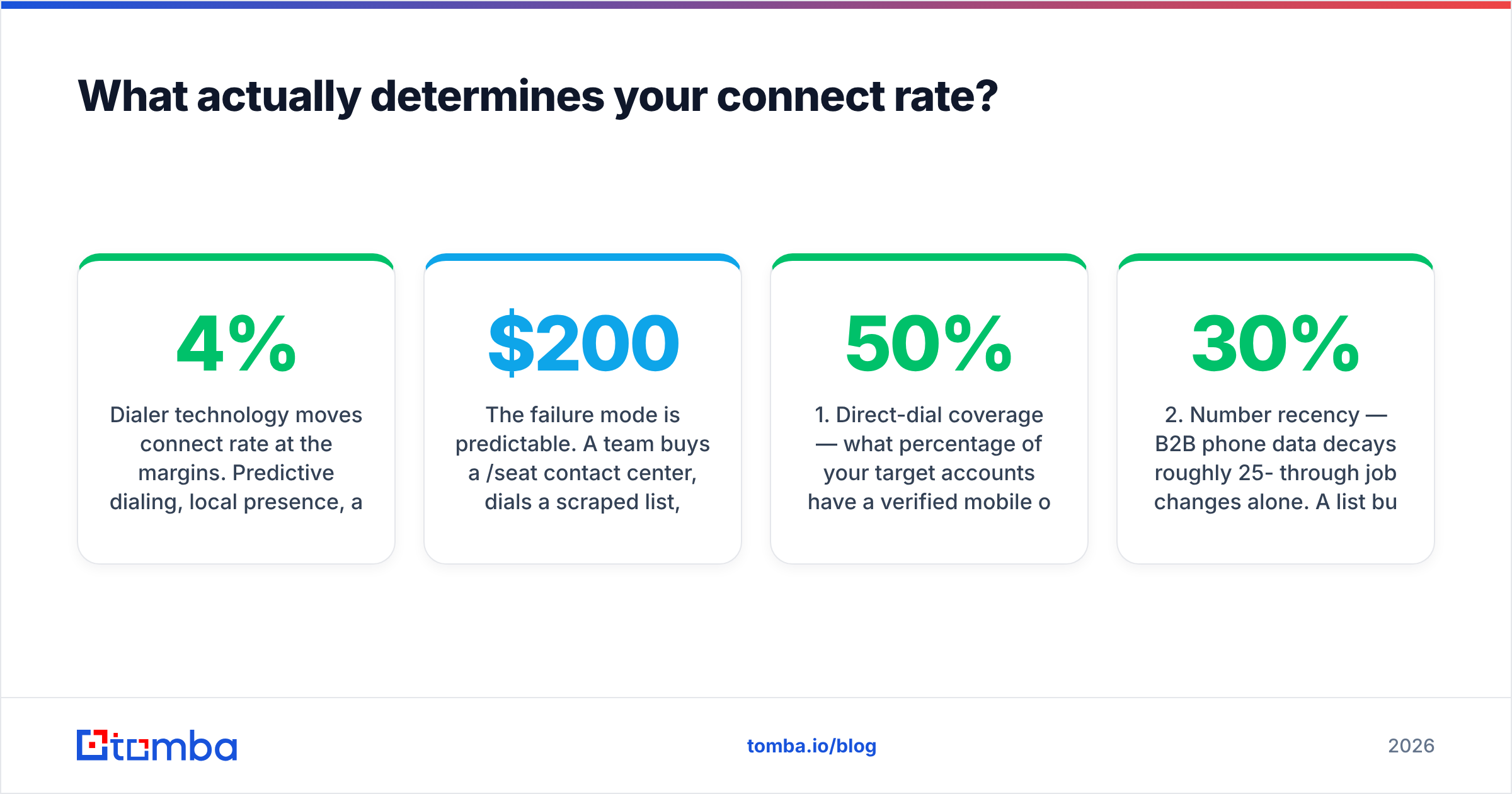
Dialer technology moves connect rate at the margins. Predictive dialing, local presence, and parallel dialing might take you from 4% to 7% connects on the same list. Data quality moves it in whole multiples. A list where 40% of the direct dials are stale, wrong, or point to a switchboard will underperform a clean list on any platform.
The failure mode is predictable. A team buys a $200/seat contact center, dials a scraped list, gets a 3% connect rate, and concludes the dialer is broken. It isn't. The list is.
Three things worth auditing before you sign a dialer contract:
- Direct-dial coverage — what percentage of your target accounts have a verified mobile or direct line, not a main switchboard number? Under 50% means your reps are gatekeeper-farming.
- Number recency — B2B phone data decays roughly 25-30% per year through job changes alone. A list built 18 months ago is half wrong.
- Contact-to-account match rate — do you have the right person, or the right company and a guess at the person? Enrichment fixes this; more dialing does not.
This is where your data layer matters more than your telephony layer. A phone finder that returns verified direct dials, paired with a phone validator that strips disconnected and invalid numbers before they hit the dialer, does more for connect rate than upgrading from power to predictive dialing.
The same logic applies to the email half of your sequence. Most outbound teams run calls and email in parallel, and a dialer upgrade does nothing for the email leg. Running your list through an email verifier before a campaign protects the sender reputation that the whole sequence depends on.
How should you run the evaluation?#
Five steps, in order. Skipping the first two is how teams end up over-buying.
- Count your inbound-to-outbound ratio over the last 90 days from your current phone logs. This decides the bucket, and nothing else does.
- Count your seats over the next 12 months, not today. Seat minimums and annual terms punish teams that guessed low, and empty seats punish teams that guessed high.
- Get the all-in quote — license + telephony + implementation + any AI add-on. Vendors quote the license. You pay the total. Ask specifically what a per-minute outbound rate looks like at your volume.
- Run a two-week pilot on real lists with 3-5 reps. Measure connect rate, dials per rep-hour, and CRM logging accuracy. Do not evaluate on a demo dataset.
- Test the CRM integration properly — bidirectional sync, custom field mapping, call disposition write-back. This is where "it integrates with HubSpot" quietly means "it creates an activity log entry and nothing else."
For teams already running Salesforce or HubSpot as their system of record, check how the dialer handles enrichment on inbound leads. Most don't do it at all, which is why a separate data enrichment step usually sits between form fill and first dial.
What about the total cost over three years?#
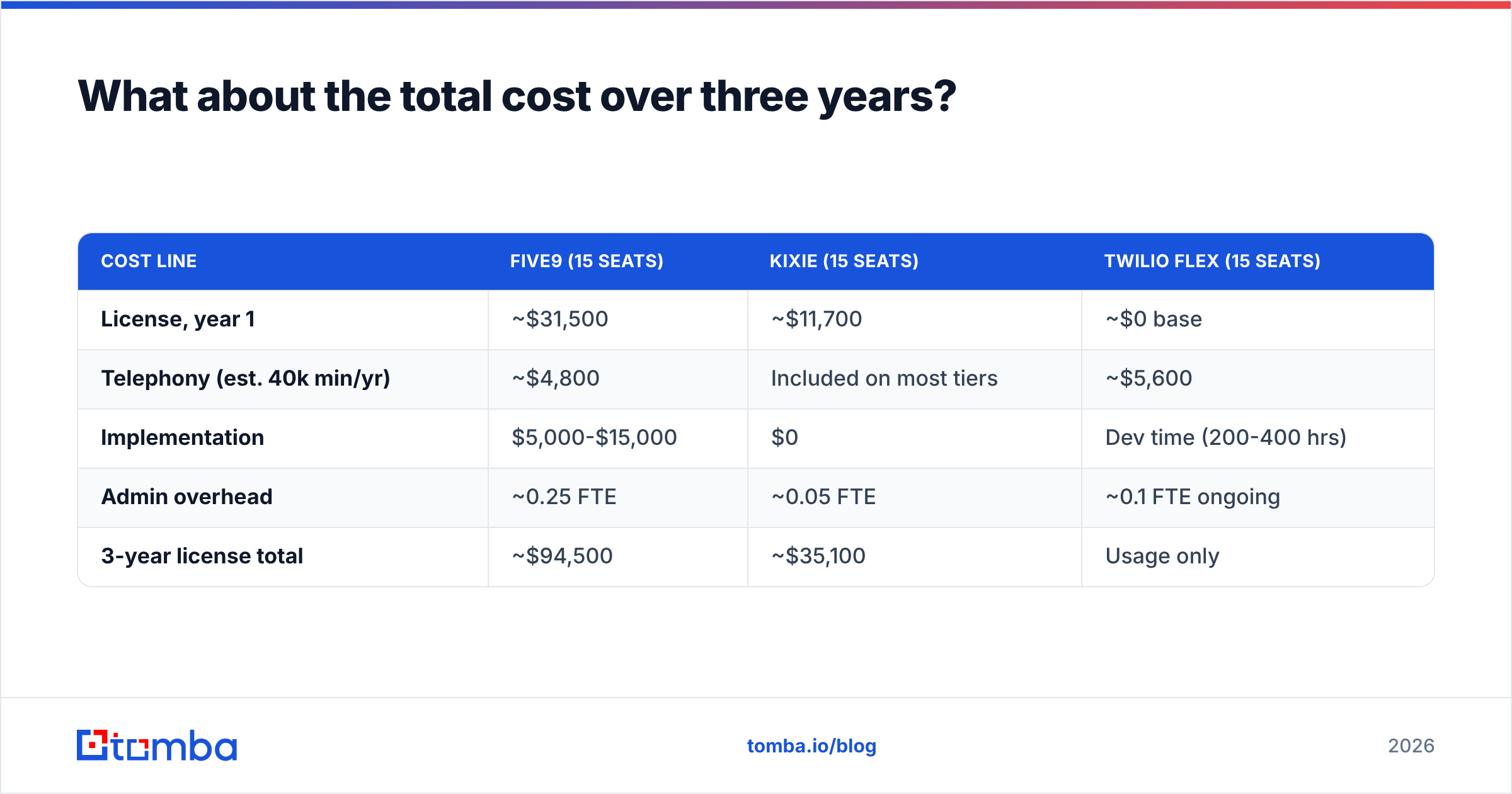
Model it properly, because the license is rarely the biggest number.
| Cost line | Five9 (15 seats) | Kixie (15 seats) | Twilio Flex (15 seats) |
|---|---|---|---|
| License, year 1 | ~$31,500 | ~$11,700 | ~$0 base |
| Telephony (est. 40k min/yr) | ~$4,800 | Included on most tiers | ~$5,600 |
| Implementation | $5,000-$15,000 | $0 | Dev time (200-400 hrs) |
| Admin overhead | ~0.25 FTE | ~0.05 FTE | ~0.1 FTE ongoing |
| 3-year license total | ~$94,500 | ~$35,100 | Usage only |
The Twilio row is the interesting one. On paper it's cheapest. In practice, 300 hours of engineering at a loaded cost of $100/hour is $30,000 you spent before the first call — and you own maintenance forever. It wins on a five-year horizon for teams with spare engineering capacity, and loses badly for everyone else.
Note also what's missing from every row: the cost of the data feeding the dialer. Teams routinely budget $95,000 for three years of contact center licensing and $0 for verified contact data, then wonder why the connect rate is flat. Compare that to Tomba pricing — a Growth plan at $99/mo is $3,564 over three years, roughly 3.7% of the Five9 line, and it's the input that determines whether the other 96% produces anything.
Which one should you pick?#
Short version, by shape:
- 50+ agents, omnichannel, compliance-heavy → stay on Five9, or move to Genesys Cloud CX for better WFM.
- Reporting and QA are the pain → NICE CXone.
- 30-150 seats, want faster deployment → Talkdesk.
- Want AI coaching built in, not bolted on → Dialpad.
- Under 30 seats, mixed sales and support → Aircall.
- SMS and WhatsApp are real channels → JustCall.
- Pure outbound SDR team on HubSpot → Kixie.
- Maximum connects per hour, existing stack stays → Orum.
- Engineering team, custom requirements → Twilio Flex.
And regardless of which row you land on: fix the list before you fix the dialer. The best predictive algorithm in the world dialing a 30%-stale list will lose to a basic power dialer on verified direct numbers, every time.
Get the data layer right first#
Before you sign an annual contract for a platform that promises to raise your connect rate, check what you're feeding it. Tomba's Email Finder and phone data tools give you verified direct contacts — email and phone — so your reps spend their dialing hours talking to real people at the right accounts instead of burning through disconnected numbers and switchboards. The free tier gives you 25 searches a month to test coverage on your own target list; Starter is $49/mo and Growth is $99/mo when you're ready to run it at volume. Test it against 100 accounts you already know, compare the match rate to your current source, and you'll know within an hour whether your dialer was ever the problem.
Related guides#
Ready to find emails that actually work?
Join 150,000+ professionals who stopped guessing and started sending. Free credits on signup — no credit card required.
Get the Tomba newsletter
Practical outbound tactics and product updates — once every two weeks.
About the author