7 Best Goagentic Alternatives in 2026 for AI Outbound
Agentic GTM tools promise a robot SDR that books meetings while you sleep. Here are seven Goagentic alternatives that actually move pipeline, what each one costs, and the trade-off nobody puts on the pricing page.
TL;DR
- Most teams shopping for Goagentic alternatives don't actually need a smarter agent — they need cleaner contact data underneath the agent. Fix the data layer first.
- If you want an API-first data foundation you can plug into any agent framework, start with Tomba: free tier at 25 searches/mo, Starter $49/mo, Growth $99/mo.
- If you want orchestration and waterfall enrichment, Clay is the category leader — and the most expensive way to learn you had bad inputs.
- If you want an all-in-one database plus sequencer, Apollo.io is the default; if you want sending infrastructure at scale, Instantly is the default.
- Quote-gated "AI SDR" platforms (11x, Amplemarket, and Goagentic itself in most configurations) are viable, but budget for onboarding time, not just license cost.
Prices below were accurate at the time of writing. Agentic GTM vendors reprice constantly — verify on the vendor's own site before you sign anything.
What is Goagentic, and why are people looking for alternatives?#
Goagentic sits in the "agentic GTM" category: software that wraps LLM agents around the outbound motion so the system researches accounts, drafts messaging, and executes multi-channel sequences with less human keystroke-per-lead. It's the same product thesis as 11x, Artisan, Regie.ai, and the AI-SDR features Salesforce and HubSpot have been bolting onto their clouds since 2024.
The category is real. The disappointment is also real, and it's usually one of three things:
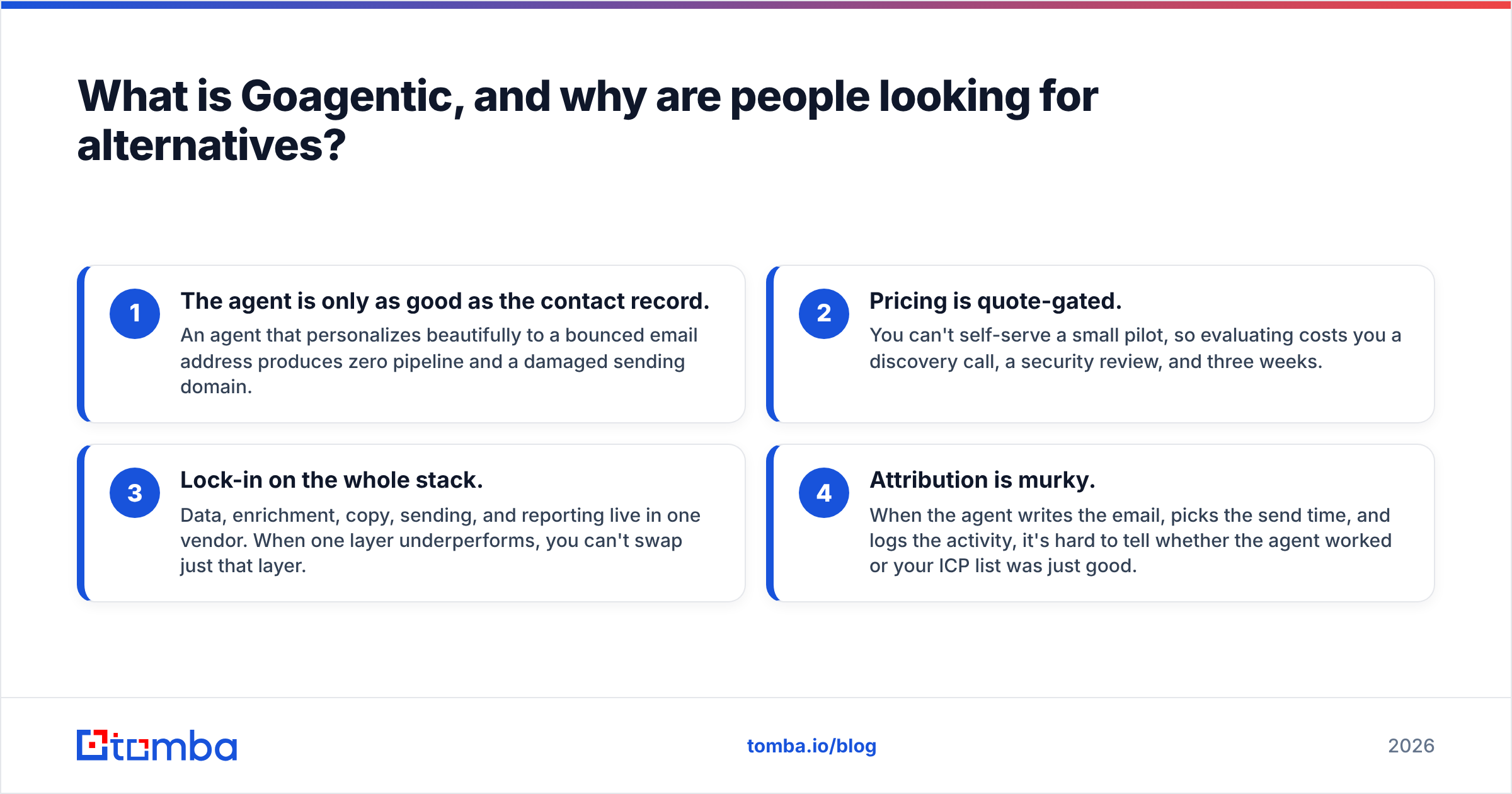
- The agent is only as good as the contact record. An agent that personalizes beautifully to a bounced email address produces zero pipeline and a damaged sending domain.
- Pricing is quote-gated. You can't self-serve a small pilot, so evaluating costs you a discovery call, a security review, and three weeks.
- Lock-in on the whole stack. Data, enrichment, copy, sending, and reporting live in one vendor. When one layer underperforms, you can't swap just that layer.
- Attribution is murky. When the agent writes the email, picks the send time, and logs the activity, it's hard to tell whether the agent worked or your ICP list was just good.
That's the honest framing for this comparison: you're not looking for a Goagentic clone. You're looking for the layer that was actually failing.

How should you evaluate agentic GTM tools?#
Before you look at logos, decide which layer you're buying. Every serious outbound stack in 2026 has five layers, and most vendors claim four of them while genuinely owning one or two.
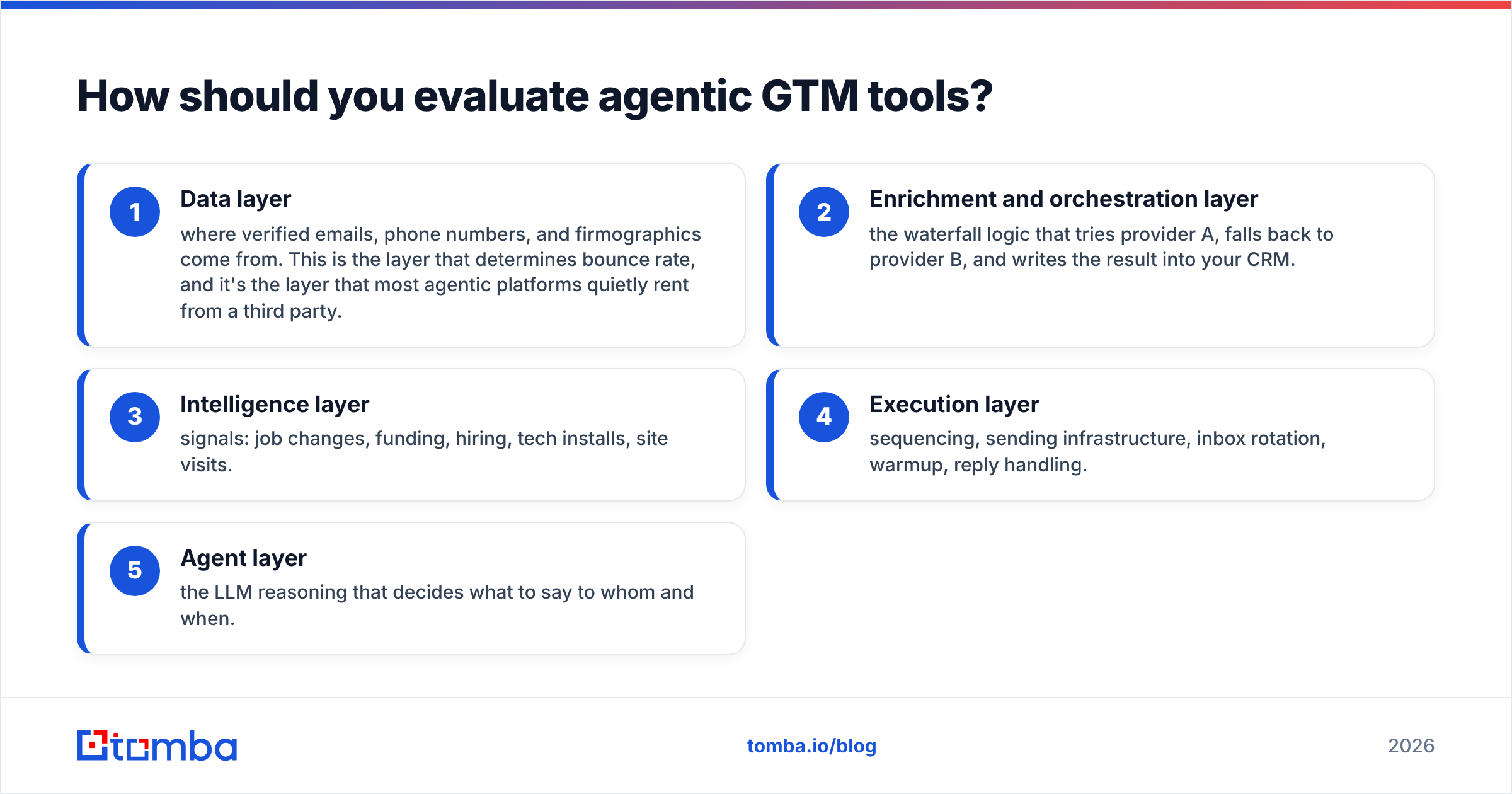
- Data layer — where verified emails, phone numbers, and firmographics come from. This is the layer that determines bounce rate, and it's the layer that most agentic platforms quietly rent from a third party.
- Enrichment and orchestration layer — the waterfall logic that tries provider A, falls back to provider B, and writes the result into your CRM.
- Intelligence layer — signals: job changes, funding, hiring, tech installs, site visits.
- Execution layer — sequencing, sending infrastructure, inbox rotation, warmup, reply handling.
- Agent layer — the LLM reasoning that decides what to say to whom and when.
Rank those five by which one is currently costing you the most pipeline. If you can't confidently say your data layer is clean — meaning under 3% bounce on a cold send — the agent layer is not your problem, and no Goagentic alternative will fix it. Start with an email verifier run against your last 5,000 sends and read the number before you shop.
Which Goagentic alternatives are worth comparing?#
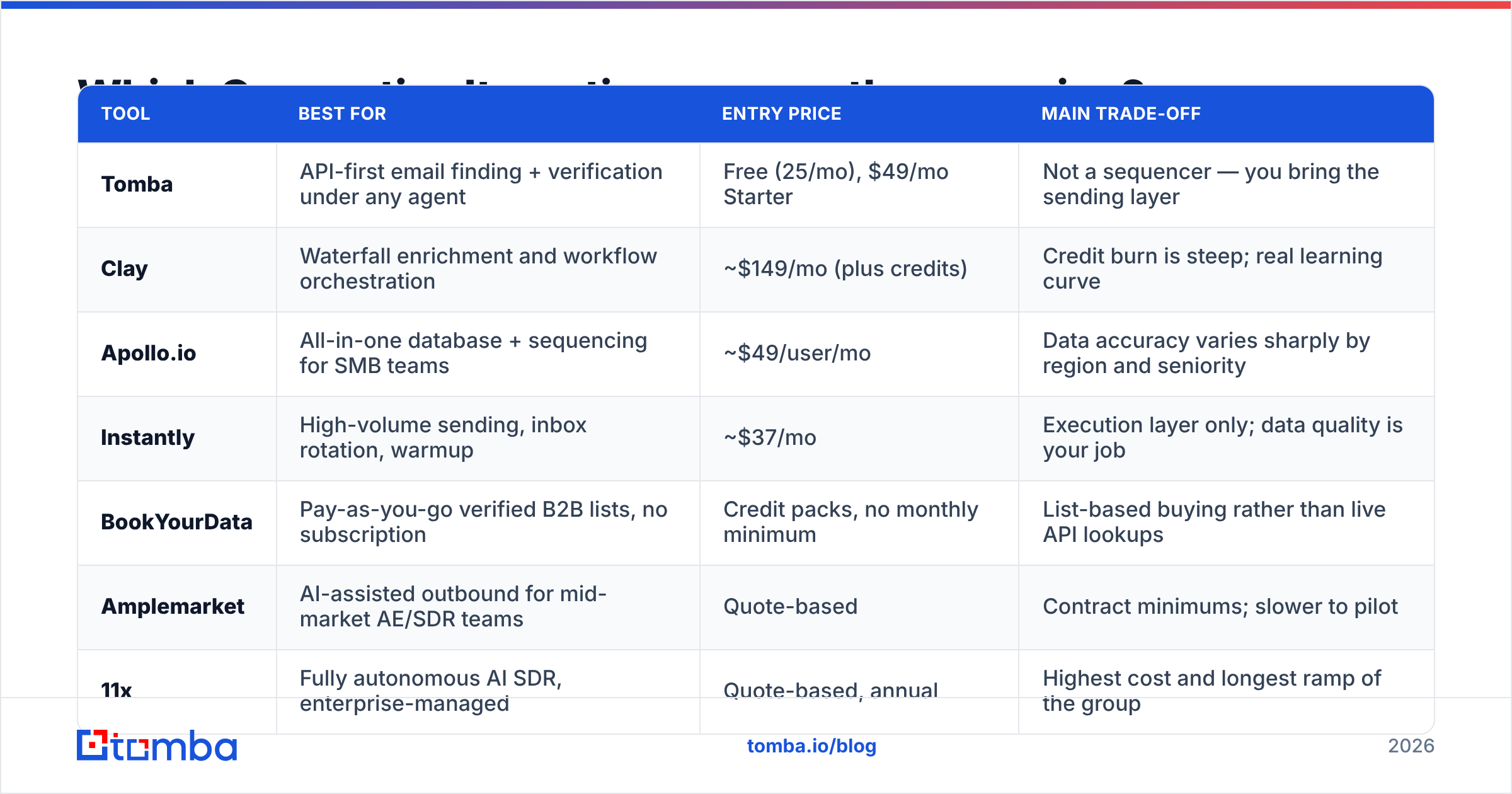
| Tool | Best for | Entry price | Main trade-off |
|---|---|---|---|
| Tomba | API-first email finding + verification under any agent | Free (25/mo), $49/mo Starter | Not a sequencer — you bring the sending layer |
| Clay | Waterfall enrichment and workflow orchestration | ~$149/mo (plus credits) | Credit burn is steep; real learning curve |
| Apollo.io | All-in-one database + sequencing for SMB teams | ~$49/user/mo | Data accuracy varies sharply by region and seniority |
| Instantly | High-volume sending, inbox rotation, warmup | ~$37/mo | Execution layer only; data quality is your job |
| BookYourData | Pay-as-you-go verified B2B lists, no subscription | Credit packs, no monthly minimum | List-based buying rather than live API lookups |
| Amplemarket | AI-assisted outbound for mid-market AE/SDR teams | Quote-based | Contract minimums; slower to pilot |
| 11x | Fully autonomous AI SDR, enterprise-managed | Quote-based, annual | Highest cost and longest ramp of the group |
Two things to notice. First, the cheapest tools on this list are the ones that do exactly one layer well. Second, the quote-based tools are the ones that promise all five layers — which is precisely why they need a sales call to scope.
Tomba — the data layer your agent runs on#
Tomba is not an AI SDR and doesn't pretend to be. It's the contact-data foundation: email finder, domain search, catch-all verification, phone finder, and enrichment, all exposed through a documented Tomba API plus CLI, MCP server, Sheets, Excel, and Chrome extension surfaces.
That matters more in an agentic stack than it did in a manual one. When a human SDR hits a bad address, they notice. When an agent hits a bad address at 400 sends/day, it keeps going. Putting a verification gate between "agent found a prospect" and "agent sends" is the single highest-ROI change most teams make.
- Pricing: Free 25 searches/mo, Starter $49/mo, Growth $99/mo, Pro $249/mo, Enterprise custom. Full Tomba pricing is public — no call required.
- Best when: you already have (or are building) an agent, a sequencer, or a Clay table, and you want the data underneath it to be defensible.
- Weakness: you still need an execution layer. Tomba won't send your emails.
Clay — orchestration for people who like building#
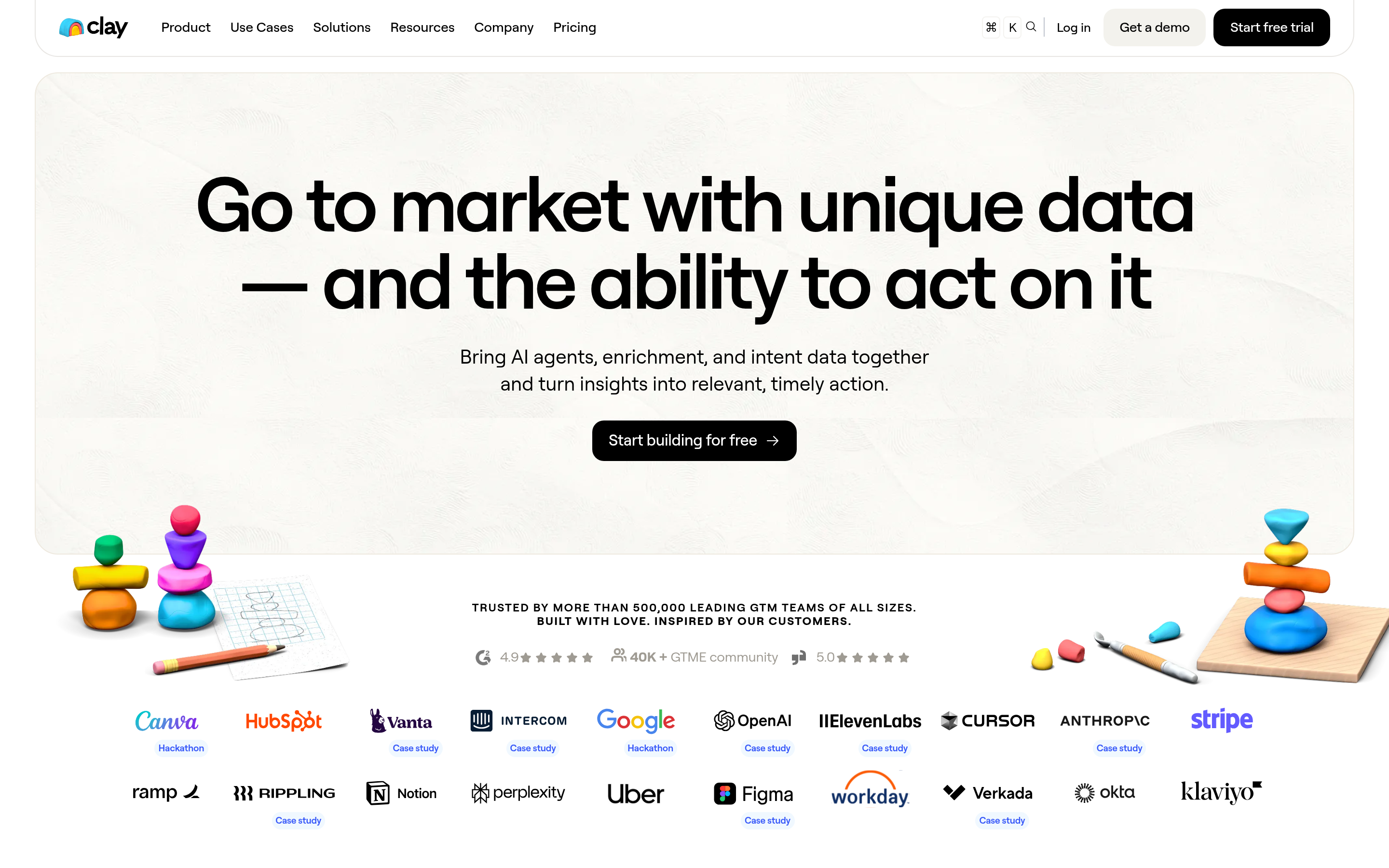
Clay won the enrichment-orchestration category by being a spreadsheet that can call fifty providers in sequence. If provider A misses, try B, then C, then a scraper, then an LLM. It's genuinely powerful and it's how most sophisticated GTM engineering teams operate now.
The trade-off is cost curve and complexity. Credits go fast on wide tables, and the tool rewards people who enjoy building systems. If your team's bottleneck is "nobody has time to build," Clay increases the workload before it decreases it. Many teams end up running Tomba as one of the providers inside Clay rather than choosing between the two.
Apollo.io — the default all-in-one#
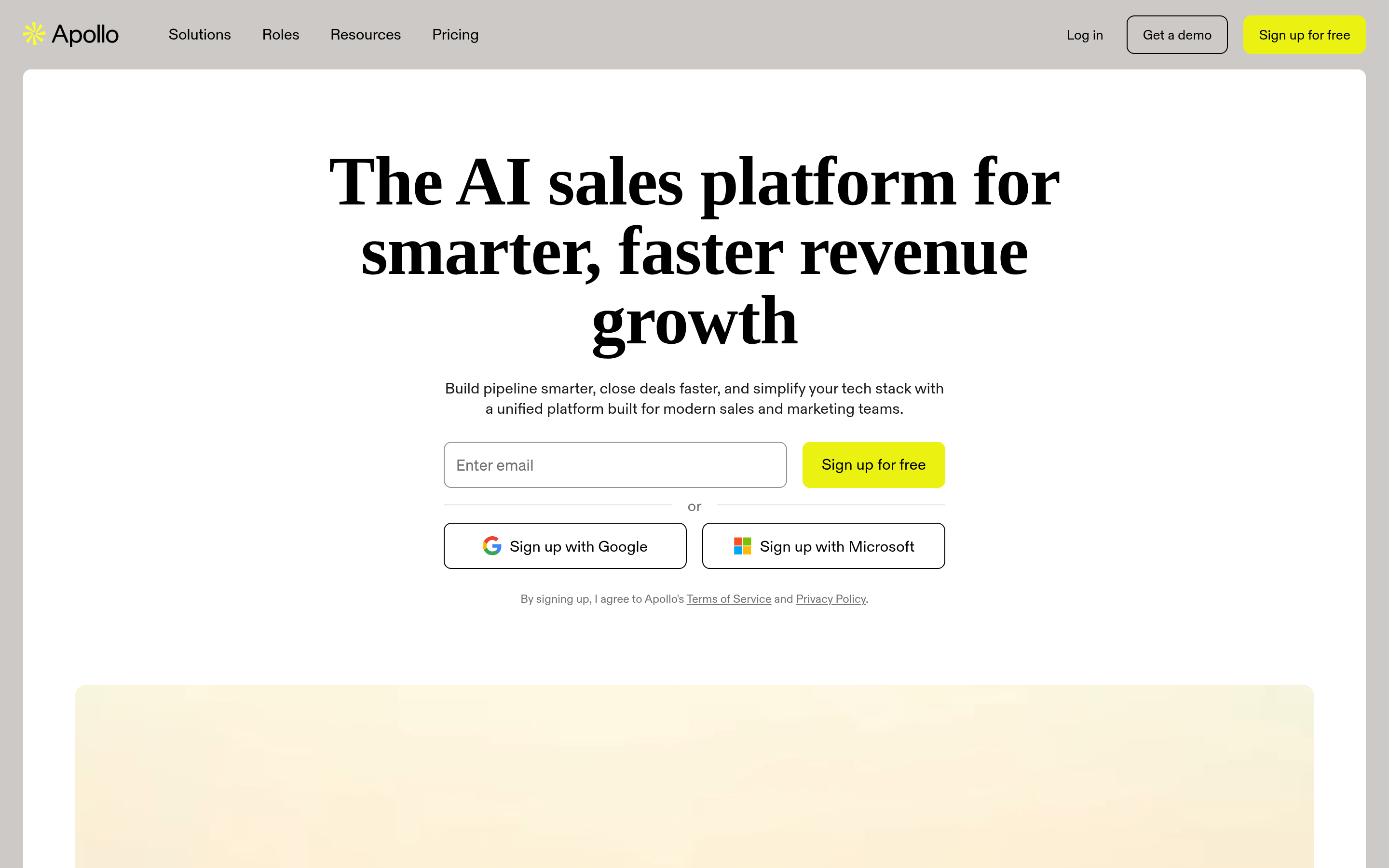
Apollo bundles a large B2B contact database with sequencing, dialing, and basic AI assistance, at a self-serve price point that undercuts most enterprise options. For a small team that wants one login, it's a reasonable landing spot.
The consistent criticism, visible across G2 reviews and practitioner threads, is data variance: strong on US mid-market tech, weaker on EMEA, non-tech verticals, and senior titles. Teams often pair it with a dedicated verification pass before send. If you're specifically weighing that swap, the Apollo alternative breakdown covers the data-accuracy differences in more detail.
Instantly — the sending layer#
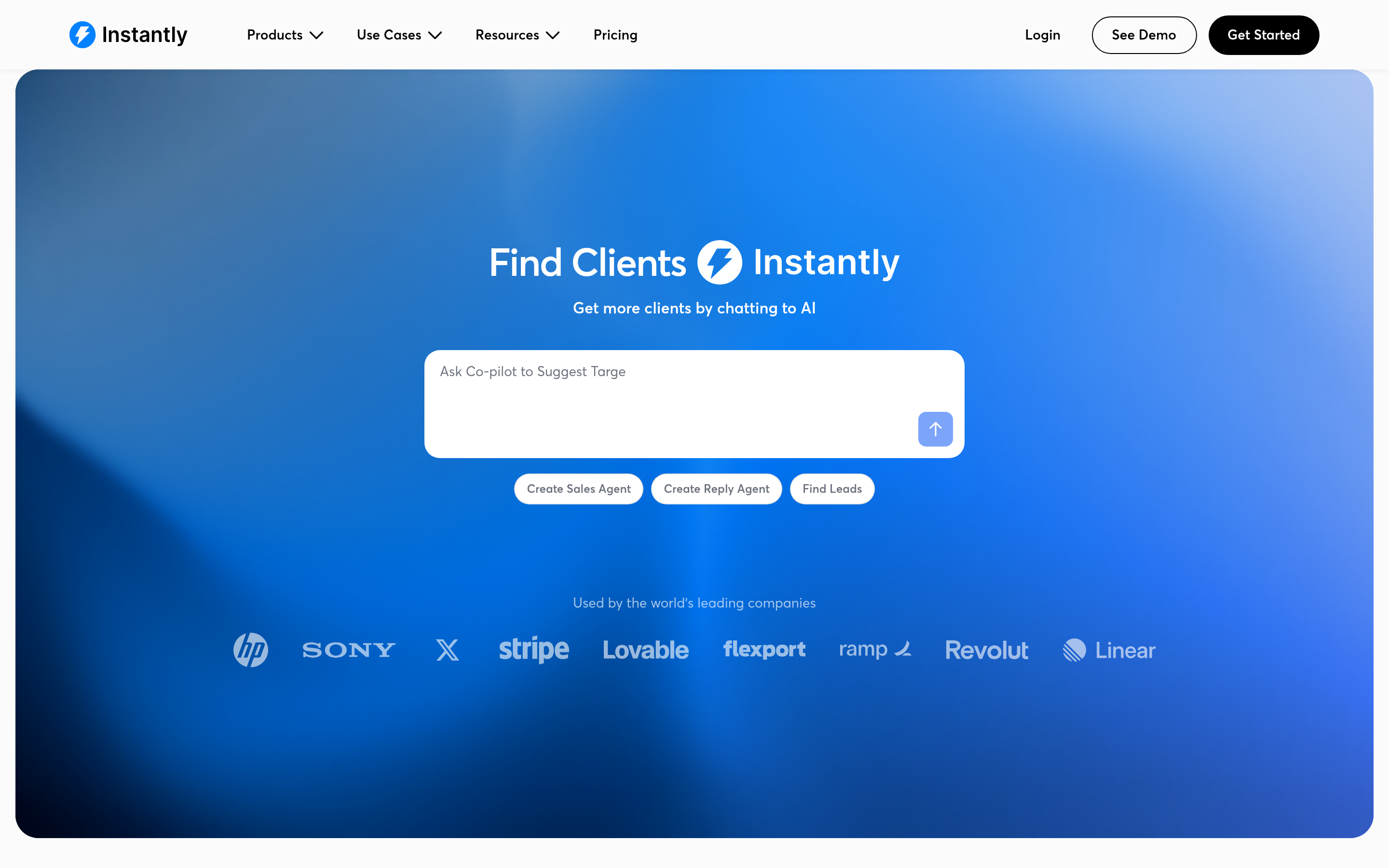
Instantly owns execution: mailbox rotation, warmup, deliverability monitoring, and volume sending. It does not solve your data problem and doesn't claim to. If your Goagentic frustration was "the agent's copy was fine but everything bounced," Instantly plus a real verification step is the cheaper fix than another agent platform.
BookYourData — pay-as-you-go, no subscription#
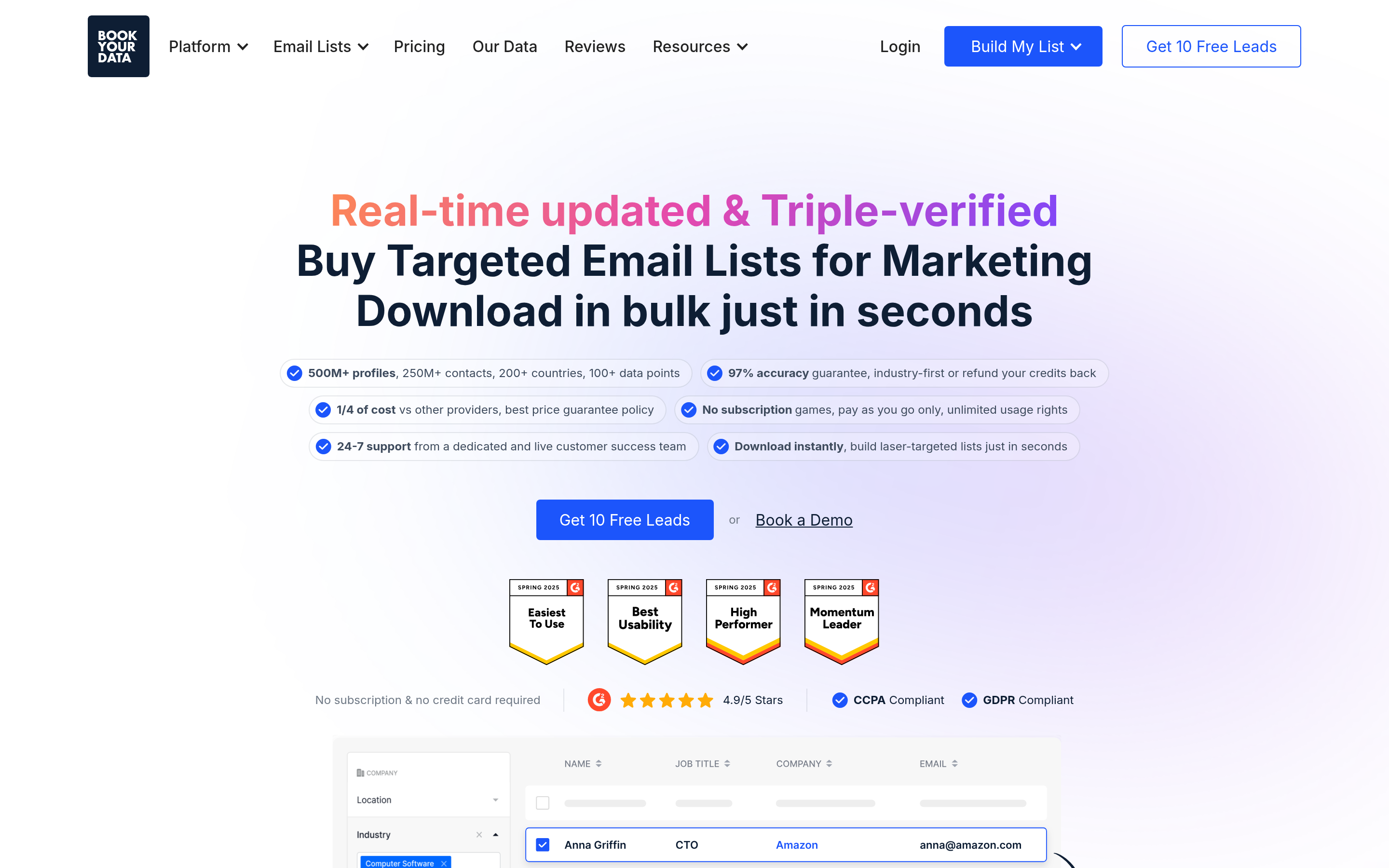
BookYourData is a good answer to a question the agentic vendors don't like: what if you just want a clean, verified list this quarter without signing a twelve-month agreement? It sells verified B2B contact data on credit packs with an accuracy guarantee, and the pay-as-you-go model makes it easy to size a pilot honestly.
It's a different buying motion from an API — you're purchasing filtered lists rather than looking up contacts in real time inside a workflow. For campaign-based teams with defined ICP segments, that's often exactly right, and it pairs cleanly with a live lookup tool for the accounts you discover mid-quarter.
Amplemarket — AI-assisted outbound for mid-market#
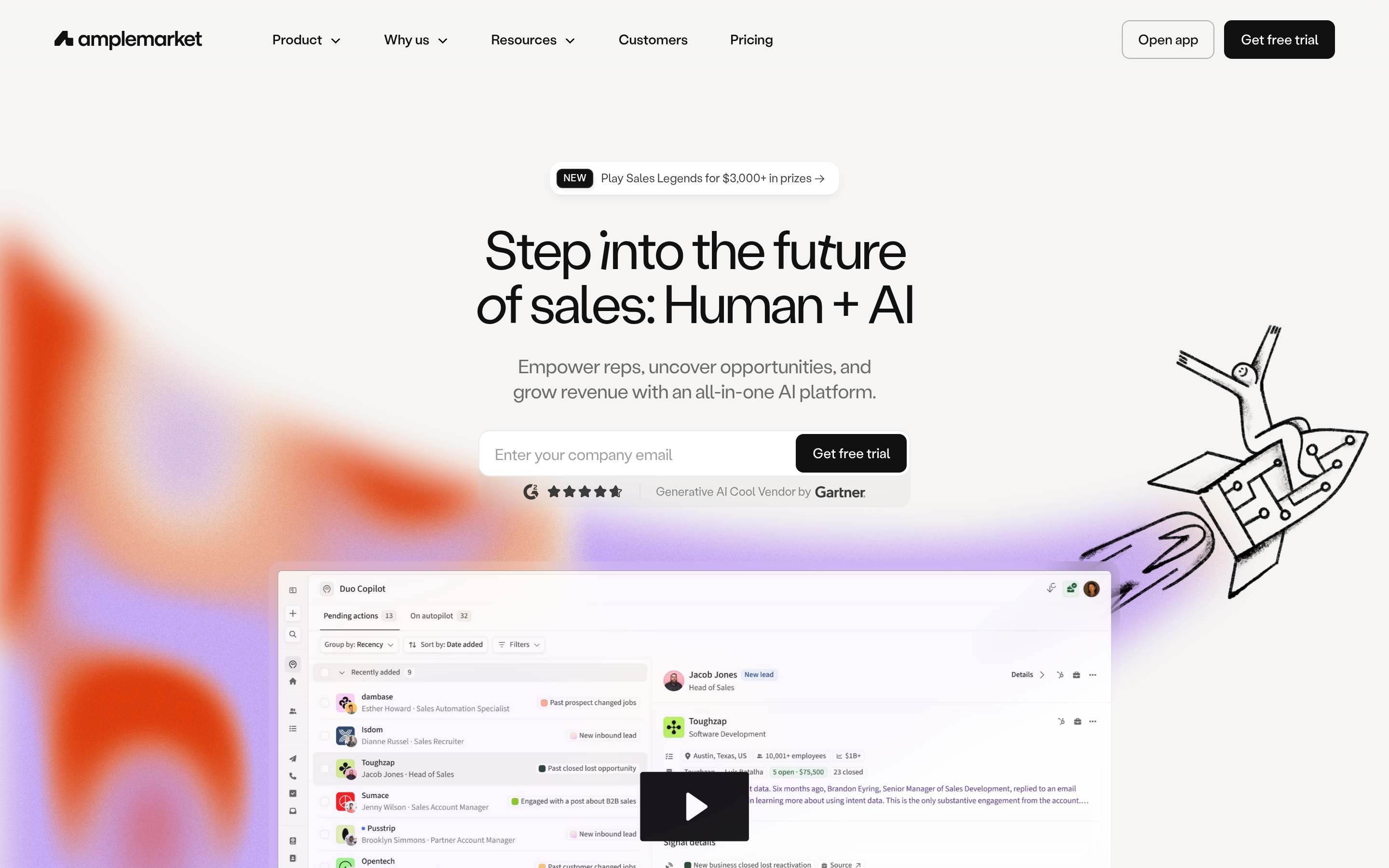
Amplemarket layers signal-based targeting and AI copy assistance over a contact database and sequencer. It's a credible Goagentic alternative for teams with 5–50 reps who want the agentic benefits without a full autonomous-SDR bet. Pricing is quote-based with contract minimums, so a two-week pilot is not usually on the table. See the Amplemarket alternative comparison if you're specifically evaluating cost per verified contact.
11x — the fully autonomous end of the spectrum#
11x is the most aggressive version of the thesis: an AI SDR that runs the whole motion. If your leadership has explicitly funded "replace manual prospecting," it belongs on the shortlist. Expect enterprise pricing, annual commitment, and a real implementation period. Don't buy it to test whether agents work — buy it after you already know your data and ICP are solid.

Is a cheaper stack actually better than one agentic platform?#
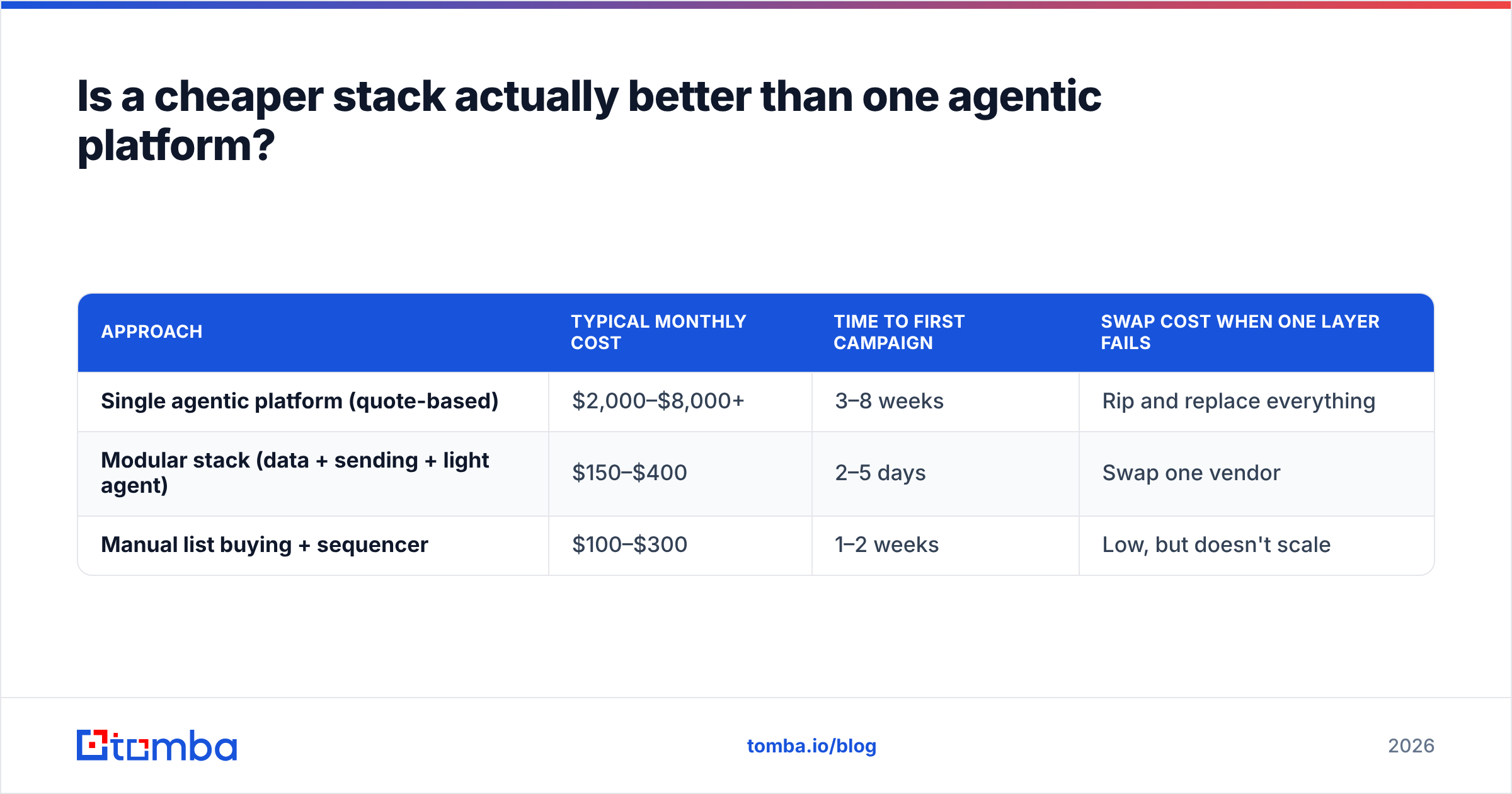
Often, yes — and the arithmetic is easy to run.
| Approach | Typical monthly cost | Time to first campaign | Swap cost when one layer fails |
|---|---|---|---|
| Single agentic platform (quote-based) | $2,000–$8,000+ | 3–8 weeks | Rip and replace everything |
| Modular stack (data + sending + light agent) | $150–$400 | 2–5 days | Swap one vendor |
| Manual list buying + sequencer | $100–$300 | 1–2 weeks | Low, but doesn't scale |
The modular stack wins on speed and optionality. It loses on unified reporting and on having a single vendor to call at 2am. Most teams under 30 reps should take the modular stack and revisit consolidation once volume justifies the overhead.
One caveat worth stating plainly: modular means you own integration. If nobody on your team will maintain the seams between tools, the all-in-one platform's higher price is buying you a real service.
What should you check before you switch?#
Run this checklist against any Goagentic alternative before signing. It takes an afternoon and saves quarters.
- Bounce test on your own list. Upload 500 known-good and 500 known-bad addresses. Any vendor unwilling to let you run this is telling you something. A bulk verify pass gives you a baseline number to compare against.
- Coverage by your actual ICP. Test the segment you sell to — not US SaaS VPs, if you sell to German manufacturing plant managers. Coverage collapses outside a vendor's home market more often than anyone admits.
- Catch-all handling. Ask specifically how catch-all domains are scored. "Accept-all" treated as "valid" is the most common source of inflated accuracy claims.
- Export and API rights. Can you get your data out? Is there an API on your plan tier, or is it gated to enterprise?
- Real cost per verified contact. Divide total monthly spend by contacts that passed verification, not by credits granted. This number is usually 2–4x the sticker rate.
- Deliverability ownership. If the platform sends on shared infrastructure, your sender reputation is partly a function of other customers' behavior.
For context on why the data layer keeps being the constraint, the broader sales intelligence category has always had the same failure mode — the pitch is insight, the reality is record hygiene. Vendor-neutral reading from HubSpot on outbound benchmarks is a decent sanity check on whatever reply-rate numbers a sales rep quotes you.
Which Goagentic alternative is right for you?#
- You have an agent or workflow already and need clean data: Tomba. Self-serve, API-first, no call required.
- You want to build sophisticated enrichment waterfalls: Clay, with Tomba as a provider inside it.
- You want one tool, one login, SMB budget: Apollo.io, with a verification gate before send.
- Your problem is deliverability and volume: Instantly.
- You want verified lists without a subscription: BookYourData.
- You want AI-assisted outbound with a rep team: Amplemarket.
- You've been funded to replace manual prospecting entirely: 11x.
The pattern across every successful migration off an agentic platform is the same: teams stopped paying for reasoning they weren't using and started paying for accuracy they were.
Start with the layer that actually breaks#
Whatever agent you end up running, it will send to whatever addresses you give it. Start with the Tomba Email Finder — free for 25 searches a month, $49/mo on Starter, with the same email finding, verification, domain search, and enrichment endpoints available through the API, CLI, MCP server, and Chrome extension. Test it against your own list before you sit through another quote-gated demo. If the bounce rate drops, you just found out your agent was never the problem.
Related guides#
Ready to find emails that actually work?
Join 150,000+ professionals who stopped guessing and started sending. Free credits on signup — no credit card required.
Get the Tomba newsletter
Practical outbound tactics and product updates — once every two weeks.
About the author