GrowMeOrganic vs Harmonic: Which B2B Data Tool Wins in 2026
One is a $49 LinkedIn scraper with a built-in sender. The other is a venture-grade startup intelligence graph. Here is which one actually belongs in your outbound stack in 2026 — and where both leave gaps.
GrowMeOrganic vs Harmonic is an odd matchup. One tool scrapes cheap contact lists. The other tracks what private companies are doing right now. Here is how each one earns its place in a 2026 outbound stack — and where both leave you short.
TL;DR
- GrowMeOrganic vs Harmonic is not a fair fight. GrowMeOrganic is a low-cost LinkedIn and Maps scraper with a built-in cold email sender. Harmonic is a company data graph built for VCs and startup sourcing.
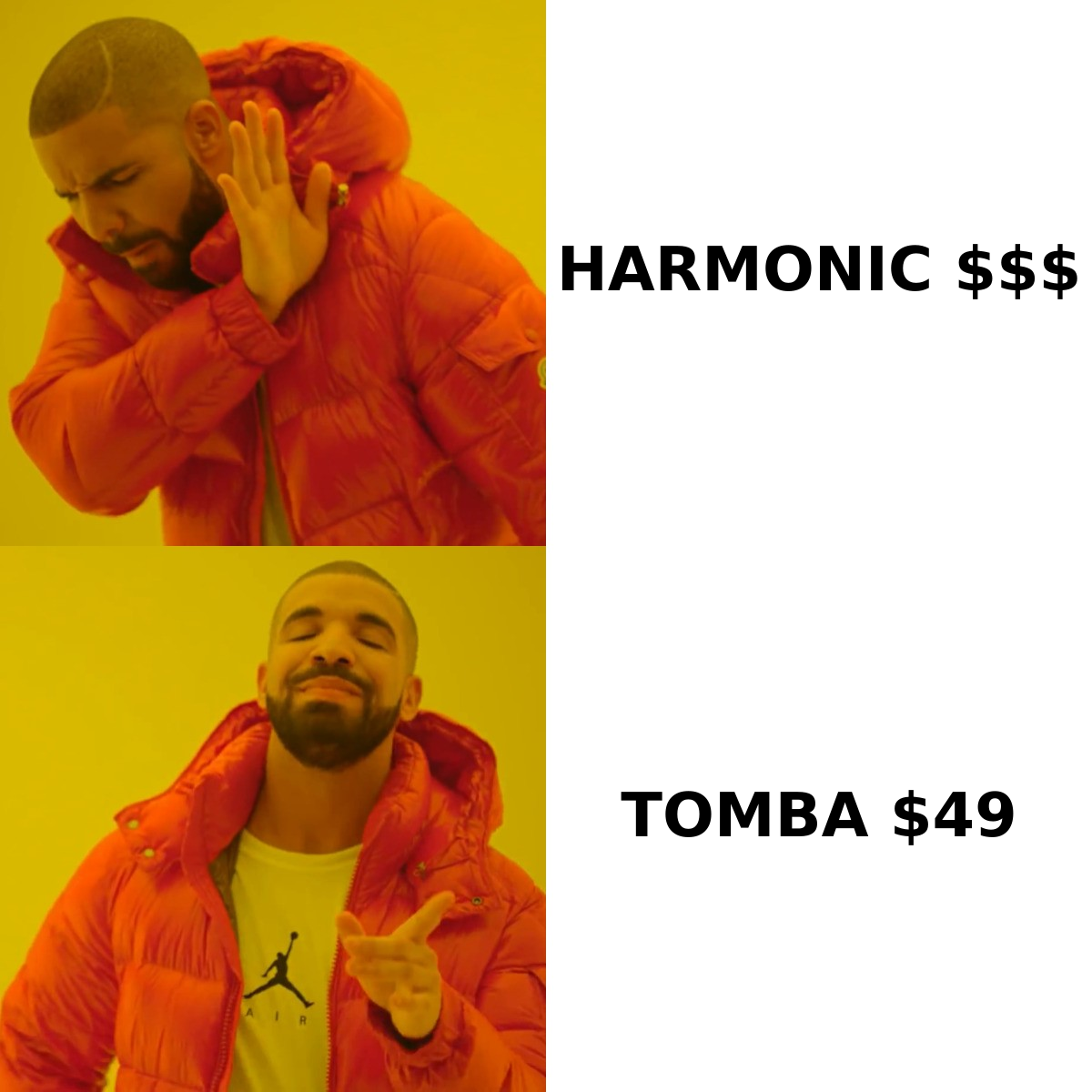
- The price gap is huge. GrowMeOrganic starts near $49/mo, self-serve. Harmonic is quote-only and seat-based. Most teams land in the four- to five-figure range per year.
- Neither one verifies email well. GrowMeOrganic guesses address patterns. Harmonic gives you people and signals, not always a live inbox. You still need SMTP checks.
- Pick by the job. Need cheap SMB lists at volume? GrowMeOrganic. Need to track funding, hiring, and founder moves? Harmonic. Need clean, sendable emails? Use a dedicated finder and verifier.
- The usual mistake is paying for a signal platform, then emailing 22% bad addresses. Fix the contact layer first. It is the cheapest part of the stack.
What is GrowMeOrganic?#
GrowMeOrganic is an all-in-one prospecting suite built around a Chrome extension. You scrape LinkedIn Sales Navigator lists, Google Maps results, or company websites. It then guesses email addresses from name patterns and its own database. You send drip campaigns from the same dashboard.
Price is its whole identity. The tool grew on lifetime deals and "unlimited credits" promises. That is why you see it in agency, freelancer, and SMB stacks. Those buyers need 10,000 rows this month and cannot sign a per-credit contract. Scraping, enrichment, sequencing, a light CRM, and warmup all sit under one login. The coverage is broad but thin.
The trade-off is data depth. GrowMeOrganic is strongest on the long tail: local shops, small agencies, regional SMBs. It is weakest on precise company filters. "Every dentist in Ohio" works fine. "Series A companies that hired a VP of Engineering in the last 60 days" does not.
What is Harmonic?#
Harmonic is a different animal. It maps roughly 20 million private companies and hundreds of millions of people. Its focus is change over time: headcount growth, funding rounds, founder exits, web traffic, GitHub and app-store traction.
Its first buyers were venture funds. Sourcing teams want to see a company two weeks after it incorporates, before anyone else lists it. In recent years it has moved into sales. RevOps teams use the signals to rank accounts and build territories. There is an API, a Chrome extension, and CRM plug-ins, so a "raised Series B" event can trigger a play.
Harmonic is not a cold email platform. There is no sequencer. Verified work emails are patchy on purpose. The product answers who is interesting and why now, not what address will actually deliver.
GrowMeOrganic vs Harmonic: how do they compare?#
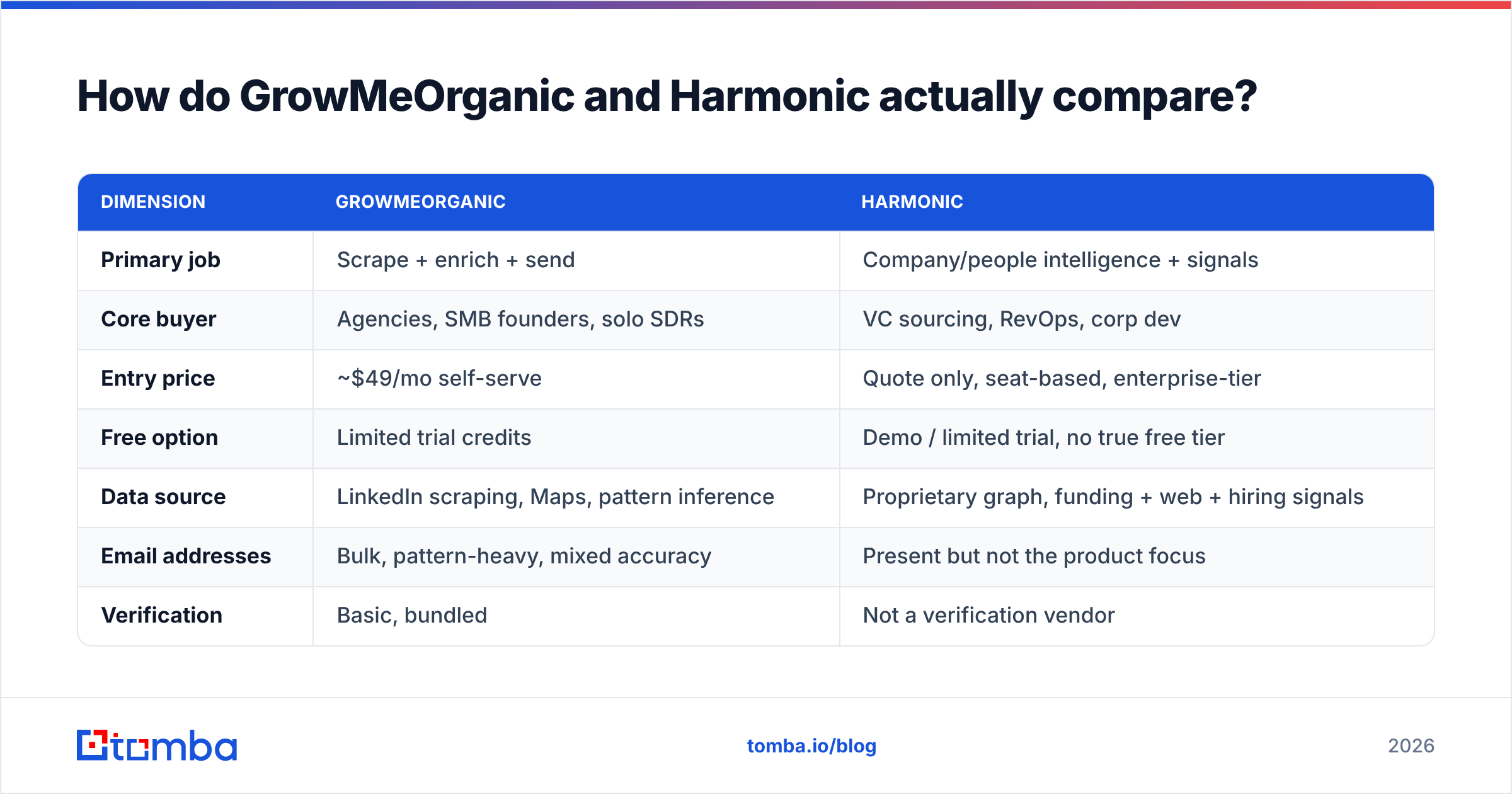
| Dimension | GrowMeOrganic | Harmonic |
|---|---|---|
| Primary job | Scrape + enrich + send | Company/people intelligence + signals |
| Core buyer | Agencies, SMB founders, solo SDRs | VC sourcing, RevOps, corp dev |
| Entry price | ~$49/mo self-serve | Quote only, seat-based, enterprise-tier |
| Free option | Limited trial credits | Demo / limited trial, no true free tier |
| Data source | LinkedIn scraping, Maps, pattern inference | Proprietary graph, funding + web + hiring signals |
| Email addresses | Bulk, pattern-heavy, mixed accuracy | Present but not the product focus |
| Verification | Basic, bundled | Not a verification vendor |
| Sequencing | Built in (drip campaigns) | None — export or API |
| API | Limited | Strong, GraphQL, well documented |
| Best for | Volume SMB lists on a budget | Timing plays on private companies |
| Worst for | Enterprise ICP precision | Anyone who needs cheap contact volume |
The GrowMeOrganic vs Harmonic table makes the point better than a paragraph can. These tools sit at opposite ends of one pipeline. GrowMeOrganic answers how do I contact 5,000 people cheaply. Harmonic answers which 200 companies are worth contacting this quarter.
Teams who compare them are usually asking one of two things. Can a $49 scraper replace an expensive data contract? Or is my scraper's data so bad that I should pay for real intelligence? Both questions share one answer, and it is neither vendor.
GrowMeOrganic vs Harmonic: which has better data?#
They fail in different ways. Price each failure on its own.
GrowMeOrganic makes addresses up. Pattern enrichment sees that most people at a domain use first.last@domain.com. It then builds that address for everyone and ships it with a confidence score. On simple, common domains this works well. On domains with mixed formats, past acquisitions, or catch-all servers, it returns strings that bounce. Reviews on G2 split along that line. Users love the price. They flag bounce rates as the recurring complaint.
Harmonic leaves gaps instead. The graph is strong on company facts: funding, team growth, product signals. Its people data is good for spotting the right person. But spotting someone is not the same as reaching them. You will often get a name, a title, a LinkedIn URL, and a work history with no verified email. A VC writing one personal note can live with that. An SDR sending 400 touches a week cannot.
So here is the honest score:
- Company facts — Harmonic wins, clearly. Fresh data on private companies is its whole reason to exist.
- Contacts per dollar — GrowMeOrganic wins, clearly. Nothing at $49 matches its raw row count.
- Emails that deliver out of the box — Neither wins. Both need an outside verification pass first.
- Timing signals like funding, hiring, and tech changes — Harmonic, not close.
- Local and SMB coverage — GrowMeOrganic. Maps scraping reaches shops no data graph bothers to index.
- Compliance — Harmonic is safer for regulated buyers. Scraping LinkedIn through an extension carries platform risk, and GrowMeOrganic users carry it themselves.
Item three is where most stacks bleed money. A 20% bounce rate on a 5,000-send month is not just 1,000 wasted contacts. It also damages your sending domain, which drags down every later campaign. Run the list through a real email verifier before the first send. It costs far less than fixing your reputation.
Is GrowMeOrganic worth it at $49/mo?#
Yes, with one caveat. Budget for verification on top, and treat the built-in sender as optional.
The economics work because guessing an email costs almost nothing. That is also why accuracy swings so much. Treat the tool as a list builder, not a source of truth, and the price is hard to beat. Agencies running local outreach — home services, clinics, restaurants, regional retail — get real value.
Where it breaks down:
- Catch-all domains. Many B2B domains accept every address at the server level. A guessed email neither bounces nor reaches a human. You need a catch-all verifier to tell real mailboxes from black holes.
- Big-company targets. Email formats split across subsidiaries. Pattern guessing degrades fast.
- Sender reputation. Sending a scraped, unverified list from the same tool that built it stacks all the risk in one place. Most seasoned teams send from a separate platform with warmup and domain rotation.
- Support load. A large lifetime-deal user base creates support pressure, and it shows in review sites. Set your expectations.
Is Harmonic worth an enterprise contract?#
It depends on one thing: is timing your bottleneck?
Some teams win when they reach a company within weeks of an event. A raise, a new exec, a hiring push in one function. If that is you, Harmonic pays for itself fast. Funds and startup-focused sales teams say the freshness edge is real, especially for pre-seed and seed companies. Other databases catalog those months late.
If your bottleneck is volume, mature-company coverage, or plain contact data, you are overpaying. A general database plus a good finder covers that at a tenth of the cost.
A quick way to decide:
- Buy Harmonic if your targets are private, venture-backed, and fast-moving, and your plays run off events.
- Skip Harmonic if your targets are stable: established SMBs, local services, mature mid-market. Last week's funding news does not help you there.
- Pair Harmonic with a finder if you do buy it. The graph tells you who to reach. A finder tells you how.
What does a stack that uses both actually look like?#
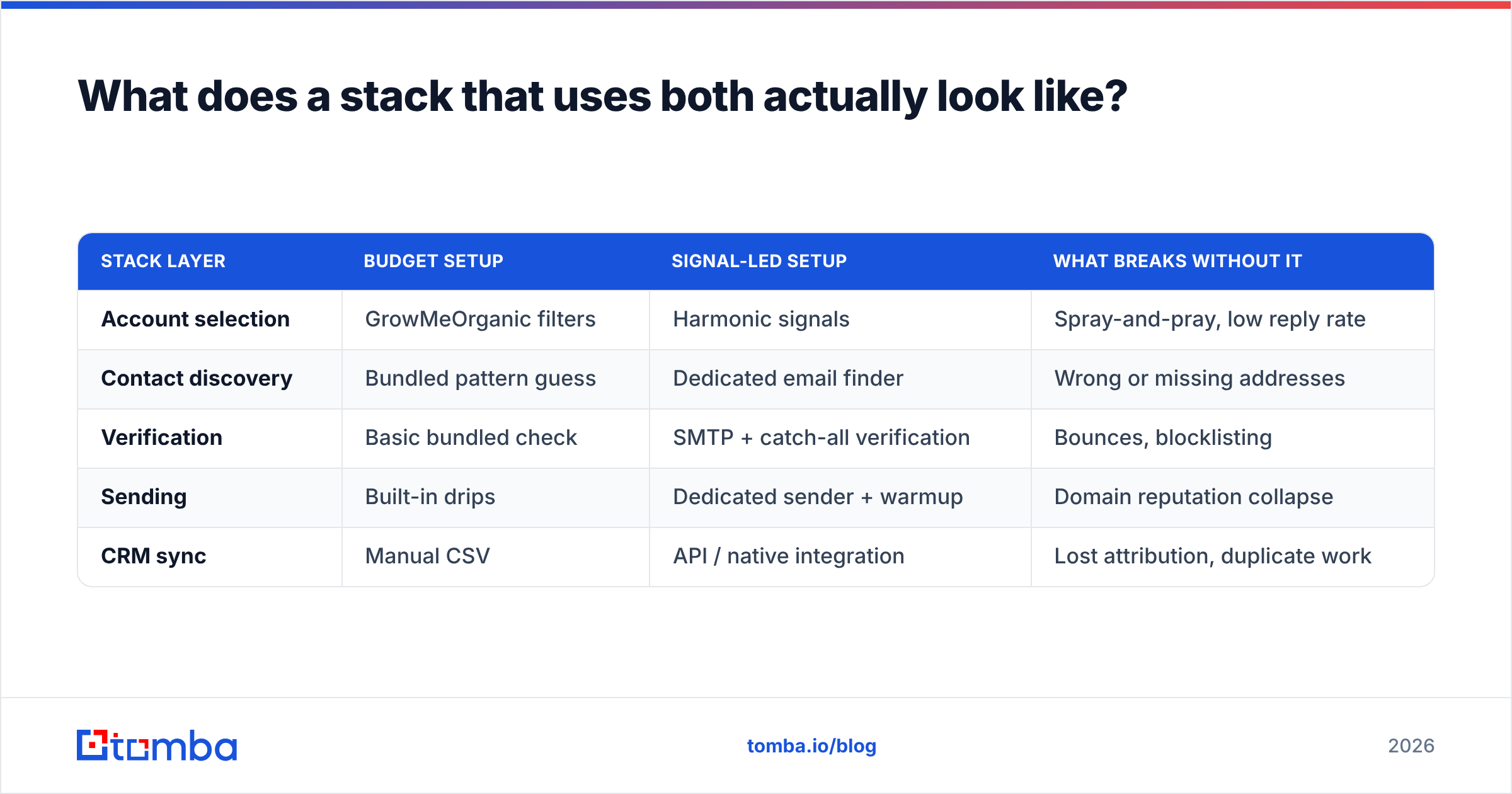
The mature setup treats them as layers, not rivals:
- Signal layer — Harmonic, or a similar source, picks the account list and the reason to reach out this month.
- Contact layer — a finder turns those accounts into real, verified work emails. This is where a domain search beats scraping. You give it a domain and get back the people plus the format the company really uses.
- Hygiene layer — bulk verification with SMTP checks, catch-all handling, and role-address filtering, before anything hits a sequence. Run it through a bulk email finder so the whole list clears in one pass.
- Send layer — a dedicated cold email tool with warmup, domain rotation, and reply detection.
- Sync layer — write it all back to the CRM through an API so attribution survives.
GrowMeOrganic tries to be layers one through four in one $49 product. That is a fair choice when $49 is your whole budget. It stops being fair the moment bounces cost you more than the software. This is the real GrowMeOrganic vs Harmonic lesson: they solve different layers, so most teams still need a layer neither one covers.
| Stack layer | Budget setup | Signal-led setup | What breaks without it |
|---|---|---|---|
| Account selection | GrowMeOrganic filters | Harmonic signals | Spray-and-pray, low reply rate |
| Contact discovery | Bundled pattern guess | Dedicated email finder | Wrong or missing addresses |
| Verification | Basic bundled check | SMTP + catch-all verification | Bounces, blocklisting |
| Sending | Built-in drips | Dedicated sender + warmup | Domain reputation collapse |
| CRM sync | Manual CSV | API / native integration | Lost attribution, duplicate work |
How does Tomba fit next to either tool?#
Tomba is not a data graph and not a sequencer. It sits in the contact layer — the part both tools leave half-solved.
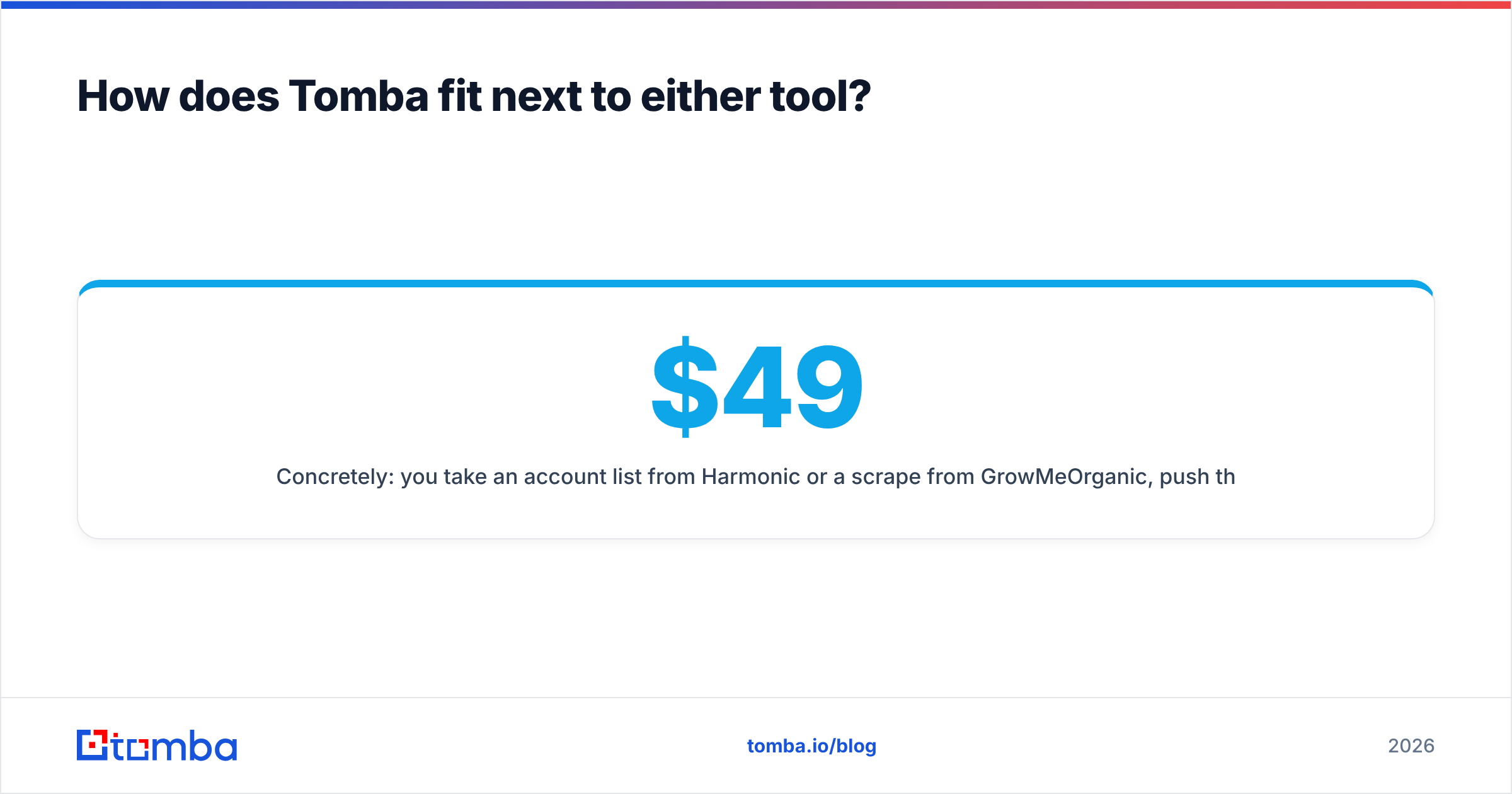
Here is the flow. Take an account list from Harmonic, or a scrape from GrowMeOrganic. Push the domains through Tomba. You get back verified addresses with sources and confidence scores, plus SMTP checks and catch-all handling. Pricing is public: a free tier at 25 searches/mo, Starter at $49/mo, Growth at $99/mo, Pro at $249/mo, and custom Enterprise. You can read the full Tomba pricing page yourself, which already sets it apart from quote-only vendors.
Why teams add it instead of swapping tools:
- Sources are shown. Every result says where it came from, which matters in a compliance review.
- Catch-all is flagged, not quietly marked valid.
- The Tomba API runs the same engine as the UI. A warehouse job behaves like a manual lookup.
- No sending. That is on purpose. Keeping discovery apart from sending stops a bad list from burning a good domain.
GrowMeOrganic vs Harmonic: which should you choose in 2026?#
The short version:
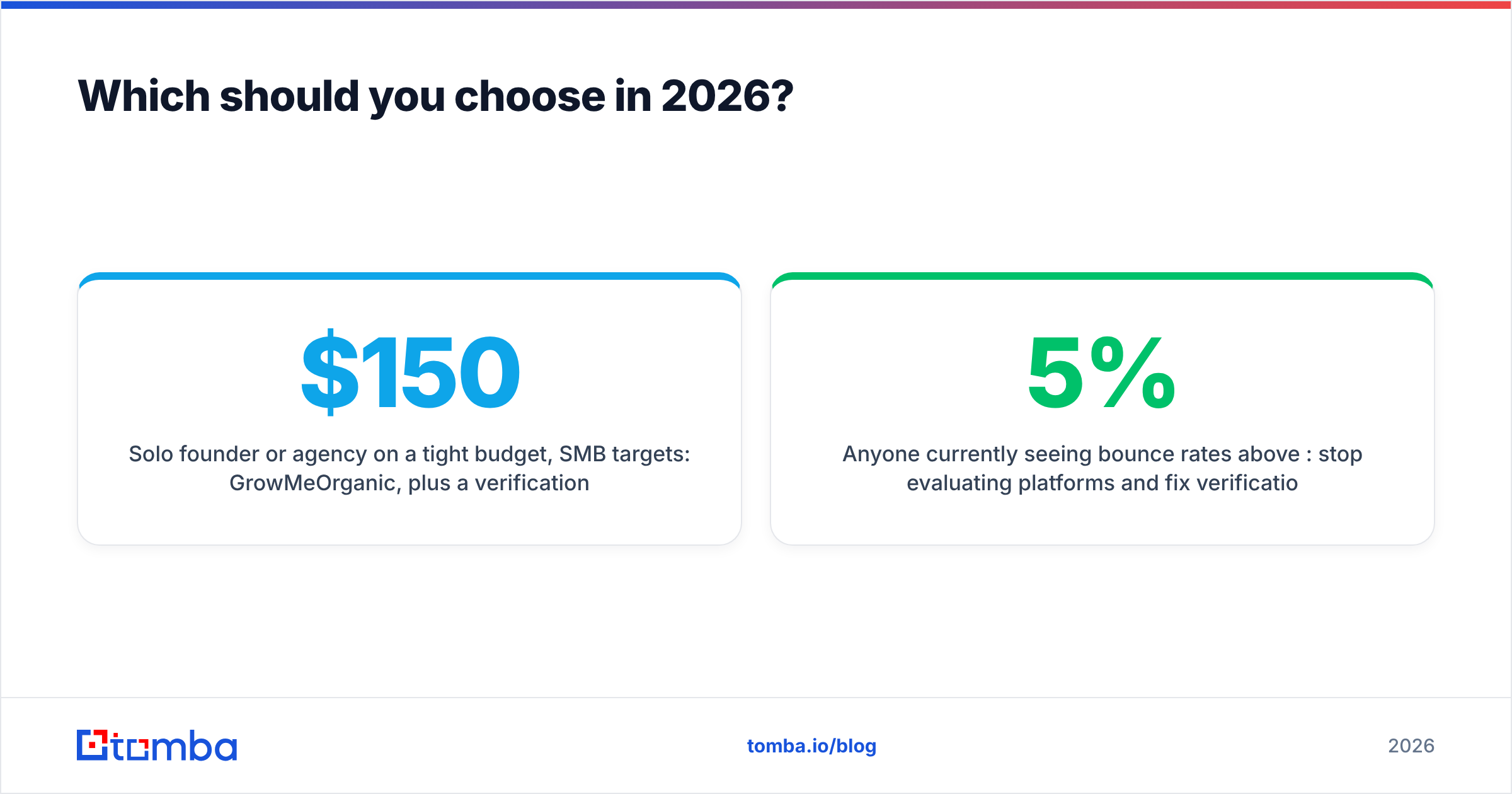
- Solo founder or agency on a tight budget, SMB targets: GrowMeOrganic, plus a verification pass before every send. You stay under $150/mo and under a 3% bounce rate.
- VC, corp dev, or a team selling into startups: Harmonic for the graph, plus a finder to make people reachable. The contract only pays off if timing drives your win rate.
- Mid-market team with a stable ICP: neither, as your main system. Buy a solid contact database and a finder/verifier. Spend the rest on sequencing and SDRs.
- Anyone with bounce rates above 5%: stop shopping and fix verification first. It is a one-week project with a better return than any migration.
People frame this as "GrowMeOrganic vs Harmonic," but the real problem is usually a fuzzy pipeline. Split the work into account selection, contact discovery, and delivery. The answer stops being a versus and starts being an assembly.
Start with the layer that fails most often. Run 25 of your current accounts through the Tomba Email Finder for free. Compare the results to what your scraper or data platform gave you. If the verified rate jumps, you just found the cheapest fix in your stack. Then you can settle GrowMeOrganic vs Harmonic on the merits, not on bounce anxiety.
Related guides#
Ready to find emails that actually work?
Join 150,000+ professionals who stopped guessing and started sending. Free credits on signup — no credit card required.
Get the Tomba newsletter
Practical outbound tactics and product updates — once every two weeks.
About the author