Leadrocks vs Span Global Services: Which B2B Data Source Wins?
One is a self-serve contact database with a LinkedIn extension; the other builds custom B2B lists for you. Here's how Leadrocks and Span Global Services compare on freshness, cost model and fit.
TL;DR
- Leadrocks is a self-serve B2B contact database with a Chrome extension. You search, filter and export contacts yourself, in real time.
- Span Global Services is a managed data vendor. You give them a brief, they build a custom list, and they also sell append, cleansing and research services.
- If you run outbound daily and want to control your own targeting, Leadrocks fits better. If you want a large, one-off list in a niche vertical such as healthcare or IT decision-makers, and would rather hand the work off, Span Global Services is the better fit.
- Neither tool removes the need to verify addresses before you send. Whichever source you use, run an email verification pass on every export.
- The two pricing models work differently: Leadrocks sells a subscription with credits, while Span Global Services quotes each project. Compare cost per usable contact, not the sticker price.
What is Leadrocks?#
Leadrocks is a B2B contact database built for salespeople and recruiters who do their own prospecting. It has three main parts:
- A searchable web database with filters for job title, seniority, industry, company size and location.
- A Chrome extension that shows contact details while you browse LinkedIn profiles and company pages.
- Export of the contacts you pick, including work emails and, where available, phone numbers, to CSV or your outreach stack.
The product is aimed at individual reps and small teams. You don't talk to anyone to get data. You log in, build a filter, check the results and export. That speed is the main selling point: you can go from an ICP idea to a sequence-ready list in one afternoon.
The downside is the same as with every self-serve database. Records are only as fresh as the provider's last refresh cycle, and you do the quality control. If you pull 2,000 contacts in a vertical with heavy job turnover, expect some of them to have moved on.
What is Span Global Services?#
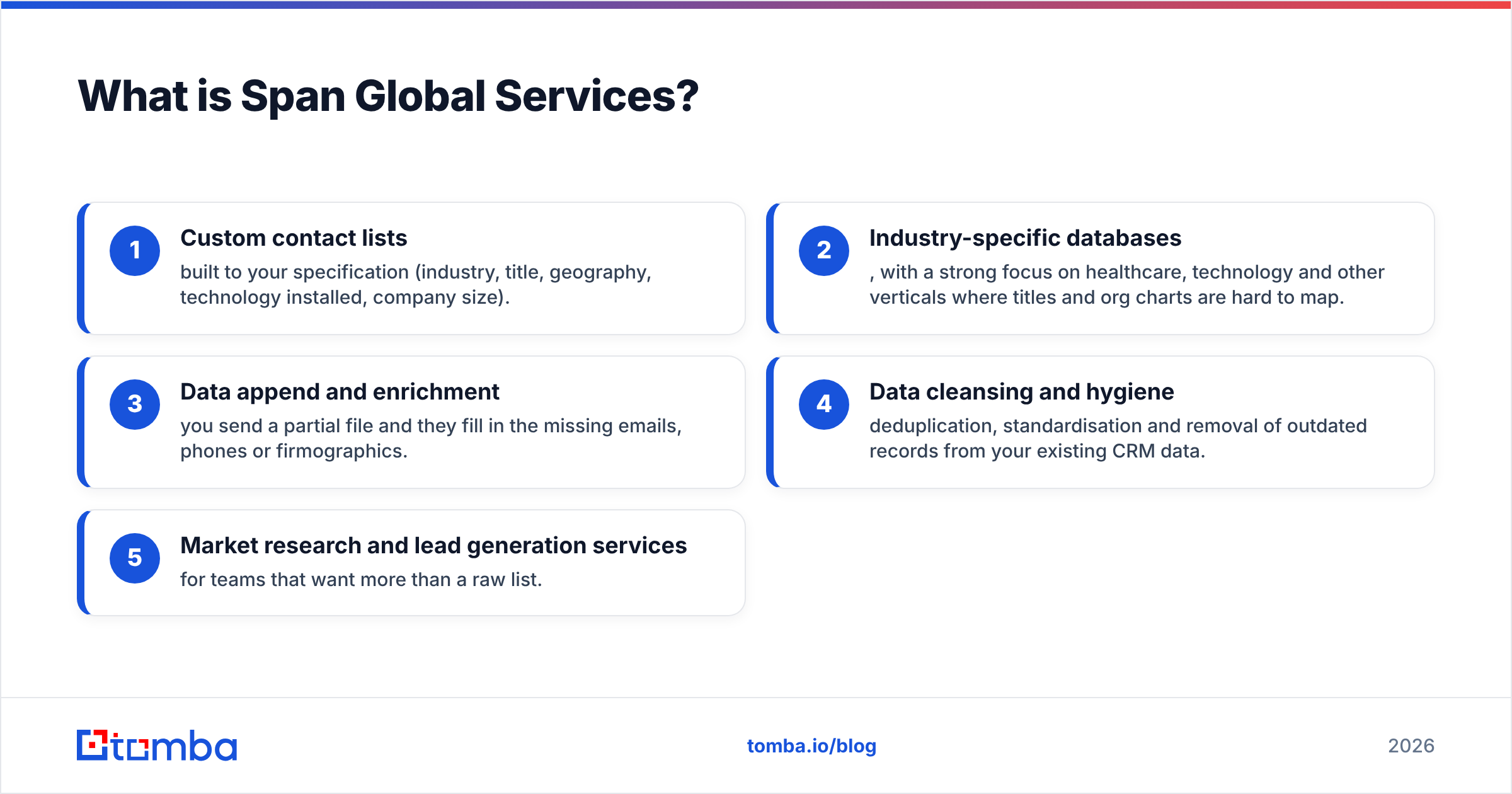
Span Global Services is a B2B data company that works more like an agency than a SaaS tool. Its main offerings are:
- Custom contact lists built to your specification (industry, title, geography, technology installed, company size).
- Industry-specific databases, with a strong focus on healthcare, technology and other verticals where titles and org charts are hard to map.
- Data append and enrichment: you send a partial file and they fill in the missing emails, phones or firmographics.
- Data cleansing and hygiene: deduplication, standardisation and removal of outdated records from your existing CRM data.
- Market research and lead generation services for teams that want more than a raw list.
You don't get a search bar and a credit balance. You get an account contact, a scoping conversation and a delivered file. For some buyers, especially marketing teams planning a campaign or companies entering a new vertical, that is exactly what they want.
How do Leadrocks and Span Global Services compare side by side?#
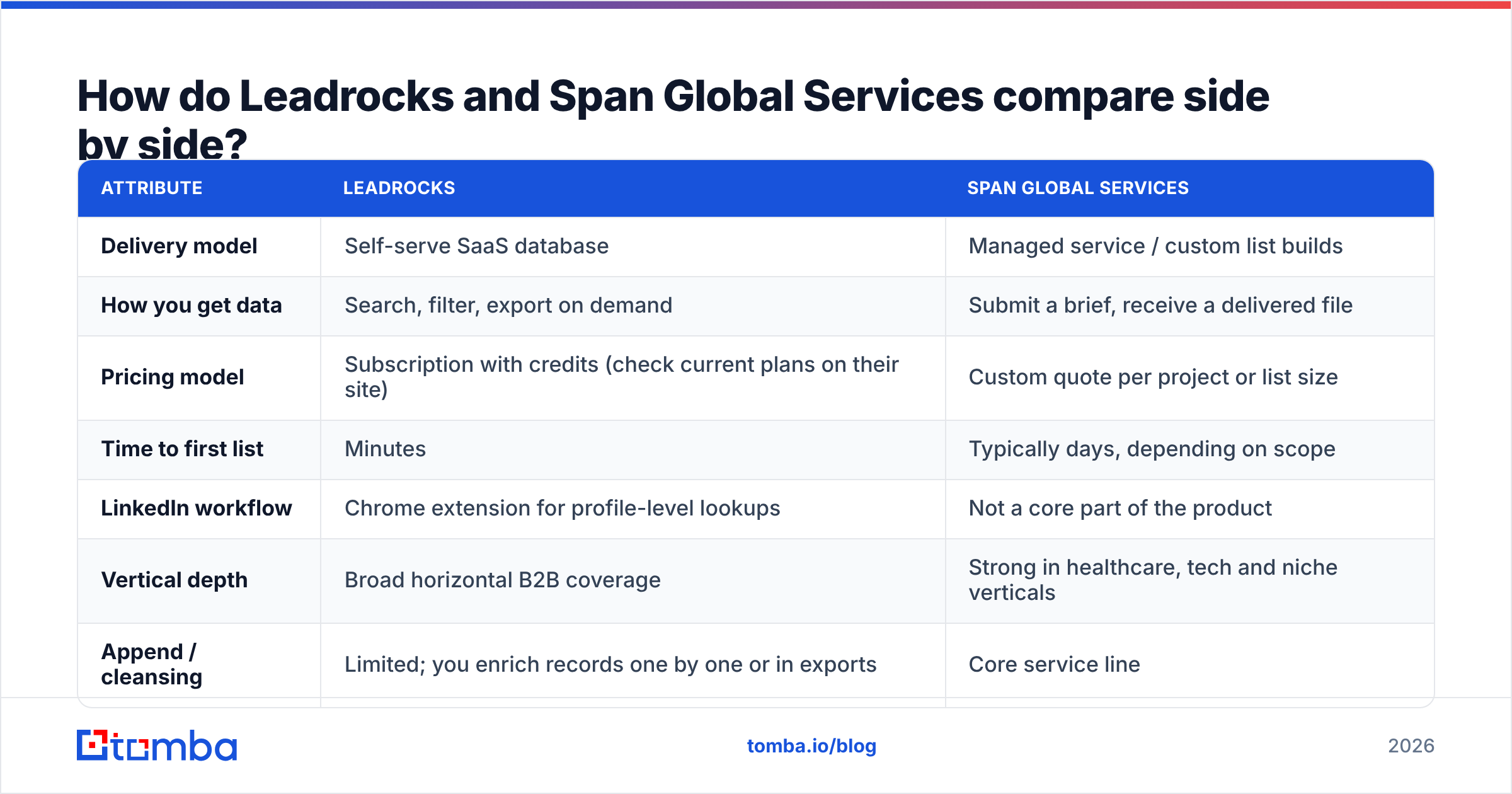
The main difference isn't data quality. It's the operating model. One is software you run yourself. The other is a service that runs for you.
| Attribute | Leadrocks | Span Global Services |
|---|---|---|
| Delivery model | Self-serve SaaS database | Managed service / custom list builds |
| How you get data | Search, filter, export on demand | Submit a brief, receive a delivered file |
| Pricing model | Subscription with credits (check current plans on their site) | Custom quote per project or list size |
| Time to first list | Minutes | Typically days, depending on scope |
| LinkedIn workflow | Chrome extension for profile-level lookups | Not a core part of the product |
| Vertical depth | Broad horizontal B2B coverage | Strong in healthcare, tech and niche verticals |
| Append / cleansing | Limited; you enrich records one by one or in exports | Core service line |
| Best for | SDRs, founders, recruiters doing daily prospecting | Marketing ops, ABM campaigns, vertical expansion |
| Main risk | Record decay between refreshes; you own QA | Static snapshot starts ageing on delivery |
A useful way to think about it: Leadrocks is a well-stocked kitchen where you cook every night. Span Global Services is a caterer you book for a big event. Both feed people. They solve different problems.

Which one has more accurate data?#
There is no clean head-to-head accuracy benchmark for these two vendors, and you should be wary of anyone who claims one. Accuracy depends heavily on:
- Vertical. A database can be excellent for SaaS mid-market and weak for regional hospitals, or the other way around.
- Seniority. C-level contacts are easier to map than individual contributors, but they are also more heavily targeted and more often protected by catch-all servers.
- Geography. North American coverage is usually deeper than coverage in APAC, LATAM or the Middle East.
- Time since collection. B2B contact data decays steadily as people change jobs, get promoted or leave companies.
The model matters here. With Leadrocks, data is pulled at the moment you export it, so you get whatever state the database is in that day. With Span Global Services, the list is typically validated during the build. That is a real advantage on delivery day, but the file starts ageing as soon as it lands in your inbox. If the campaign doesn't launch for six weeks, you are sending to a six-week-old snapshot.
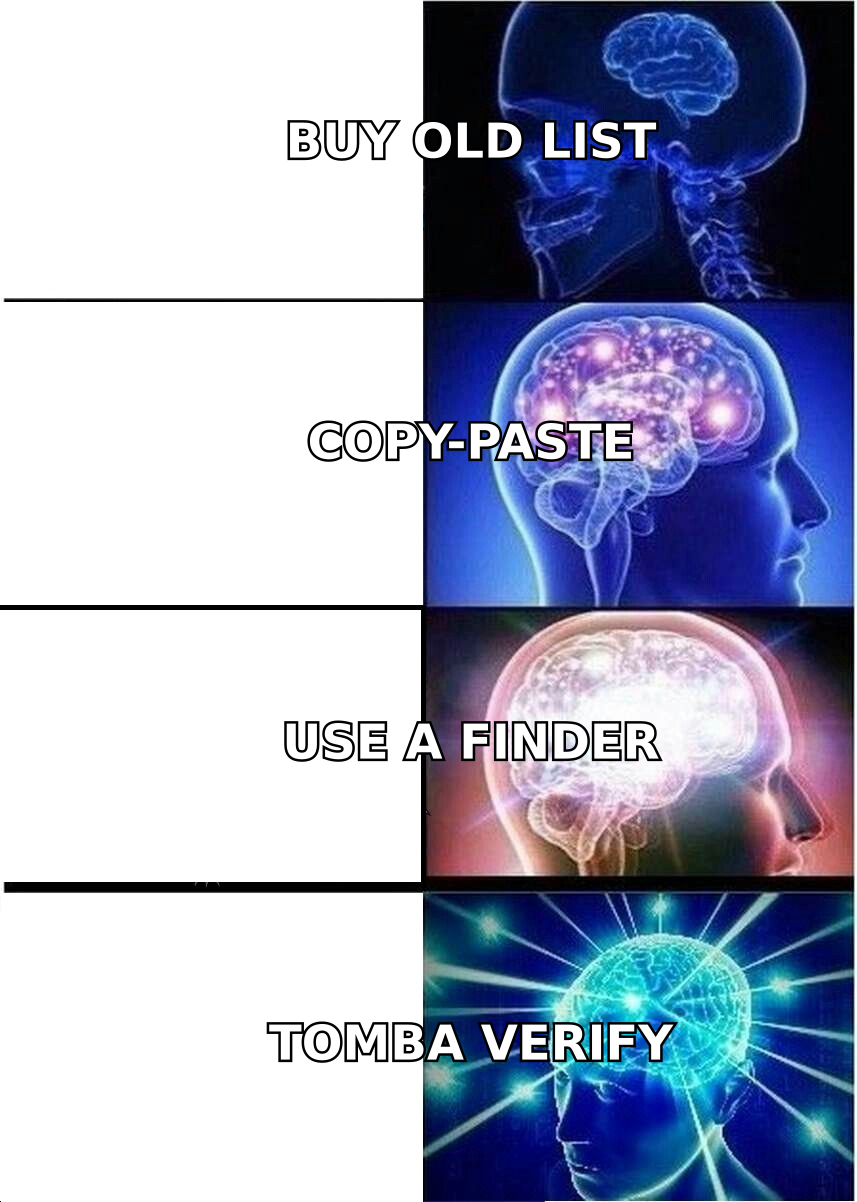
In practice, the right approach is the same whichever vendor you pick: verify before you send. Run every export through an email verifier and treat catch-all and "risky" results separately from confirmed-valid ones. That single step protects your sender reputation more than any vendor's accuracy claim.
How does pricing compare?#
This is where buyers most often compare the wrong things.
Leadrocks uses a subscription-plus-credits model. You pay monthly or annually for a set number of contact reveals or exports. Plans change, so check the current tiers on the Leadrocks site before you budget. What matters is how your effective cost per usable contact compares:
- Credits spent on contacts that bounce are wasted.
- Credits spent on contacts outside your ICP (from loose filters) are wasted.
- Credits left unused at the end of the month may or may not roll over, so read the terms.
Span Global Services quotes each project. The price depends on list size, vertical, how many data points you want per record (email, direct dial, technographics, etc.) and whether you add append or cleansing. For large, well-defined campaigns, a custom quote can come out cheaper per record than self-serve credits. For small, changing needs, the minimum project size can make it poor value.
A quick way to compare quotes:
- Define the same ICP for both. Titles, industries, headcount band and geography.
- Ask for a sample. 50–100 records from each source.
- Verify both samples with the same tool.
- Divide total cost by the number of valid, on-ICP contacts. That number is your real price.
Buyers who skip step 3 end up comparing marketing claims, not data.
Which is better for compliance and data sourcing?#
Both vendors operate in a regulated space. If you email contacts in the EU or UK, GDPR applies to how the data was collected and how you process it. You need a lawful basis (usually legitimate interest for B2B outreach), a clear opt-out, and the ability to explain where you got the contact.
Ask each vendor the same questions:
- Where does the data come from? Public web sources, partner networks, user-contributed data, research teams, or a mix?
- How often is it refreshed or re-verified?
- Do they honour removal requests across their whole database?
- Can they provide documentation you can show your legal or security team?
Managed vendors like Span Global Services usually have a sales process that makes it easy to request this documentation during procurement. With self-serve tools like Leadrocks, the answers are generally in the privacy policy and help docs, and you may need to email support for anything more detailed. Neither approach is better in itself. Just make sure you actually get the answers before you import 10,000 records into your CRM.
Who should choose Leadrocks?#
Leadrocks is the better fit if most of these describe you:
- You prospect every day. SDRs and founders who build lists weekly, or daily, need on-demand access, not a two-week turnaround.
- You live on LinkedIn. The Chrome extension lets you research a person and pull contact details in the same flow, which fits well with LinkedIn outreach.
- Your ICP changes often. Testing a new persona this week and a new region next week is cheap with filters and expensive with custom list builds.
- You want predictable monthly spend. A subscription is easier to plan around than project quotes.
- You have someone to do QA. Self-serve means you own verification, deduplication and CRM hygiene.
The main caveat is scale. If you need 50,000 contacts in one vertical with specific technographic filters, pulling them credit by credit gets tedious and may cost more than a managed build.
Who should choose Span Global Services?#
Span Global Services is the better fit if most of these apply:
- You need a large list for a defined campaign. Trade-show follow-up, ABM launches or a direct-mail-plus-email push into a new vertical.
- You're targeting hard-to-map verticals. Healthcare is the classic example: physicians, practice managers and hospital administrators don't sit neatly in LinkedIn-style job titles.
- Your CRM is a mess. Their append and cleansing services can fix a decaying database in one project, which a self-serve tool won't do for you.
- You'd rather not run the tooling. Marketing teams without a dedicated ops person often prefer a delivered, validated file.
- Procurement prefers a vendor relationship. Some enterprises find it easier to buy a scoped service with an SOW than a per-seat SaaS tool.
The caveat here is freshness and flexibility. Once the file is delivered, keeping it current is your job, and changing the targeting usually means a new project.
Is there a middle ground between the two models?#
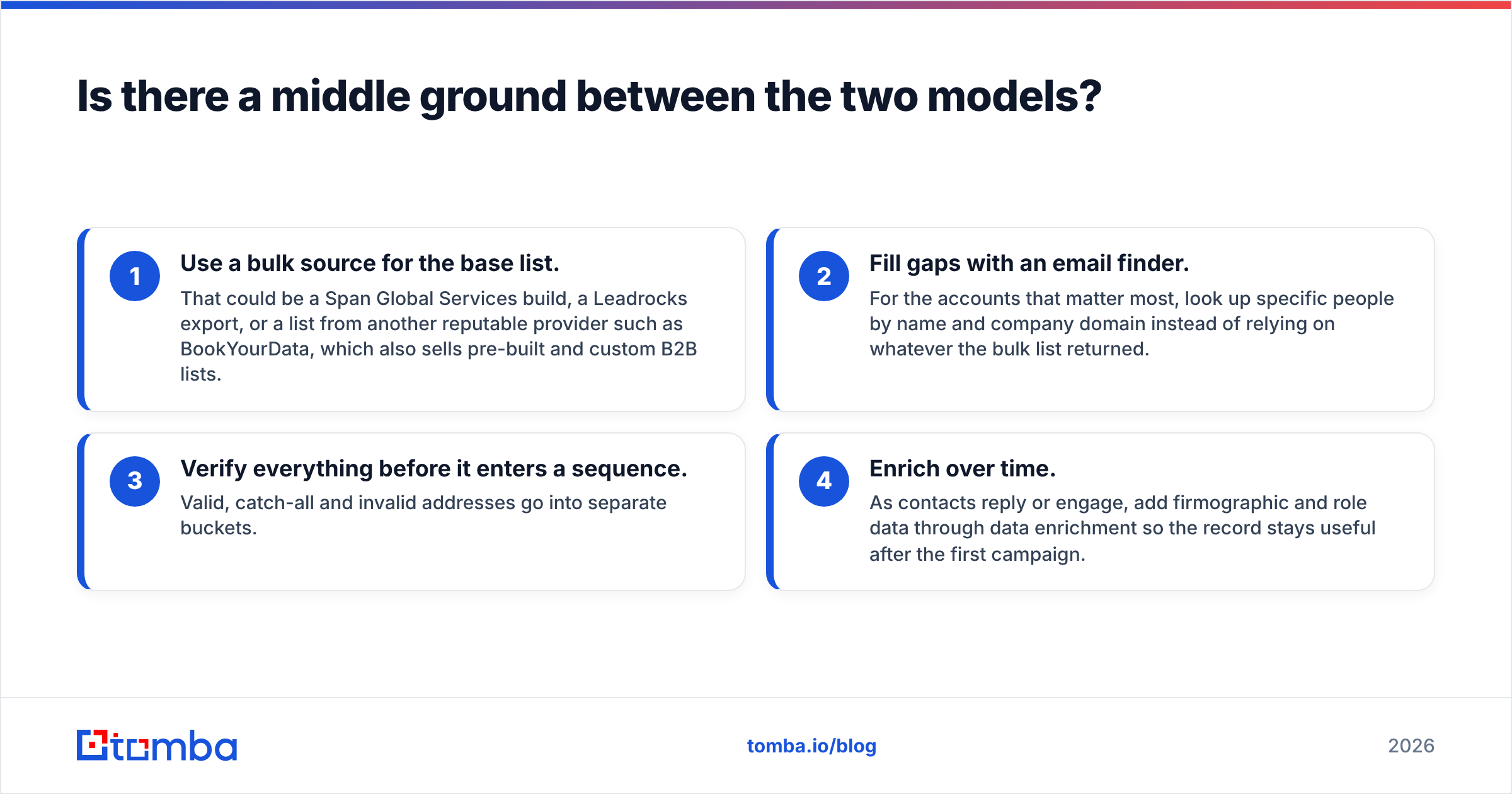
Yes, and many teams end up there without planning to. The pattern looks like this:
- Use a bulk source for the base list. That could be a Span Global Services build, a Leadrocks export, or a list from another reputable provider such as BookYourData, which also sells pre-built and custom B2B lists.
- Fill gaps with an email finder. For the accounts that matter most, look up specific people by name and company domain instead of relying on whatever the bulk list returned.
- Verify everything before it enters a sequence. Valid, catch-all and invalid addresses go into separate buckets.
- Enrich over time. As contacts reply or engage, add firmographic and role data through data enrichment so the record stays useful after the first campaign.
This hybrid approach combines the scale of a managed list with the precision of on-demand lookups. It also means no single vendor's weak spots, whether a thin vertical, a stale refresh cycle or a bad regional segment, can sink a whole campaign.
If you want to read how peers rate these vendors in practice, user reviews on G2 are a reasonable next step. Filter for reviewers in your industry and company size, because a startup SDR and an enterprise marketing ops lead will judge the same product very differently.
What are the pros and cons of each?#
Leadrocks
- Pro: Speed. Lists in minutes, not days.
- Pro: LinkedIn workflow. The extension fits naturally into social-first prospecting.
- Pro: Flexibility. Change filters as fast as you change your mind.
- Con: You own QA. Verification, deduplication and ICP discipline are your responsibility.
- Con: Credit maths. Wasted credits on bounces or off-target contacts raise your real cost.
Span Global Services
- Pro: Vertical depth. Strong in industries where self-serve databases often thin out.
- Pro: Full-service options. Append, cleansing and research under one vendor.
- Pro: Validated at delivery. Lists are typically checked during the build.
- Con: Turnaround time. Not suited to same-day list building.
- Con: Static snapshots. Data starts ageing on delivery, and new targeting usually means a new project.
So, Leadrocks vs Span Global Services: which should you pick?#
For most outbound sales teams running continuous prospecting, Leadrocks is the more practical choice. The self-serve model, LinkedIn extension and subscription pricing match how SDRs and founders actually work.
For marketing and ops teams planning large, vertical-specific campaigns, or teams that need their existing CRM data repaired, Span Global Services is more useful. You're paying for expertise and labour, not just rows in a database.
And if you're unsure, run the sample test: same ICP, 100 records from each, verified with the same tool. Use whichever gives the lower cost per valid, on-ICP contact.
Where does Tomba fit into this?#
Whichever list source you choose, you will still hit the same two problems: gaps (key people missing from the list) and decay (addresses that were valid last quarter and bounce today). That's the job of Tomba Email Finder. Enter a name and company domain, or search a whole domain, and get a professional email address with a confidence score. Then run it through Tomba's verifier before it goes into a sequence. It works alongside Leadrocks exports and Span Global Services files, so you don't have to change vendors to get cleaner data. You can start on the free tier (25 searches a month) and move up to Starter at $49/mo when you need volume. The full breakdown is on the Tomba pricing page.
Related guides#
// get started
Find, verify and enrich your first contacts today
Start on the free plan with 25 searches a month, then scale when your team is ready.
Free plan · No credit card required · GDPR & CCPA
// about the author