LogiKlu Alternatives: 7 Tools for Visitor ID, CRM and Contact Data
LogiKlu combines website visitor tracking with a lightweight CRM, but it tells you which companies visited, not who to email. Here are 7 LogiKlu alternatives, what they cost, and which kind of team each one suits.
TL;DR
- LogiKlu is an SME-focused platform that combines website visitor identification, lead scoring by engagement, and a lightweight CRM. It is useful, but its public review footprint is thin and it stops short of giving you verified, person-level contact data at scale.
- The best LogiKlu alternatives depend on which part of LogiKlu you actually use. If you mainly want to know which companies are visiting your site, look at visitor-ID tools. If you want the pipeline, look at CRMs. If you want named decision-makers you can email, look at contact-data tools.
- Dealfront (Leadfeeder) and Albacross are the closest like-for-like swaps for visitor identification. HubSpot and Pipedrive replace the CRM layer. Apollo and Lusha replace the lead database.
- Tomba covers two of the three jobs: Reveal identifies companies visiting your site, and the Email Finder and Verifier turn those accounts into verified contacts. Plans start at $49/mo, and there is a free tier with 25 searches/mo.
- Before you switch, check your current LogiKlu action limits against the new tool's credit model. That is usually where the real cost difference shows up.
What is LogiKlu, and why are teams looking for alternatives?#
LogiKlu is a sales pipeline automation platform founded in 2020 and based in Saratoga, California. It is positioned as "better than a CRM for SMEs." In practice it does three things:
- Identifies warm accounts from your website traffic. Leads are segmented by product and region and qualified by level of interest and depth of engagement.
- Tracks the customer journey. Page-level analytics flag which topics an account cares about, and configurable alerts fire when an account on your Watch List comes back.
- Manages the pipeline. You get basic CRM features such as lead management and stage tracking, without the setup overhead of a heavyweight system.
LogiKlu also sells B2B lead data. It says it provides around 40 data points per prospect, including name and email. Pricing is tied to monthly action limits plus add-on features, and the full breakdown lives on the LogiKlu pricing page.
Teams tend to start comparing LogiKlu alternatives for a few recurring reasons:
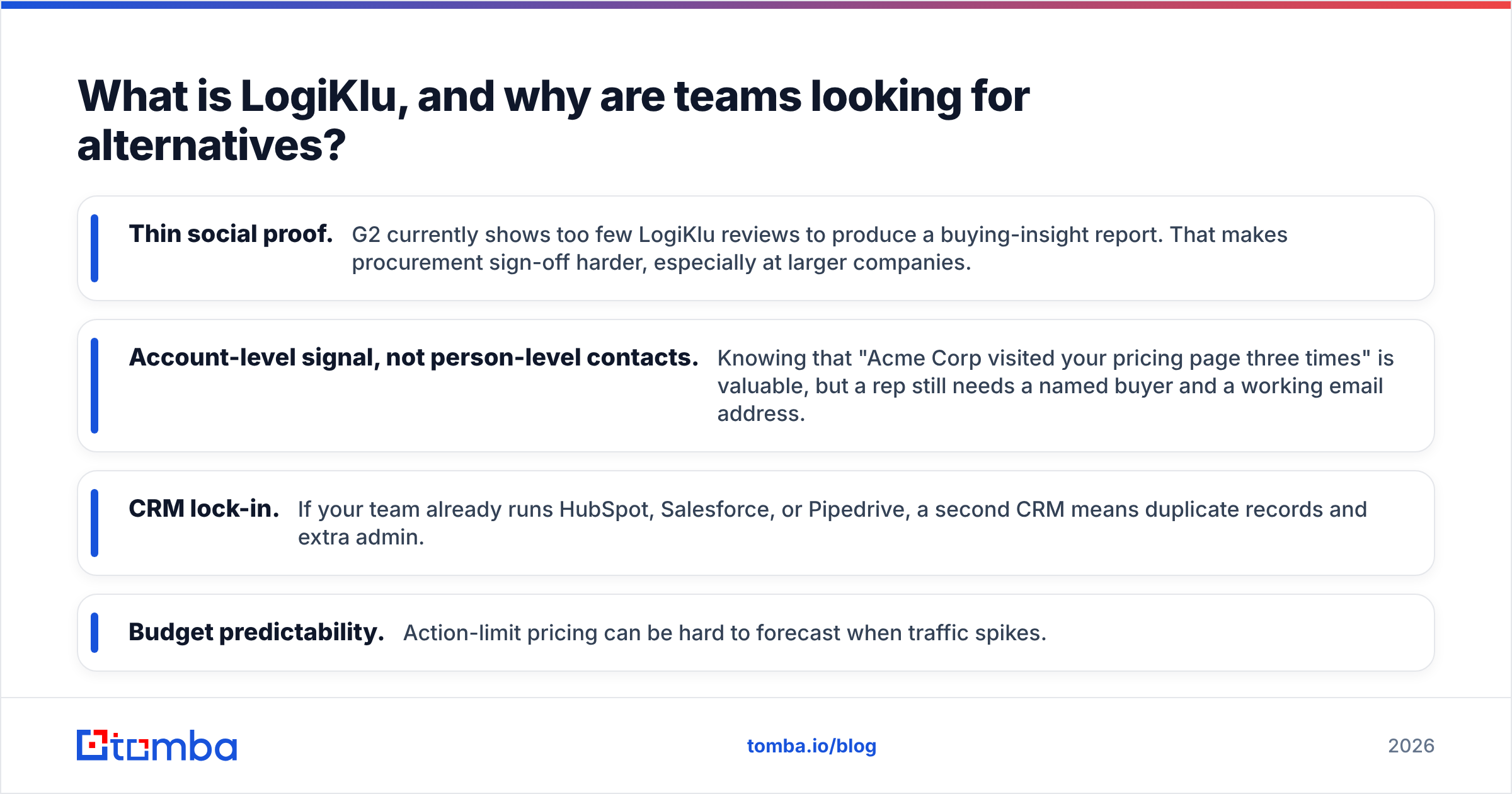
- Thin social proof. G2 currently shows too few LogiKlu reviews to produce a buying-insight report. That makes procurement sign-off harder, especially at larger companies.
- Account-level signal, not person-level contacts. Knowing that "Acme Corp visited your pricing page three times" is valuable, but a rep still needs a named buyer and a working email address.
- CRM lock-in. If your team already runs HubSpot, Salesforce, or Pipedrive, a second CRM means duplicate records and extra admin.
- Budget predictability. Action-limit pricing can be hard to forecast when traffic spikes.
None of these makes LogiKlu a bad product. They just mean it fits some teams better than others.
Which parts of LogiKlu do you actually need to replace?#
This is the question most "alternatives" lists skip, and it is the one that saves you money. LogiKlu bundles several jobs. Most replacement tools do one or two of them well. Map your usage first:
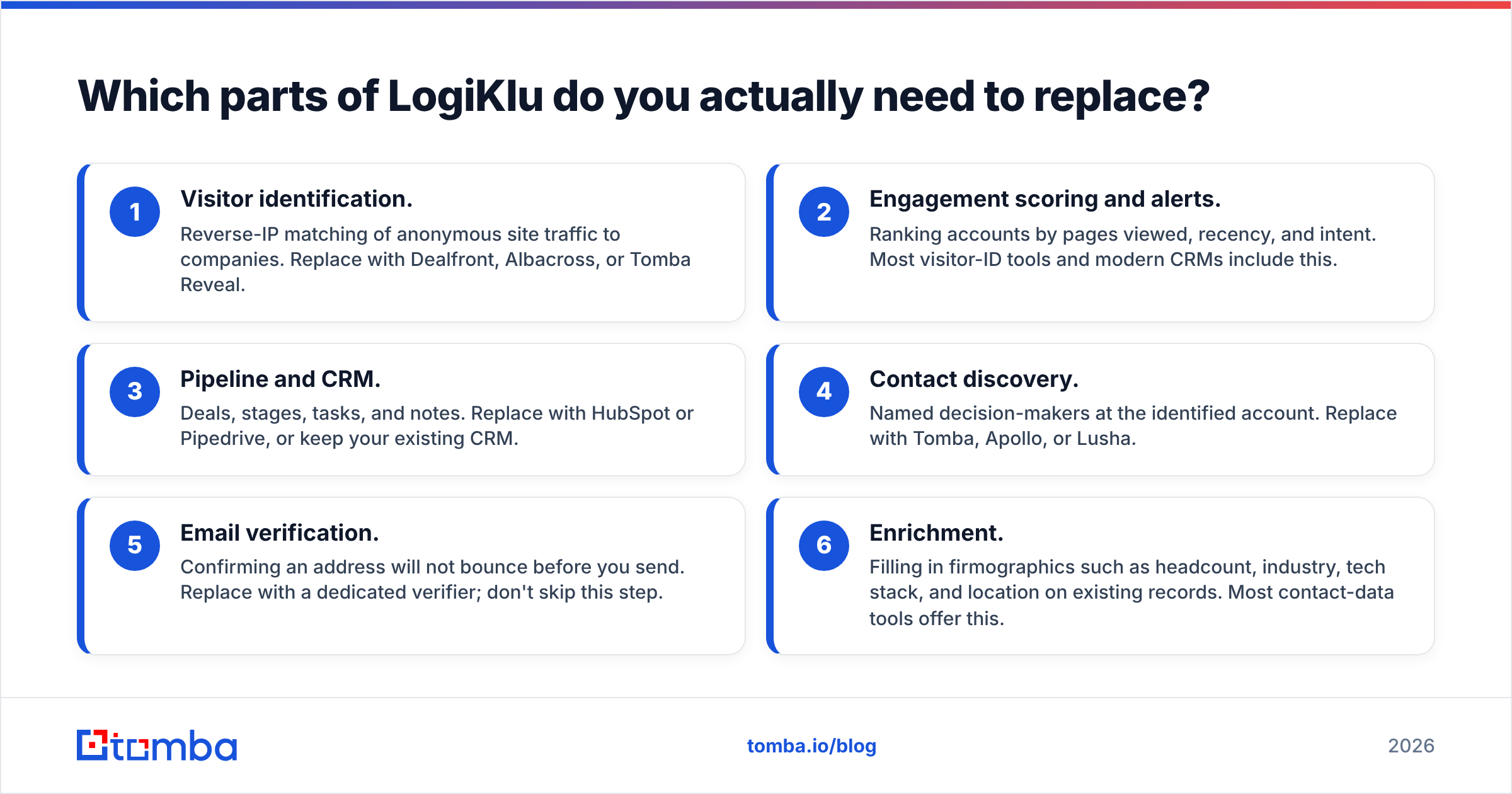
- Visitor identification. Reverse-IP matching of anonymous site traffic to companies. Replace with Dealfront, Albacross, or Tomba Reveal.
- Engagement scoring and alerts. Ranking accounts by pages viewed, recency, and intent. Most visitor-ID tools and modern CRMs include this.
- Pipeline and CRM. Deals, stages, tasks, and notes. Replace with HubSpot or Pipedrive, or keep your existing CRM.
- Contact discovery. Named decision-makers at the identified account. Replace with Tomba, Apollo, or Lusha.
- Email verification. Confirming an address will not bounce before you send. Replace with a dedicated verifier; don't skip this step.
- Enrichment. Filling in firmographics such as headcount, industry, tech stack, and location on existing records. Most contact-data tools offer this.
If you only use jobs 1 and 2, a visitor-ID tool is a direct swap. If you mostly use job 3, you probably don't need a new lead-gen tool at all, just a proper CRM. If what you wanted from LogiKlu was job 4, you need a contact-data platform, and pairing it with a visitor-ID layer usually outperforms any all-in-one.

What are the best LogiKlu alternatives in 2026?#
Here is the shortlist, grouped by the job each tool does best. Pricing reflects publicly listed plans at the time of writing. Vendors change these often, so confirm before you buy.
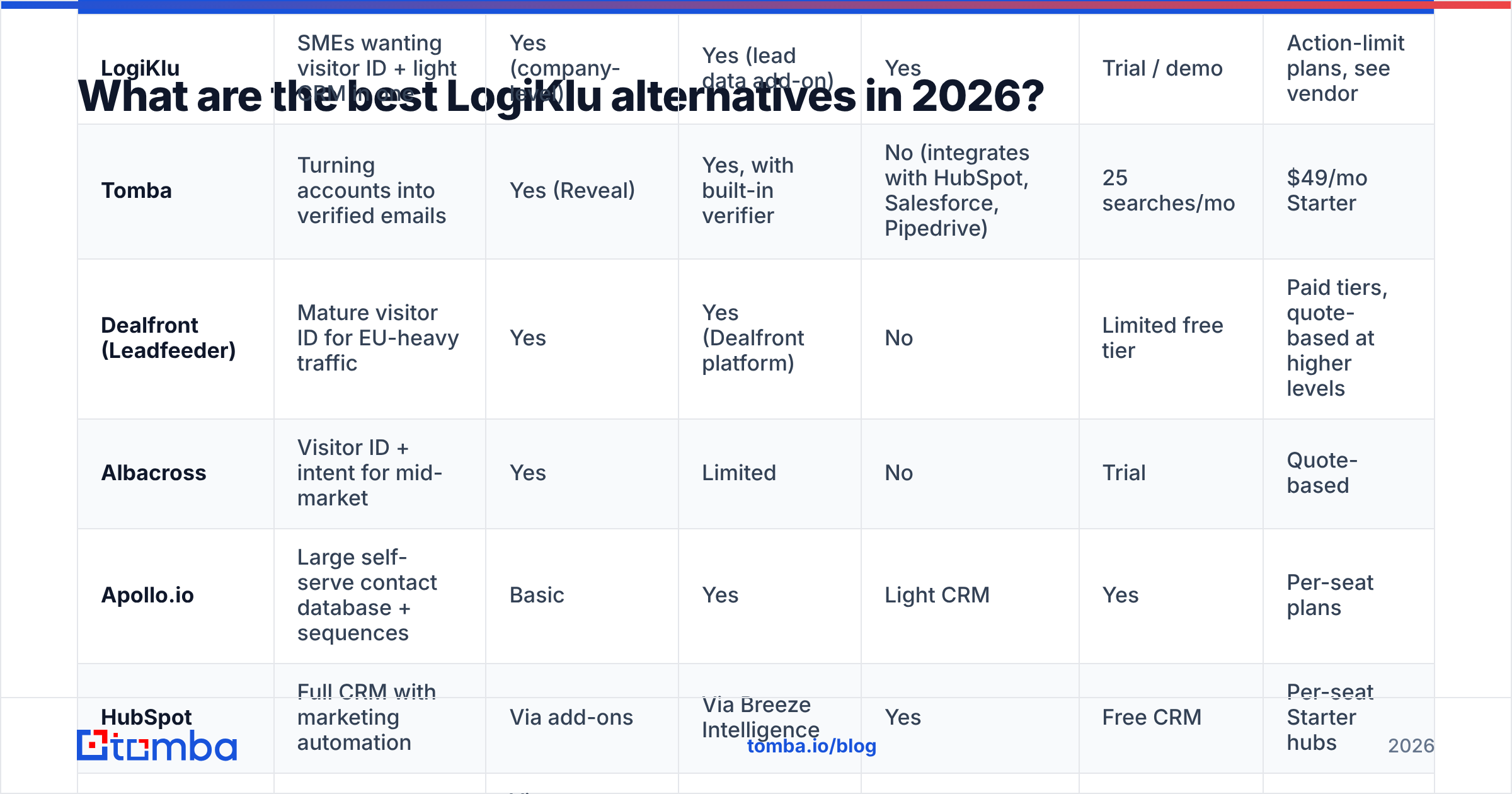
| Tool | Best for | Visitor ID | Contact data (emails) | Built-in CRM | Free option | Paid entry point |
|---|---|---|---|---|---|---|
| LogiKlu | SMEs wanting visitor ID + light CRM in one | Yes (company-level) | Yes (lead data add-on) | Yes | Trial / demo | Action-limit plans, see vendor |
| Tomba | Turning accounts into verified emails | Yes (Reveal) | Yes, with built-in verifier | No (integrates with HubSpot, Salesforce, Pipedrive) | 25 searches/mo | $49/mo Starter |
| Dealfront (Leadfeeder) | Mature visitor ID for EU-heavy traffic | Yes | Yes (Dealfront platform) | No | Limited free tier | Paid tiers, quote-based at higher levels |
| Albacross | Visitor ID + intent for mid-market | Yes | Limited | No | Trial | Quote-based |
| Apollo.io | Large self-serve contact database + sequences | Basic | Yes | Light CRM | Yes | Per-seat plans |
| HubSpot | Full CRM with marketing automation | Via add-ons | Via Breeze Intelligence | Yes | Free CRM | Per-seat Starter hubs |
| Pipedrive | Simple, visual sales pipeline | Via LeadBooster add-on | Limited | Yes | Trial | Low per-seat plans |
| Lusha | Quick direct-dial and email lookups | No | Yes | No | Yes (limited credits) | Per-seat plans |
1. Tomba: best for turning identified accounts into verified contacts#
Tomba started as an email finder and has grown into a contact-data toolkit. For a LogiKlu user, two pieces matter most:
- Website visitor reveal identifies the companies behind anonymous traffic, which covers LogiKlu's core warm-lead feature.
- Email Finder plus the email verifier take a domain or a name + company and return a professional address with a deliverability status.
Around those sit domain search, a catch-all verifier, a phone finder, and data enrichment, plus native integrations with HubSpot, Salesforce, and Pipedrive. That means your pipeline stays in the CRM you already run.
Pricing: Free (25 searches/mo), Starter $49/mo, Growth $99/mo, Pro $249/mo, and Enterprise custom. The full breakdown is in Tomba plans.
Where it falls short: Tomba is not a CRM. If what you liked about LogiKlu was having one screen for pipeline and leads, you will pair Tomba with a CRM rather than replace both with a single login.
2. Dealfront (formerly Leadfeeder): best like-for-like visitor ID#
Leadfeeder is one of the longest-running website visitor identification tools, and it now sits inside the Dealfront platform alongside a European-focused company and contact database. You get company identification, visit-level page tracking, custom feeds (for example, "visited pricing, 50–500 employees, DACH"), and CRM sync.
Best for: Teams whose traffic is heavily European, or who want the most mature visitor-ID filters. Watch out for: Contact data and the broader platform are priced above basic visitor tracking. Budget for the tier you actually need.
3. Albacross: best for visitor ID plus intent signals#
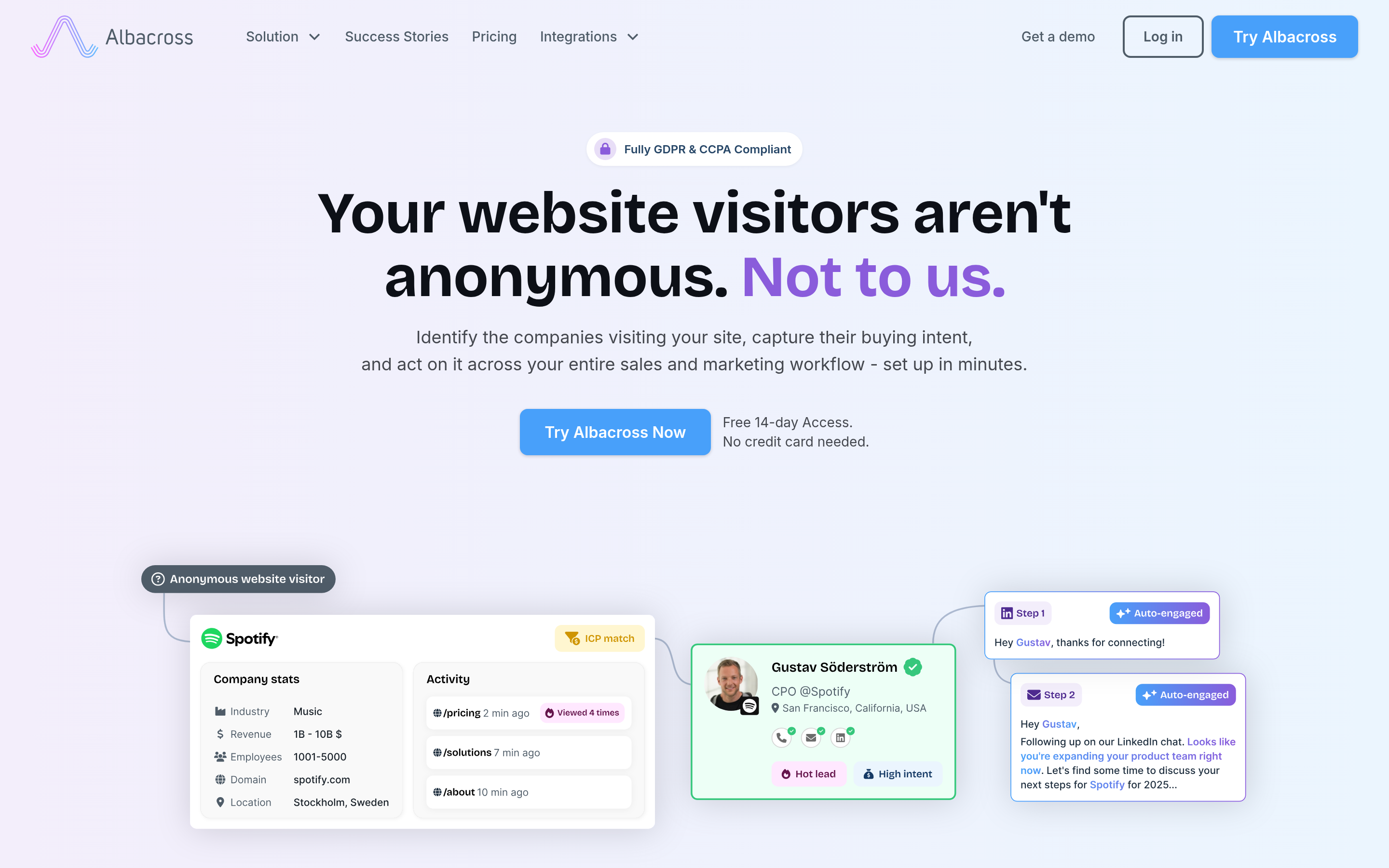
Albacross identifies companies from site traffic and layers on intent data and ad-audience activation. It is a strong fit if your motion is account-based and you want to retarget identified accounts, not just email them.
Best for: Mid-market ABM teams. Watch out for: Pricing is largely quote-based, and contact-level data is not its main strength. If you're evaluating it, our Albacross alternative breakdown covers the trade-offs in more depth.
4. Apollo.io: best all-in-one database for self-serve outbound#
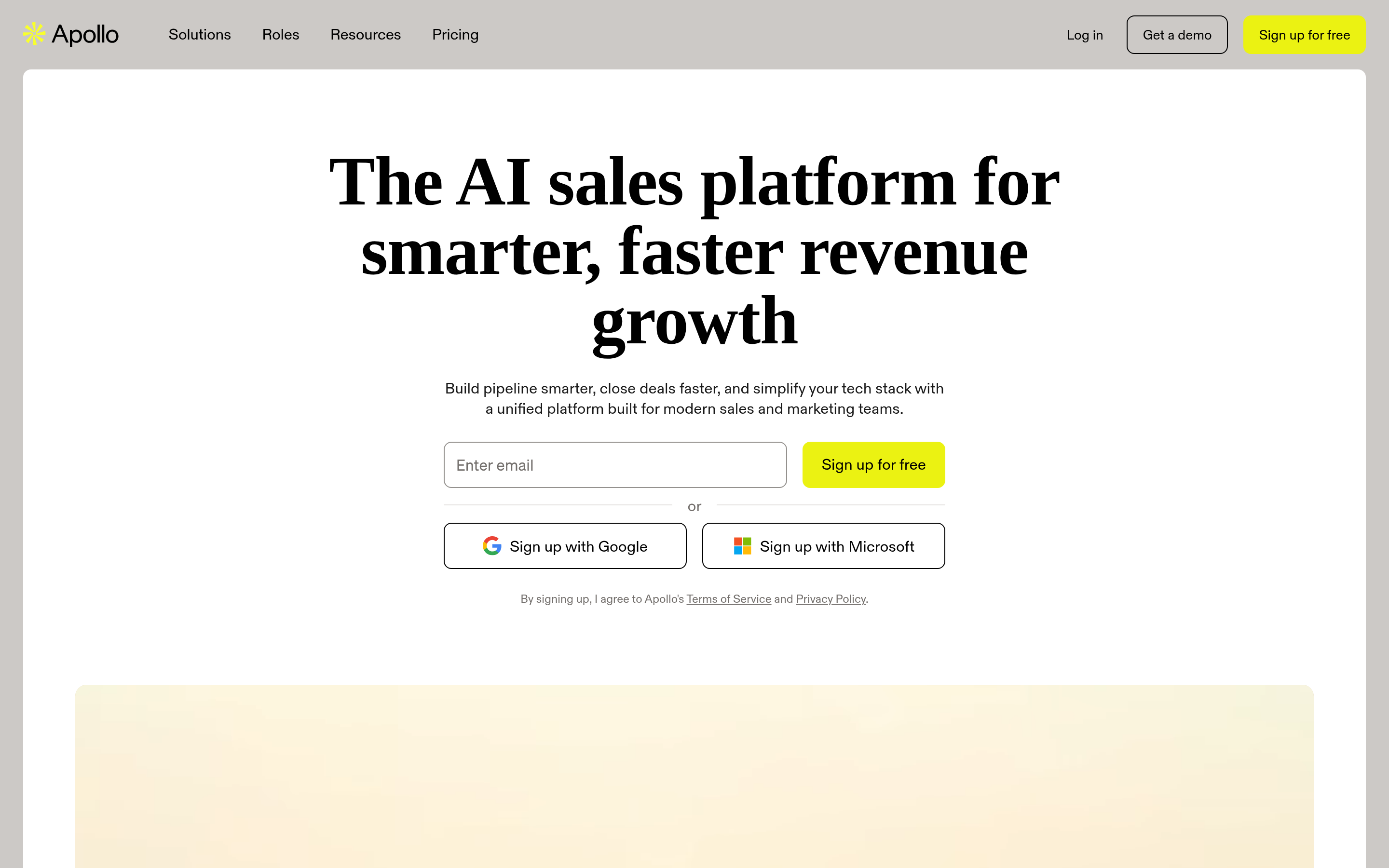
Apollo combines a large B2B contact database, email sequencing, a Chrome extension, and light CRM features. It is the closest thing to a "do everything outbound" tool at an SME price point, and it has a free plan.
Best for: Small teams that want prospecting, sequencing, and basic pipeline in one place. Watch out for: Data freshness varies by region and segment, so verify before large sends. Seat-based pricing also adds up as the team grows. See the Apollo pricing page for current tiers.
5. HubSpot: best if the CRM is what you really need#
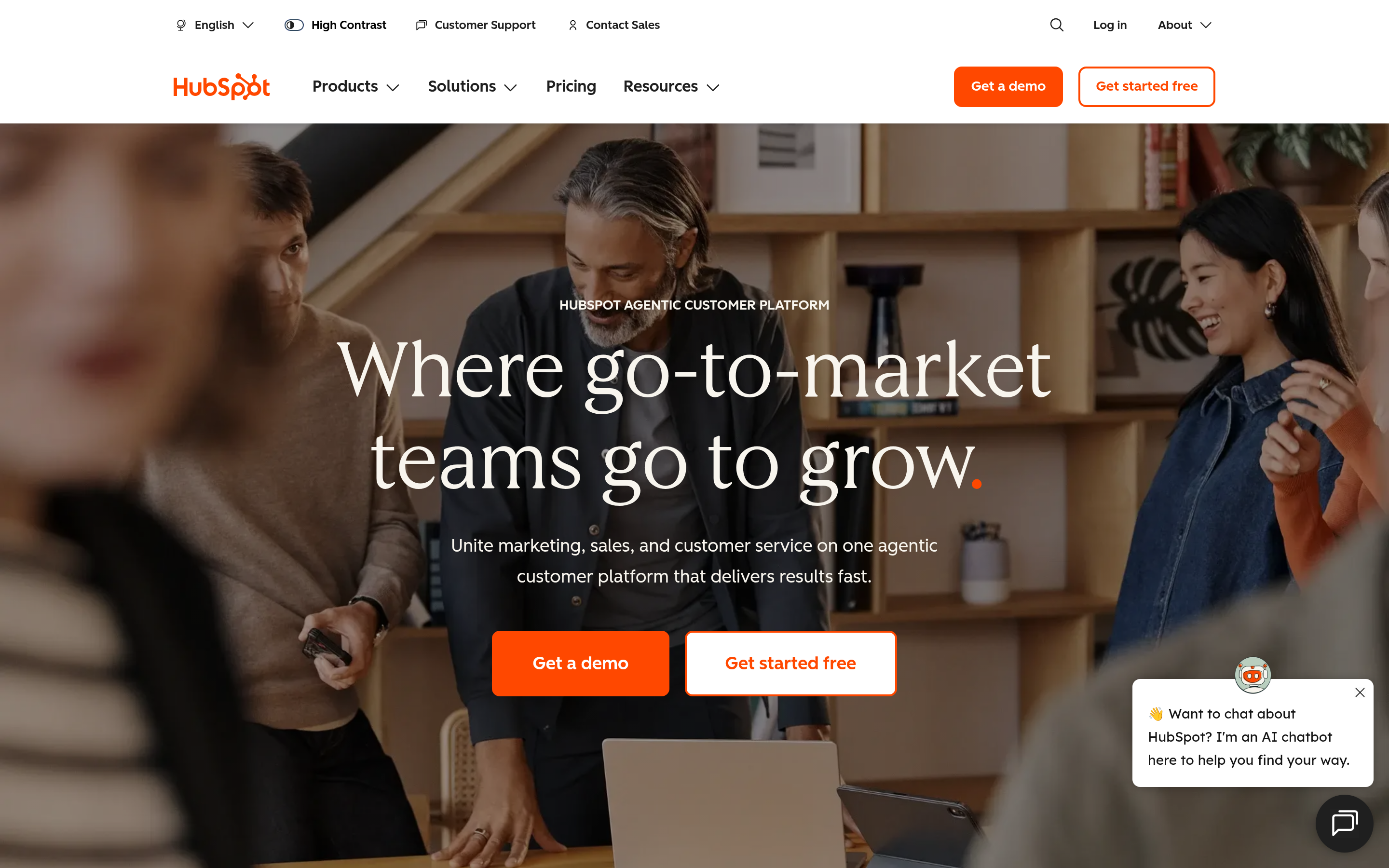
If your team leaned on LogiKlu mainly for pipeline tracking, HubSpot's free CRM is hard to beat as a starting point. Paid Sales and Marketing Hub tiers add sequences, forms, lead scoring, and reporting. HubSpot's Breeze Intelligence (the former Clearbit data) adds company enrichment and buyer-intent signals.
Best for: Teams that want marketing and sales on one record and expect to scale. Watch out for: Costs rise quickly once you move beyond Starter, and enrichment is priced separately. Compare tiers on HubSpot's pricing page.
6. Pipedrive: best lightweight pipeline for small sales teams#
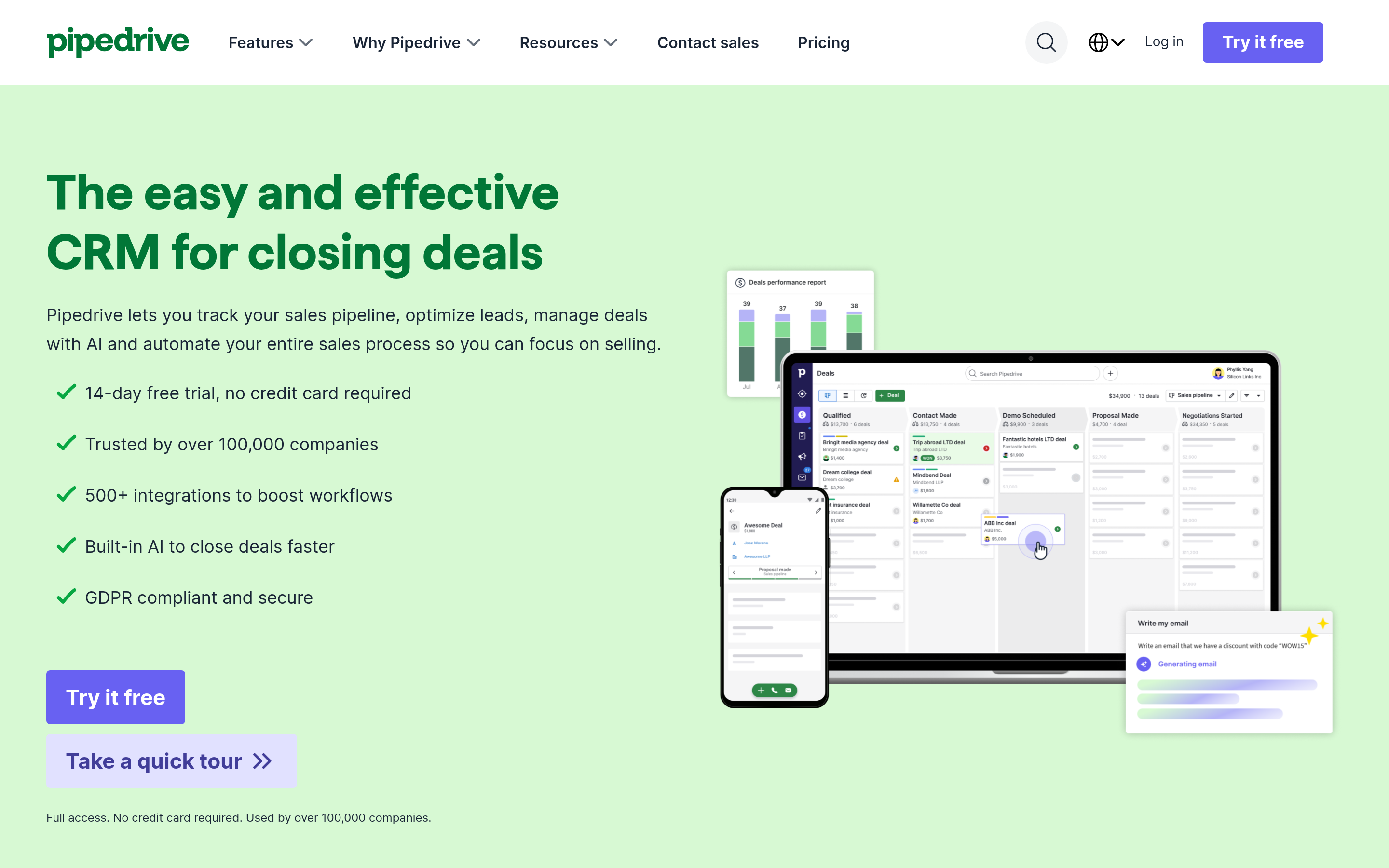
Pipedrive's visual, deal-first pipeline is what many SMEs actually want when they say they need "a simpler CRM." The LeadBooster add-on brings chatbots, web forms, and a web visitors feature, so you can get close to LogiKlu's warm-lead view inside the pipeline itself.
Best for: Owner-led and small sales teams that live in their pipeline. Watch out for: Contact discovery is limited. You'll still want a separate tool for finding and verifying emails.
7. Lusha: best for quick contact lookups#
Lusha is built for speed. You can open a LinkedIn profile or company page and pull an email and direct dial in a click. It has a free plan with limited monthly credits and per-seat paid tiers.
Best for: Reps who need phone numbers alongside emails. Watch out for: There is no visitor identification, and credit consumption on phone reveals can be steep.
Is an all-in-one like LogiKlu better than a two-tool stack?#
Usually not, once you're past the first handful of reps. Think of it like a kitchen. A combination oven-microwave-air-fryer saves counter space, but each function is a compromise. A dedicated oven and a dedicated air fryer each do their one job better.
All-in-ones like LogiKlu make sense when:
- You have one to three sellers and no existing CRM.
- Your volume is low enough that data coverage gaps don't hurt much.
- Setup time matters more than depth.
A two-tool stack (visitor ID + contact data feeding your existing CRM) wins when:
- You already pay for HubSpot, Salesforce, or Pipedrive and don't want a second source of truth.
- You send enough outbound that bounce rates affect sender reputation.
- You need to swap one component later without migrating everything.
The practical workflow looks like this: visitor ID flags an account on your pricing page, contact data finds the head of operations there, the verifier confirms the address, and the record syncs to your CRM with the visit history attached. Each step is replaceable on its own.

How do you choose the right LogiKlu alternative for your team?#
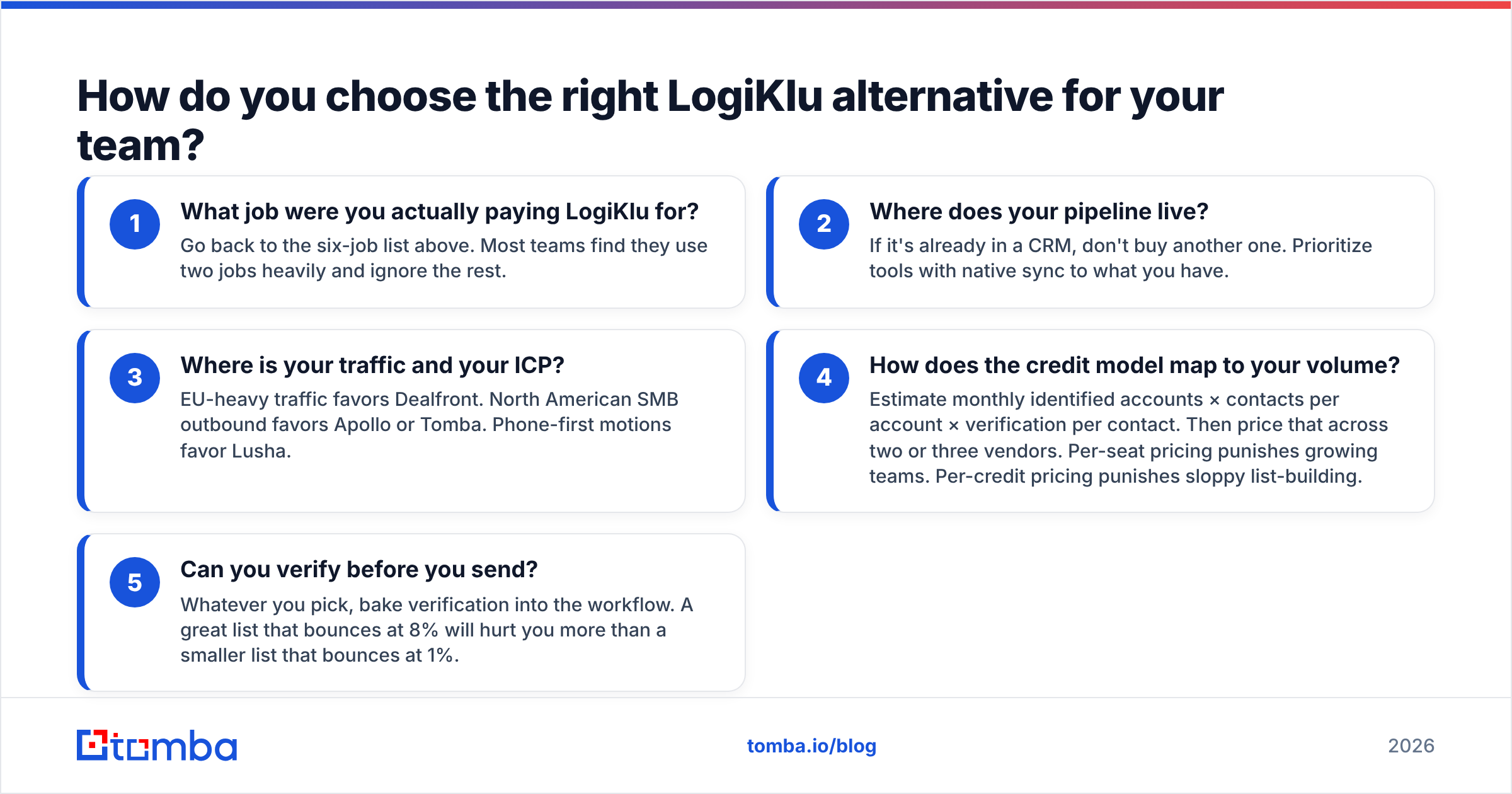
Use these five questions, in order:
- What job were you actually paying LogiKlu for? Go back to the six-job list above. Most teams find they use two jobs heavily and ignore the rest.
- Where does your pipeline live? If it's already in a CRM, don't buy another one. Prioritize tools with native sync to what you have.
- Where is your traffic and your ICP? EU-heavy traffic favors Dealfront. North American SMB outbound favors Apollo or Tomba. Phone-first motions favor Lusha.
- How does the credit model map to your volume? Estimate monthly identified accounts × contacts per account × verification per contact. Then price that across two or three vendors. Per-seat pricing punishes growing teams. Per-credit pricing punishes sloppy list-building.
- Can you verify before you send? Whatever you pick, bake verification into the workflow. A great list that bounces at 8% will hurt you more than a smaller list that bounces at 1%.
A quick way to sanity-check any vendor: take 50 accounts you already know well, run them through the free tier or trial, and count how many correct, deliverable contacts come back. That tells you more than any vendor's coverage claim.
What does migrating off LogiKlu involve?#
Less than you'd think, if you plan it:
- Export first. Pull your lead lists, Watch List accounts, notes, and deal stages to CSV before your contract lapses.
- Clean before importing. Deduplicate records and re-verify every email address. Data older than six months decays noticeably, since people change jobs and companies change domains.
- Rebuild alerts. Recreate your highest-value Watch List triggers (pricing-page visits, repeat visits, specific product pages) in the new visitor-ID tool.
- Run both tools in parallel for 2–4 weeks. Compare identified-account counts and match quality on the same traffic before you cancel.
- Update tracking scripts. Remove the old snippet once you're confident. Two reverse-IP scripts on one site add page weight for no benefit.
Frequently asked questions#
Is LogiKlu free? LogiKlu does not advertise a permanent free plan. Its pricing is based on monthly action limits and add-on features, so check the vendor's pricing page or request a demo for a current quote.
What is the closest direct replacement for LogiKlu? For visitor identification specifically, Dealfront (Leadfeeder) and Albacross are the closest. For the combined "warm account → verified contact" workflow, Tomba Reveal paired with the Tomba Email Finder covers the same ground and syncs into the CRM you already use.
Do I need a CRM if I switch away from LogiKlu? If you used LogiKlu as your pipeline, yes. HubSpot's free CRM or Pipedrive are the lowest-friction options. If you already have a CRM, pick alternatives that integrate with it natively.
Which LogiKlu alternative has the best free tier? HubSpot (free CRM), Apollo (free plan with limited credits), Lusha (free credits), and Tomba (25 searches/mo) all let you test before paying. Which one is "best" depends on whether you're testing pipeline, database coverage, or email accuracy.
Which LogiKlu alternative should you pick?#
If you want a like-for-like visitor ID replacement, start with Dealfront or Albacross. If you mainly used LogiKlu as a CRM, move to HubSpot or Pipedrive. If what you really want is to get from "this company visited" to "this person replied," you need reliable contact data behind your visitor signals. That is the gap most teams feel first.
That's where the Tomba Email Finder fits. Point it at the domains your visitor-ID tool surfaces, find the decision-makers by name or role, and verify every address before it reaches your sequence. It plugs into HubSpot, Salesforce, and Pipedrive, and you can test it on your own warm accounts with the free tier (25 searches/mo) before moving to Starter at $49/mo.
Related guides#
// get started
Find, verify and enrich your first contacts today
Start on the free plan with 25 searches a month, then scale when your team is ready.
Free plan · No credit card required · GDPR & CCPA
// about the author