7 Best CloudCall Alternatives for Sales Teams in 2026
CloudCall bundles CRM telephony, but pricing, dialer speed, and data quality push many teams to look elsewhere. Here are 7 CloudCall alternatives worth testing in 2026.
CloudCall works fine until it doesn't. Maybe the CRM-embedded dialer is slower than your reps want, maybe the per-seat pricing stopped making sense as the team grew, or maybe your connect rates cratered because the numbers you're dialing are stale. Whatever pushed you here, you're not short on options — the cloud telephony market is crowded, and several tools now beat CloudCall on the exact axis you care about.
This guide ranks seven CloudCall alternatives for 2026, compares them head-to-head, and then covers the part most "best dialer" lists skip: no dialer fixes a bad list. The tool that decides your connect rate isn't the phone system. It's the data feeding it.
TL;DR#
- Best overall CloudCall alternative: Aircall for CRM-native teams, JustCall for automation-heavy sales orgs.
- Cheapest credible option: CloudTalk and Kixie both undercut CloudCall's effective per-seat cost.
- Best for high-volume outbound: Dialpad and Kixie ship the fastest power/parallel dialers.
- The real lever: connect rate lives and dies on phone-number accuracy. Pair any dialer with a verified data source like the phone finder and phone validator so you're not burning dials on dead numbers.
- Pricing reality: most alternatives run $20–$50 per user per month before add-ons; the dialer is rarely your biggest cost — bad lists are.
What is CloudCall and why look for alternatives?#
CloudCall is a cloud-based telephony and communications platform built to sit inside your CRM. Its pitch is tight integration: click-to-dial from a contact record, automatic call logging, and conversation data written straight back to systems like Bullhorn, HubSpot, and Salesforce. For recruitment and staffing agencies especially, that CRM-first design has been the main draw.
So why do teams leave? A few recurring reasons:
- Pricing pressure. CloudCall's per-seat model gets expensive as headcount climbs, and some features sit behind higher tiers.
- Dialer speed. Reps running high-volume outbound often want a true power or parallel dialer, not just click-to-dial.
- Integration gaps. If your CRM isn't one of CloudCall's first-class integrations, the experience degrades fast.
- Support and reliability. Call quality and support responsiveness are the two complaints that show up most in reviews on G2.
- Feature ceilings. Conversation intelligence, AI transcription, and analytics are stronger elsewhere.
None of these mean CloudCall is a bad product. They mean it's not the right fit for every team — which is exactly what an alternatives search should surface.
What are the best CloudCall alternatives in 2026?#
Here's the shortlist, ranked by how well each one replaces CloudCall for a typical B2B sales or recruitment team.
1. Aircall — best CRM-native replacement#
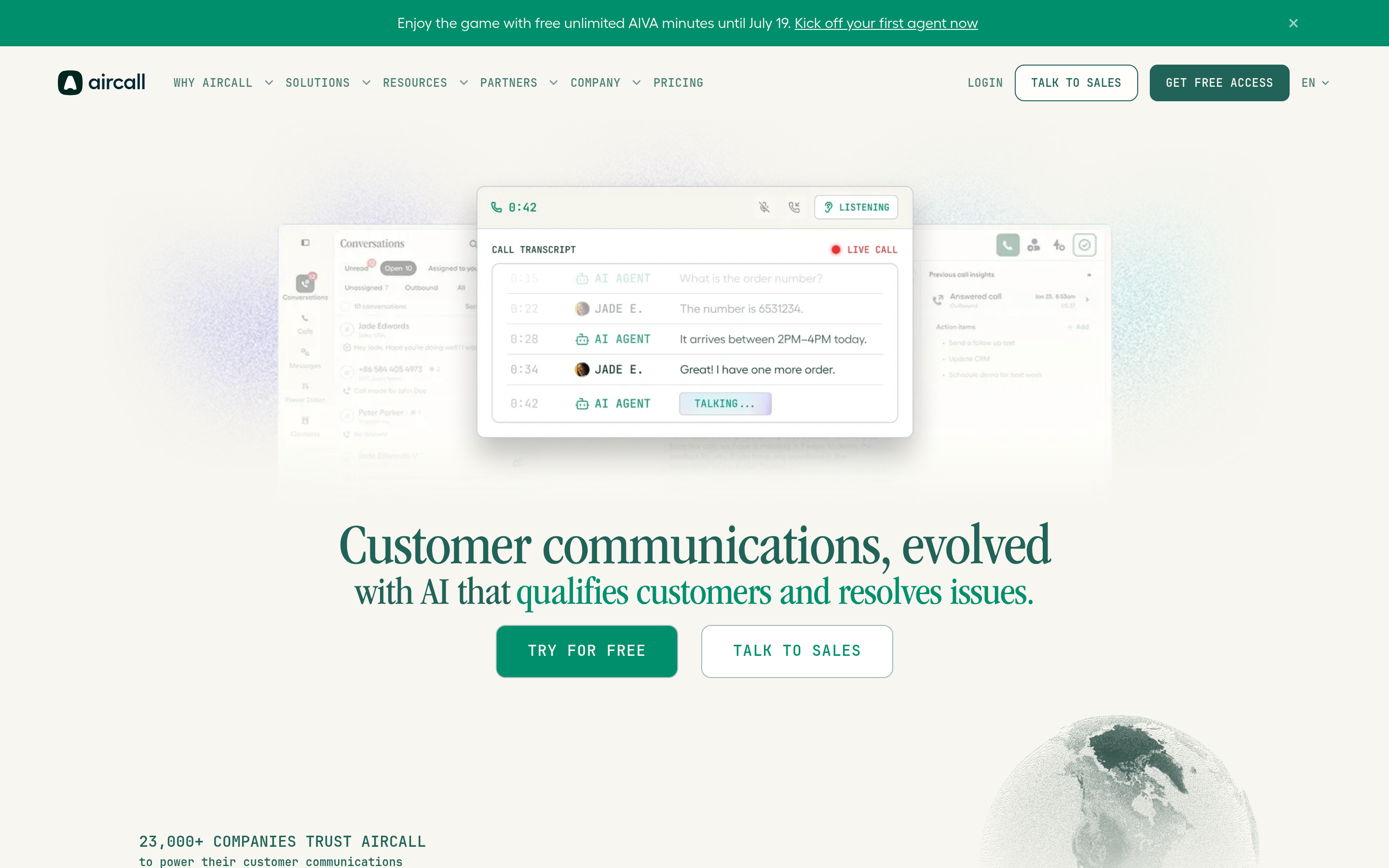
Aircall is the most direct swap for CloudCall's "phone system inside your CRM" positioning. It has a deep integration marketplace (HubSpot, Salesforce, Pipedrive, Zendesk), a clean shared inbox for calls and SMS, and solid call-center features like IVR, routing, and analytics. If you liked CloudCall's philosophy but wanted better polish and a bigger integration catalog, start here. See the Aircall site for the current integration list.
Best for: teams that want CRM-embedded calling without the rough edges.
2. JustCall — best for automation-heavy sales orgs#

JustCall pairs telephony with a workflow engine: sales dialer, SMS automation, AI call transcription, and triggers that fire actions in your CRM. Its power dialer and sales-focused feature set make it a stronger outbound tool than CloudCall out of the box.
Best for: SDR teams that live in sequences and want calling + SMS + automation in one place.
3. Dialpad — best AI and voice intelligence#
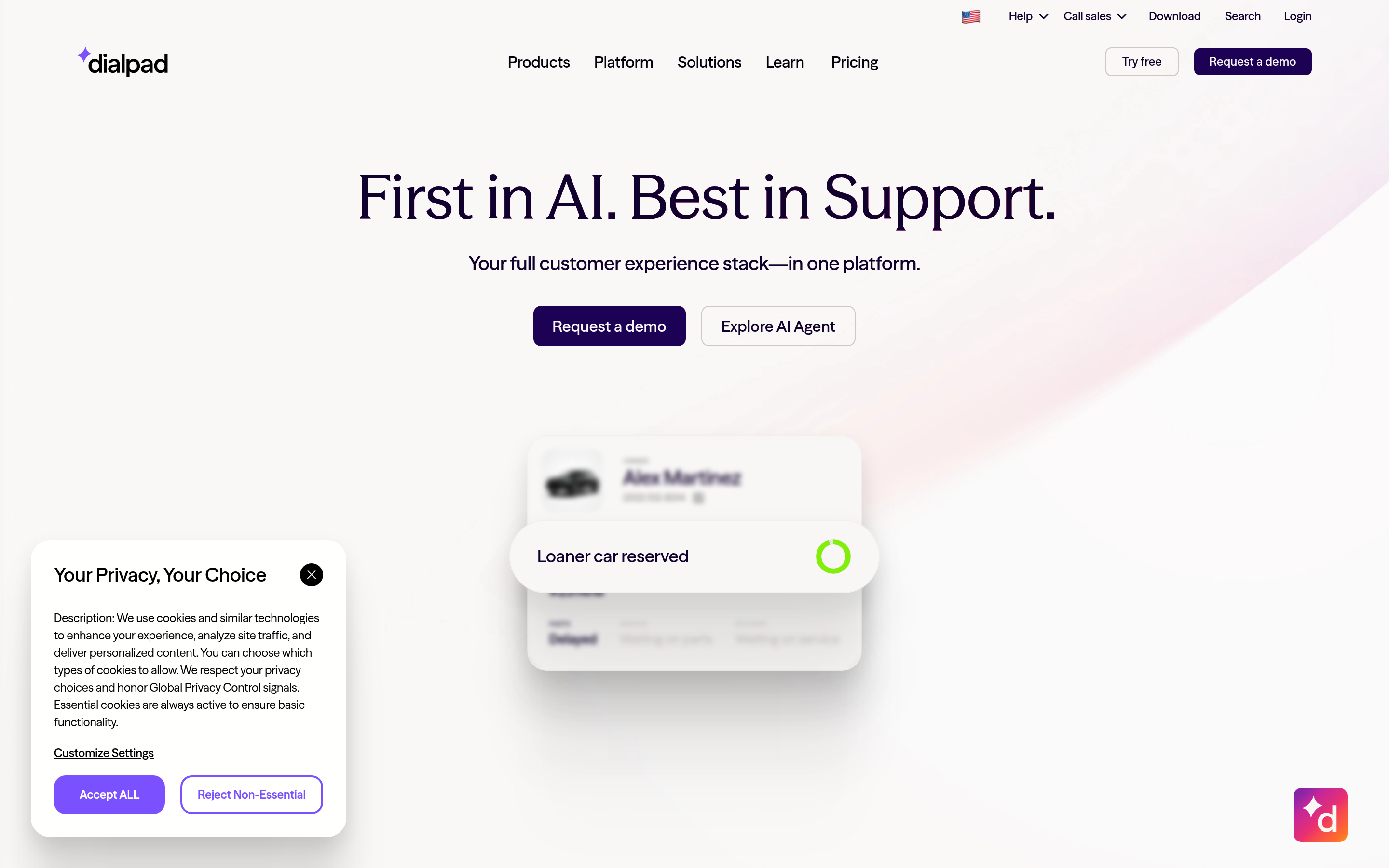
Dialpad leads on real-time AI: live transcription, sentiment analysis, and automated call notes are core, not add-ons. If conversation intelligence is why you're leaving CloudCall, Dialpad is the upgrade. Details at dialpad.com.
Best for: teams that want coaching, QA, and AI summaries baked into every call.
4. Kixie — best power dialer for volume#
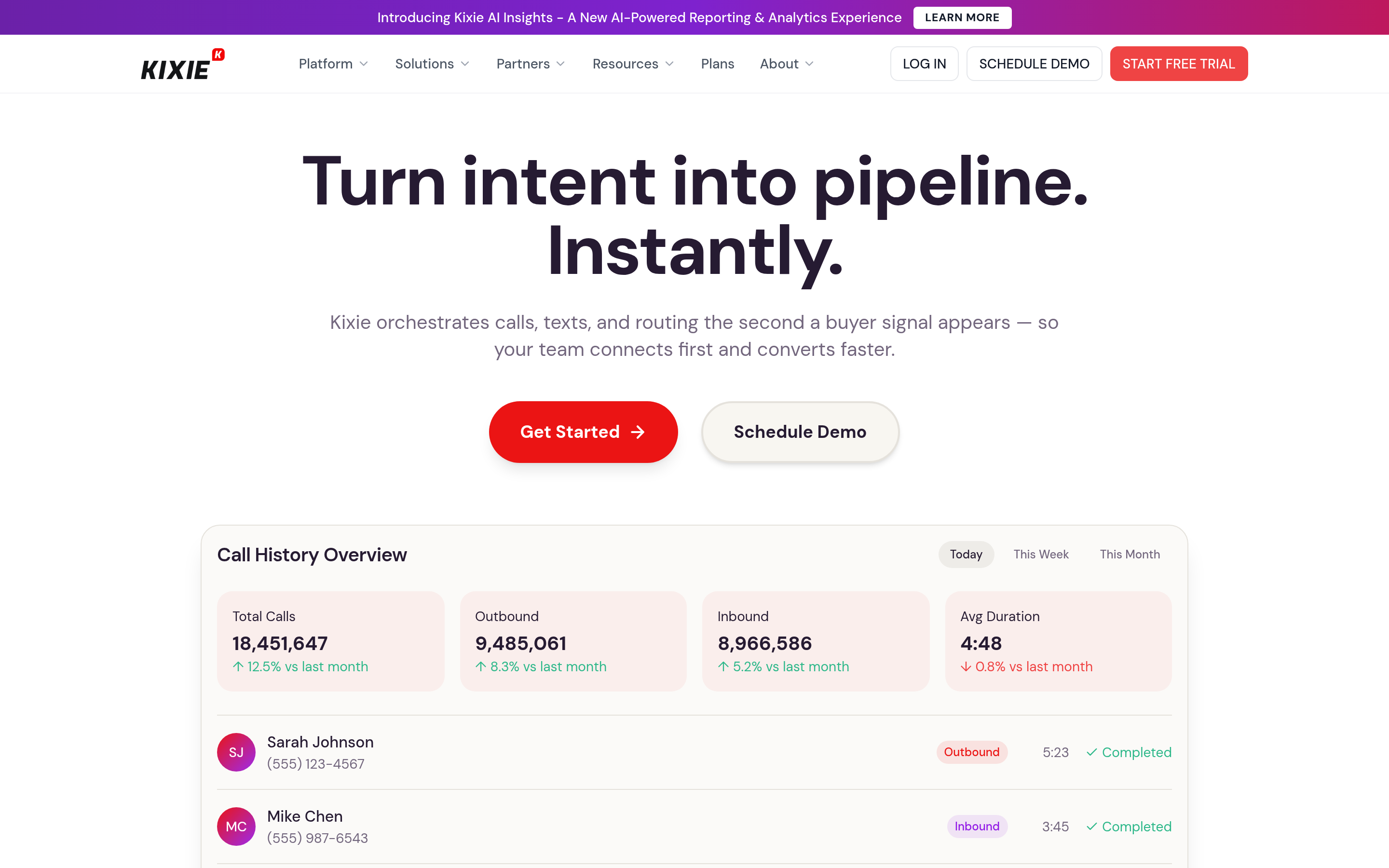
Kixie is built for outbound velocity: local presence dialing, a fast power dialer, and native HubSpot/Pipedrive integration. Connect rates tend to be its headline selling point.
Best for: high-volume outbound where dials-per-hour is the metric that matters.
5. CloudTalk — best value for growing teams#
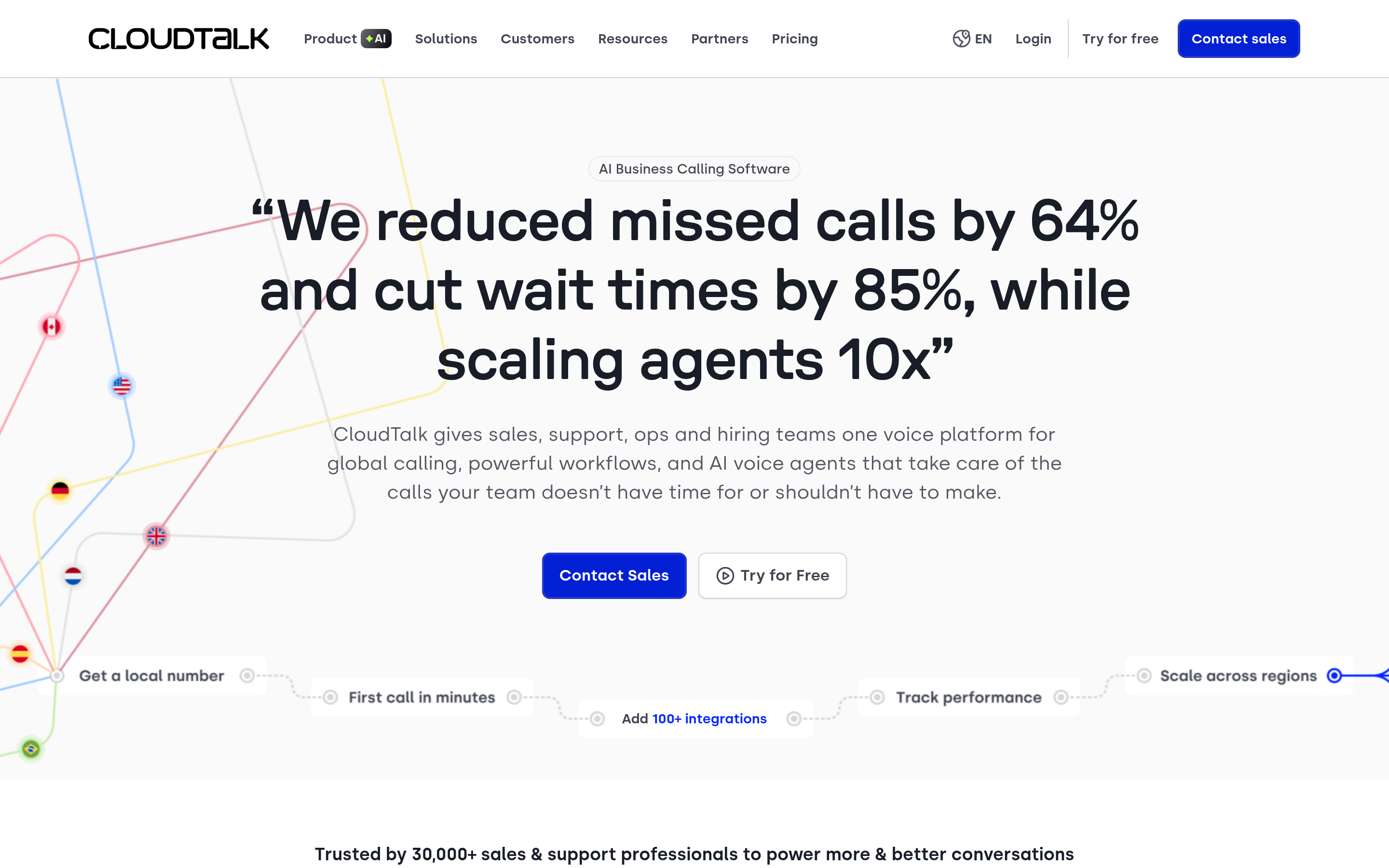
CloudTalk offers a strong feature-to-price ratio: international numbers, IVR, call flow designer, and analytics at tiers that often undercut CloudCall's effective cost.
Best for: distributed teams needing international coverage without enterprise pricing.
6. RingCentral — best all-in-one UCaaS#
If you want phone, video, messaging, and contact center in one suite — not just a sales dialer — RingCentral is the enterprise-grade platform. It's heavier than CloudCall but far broader.
Best for: organizations consolidating all communications, not just sales calls.
7. Nextiva — best for SMB reliability and support#
Nextiva competes on uptime, support quality, and a simple UCaaS bundle. It's a safe pick for smaller teams that value reliability over cutting-edge features.
Best for: SMBs that want dependable business phone service with minimal fuss.
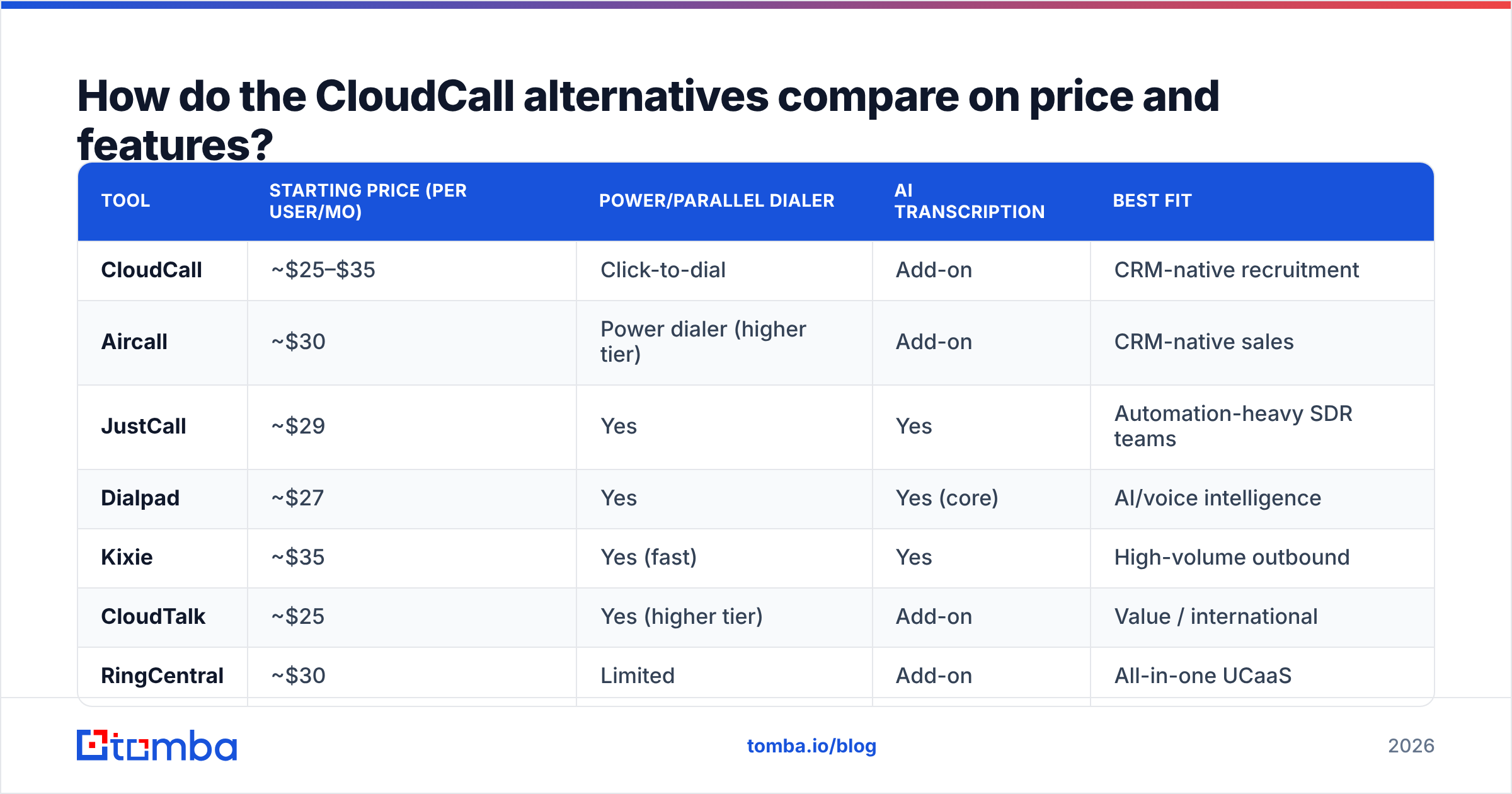
How do the CloudCall alternatives compare on price and features?#
Pricing changes often and varies by contract length and seat count, so treat the figures below as directional and confirm on each vendor's page before you buy.
| Tool | Starting price (per user/mo) | Power/parallel dialer | AI transcription | Best fit |
|---|---|---|---|---|
| CloudCall | ~$25–$35 | Click-to-dial | Add-on | CRM-native recruitment |
| Aircall | ~$30 | Power dialer (higher tier) | Add-on | CRM-native sales |
| JustCall | ~$29 | Yes | Yes | Automation-heavy SDR teams |
| Dialpad | ~$27 | Yes | Yes (core) | AI/voice intelligence |
| Kixie | ~$35 | Yes (fast) | Yes | High-volume outbound |
| CloudTalk | ~$25 | Yes (higher tier) | Add-on | Value / international |
| RingCentral | ~$30 | Limited | Add-on | All-in-one UCaaS |
A quick read of that table: the dialers cluster tightly on price. The differences that actually change your results are dialer type (power/parallel vs click-to-dial) and whether AI transcription is core or a paid add-on. Pick the two features you'll use daily and let those decide — not the $5/seat spread.
Which CloudCall alternative should you choose?#
Match the tool to the failure mode that pushed you out of CloudCall:
- Left over price? CloudTalk or Kixie.
- Left over dialer speed? Kixie or Dialpad.
- Left over weak AI/analytics? Dialpad, then JustCall.
- Left over integration gaps? Aircall's marketplace is the deepest.
- Left over reliability/support? Nextiva or RingCentral.
- Left because you outgrew a single-purpose tool? RingCentral consolidates everything.
But before you migrate, ask a harder question: was CloudCall really the problem, or was it the list you were dialing?
Why the dialer is not your real bottleneck#
Here's the uncomfortable truth every rep learns eventually: a faster dialer just dials bad numbers faster.
If 30% of the phone numbers in your CRM are wrong, disconnected, or route to the wrong person, no telephony platform on this list will save your connect rate. You'll simply reach voicemail and dead lines more efficiently. The dialer is the last mile. The data is the road.
This is where a data layer sitting in front of your dialer changes the math. Two moves matter most:
- Source accurate direct-dial numbers instead of relying on whatever a scraped list gave you. A dedicated B2B phone finder pulls direct and mobile numbers tied to the right contact.
- Validate before you dial. Running numbers through a phone validator filters out invalid and disconnected lines so your dialer only spends time on reachable prospects.
Layer in data enrichment to fill missing titles, companies, and emails, and your reps stop guessing who they're calling. The dialer becomes a productivity tool again instead of a bad-data amplifier.
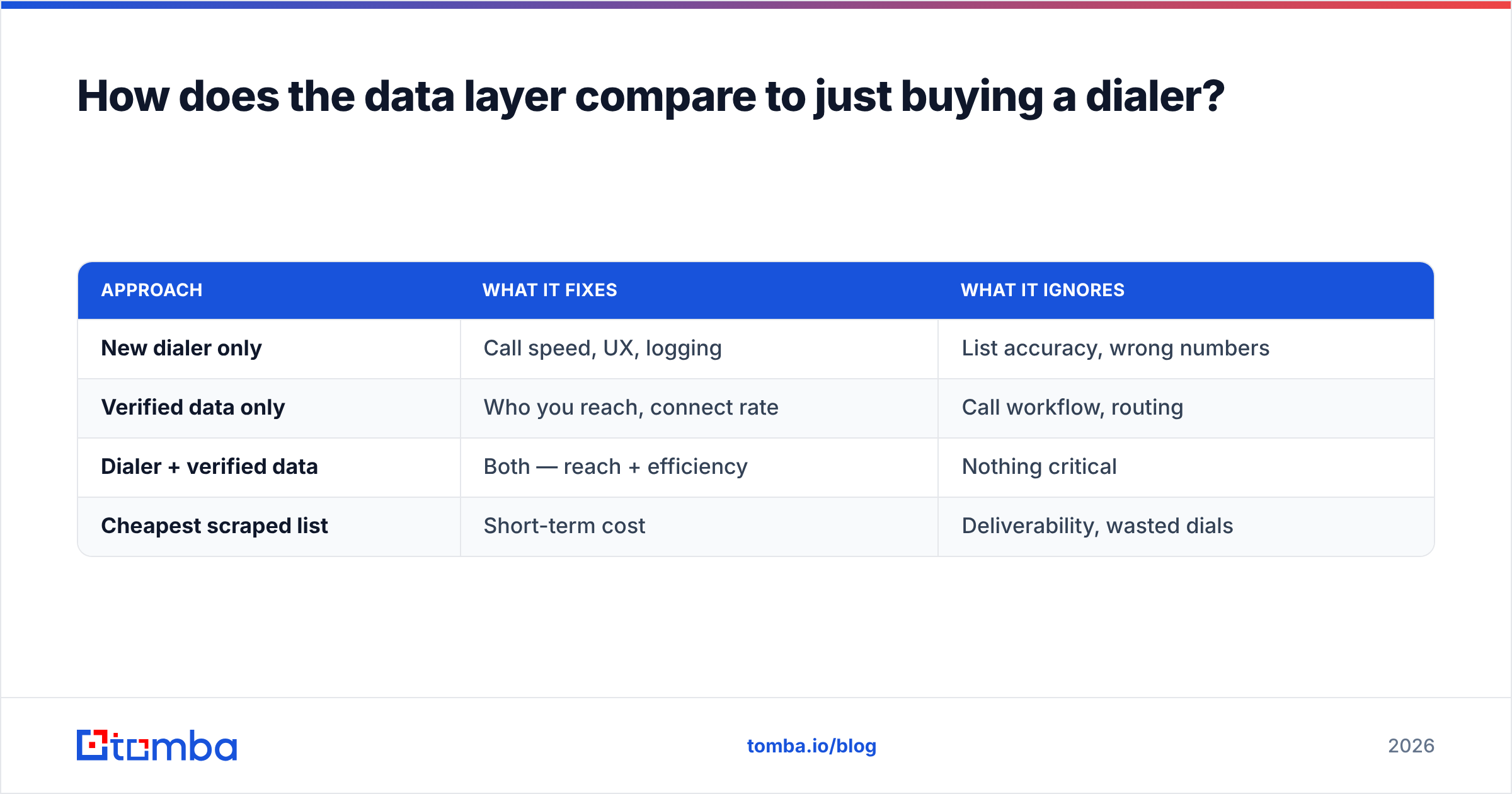
How does the data layer compare to just buying a dialer?#
| Approach | What it fixes | What it ignores |
|---|---|---|
| New dialer only | Call speed, UX, logging | List accuracy, wrong numbers |
| Verified data only | Who you reach, connect rate | Call workflow, routing |
| Dialer + verified data | Both — reach + efficiency | Nothing critical |
| Cheapest scraped list | Short-term cost | Deliverability, wasted dials |
The pattern is clear: swapping CloudCall for another dialer optimizes half the equation. Pairing whatever dialer you pick with a verified contact source optimizes the whole thing. It's the difference between a fast car on a cratered road and a fast car on a highway.
What about multichannel outreach?#
Phone is one channel. Most 2026 sales motions blend calls with email and LinkedIn, and the same accuracy problem applies across all of them. A wrong email hurts your sender reputation the same way a wrong number wastes a dial. If you're rebuilding your outbound stack anyway, it's worth sourcing verified emails at the same time you fix phone data — a single email finder run over your target accounts gives sequences something real to send to. And because it's the same contact record, your rep can call, email, and follow up without stitching three tools together by hand.
Whatever dialer you land on, check the Tomba pricing plans to see how a verified data layer fits alongside it — the Free tier gives you 25 searches a month to test accuracy before committing.
The bottom line#
CloudCall is a solid CRM-native phone system, but it's not the only one — and for many teams, Aircall, JustCall, Dialpad, or Kixie will be a better fit depending on whether price, speed, or AI is the thing you're chasing. Run a two-week trial on your two finalists and measure real connect rates, not feature lists.
Just remember what those connect rates actually depend on. The best CloudCall alternative in the world still needs good numbers to dial. Fix the data first, and any dialer on this list will perform better than CloudCall did.
Ready to stop dialing dead numbers? Start with accurate, verified contact data. Use the Tomba Email Finder and phone finder to build clean, enriched lists your new dialer can actually convert — try it free with 25 searches, no card required, and feed your outbound engine the fuel it's been missing.
Related guides#
Ready to find emails that actually work?
Join 150,000+ professionals who stopped guessing and started sending. Free credits on signup — no credit card required.
Get the Tomba newsletter
Practical outbound tactics and product updates — once every two weeks.
About the author