Cognism vs Forager (2026): B2B Data Platforms Compared
Cognism sells compliance-first phone data; Forager sells fresh API-delivered contacts. Here's an honest breakdown of pricing, coverage, and which fits your GTM motion in 2026.
TL;DR
- Cognism vs Forager comes down to fit. Cognism is an enterprise sales-intelligence suite built around phone-verified ("Diamond Data") mobile numbers and strong EU/GDPR compliance. It sells on annual contracts that usually start in the low five figures.
- Forager is a newer, API-first B2B contact-data provider. It emphasizes freshly re-verified emails and mobiles, usage-based pricing, and developer-friendly delivery.
- Pick Cognism if you sell into Europe, need documented compliance, and want a full platform with intent data and CRM enrichment.
- Pick Forager if you're a lean, technical team that wants pay-for-what-you-use data piped straight into your own stack.
- If both feel too heavy or too pricey for pure email discovery, a focused finder like Tomba Email Finder covers the "get the address" job at a fraction of the cost.
What are Cognism and Forager?#
They solve the same core problem from opposite ends. Both give go-to-market teams contact data — names, emails, phone numbers, and company attributes — so reps can reach buyers. But they were built for different buyers.
Cognism is a mature sales-intelligence platform. It bundles a large B2B contact database, phone-verified mobile numbers, and buyer-intent signals (via a Bombora partnership). It also adds sales-trigger events and native CRM enrichment. Its reputation was built in Europe. There its compliance posture — GDPR alignment and DNC list screening across major markets — is a genuine differentiator. Cognism is typically bought by mid-market and enterprise sales orgs that want one platform their whole team logs into.
Forager is the younger challenger. It positions itself as an API-first contact-data source. You query for a person or company, and it returns freshly re-verified emails and mobile numbers, priced by usage rather than by seat. That design appeals to RevOps and engineering teams that build their own enrichment workflows, waterfall-enrichment stacks, or internal prospecting tools. They want data, not a full seat-based UI for every rep.
In short: Cognism is a destination (a platform your team works inside), and Forager is a supply line (data you pull into wherever you already work).

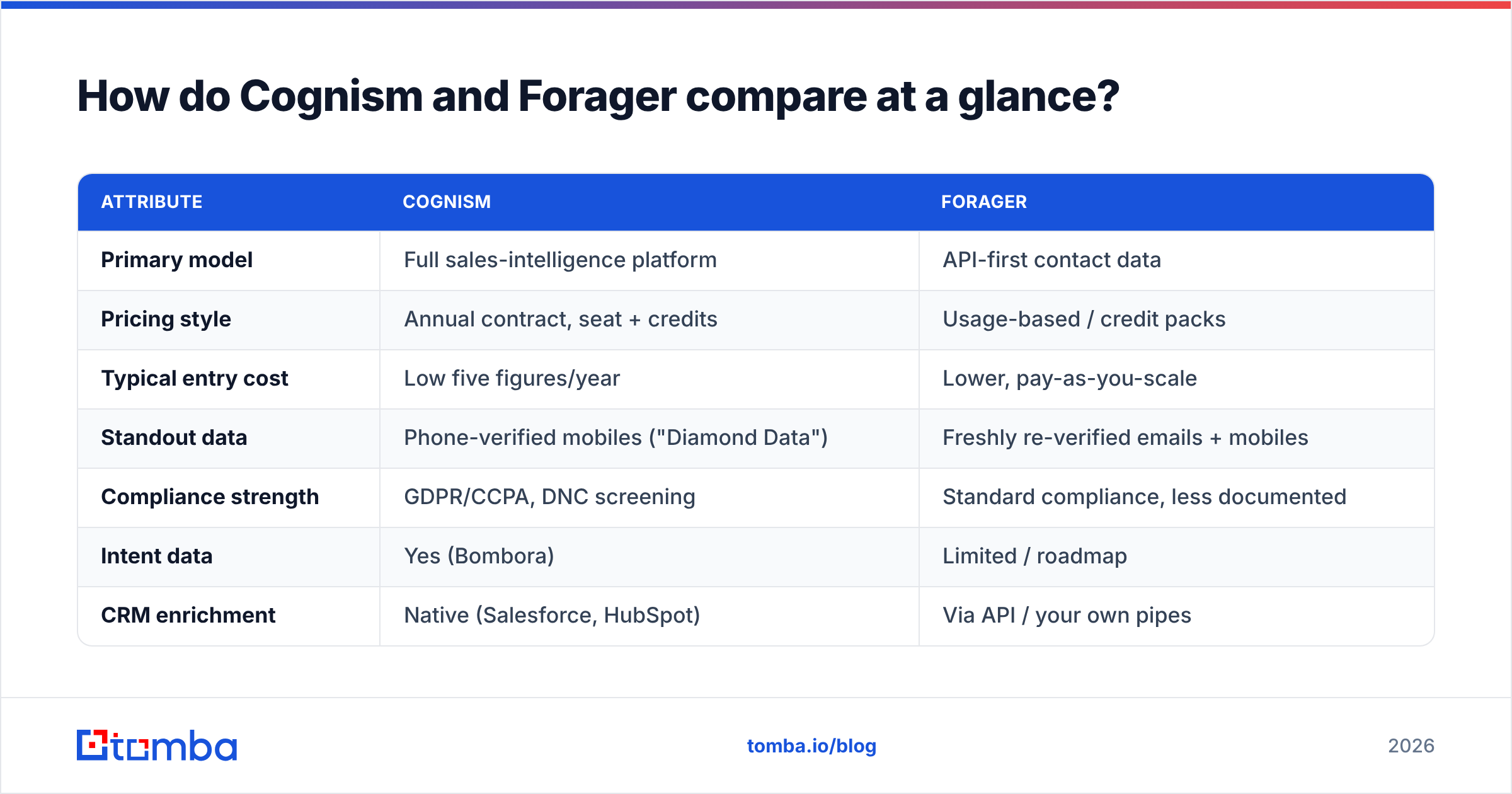
How do Cognism and Forager compare at a glance?#
Here's the Cognism vs Forager head-to-head on the attributes buyers ask about most. Treat the pricing rows as directional. Both vendors quote custom deals and rarely publish hard numbers.
| Attribute | Cognism | Forager |
|---|---|---|
| Primary model | Full sales-intelligence platform | API-first contact data |
| Pricing style | Annual contract, seat + credits | Usage-based / credit packs |
| Typical entry cost | Low five figures/year | Lower, pay-as-you-scale |
| Standout data | Phone-verified mobiles ("Diamond Data") | Freshly re-verified emails + mobiles |
| Compliance strength | GDPR/CCPA, DNC screening | Standard compliance, less documented |
| Intent data | Yes (Bombora) | Limited / roadmap |
| CRM enrichment | Native (Salesforce, HubSpot) | Via API / your own pipes |
| Best for | EU-heavy mid-market & enterprise | Technical, usage-conscious teams |
| Free trial | Limited, sales-gated | Sales-gated |
The pattern is consistent. Cognism charges more and gives you a wider, more managed product. Forager charges less and hands you raw, fresh data to route yourself.
Is Cognism's data actually better?#
Cognism wins on verified phone data and EU coverage. But the email gap is narrower than the price gap suggests. Cognism's flagship claim is Diamond Data — mobile numbers that a human or automated call has verified. That lift in accuracy raises connect rates for teams that live on the dialer. If cold calling is central to your motion and you sell into EMEA, that's a real, defensible edge. It's a big part of what you're paying for.
Forager counters on freshness. Its pitch is simple: records are re-verified close to the moment you request them. So you're less likely to hit a bounced email or a number that changed when someone switched jobs. For fast-moving outbound, where list decay is the enemy, that recency matters more than raw database size.
The honest read on Cognism vs Forager: neither vendor is universally "more accurate." Accuracy is segment-specific. Cognism tends to lead on European mobiles and regulated-market coverage. Forager tends to hold its own on North American email freshness while costing less. The only reliable test is to run the same seed list of 100–200 target accounts through both. Then measure bounce rate, connect rate, and match rate on your ICP. Vendor-published accuracy stats are marketing until you reproduce them.
This is also where a dedicated verification layer earns its keep. Whatever provider you land on, pass exports through an email verifier before you send. That strips the bounces that quietly wreck your sender reputation — a step neither platform fully removes.

How does pricing really work?#
On price, Cognism vs Forager is a simple split: Cognism is a bigger, more rigid commitment; Forager flexes with usage. Cognism almost always sells annual contracts. You pay a platform fee plus per-user seats and a credit allocation. Real-world entry points commonly land in the low five figures per year, and unused credits generally don't roll over. That's fine if a full team hammers the platform daily — the per-rep math works. It's painful if only two people touch it, or if your volume is seasonal.
Forager's usage-based structure is the counterweight. You buy credits or pay per enriched record. So a three-person team pulling a few thousand contacts a month isn't subsidizing an enterprise seat model. The tradeoff is that you assemble more of the workflow yourself. Forager gives you the data, not the surrounding UI, dashboards, and managed onboarding that justify Cognism's premium.
A few cost realities to price in for either tool:
- Annual lock-in risk. Cognism's contract means you commit before you've fully validated coverage on your ICP. Negotiate a pilot or a shorter first term.
- Credit expiry. Confirm whether unused credits roll over. With Cognism they typically don't; with usage-based Forager the question is minimum spend.
- Overage pricing. Ask what happens when you blow past your allocation mid-quarter — the marginal price per record is where budgets quietly break.
- Seat inflation. Platform tools tempt you to add seats "just in case." Every seat is a recurring cost whether the rep logs in or not.
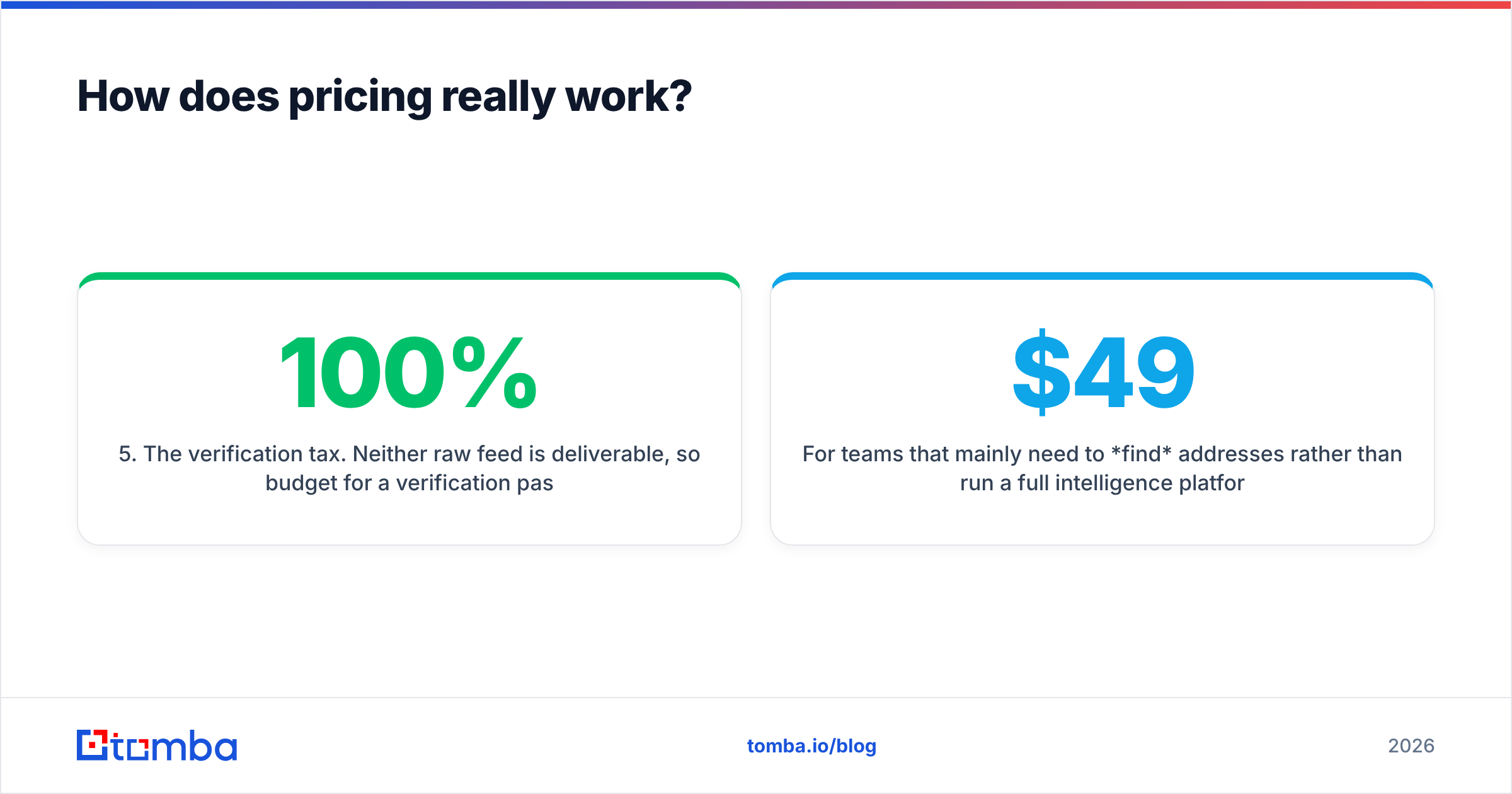
- The verification tax. Neither raw feed is 100% deliverable, so budget for a verification pass on top.
Some teams mainly need to find addresses, not run a full intelligence platform. For them, it's worth putting transparent, published rates next to these quotes. Tomba's pricing runs Free (25 searches/mo), Starter at $49/mo, Growth at $99/mo, and Pro at $249/mo — no annual handcuffs required to get started.
Which one fits your go-to-market motion?#
In the Cognism vs Forager choice, match the tool to how your team actually sells, not to the feature list. Here's the practical routing:
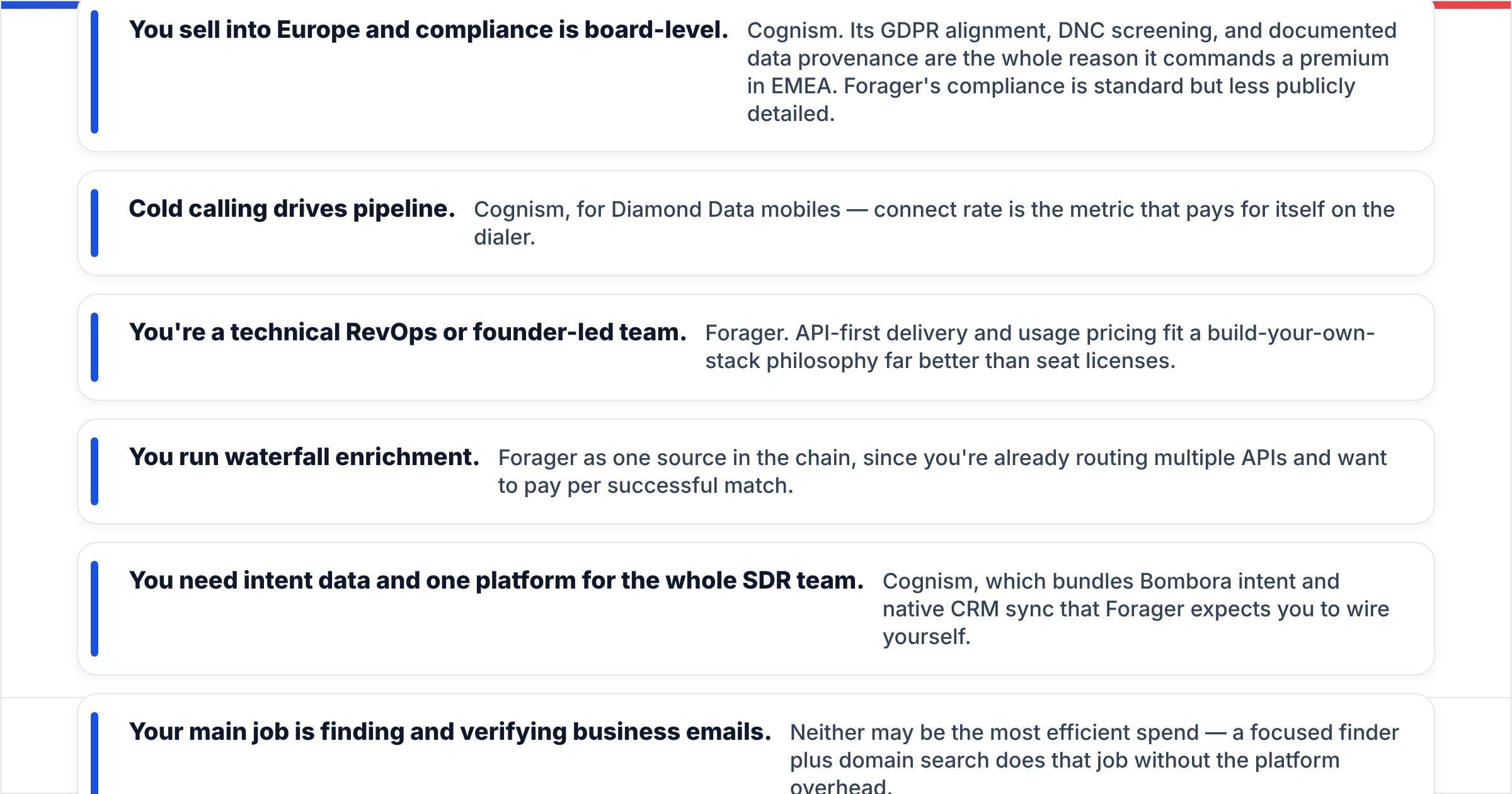
- You sell into Europe and compliance is board-level. Cognism. Its GDPR alignment, DNC screening, and documented data provenance are the whole reason it commands a premium in EMEA. Forager's compliance is standard but less publicly detailed.
- Cold calling drives pipeline. Cognism, for Diamond Data mobiles — connect rate is the metric that pays for itself on the dialer.
- You're a technical RevOps or founder-led team. Forager. API-first delivery and usage pricing fit a build-your-own-stack philosophy far better than seat licenses.
- You run waterfall enrichment. Forager as one source in the chain, since you're already routing multiple APIs and want to pay per successful match.
- You need intent data and one platform for the whole SDR team. Cognism, which bundles Bombora intent and native CRM sync that Forager expects you to wire yourself.
- Your main job is finding and verifying business emails. Neither may be the most efficient spend — a focused finder plus domain search does that job without the platform overhead.
That last point matters more than vendors admit. A lot of teams buy a heavyweight intelligence suite to solve what is, in practice, an email-and-phone lookup problem. If you don't need intent scoring, trigger events, and a full analytics UI, you're paying for shelfware.
What are the main drawbacks of each?#
Every tool trades something away. In Cognism vs Forager, know the tradeoff before you sign.
Cognism's weaknesses:
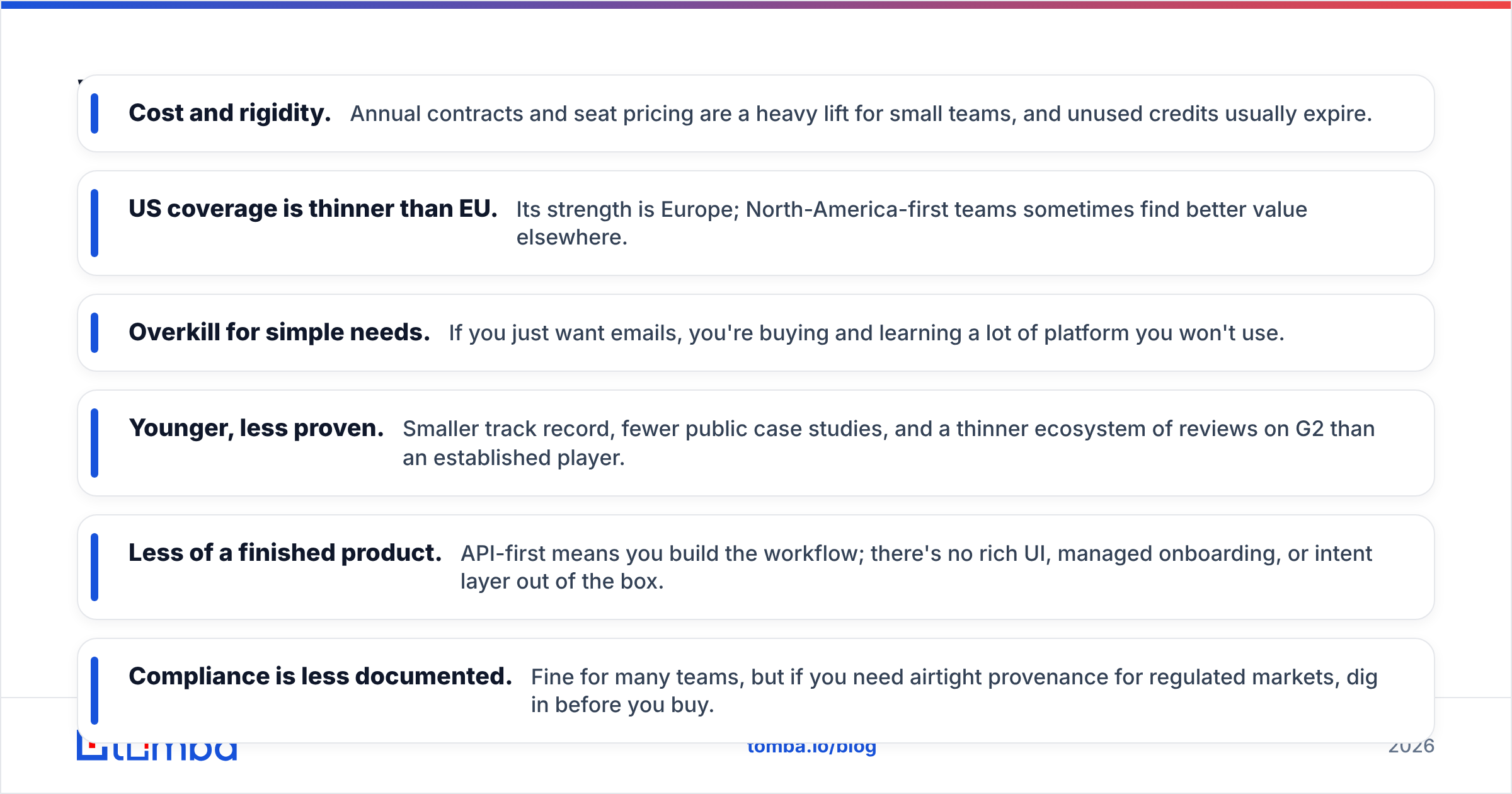
- Cost and rigidity. Annual contracts and seat pricing are a heavy lift for small teams, and unused credits usually expire.
- US coverage is thinner than EU. Its strength is Europe; North-America-first teams sometimes find better value elsewhere.
- Overkill for simple needs. If you just want emails, you're buying and learning a lot of platform you won't use.
Forager's weaknesses:
- Younger, less proven. Smaller track record, fewer public case studies, and a thinner set of reviews on G2 than an established player.
- Less of a finished product. API-first means you build the workflow; there's no rich UI, managed onboarding, or intent layer out of the box.
- Compliance is less documented. Fine for many teams, but if you need airtight provenance for regulated markets, dig in before you buy.
The shared drawback: both sell you a database, and every B2B database decays. Contacts change jobs. Domains change formats. Catch-all servers hide dead mailboxes. That's why a lot of teams layer a lightweight finder-and-verifier on top of whatever primary provider they choose — to fill gaps and re-check records at send time. Tools like a catch-all verifier exist precisely because the big platforms can't guarantee deliverability on ambiguous domains.
Cognism vs Forager: the verdict#
Cognism is the safer enterprise bet in Europe. Forager is the leaner, cheaper choice for technical teams. And for pure email discovery, neither may be necessary.
Choose Cognism when compliance, phone-verified mobiles, intent data, and a single team-wide platform justify a five-figure annual commitment. Choose Forager when you're a usage-conscious, API-fluent team that wants fresh contact data piped into a stack you control, without paying for seats and features you won't touch.
But be honest about the job to be done. Maybe most of your day is finding the right business email and confirming it's real. If so, a specialized email finder does that faster and cheaper than either platform — and you can always enrich further later. That's the part the Cognism vs Forager debate often skips.
That's where Tomba fits. The Tomba Email Finder locates professional email addresses by domain, name, or company. It pairs with a built-in verifier to protect your email deliverability, and it starts free with 25 searches a month — no annual contract, no seat minimums, no credit-expiry surprises. Run your target list through it alongside any Cognism or Forager trial. Then compare match rate, bounce rate, and cost per usable contact. Let the numbers on your own ICP pick the winner. Start free at tomba.io and see how much of your data problem is really just an email-finding problem.
Related guides#
// get started
Find, verify and enrich your first contacts today
Start on the free plan with 25 searches a month, then scale when your team is ready.
Free plan · No credit card required · GDPR & CCPA
// about the author