Cognism vs Generect: B2B Data Platforms Compared for 2026
Cognism and Generect both promise clean B2B contact data, but they aim at very different buyers. Here's an honest breakdown of pricing, coverage, compliance, and which one fits your outbound motion.
Choosing between Cognism and Generect usually comes down to one question: do you need an enterprise sales-intelligence suite, or a fast, developer-friendly data source you can plug into your own workflow? Both pull B2B contact data, both cover email and phone, and both lean into European coverage — but they price, package, and deliver that data very differently.
This is a neutral breakdown, not a sales pitch. We'll compare data coverage, accuracy, compliance, pricing structure, and the real-world workflows each one fits. Where a leaner alternative makes more sense, we'll say so.
TL;DR#
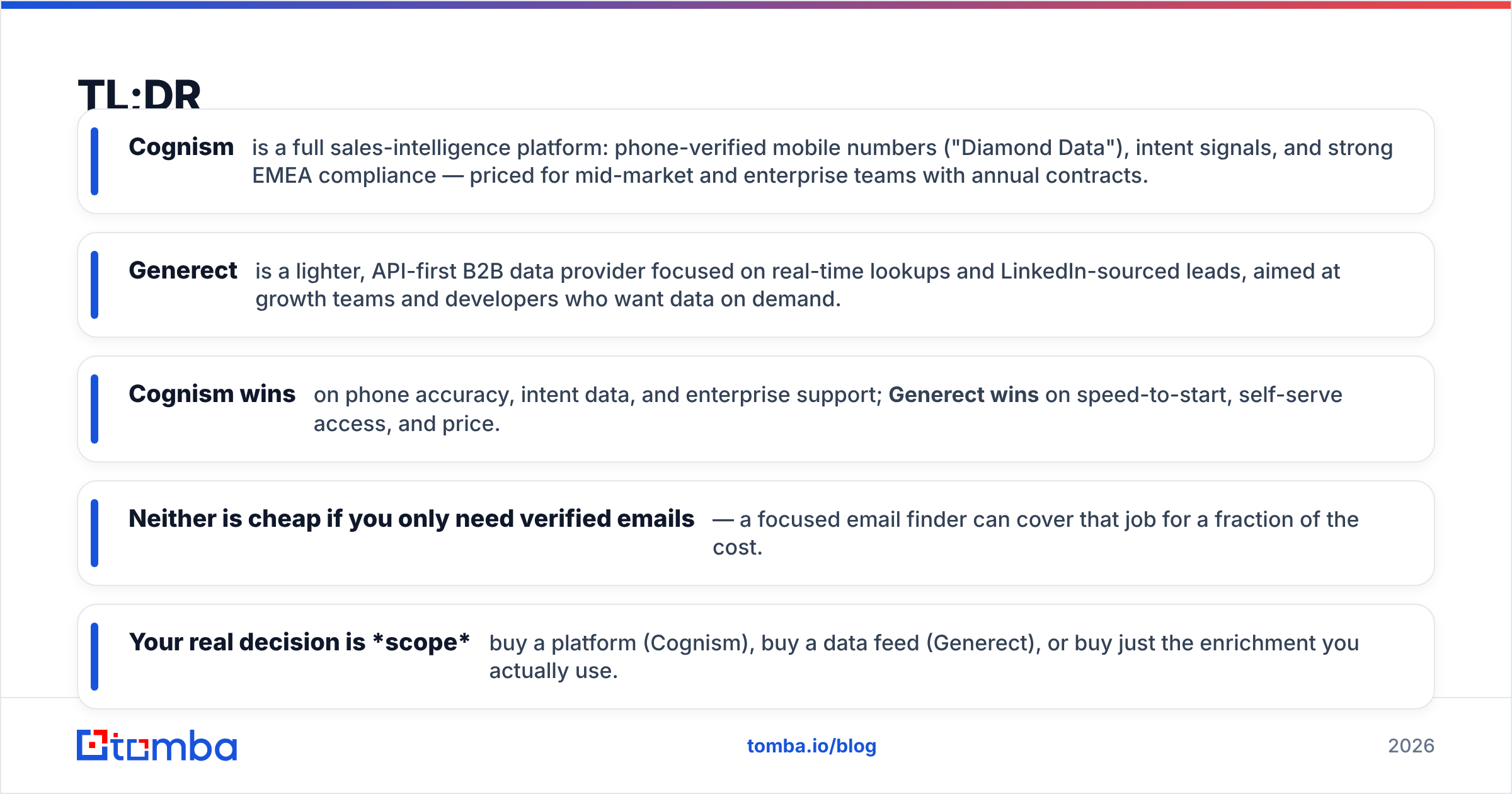
- Cognism is a full sales-intelligence platform: phone-verified mobile numbers ("Diamond Data"), intent signals, and strong EMEA compliance — priced for mid-market and enterprise teams with annual contracts.
- Generect is a lighter, API-first B2B data provider focused on real-time lookups and LinkedIn-sourced leads, aimed at growth teams and developers who want data on demand.
- Cognism wins on phone accuracy, intent data, and enterprise support; Generect wins on speed-to-start, self-serve access, and price.
- Neither is cheap if you only need verified emails — a focused email finder can cover that job for a fraction of the cost.
- Your real decision is scope: buy a platform (Cognism), buy a data feed (Generect), or buy just the enrichment you actually use.
What is Cognism?#
Cognism is an established B2B sales-intelligence platform best known in the UK and wider EMEA market. Its pitch is premium, compliant contact data — especially mobile phone numbers that its team manually verifies, marketed as "Diamond Verified" records. Beyond raw contacts, Cognism layers on buyer-intent data (via Bombora), technographics, and CRM integrations, positioning itself as the single source outbound and RevOps teams build their prospecting on.
The trade-off is packaging. Cognism sells annual contracts with seat-based licensing and, in most cases, a demo-and-quote sales process rather than instant self-serve signup. That's normal for the enterprise data category, but it means you rarely see a public price before talking to sales. You can read their positioning on the Cognism site and cross-check reviews on G2.
What is Generect?#
Generect is a newer, API-first B2B data provider. Instead of a heavy dashboard-and-seats model, it emphasizes real-time lookups: you query for a company or person and it returns emails, phone numbers, and LinkedIn-derived firmographic data on demand. It appeals to growth marketers, agencies, and developers who want to wire fresh data directly into their own tools, sequencers, or enrichment pipelines.
Because it's lighter, Generect tends to be faster to adopt and friendlier on price, with more accessible plans and pay-as-you-scale usage. The trade-off runs the other way: you generally get less of the surrounding platform — fewer native intent signals, lighter enterprise support, and a smaller ecosystem of prebuilt integrations. You can see their current offering on the Generect site.
Cognism vs Generect: how do they compare?#
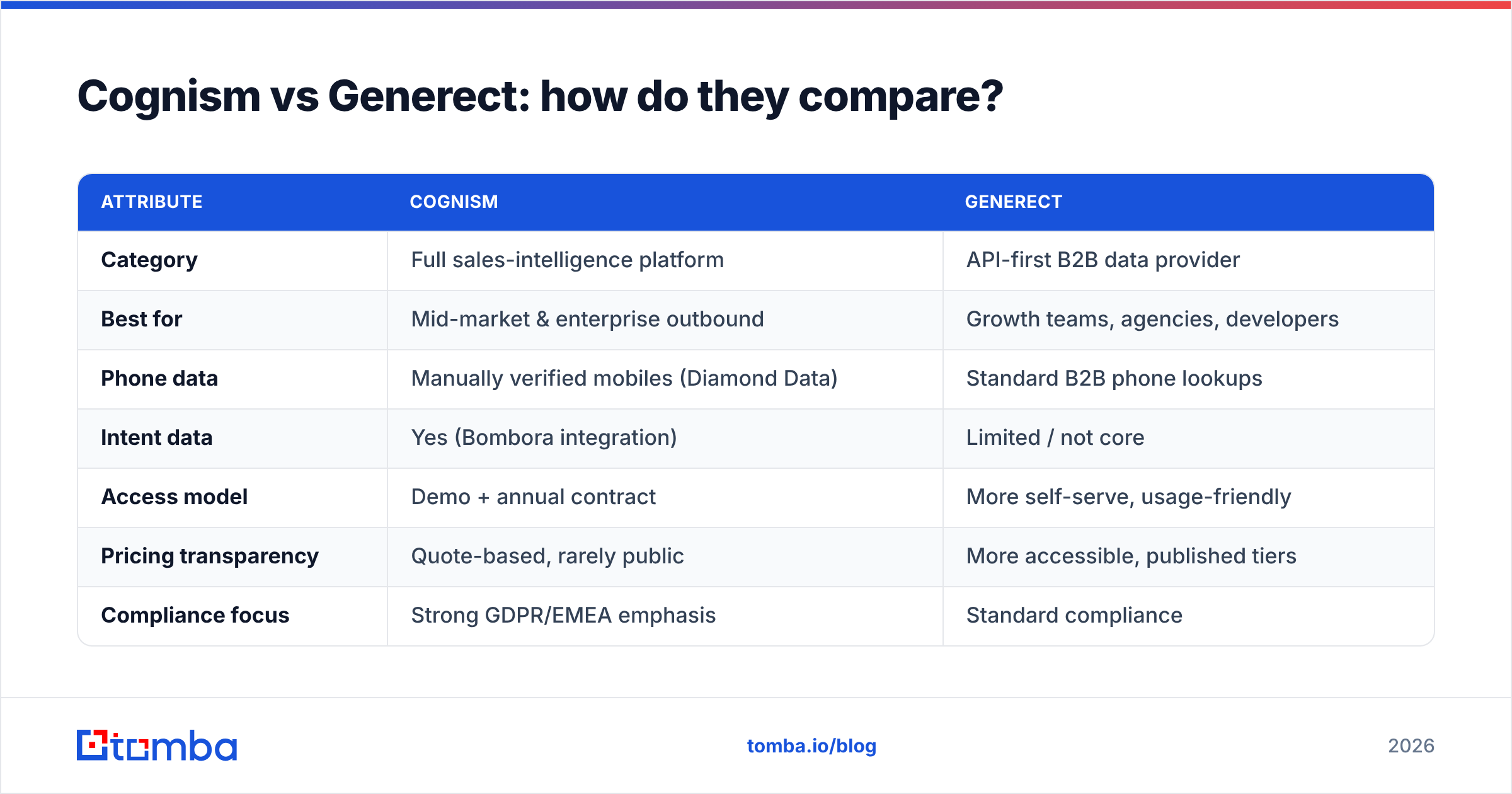
Here's the head-to-head on the attributes that actually change your buying decision. Treat specific numbers as directional and confirm current terms with each vendor — data pricing shifts often.
| Attribute | Cognism | Generect |
|---|---|---|
| Category | Full sales-intelligence platform | API-first B2B data provider |
| Best for | Mid-market & enterprise outbound | Growth teams, agencies, developers |
| Phone data | Manually verified mobiles (Diamond Data) | Standard B2B phone lookups |
| Intent data | Yes (Bombora integration) | Limited / not core |
| Access model | Demo + annual contract | More self-serve, usage-friendly |
| Pricing transparency | Quote-based, rarely public | More accessible, published tiers |
| Compliance focus | Strong GDPR/EMEA emphasis | Standard compliance |
| Setup speed | Slower (onboarding, contract) | Fast (API keys, quick start) |
| Typical entry cost | High (enterprise-tier) | Lower / mid-range |
The pattern is clear: Cognism is the heavier, higher-assurance platform, and Generect is the nimble data feed. Which of those you should pay for depends less on brand and more on how much of a full platform you'll genuinely use.
Is Cognism's data more accurate than Generect's?#
For phone numbers, Cognism generally has the edge — its manual verification of mobile numbers is its core differentiator, and teams that live on cold calling often cite connect-rate improvements as the reason they pay the premium. If dialing mobiles at scale is central to your motion, that accuracy is worth real money.
For email, the gap narrows. Both platforms return business emails sourced and validated through similar signals, and neither is immune to the universal problem of B2B data: people change jobs, domains go catch-all, and any provider's records decay month over month. Accuracy claims from any vendor should be treated as a starting point, not gospel. The durable habit is to verify at the point of use — run addresses through an email verifier before you send, regardless of where the data came from. That single step protects your sender reputation more than choosing "the accurate vendor" ever will.
Independent numbers help here. Rather than trusting a marketing page, sanity-check bounce rates on a sample export from each provider and compare. A tool that looks 5% more accurate on paper can look identical once you filter to your actual target segment.
How does pricing compare?#
This is where the two diverge most sharply.
Cognism is priced as an enterprise platform. Expect annual commitments, seat-based licensing, and a quote that depends on data volume, modules (intent, enrich, etc.), and headcount. There's usually no free trial in the self-serve sense — you go through a demo. For a well-funded team that will use the intent data and phone verification daily, the cost is justifiable. For a small team that mostly wants emails, it's a lot of platform to pay for.
Generect is friendlier to smaller budgets and usage-based scaling. You can get moving faster and pay closer to what you consume, which suits agencies and developers running variable workloads.
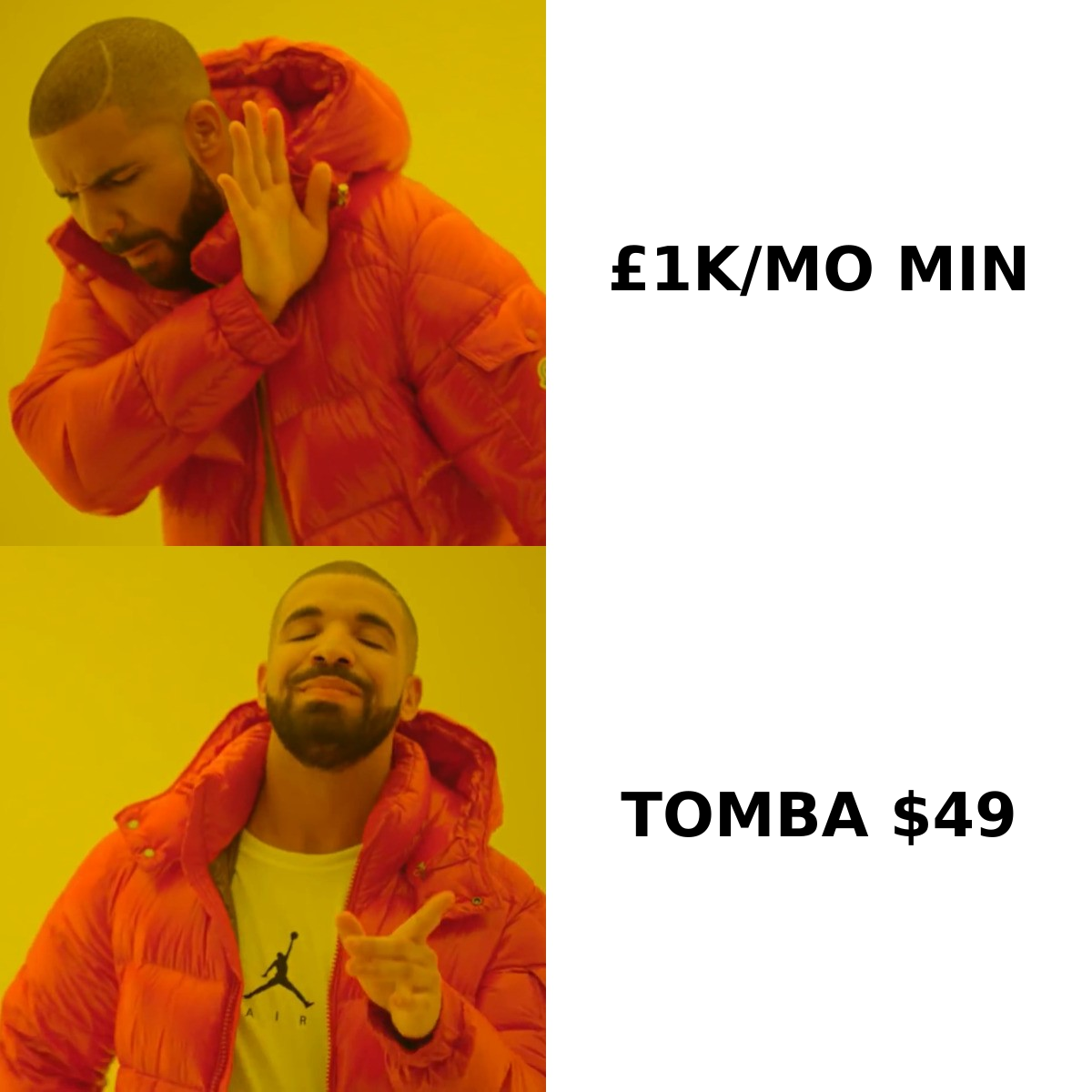
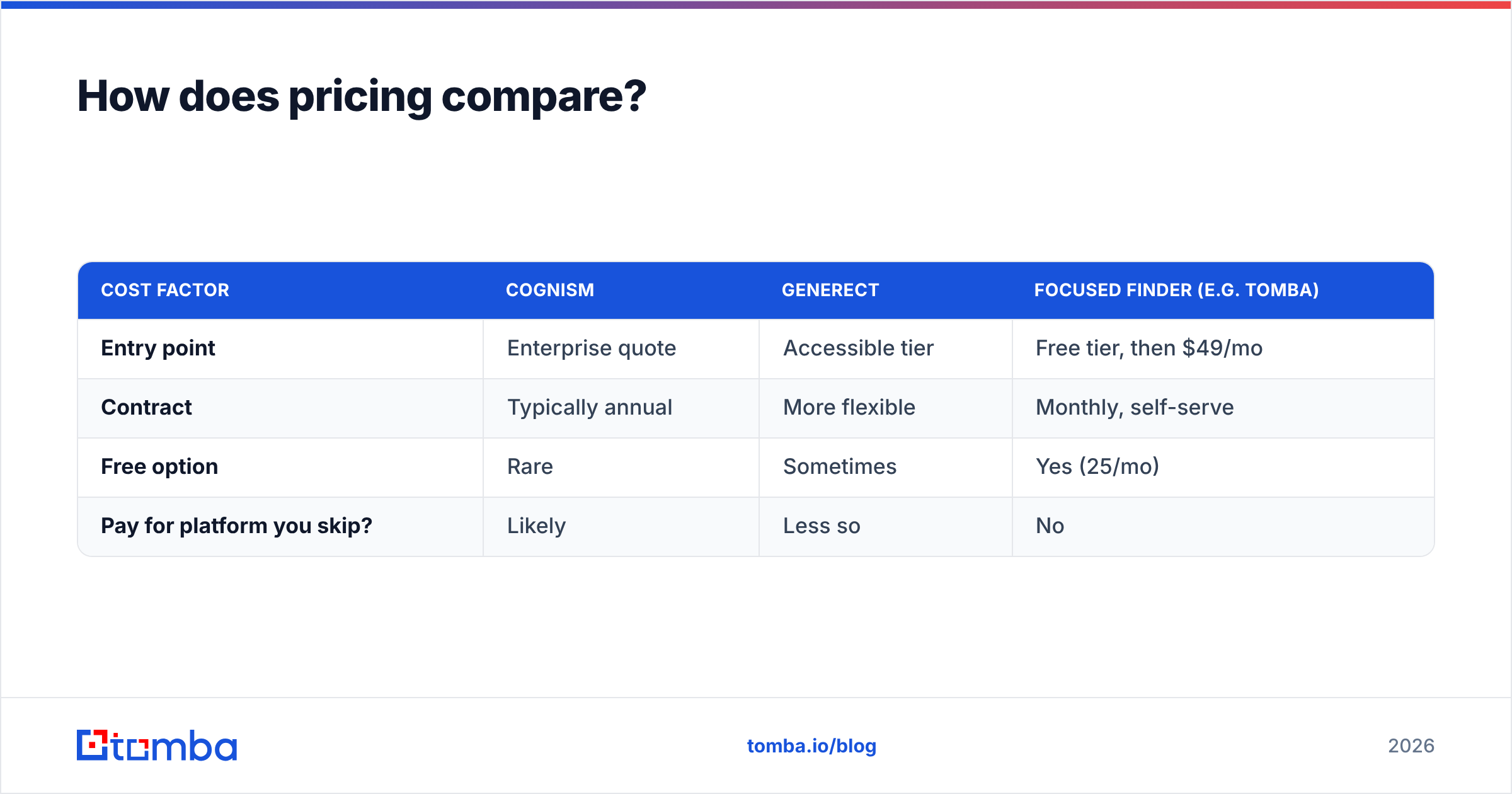
But zoom out and ask the real question: what job are you hiring the tool for? If the honest answer is "find and verify B2B emails, plus some phone numbers," you're often overpaying with either platform. A focused stack — an email finder, a verifier, and a phone finder — covers that job at a fraction of enterprise-suite pricing. For reference, transparent per-search plans like Tomba pricing start with a free tier (25 searches/month) and a $49/mo Starter plan, versus the four- and five-figure annual contracts common at the enterprise end of this category.
| Cost factor | Cognism | Generect | Focused finder (e.g. Tomba) |
|---|---|---|---|
| Entry point | Enterprise quote | Accessible tier | Free tier, then $49/mo |
| Contract | Typically annual | More flexible | Monthly, self-serve |
| Free option | Rare | Sometimes | Yes (25/mo) |
| Pay for platform you skip? | Likely | Less so | No |
Which one has better compliance and coverage?#
Cognism built much of its reputation on GDPR-conscious data practices and strong EMEA coverage, including a notify-and-suppress approach that appeals to legal and RevOps teams operating in Europe. If your outbound touches the EU and UK heavily and compliance sign-off is a real gate in your org, that emphasis is a genuine advantage.
Generect covers global B2B data with standard compliance, and for many teams that's perfectly adequate — especially if your primary market is North America or you're already handling suppression and consent in your own systems. If, however, your legal team wants a vendor that leads with European compliance posture, Cognism is the safer conversation to have.
Coverage also depends on your ICP, not the vendor's total record count. A provider with 200M contacts globally can still be thin in your specific niche. Always test against a real target list before committing.

When should you pick a lighter alternative instead?#
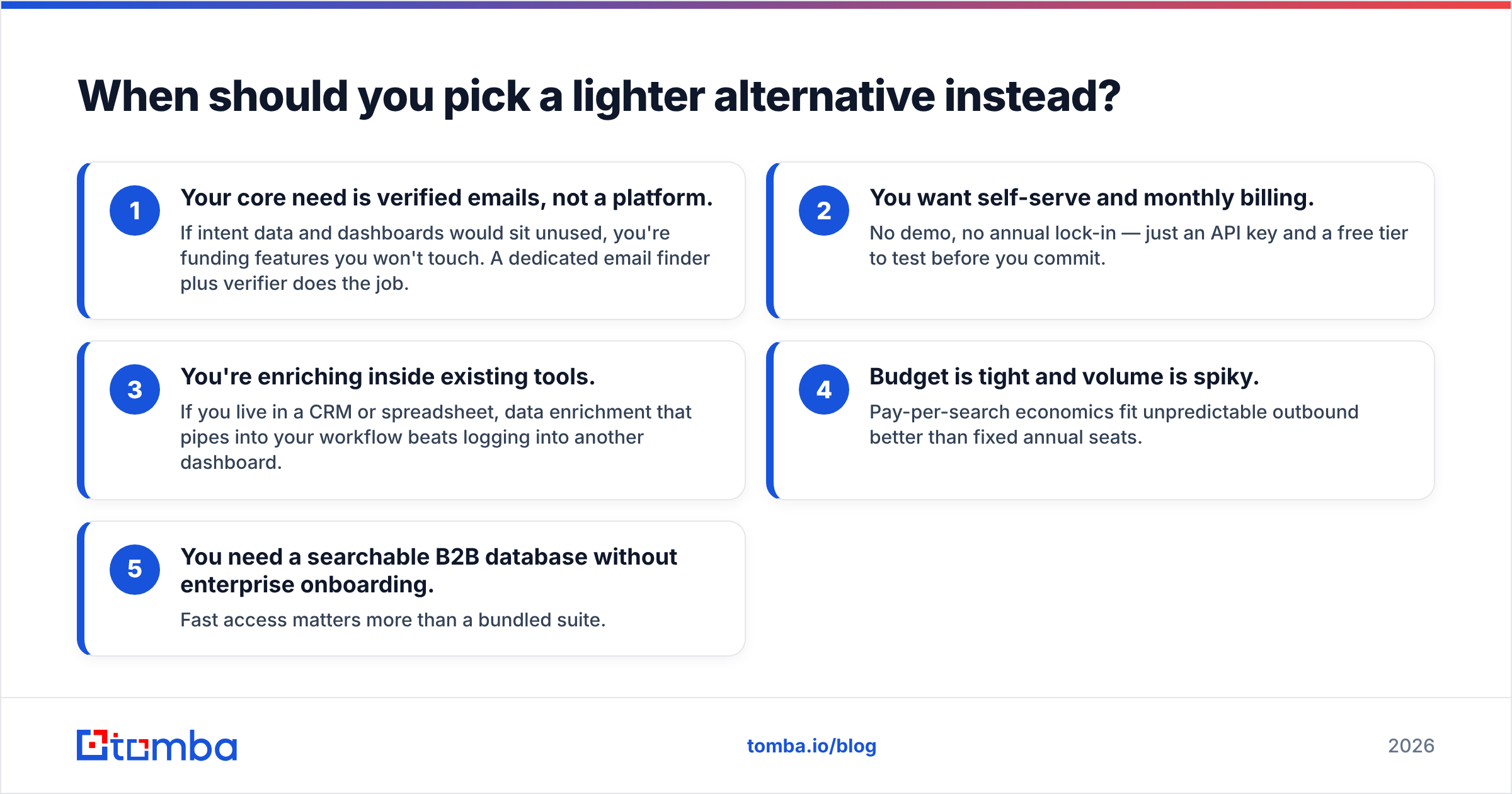
Plenty of teams don't need either full offering. Consider a leaner stack when:
- Your core need is verified emails, not a platform. If intent data and dashboards would sit unused, you're funding features you won't touch. A dedicated email finder plus verifier does the job.
- You want self-serve and monthly billing. No demo, no annual lock-in — just an API key and a free tier to test before you commit.
- You're enriching inside existing tools. If you live in a CRM or spreadsheet, data enrichment that pipes into your workflow beats logging into another dashboard.
- Budget is tight and volume is spiky. Pay-per-search economics fit unpredictable outbound better than fixed annual seats.
- You need a searchable B2B database without enterprise onboarding. Fast access matters more than a bundled suite.
None of this makes Cognism or Generect wrong — it makes them the wrong scope for a specific job. Match the tool to the task, not to the brand's marketing tier.
Cognism vs Generect: the verdict#
Pick Cognism if you're a mid-market or enterprise team that will actually use phone verification, intent data, and European compliance depth — and you have budget for an annual platform contract. The premium buys assurance and support, and for high-volume cold calling in EMEA, that assurance pays for itself.
Pick Generect if you're a growth team, agency, or developer who wants fresh B2B data on demand, fast setup, and pricing that scales with usage rather than seats. You give up some platform depth for speed and flexibility — often a smart trade for lean teams.
Pick a focused finder if what you truly need is accurate emails and phone numbers without paying for a suite you'll half-use. The cheapest data problem to solve is the one you scope correctly.
Whatever you choose, verify before you send and test coverage against your own ICP first. The best B2B data tool is the one that matches your motion, your budget, and your compliance bar — not the one with the longest feature list.
Start with the data you actually need#
If your bottleneck is simply finding and verifying professional emails at your target accounts, you don't need to sign an annual enterprise contract to fix it. The Tomba Email Finder lets you search by domain, name, or company, verify results before you send, and start on a free tier — no demo, no lock-in. Pair it with phone lookup and enrichment only if and when your motion needs them. Scope the tool to the job, prove the ROI, then scale. Try it free and see how far a focused stack gets you before you commit to a full platform.
Related guides#
// get started
Find, verify and enrich your first contacts today
Start on the free plan with 25 searches a month, then scale when your team is ready.
Free plan · No credit card required · GDPR & CCPA
// about the author