Cold Calling Conversion Rate: Benchmarks and How to Improve It
What counts as a good cold calling conversion rate in 2026, how to calculate it at every stage, and the concrete levers that move dials into booked meetings.
TL;DR
- A "good" cold calling conversion rate depends on which stage you measure. Dial-to-connect sits around 5-10%, connect-to-conversation 30-40%, and dial-to-meeting typically lands between 1% and 3%.
- Most reps who think they have a script problem actually have a data problem: wrong numbers, wrong titles, and stale lists quietly cap the ceiling.
- Calculate conversion at every stage — dial, connect, conversation, meeting, opportunity — so you fix the real bottleneck instead of guessing.
- The three biggest levers are accurate direct-dial data, disciplined call timing, and a discovery-first opening that earns the next 30 seconds.
- Track the numbers weekly. Small gains at the connect stage compound harder than any clever closing line.
Cold calling still works in 2026 — but only when the math works. If you are dialing bad numbers or reading a monologue, no benchmark will save you. This guide breaks down what a realistic cold calling conversion rate looks like at each stage, how to calculate yours, and the specific changes that move the number.
What is a cold calling conversion rate?#
Your cold calling conversion rate is the percentage of calls that produce the outcome you care about — usually a booked meeting. Think of it like a funnel with leaks: you pour dials in the top, and only a fraction come out the bottom as meetings. The rate tells you how leaky the funnel is.
The trap is measuring only the final number. "We booked 12 meetings from 600 dials" hides where the loss happens. Did you fail to connect? Connect but get hung up on? Have good conversations that never converted? Each is a different fix.
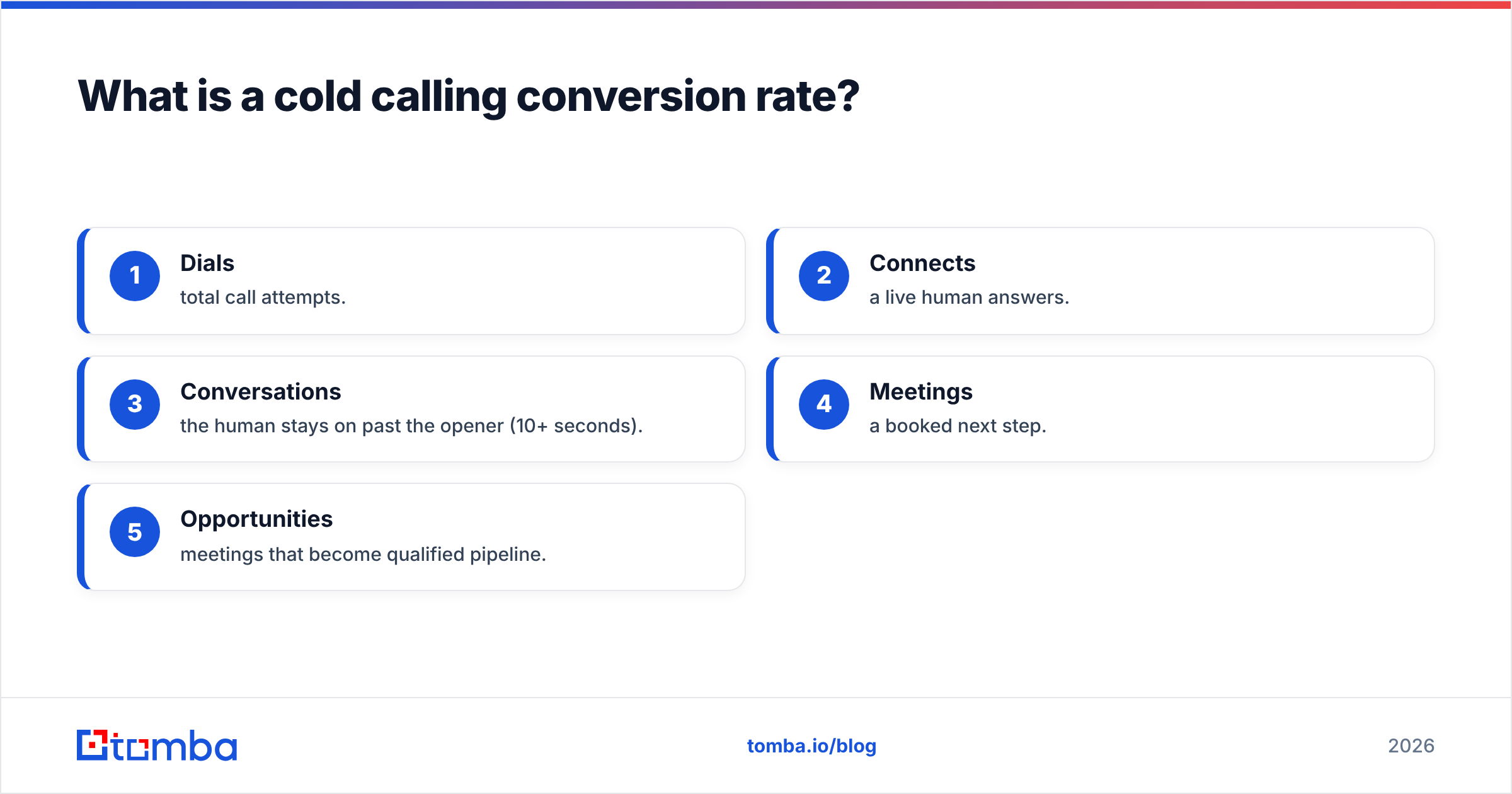
Break the funnel into stages:
- Dials — total call attempts.
- Connects — a live human answers.
- Conversations — the human stays on past the opener (10+ seconds).
- Meetings — a booked next step.
- Opportunities — meetings that become qualified pipeline.
Measure the ratio between each step and you know exactly which leak to plug.
What is a good cold calling conversion rate in 2026?#
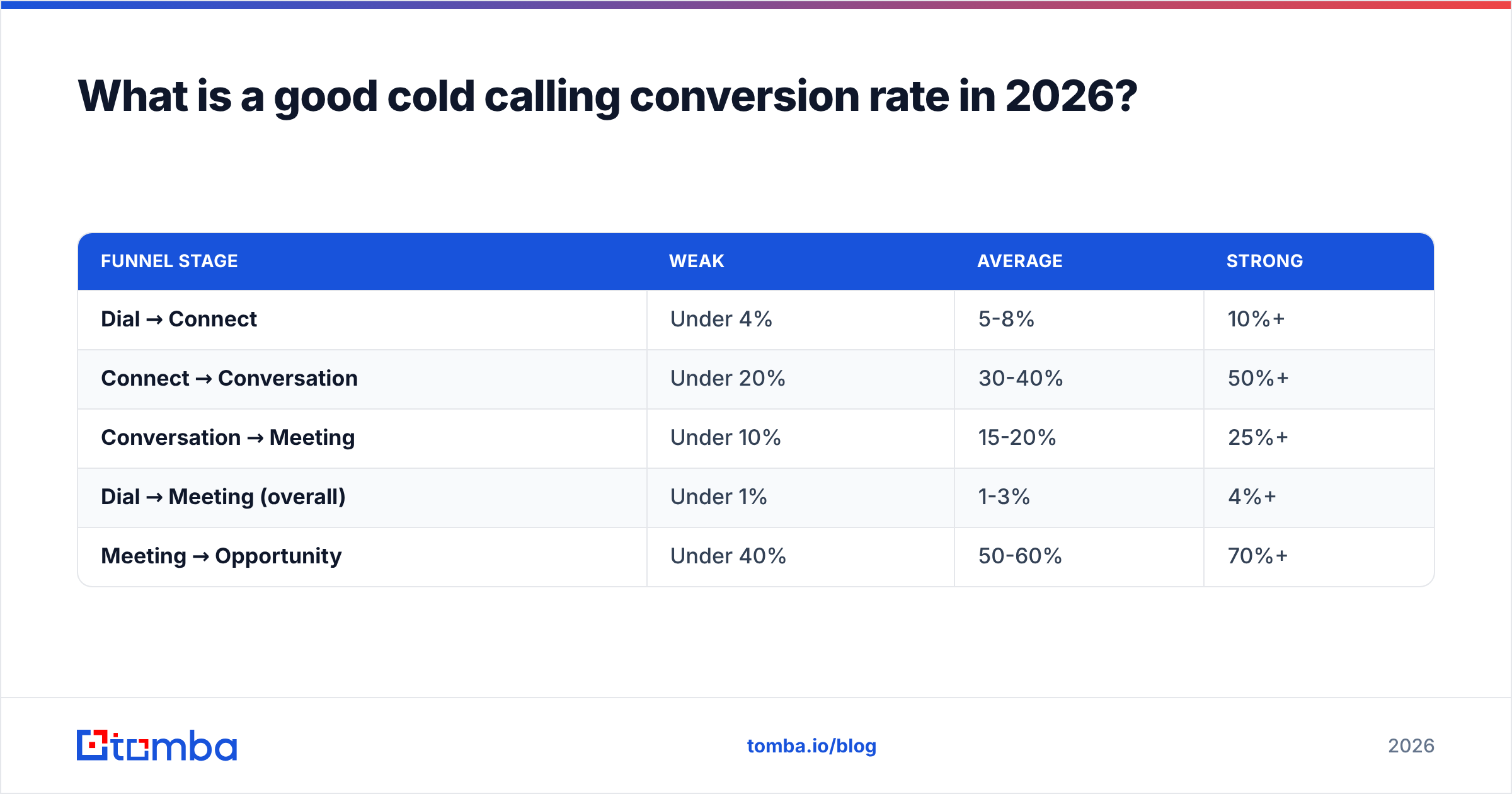
Here is the honest answer: benchmarks vary wildly by industry, seniority of target, and list quality. But across B2B SaaS and services teams, the ranges below hold up well enough to diagnose your own performance.
| Funnel stage | Weak | Average | Strong |
|---|---|---|---|
| Dial → Connect | Under 4% | 5-8% | 10%+ |
| Connect → Conversation | Under 20% | 30-40% | 50%+ |
| Conversation → Meeting | Under 10% | 15-20% | 25%+ |
| Dial → Meeting (overall) | Under 1% | 1-3% | 4%+ |
| Meeting → Opportunity | Under 40% | 50-60% | 70%+ |
A few things to notice. First, the dial-to-connect rate is the single biggest lever — if only 4% of your dials reach a human, everything downstream is starved. Second, "strong" at the overall dial-to-meeting stage is roughly 4%, meaning even elite reps book a meeting on fewer than 1 in 20 dials. That is normal. Cold calling is a volume-plus-precision game, not a magic-words game.
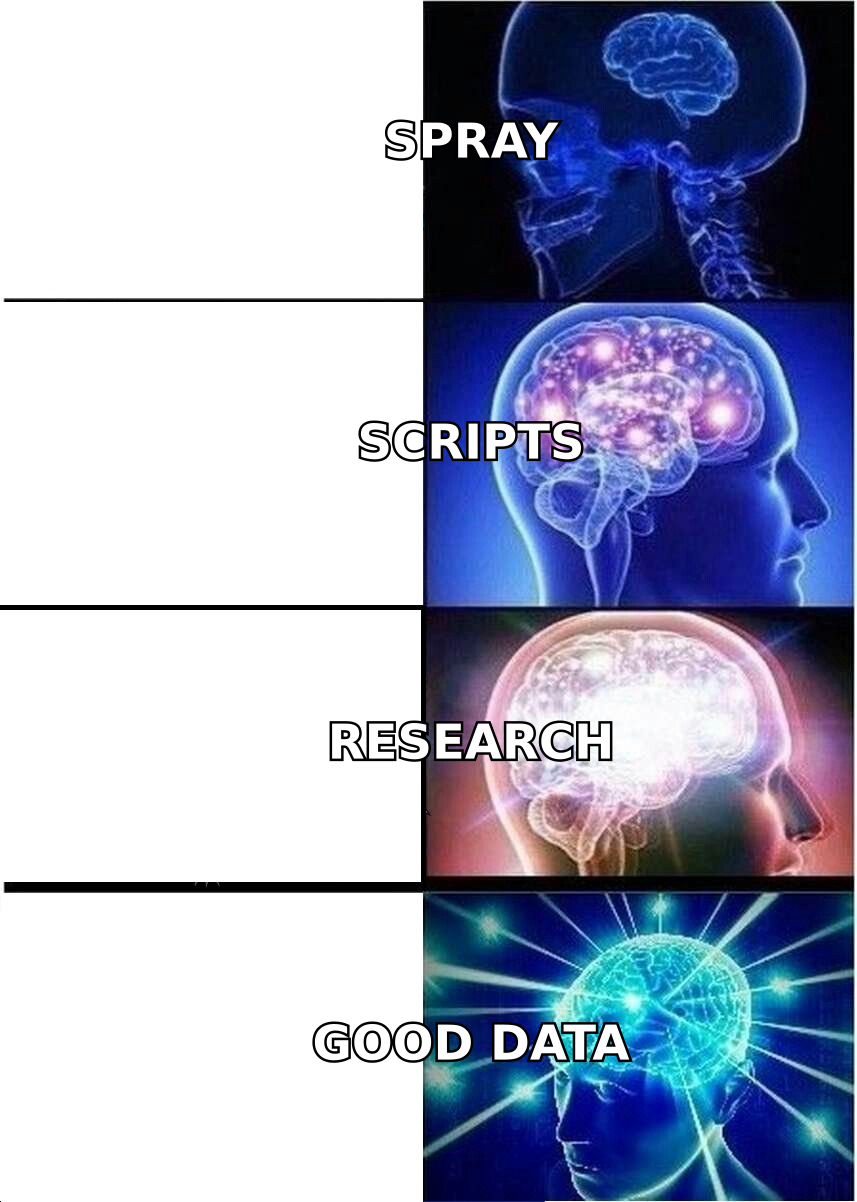
If your numbers sit at the weak end, resist the urge to rewrite your script first. Check the data feeding the top of the funnel — that is where most teams are silently bleeding.
How do you calculate cold calling conversion rate?#
Use plain division at each stage, then multiply through for the overall rate.
- Connect rate = Connects ÷ Dials × 100
- Conversation rate = Conversations ÷ Connects × 100
- Meeting rate = Meetings ÷ Conversations × 100
- Overall conversion = Meetings ÷ Dials × 100
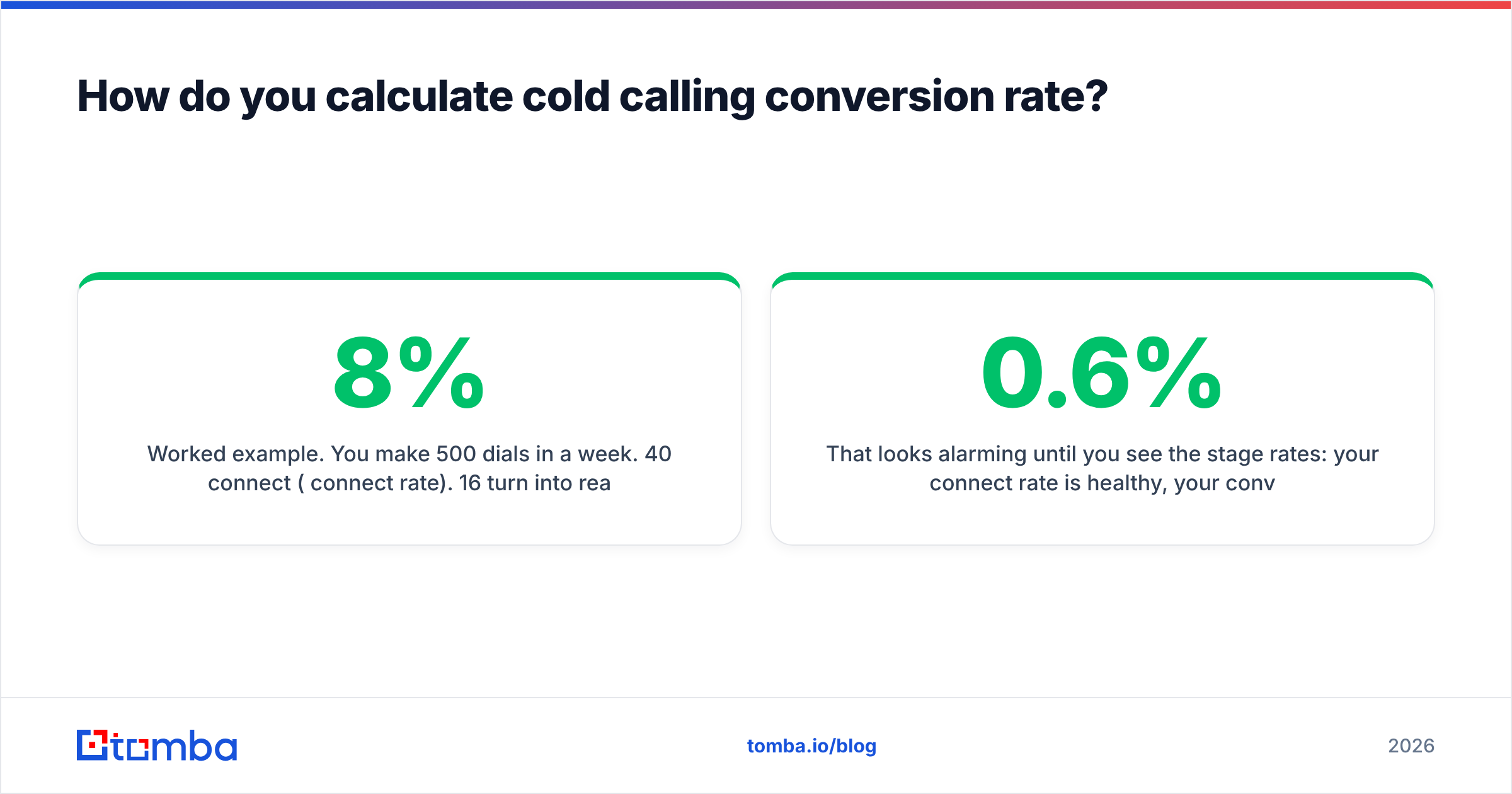
Worked example. You make 500 dials in a week. 40 connect (8% connect rate). 16 turn into real conversations (40% conversation rate). 3 become meetings (about 19% meeting rate). Your overall cold calling conversion rate is 3 ÷ 500 = 0.6%.
That 0.6% looks alarming until you see the stage rates: your connect rate is healthy, your conversation rate is strong, but your conversation-to-meeting step is dragging the total down. Now you know the fix is your discovery and ask — not your dialer or your list. Without stage math, you would have blamed the wrong thing.
Track these weekly in a simple sheet or your CRM. Tools like HubSpot and Salesforce log call activity automatically, but the ratios are what you act on — raw dial counts tell you nothing.
Why is your connect rate so low?#
Nine times out of ten, a low connect rate traces back to the contact data, not the effort. You can be a great rep dialing numbers that ring a disconnected desk phone or a switchboard that screens you out.
Common data failures that cap your cold calling conversion rate:
- Main lines instead of direct dials. Reaching a receptionist adds a gatekeeper to every call. Direct-dial mobile numbers skip the queue entirely.
- Stale numbers. People change roles and companies constantly. A list built 12 months ago is decaying at roughly 20-30% per year.
- Wrong person entirely. If the number belongs to someone who left, or a title that does not own the problem you solve, the call was dead before you dialed.
- No verification. Unvalidated numbers waste dials on dead ends that never had a chance to connect.
This is where pulling accurate contact data matters more than any talk track. Use a phone finder to source verified B2B direct dials, run them through a phone validator to strip out disconnected lines before you dial, and enrich the records so you are calling the right title with context. Feeding clean data into the top of the funnel raises the connect rate, and every downstream stage inherits the lift.

What separates high-converting cold calls from the rest?#
Once you are actually connecting with the right people, the conversation itself decides the meeting rate. The pattern among reps with strong conversation-to-meeting numbers is consistent.
They open with a pattern interrupt, not a pitch. "Hey, I know I'm an interruption — can I take 30 seconds and you can tell me to buzz off?" earns permission and disarms the reflex to hang up.
They lead with a problem, not a product. High converters reference a specific pain the prospect's role owns — pipeline gaps, ramp time, churn — before ever naming a solution.
They ask, then listen. The best cold calls are 60-70% prospect talking. A single sharp discovery question outperforms three minutes of feature-listing.
They make one clear ask. "Does it make sense to grab 20 minutes Thursday?" beats a vague "would you be open to learning more?" every time.
They call at the right time. Data consistently shows late morning and late afternoon outperform lunch and early morning. Mid-week beats Monday and Friday.
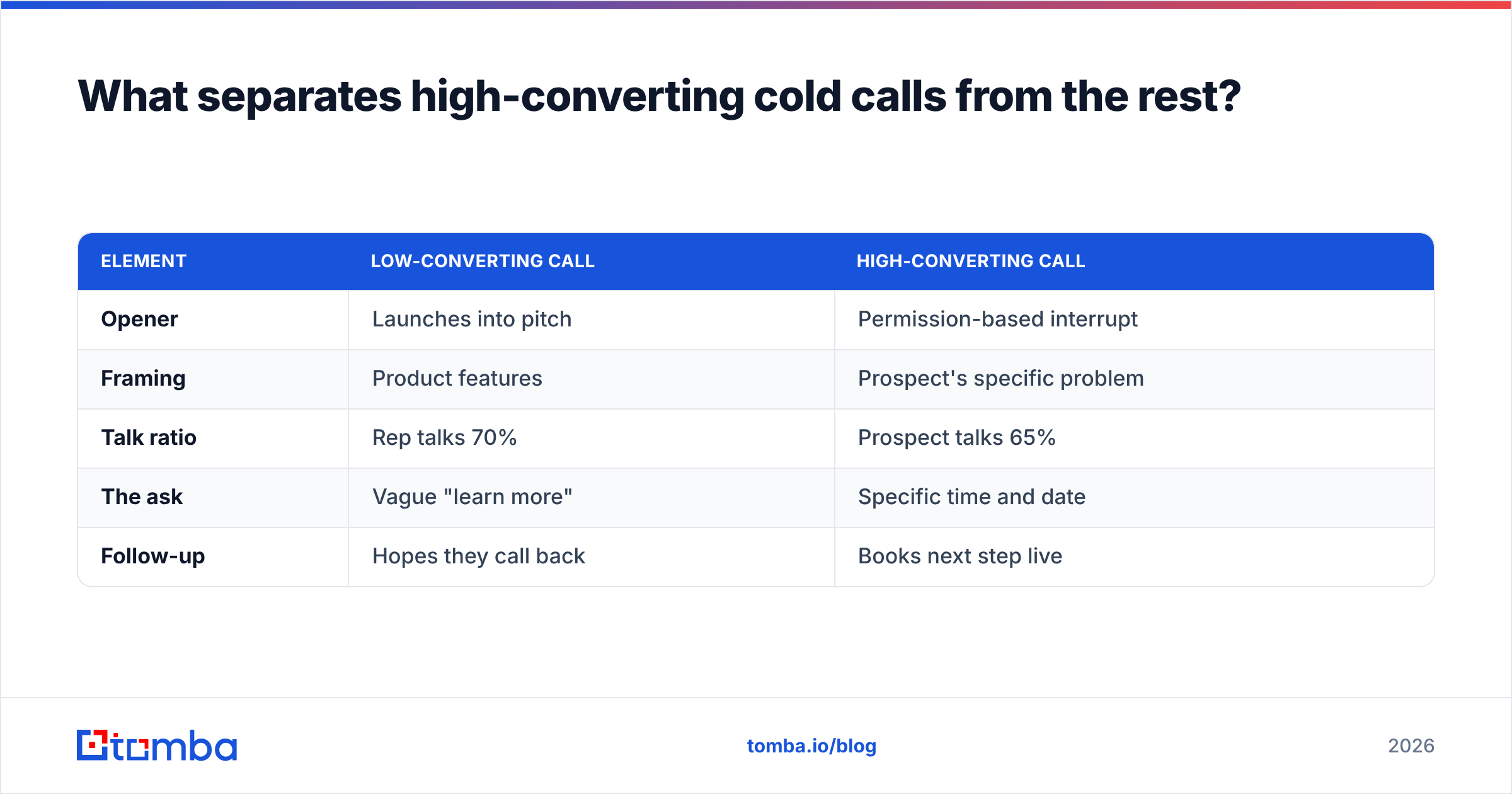
Here is a side-by-side of the two approaches:
| Element | Low-converting call | High-converting call |
|---|---|---|
| Opener | Launches into pitch | Permission-based interrupt |
| Framing | Product features | Prospect's specific problem |
| Talk ratio | Rep talks 70% | Prospect talks 65% |
| The ask | Vague "learn more" | Specific time and date |
| Follow-up | Hopes they call back | Books next step live |
None of this works on the wrong person. Great technique on a bad list still converts poorly — which is why data and delivery have to improve together.
Does call volume still matter, or is it all about targeting?#
Both — and the ratio between them is the whole game. Volume without targeting is spray-and-pray; targeting without volume is a rounding error. You need enough dials to hit statistical significance and a good enough list that those dials connect with real buyers.
The smarter play is to raise the quality of each dial so you need fewer of them to hit the same meeting count. That means:
- Segment before you dial. Group accounts by trigger events — new funding, a relevant hire, tech-stack changes — so your opener has a reason to exist.
- Enrich every record. Pair each phone number with title, company size, and a recent signal. Data enrichment turns a bare number into a call you can actually personalize.
- Multi-thread with email. Pair calls with a warm email so your name is already familiar. A verified address from an email finder lets you send that touch to a real inbox instead of a bounce.
- Kill dead numbers early. Validate before dialing so your connect rate reflects reachable prospects, not phantom lines.
A rep making 40 precise, well-researched dials a day will usually out-book a rep making 120 blind ones — with far less burnout. See the range of options and Tomba pricing if you want to build that clean list without spending your morning on manual research. For a wider look at data tools, G2's sales intelligence category is a solid neutral reference.
How do you improve your cold calling conversion rate step by step?#
Work the funnel from top to bottom. Fixing the earliest leak first gives you the biggest compounding gain.
- Audit your list. Verify every number and confirm the title actually owns the problem. This alone often doubles a weak connect rate.
- Track stage-by-stage. Log dials, connects, conversations, and meetings separately. You cannot fix what you do not measure.
- Fix the worst stage first. Whichever ratio is furthest below the benchmark table is your priority — not your favorite thing to tweak.
- Refine the opener. Test permission-based and problem-led openings against each other for two weeks. Keep the winner.
- Standardize the ask. Move everyone to a specific, time-bound meeting request.
- Optimize timing. Concentrate dials in the high-connect windows your own data reveals.
- Re-measure weekly. Small, steady gains at the connect and conversation stages compound faster than any single closing trick.
The teams that win at cold calling are not the ones with the slickest scripts. They are the ones who treat conversion as a measurable system, fix the biggest leak first, and refuse to dial a list they have not cleaned.
The bottom line#
Your cold calling conversion rate is a funnel, not a single number. Measure every stage, and the fix usually reveals itself — and more often than not, it starts with the data feeding the top. Clean, verified, well-targeted contacts raise the connect rate, and every stage below inherits the gain.
If your dials keep hitting dead numbers and gatekeepers, start there. Use the Tomba Email Finder to build accurate, enriched contact lists — verified emails and direct-dial data for the exact decision-makers you want to reach — so every call you make has a real shot at a real conversation. Better data in, more meetings out. That is the whole equation.
Related guides#
Ready to find emails that actually work?
Join 150,000+ professionals who stopped guessing and started sending. Free credits on signup — no credit card required.
Get the Tomba newsletter
Practical outbound tactics and product updates — once every two weeks.
About the author