7 Best Dialiq Alternatives in 2026 for Sales Teams
Dialiq's AI dialer is solid, but it isn't the only option. Here are 7 Dialiq alternatives compared on price, call quality, and data — so you can pick the right dialer for your team.
Dialiq built a name for itself as an AI-assisted dialer that promises to make cold calling feel less like a grind. But "the popular option" and "the right option for your team" are rarely the same thing. Pricing, call-connect quality, CRM depth, and — critically — the quality of the phone data you feed into it all vary wildly between tools.
This guide breaks down seven credible Dialiq alternatives for 2026, what each one is actually good at, and how to decide. No fluff, no "revolutionary game-changer" language — just the trade-offs.
TL;DR — the short version#
- Best for high-volume parallel dialing: Orum and Nooks lead on raw connect rates and AI-powered parallel dialing.
- Best all-in-one phone system: Aircall and CloudTalk if you want a full business phone platform, not just an outbound dialer.
- Best for SMB sales teams on a budget: Kixie and JustCall offer strong CRM integrations at a lower entry price.
- The part everyone skips: a dialer is only as good as the numbers you load into it. Bad phone data kills connect rates faster than any feature gap.
- Tomba's angle: Tomba isn't a dialer — it's the phone finder and enrichment layer that feeds accurate B2B numbers into whichever dialer you choose.
What is Dialiq and why look for alternatives?#
Dialiq is an AI-powered sales calling tool designed to speed up outbound prospecting — auto-dialing, call transcription, and coaching features rolled into one workflow. It sits in the same category as power dialers and parallel dialers: software that removes the manual "look up number, type it in, wait for ringing" tax from a rep's day.
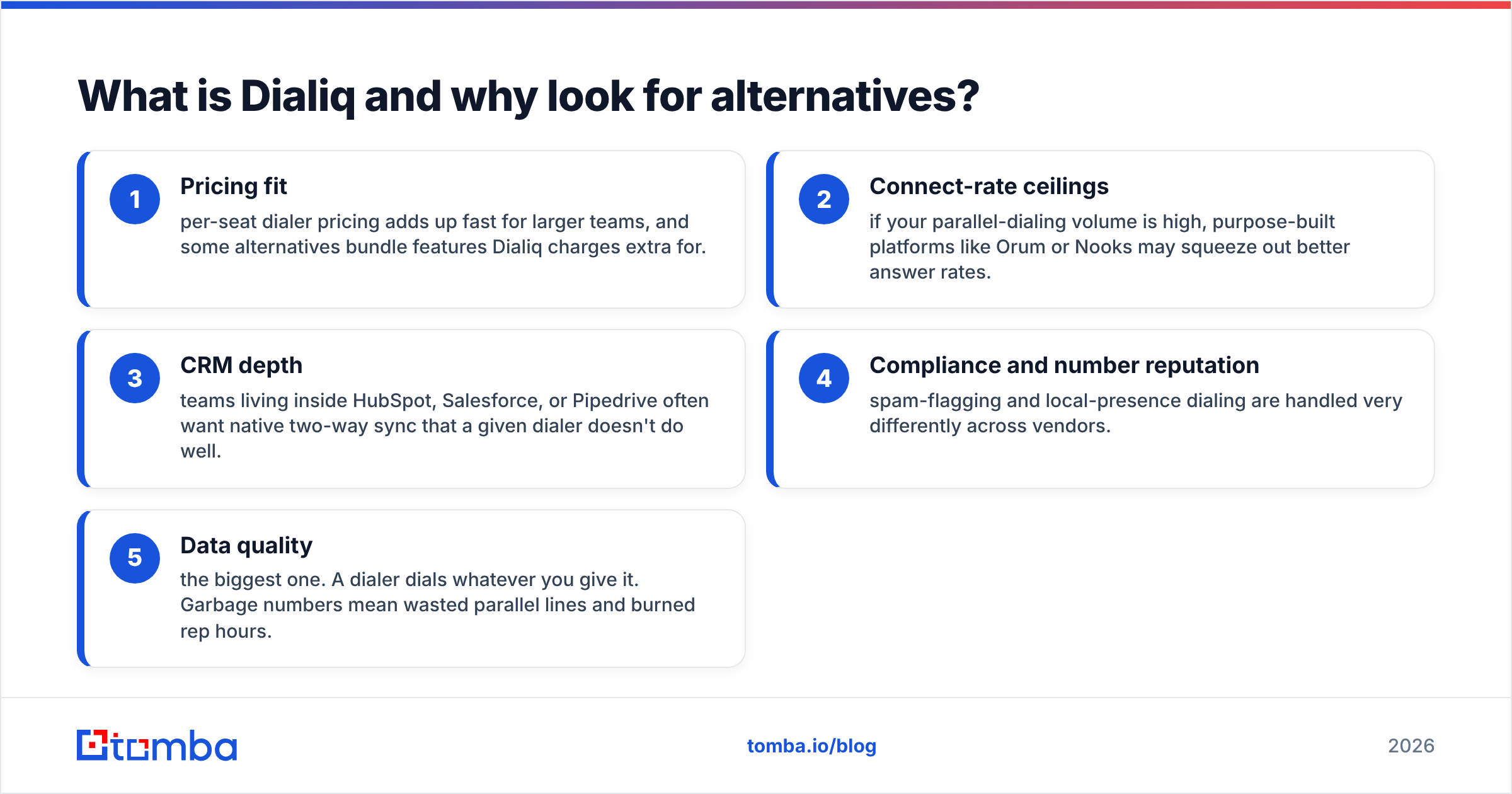
So why shop around? A few common reasons teams outgrow or bypass Dialiq:
- Pricing fit — per-seat dialer pricing adds up fast for larger teams, and some alternatives bundle features Dialiq charges extra for.
- Connect-rate ceilings — if your parallel-dialing volume is high, purpose-built platforms like Orum or Nooks may squeeze out better answer rates.
- CRM depth — teams living inside HubSpot, Salesforce, or Pipedrive often want native two-way sync that a given dialer doesn't do well.
- Compliance and number reputation — spam-flagging and local-presence dialing are handled very differently across vendors.
- Data quality — the biggest one. A dialer dials whatever you give it. Garbage numbers mean wasted parallel lines and burned rep hours.
How should you evaluate a Dialiq alternative?#
Before comparing logos, get clear on the five variables that actually move revenue. Use these as your scorecard:
- Dial mode — Do you need a single-line power dialer, or a multi-line parallel dialer that calls several numbers at once and connects the first live human to a rep?
- Connect rate & number reputation — Local presence, spam-label monitoring, and number rotation directly affect how often people pick up.
- CRM and tooling integration — Native sync with your CRM beats CSV exports every time.
- AI features — Transcription, call scoring, and coaching are increasingly table stakes, but implementation quality varies.
- Total cost of ownership — Per-seat price plus minutes/credits plus the data you feed it. A cheap dialer loaded with bad numbers is expensive.
Keep that fifth point in mind. The rest of this guide compares dialers, but your connect rate lives and dies on data hygiene — which is why an accurate phone finder and phone validator sit upstream of every tool below.
What are the best Dialiq alternatives in 2026?#
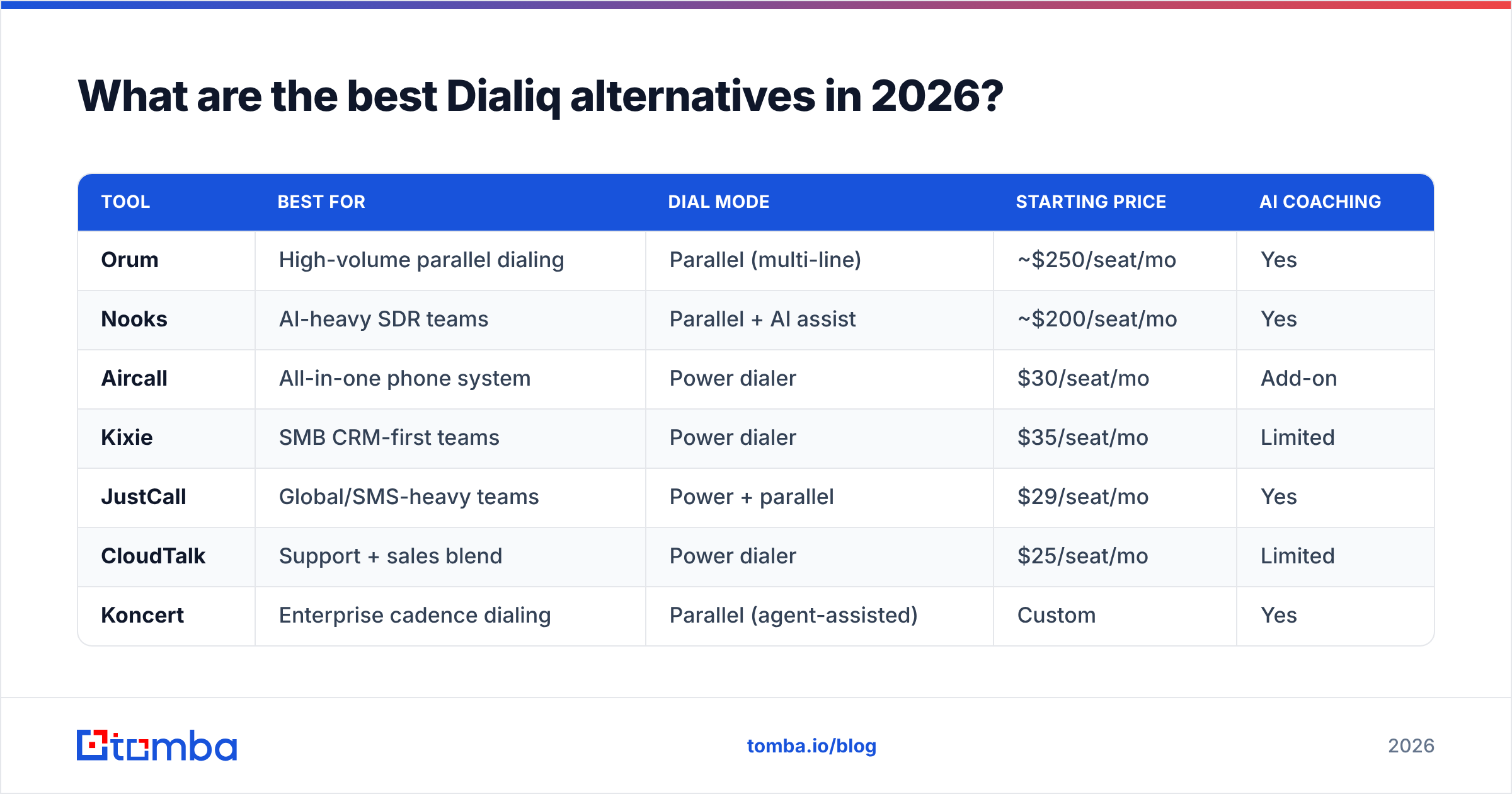
Here's the at-a-glance comparison, then a breakdown of each.
| Tool | Best for | Dial mode | Starting price | AI coaching |
|---|---|---|---|---|
| Orum | High-volume parallel dialing | Parallel (multi-line) | ~$250/seat/mo | Yes |
| Nooks | AI-heavy SDR teams | Parallel + AI assist | ~$200/seat/mo | Yes |
| Aircall | All-in-one phone system | Power dialer | $30/seat/mo | Add-on |
| Kixie | SMB CRM-first teams | Power dialer | $35/seat/mo | Limited |
| JustCall | Global/SMS-heavy teams | Power + parallel | $29/seat/mo | Yes |
| CloudTalk | Support + sales blend | Power dialer | $25/seat/mo | Limited |
| Koncert | Enterprise cadence dialing | Parallel (agent-assisted) | Custom | Yes |
Prices are indicative list prices as of 2026 and change often — confirm on each vendor's site.
1. Orum — best for raw parallel-dialing volume#
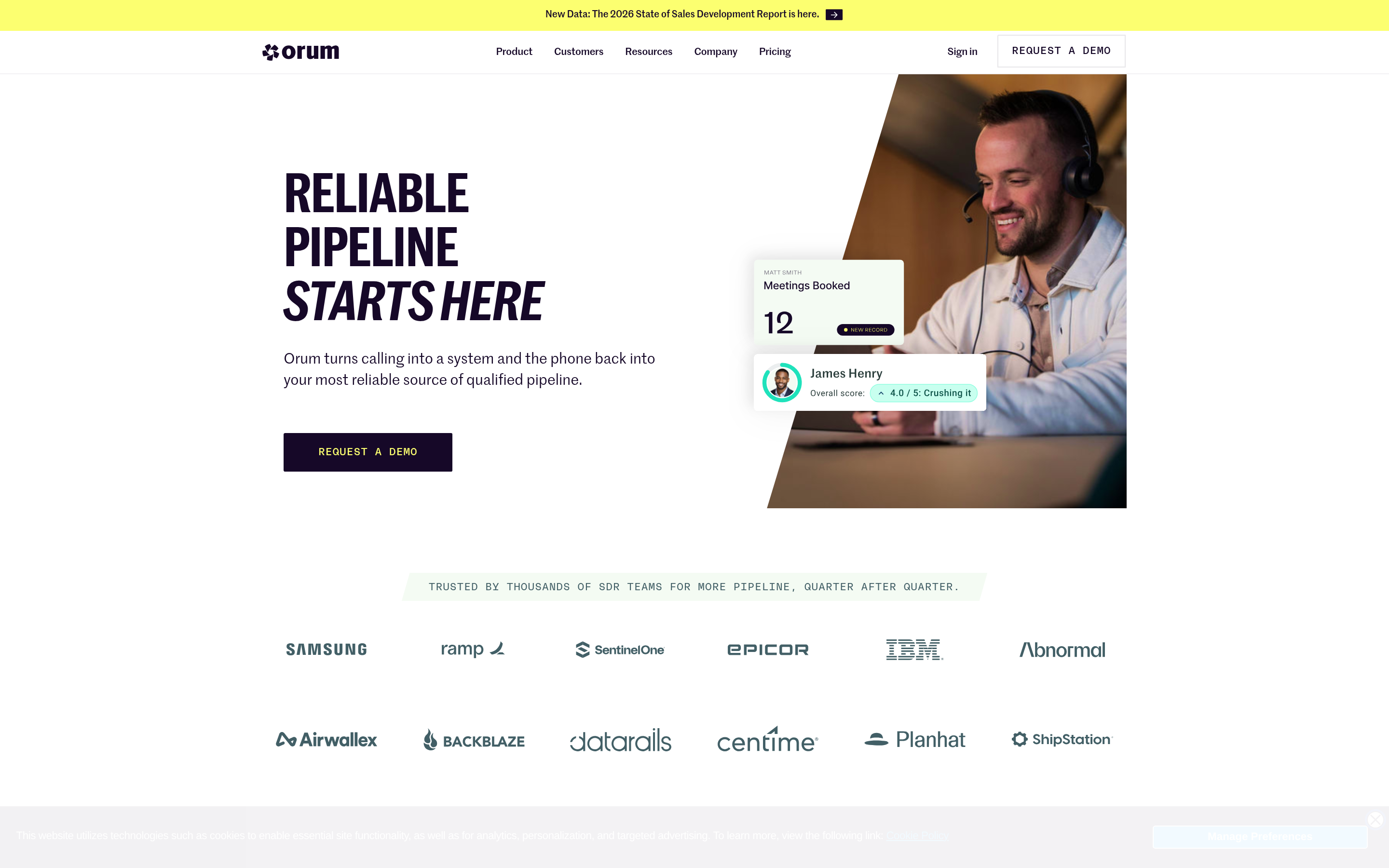
Orum is the go-to when the goal is maximizing live conversations per hour. Its parallel dialer works multiple lines simultaneously, skips voicemails and dead numbers, and only routes answered calls to your rep. Teams running big outbound motions cite meaningful jumps in conversations per day. The trade-off is price and a workflow built for high-activity SDRs rather than occasional callers. Check current plans on the Orum site and read verified reviews on G2 before committing.
2. Nooks — best for AI-first SDR teams#
Nooks leans hard into AI: parallel dialing, an "AI dialer assistant," call analysis, and virtual salfloor features for remote teams. If you want the AI coaching layer to be central rather than bolted on, Nooks is a strong Dialiq alternative. It's priced for teams that dial daily and want the analytics to match.
3. Aircall — best all-in-one business phone#
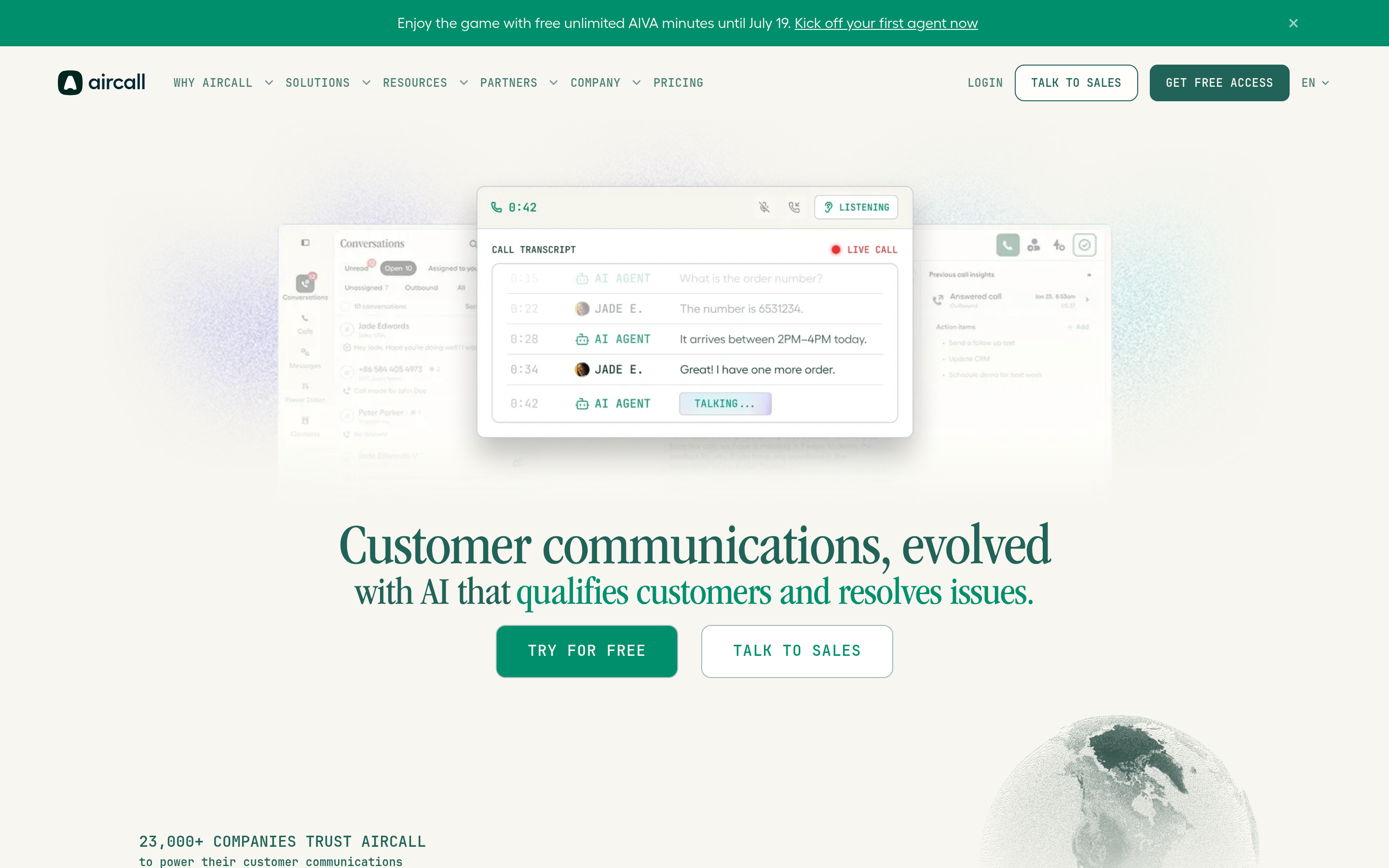
Aircall isn't a pure outbound dialer — it's a full cloud phone system with a power dialer included. That makes it a fit for teams that need inbound support lines, shared numbers, and outbound cadences under one roof. Its integration marketplace is deep, and the Aircall platform plays well with most major CRMs. If your bottleneck is telephony infrastructure rather than parallel-dial volume, start here.
4. Kixie — best for SMB CRM-first teams#
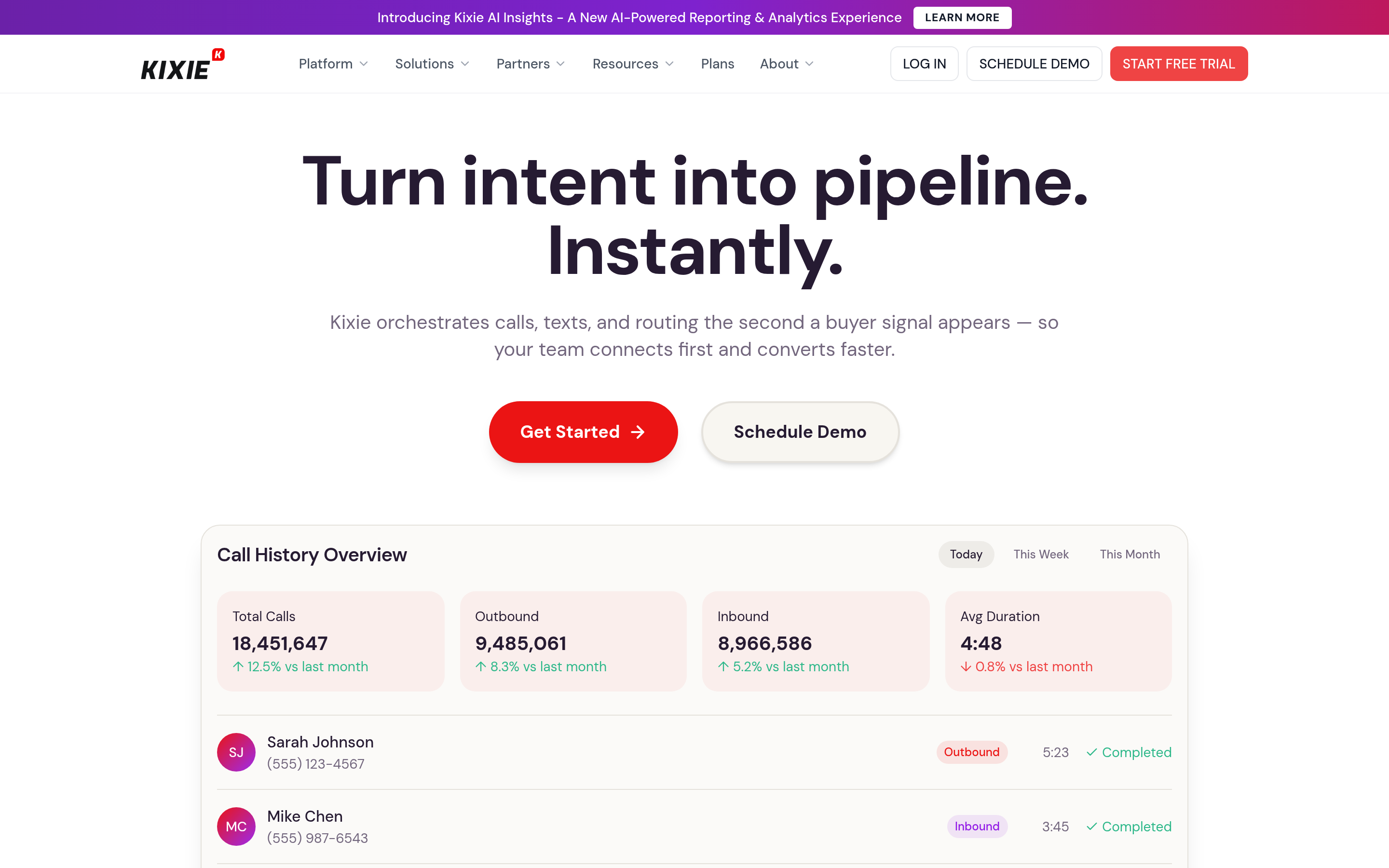
Kixie pairs a reliable power dialer with genuinely strong CRM integrations and local-presence dialing, at a price SMBs can stomach. It's less about AI wizardry and more about doing the fundamentals — automatic logging, click-to-call, SMS follow-up — cleanly. A sensible pick if you want fewer moving parts.
5. JustCall — best for global and SMS-heavy outbound#

JustCall offers both power and parallel dialing plus a robust SMS suite and international numbers in many countries. Teams selling across borders appreciate the breadth. AI features (transcription, scoring) are included on higher tiers. It's a versatile middle-ground option.
6. CloudTalk — best for blended sales and support#
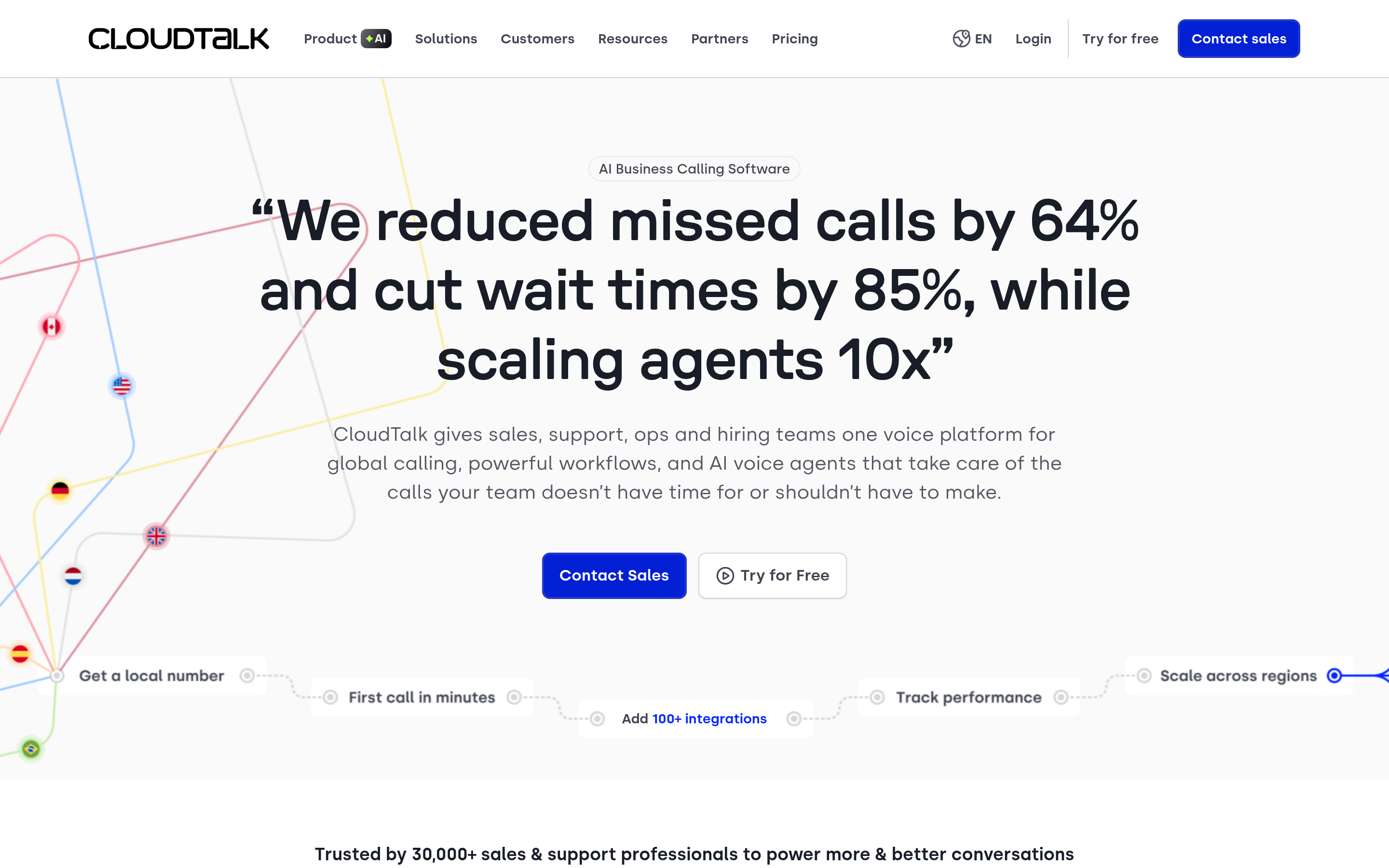
CloudTalk is a call-center-grade platform that handles both inbound support and outbound sales. If your reps wear both hats, its routing, queuing, and analytics are more mature than a sales-only dialer. The outbound side is a power dialer rather than a heavy parallel engine.
7. Koncert — best for enterprise agent-assisted dialing#
Koncert's differentiator is agent-assisted parallel dialing: human agents help navigate phone trees and gatekeepers so reps only join live conversations. For enterprise teams with the volume to justify it, that can lift connect quality. Pricing is custom and sits at the higher end.
Is Dialiq or an alternative actually better?#
There's no universal winner — the honest answer depends on your motion:
- You run high-volume outbound and live in the dialer all day: Orum, Nooks, or Koncert will likely out-perform on connect rate.
- You need a real phone system, not just a dialer: Aircall or CloudTalk.
- You're an SMB that wants CRM-native simplicity at a fair price: Kixie or JustCall.
- Dialiq already works and the cost is fine: there's no rule that says you must switch. The best tool is the one your reps actually use consistently.
What none of these tools fix is the input problem. Every platform in this list assumes you already have accurate, dial-ready phone numbers. In practice, that assumption is where most outbound programs quietly leak performance.
Why does phone data quality decide your connect rate?#
Your dialer can't call a number that's wrong. This is the point most "best dialer" roundups skip entirely.
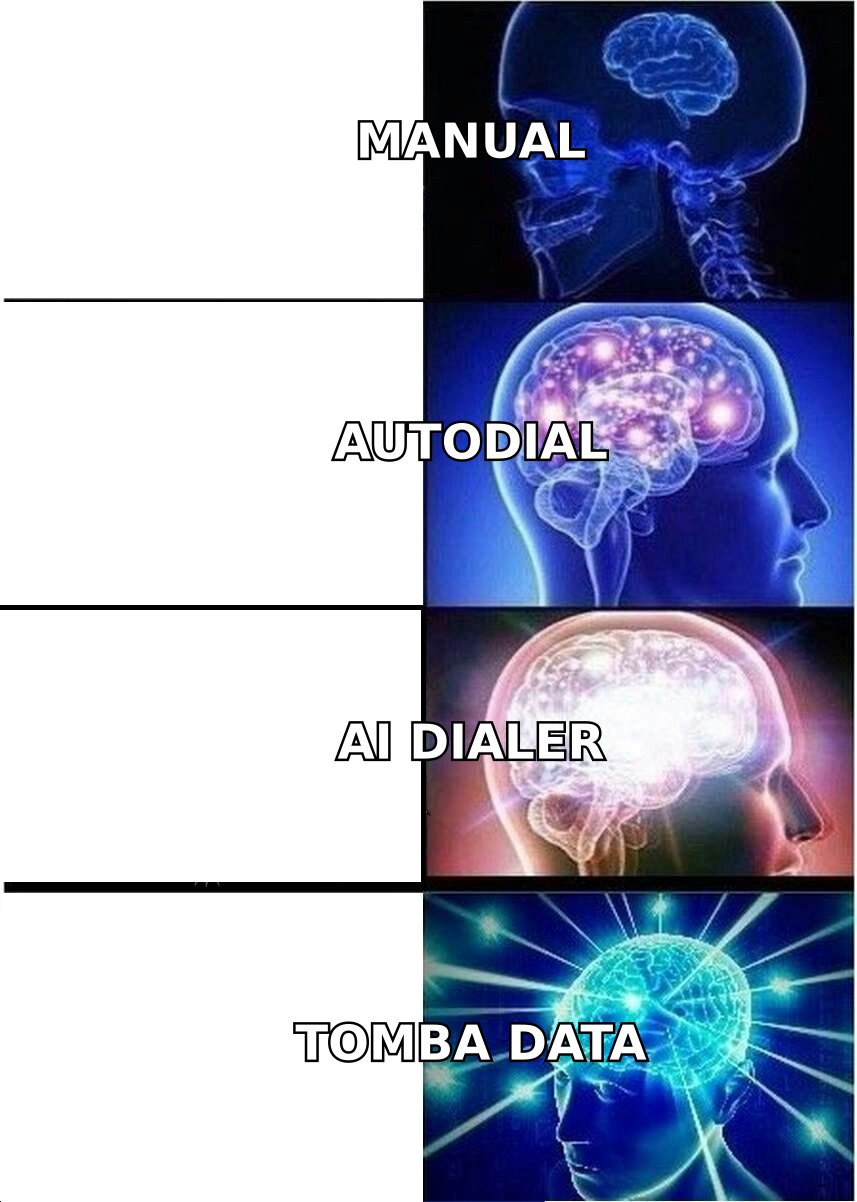
Think of a dialer like a high-performance engine and your contact data like fuel. A world-class parallel dialer running on stale, mistyped, or disconnected numbers will burn through lines connecting to voicemail, dead lines, and wrong people — and your expensive per-seat software will show mediocre results that get blamed on the tool.
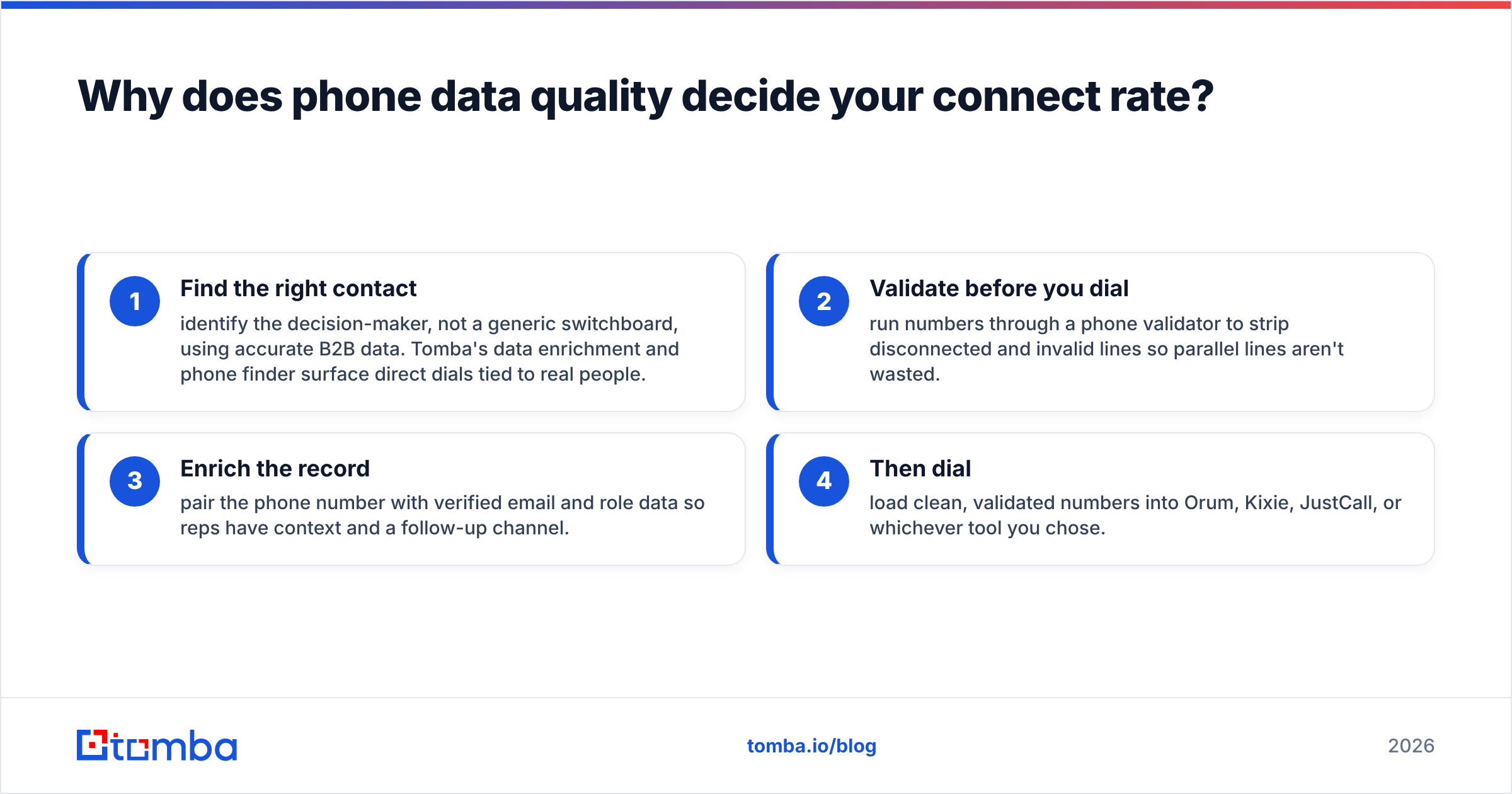
Here's the sequence that actually produces conversations:
- Find the right contact — identify the decision-maker, not a generic switchboard, using accurate B2B data. Tomba's data enrichment and phone finder surface direct dials tied to real people.
- Validate before you dial — run numbers through a phone validator to strip disconnected and invalid lines so parallel lines aren't wasted.
- Enrich the record — pair the phone number with verified email and role data so reps have context and a follow-up channel.
- Then dial — load clean, validated numbers into Orum, Kixie, JustCall, or whichever tool you chose.
Do steps one through three well and almost any dialer on this list performs better. Skip them and even the best dialer disappoints. This is why leading sales teams treat data providers and dialers as separate, complementary layers — see how HubSpot frames the sales tech stack for the same logic.
How does Tomba fit alongside these dialers?#
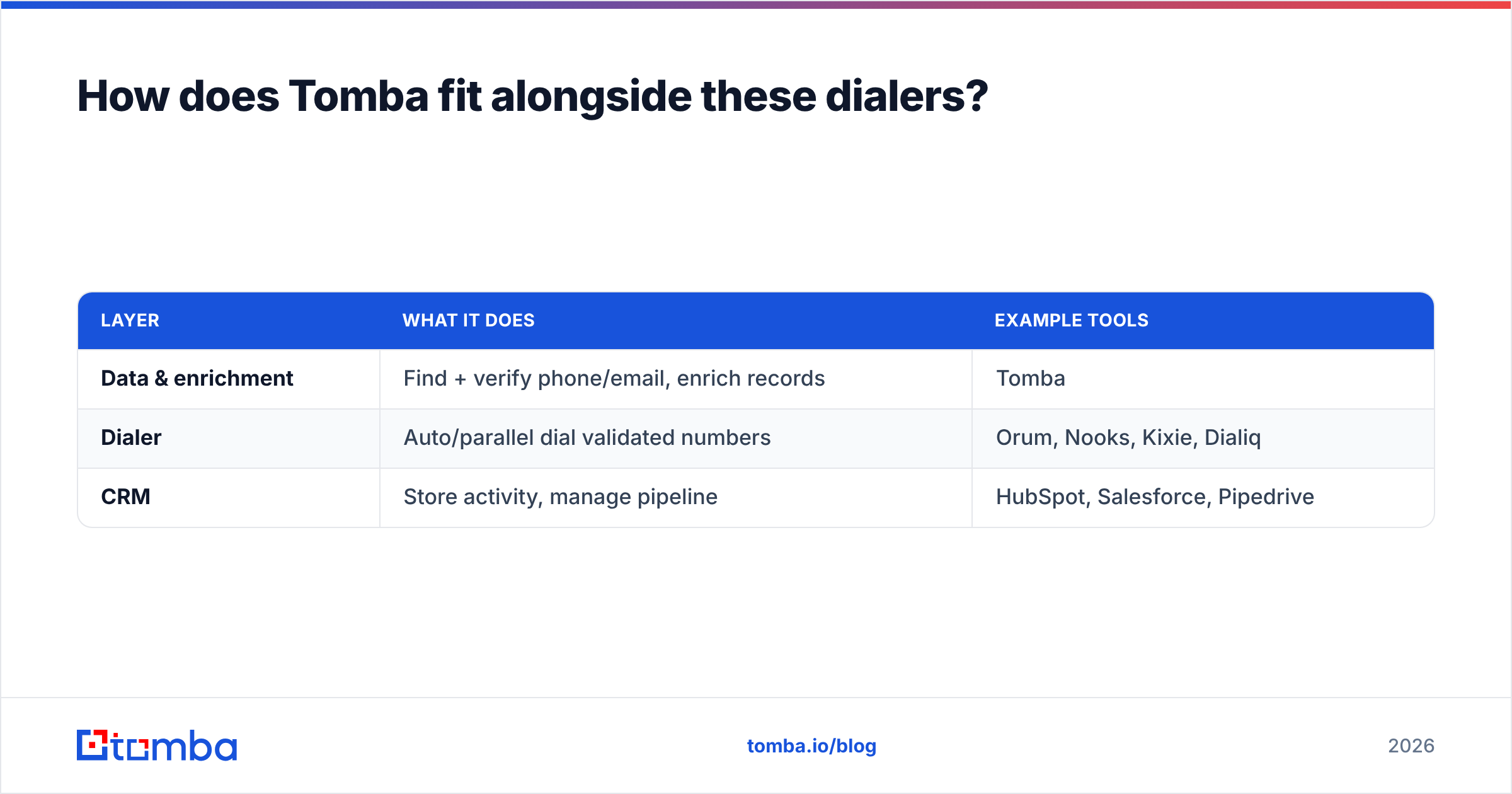
Tomba isn't competing with Dialiq or Orum — it sits upstream of them. Tomba is a B2B data platform whose job is to hand your dialer accurate contacts:
| Layer | What it does | Example tools |
|---|---|---|
| Data & enrichment | Find + verify phone/email, enrich records | Tomba |
| Dialer | Auto/parallel dial validated numbers | Orum, Nooks, Kixie, Dialiq |
| CRM | Store activity, manage pipeline | HubSpot, Salesforce, Pipedrive |
Tomba's phone finder locates B2B phone numbers, the phone validator confirms they're live before you spend dialer minutes, and contact enrichment rounds out the record with verified emails and firmographics. Pricing is straightforward — a free tier with 25 searches a month, then paid plans from $49/mo — and you can see full Tomba pricing without a sales call.
The takeaway: choose the dialer that fits your motion from the seven above, but don't expect it to fix a data problem. Pair whichever tool you pick with a clean, validated contact list and your connect rate does the rest.
Which Dialiq alternative should you choose?#
Match the tool to your bottleneck:
- Volume bottleneck → Orum or Nooks
- Phone-system bottleneck → Aircall or CloudTalk
- Budget/simplicity bottleneck → Kixie or JustCall
- Enterprise gatekeeper bottleneck → Koncert
- Data bottleneck (the hidden one) → fix it with Tomba, regardless of dialer
Most teams overweight the dialer decision and underweight the data decision. Get both right and you'll out-dial competitors who obsessed over software features while feeding their fancy tool a list of dead numbers.
Start with better data, then pick your dialer#
Before you migrate off Dialiq or sign a new dialer contract, run a small test: pull a list of your target accounts, enrich and validate the phone numbers with Tomba, and load them into your current tool. Watch what happens to your connect rate when every line rings a real, correct number.
You can start free with Tomba's phone finder and email finder — 25 searches a month, no card required — then scale on the $49/mo Starter plan once you see the lift. Whichever Dialiq alternative you land on, feed it clean data and let your reps spend their hours talking to humans instead of chasing dial tones.
Related guides#
Ready to find emails that actually work?
Join 150,000+ professionals who stopped guessing and started sending. Free credits on signup — no credit card required.
Get the Tomba newsletter
Practical outbound tactics and product updates — once every two weeks.
About the author