Enrow vs Seamless.AI: Accuracy, Pricing, and Best Fit in 2026
Enrow vs Seamless.AI: one verifies and finds emails with a narrow, accuracy-first product. The other sells you a whole contact database. Here is how they compare on data quality, credits, contracts, and cost per usable lead.
Enrow vs Seamless.AI comes down to one question: do you need clean emails, or do you need a list to email in the first place?
TL;DR
Enrow vs Seamless.AI is not a like-for-like fight. Enrow is a narrow, accuracy-first email finder and verifier. Seamless.AI is a full contact database with an AI search layer, sequencing add-ons, and a sales rep at checkout.
Enrow wins on cost per verified email and on catch-all handling. It publishes prices, charges per result, and is built around one job.
Seamless.AI wins on breadth. It gives you firmographics, phone numbers, intent signals, and a searchable database in one login. Enrow does not compete on that axis.
Pricing transparency is the sharpest split. Enrow lists its tiers on the site. Seamless.AI routes most buyers through a sales call and an annual commitment. That is where the real cost shows up.
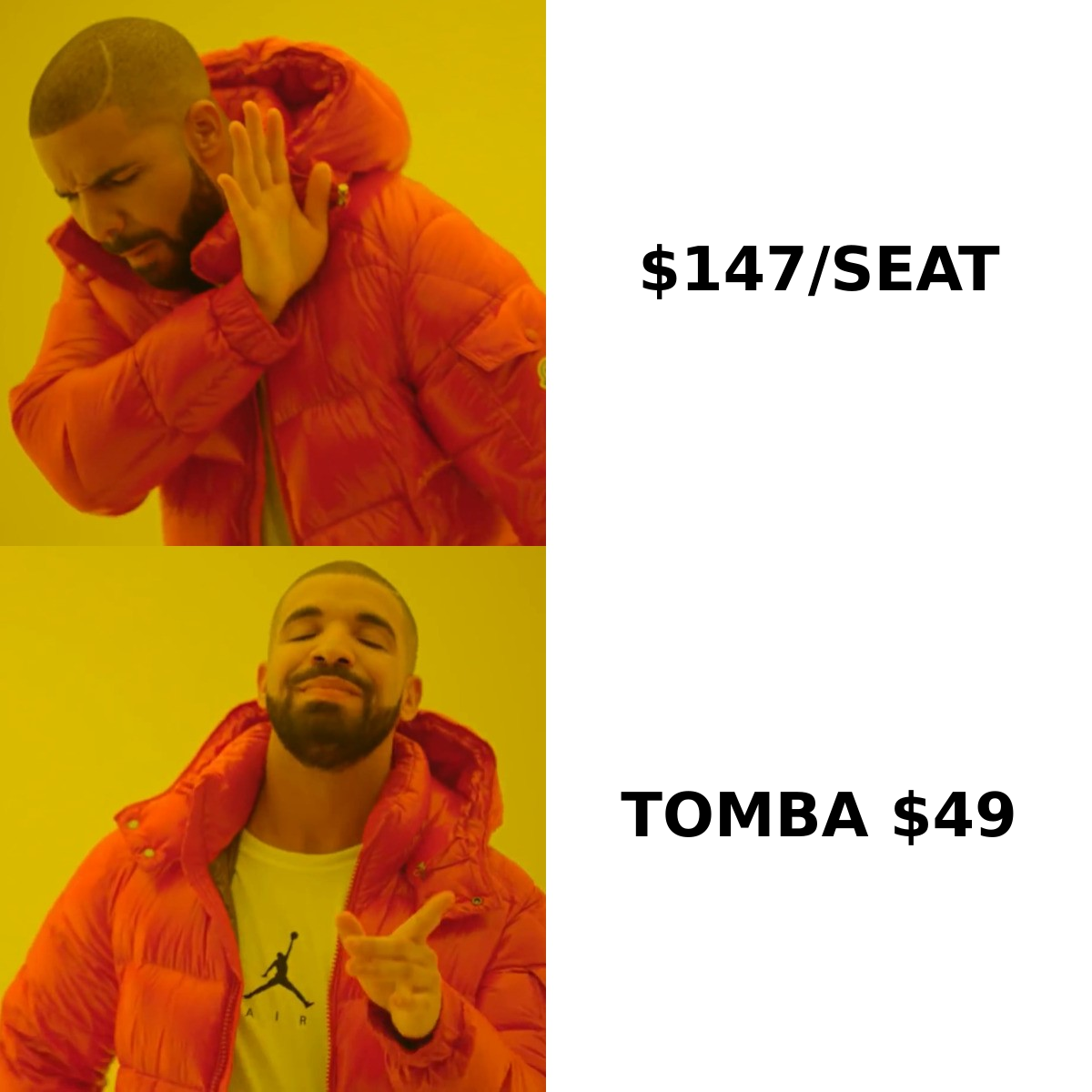
Need accurate emails at a predictable price? A single-purpose finder like Tomba at $49/mo, Enrow, or a similar vendor will beat a database seat you only use 20% of.
What are Enrow and Seamless.AI, actually?#
Different categories wearing similar marketing.
Enrow is a French-built email finding and verification tool. Its pitch is precision. You give it a name and a domain. It returns the address and verifies it, including on catch-all domains — the part most verifiers quietly skip. It bills per successful result rather than per attempt, which changes the math more than people expect. There is no searchable database of 500 million contacts behind it. You bring the names; it returns the addresses.
Seamless.AI is a US-based sales intelligence platform. It sells a searchable B2B contact database, and an AI "research engine" assembles contact records in real time. You also get buyer intent, job-change alerts, a Chrome extension, and CRM writeback. Search by title, industry, headcount, and location, and it hands you a list. It sits closer to Apollo, ZoomInfo, or Lusha than to a verification utility.
So the honest framing of Enrow vs Seamless.AI is not "which is better." It is "do you need a scalpel or a supermarket?"
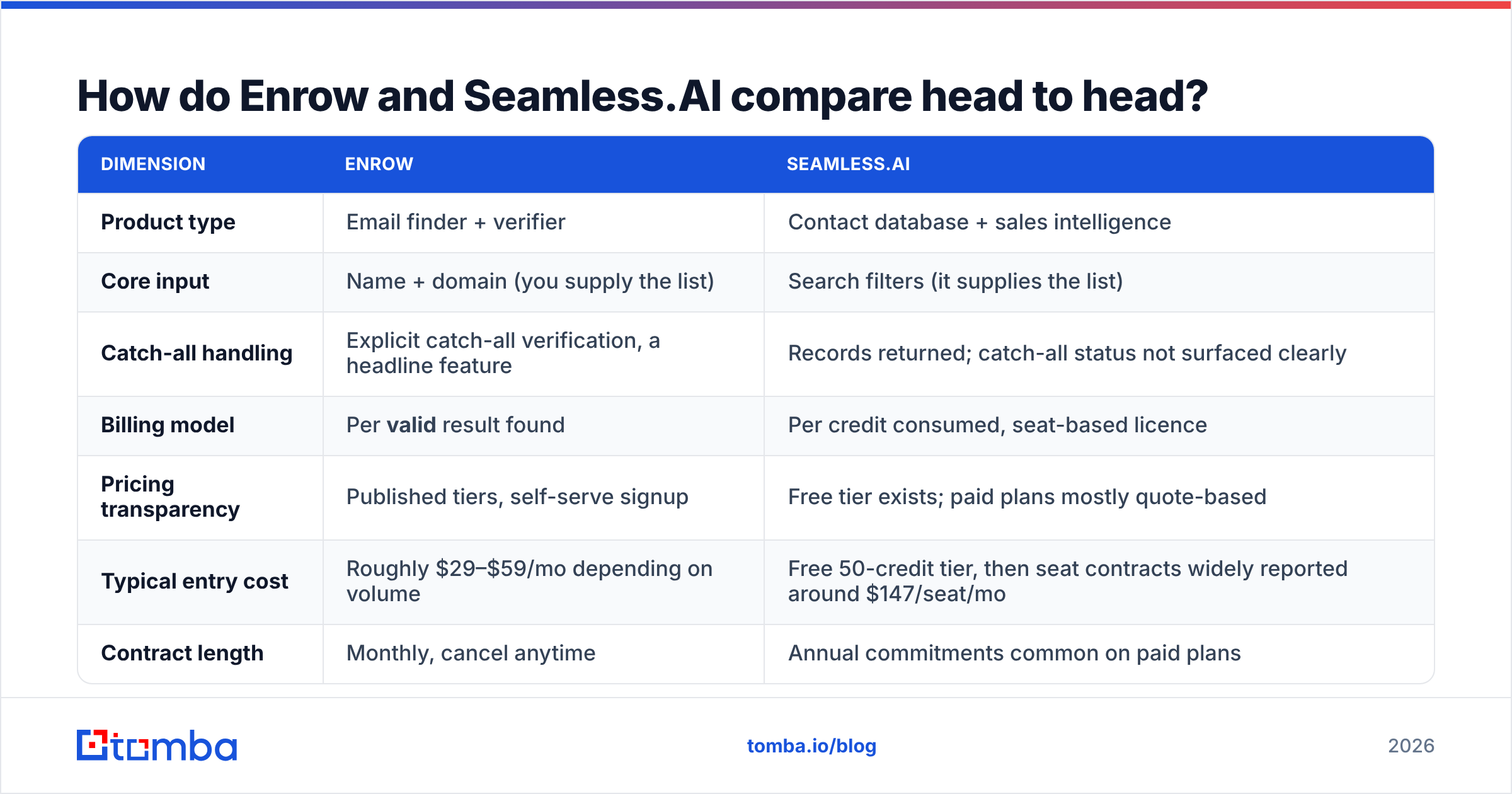
Enrow vs Seamless.AI: how do they compare head to head?#
| Dimension | Enrow | Seamless.AI |
|---|---|---|
| Product type | Email finder + verifier | Contact database + sales intelligence |
| Core input | Name + domain (you supply the list) | Search filters (it supplies the list) |
| Catch-all handling | Explicit catch-all verification, a headline feature | Records returned; catch-all status not surfaced clearly |
| Billing model | Per valid result found | Per credit consumed, seat-based licence |
| Pricing transparency | Published tiers, self-serve signup | Free tier exists; paid plans mostly quote-based |
| Typical entry cost | Roughly $29–$59/mo depending on volume | Free 50-credit tier, then seat contracts widely reported around $147/seat/mo |
| Contract length | Monthly, cancel anytime | Annual commitments common on paid plans |
| Phone numbers | No | Yes |
| Intent data / firmographics | No | Yes |
| Bulk enrichment | Yes, CSV + API | Yes, credit-metered |
| Best for | Teams with a target list who need clean addresses | Teams with no list who need to build one |
Two rows matter more than the rest.
First, the billing model. Enrow charges when it finds something. Seamless.AI burns credits as you pull records, and credits sit inside seats. If four SDRs each need occasional access, you buy four seats, not one shared pool. That structure usually drives total cost more than the sticker price does.
Second, contract length. A monthly tool you can cancel is a very different risk from an annual seat contract signed after a demo. Read the renewal clause on either one. Read it twice on the second.
Enrow vs Seamless.AI: which one has better data accuracy?#
Enrow wins on emails. Seamless.AI wins on coverage.
That is not a dodge. It follows from how each tool is built. Enrow runs deliverability checks as the product, so its output is tuned for one number: bounce rate. Vendors in this niche aim for sub-2% bounce on verified results. Enrow leans hard on catch-all accuracy, and that is exactly where most verifiers return "unknown" and hand the risk back to you.
Seamless.AI builds records from web crawling and AI inference at query time. Coverage is huge. You will almost always get something for a target account. But confidence per record varies, and public review data shows it. Read the Seamless.AI reviews on G2 and the same pattern repeats: strong marks for volume and easy search, recurring complaints about outdated contacts and credits burned on records that bounce.
So the practical takeaway on Enrow vs Seamless.AI data quality: if you buy Seamless.AI, you still need a verifier in front of your sequencer. Plenty of teams run that exact stack. Seamless.AI builds the list, and a dedicated email verifier cleans it before send. With Enrow the verification is already done, but you sourced the names somewhere else.

One more check, whatever you buy: are catch-all domains validated, or just flagged? A list that is 30% catch-all and marked "unknown" is not a verified list. A dedicated catch-all verifier resolves those instead of passing the risk downstream.
Enrow vs Seamless.AI pricing: what does each one cost?#
Here is the part vendors bury.
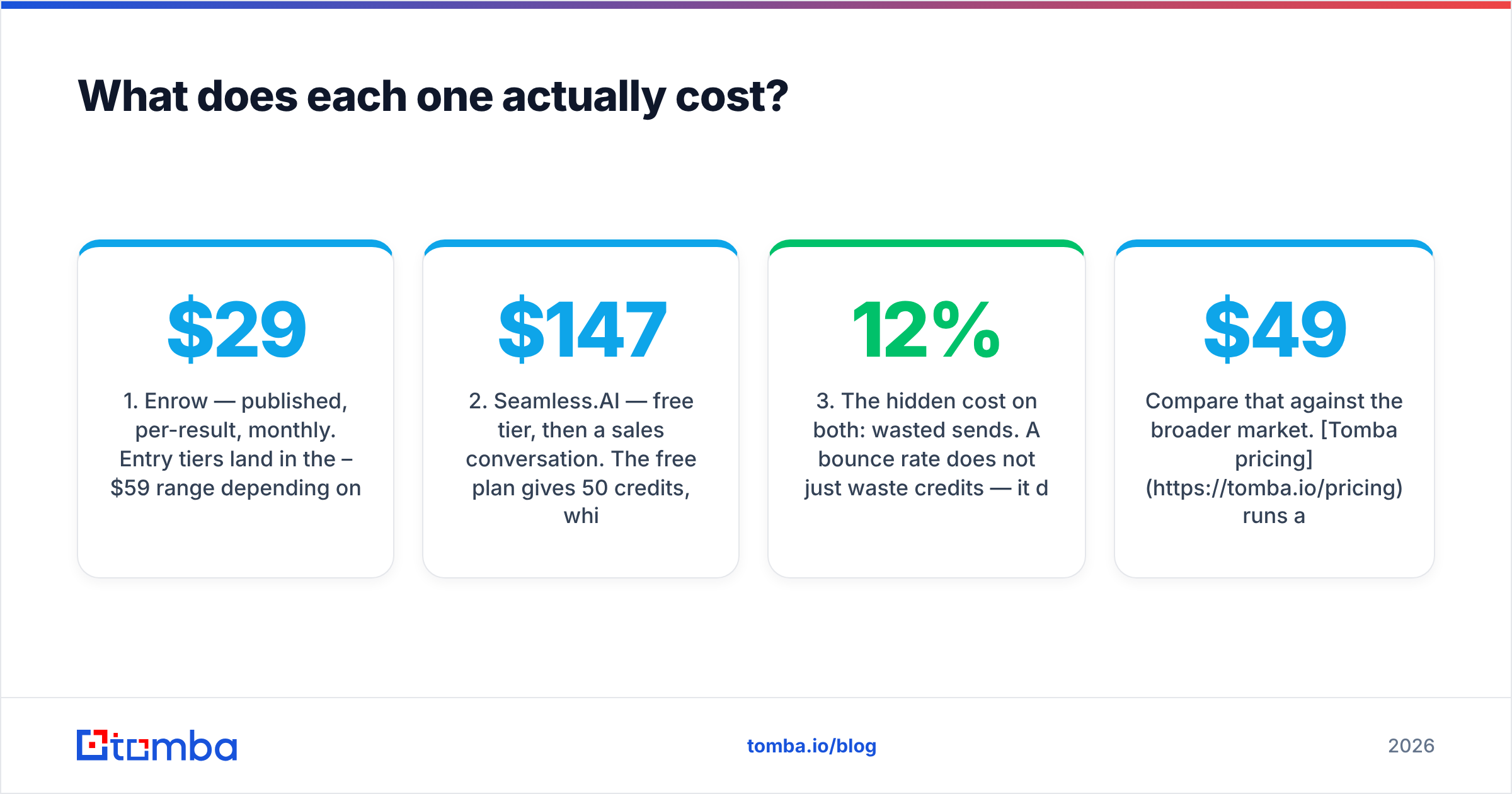
Enrow — published, per-result, monthly. Entry tiers land in the $29–$59/mo range, depending on how many emails you find, and scale up from there. You pay for results, not attempts, so a low-yield list costs less than it would on a credit-burn model. Check the vendor page for current numbers. Prices in this category move.
Seamless.AI — free tier, then a sales call. The free plan gives 50 credits. That is enough to test quality on a handful of accounts, and nothing more. Paid plans are quote-based. Reported figures cluster around $147 per seat per month on annual terms, with higher tiers for intent data and enrichment volume. Your number depends on seat count and negotiation.
The hidden cost on both: wasted sends. A 12% bounce rate does more than waste credits. It damages sender reputation, which hurts inbox placement on the good addresses too. Price per record is the wrong metric. Price per record that lands in an inbox is the right one.
The hidden cost on Seamless.AI: seat sprawl. Database tools price per user. Verification tools price per volume. A five-person team hitting one shared list pays roughly 5× on the first model and 1× on the second.
The hidden cost on Enrow: sourcing. If you have no list, Enrow does not solve your problem. You will still pay for a database, a scraper, or manual research. Budget for two line items, not one.
Compare that against the wider market. Tomba pricing runs a free tier at 25 searches/mo, Starter at $49/mo, Growth at $99/mo, and Pro at $249/mo. All published, all volume-based, no seat multiplier. BookYourData takes another honest route: pay-as-you-go credits, no subscription at all. That suits teams who buy in bursts. The point is simple. "Quote us for a seat" is not the only model, and it is rarely the cheapest.

Is Enrow better than Seamless.AI for cold outbound?#
For the sending half, yes. For the targeting half, no.
Split the Enrow vs Seamless.AI question into two jobs:
- Job 1 — decide who to contact. ICP definition, account selection, title filtering. Seamless.AI is built for this. Enrow is not.
- Job 2 — get a working address for those people. Finding and verification. Enrow is built for this. Seamless.AI does it as a byproduct, with mixed results.
Most teams who complain about a tool are really complaining about using it for the wrong job. Buying Seamless.AI and grading it on bounce rate is like grading a supermarket on knife sharpness.
Is your ICP already defined? If you know the 400 accounts and have the names from LinkedIn, a conference list, or your CRM, then a finder-plus-verifier is the right purchase. A database seat is expensive overlap. If you are starting from "we sell to mid-market fintech in EMEA and have no list," a database earns its cost in week one.

What should you look for in either tool before buying?#
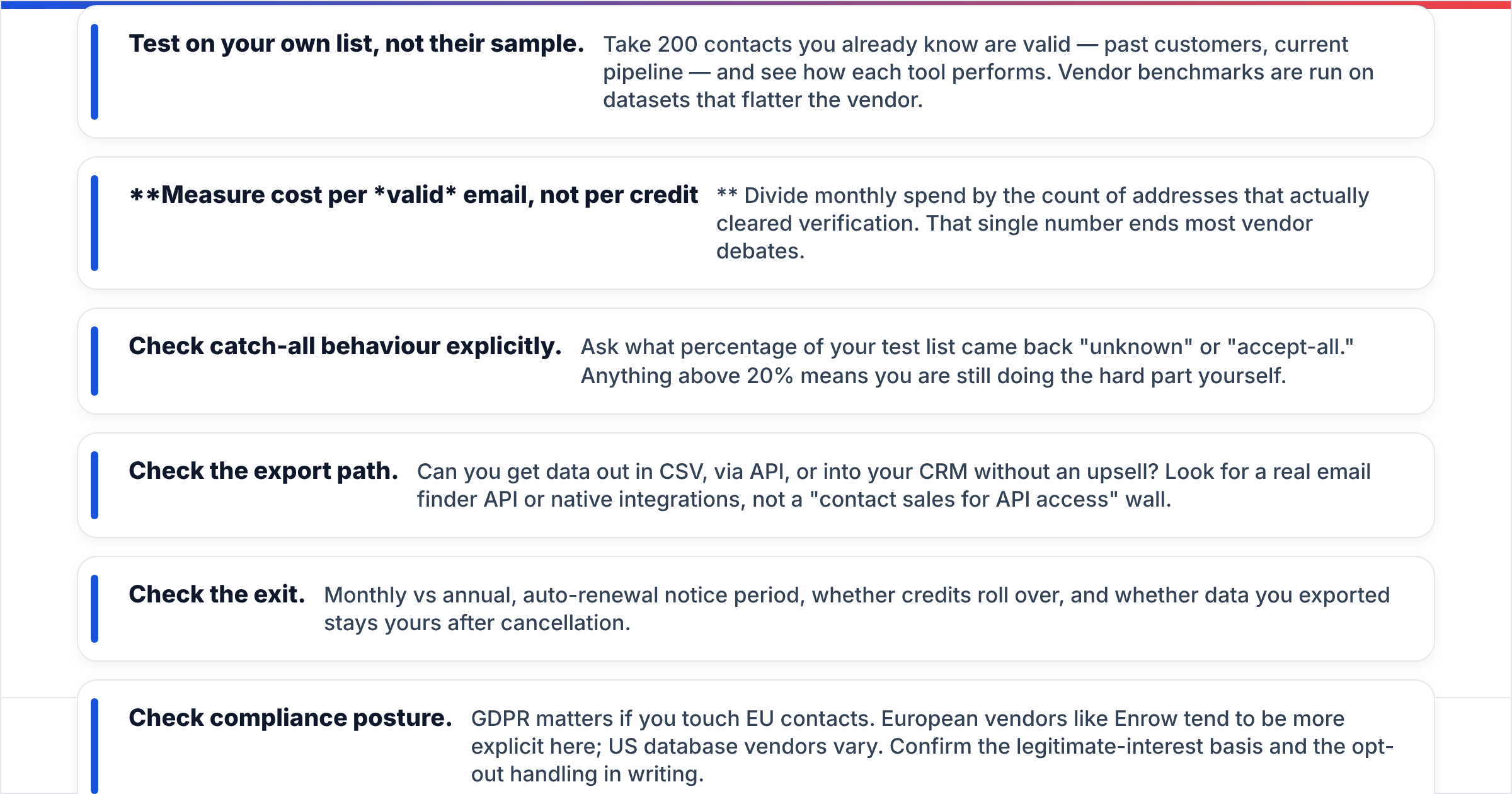
Run the same evaluation on both. Do not take the vendor's own accuracy stat.
Test on your own list, not their sample. Take 200 contacts you know are valid — past customers, current pipeline — and see how each tool performs. Vendor benchmarks run on datasets that flatter the vendor.
Measure cost per valid email, not per credit. Divide monthly spend by the addresses that actually cleared verification. That single number ends most vendor debates.
Check catch-all behaviour explicitly. Ask what share of your test list came back "unknown" or "accept-all." Above 20% means you are still doing the hard part yourself.
Check the export path. Can you get data out in CSV, via API, or into your CRM without an upsell? Look for a real email finder API or native integrations, not a "contact sales for API access" wall.
Check the exit. Monthly or annual? What is the auto-renewal notice period? Do credits roll over? Does exported data stay yours after you cancel?
Check compliance posture. GDPR matters if you touch EU contacts. European vendors like Enrow tend to be explicit here. US database vendors vary. Get the legitimate-interest basis and the opt-out handling in writing.
Enrow vs Seamless.AI: which tool should you pick?#
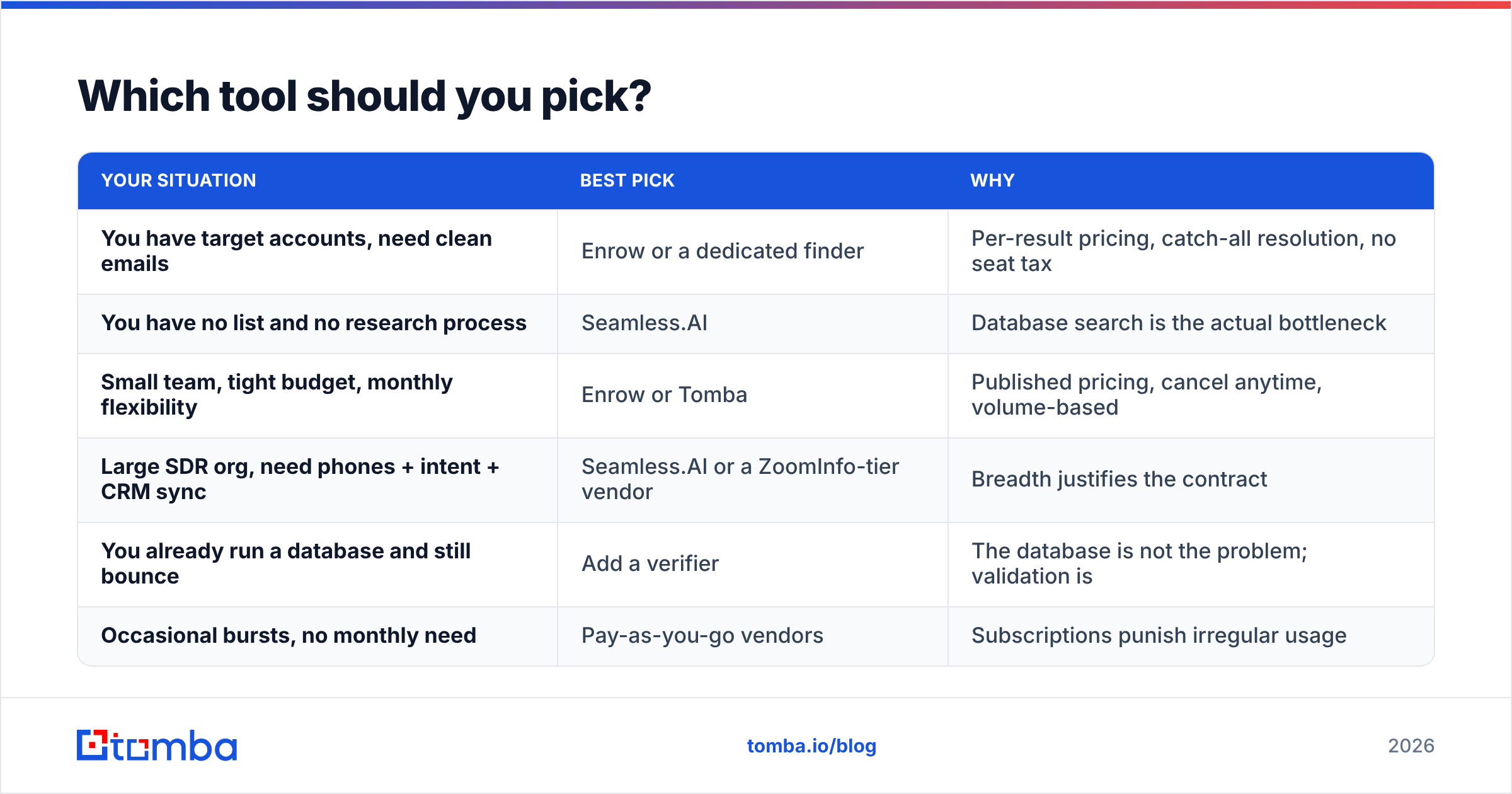
Match the tool to your bottleneck, not to the louder marketing.
| Your situation | Best pick | Why |
|---|---|---|
| You have target accounts, need clean emails | Enrow or a dedicated finder | Per-result pricing, catch-all resolution, no seat tax |
| You have no list and no research process | Seamless.AI | Database search is the actual bottleneck |
| Small team, tight budget, monthly flexibility | Enrow or Tomba | Published pricing, cancel anytime, volume-based |
| Large SDR org, need phones + intent + CRM sync | Seamless.AI or a ZoomInfo-tier vendor | Breadth justifies the contract |
| You already run a database and still bounce | Add a verifier | The database is not the problem; validation is |
| Occasional bursts, no monthly need | Pay-as-you-go vendors | Subscriptions punish irregular usage |
Here is the uncomfortable truth for a lot of teams. They buy a $147/seat database, use it as an email finder, and pay a 3× premium for features they never open. If your last three months of usage were "search a company, grab an email, move on," you bought the wrong category.
The reverse mistake is just as real. Buying a verifier when you have no idea who to contact produces a very clean list of nobody.
The bottom line#
Enrow vs Seamless.AI is a scalpel-versus-supermarket decision. The right answer depends on which half of outbound is broken for you. Enrow is the sharper instrument for finding and validating addresses at a published, per-result price. Seamless.AI is the broader platform for working out who to contact, at a seat-based cost you negotiate rather than read off a page.
Whichever side you land on, verify before you send. Bounce rate is the tax you pay for skipping that step, and it compounds. A damaged sending domain costs more to repair than any credit pack costs to buy.
If you need accurate B2B emails at a price you can read on a webpage, start with the Tomba Email Finder. The free tier gives you 25 searches a month to test against your own known-good list, and Starter is $49/mo. Finding, verifying, catch-all resolution, and bulk email finder processing all sit in the same account. No per-seat multiplier, no annual signature required to see what the data looks like. Run it against the same 200 contacts you test Enrow and Seamless.AI on, compare cost per valid email, and let that number decide.
Related guides#
Ready to find emails that actually work?
Join 150,000+ professionals who stopped guessing and started sending. Free credits on signup — no credit card required.
Get the Tomba newsletter
Practical outbound tactics and product updates — once every two weeks.
About the author