9 Best Expandi Cyance Alternatives for B2B Teams in 2026
Expandi handles LinkedIn automation, Cyance handles intent data, and most teams pay for both without connecting them. Here are nine alternatives with real 2026 pricing, plus a cheaper way to assemble the same stack.
TL;DR — Expandi Cyance alternatives at a glance
- Most Expandi Cyance alternatives searches are really two searches. Expandi solves LinkedIn automation, Cyance solves B2B intent data, and almost nobody needs to replace both with one tool.
- Expandi's pain point is per-seat cost (~$99/seat/mo) and cloud-proxy risk on LinkedIn. HeyReach, Dripify, Waalaxy and Lemlist cover the same ground cheaper, or handle multiple accounts better.
- Cyance's pain point is enterprise-only pricing and contract length. Bombora, G2 Buyer Intent, and 6sense are the obvious swaps. For smaller teams, firmographic and tech-stack triggers often beat paid intent entirely.
Two more things to keep in mind before you shortlist:
- The cheapest working replacement for most sub-50-person GTM teams: a solid contact-data layer plus one sequencer, not a $30K intent subscription.
- Budget the whole stack, not the line item. Two "affordable" tools plus a data provider often cost more than the thing you cancelled.
Why are teams looking for Expandi Cyance alternatives?#
Because they were bought at different times, for different reasons, and never talked to each other.
Expandi came in when someone on the team wanted LinkedIn connection requests at scale. Cyance came in when leadership asked "which accounts are actually in market?" Two years later, the SDRs are running LinkedIn sequences off a list they built by hand. The intent dashboard gets opened once a quarter. That's the usual story behind Expandi Cyance alternatives searches.
The specific triggers we hear:
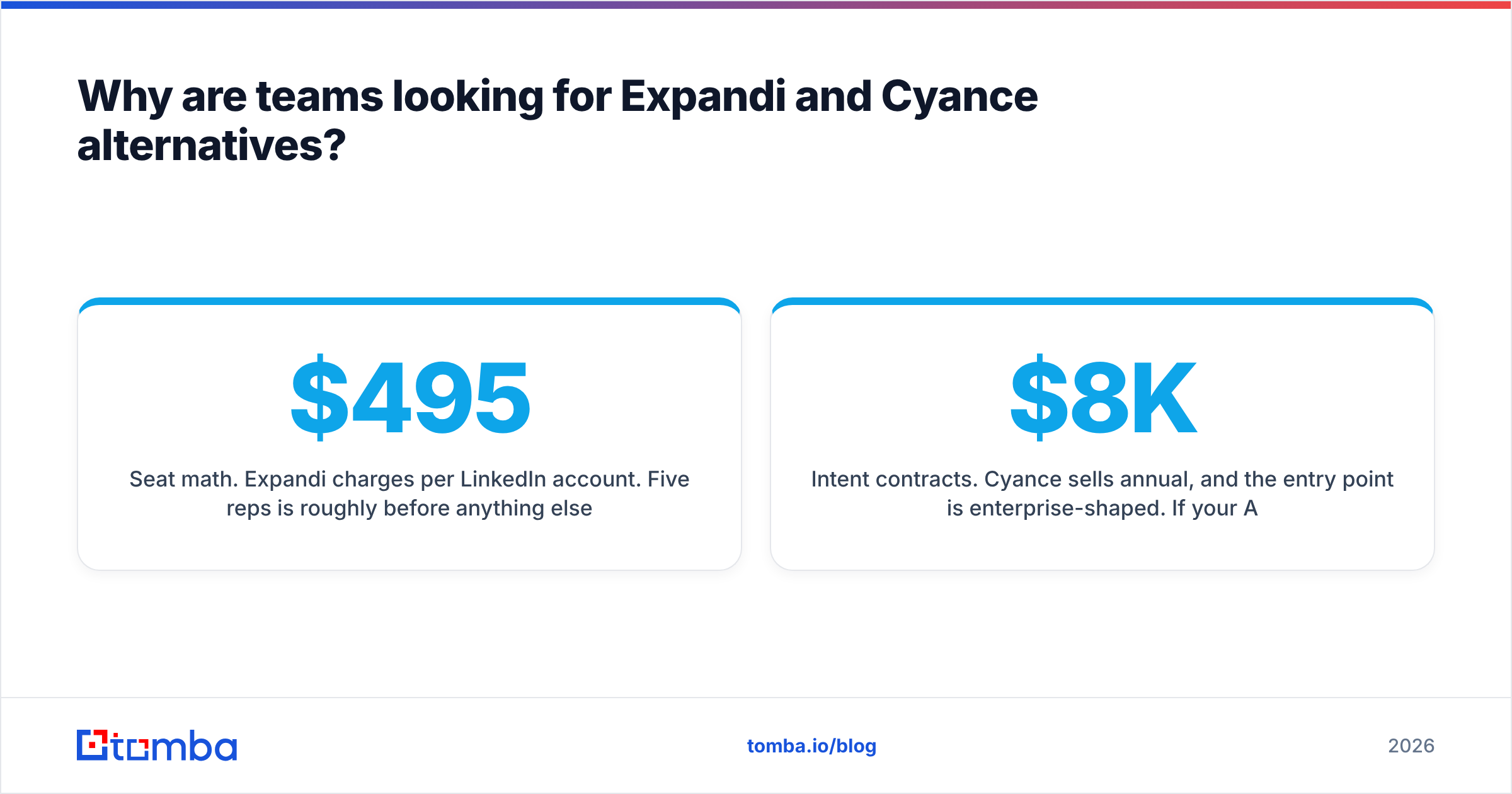
- Seat math. Expandi charges per LinkedIn account. Five reps is roughly $495/mo before anything else. Ten is close to $12K/yr for what is, functionally, a scheduler.
- Account risk. Cloud-based LinkedIn automation runs through a dedicated proxy IP. It works until it doesn't. LinkedIn has cracked down harder on detection since 2024, and a restricted account takes a rep offline for days.
- Intent contracts. Cyance sells annual, and the entry point is enterprise-shaped. If your ACV is $8K, a $25K–$40K intent contract has to source a lot of pipeline before it pays back.
- No email layer. Neither tool is a contact-data provider. You still need verified work emails to run multichannel, which means a third vendor.
That last point matters more than people expect. LinkedIn-only outreach caps out fast. Connection limits are tight, cold profiles accept at low rates, and you can't follow up if they never accept. The teams getting results run LinkedIn and email against the same account list. That takes an email finder sitting underneath both.
What do Expandi and Cyance actually do?#
Worth separating clearly, because the two names show up in the same search and shouldn't.
Expandi is cloud LinkedIn automation. Connection requests, InMails, message sequences, profile views, and "smart sequences" with if/then branching. It runs from a dedicated IP, so you don't leave your browser open. Its differentiator was the smart-sequence builder and fairly safe sending limits.
Cyance is B2B intent data plus account-based marketing activation. It scores accounts on buying signals from content consumption, feeds them into ABM channels, and reports on account engagement. It's a demand-side tool for marketing, not an outreach tool for reps.
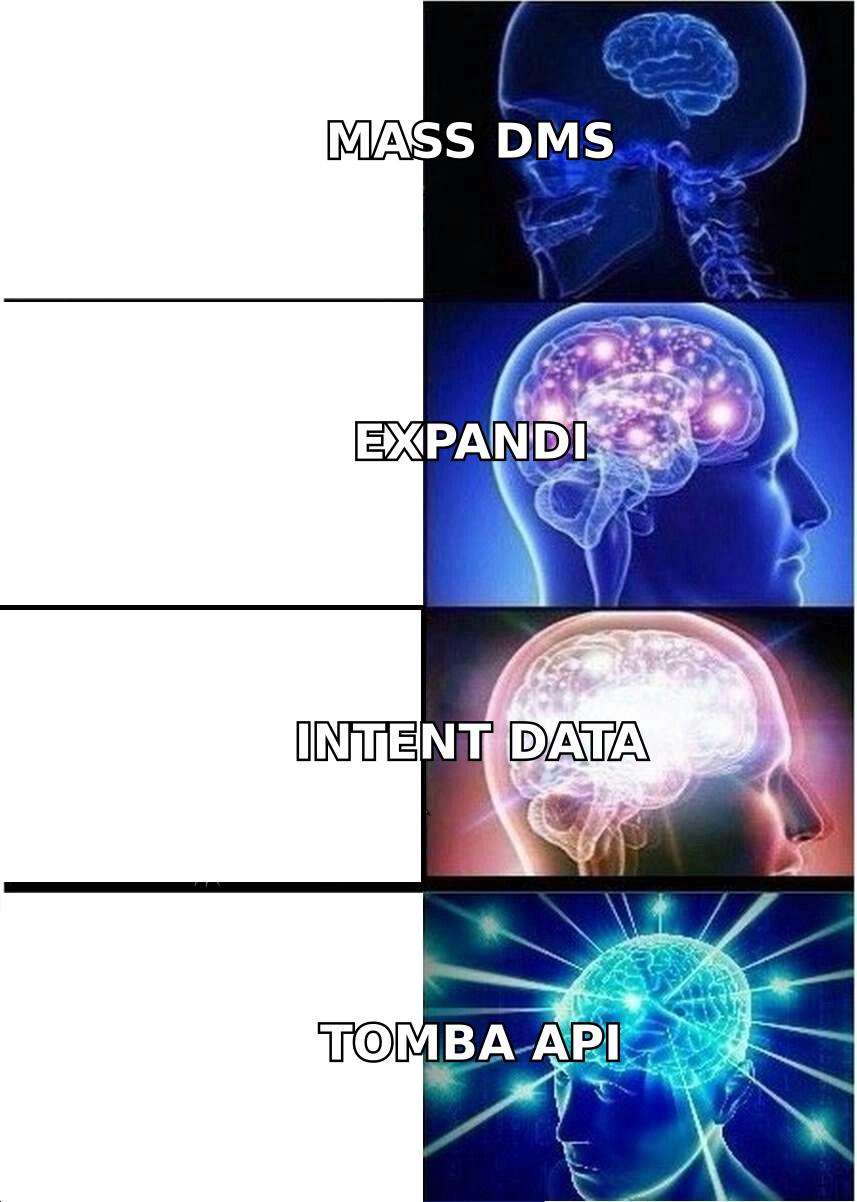
So "Expandi Cyance alternatives" is really two shopping lists. Treat them that way and you'll spend less.
What should you look for in Expandi Cyance alternatives?#
Six criteria, in the order they actually bite. The first three decide your bill:
- Pricing model, not price. Per-seat kills LinkedIn tools as you grow. Per-credit kills data tools if you run bulk. Model your 12-month volume before you compare sticker prices.
- Account safety and sending limits. Ask whether the tool is browser-based or cloud-based, whether the IP is dedicated and geo-matched, and what the daily caps are. Anything promising 200+ connection requests a day is selling you a ban.
- Multi-account orchestration. If you run 5+ LinkedIn profiles, you need shared blacklists and inbox rotation so two reps don't hit the same prospect. This is where per-seat tools get expensive fast.
The next three decide whether the stack still works in a year:
- Email coverage and verification. Signals without contactable people are trivia. Check catch-all handling specifically. A large share of B2B domains are catch-all, and providers that silently mark them "valid" inflate your bounce rate. A dedicated catch-all verifier is not optional at scale.
- Signal freshness for intent. Weekly-refresh intent is nearly useless for outbound timing. Ask for refresh cadence, not just source count.
- API and workflow fit. If your RevOps person can't push results into the CRM without a CSV, the tool will decay into shelfware within two quarters.
What are the best Expandi alternatives in 2026?#
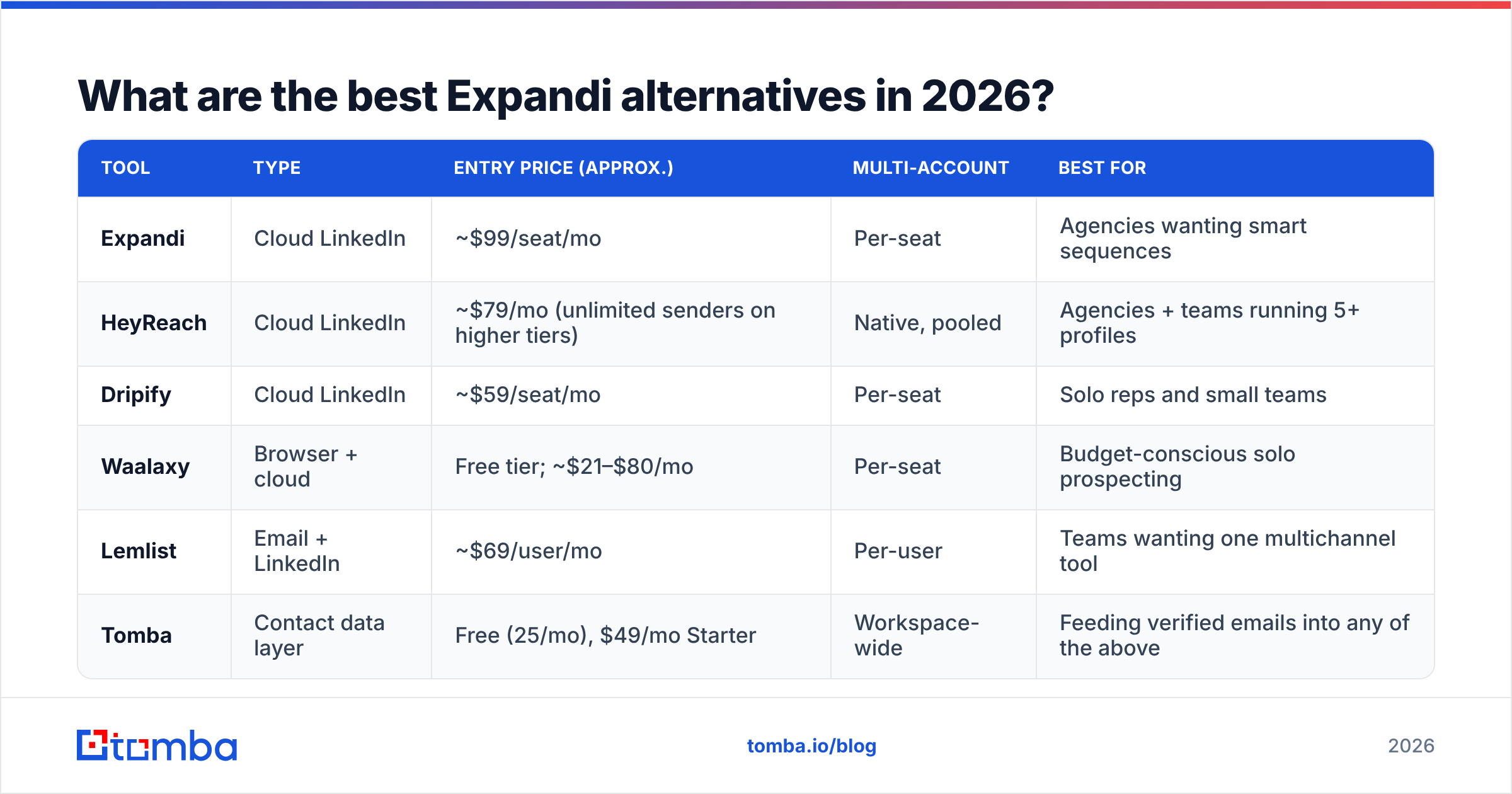
Most Expandi Cyance alternatives shortlists start with the LinkedIn half.
| Tool | Type | Entry price (approx.) | Multi-account | Best for |
|---|---|---|---|---|
| Expandi | Cloud LinkedIn | ~$99/seat/mo | Per-seat | Agencies wanting smart sequences |
| HeyReach | Cloud LinkedIn | ~$79/mo (unlimited senders on higher tiers) | Native, pooled | Agencies + teams running 5+ profiles |
| Dripify | Cloud LinkedIn | ~$59/seat/mo | Per-seat | Solo reps and small teams |
| Waalaxy | Browser + cloud | Free tier; ~$21–$80/mo | Per-seat | Budget-conscious solo prospecting |
| Lemlist | Email + LinkedIn | ~$69/user/mo | Per-user | Teams wanting one multichannel tool |
| Tomba | Contact data layer | Free (25/mo), $49/mo Starter | Workspace-wide | Feeding verified emails into any of the above |
HeyReach is the most common direct swap. It was built for agencies, so the pricing rewards volume instead of punishing it. Sender pooling means you can add LinkedIn accounts without buying a seat each time. A unified inbox and a shared blocklist across accounts are the features Expandi users miss most.
Dripify is the cheaper like-for-like. Simpler sequence builder, solid safety limits, and a lower per-seat number. If you're one or two people and the smart-sequence branching was overkill anyway, this is the boring correct answer.
Waalaxy is the entry-level pick with a genuinely usable free tier. Limits are tighter and the enrichment add-on gets pricey. But for a founder doing 30 touches a day it's hard to argue with. See our full Waalaxy alternative breakdown for the feature-by-feature.
Lemlist is the consolidation play: email sequencing and LinkedIn steps in one sequence, one report. You give up some LinkedIn-specific depth and you pay per user, but you delete a tool from the stack. Our Expandi alternative page covers the data-layer angle if you're keeping outreach where it is.
One thing none of these replace: the list. Every LinkedIn tool assumes you already know who to contact. Which brings us to the other half.
What are the best Cyance alternatives for intent data?#
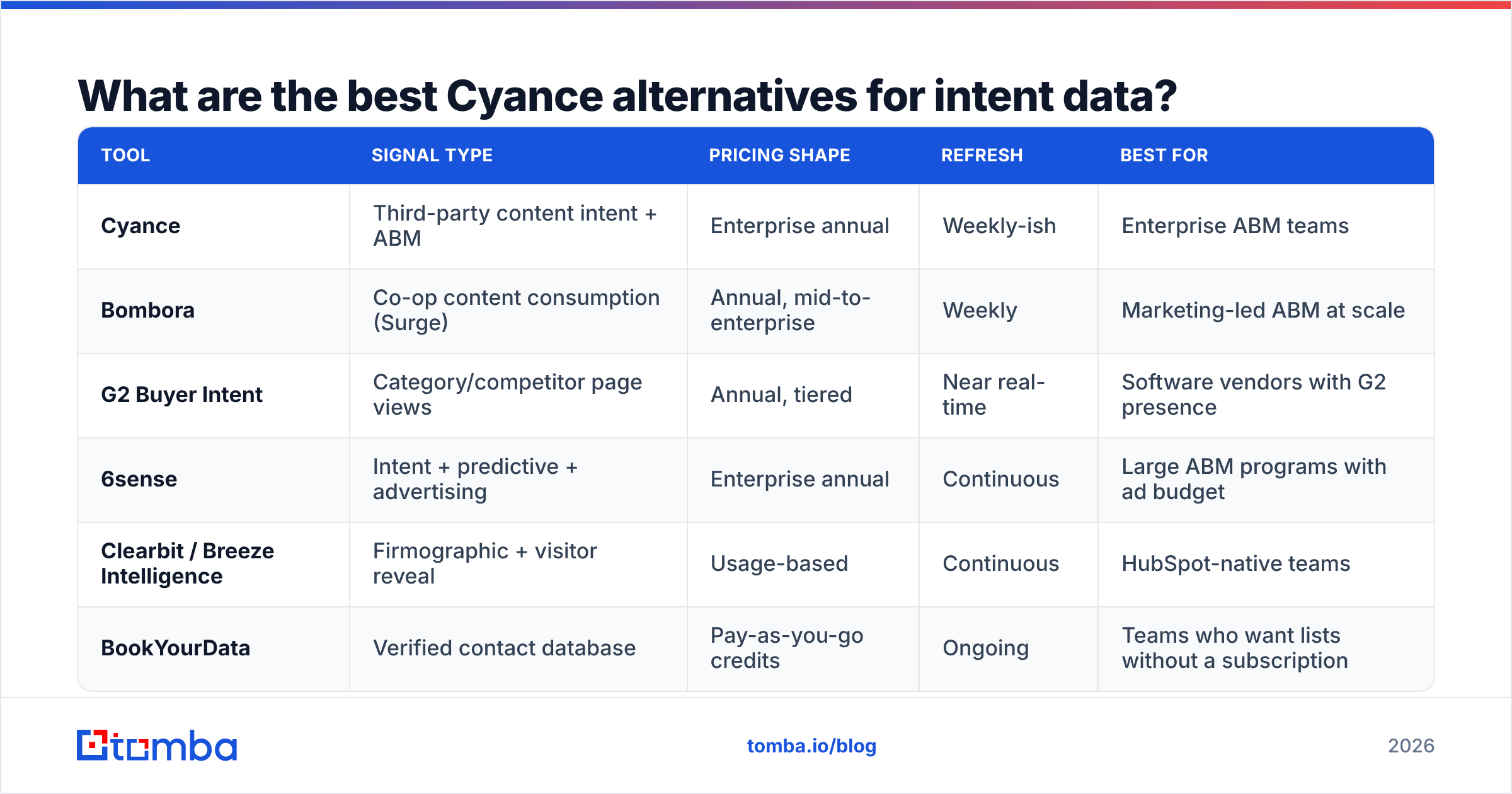
The Cyance half of the Expandi Cyance alternatives list looks like this.
| Tool | Signal type | Pricing shape | Refresh | Best for |
|---|---|---|---|---|
| Cyance | Third-party content intent + ABM | Enterprise annual | Weekly-ish | Enterprise ABM teams |
| Bombora | Co-op content consumption (Surge) | Annual, mid-to-enterprise | Weekly | Marketing-led ABM at scale |
| G2 Buyer Intent | Category/competitor page views | Annual, tiered | Near real-time | Software vendors with G2 presence |
| 6sense | Intent + predictive + advertising | Enterprise annual | Continuous | Large ABM programs with ad budget |
| Clearbit / Breeze Intelligence | Firmographic + visitor reveal | Usage-based | Continuous | HubSpot-native teams |
| BookYourData | Verified contact database | Pay-as-you-go credits | Ongoing | Teams who want lists without a subscription |
Bombora is the source most other vendors resell. Buying it directly gets you Surge scores across a large topic taxonomy, plus clean integrations into most CRMs and ad platforms. It's still an annual commitment, but the pricing is friendlier than full-platform ABM suites.
G2 Buyer Intent is the highest signal-to-noise option if you sell software. Someone comparing you against a named competitor on a review page is a far better signal than "this account read three articles about cloud security." It's narrow by design. That's the point.
6sense is the maximalist choice: intent, predictive scoring, and programmatic advertising in one platform. Real capability, real price tag, real implementation timeline. See the 6sense alternative comparison before you sit through the demo.
BookYourData is a different shape of answer. It's a verified B2B contact database sold on pay-as-you-go credits rather than an annual seat, with a bounce guarantee attached. It doesn't do intent scoring. But if your real problem was "we can't get contactable people for the accounts we already care about," it fixes the actual bottleneck without a procurement cycle. Plenty of teams cancel intent and buy data instead, and their pipeline doesn't notice.
Clearbit (now Breeze Intelligence inside HubSpot) covers firmographic enrichment and anonymous visitor identification. If you're already on HubSpot, this is the lowest-friction way to get account-level signal. The Clearbit alternative page covers where it falls short on email coverage outside North America.

Do you actually need paid intent data?#
Probably not yet, if you're under ~$5M ARR. Here's the honest test.
Paid intent pays for itself when three things are true. Your market is big enough that prioritizing is a real problem. Your sales cycle is long enough that early signal creates an edge. And you have the headcount to act on scored accounts within days. Miss one of those and you've bought a dashboard.
Cheaper signals that work for most teams:
- Hiring signals. A company posting three SDR roles is building an outbound motion. Job boards are free.
- Tech-stack changes. A site that just added a new analytics or payments tag has budget and a project. A website tech stack check gives you this without a contract.
- Funding events. Public, timely, and tied directly to spend.
- Your own traffic. Anonymous visitor identification on your pricing page is first-party intent. It beats anything you can buy — website visitor reveal turns that into named accounts.
- Content and podcast mentions. If a target-account exec published something last month, you have a real opener. The author finder gets you their address directly.
Run those for two quarters. If prioritization is still your binding constraint, then buy intent. You'll negotiate better, because you'll know exactly which topics matter.
How does the total stack cost compare?#
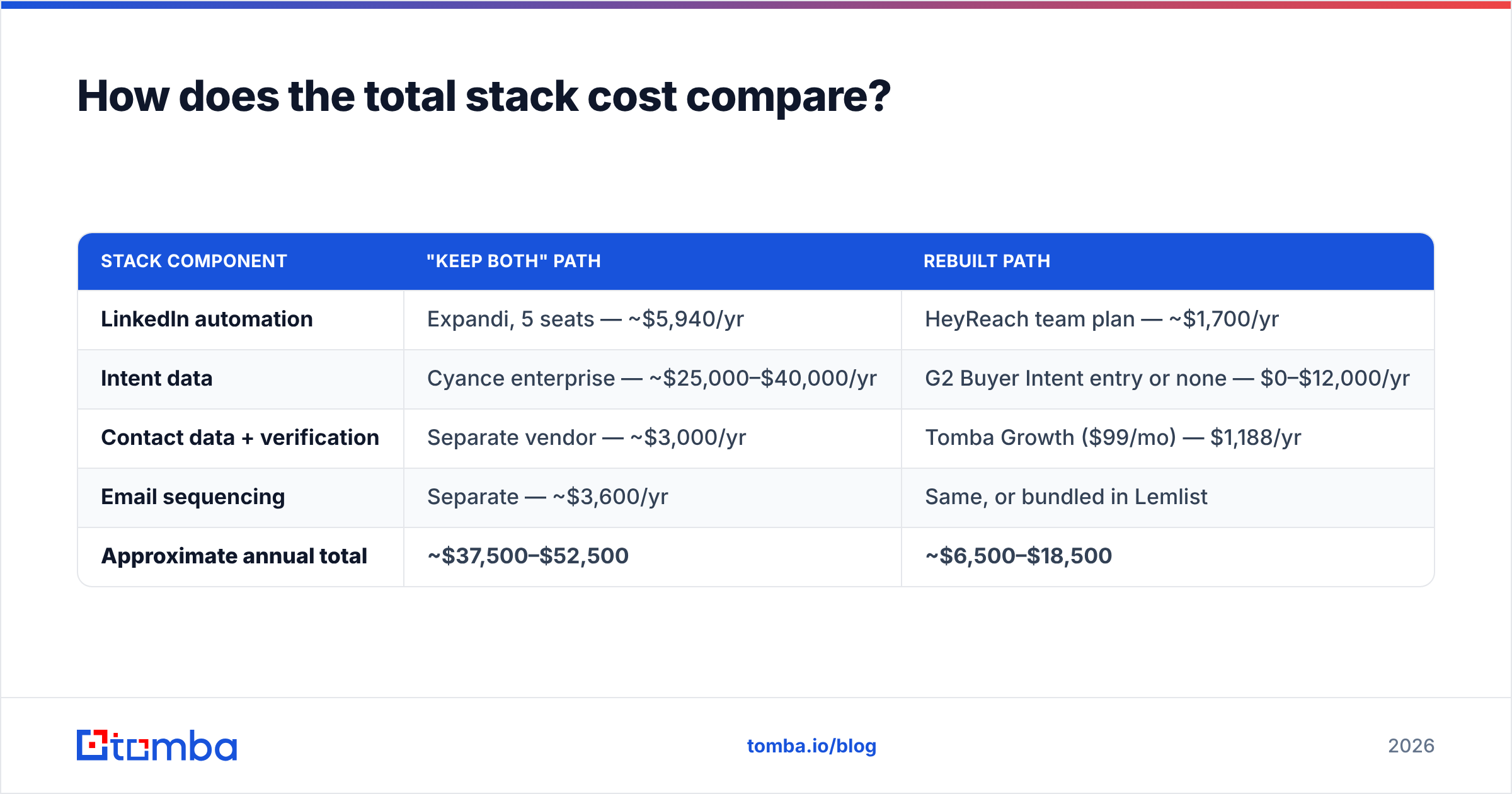
The line-item comparison is misleading. Here's what Expandi Cyance alternatives do to the total bill for a five-rep team, annualized, at 2026 list prices:
| Stack component | "Keep both" path | Rebuilt path |
|---|---|---|
| LinkedIn automation | Expandi, 5 seats — ~$5,940/yr | HeyReach team plan — ~$1,700/yr |
| Intent data | Cyance enterprise — ~$25,000–$40,000/yr | G2 Buyer Intent entry or none — $0–$12,000/yr |
| Contact data + verification | Separate vendor — ~$3,000/yr | Tomba Growth ($99/mo) — $1,188/yr |
| Email sequencing | Separate — ~$3,600/yr | Same, or bundled in Lemlist |
| Approximate annual total | ~$37,500–$52,500 | ~$6,500–$18,500 |
Prices are list-rate estimates as of early 2026, and they move with negotiation and volume. Verify with each vendor. But the ratio holds: the intent contract is the whole budget, and the outreach tools are rounding errors.
The rebuilt path assumes you're honest about what each layer does. Sequencing tools send. Intent tools prioritize. Neither one produces a verified email address. Skip that layer and your bounce rate does the damage instead. Our pricing details run Free (25 searches/mo), Starter $49/mo, Growth $99/mo, and Pro $249/mo. The data layer should be the cheapest part of the stack, not the thing you improvise.
Which Expandi Cyance alternatives fit your team?#
Start with team size. For small teams:
- Solo founder or 1–2 reps: Waalaxy or Dripify for LinkedIn, no paid intent, and a free-tier or Starter data plan for emails. Total under $150/mo.
- Agency running client accounts: HeyReach for pooled sender management, plus per-client data credits. Skip intent unless a client funds it.
For larger teams the math changes:
- 5–15 person SDR team: HeyReach or Lemlist, G2 Buyer Intent if you sell software, and a proper verification layer. Budget $1,200–$2,000/mo all-in.
- Enterprise ABM with ad budget: This is where 6sense or keeping Cyance genuinely makes sense. The platform cost is defensible when you activate across paid channels and have an ops team to run it.
- Anyone with a CRM full of stale records: Fix that first. Data enrichment on existing accounts almost always returns more pipeline per dollar than a new prospecting tool. Third-party research keeps finding B2B contact data decaying at roughly 20–30% per year, and G2 category reviews are full of teams learning this after they bought the shiny thing.
What's the fastest way to migrate off both?#
Give yourself 30 days and do it in this order. First, get your data out:
- Export everything. Pull your Expandi campaign lists and Cyance account scores to CSV before the renewal date. Both get harder to extract after you cancel.
- Rebuild the account list from firmographics, not from the intent scores. You want a list you can regenerate yourself.
- Re-enrich contacts. Run the account domains through domain search to get current people and email patterns, then verify. Expect 15–25% of your old contacts to have moved.
Then rebuild the sending motion, one channel at a time:
- Run one channel first. Launch email against the rebuilt list while the LinkedIn tool is still in trial. If email alone matches your old reply volume, you've learned something about what you were paying for.
- Add LinkedIn on top, using the same list, with shared suppression so nobody gets both messages on the same day.
- Only then reconsider intent. With clean baseline numbers, you can measure whether a scored list beats your firmographic one.
Start with the layer everything else depends on. Whichever Expandi Cyance alternatives you pick for sequencing and signals, every campaign still ends at a real, verified, deliverable address. Tomba Email Finder finds professional emails by domain, name, or company, verifies them including catch-all domains, and hands them off through the Tomba API, Chrome extension, or Google Sheets. It starts free at 25 searches/month and $49/mo on Starter. Build the contact layer first, then decide how much prioritization you're willing to pay for.
Related guides#
Ready to find emails that actually work?
Join 150,000+ professionals who stopped guessing and started sending. Free credits on signup — no credit card required.
Get the Tomba newsletter
Practical outbound tactics and product updates — once every two weeks.
About the author