7 Best Genoo Alternatives in 2026 for B2B Lead Generation
Genoo bundles email, landing pages and lead scoring into one small-business suite — but it's not the only option. Here are seven Genoo alternatives compared on price, data quality, and how painful the migration actually is.

TL;DR
Genoo is a small-business B2B marketing suite: email, landing pages, forms, lead scoring, and a deep WordPress plugin behind one login. That bundle is the bar most Genoo alternatives have to clear.
Most teams shopping for Genoo alternatives want one of three things. A bigger ecosystem (HubSpot). Cheaper email automation per contact (Brevo, ActiveCampaign). Or an all-in-one that runs CRM and deals too (EngageBay, Ontraport, Zoho).
No platform fixes bad contact data. Roughly 25–30% of B2B contact records decay each year. Your data layer matters more than the nurture builder you pick.
Migration is the real switching cost. Forms, tracking scripts, scoring rules, and hosted pages all get rebuilt. Budget two to four weeks, not a weekend.
Best default for a 2–15 person B2B team in 2026: ActiveCampaign or Brevo for automation, plus a dedicated data layer to find and verify the addresses you mail.
What is Genoo, and why are teams looking for alternatives?#
Genoo is a B2B marketing automation platform for small and mid-sized companies. These are the teams that never had the budget or headcount for Marketo or Eloqua. It packs email campaigns, hosted landing pages, forms, lead capture, lead scoring, and basic nurture flows into one product. It also leans hard on WordPress. The plugin drops Genoo forms and gated content straight into your site, so you skip the parallel microsite.
That was a good bet in 2011. In 2026, the reasons teams start looking at Genoo alternatives are pretty consistent:
- Ecosystem gravity. Your sales team lives in HubSpot or Pipedrive. You are tired of babysitting a sync between the marketing tool and the CRM.
- Price per contact. Legacy marketing automation starts in the low hundreds per month. Modern email-first tools start under $20 and scale on sends or contacts.
- Feature drift. SMS, in-app messaging, AI-drafted sequences, ad audience sync, and visitor identification all became table stakes. Most small vendors could not ship them fast enough.
- Data quality. Automation only compounds if the contacts are real. Teams that hit a deliverability wall usually find the problem sits upstream of the tool.
Think of marketing automation like the plumbing in a house. Genoo put decent pipes in a small house. Then you added three floors: outbound reps, a product-led signup flow, paid retargeting. At some point you need bigger pipes, or a different plumber.
How do you choose between Genoo alternatives?#
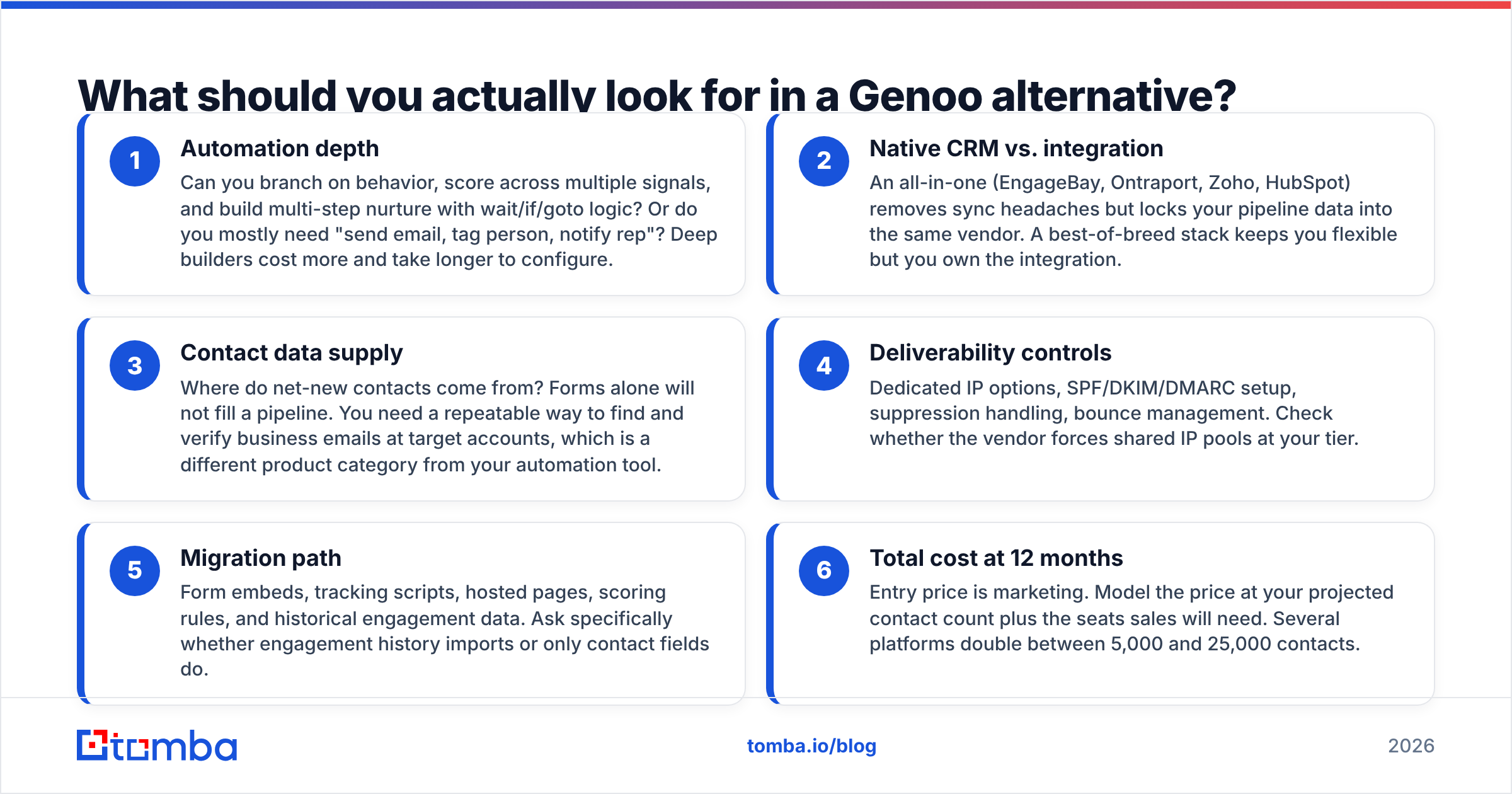
Before you compare Genoo alternatives logo by logo, write down which of these six things you are buying. Most bad migrations happen because a team optimized for the wrong one.
Automation depth — Can you branch on behavior and score across many signals? Do you need multi-step nurture with wait, if, and goto logic? Or do you mostly need "send email, tag person, notify rep"? Deep builders cost more and take longer to set up.
Native CRM vs. integration — An all-in-one (EngageBay, Ontraport, Zoho, HubSpot) removes sync headaches. It also locks your pipeline data into one vendor. A best-of-breed stack keeps you flexible, but you own the wiring.
Contact data supply — Where do net-new contacts come from? Forms alone will not fill a pipeline. You need a repeatable way to find and verify business emails at target accounts. That is a different product category from your automation tool.
Deliverability controls — Look for dedicated IP options, SPF/DKIM/DMARC setup, suppression handling, and bounce management. Check whether the vendor forces shared IP pools at your tier.
Migration path — Count your form embeds, tracking scripts, hosted pages, and scoring rules. Ask whether engagement history imports, or only contact fields.
Total cost at 12 months — Entry price is marketing. Model the price at your projected contact count, plus the seats sales will need. Several platforms double between 5,000 and 25,000 contacts.
How do the top Genoo alternatives compare?#
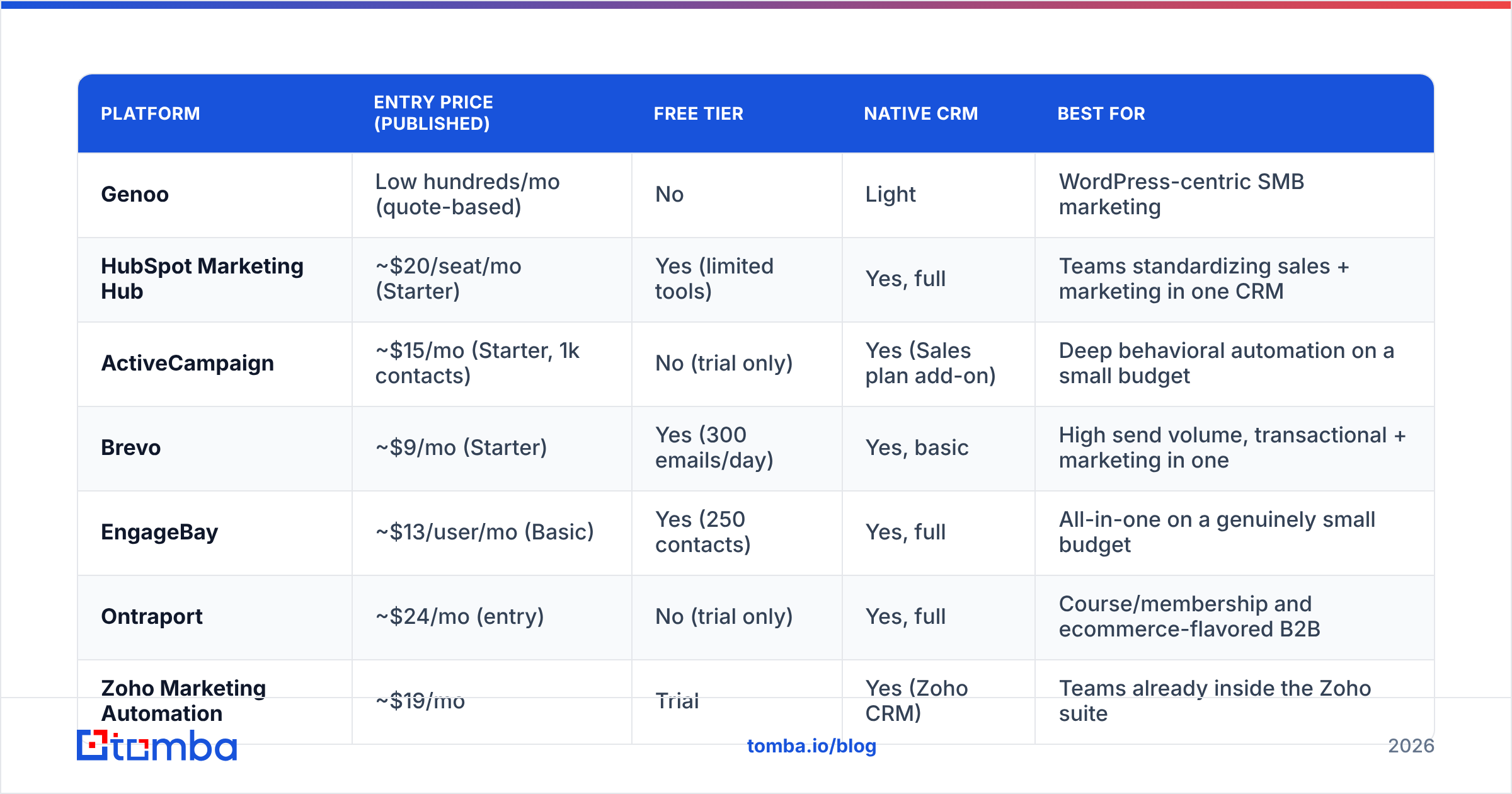
Prices below are the published entry tiers at the time of writing. Vendors change pricing constantly. Always confirm on the vendor's own page before you commit budget. The Genoo alternatives below cover most of what small B2B teams actually buy.
| Platform | Entry price (published) | Free tier | Native CRM | Best for |
|---|---|---|---|---|
| Genoo | Low hundreds/mo (quote-based) | No | Light | WordPress-centric SMB marketing |
| HubSpot Marketing Hub | ~$20/seat/mo (Starter) | Yes (limited tools) | Yes, full | Teams standardizing sales + marketing in one CRM |
| ActiveCampaign | ~$15/mo (Starter, 1k contacts) | No (trial only) | Yes (Sales plan add-on) | Deep behavioral automation on a small budget |
| Brevo | ~$9/mo (Starter) | Yes (300 emails/day) | Yes, basic | High send volume, transactional + marketing in one |
| EngageBay | ~$13/user/mo (Basic) | Yes (250 contacts) | Yes, full | All-in-one on a genuinely small budget |
| Ontraport | ~$24/mo (entry) | No (trial only) | Yes, full | Course/membership and ecommerce-flavored B2B |
| Zoho Marketing Automation | ~$19/mo | Trial | Yes (Zoho CRM) | Teams already inside the Zoho suite |
HubSpot Marketing Hub — the safe default#
HubSpot is the obvious pick if marketing and sales do not share a database. Starter is cheap and genuinely usable. The trap sits one tier up. Workflows, custom reporting, and lead scoring live on Professional, which jumps into four figures per month. Buy HubSpot when the CRM is the product you want. The automation is the bonus, not the reason.
Pros: unmatched integration ecosystem, best-in-class documentation, strong reporting. Cons: the Starter-to-Professional cliff is steep, and contact-tier pricing punishes list growth.
ActiveCampaign — the automation power user's pick#
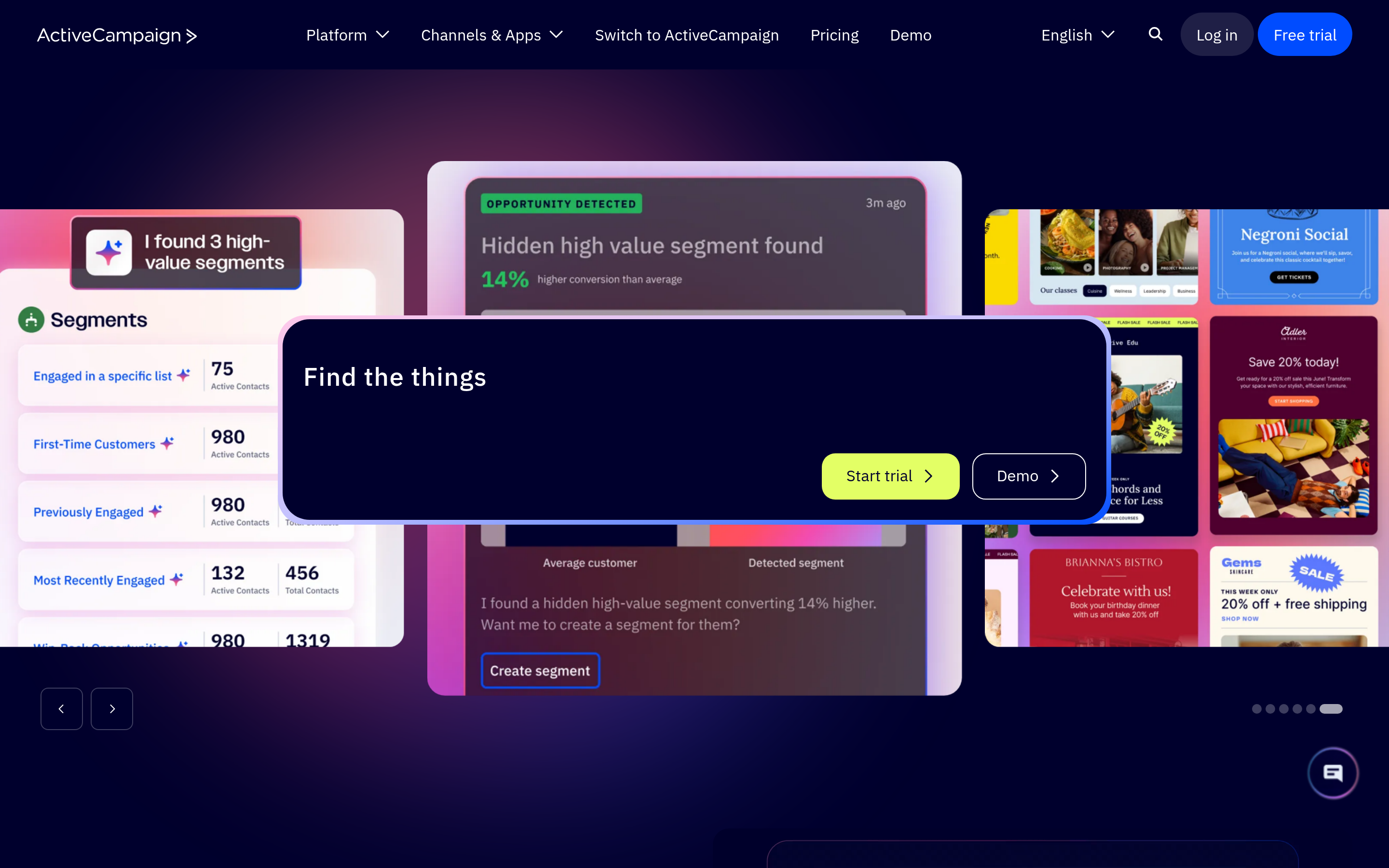
If you liked Genoo's logic but want a builder from this decade, ActiveCampaign is the closest upgrade. You get conditional splits, goal tracking, site tracking, predictive sending, and a deep tag and custom-field model. Its CRM ("Sales") is competent. It is not a Salesforce replacement.
Pros: best automation per dollar in the category, huge template library. Cons: the UI has real depth and a real learning curve; per-contact pricing climbs.
Brevo — the volume play#
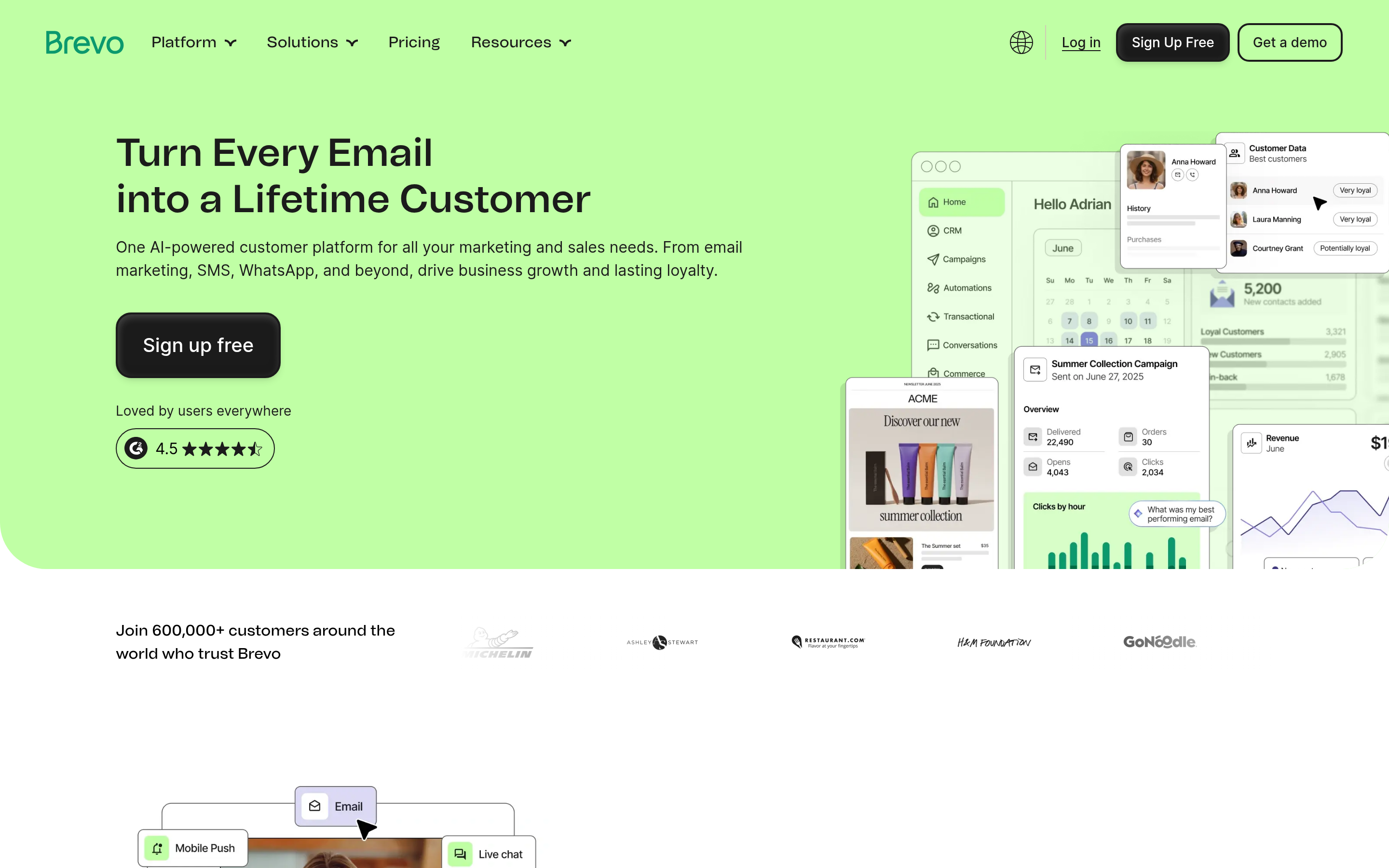
Brevo (formerly Sendinblue) charges on emails sent, not contacts stored. That flips the math if you keep a large, lightly engaged list. It also handles transactional email and SMS in the same account. Product alerts and marketing sends then share the same deliverability setup.
Pros: cheapest at high volume, solid free tier, EU data residency. Cons: automation is shallower than ActiveCampaign; landing pages are basic.
EngageBay — the budget all-in-one#
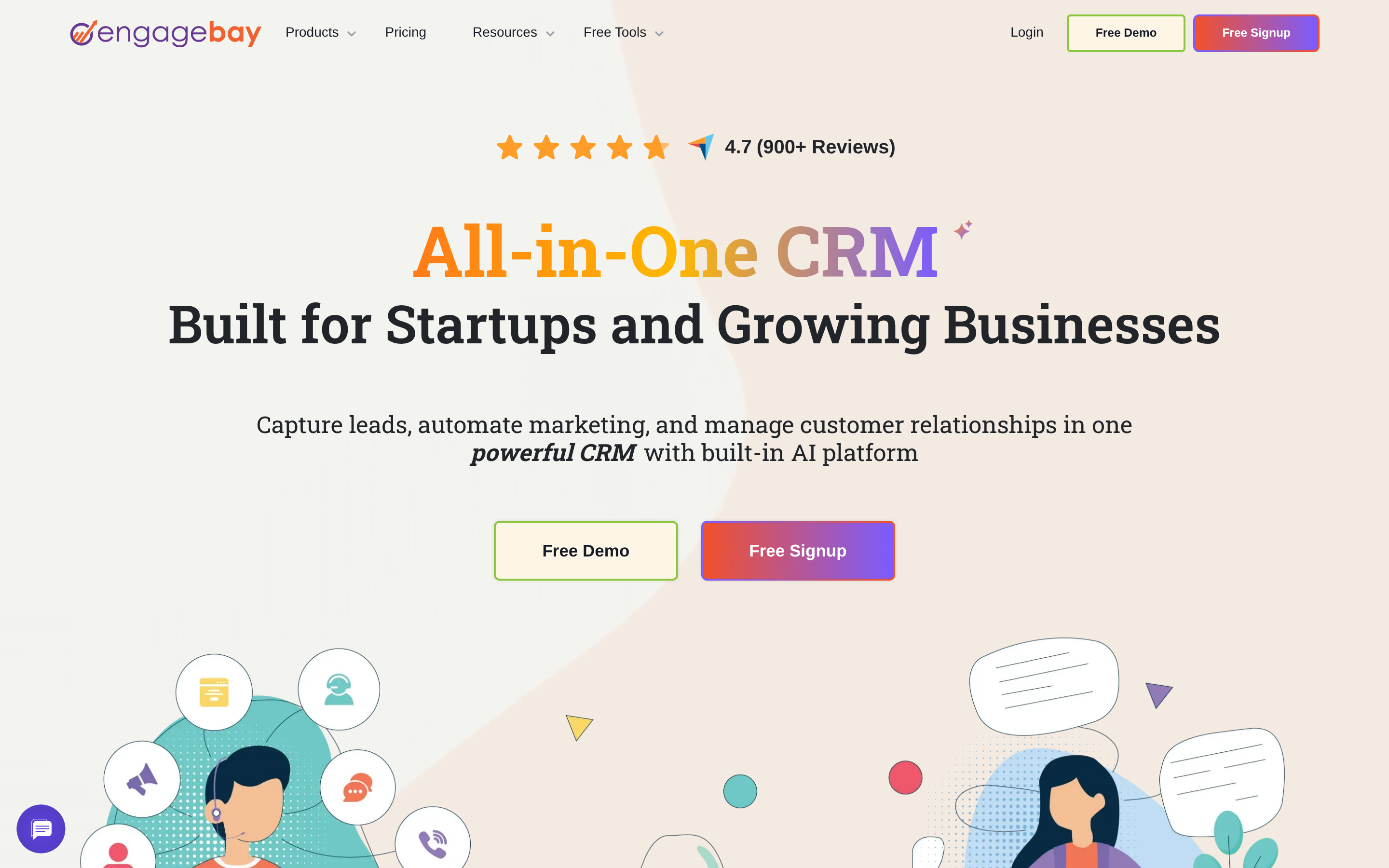
EngageBay is what Genoo might look like if it were rebuilt in 2019. You get marketing automation, CRM, helpdesk, and live chat, priced per user. For a five-person B2B team that needs a pipeline plus nurture, it is the value pick. Reviews on G2 praise the price and flag the polish gap versus HubSpot.
Pros: everything included, per-user pricing, real support. Cons: fewer integrations, less mature reporting.
Ontraport and Zoho — the situational picks#
Ontraport is strongest when your B2B motion has a transactional edge: courses, memberships, recurring billing. Zoho Marketing Automation makes sense if you already run Zoho CRM. As a standalone pick it is fine, but rarely the best in class.
Where does your contact data actually come from?#
Most Genoo alternatives roundups skip this part. Swapping Genoo for HubSpot changes how you send. It does not change who you send to. That is where most B2B programs leak.
Inbound forms cover a slice of your addressable market. The rest has to be sourced. That means two jobs your marketing automation platform does not do well:
- Finding the right contact at a target account. You want the VP of Ops at a 200-person logistics firm, not the generic info@ inbox.
- Verifying that the address is deliverable before it enters a nurture sequence, so bounces do not torch your sender reputation.
There are two credible ways to solve this. The first is buying a pre-built list from a data vendor. BookYourData is a solid option here, with pay-as-you-go credits and a bounce guarantee. That suits teams who want one list for one defined campaign.
The second is finding contacts on demand from the domains you already target. That is where an email finder fits. You feed it a company domain and a name. It returns the verified work address with a confidence score.
The two approaches are not exclusive. Buy a list to seed a segment. Use on-demand lookup for the accounts your reps add week to week.
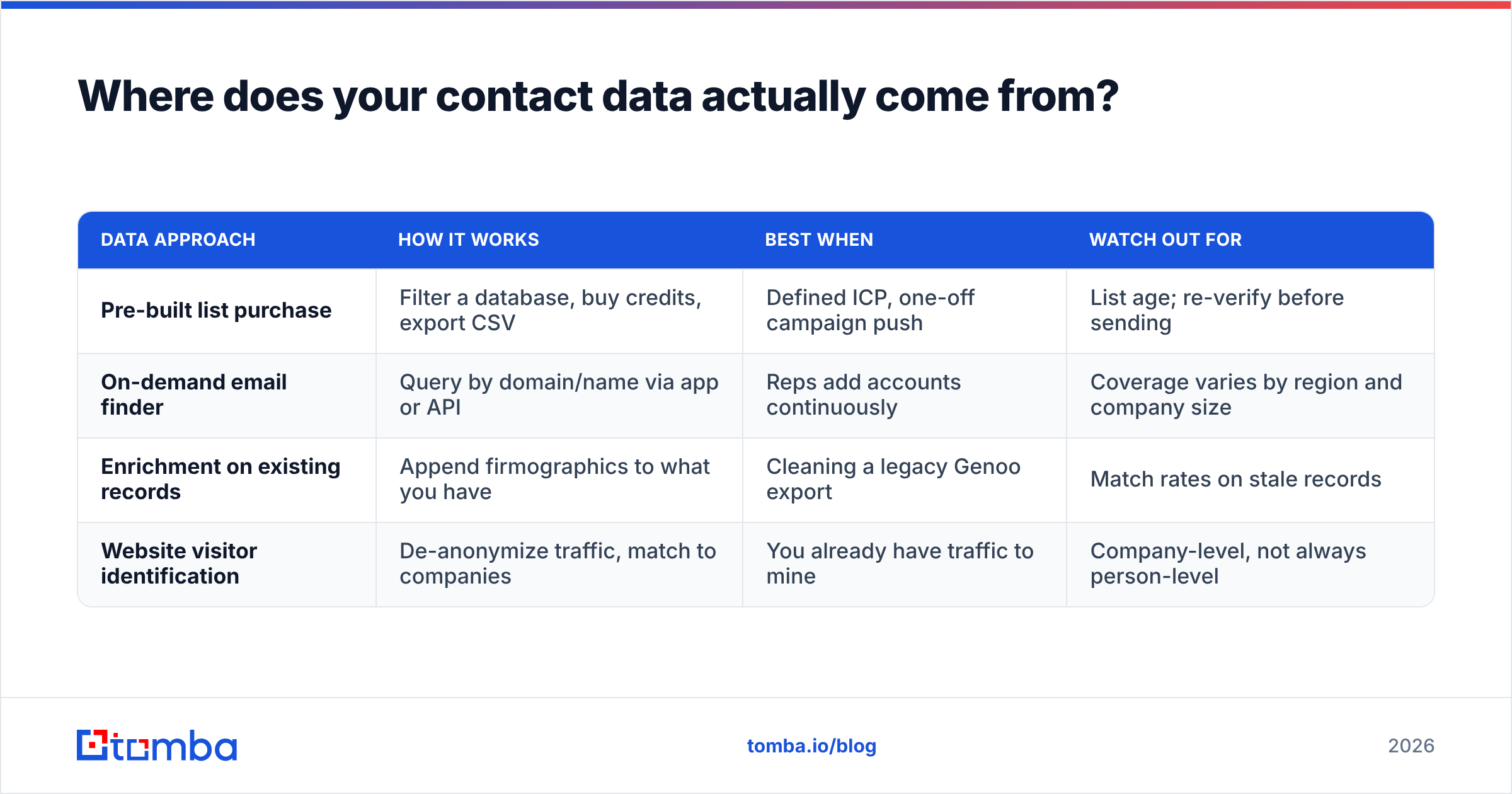
| Data approach | How it works | Best when | Watch out for |
|---|---|---|---|
| Pre-built list purchase | Filter a database, buy credits, export CSV | Defined ICP, one-off campaign push | List age; re-verify before sending |
| On-demand email finder | Query by domain/name via app or API | Reps add accounts continuously | Coverage varies by region and company size |
| Enrichment on existing records | Append firmographics to what you have | Cleaning a legacy Genoo export | Match rates on stale records |
| Website visitor identification | De-anonymize traffic, match to companies | You already have traffic to mine | Company-level, not always person-level |
Whichever route you take, run every address through an email verifier before import. A 3% bounce rate is the point where mailbox providers start throttling you. One bad import can undo months of warmed reputation. Is your legacy Genoo list more than a year old? Treat it as unverified and re-check it. Data decay does not care how carefully you collected the addresses.
How do you migrate off Genoo without losing pipeline?#
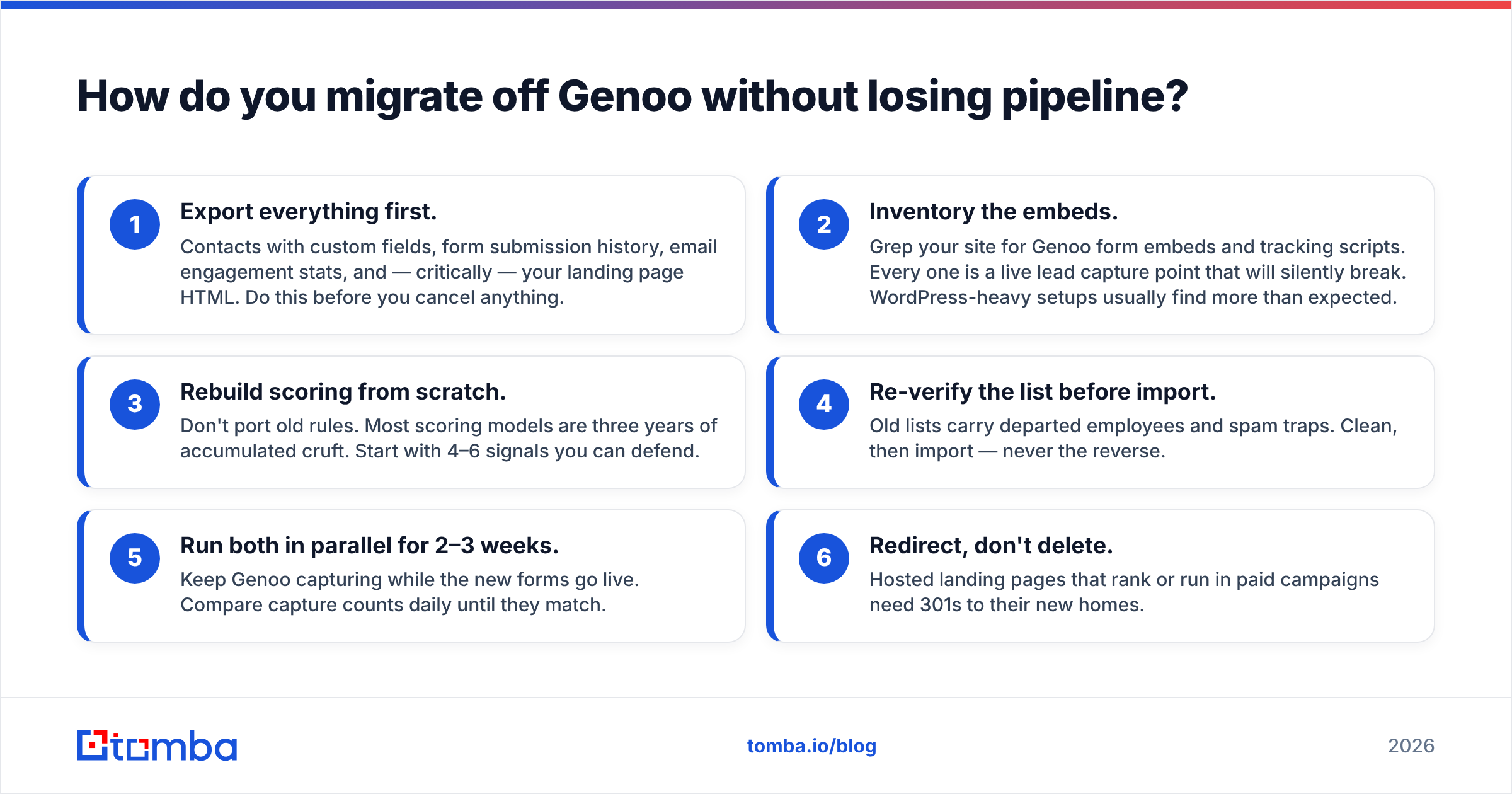
The platform switch is easy. The plumbing is not. Most Genoo alternatives import contacts fine and break everything else, so work in this order:
Export everything first. Pull contacts with custom fields, form submission history, email engagement stats, and your landing page HTML. Do this before you cancel anything.
Inventory the embeds. Grep your site for Genoo form embeds and tracking scripts. Each one is a live lead capture point that will break quietly. WordPress-heavy sites usually hide more than expected.
Rebuild scoring from scratch. Do not port the old rules. Most scoring models are three years of accumulated cruft. Start with four to six signals you can defend.
Re-verify the list before import. Old lists carry departed employees and spam traps. Clean first, then import. Never the reverse.
Run both tools for two to three weeks. Keep Genoo capturing while the new forms go live. Compare daily capture counts until they match.
Redirect, do not delete. Hosted landing pages that rank or run in paid campaigns need 301s to their new homes.
Consolidating into HubSpot? Wire the data layer in at the same time, not as a follow-up project. A HubSpot integration that enriches records on creation keeps the new instance clean from day one.
Which of these Genoo alternatives is right for your team?#
- One system of record for sales and marketing: HubSpot Marketing Hub. Accept the Professional tier when workflows become non-negotiable.
- Genoo's automation logic, upgraded, for less money: ActiveCampaign.
- You send a lot and store even more: Brevo. Send-based pricing wins on big lists.
- Five people and no budget: EngageBay.
- Already a Zoho shop: Zoho Marketing Automation, purely to skip the integration tax.
- Your bottleneck is contacts, not campaigns: fix the data layer first. A better nurture builder mailing the same stale 4,000 records will not move the number.
That last point is worth sitting with. Teams often spend six weeks on a migration, then run the same campaign to the same list. If your reply rate is flat, look at list quality, targeting, and offer first. The automation tool comes last.
What's the honest verdict?#
Genoo is not a bad product. It was built for a stack most B2B teams no longer run. If your site is WordPress, your team is small, and the thing works, leaving it alone is a fair answer. Hitting a ceiling on integrations, cost per contact, or feature velocity? Then ActiveCampaign is the lowest-regret swap for automation-first teams, and HubSpot is the lowest-regret swap for CRM-first teams.
One caveat holds for all of the Genoo alternatives above: none of them fixes a stale list. Do not let the migration become the whole strategy. Compare Tomba pricing against what stale data costs you today, then put the savings into contact quality.
Ready to fix the input, not just the pipes? Start with the Tomba Email Finder. Find verified business emails by domain, name, or company, with a confidence score on every result. The free tier gives you 25 searches a month, so you can test coverage on your own target accounts first. Paid plans start at $49/mo. Whichever Genoo alternative you pick, it will only perform as well as the contacts you feed it.
Related guides#
Ready to find emails that actually work?
Join 150,000+ professionals who stopped guessing and started sending. Free credits on signup — no credit card required.
Get the Tomba newsletter
Practical outbound tactics and product updates — once every two weeks.
About the author