9 Best Grain Alternatives in 2026 (Free and Paid Compared)
Grain is a solid AI meeting recorder, but per-seat pricing and shallow coaching depth push a lot of revenue teams to look elsewhere. Here are nine Grain alternatives compared on price, accuracy, and CRM sync.
TL;DR
- Grain is a well-built AI meeting recorder for small revenue teams: clean notes, video highlight clips, HubSpot and Salesforce sync. Most teams leave it over per-seat cost at scale or missing coaching depth — not over quality.
- If you want the cheapest capable replacement, look at Fathom and Fireflies. If you want deal intelligence and forecasting, look at Gong, Clari Copilot, or Avoma.
- Free plans exist across almost every option in 2026, but they differ wildly in what is free: recording minutes, AI summaries, storage retention, or integrations.
- Per-seat pricing is the real budget killer. A 20-rep team on a $39/seat tool spends $9,360/year before a single integration.
- A meeting recorder tells you what happened on calls you already booked. It does nothing to fill the calendar — that is a contact data problem, not a transcription problem.
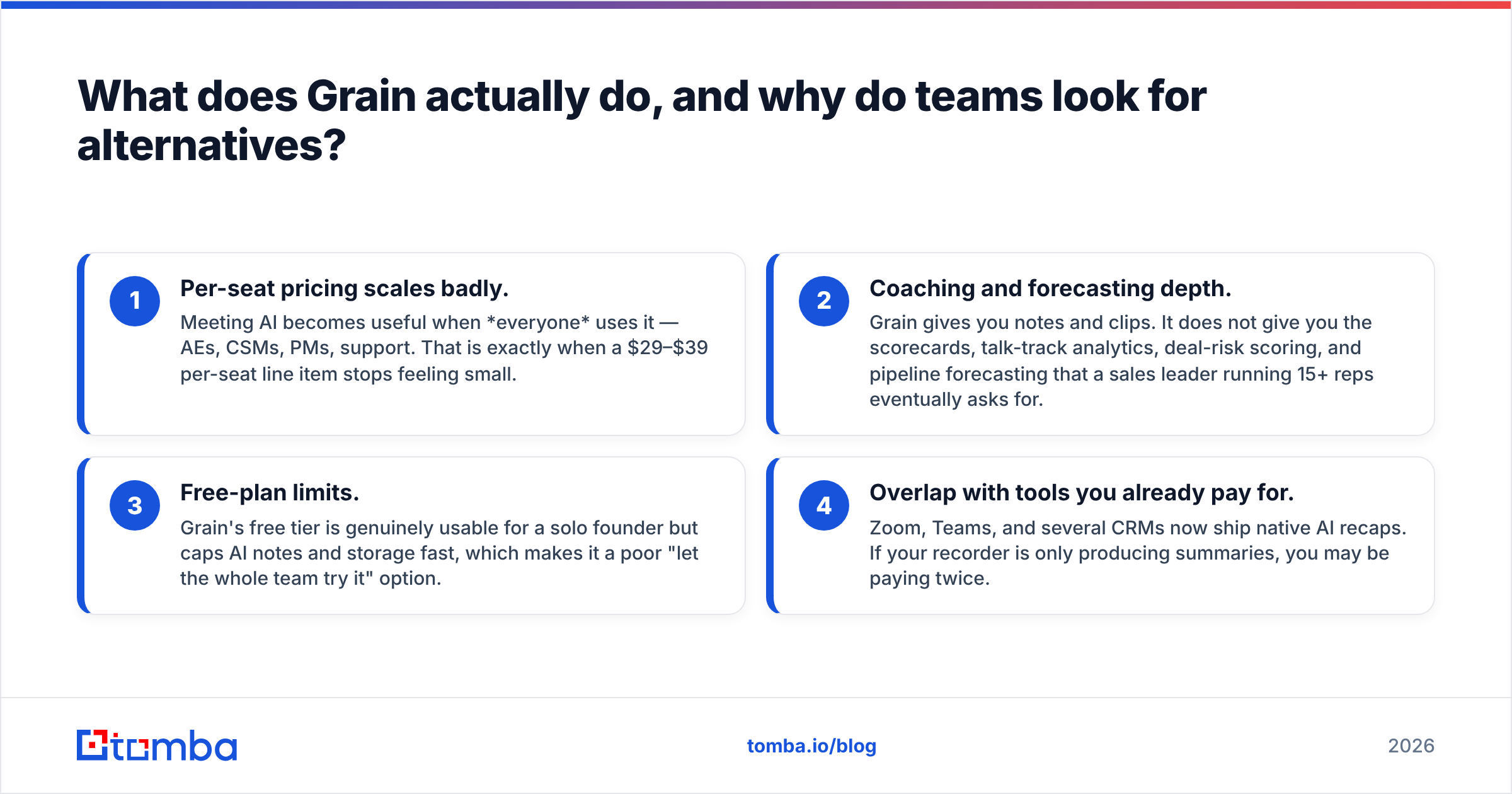
What does Grain actually do, and why do teams look for alternatives?#
Grain sits in the conversation intelligence category: it joins your Zoom, Google Meet, or Microsoft Teams calls, records and transcribes them, generates AI meeting notes, clips shareable video highlights, and pushes summaries into your CRM. Its differentiator has always been the highlight reel — turning a 45-minute discovery call into a 40-second clip you can drop into Slack or a deal record.
That is a real, useful product. So why is "grain alternatives" a search people run every week? Four recurring reasons show up in buyer conversations and in public review threads on G2:
- Per-seat pricing scales badly. Meeting AI becomes useful when everyone uses it — AEs, CSMs, PMs, support. That is exactly when a $29–$39 per-seat line item stops feeling small.
- Coaching and forecasting depth. Grain gives you notes and clips. It does not give you the scorecards, talk-track analytics, deal-risk scoring, and pipeline forecasting that a sales leader running 15+ reps eventually asks for.
- Free-plan limits. Grain's free tier is genuinely usable for a solo founder but caps AI notes and storage fast, which makes it a poor "let the whole team try it" option.
- Overlap with tools you already pay for. Zoom, Teams, and several CRMs now ship native AI recaps. If your recorder is only producing summaries, you may be paying twice.
None of that makes Grain a bad tool. It makes it a tier-specific tool. The question is which tier you are actually in.
How should you compare Grain alternatives?#
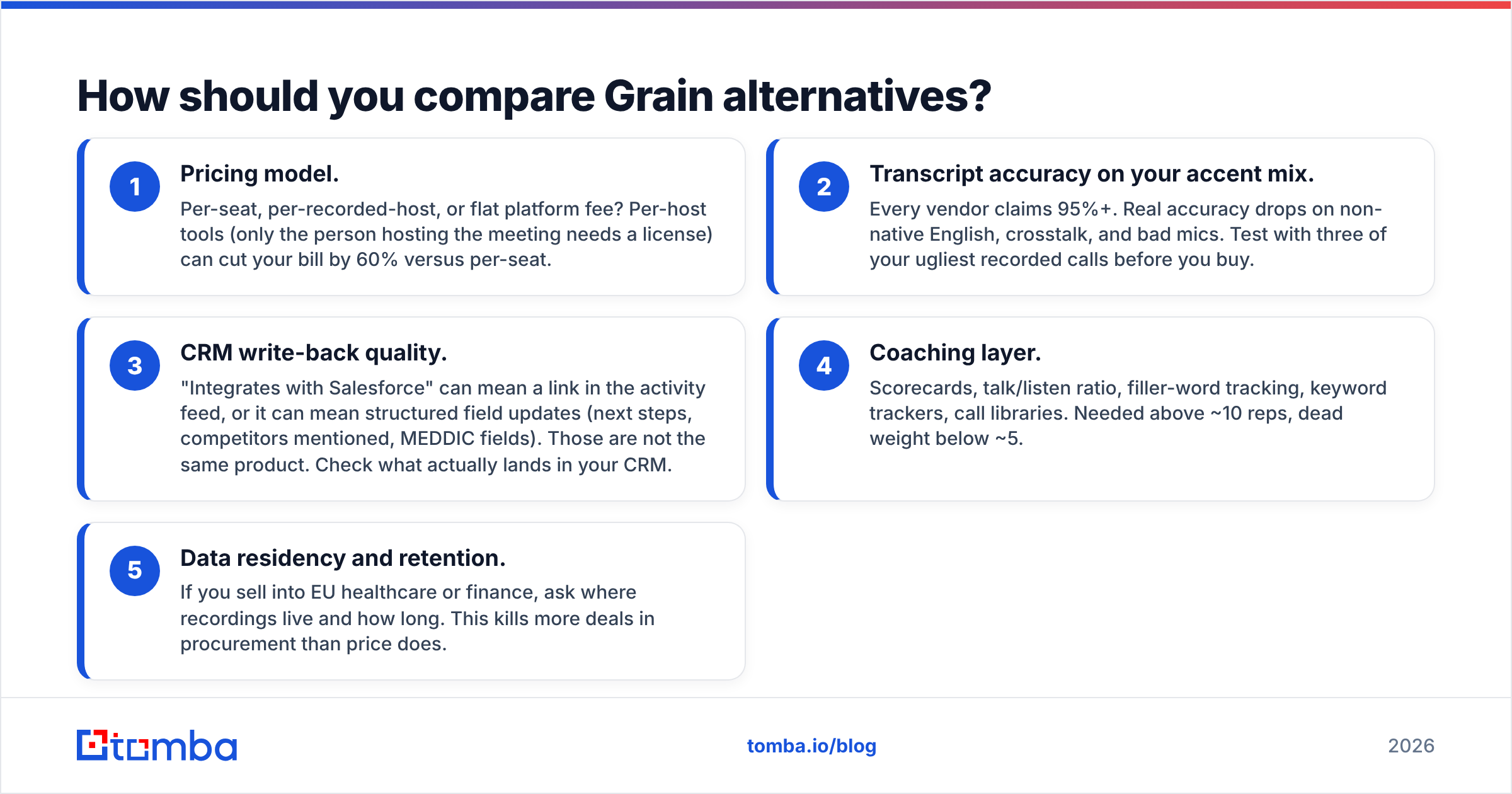
Do not start from the feature list. Start from these five decision axes — they explain almost every switch I have seen:
- Pricing model. Per-seat, per-recorded-host, or flat platform fee? Per-host tools (only the person hosting the meeting needs a license) can cut your bill by 60% versus per-seat.
- Transcript accuracy on your accent mix. Every vendor claims 95%+. Real accuracy drops on non-native English, crosstalk, and bad mics. Test with three of your ugliest recorded calls before you buy.
- CRM write-back quality. "Integrates with Salesforce" can mean a link in the activity feed, or it can mean structured field updates (next steps, competitors mentioned, MEDDIC fields). Those are not the same product. Check what actually lands in your CRM.
- Coaching layer. Scorecards, talk/listen ratio, filler-word tracking, keyword trackers, call libraries. Needed above ~10 reps, dead weight below ~5.
- Data residency and retention. If you sell into EU healthcare or finance, ask where recordings live and how long. This kills more deals in procurement than price does.
Score each candidate 1–5 on those five axes, weight them for your team, and the shortlist usually collapses to two options.
What are the best Grain alternatives in 2026?#
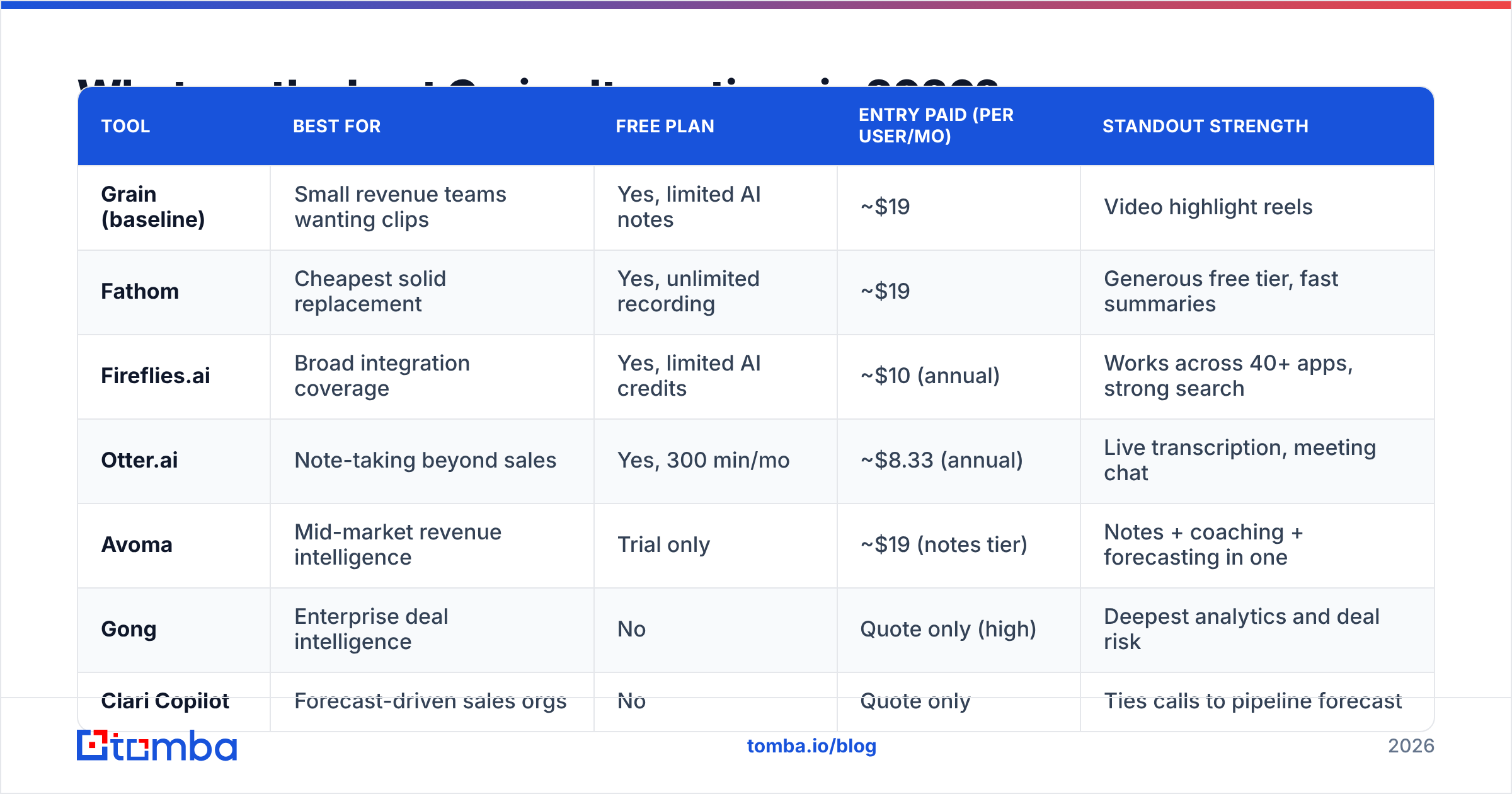
Here is the shortlist, with list pricing as published at the time of writing. Vendors change tiers constantly — verify on their pricing page before you commit.
| Tool | Best for | Free plan | Entry paid (per user/mo) | Standout strength |
|---|---|---|---|---|
| Grain (baseline) | Small revenue teams wanting clips | Yes, limited AI notes | ~$19 | Video highlight reels |
| Fathom | Cheapest solid replacement | Yes, unlimited recording | ~$19 | Generous free tier, fast summaries |
| Fireflies.ai | Broad integration coverage | Yes, limited AI credits | ~$10 (annual) | Works across 40+ apps, strong search |
| Otter.ai | Note-taking beyond sales | Yes, 300 min/mo | ~$8.33 (annual) | Live transcription, meeting chat |
| Avoma | Mid-market revenue intelligence | Trial only | ~$19 (notes tier) | Notes + coaching + forecasting in one |
| Gong | Enterprise deal intelligence | No | Quote only (high) | Deepest analytics and deal risk |
| Clari Copilot | Forecast-driven sales orgs | No | Quote only | Ties calls to pipeline forecast |
| tl;dv | Multilingual teams, PMs | Yes | ~$18 | 30+ languages, cheap clipping |
| Read AI | Meeting efficiency metrics | Yes | ~$15 | Engagement and sentiment scoring |
| Sembly AI | Ops and project teams | Yes | ~$10 | Task extraction from meetings |
Which alternatives win on price?#
Fathom is the default recommendation for teams under 15 people who want to leave Grain without losing capability. Unlimited recording and transcription on the free plan is unusual, and the paid tier mostly buys you AI summaries at volume, CRM push, and team folders. If your requirement is "record everything, summarize most of it, do not think about credits," start here. Their product pages are refreshingly clear on what each tier includes.
Fireflies.ai wins when your stack is sprawling. It connects to more downstream tools than most competitors, and its cross-meeting search — "show me every call where someone said 'security review'" — is genuinely strong. The catch is AI credit metering: heavy users hit ceilings on lower tiers.
Otter.ai is the cheapest per seat and the least sales-specific. If half your seats are non-revenue roles who just want notes, Otter's blended cost across the org often beats a sales-only tool.
Which alternatives win on depth?#
Gong is the category benchmark for deal intelligence, and it prices accordingly: expect a platform fee plus a per-seat license, typically landing well into five figures annually for a mid-sized team. You are not buying transcription. You are buying deal-risk scoring, market intelligence, and a coaching system your managers will actually run. If Gong quotes above your budget, the practical move is comparing it against a leaner stack — we break the tradeoffs down in our Gong alternative breakdown.
Avoma is the most interesting middle option. It bundles AI notes, a coaching layer, and revenue intelligence into modular tiers, so you can buy notes now and add forecasting later without replatforming. For teams of 10–50 reps, it is frequently the best price-to-capability ratio on this list.
Clari Copilot makes sense only if you already run Clari for forecasting. Standalone, it is expensive for what you get. Bundled, the call-to-forecast linkage is hard to replicate.
Which alternatives win on niche needs?#
tl;dv for multilingual sales orgs — its language coverage is broader than most rivals, and the clip-and-share workflow is closest to Grain's, which makes it the lowest-friction migration if highlight reels are why you bought Grain in the first place.
Read AI for teams with a meeting-culture problem. Its engagement and sentiment scoring is the only feature set here aimed at "should this meeting have existed."
Sembly AI for ops teams that need automated task extraction more than call analytics.
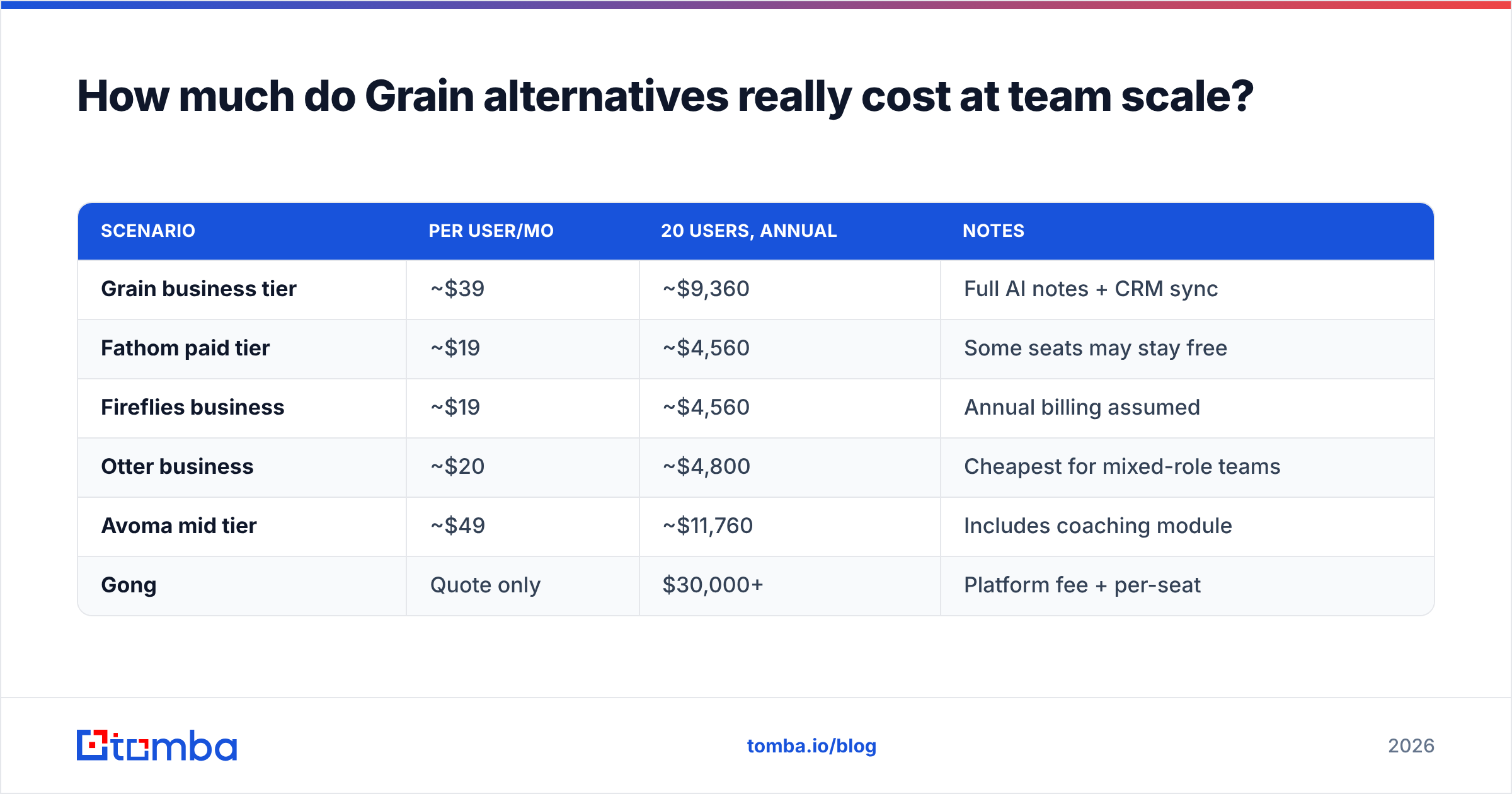
How much do Grain alternatives really cost at team scale?#
Per-seat math is where switching decisions get made. Here is annual cost for a 20-person team at list price, before annual discounts:
| Scenario | Per user/mo | 20 users, annual | Notes |
|---|---|---|---|
| Grain business tier | ~$39 | ~$9,360 | Full AI notes + CRM sync |
| Fathom paid tier | ~$19 | ~$4,560 | Some seats may stay free |
| Fireflies business | ~$19 | ~$4,560 | Annual billing assumed |
| Otter business | ~$20 | ~$4,800 | Cheapest for mixed-role teams |
| Avoma mid tier | ~$49 | ~$11,760 | Includes coaching module |
| Gong | Quote only | $30,000+ | Platform fee + per-seat |
Two things fall out of that table. First, the gap between the cheap tier and the deep tier is roughly 6x — so "which tier am I in" matters far more than "which vendor." Second, most teams over-license. Audit who actually opens a transcript in a given month before renewing; in most orgs it is under half the seat count.
Do meeting recorders solve your pipeline problem?#
No, and this is the most common misdiagnosis in the whole category.
Conversation intelligence is a post-booking tool. It makes the calls you already have more valuable: better notes, better follow-ups, better coaching, cleaner CRM hygiene. It has zero effect on how many qualified conversations enter the calendar next month.
Think of it like a restaurant installing a better kitchen camera system. The footage genuinely improves how the line cooks work — but it does not bring anyone through the front door. If your problem is "our calls are messy and follow-ups slip," a Grain alternative fixes it. If your problem is "we do not have enough calls," you need a top-of-funnel fix instead.
That top-of-funnel fix is contact data plus outreach. Concretely:
- Find the right people. A verified email finder turns a target account list into reachable decision-makers, using domain and name inputs rather than scraped lists of unknown age.
- Verify before you send. Bounce rates above 3% start damaging sender reputation. Running addresses through an email verifier before a campaign is the cheapest deliverability insurance available.
- Enrich what you already have. Half-complete CRM records are a silent tax. Contact enrichment fills in titles, companies, and social profiles so segmentation actually works.
- Then record the calls. Once meetings are booked, your Grain alternative earns its seat cost.
Teams that get this order wrong buy a $9,000/year recorder to analyze 40 calls a quarter, then wonder why revenue did not move.
Which Grain alternative should you pick?#
Match yourself to one of these five profiles:
- Solo founder or team under 5. Stay on a free plan. Fathom free, Fireflies free, or Grain free are all adequate. Do not pay yet.
- Team of 5–15, budget-sensitive. Fathom or Fireflies paid. You get 90% of Grain's value at roughly half the per-seat cost, and migration takes an afternoon.
- Team of 15–50 with a sales manager who coaches. Avoma. The bundled coaching layer is the reason to move, not the transcription.
- Enterprise with forecasting requirements. Gong or Clari Copilot. Budget accordingly and involve procurement early — data residency questions will come up.
- Multilingual or product-heavy org. tl;dv for language coverage, Sembly for task extraction, Read AI if the goal is fewer and better meetings.
One migration warning: transcripts and recordings rarely export cleanly between vendors. Before you cancel Grain, export the calls you actually reference — usually a few dozen — and archive them. Assume anything you leave behind is gone.
What is the fastest way to test a replacement?#
Run a two-week bake-off, not a demo tour:
- Pick two finalists and run them simultaneously on the same calls for ten business days.
- Rate three real transcripts per tool for accuracy, blind if you can.
- Check what actually landed in the CRM — open five deal records and look.
- Ask two reps which summaries they read voluntarily. Voluntary usage is the only adoption metric that predicts renewal.
- Total the real seat count you need, not the seat count sales suggests.
Whichever tool wins, remember what it is: an amplifier for conversations you already earned. The number of those conversations is set upstream, by how good your contact data is and how many of the right people you can reach.
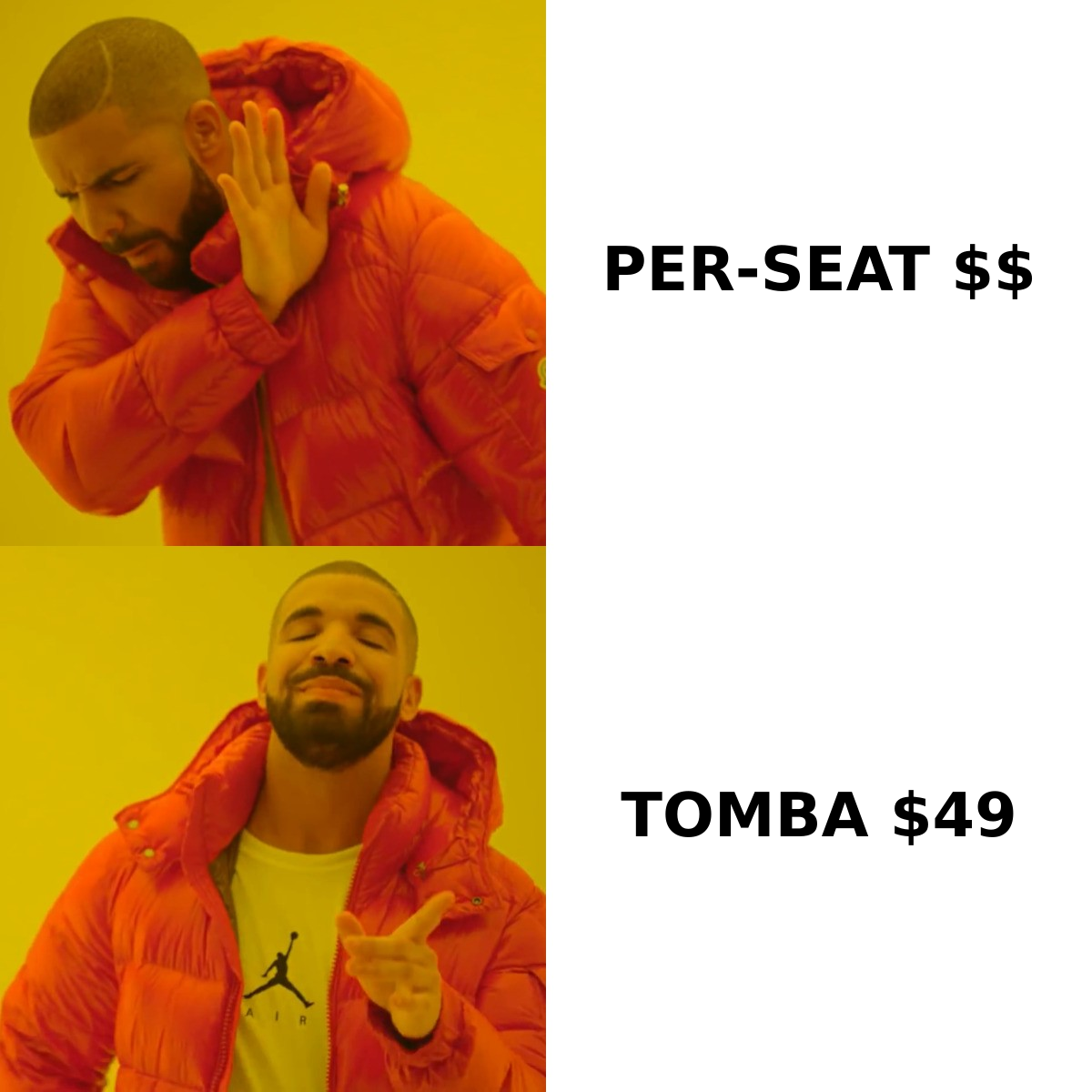
If your calendar is the constraint rather than your call notes, start there. Tomba Email Finder locates verified professional email addresses by domain, name, or company, with a free tier of 25 searches a month to test on your own target list — and paid plans starting at $49/mo. See the full breakdown on the Tomba pricing page, fill the calendar first, then let your meeting recorder do the job it is actually good at.
Related guides#
Ready to find emails that actually work?
Join 150,000+ professionals who stopped guessing and started sending. Free credits on signup — no credit card required.
Get the Tomba newsletter
Practical outbound tactics and product updates — once every two weeks.
About the author