GrowMeOrganic vs Sendigram: Which Outreach Tool Wins in 2026?
One sells you contacts and LinkedIn automation. The other sells you inboxes that survive Gmail. Here is the honest breakdown of where GrowMeOrganic and Sendigram actually compete, where they don't, and what you still need to buy separately.
GrowMeOrganic vs Sendigram is a matchup people run every week. It starts from a false premise. The two tools do not do the same job.
TL;DR
- GrowMeOrganic vs Sendigram gets framed as a duel, but each tool owns a different half of the same problem. GrowMeOrganic is a contact database with LinkedIn and email automation. Sendigram is cold email sending infrastructure: domains, mailboxes, warmup, rotation.
- If your bottleneck is "I have no one to email," GrowMeOrganic is the closer fit. If your bottleneck is "my email lands in spam," Sendigram is the closer fit.
- Neither one is a strong email verifier. That gap quietly kills most campaigns run on either platform.
- The pricing models differ in shape. GrowMeOrganic charges per credit and seat. Sendigram charges per mailbox. A raw monthly-price comparison misleads you until you normalize by volume.
- The realistic 2026 stack has three parts: a dedicated finder and verifier for data quality, one of these two tools for your weakest layer, and a sequencer your team already trusts.
What is GrowMeOrganic?#
GrowMeOrganic is an all-in-one B2B prospecting platform. The pitch is breadth. You get a contact database you can filter by industry, headcount, geography and job title. You also get a Chrome extension that scrapes LinkedIn and Sales Navigator lists, an email finder and verifier bolted onto the export flow, and a built-in drip sequencer. You can prospect and send from the same tab.
It grew out of the lifetime-deal era, and that still shapes the product. The feature list is wide. Credits are generous for the price. The interface assumes you want to go from "search" to "sequence running" without opening another tool. You can read the current feature set on growmeorganic.com.
What GrowMeOrganic is not is a deliverability company. It gives you a sending layer. It does not solve domain reputation, mailbox provisioning at scale, or the other infrastructure problems that show up once you send more than a few hundred emails a day.
What is Sendigram?#
Sendigram sits at the opposite end of the pipeline. It sells cold email infrastructure. You buy sending mailboxes. They arrive with SPF, DKIM and DMARC already configured. Warmup runs on its own. Volume spreads across many inboxes, so no single one gets torched. Details and current plans are on sendigram.com.
This category exists for one reason. Google and Microsoft tightened their bulk sender rules — authentication, low complaint rates, one-click unsubscribe. Blasting from two Google Workspace seats stopped working. Google's bulk sender guidelines are the reference document. If you cannot tick every box, your open rates are fiction.
Sendigram does not give you leads. It assumes you arrive with a clean, verified list and a sequencer. It makes that list reach the inbox.
How do GrowMeOrganic vs Sendigram compare head-to-head?#
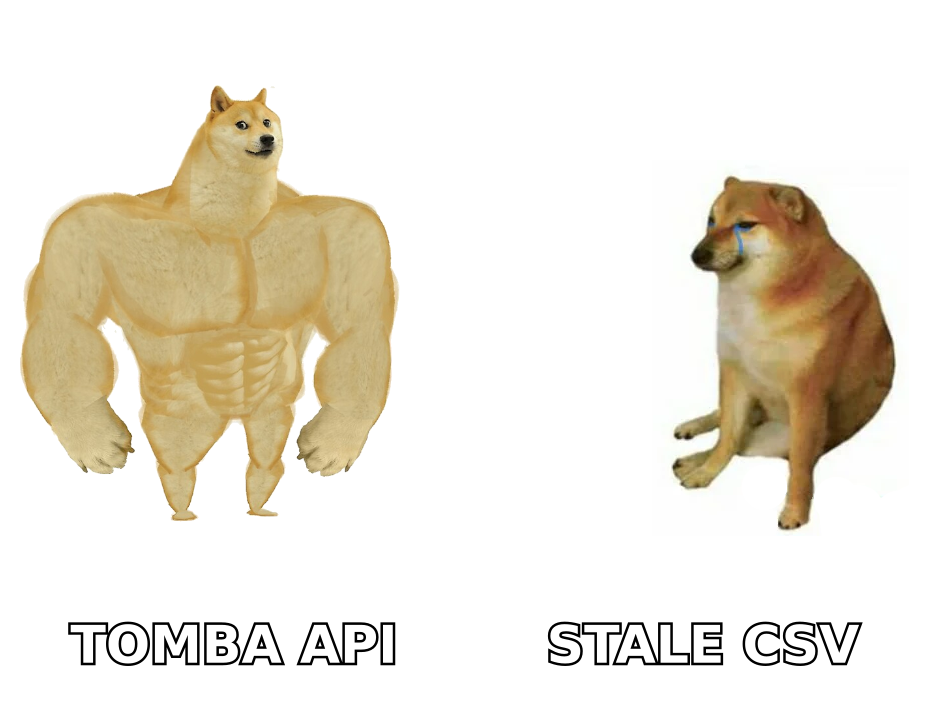
Here is the honest side-by-side. Note how few rows have a real winner. That is the finding.
| Dimension | GrowMeOrganic | Sendigram |
|---|---|---|
| Primary job | Find and sequence prospects | Deliver email that lands in the inbox |
| Contact database | Yes — filterable B2B database | No |
| LinkedIn scraping / automation | Yes, via Chrome extension | No |
| Email finding | Built in, bundled with credits | No |
| Email verification | Basic, bundled | No (assumes clean list) |
| Mailbox provisioning | No | Core product — bulk inboxes, ready-configured |
| SPF / DKIM / DMARC setup | Manual, your problem | Handled at provisioning |
| Automated warmup | Limited | Core product |
| Inbox rotation at volume | Not designed for it | Core product |
| Sequencer included | Yes | Depends on plan; often paired with an external sequencer |
| Pricing unit | Seats + credits | Per mailbox / per domain |
| Best for | Solo founders and small teams with no list | Teams already sending and hitting spam folders |
Read that table again and the framing changes. The question is not "which tool is better." It is "which half of my funnel is broken."
Which one actually has better data quality?#
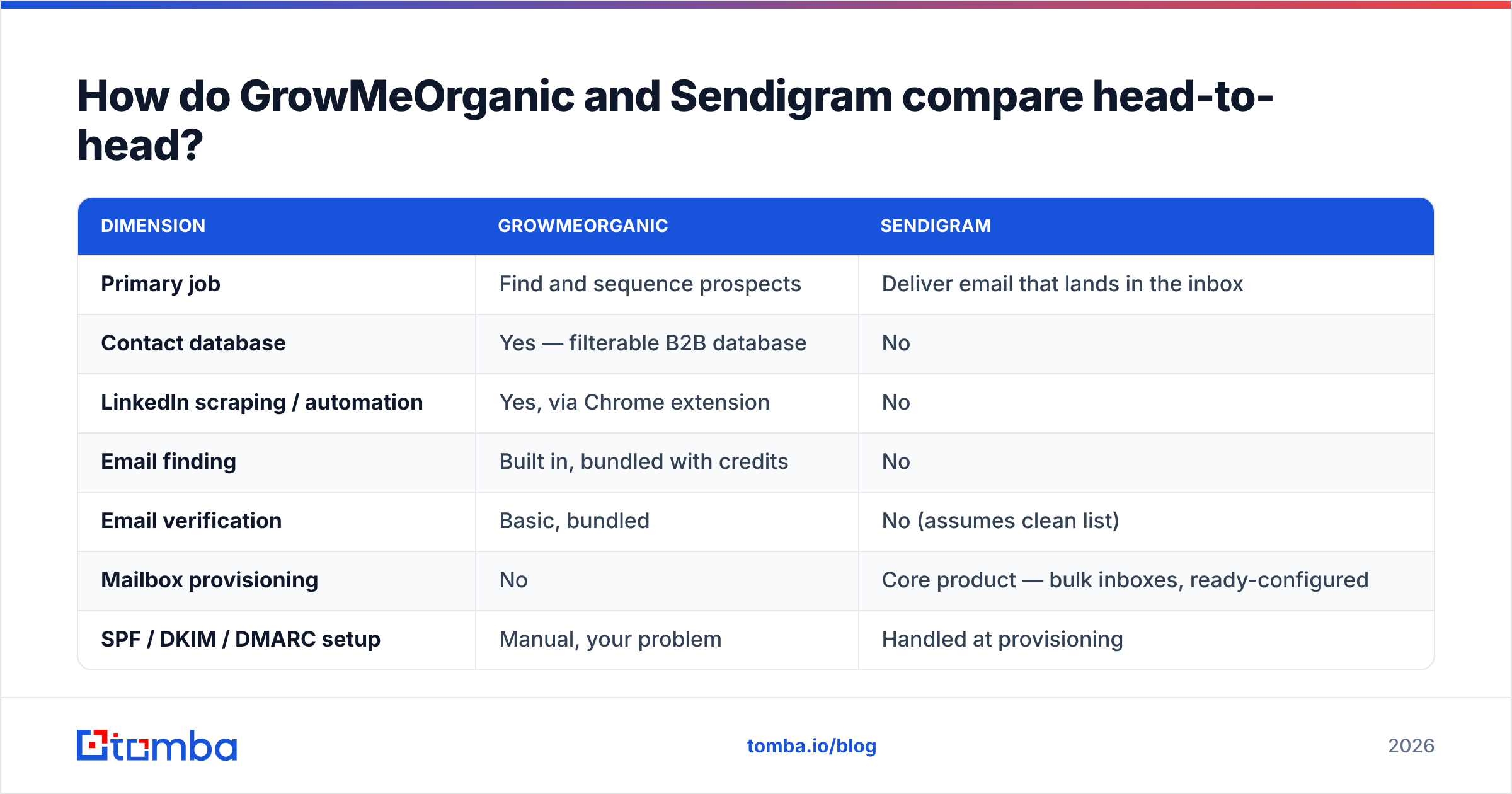
In the GrowMeOrganic vs Sendigram comparison, only one of them ships data, so GrowMeOrganic wins by default. That is a low bar. The useful question is whether its data is good enough to send against.
Aggregated B2B databases decay fast. The industry rule of thumb is that 2–3% of B2B contact records go stale every month. Over a year, that compounds to roughly a quarter or a third of a database being wrong. Job changes, domain migrations, acquisitions and role renames all chip away at it. G2 reviews across the prospecting software category show the same complaint for every database vendor: good coverage in the US mid-market, thinner coverage elsewhere, and a bounce rate that surprises people on their first send.
Here is what to check before you trust any bundled database. Start with the three that decide your bounce rate:
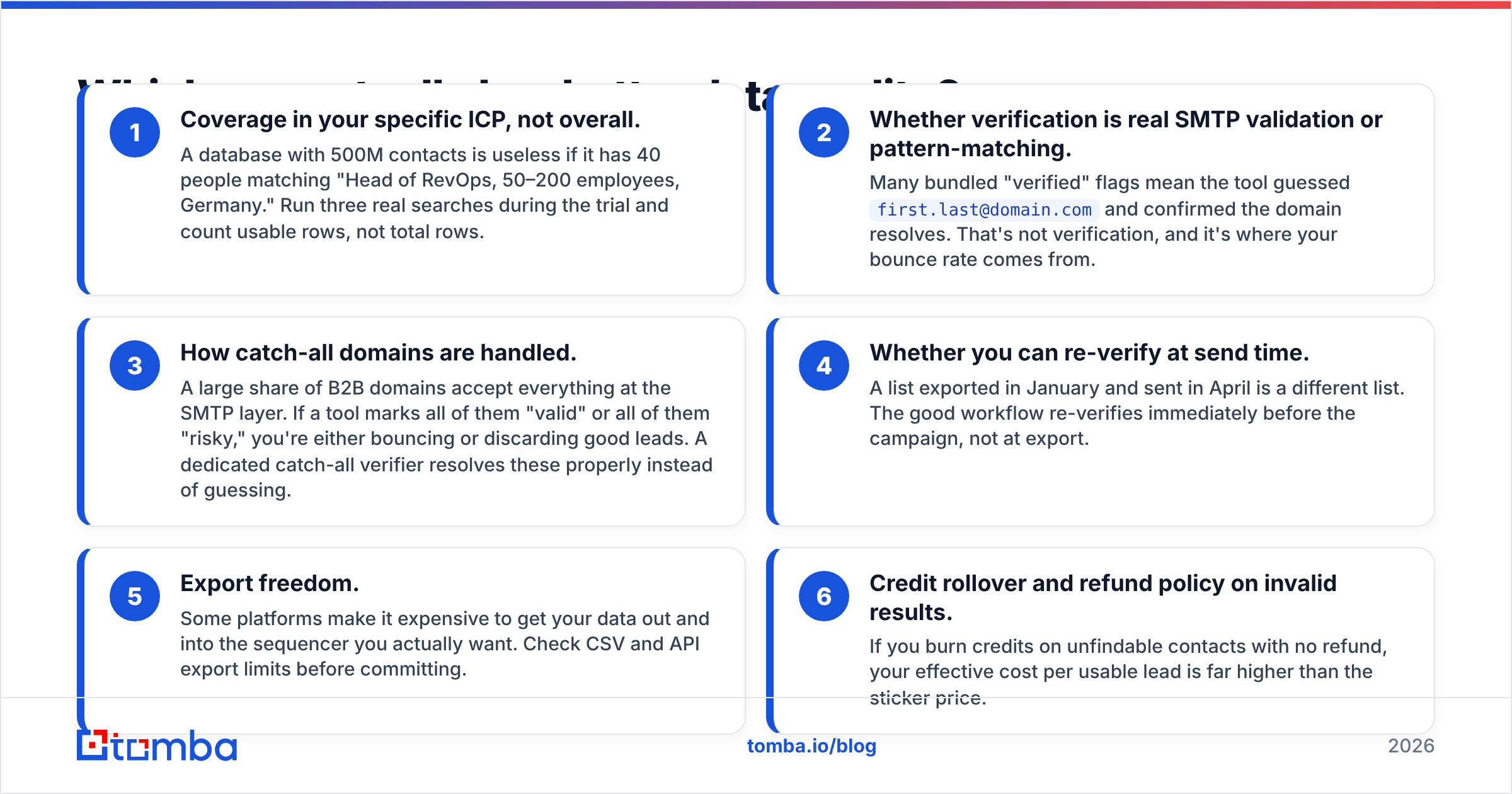
- Coverage in your ICP, not overall. A database with 500M contacts is useless if only 40 of them match "Head of RevOps, 50–200 employees, Germany." Run three real searches during the trial. Count usable rows, not total rows.
- Real SMTP validation, not pattern-matching. Many bundled "verified" flags only mean the tool guessed
first.last@domain.comand checked that the domain resolves. That is not verification. That is where your bounces come from. - How catch-all domains are handled. A large share of B2B domains accept every address at the SMTP layer. If a tool marks them all "valid" or all "risky," you either bounce or throw away good leads. A dedicated catch-all verifier resolves them properly instead of guessing.
Then check the three that decide your real cost:
- Re-verification at send time. A list exported in January and sent in April is a different list. Good workflows re-verify right before the campaign, not at export.
- Export freedom. Some platforms make it costly to move your data into the sequencer you actually want. Check CSV and API export limits first.
- Credit rollover and refunds. If unfindable contacts burn credits with no refund, your true cost per usable lead sits far above the sticker price.
This is why many teams run a dedicated email verifier next to whatever platform they bought. It protects the sending domain.
Which is better for deliverability?#
Sendigram, and it is not close. On deliverability, GrowMeOrganic vs Sendigram is barely a contest, because GrowMeOrganic is not really competing here.
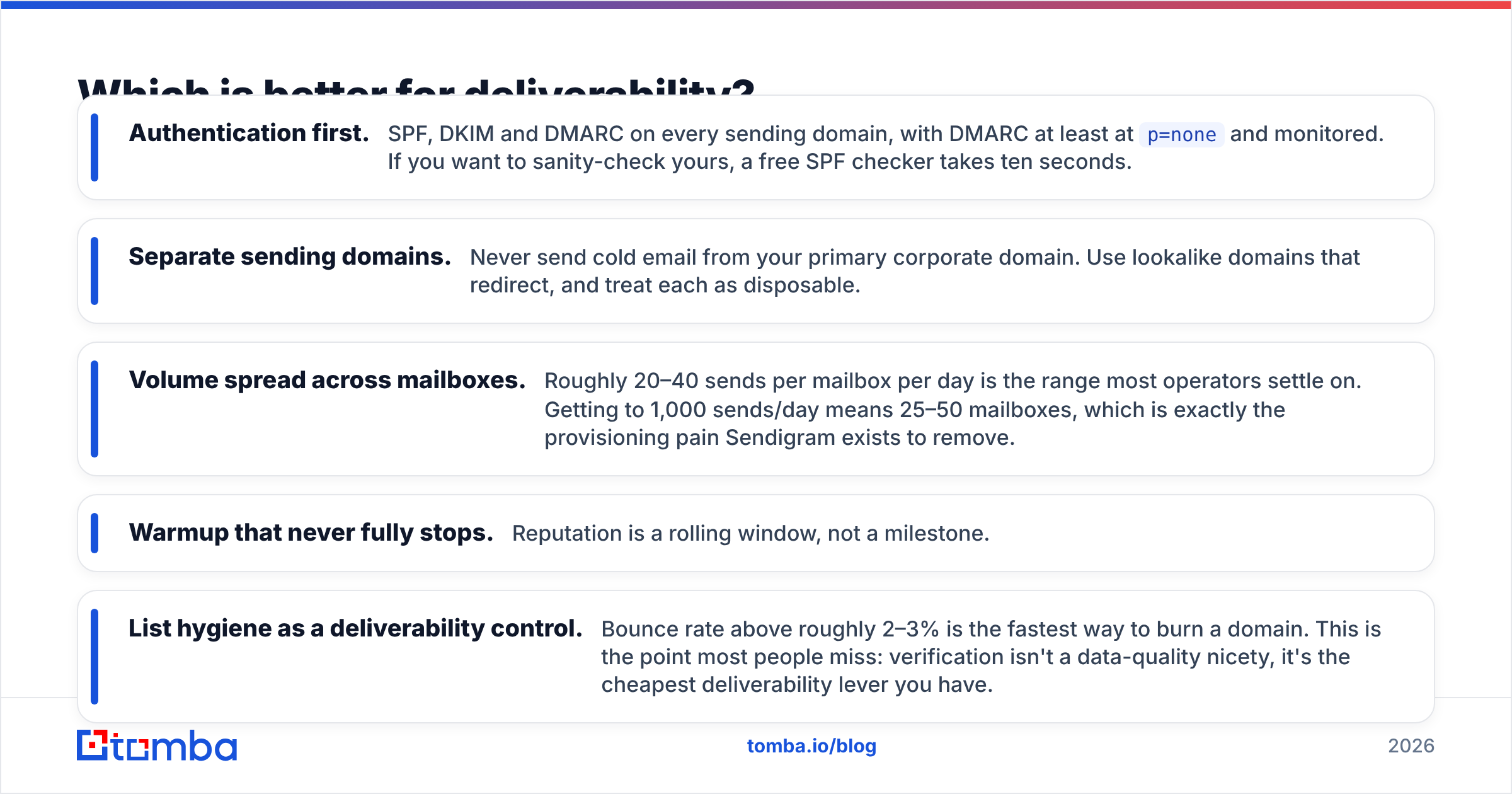
Deliverability in 2026 is an infrastructure problem, not a copywriting problem. Here is the order that matters:
- Authentication first. Set up SPF, DKIM and DMARC on every sending domain. Keep DMARC at
p=noneor stricter, and monitor it. A free SPF checker takes ten seconds. - Separate sending domains. Never send cold email from your main corporate domain. Use lookalike domains that redirect, and treat each one as disposable.
- Volume spread across mailboxes. Most operators settle on 20–40 sends per mailbox per day. Reaching 1,000 sends a day means 25–50 mailboxes. That provisioning pain is exactly what Sendigram removes.
- Warmup that never stops. Reputation is a rolling window, not a milestone.
- List hygiene as a deliverability control. A bounce rate above 2–3% is the fastest way to burn a domain. Verification is not a data-quality nicety. It is the cheapest deliverability lever you have.
That last point is why the two categories keep colliding. You can buy perfect infrastructure and still get filtered, because you fed it a stale list. You can buy a great database and still land in spam, because you send 400 emails a day from one Google Workspace seat.

What does each one actually cost?#
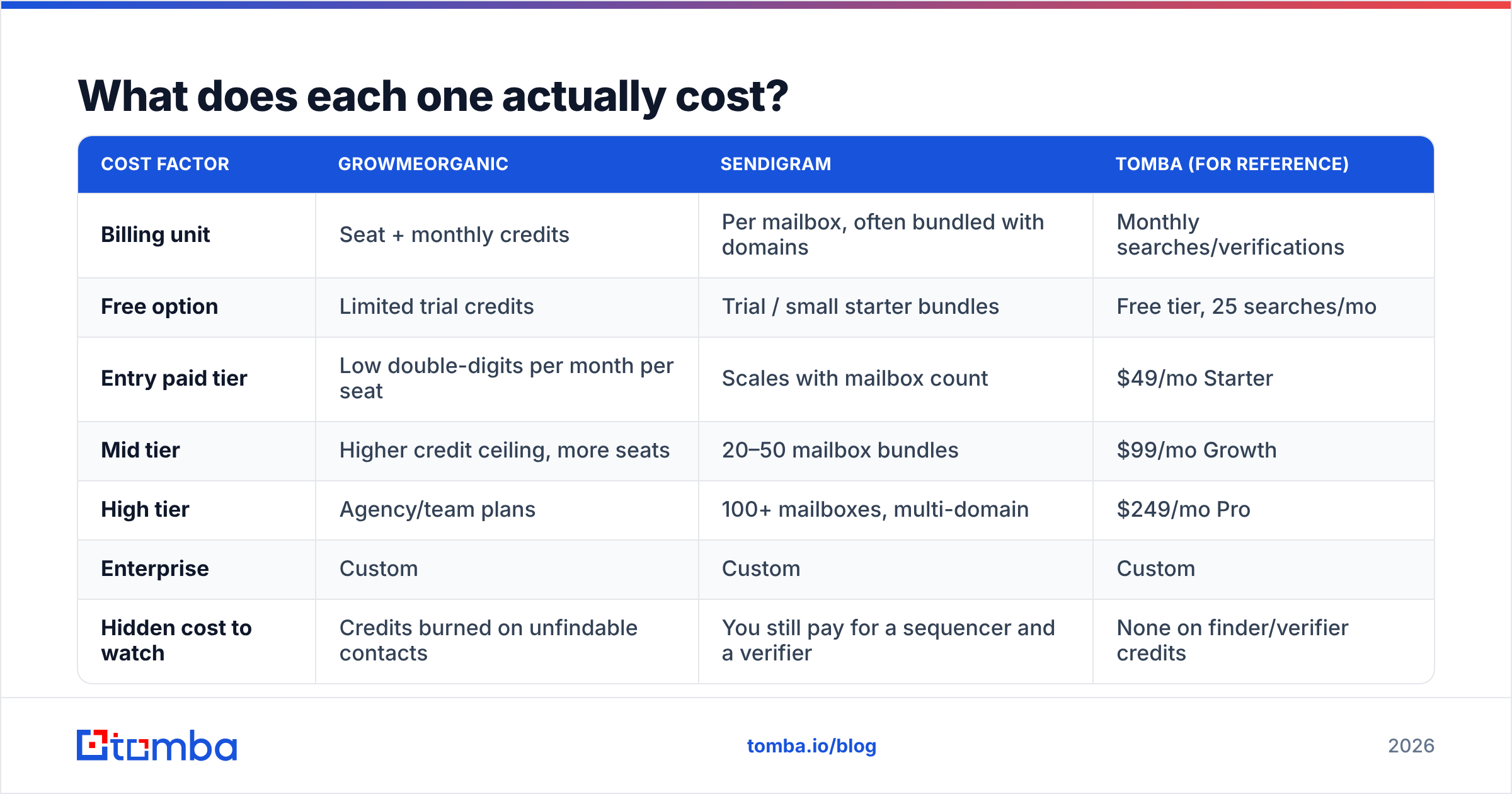
Pricing is where GrowMeOrganic vs Sendigram gets confusing, because the two bills are not shaped alike. Both vendors change prices often. Treat the shape as reliable and confirm the numbers on the vendor's own page before you buy.
| Cost factor | GrowMeOrganic | Sendigram | Tomba (for reference) |
|---|---|---|---|
| Billing unit | Seat + monthly credits | Per mailbox, often bundled with domains | Monthly searches/verifications |
| Free option | Limited trial credits | Trial / small starter bundles | Free tier, 25 searches/mo |
| Entry paid tier | Low double-digits per month per seat | Scales with mailbox count | $49/mo Starter |
| Mid tier | Higher credit ceiling, more seats | 20–50 mailbox bundles | $99/mo Growth |
| High tier | Agency/team plans | 100+ mailboxes, multi-domain | $249/mo Pro |
| Enterprise | Custom | Custom | Custom |
| Hidden cost to watch | Credits burned on unfindable contacts | You still pay for a sequencer and a verifier | None on finder/verifier credits |
Full Tomba pricing is public if you want the exact comparison line.
The trap is the same on both sides. The sticker price is not the cost per meeting booked. Run the math on cost per verified, deliverable, in-ICP contact. A cheap platform with 1,000 credits and 55% deliverable emails costs more than a pricier one at 95%.
Who should pick GrowMeOrganic?#
In a GrowMeOrganic vs Sendigram decision, pick GrowMeOrganic if you recognize yourself here:
- You are a founder or a one-to-three person sales team with no list and no data budget.
- Your motion is LinkedIn-first. You already live in Sales Navigator and want extraction plus follow-up in one place.
- Your volume is modest, under a few hundred emails a day, so infrastructure is not yet your constraint.
- You value having fewer subscriptions more than best-in-class in any single layer.
- You are willing to add a real verifier on top before you send.
It is a reasonable first platform. It stops being enough the moment volume or deliverability becomes the constraint.
Who should pick Sendigram?#
Pick Sendigram if:
- You already have a list source you trust: an SDR team, a scraper, an enrichment vendor, or a finder API.
- You are scaling past what two or three mailboxes can carry, and manual DNS setup eats a day per batch.
- Your open rates dropped and you confirmed it is a placement problem, not a subject-line problem. A quick spam checker run will tell you which.
- You run several clients or brands and need clean separation between sending identities.
- You already pay for a sequencer and do not need another one.
Do you still need a separate email finder either way?#
Yes. This is the practical takeaway from the whole comparison.
Sendigram does not do data at all. GrowMeOrganic does, but bundled finders inside all-in-one platforms are almost always the weakest module in the suite. The vendor's engineering attention goes to the flashier layers. You see the same pattern in reviews of every all-in-one prospecting tool.
A dedicated finder does a few things a bundled one usually does not. It runs live SMTP verification instead of guessing patterns. It reports a confidence score you can threshold on. It resolves catch-all domains instead of blanket-flagging them. And it exposes an API, so verification can run at send time rather than at export time.
That is the shape of a workflow that holds up:
- Source the target account list — database, scrape, intent signal, or inbound.
- Find the contact with a purpose-built email finder or domain search.
- Verify immediately before send, not at export.
- Push to your sequencer.
- Send through properly warmed, authenticated infrastructure.
GrowMeOrganic covers steps 1, 2 and 4 at moderate quality. Sendigram covers step 5 at high quality. Step 3 is where campaigns quietly die, and neither of them owns it well.
What's the verdict on GrowMeOrganic vs Sendigram?#
The GrowMeOrganic vs Sendigram verdict comes down to your bottleneck, because the two are not substitutes.
- No list, small volume, tight budget: GrowMeOrganic. Add a real verifier on top.
- Have a list, hitting spam, scaling volume: Sendigram. Keep your existing sequencer.
- Both problems at once: do not buy one platform and hope it solves both. Buy a finder and verifier you trust, buy sending infrastructure, and use the sequencer your team already knows. The stack costs a little more and performs a lot better.
- Agency running several clients: Sendigram's per-mailbox model maps cleanly to client separation. GrowMeOrganic's seat model does not.
Operators on both sides agree on one thing. The bounce rate is the leading indicator. Fix that first, and both tools get better.
Start with the data layer. Before you commit to either platform, run your next target list through the Tomba Email Finder. See what your real deliverable-contact rate looks like.
The free tier gives you 25 searches a month with no card. Starter is $49/mo. Every result comes back with an SMTP-verified status and a confidence score, so you know what you are sending to before you burn a domain finding out. If you run volume, the bulk email finder and the API handle list-level enrichment and pre-send re-verification in one pass.
Related guides#
Ready to find emails that actually work?
Join 150,000+ professionals who stopped guessing and started sending. Free credits on signup — no credit card required.
Get the Tomba newsletter
Practical outbound tactics and product updates — once every two weeks.
About the author