In Person Prospecting in 2026: A Complete Field Guide
Trade shows, walk-ins, and field visits are expensive and slow — and they still close deals cold email can't touch. Here's the real cost, the real conversion math, and the follow-up system that makes in person prospecting pay.
In person prospecting is back on the plan for a lot of B2B teams. It is also the fastest way to burn a budget. This guide covers what it costs, what it returns, and when to skip it.
TL;DR
- In person prospecting is not back because digital stopped working. It is back because digital got crowded. A 20-minute hallway chat still beats 20 emails on trust-heavy, high-ACV deals.
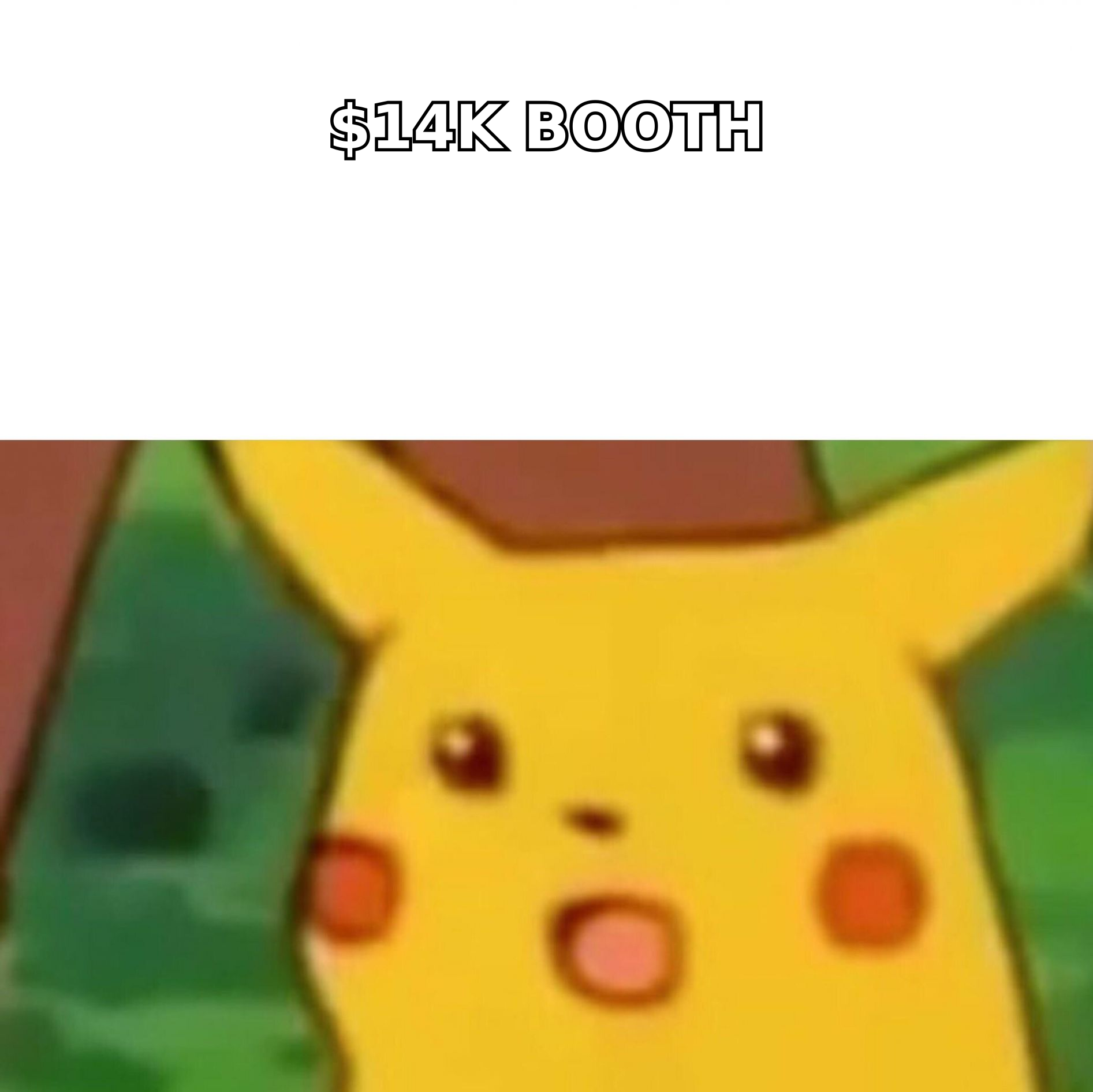
- The economics only work if you treat the event as lead capture, not lead closing. A booth with 300 scans and no enrichment pipeline is a $14K expense, not a channel.
- Cost per qualified opportunity at a mid-size trade show runs 5–15x higher than outbound email. That only pays above roughly $25K ACV, or in markets where buyers refuse cold contact.
- The best moment is the 48 hours after the event. Enrich, verify, and sequence the list while the badge is still in their bag.
- Blended beats pure. Use field contact for the first handshake. Use email and phone for the 6–9 touches that move the deal.
What is in person prospecting?#
In person prospecting is any top-of-funnel activity where you and the buyer share the same physical space. That covers trade show booths and floor-walking, industry conferences, local business walk-ins, door-to-door canvassing, hosted dinners and roundtables, user-group meetups, and the now common "we'll be in your city Thursday" field visit.
It sits opposite digital prospecting — cold email, LinkedIn, phone, paid ads — on almost every axis. It costs more per contact. It scales worse. It takes longer to run. It also builds trust faster and wins far more meetings, because a person who shook your hand feels obliged to reply. An inbox recipient does not.
The useful model: in person prospecting is not a channel, it's an accelerant. It cuts the trust-building phase of a deal from months to minutes. What it cannot do is create volume. So the teams that win in the field are the ones with a solid digital follow-up engine behind them.
Why is in person prospecting working again in 2026?#
Three things changed at once.
Inbox saturation hit a ceiling. Sequencing tools made it easy to send 3,000 personalized-looking emails a week, so everyone did. Reply rates on generic cold outbound have dropped across most B2B categories. Buyers now spot an AI-written first line in under two seconds.
Buying committees got bigger and more skeptical. Gartner's sales research has tracked the growth of B2B buying groups for years. More stakeholders means more consensus to build, and consensus is built faster in rooms than in threads.
Events recovered and then specialized. The generalist mega-conference lost ground to narrow, 200–800 person vertical events where the attendee list is your ICP. Those are the ones worth a booth.
None of this means email is dead. It means the first touch is where standing out got hard. Physical presence is one of the few first touches that still cuts through. The rest of the sequence — follow-up, multithreading, nurture — is still email and phone work.
Which in person prospecting channels actually convert?#
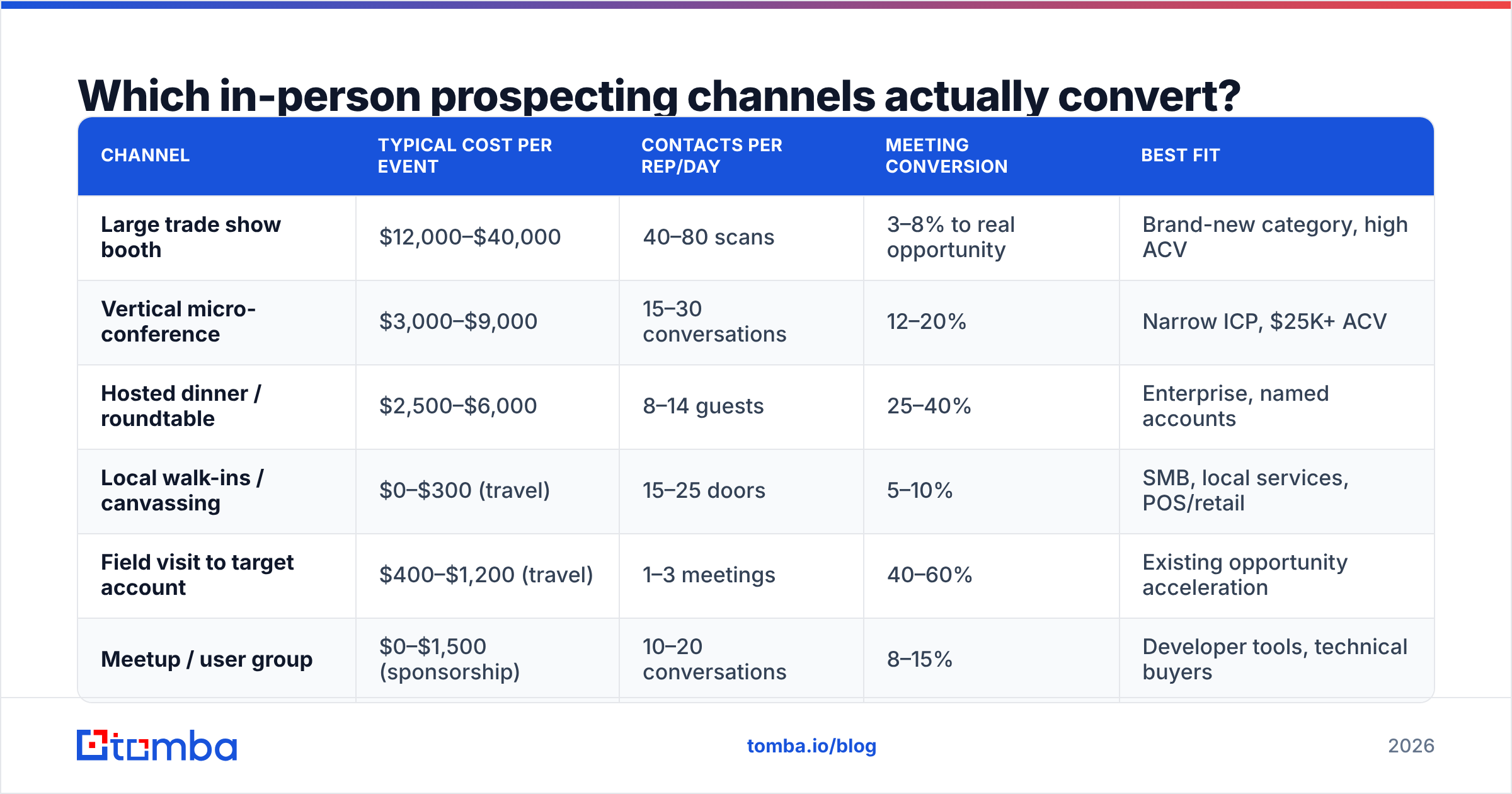
Not all field activity is equal. Here is how the main formats compare on the numbers a pipeline owner cares about.
| Channel | Typical cost per event | Contacts per rep/day | Meeting conversion | Best fit |
|---|---|---|---|---|
| Large trade show booth | $12,000–$40,000 | 40–80 scans | 3–8% to real opportunity | Brand-new category, high ACV |
| Vertical micro-conference | $3,000–$9,000 | 15–30 conversations | 12–20% | Narrow ICP, $25K+ ACV |
| Hosted dinner / roundtable | $2,500–$6,000 | 8–14 guests | 25–40% | Enterprise, named accounts |
| Local walk-ins / canvassing | $0–$300 (travel) | 15–25 doors | 5–10% | SMB, local services, POS/retail |
| Field visit to target account | $400–$1,200 (travel) | 1–3 meetings | 40–60% | Existing opportunity acceleration |
| Meetup / user group | $0–$1,500 (sponsorship) | 10–20 conversations | 8–15% | Developer tools, technical buyers |
Two patterns jump out. First, conversion rises as scale falls. The dinner converts ten times better than the booth and costs a fifth as much. Second, the only format that beats 40% is the one where a deal already exists. Field visits are not prospecting. They are closing with travel costs attached.
If your field budget is tight in 2026, most teams land on the same ranking after a year of testing: hosted roundtables first, vertical micro-conferences second, mega-booths last.
What does in person prospecting actually cost per opportunity?#
Most teams never run this math. Booth cost is a marketing line item, and pipeline is a sales metric, so nobody owns the division.
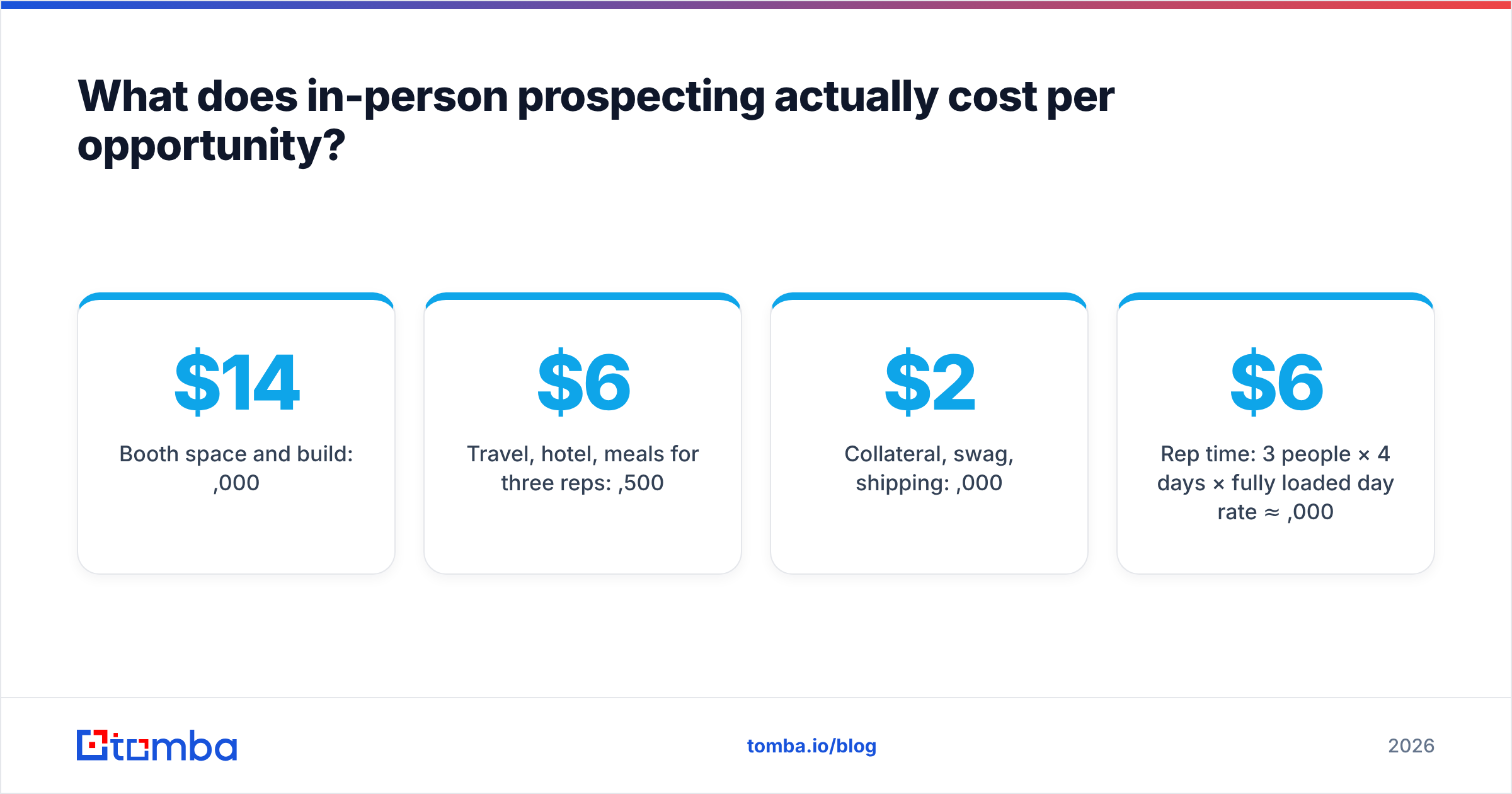
Run it anyway. Take a mid-size trade show:
- Booth space and build: $14,000
- Travel, hotel, meals for three reps: $6,500
- Collateral, swag, shipping: $2,000
- Rep time: 3 people × 4 days × fully loaded day rate ≈ $6,000
- Total: ~$28,500
Now the funnel. Say you capture 280 badge scans. Roughly 40% are competitors, students, job seekers, and people who wanted the tote bag. Call it 168 real prospects. Maybe 30% of those match your ICP well enough to sequence: 50 contacts. A strong post-event follow-up turns 20% of them into a first meeting: 10 meetings. At a 30% meeting-to-opportunity rate, that is 3 opportunities.
$28,500 ÷ 3 = $9,500 per opportunity.
Compare that to a solid outbound email motion. Fully loaded cost per opportunity — tooling, data, SDR time — usually lands between $600 and $1,800. The event is 5–15x more expensive.
That is not automatically a bad trade. If your ACV is $120,000 with a 25% win rate, three opportunities are worth $90,000 in expected revenue against $28,500 spent. If your ACV is $6,000, you just lit money on fire. Breakeven for most B2B teams sits north of $25K ACV. Below that, field prospecting should be a targeted supplement, not a program.
How do you run a trade show that doesn't waste the badge scans?#
The failure mode is always the same. Great conversations, bad data hygiene, no follow-up system. Here is the sequence that fixes it.
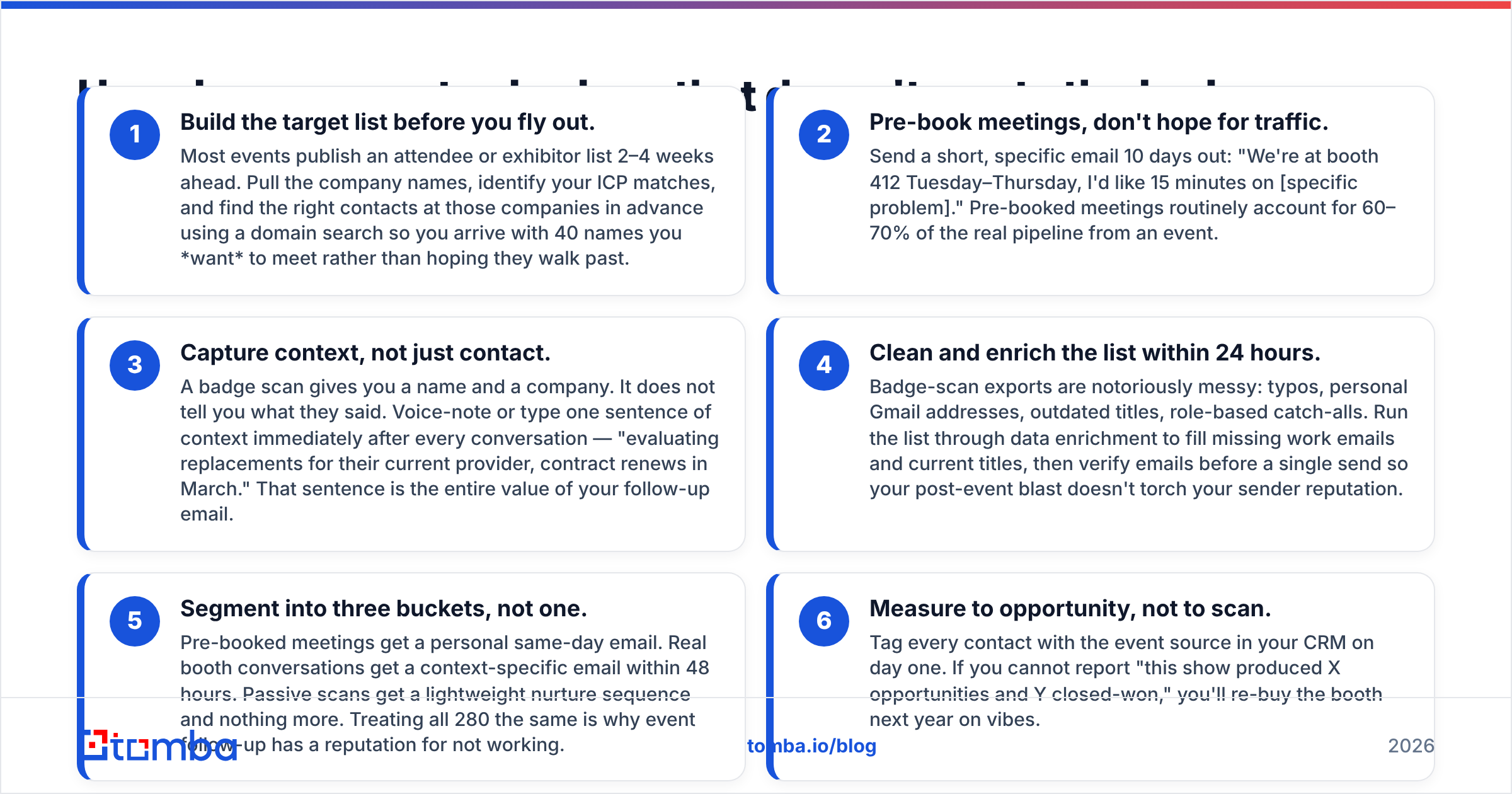
Build the target list before you fly out. Most events publish an attendee or exhibitor list 2–4 weeks ahead. Pull the company names, mark your ICP matches, and find the right contacts with a domain search. You arrive with 40 names you want to meet instead of hoping they walk past.
Pre-book meetings, don't hope for traffic. Send a short, specific email 10 days out: "We're at booth 412 Tuesday–Thursday, I'd like 15 minutes on [specific problem]." Pre-booked meetings often drive 60–70% of the real pipeline from an event.
Capture context, not just contact. A badge scan gives you a name and a company. It does not tell you what they said. Type one line of context right after every conversation — "evaluating a replacement, contract renews in March." That line is the whole value of your follow-up email.
Clean and enrich the list within 24 hours. Badge exports are messy: typos, personal Gmail addresses, stale titles, role-based catch-alls. Run the list through data enrichment for missing work emails and current titles. Then verify emails before you send, so the blast doesn't torch your sender reputation.
Segment into three buckets, not one. Pre-booked meetings get a personal same-day email. Real booth conversations get a context-specific email within 48 hours. Passive scans get a light nurture sequence and nothing more. Treating all 280 the same is why event follow-up has a bad name.
Measure to opportunity, not to scan. Tag every contact with the event source in your CRM on day one. If you cannot report "this show produced X opportunities and Y closed-won," you will re-buy the booth next year on vibes.
Is in person prospecting better than cold email?#
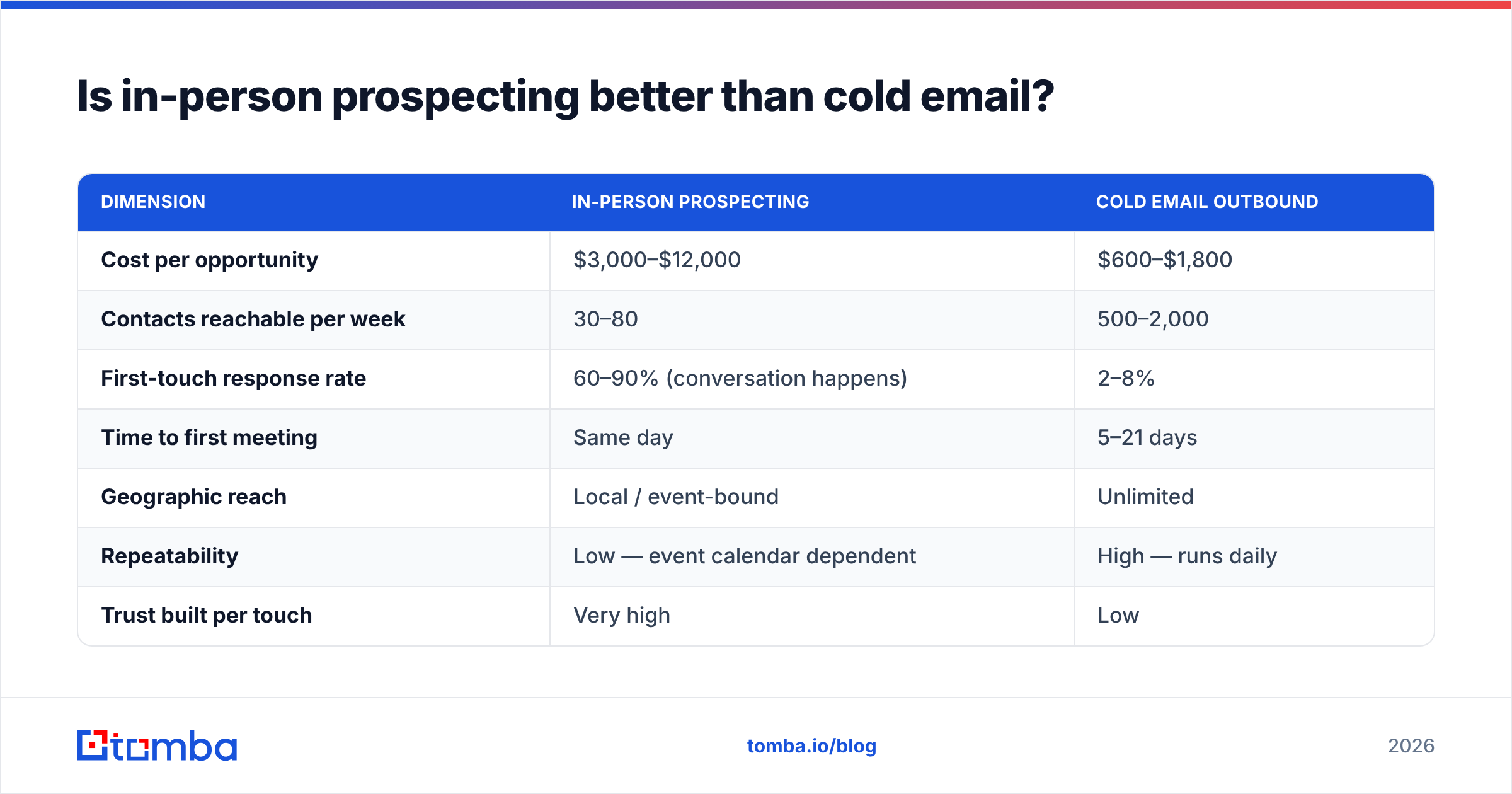
No, and the framing is wrong. They solve different problems. The honest comparison looks like this:
| Dimension | In person prospecting | Cold email outbound |
|---|---|---|
| Cost per opportunity | $3,000–$12,000 | $600–$1,800 |
| Contacts reachable per week | 30–80 | 500–2,000 |
| First-touch response rate | 60–90% (conversation happens) | 2–8% |
| Time to first meeting | Same day | 5–21 days |
| Geographic reach | Local / event-bound | Unlimited |
| Repeatability | Low — event calendar dependent | High — runs daily |
| Trust built per touch | Very high | Low |
| Best ACV range | $25K+ | $3K–$100K+ |
| Main failure mode | No follow-up system | Generic messaging, bad data |
The winning setup for most teams is not either/or. Use field contact to open the accounts email cannot open — buyers who are unreachable digitally, or categories that need a live demo. Then run everything after the handshake through email and phone. That is where the response rate economics actually work.
For volume on top of field activity, both bought and self-built lists have a place. Providers like BookYourData offer curated B2B contact lists when you need coverage in a segment fast. A self-serve email finder gives you precision on the named accounts you met in person. Most mature teams run both: bought breadth, found depth.
What are the most common in person prospecting mistakes?#
Pitching at the booth. The buyer is standing, distracted, and has 40 more booths to see. Your only job is to qualify in 90 seconds and book the real conversation for later.
Collecting without qualifying. A scan count is a vanity metric. Ten qualified conversations beat 200 scans. Every scan you chase that isn't ICP costs your SDR team real hours.
Waiting a week to follow up. Recall decays fast. A day-two follow-up references a conversation they remember. A day-nine follow-up references a stranger. If cleaning the list is the bottleneck, fix the tooling — bulk email finder and verification runs take minutes, not days.
Sending the same email to everyone. Event follow-up gets ignored because it reads like a mailing. "Great meeting you at [Event]!" looks like spam. "You mentioned your contract renews in March and that reporting was the sticking point" does not.
Skipping verification. Badge exports and hand-typed business cards produce a bounce rate that will damage your domain. HubSpot's sales blog and every deliverability guide say the same thing: clean before you send.
Treating the event as the campaign. The event is the first touch. The campaign is the six weeks after it. Budget your effort that way. If you spent $28,500 on the booth and two hours on follow-up, you optimized the wrong half.
How do you decide if in person prospecting is worth it for your team?#
Answer four questions honestly:
- Is your ACV above $25,000? Below that, field prospecting rarely pays back, outside dense local SMB territory where travel cost is near zero.
- Can your buyers be reached digitally at all? Some cannot — plant managers, clinicians, field operations, certain public-sector roles. That is the strongest case for going in person.
- Do you have a follow-up engine that already works? If your email follow-up is weak, the event will expose it, not fix it. Build the digital motion first.
- Can you attribute pipeline to the event? If not, you are buying brand awareness and calling it prospecting. Fine, but budget it as marketing.
If you answered yes to at least three, pick one vertical micro-conference and one hosted roundtable this quarter. Instrument them properly. Compare cost per opportunity against your existing outbound. One clean experiment beats a year of assumptions. For a neutral primer on how the event category is structured and priced, the trade fair overview on Wikipedia is a decent start.
Turn every handshake into a working contact record#
The gap between a good event and a good quarter is data. You come home with a spreadsheet of half-legible names, personal addresses, and stale titles. The clock is already running.
Use the Tomba Email Finder to turn that raw list into verified, current work emails you can sequence. Paste a name and a company domain, get the deliverable address back, in bulk or through the API, with verification built in. The free tier covers 25 searches a month if you want to test it on one event list. Paid plans start at $49/mo — a rounding error next to the booth invoice you already paid. Full Tomba pricing is public if you want to run the math first.
Shake the hand at the event. Let the follow-up system do the rest.
Related guides#
// get started
Find, verify and enrich your first contacts today
Start on the free plan with 25 searches a month, then scale when your team is ready.
Free plan · No credit card required · GDPR & CCPA
Get the Tomba newsletter
Product and data updates
// about the author