Invoca Pricing, Reviews, Pros and Cons: A 2026 Breakdown
Invoca never publishes a price tag. Here's what buyers actually pay in 2026, what G2 reviewers praise, where the platform frustrates teams, and when a lighter stack wins.
TL;DR
- Invoca does not publish pricing. Every deal is a custom quote, and buyers consistently report entry points in the $1,000–$3,000/month range with annual commitments, landing most contracts somewhere between $12K and $60K+ per year.
- The product is genuinely strong at what it does: AI call tracking and conversation intelligence for businesses where the phone call is the conversion event.
- Reviewers praise signal quality, ad-platform integrations, and the AI transcription/scoring. The recurring complaints are cost, contract rigidity, setup complexity, and a reporting UI with a learning curve.
- Invoca is a poor fit if you are an outbound B2B team. It measures inbound calls — it does not find you anyone to call.
- If your actual gap is contact data rather than call analytics, a $49/mo data layer plus a dialer solves the problem for roughly 2% of an Invoca contract.
What is Invoca and who is it actually for?#
Invoca is a revenue execution platform built around one idea: a huge share of high-consideration purchases still close over the phone, and most companies have no idea which ad, keyword, or landing page produced that call.
Invoca fixes that. It assigns dynamic phone numbers to traffic sources, attributes each inbound call back to the exact campaign that drove it, transcribes the conversation, and uses AI to score what happened — did the caller book? did the agent quote a price? was the lead qualified? That signal then flows back into Google Ads, Meta, Salesforce, or your CDP so you can optimize bidding on outcomes instead of raw call volume.
The companies that get real value from this share a profile:
- High-ticket, phone-closed sales. Auto dealerships, healthcare systems, home services, insurance carriers, financial services, telecom.
- Heavy paid media spend. If you are spending $100K+/month on ads and can't tie calls to keywords, you are burning a measurable percentage of it.
- Distributed call handling. Multiple locations, franchises, or outsourced contact centers where quality varies and nobody has visibility.
- A compliance surface. Regulated industries that need call recording, redaction, and consent handling built in rather than bolted on.
- Existing martech maturity. Invoca is a signal layer. It pays off when there's a CRM, a bid strategy, and an analyst to act on what it surfaces.
If you don't check at least three of those boxes, the price tag stops making sense fast. You can see the vendor's own positioning on invoca.com — it's aimed squarely at enterprise marketing teams, not at SDR pods.
How much does Invoca pricing actually cost in 2026?#
Here's the honest answer: nobody outside Invoca's sales team knows the rate card, because there isn't a public one.
Invoca runs quote-only pricing. You fill out a demo form, go through discovery, and receive a proposal scoped to your call volume, number of tracking numbers, seats, and which AI modules you turn on. That's standard for enterprise martech, but it makes budgeting genuinely hard — and it's the single most common gripe in Invoca reviews on G2.
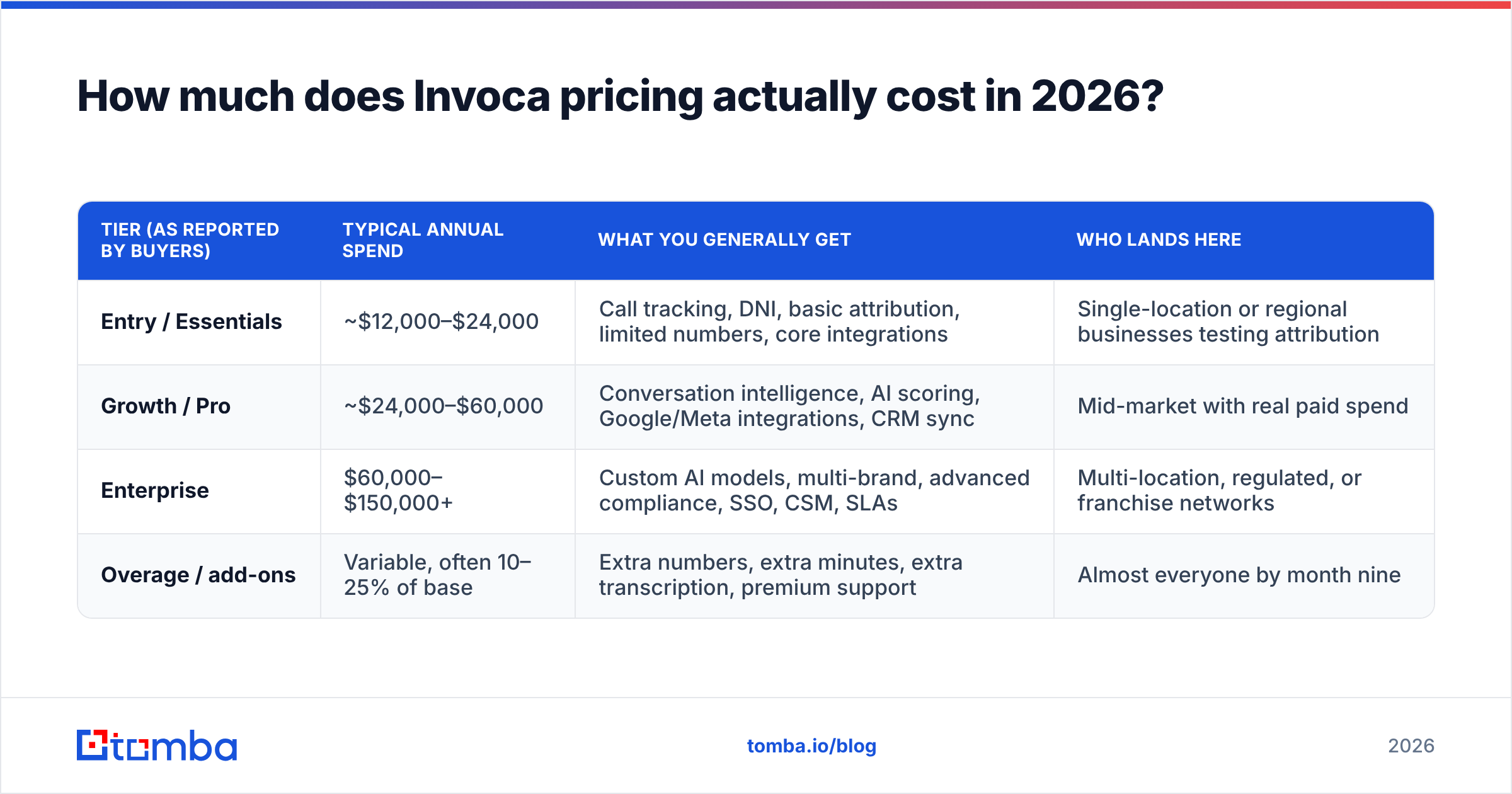
What buyers, resellers, and review-site respondents report clusters into a fairly consistent shape:
| Tier (as reported by buyers) | Typical annual spend | What you generally get | Who lands here |
|---|---|---|---|
| Entry / Essentials | ~$12,000–$24,000 | Call tracking, DNI, basic attribution, limited numbers, core integrations | Single-location or regional businesses testing attribution |
| Growth / Pro | ~$24,000–$60,000 | Conversation intelligence, AI scoring, Google/Meta integrations, CRM sync | Mid-market with real paid spend |
| Enterprise | $60,000–$150,000+ | Custom AI models, multi-brand, advanced compliance, SSO, CSM, SLAs | Multi-location, regulated, or franchise networks |
| Overage / add-ons | Variable, often 10–25% of base | Extra numbers, extra minutes, extra transcription, premium support | Almost everyone by month nine |
Treat those bands as directional, not quoted. They come from buyer-reported figures across review platforms and procurement chatter, not from a published price list. Your number will move based on minutes, numbers, and how many AI modules you switch on.
Three structural facts matter more than the headline figure:
- Annual contracts are the norm. Month-to-month is rarely offered. You are committing for twelve months minimum.
- Usage components exist. Tracking numbers and transcription minutes are metered. Growth in call volume means growth in invoice.
- There is no free tier and no self-serve signup. You cannot test it with a credit card on a Tuesday afternoon.
Sorry — that renders as: 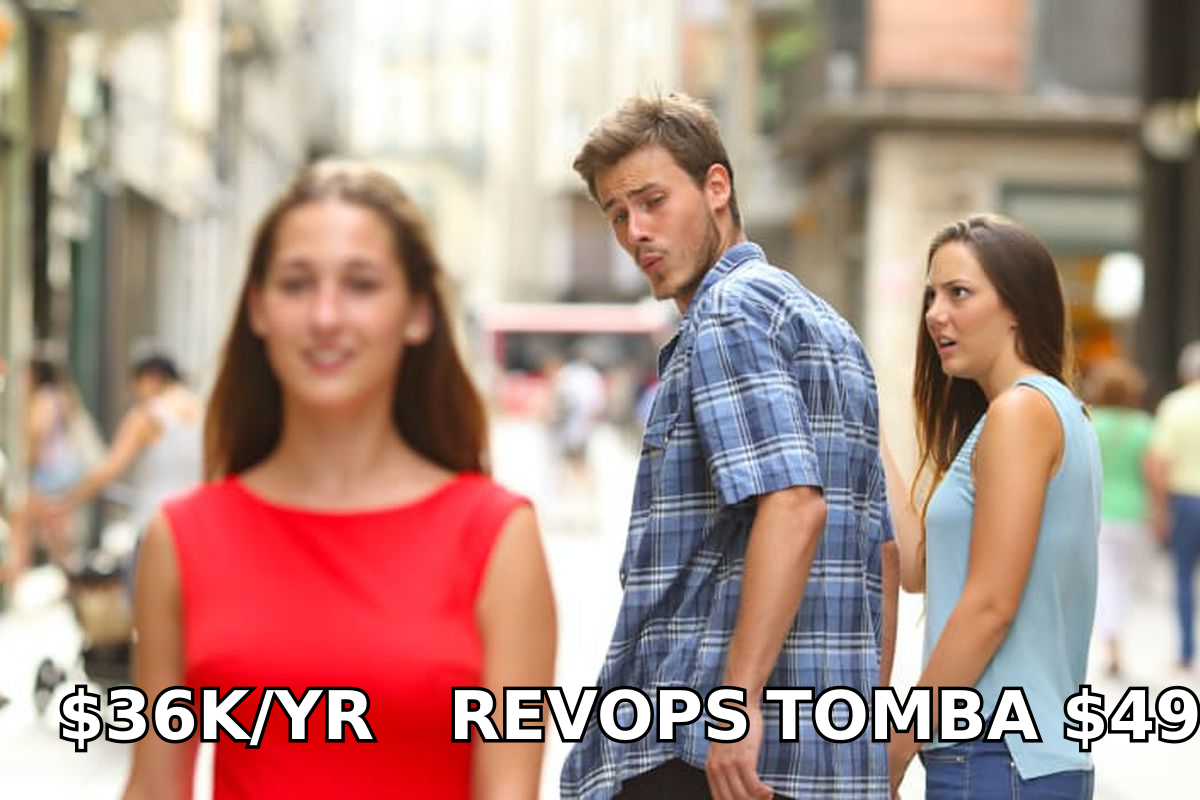
What do Invoca reviews say about the product itself?#
Strip out the pricing complaints and the reviews are broadly positive. Invoca carries strong ratings on both G2 and Capterra, and the praise is specific rather than generic.
What reviewers consistently like:
- Attribution accuracy. Dynamic number insertion works reliably, and session-level attribution holds up across multi-touch journeys. This is the core competency and it delivers.
- AI conversation scoring. Automatic detection of intent, outcome, objections, and agent behavior — without anyone listening to recordings manually. Teams describe this as the feature that changed how they coach.
- Ad platform integrations. Pushing call outcomes back into Google Ads and Meta as conversion events genuinely improves smart bidding. Several reviewers cite double-digit CPA improvements.
- Support quality. Named CSMs on larger contracts get repeated positive mentions.
What reviewers consistently criticize:
- Cost, relative to alternatives. The most frequent single complaint. Teams that only need call tracking feel they're paying for an intelligence suite they under-use.
- Contract inflexibility. Downgrading mid-term is difficult. Several reviewers describe being locked into a tier sized for a traffic peak that didn't repeat.
- Onboarding effort. Real implementations take weeks, not days — tag deployment, number pools, CRM field mapping, AI model training on your call taxonomy.
- Reporting UI depth. Powerful, but reviewers describe a learning curve and occasional difficulty building the exact custom view they want without support.
- Overkill for simple needs. If you want to know "did the call come from the Facebook ad," this is a cannon aimed at a mosquito.
Invoca pros and cons at a glance#
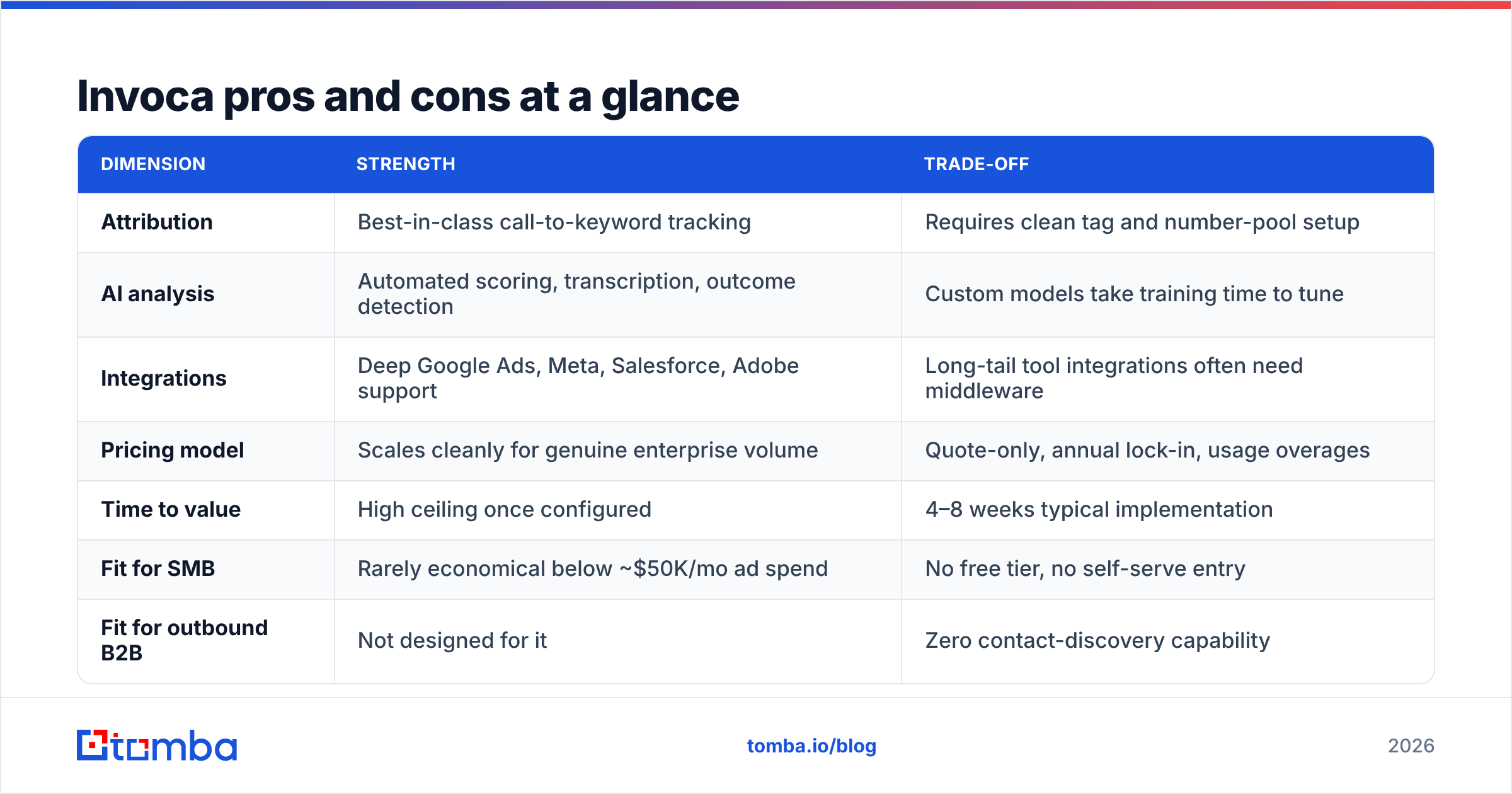
| Dimension | Strength | Trade-off |
|---|---|---|
| Attribution | Best-in-class call-to-keyword tracking | Requires clean tag and number-pool setup |
| AI analysis | Automated scoring, transcription, outcome detection | Custom models take training time to tune |
| Integrations | Deep Google Ads, Meta, Salesforce, Adobe support | Long-tail tool integrations often need middleware |
| Pricing model | Scales cleanly for genuine enterprise volume | Quote-only, annual lock-in, usage overages |
| Time to value | High ceiling once configured | 4–8 weeks typical implementation |
| Fit for SMB | Rarely economical below ~$50K/mo ad spend | No free tier, no self-serve entry |
| Fit for outbound B2B | Not designed for it | Zero contact-discovery capability |
What are the hidden costs of an Invoca contract?#
The quote is the beginning of the number, not the end. Budget for these before you sign:
- Implementation time. Even where Invoca doesn't charge a separate onboarding fee, you are spending internal hours — typically a marketing ops person part-time for a month or more.
- Usage overages. Tracking numbers and transcription minutes are metered. Seasonal businesses routinely blow through allowances in Q4 and discover the true cost in January.
- Analyst capacity. Conversation intelligence produces findings. Findings only convert into revenue when a human acts on them. Nobody quotes you for that headcount.
- Integration middleware. If your stack isn't Salesforce-and-Google-Ads shaped, expect Zapier, Make, or custom API work to close the gaps.
- The renewal ratchet. Multi-year deals often carry uplift clauses. Model year two and year three, not just year one.
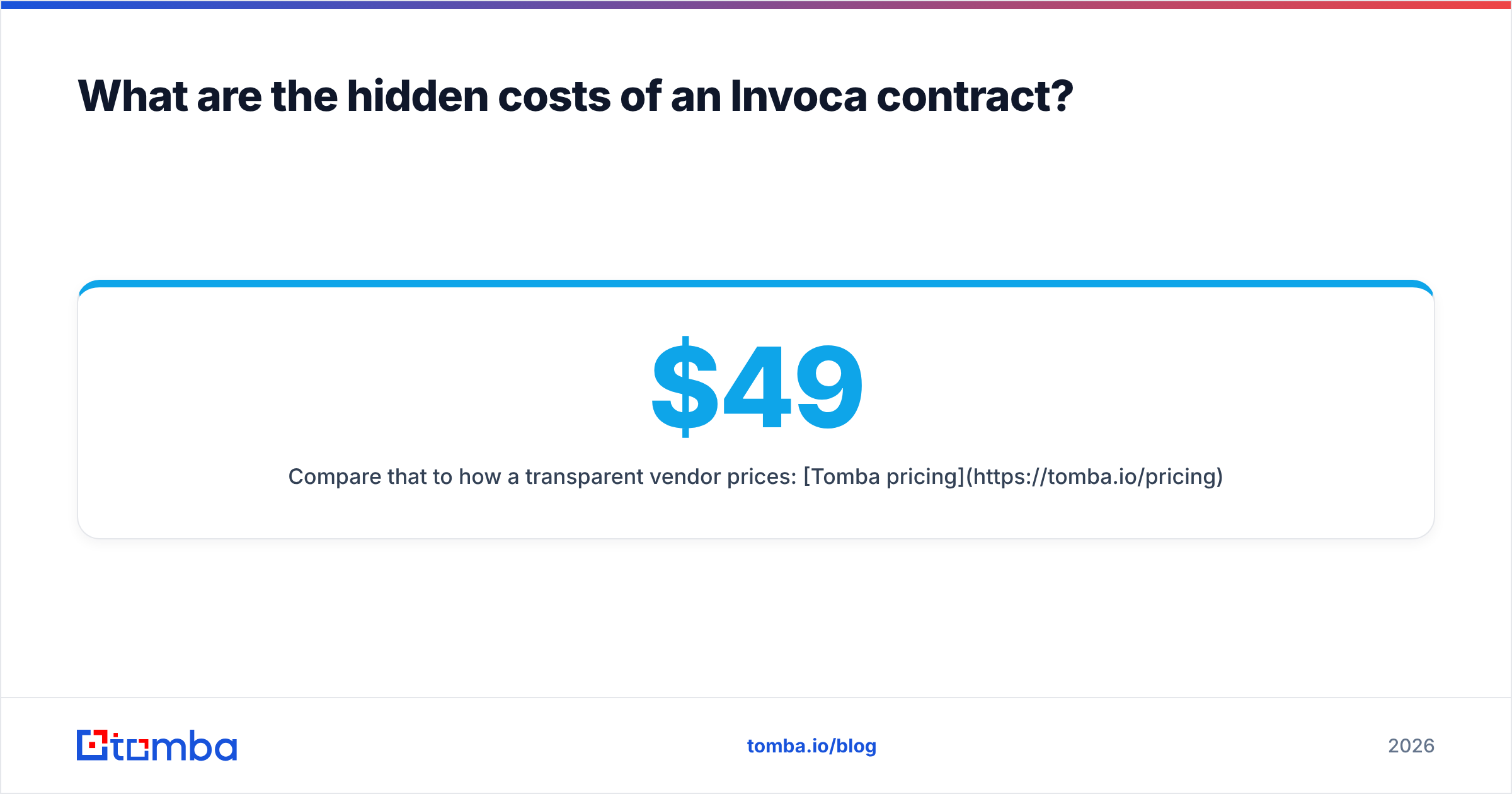
Compare that to how a transparent vendor prices: Tomba pricing is published, starts free at 25 searches/month, and runs $49/mo Starter, $99/mo Growth, $249/mo Pro. You know your cost before you talk to anybody. That difference isn't a feature — it's a procurement philosophy, and it determines how much of your quarter you spend in demo calls.
How does Invoca compare to the alternatives?#
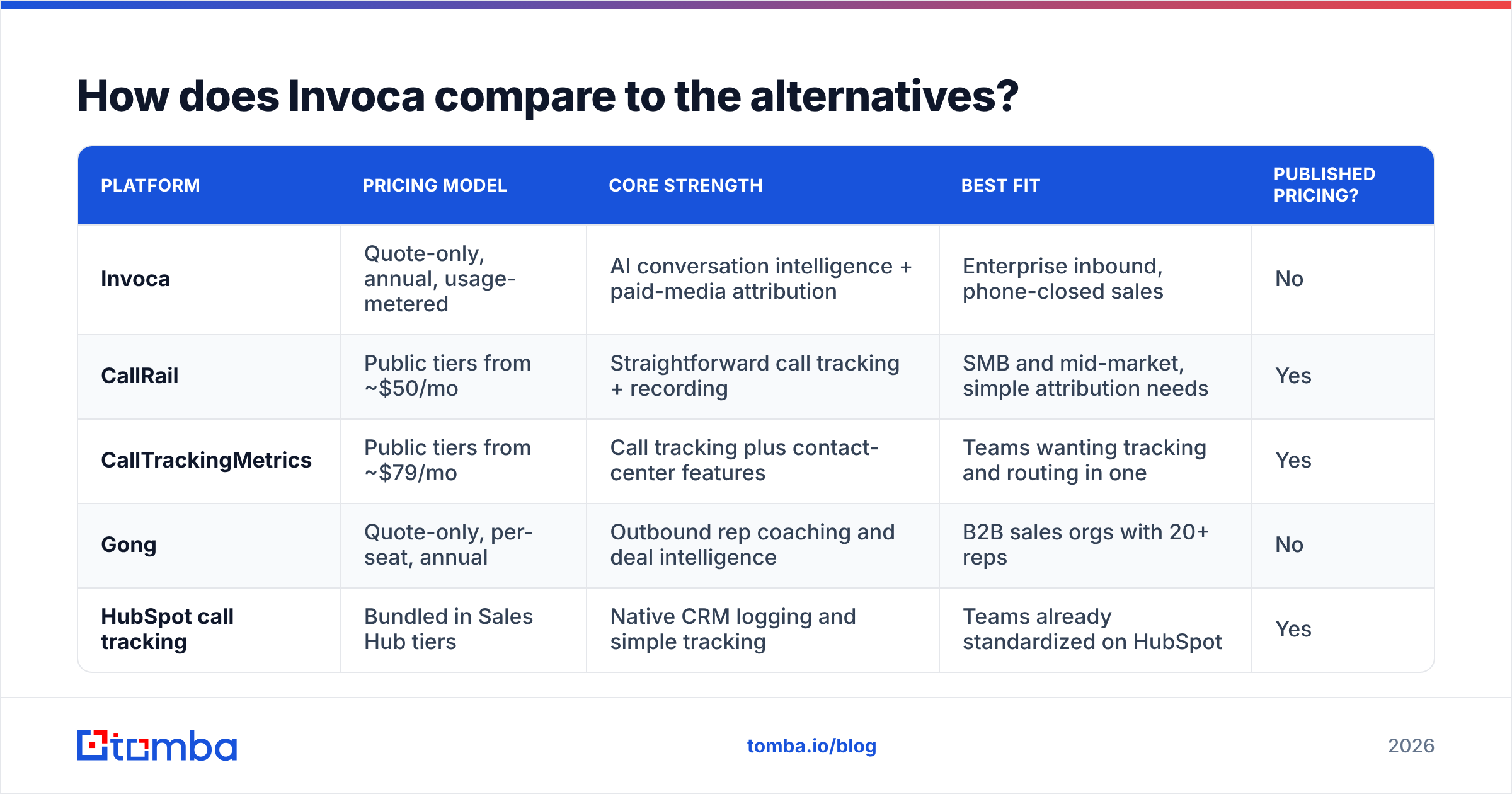
Invoca competes in two directions at once: against pure call-tracking tools that are cheaper, and against broader revenue-intelligence platforms that cover more of the funnel.
| Platform | Pricing model | Core strength | Best fit | Published pricing? |
|---|---|---|---|---|
| Invoca | Quote-only, annual, usage-metered | AI conversation intelligence + paid-media attribution | Enterprise inbound, phone-closed sales | No |
| CallRail | Public tiers from ~$50/mo | Straightforward call tracking + recording | SMB and mid-market, simple attribution needs | Yes |
| CallTrackingMetrics | Public tiers from ~$79/mo | Call tracking plus contact-center features | Teams wanting tracking and routing in one | Yes |
| Gong | Quote-only, per-seat, annual | Outbound rep coaching and deal intelligence | B2B sales orgs with 20+ reps | No |
| HubSpot call tracking | Bundled in Sales Hub tiers | Native CRM logging and simple tracking | Teams already standardized on HubSpot | Yes |
A few honest reads on that table:
- If you want call tracking, not conversation intelligence, CallRail wins on economics by a wide margin. Invoca's premium is the AI layer.
- If your problem is outbound rep performance, Invoca is the wrong shelf entirely. That's Gong's territory, and it's a different purchase.
- If you're already deep in HubSpot, their built-in call tracking may cover 70% of the need at zero marginal cost. Start there and prove the gap before you upgrade.
Is Invoca worth it in 2026?#
Yes — if inbound phone calls are your primary revenue channel and you spend serious money on ads. No, in almost every other case.
Run this test before you take the demo. Multiply your monthly inbound call volume by your average deal value by your close rate. If misattributing 20% of those calls costs you more per year than the contract, the math works. A dealership group doing 4,000 calls a month at a $3,000 gross per unit clears that bar easily. A 12-person B2B SaaS company doing 60 inbound calls a month does not.
Three clean disqualifiers:
- Your sales cycle is email- and demo-driven. Call attribution solves a problem you don't have.
- Your paid media spend is under roughly $30K/month. The optimization lift won't cover the license.
- You're outbound-first. Invoca measures calls that come to you. If the phone isn't ringing, it has nothing to analyze.
That last one is where most of the mismatched Invoca evaluations come from. Teams describe a "pipeline problem," get routed to a conversation intelligence demo, and sign a five-figure contract that measures a funnel that isn't full yet.
What should you buy instead if you're outbound-first?#
Fix the input before you instrument the output.
If your pipeline gap is "we don't have enough qualified contacts to reach," the entire Invoca category is downstream of your actual problem. The stack that fixes it costs an order of magnitude less:
- Contact discovery. Build the list from company domains rather than buying a stale database dump. A domain search returns the verified work emails at any target account, and a phone finder surfaces direct dials so your reps aren't routing through switchboards.
- Verification before send. Bounces wreck sender reputation and waste dialer hours. Run everything through an email verifier first.
- Enrichment for routing and scoring. Contact enrichment adds firmographics and role data so territory assignment and lead scoring actually work.
- A dialer and a sequencer. Pick whatever fits your CRM. This is a commodity layer.
That's a full outbound motion for a few hundred dollars a month, with published prices and no procurement cycle. Layer conversation intelligence on top later — when you have enough call volume that analyzing it becomes the bottleneck.
Final verdict#
Invoca is a well-built, well-reviewed platform with a legitimate moat in AI call attribution, sold at enterprise prices behind a quote-only wall. For a multi-location, phone-closed, paid-media-heavy business, it earns its contract. For everybody else, it is an expensive answer to a question they haven't reached yet.
The buying mistake isn't choosing Invoca — it's choosing it before your pipeline justifies it.
If the real gap is contacts rather than call analytics, start where the cost curve is friendliest. Tomba's Email Finder gets you verified, deliverable contacts at target accounts on a free tier of 25 searches/month, with paid plans from $49/mo and no annual lock-in. Build the pipeline first. Instrument it second.
Related guides#
// get started
Find, verify and enrich your first contacts today
Start on the free plan with 25 searches a month, then scale when your team is ready.
Free plan · No credit card required · GDPR & CCPA
// about the author