Is B2B Cold Calling Still Effective in 2026? Real Data
Cold calling isn't dead, but the version that worked in 2015 is. Here's what connect rates, meeting rates, and cost-per-meeting actually look like in 2026 — and when the phone still beats email.
TL;DR
- Cold calling still works in 2026, but the economics changed: connect rates on direct dials hover around 8-12%, while switchboard-only lists fall under 2%. Your list quality now determines more of the outcome than your pitch does.
- The phone beats email on two specific jobs: booking meetings with senior buyers who ignore inboxes, and disqualifying bad-fit accounts fast. It loses badly on volume-driven top-of-funnel.
- Cost per meeting is the honest metric. A cold call meeting typically costs 3-6x an email meeting — worth it for $50k+ ACV, rarely worth it below $10k.
- Multichannel beats phone-only by a wide margin. Calls that follow an email, a LinkedIn view, or a website visit connect and convert measurably better than calls into a cold account.
- The fastest fix for most teams is not a new script. It's replacing generic company switchboards with verified direct dials and a clean reason to call.
Is B2B Cold Calling Still Effective in 2026?#
Yes — for a narrower set of deals than most sales leaders assume, and only when the data feeding the dialer is good.
The "cold calling is dead" claim has been recycled every year since roughly 2012, usually by someone selling an email tool. The "cold calling is very much alive" claim gets recycled just as often, usually by someone selling a dialer. Both are marketing positions, not analysis.
Here's the analyst's version. Cold calling in 2026 is a high-cost, high-signal channel. Every dial costs a rep 3-5 minutes of fully loaded time. In exchange you get something no email sequence gives you: a live human response, in real time, with tone, objections, and context attached. Whether that trade is good depends entirely on what a closed deal is worth to you and how accurate your phone data is.
The teams still getting results from the phone in 2026 share three traits:
- They call people, not companies. Direct dials and mobile numbers, sourced and validated before the dial — not a main line and a hopeful "can you put me through to whoever handles procurement?"
- They call warm-ish, not cold. The call follows a trigger: a funding round, a job change, a competitor switch, a website visit, a downloaded report.
- They measure cost per meeting, not dials per day. Activity metrics reward the wrong behavior and hide the fact that half the list is unreachable.
Everyone else is running a 2015 playbook against a 2026 buyer who has caller ID, spam labeling on their carrier, and a calendar with no gaps.
What Do the Actual Cold Calling Numbers Look Like?#
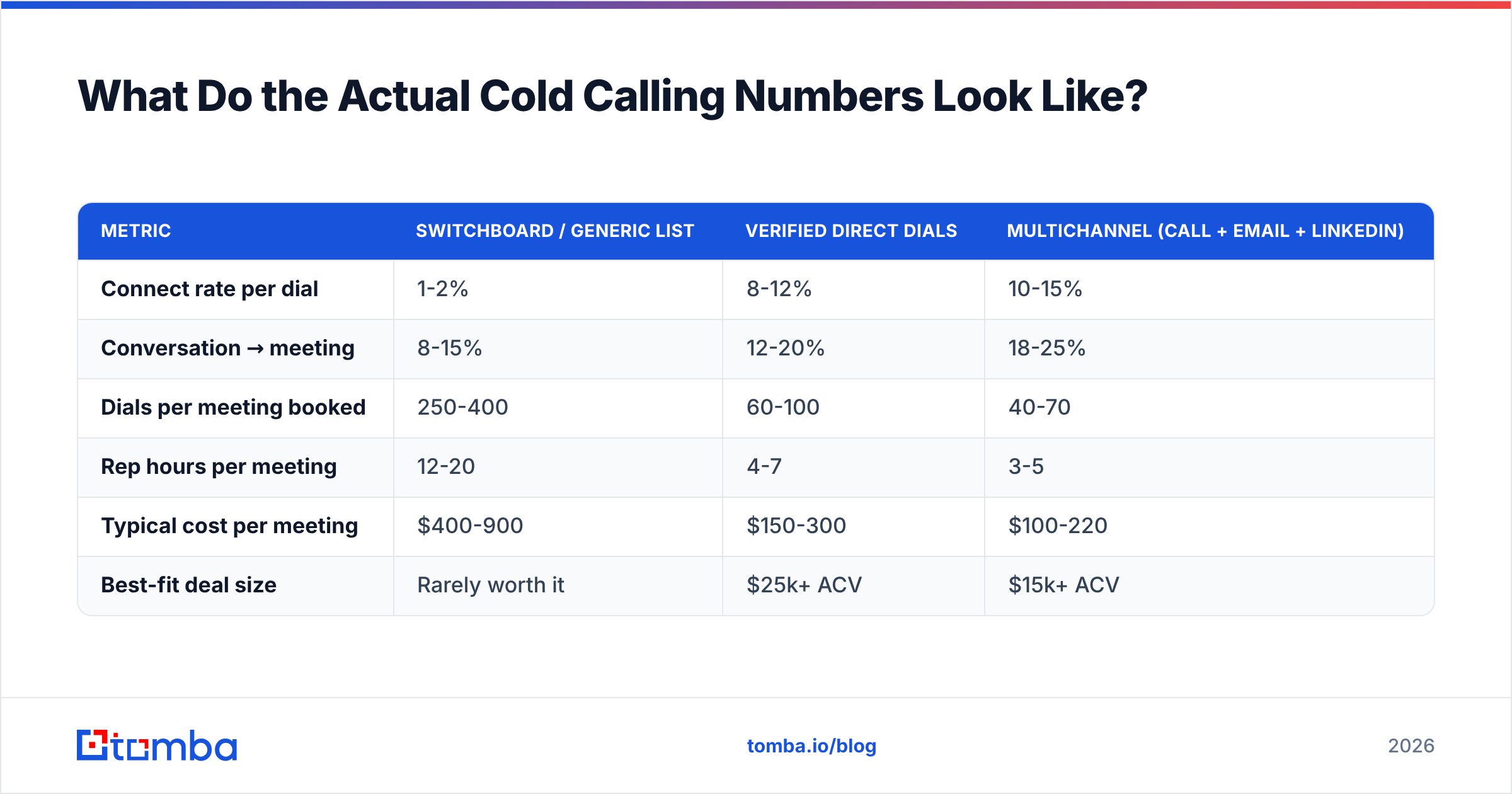
Benchmarks vary wildly by industry and seniority, so treat these as planning ranges, not laws. The pattern across teams that track honestly looks roughly like this:
| Metric | Switchboard / generic list | Verified direct dials | Multichannel (call + email + LinkedIn) |
|---|---|---|---|
| Connect rate per dial | 1-2% | 8-12% | 10-15% |
| Conversation → meeting | 8-15% | 12-20% | 18-25% |
| Dials per meeting booked | 250-400 | 60-100 | 40-70 |
| Rep hours per meeting | 12-20 | 4-7 | 3-5 |
| Typical cost per meeting | $400-900 | $150-300 | $100-220 |
| Best-fit deal size | Rarely worth it | $25k+ ACV | $15k+ ACV |
Two things jump out of that table.
First, the gap between column one and column two has almost nothing to do with selling skill. It's a data problem. The same rep, the same script, the same hours — different phone numbers. That's why "our reps need better objection handling" is usually the wrong diagnosis when call metrics are bad.
Second, nobody's best column is phone-only. The multichannel column wins on every row. The question was never "calls or emails." It's "what sequence of touches gets a specific person to give you eight minutes."
Industry research from analyst firms consistently points the same direction — Gartner's sales research has tracked the shift toward buyers completing most of their evaluation before any vendor conversation, which means a cold call landing at the wrong moment isn't just ignored, it's actively resented. Timing has become as important as targeting.
When Does Cold Calling Beat Cold Email?#
Pick the channel by job, not by preference. Here's the honest split:
Cold calling wins when:
- The deal is large and complex. Above roughly $50k ACV, the cost of 20 dials is noise against the pipeline value. Below $10k, the math almost never works.
- Your buyer is senior and email-saturated. VPs and C-suite contacts in crowded categories delete 200 cold emails a week but still answer unknown mobile numbers more often than you'd expect — particularly outside 9-5 blocks.
- You need to disqualify fast. A 90-second call can kill an account that would have absorbed six weeks of email sequencing. That's real savings.
- The category is unfamiliar. New product categories need explanation. Email is a terrible medium for "let me explain a thing you've never heard of."
- You have a time-sensitive trigger. A funding announcement, a compliance deadline, a competitor outage — these decay fast and the phone is the only channel that moves at their speed.
Cold email wins when:
- You need volume. One rep can touch 400 prospects a day by email and 60 by phone. For wide-net awareness, that's decisive.
- The buyer needs artifacts. Pricing, docs, case studies, a demo link — all of it lands better in writing.
- Your ICP spans time zones. Email is asynchronous; calls are not.
- Budgets are thin. Email infrastructure costs a fraction of loaded rep hours, provided your email deliverability is actually healthy.
- You're testing messaging. A/B testing a call script across 50 conversations is statistically useless. Across 5,000 emails, it isn't.
Most teams should run both, sequenced. The standard pattern that still performs: email touch, LinkedIn view or connection, call referencing the email, second email referencing the call attempt. The call converts better because it isn't actually cold anymore — the name is familiar.
Why Do Most Cold Calling Programs Fail?#
Not because of the script. Four causes account for the overwhelming majority of dead phone programs.
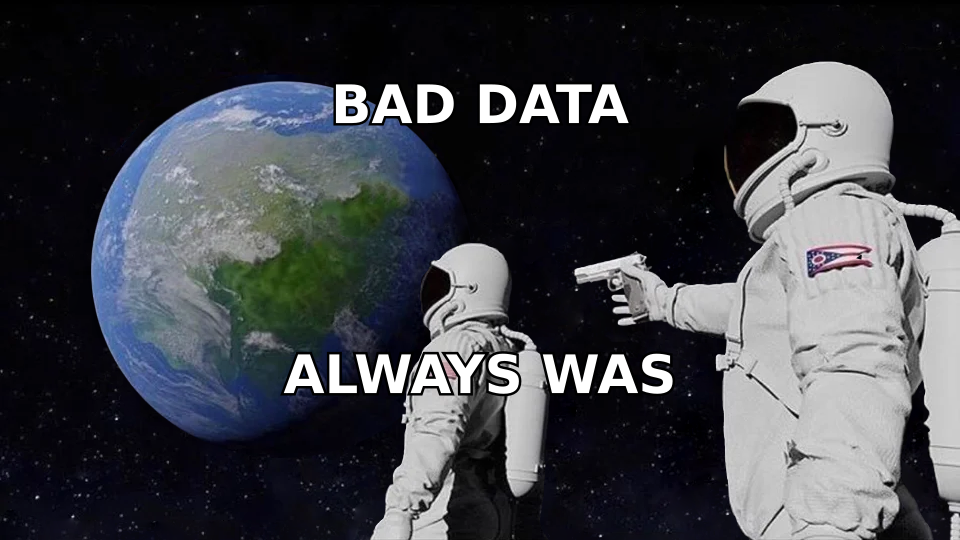
1. The phone data is garbage. Standard B2B databases are full of main lines, old numbers from a prior employer, and reception desks. Contact data decays somewhere around 25-30% per year through job changes alone. A list bought 18 months ago is half fiction. This is the single highest-leverage thing to fix, and it's a purchasing decision, not a coaching one. Running numbers through a phone validator before a campaign strips out the disconnected and unroutable lines that otherwise eat hours.
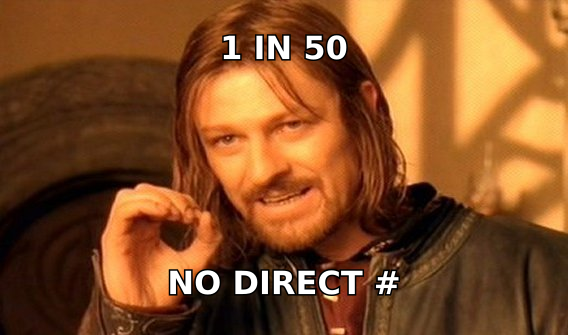
2. Reps call companies instead of humans. Getting past a gatekeeper was a skill in 2010. In 2026 most switchboards route to voicemail systems that don't have a human option. If you don't have the direct dial or mobile, you don't have a call — you have a lottery ticket.
3. There's no reason for the call to exist. "I'm reaching out because I wanted to introduce our platform" is not a reason. A trigger is a reason. Buyers can tell within four seconds whether you researched them or your dialer picked them.
4. Activity metrics replace outcome metrics. When you comp on dials, you get dials — into dead numbers, at 4:55pm, with no notes. Teams that switched to measuring conversations-per-day and meetings-per-100-connects get very different rep behavior within two weeks.
What Does a 2026 Cold Calling Stack Look Like?#
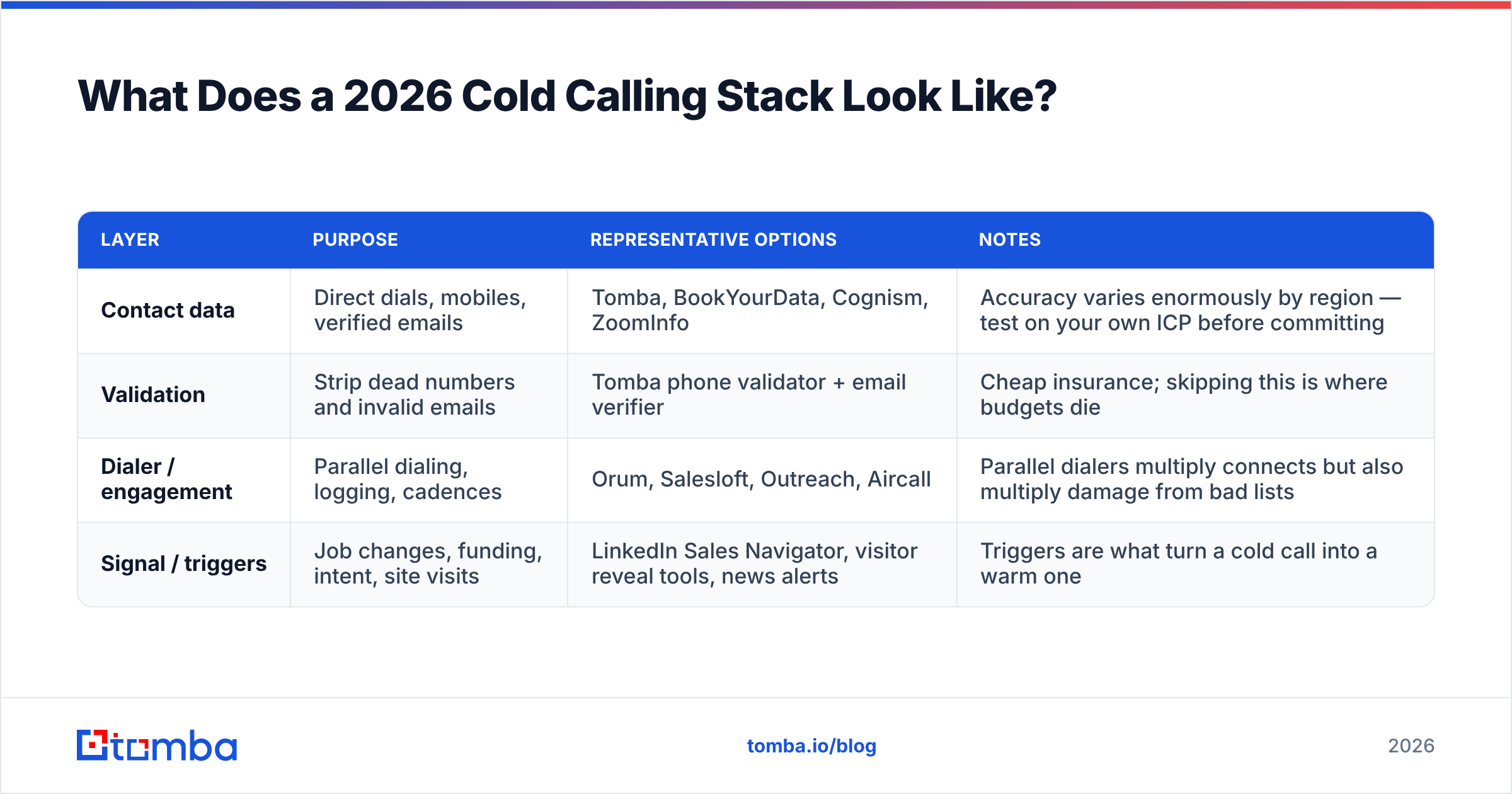
Cold calling only pays when the pre-call work is automated. The stack splits into four layers:
| Layer | Purpose | Representative options | Notes |
|---|---|---|---|
| Contact data | Direct dials, mobiles, verified emails | Tomba, BookYourData, Cognism, ZoomInfo | Accuracy varies enormously by region — test on your own ICP before committing |
| Validation | Strip dead numbers and invalid emails | Tomba phone validator + email verifier | Cheap insurance; skipping this is where budgets die |
| Dialer / engagement | Parallel dialing, logging, cadences | Orum, Salesloft, Outreach, Aircall | Parallel dialers multiply connects but also multiply damage from bad lists |
| Signal / triggers | Job changes, funding, intent, site visits | LinkedIn Sales Navigator, visitor reveal tools, news alerts | Triggers are what turn a cold call into a warm one |
A note on the data layer, since that's where most of the ROI hides. Providers differ less on raw record count than on how they handle verification. Some sell you everything they have and let you eat the bounce rate; others verify on retrieval and return fewer, better records. BookYourData has built a solid reputation on the pre-verified list side, and it's a reasonable choice when you want a bounded, clean list handed over rather than an API to integrate. Tomba sits at the other end of that spectrum — built around on-demand lookup through a phone finder and email finder, so you pull and verify contacts at the moment you need them rather than buying a snapshot that starts decaying immediately.
Both models work. The choice depends on whether your motion is campaign-batch (buy a list, run it, buy another) or continuous (enrich accounts as they enter your pipeline). If you're pulling contacts from account lists or LinkedIn research, on-demand enrichment via a LinkedIn finder keeps the data fresh at the point of use.
Also worth checking vendor claims against public review data rather than vendor marketing — G2's sales intelligence category is a reasonable cross-check on accuracy complaints, which tend to show up in reviews long before they show up in a pricing page.
How Do You Make Cold Calls Actually Convert?#
Assume the data is fixed. Here's what separates the teams booking meetings from the teams making noise.
Open with the reason, not the introduction. "Hi Sarah — I saw you're hiring three RevOps people this quarter, which usually means the reporting stack is breaking. Is that fair?" beats any variation of "how are you today" by a wide margin. You have about seven seconds.
Ask for permission to be brief, then be brief. "Can I have 30 seconds and then you can tell me to go away?" still works because it's honest and it caps their commitment.
Call at the edges. 7:45-8:45am and 4:30-5:30pm local consistently beat midday, because gatekeepers and meeting blocks are thinner. Tuesday through Thursday remains the sweet spot.
Aim for the next step, not the sale. The only goal of a cold call is a calendared conversation. Trying to demo on the first call is the most common reason a good connect turns into a dead one.
Log everything, including the misses. The rep who notes "wrong person, said Dave owns this" creates a better second attempt than the rep who marks it no-answer. Over a quarter, that note quality compounds into a materially better list.
Follow every connect with an email inside 10 minutes. The call creates recognition; the email creates a record. Send both or you're wasting half the touch. If you don't have the address, pull it with a domain search and verify it before sending — a bounce right after a live conversation is an avoidable own goal.
One more thing that doesn't fit neatly into a bullet: compliance. Cold calling regulation has tightened in most markets. The US has the FCC's telemarketing rules and state-level additions; the EU and UK layer GDPR and PECR requirements on top; several countries now require consent even for B2B mobiles. Check your jurisdictions before you scale dials. A compliance problem will cost more than every meeting the program ever books.
What Should You Do Next?#
Run this diagnostic before you decide whether to keep, kill, or rebuild your cold calling motion:
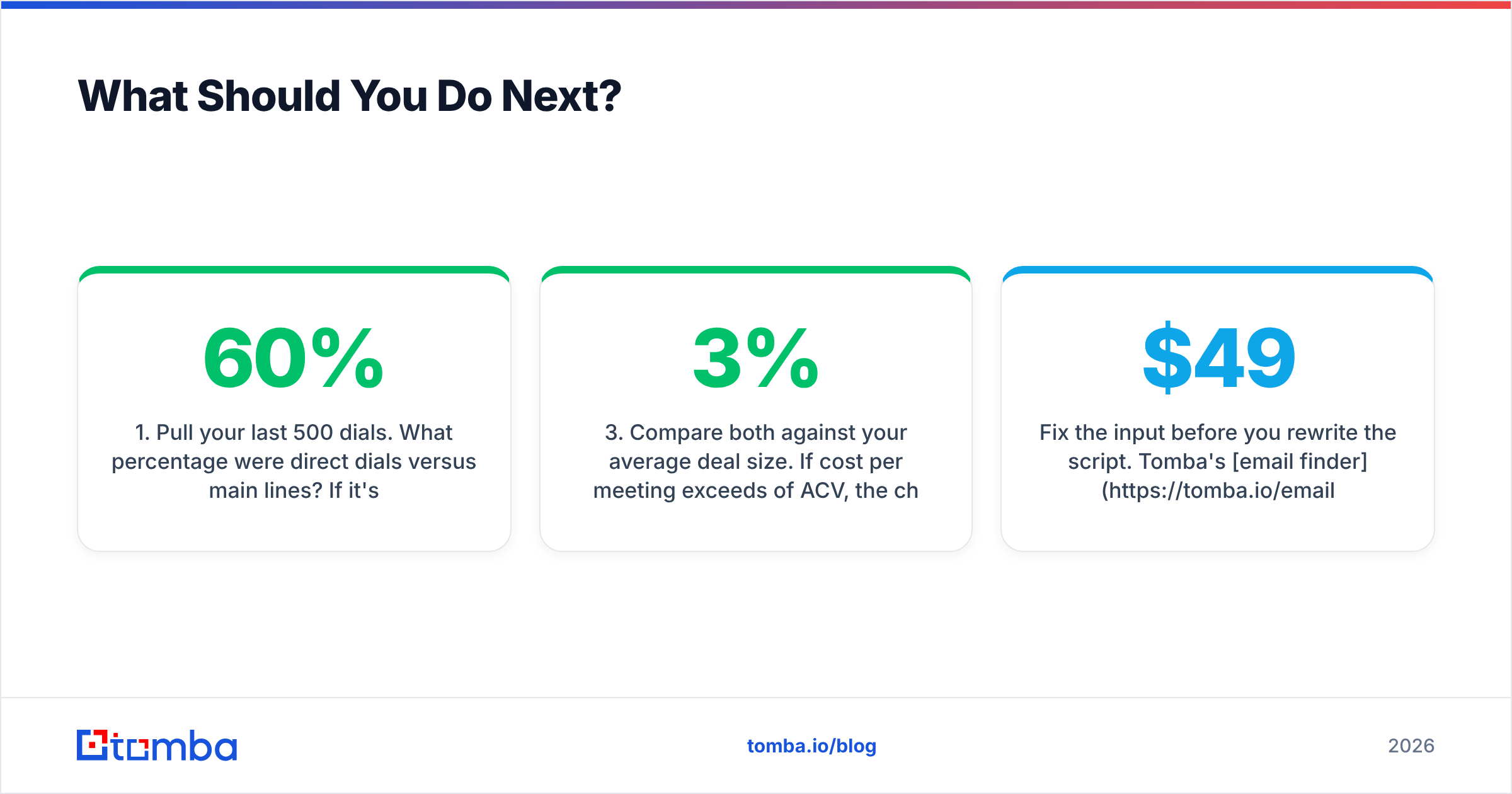
- Pull your last 500 dials. What percentage were direct dials versus main lines? If it's under 60% direct, your connect rate problem is a data problem.
- Calculate real cost per meeting: (rep hourly cost × hours on phone) ÷ meetings booked. Compare it to your email channel's number.
- Compare both against your average deal size. If cost per meeting exceeds 3% of ACV, the channel is underwater.
- Check what percentage of calls followed a trigger or a prior touch. If it's near zero, you're running the hardest possible version of the job.
- Verify a sample of 100 numbers from your list. The dead-number rate tells you how much of your team's week is being burned on nothing.
Most teams who run this find the same thing: the phone still works, they just aren't calling reachable people.
Fix the input before you rewrite the script. Tomba's email finder and phone tools let you pull verified direct contacts for the accounts you actually want, one at a time or in bulk through the Tomba API — so your reps spend their dials on people who pick up. Start on the free tier (25 searches/month) to test accuracy against your own ICP, then move to Starter at $49/mo or Growth at $99/mo once the numbers hold up. Full Tomba pricing is public, no sales call required — which, given the topic, feels like the right way to end.
Related guides#
// get started
Find, verify and enrich your first contacts today
Start on the free plan with 25 searches a month, then scale when your team is ready.
Free plan · No credit card required · GDPR & CCPA
// about the author