Kipplo vs Warpleads: Which Lead Data Tool Wins in 2026?
Warpleads sells volume. Kipplo sells precision. We break down pricing, data accuracy, export limits and verification behaviour so you can pick the one that won't torch your sending domain.
TL;DR
- Warpleads is an export-volume play: large B2B databases, unlimited or very high export ceilings, priced so you can dump tens of thousands of contacts into a sequencer. Best when you run high-volume outbound and accept that you'll filter hard afterwards.
- Kipplo is a targeting-and-enrichment play: smaller pulls, more filtering, real-time lookups per contact. Best when each lead costs you real SDR time.
- Neither tool removes your verification step. Bulk exports from any vendor carry stale rows; you still need a standalone verifier before you send.
- If your bottleneck is list size, Warpleads wins. If your bottleneck is bounce rate and reply rate, Kipplo — or a dedicated finder like Tomba — wins.
- Cheapest total cost isn't the sticker price. It's
price per contact that actually replies, and that number moves 3-5x depending on how much junk you paid to import.
What are Kipplo and Warpleads?#
Both tools sit in the same aisle of the B2B data store, but they answer different questions.
Warpleads (warpleads.com) is a lead-export platform. You filter a large contact database by title, industry, geography, headcount and tech signals, then export the result as CSV or push it into your outbound stack. Its pitch is volume: the plans are built around large monthly export allowances rather than per-credit metering, which is why it keeps showing up in "unlimited leads" listicles.
Kipplo (kipplo.com) approaches the same problem from the contact side. Rather than positioning around raw export ceilings, it leans on targeted lookups — find the right person at the right company, resolve their work email, enrich the record. The workflow assumes you already know who you want, or you're building a tightly defined list rather than a broad sweep.
That distinction drives almost every downstream difference: pricing model, accuracy profile, how much cleanup you do, and which team should own the tool.
How do Kipplo and Warpleads compare at a glance?#
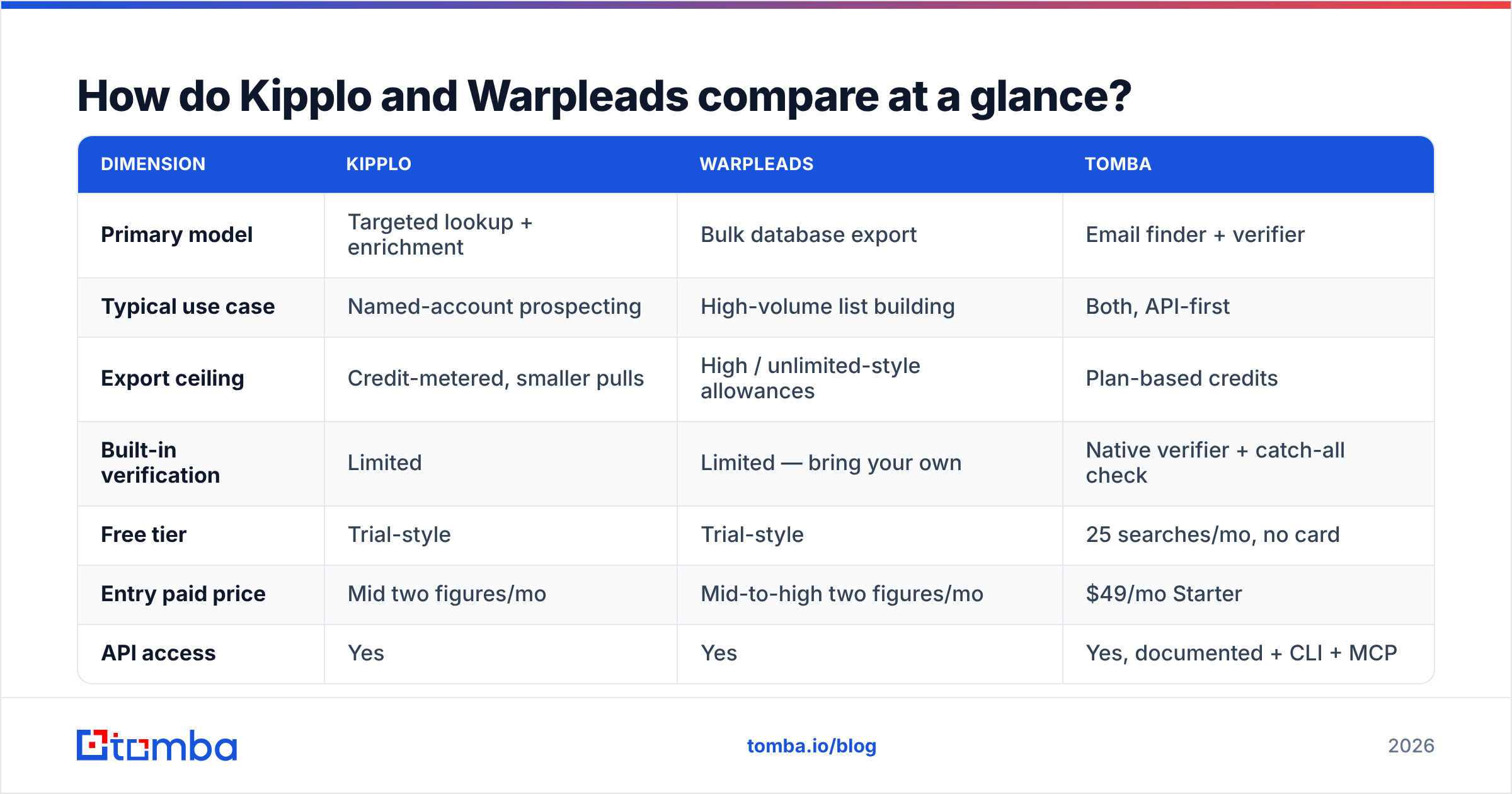
| Dimension | Kipplo | Warpleads | Tomba |
|---|---|---|---|
| Primary model | Targeted lookup + enrichment | Bulk database export | Email finder + verifier |
| Typical use case | Named-account prospecting | High-volume list building | Both, API-first |
| Export ceiling | Credit-metered, smaller pulls | High / unlimited-style allowances | Plan-based credits |
| Built-in verification | Limited | Limited — bring your own | Native verifier + catch-all check |
| Free tier | Trial-style | Trial-style | 25 searches/mo, no card |
| Entry paid price | Mid two figures/mo | Mid-to-high two figures/mo | $49/mo Starter |
| API access | Yes | Yes | Yes, documented + CLI + MCP |
| Best for | Reply rate | List volume | Deliverability-first outbound |
Pricing on both vendors moves. Treat the rows above as directional and check the live pricing pages before you commit to an annual plan — both have repriced within the last 18 months.
Which one has better data accuracy?#
This is the question that actually decides the purchase, and it's the one both vendors are vaguest about.
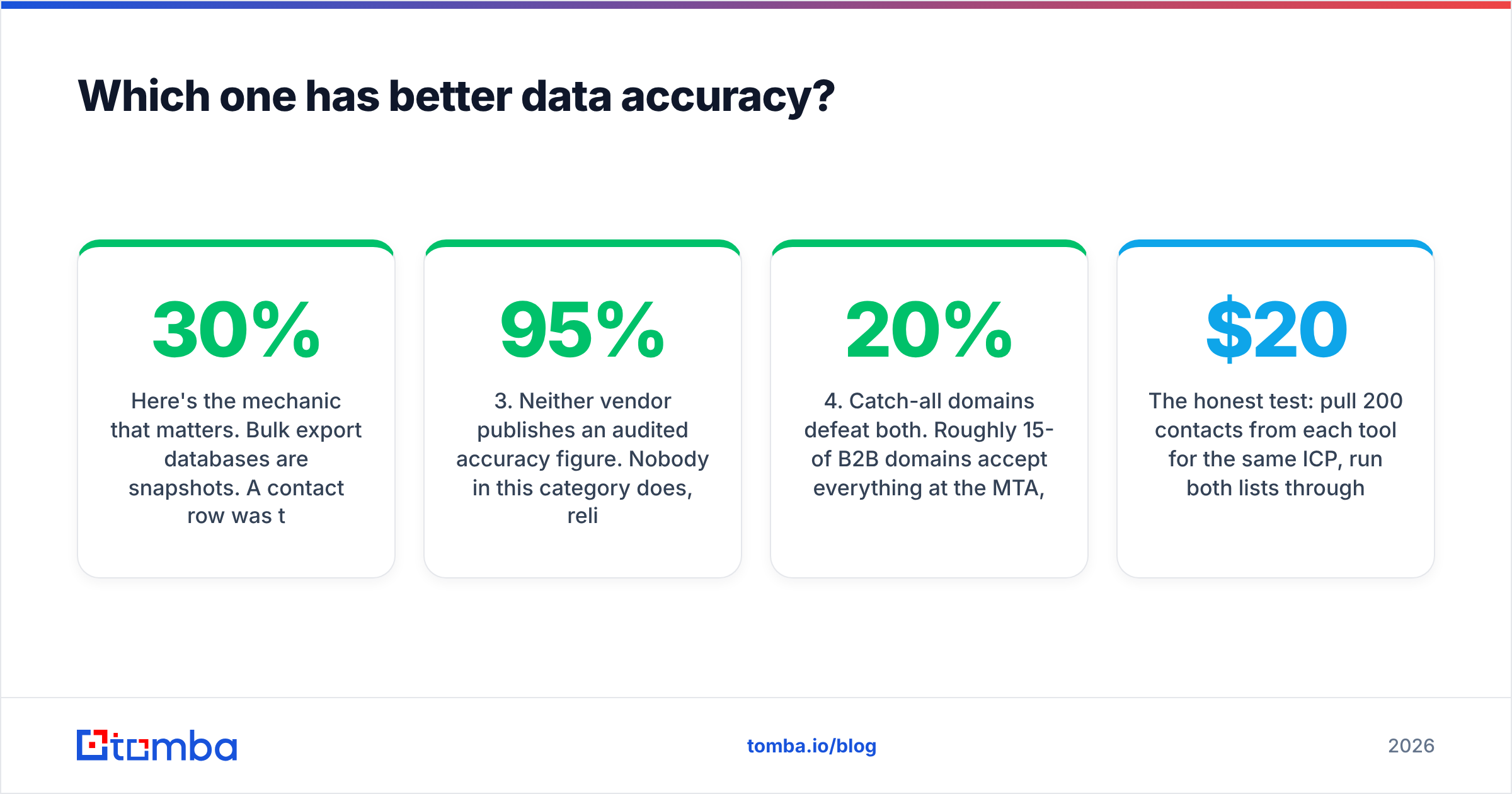
Here's the mechanic that matters. Bulk export databases are snapshots. A contact row was true when it was scraped or contributed; whether it's true today depends on how aggressively the vendor re-crawls and re-verifies. B2B contact data decays at roughly 25-30% per year — people change jobs, companies rebrand, mailboxes get deprovisioned. A database that looks enormous can be enormous and half-stale.
Real-time finders work differently. They resolve a pattern (first.last@, f.last@, firstname@) against the domain at query time and run SMTP-level checks before returning a result. Slower per contact, far fewer dead rows.

Practically, that means:
- Warpleads exports need a verification pass. Expect meaningful bounce risk on any list you pull and send without cleaning. Budget for it — the cost of a verifier is trivial next to a burned sending domain.
- Kipplo's per-contact results are usually fresher, because the lookup happens when you ask rather than when the crawler last ran. You pay for that in throughput.
- Neither vendor publishes an audited accuracy figure. Nobody in this category does, reliably. Vendor-claimed "95% accuracy" is a marketing number, not a measured one.
- Catch-all domains defeat both. Roughly 15-20% of B2B domains accept everything at the MTA, so a plain SMTP check returns "valid" for addresses that don't exist. You need a dedicated catch-all verifier to score those properly.
The honest test: pull 200 contacts from each tool for the same ICP, run both lists through an independent email verifier, and compare valid-rate. That's a $20 experiment that beats every comparison post on the internet — including this one.
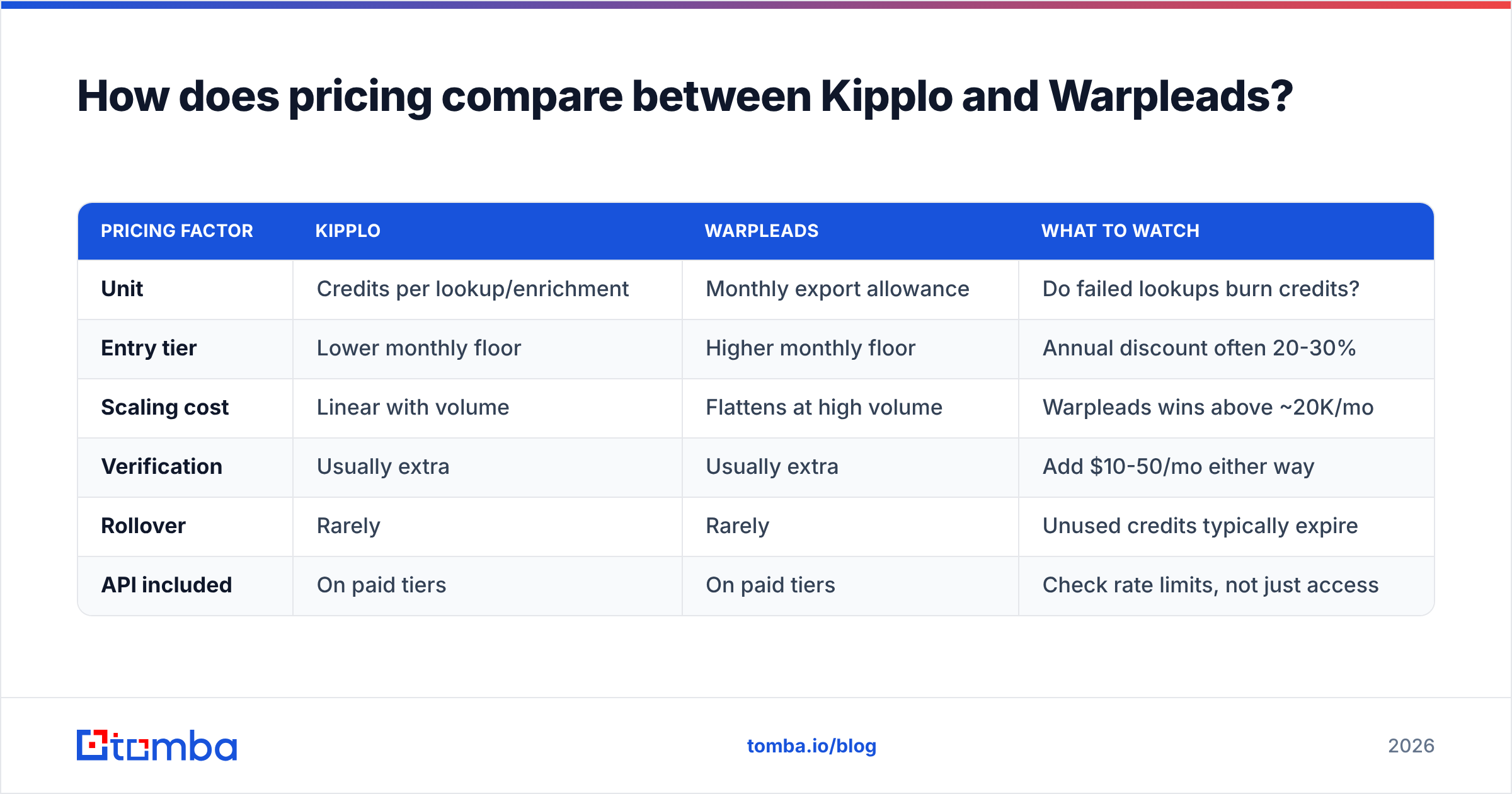
How does pricing compare between Kipplo and Warpleads?#
Both vendors price on different axes, which makes a straight comparison misleading unless you normalise.
| Pricing factor | Kipplo | Warpleads | What to watch |
|---|---|---|---|
| Unit | Credits per lookup/enrichment | Monthly export allowance | Do failed lookups burn credits? |
| Entry tier | Lower monthly floor | Higher monthly floor | Annual discount often 20-30% |
| Scaling cost | Linear with volume | Flattens at high volume | Warpleads wins above ~20K/mo |
| Verification | Usually extra | Usually extra | Add $10-50/mo either way |
| Rollover | Rarely | Rarely | Unused credits typically expire |
| API included | On paid tiers | On paid tiers | Check rate limits, not just access |

The normalising question is simple: what does one contact-that-replies cost you?
Say Warpleads gives you 50,000 exports for a flat monthly fee. Looks like near-zero cost per lead. Now assume 30% are stale, another 15% are outside your real ICP after you look at them, and your reply rate on the survivors is 2%. You're paying for 50,000 rows to get roughly 600 replies. Fine — if your infrastructure can send that volume safely, and most can't.
Now say Kipplo returns 3,000 tightly-targeted contacts at a higher unit cost, with 5% stale and a 5% reply rate. That's 140 replies from 3,000 contacts. Fewer replies in absolute terms, but a fraction of the sending volume, far less domain risk, and an SDR team that isn't drowning.
Neither is wrong. They're different businesses. A PLG startup testing five ICPs wants Warpleads. A six-person enterprise sales team working 200 named accounts wants Kipplo.
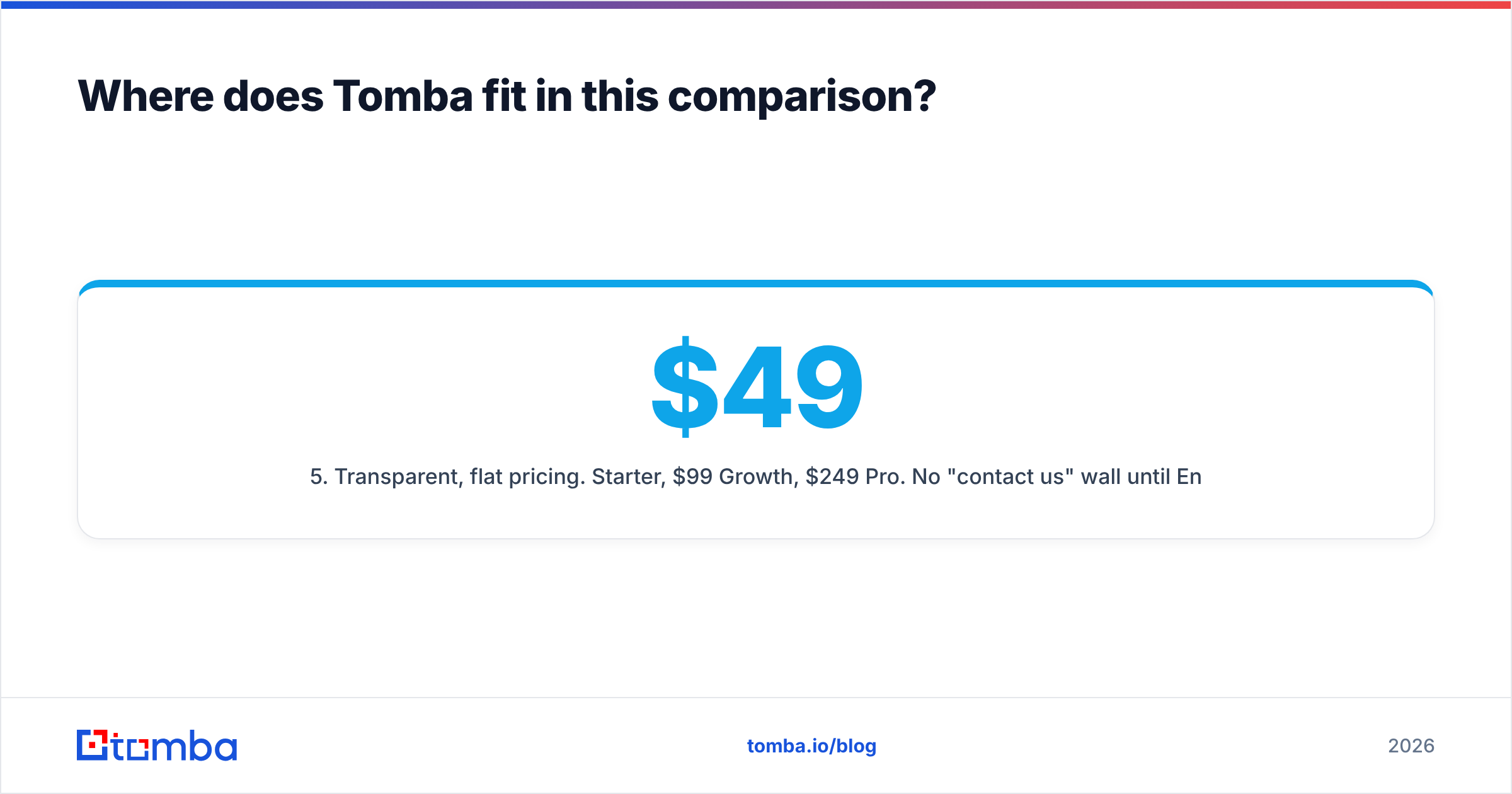
For reference, Tomba pricing sits between the two models: a free tier at 25 searches/month, Starter at $49/mo, Growth at $99/mo and Pro at $249/mo, with verification bundled rather than sold as an upsell.
Is Warpleads better than Kipplo for cold email?#
It depends entirely on your sending infrastructure, and this is where most teams get it wrong.
Volume-first tools only pay off if you can send the volume without wrecking sender reputation. That means warmed domains, sub-2% bounce rates, SPF/DKIM/DMARC configured, and a mailbox rotation that keeps per-inbox volume sane. Google and Microsoft both tightened bulk-sender enforcement in 2024, and the practical bounce ceiling most deliverability teams now target is under 2% — some go as low as 1%.
Push a raw 50,000-row export into a sequencer with a 12% invalid rate and you will get filtered inside two weeks. The tool didn't fail. The process did.
So the real decision tree looks like this:
- You have 10+ warmed domains, a deliverability owner, and a sequencer that throttles properly → Warpleads' volume economics are genuinely attractive.
- You have 1-3 domains and no dedicated deliverability person → volume is a liability. Go targeted.
- You sell into a small TAM (under ~5,000 accounts) → export ceilings are irrelevant. Buy on accuracy and enrichment depth.
- You need phone as well as email → check both vendors' mobile coverage separately; email coverage tells you nothing about phone coverage.

What do the reviews actually say?#
Third-party review sites are noisy in this category — the sample sizes are small and vendors run incentivised review campaigns. Read them, but read them for patterns of complaint, not star ratings. Filter for:
- Credit-burn complaints — does the tool charge for lookups that return nothing?
- Export friction — rate limits, CSV column mapping, CRM sync failures.
- Support responsiveness — the single most reliable signal in low-price SaaS.
- Data freshness by region — most of these databases are US-heavy; EMEA and APAC coverage is usually thinner than the marketing suggests.
Cross-check on G2 and read the two-star reviews first. They're the only ones that contain information.
It's also worth noting that neither Kipplo nor Warpleads is the only shape of this product. BookYourData is a strong option if you want verified, purchase-once lists with a bounce guarantee rather than a subscription — a genuinely different commercial model that suits teams doing a few large, well-defined campaigns per year rather than continuous prospecting.
Where does Tomba fit in this comparison?#
Tomba isn't a database-export tool and doesn't pretend to be. It's an email finder with verification built into the same product, which changes the workflow shape.
The practical differences:
- Verification is native, not an add-on. Every result is scored before it reaches you, including catch-all domains, so you're not paying a second vendor to clean a first vendor's output.
- Domain search covers the "who works here" problem. Point domain search at a company and get the mapped contacts plus the detected email pattern — useful when you know the account but not the person.
- API-first, with a CLI and MCP server. If your GTM stack is scripted rather than clicked, the Tomba API slots into enrichment jobs, Clay-style workflows, and agent pipelines without a UI in the loop.
- Free tier that's actually testable. 25 searches a month, no card, which is enough to run the accuracy experiment described above before you spend anything.
- Transparent, flat pricing. $49 Starter, $99 Growth, $249 Pro. No "contact us" wall until Enterprise.
Where Tomba is not the answer: if you want to download 50,000 rows filtered by funding stage and hiring signals, a database-export tool does that better. Use the right shape of tool for the job — or use both, with the finder as the verification and enrichment layer on top of the export.
Which should you actually buy?#
Buy Warpleads if: you're running high-volume, multi-ICP outbound; you have the sending infrastructure to absorb volume safely; you already own a verification tool; and flat-rate export economics beat per-credit pricing at your scale.
Buy Kipplo if: your list is defined by account rather than filter; SDR time is your scarce resource; you care more about a 5% reply rate than a 50,000-row export; and you'd rather pay more per contact for fewer dead ones.
Buy neither — or buy alongside — if: your actual problem is that you don't trust the emails you already have. That's a verification problem, not a sourcing problem, and it's cheaper to fix than either subscription.
Run the 200-contact test before you sign anything annual. Same ICP, both tools, independent verification, compare valid-rate and reply-rate after two weeks. Whichever number wins is your answer, and it may not match anything written here.
Start with the part you can measure. Before you commit to an export subscription, run your existing list — or a sample from either vendor — through the Tomba Email Finder and see how many addresses are real. The free tier gives you 25 searches a month with no card, Starter is $49/mo, and verification is included rather than billed separately. Find the emails, confirm they're deliverable, then decide how much volume you actually need.
Related guides#
// get started
Find, verify and enrich your first contacts today
Start on the free plan with 25 searches a month, then scale when your team is ready.
Free plan · No credit card required · GDPR & CCPA
Get the Tomba newsletter
Product and data updates
// about the author