7 Best Kookoo (Ozonetel) Alternatives for Sales Teams in 2026
Kookoo by Ozonetel is a solid cloud-telephony workhorse, but it is not the right fit for every outbound team. Here are seven alternatives compared on pricing, IVR depth, global coverage, CRM integrations, and developer control.
TL;DR — the short list of Kookoo Ozonetel alternatives, and how to pick one.
- Kookoo by Ozonetel is a mature cloud phone platform. It has deep IVR, wide India number coverage, and a solid API. It is a good product. It is just a very specific shape of product.
- Teams leave for one of four reasons. They need numbers in more countries. They want simple per-seat pricing. They want the dialer inside the CRM. Or they want raw voice APIs.
- The seven Kookoo Ozonetel alternatives to shortlist in 2026: Exotel, Knowlarity (Gupshup), MyOperator, Acefone, CloudTalk, JustCall, and Twilio or Plivo.
- Price is the wrong first filter. Start with number coverage. Then check CRM depth. Then look at cost.
- The dialer is not your bottleneck. Bad phone numbers are. Fix the data layer first.
What is Kookoo by Ozonetel, exactly?#
Kookoo is the voice API side of Ozonetel. You use it to build call flows. The same company also sells CloudAgent, a full contact center product for agents.
Think of a light switch and a lamp. Kookoo is the wiring. CloudAgent is the lamp you plug in.
That split matters. People who search for Kookoo Ozonetel alternatives are really asking one of two questions:
- What else gives me a voice API for IVR, click-to-call, and number masking?
- What else gives me a ready call center my reps can log into tomorrow?
The answer changes with the question. Most comparison posts mash the two into one list. This one does not.
Ozonetel is strong in clear ways. The IVR logic runs deep. India telecom rules are handled well, including DLT and number setup. The REST API is easy to use. Billing scales on usage, not seats. For a 200-agent floor in Hyderabad, it is a fine default. The strain shows up elsewhere.
Why do teams look for Kookoo Ozonetel alternatives?#
Five reasons come up again and again. You see them in review threads on G2. You hear them in migration calls. The first two are about money and maps:
- Country coverage. Ozonetel is strongest in India. It also covers the US and the Middle East. If your reps dial Germany, Brazil, and Australia in one week, you will need a second vendor.
- Billing that does not match. Telecom billing counts channels, minutes, and number rentals. That is cheap at scale. It is confusing at ten seats. Finance teams often want one flat line per user.
The other three are about how the tool feels day to day:
- Dialing inside the CRM. Sales teams want to click a record in HubSpot, Salesforce, or Pipedrive. The call should log itself. The recording should attach. Sales diallers do this better than contact center platforms.
- Sign up and go. Ozonetel sells through a sales team. Some buyers want to add a card and start in an hour.
- Developer comfort. If you build voice into your own app, you will compare Kookoo with Twilio and Plivo. Their docs and SDKs set a high bar.
None of these are flaws. They are fit problems.
What should you compare before switching?#
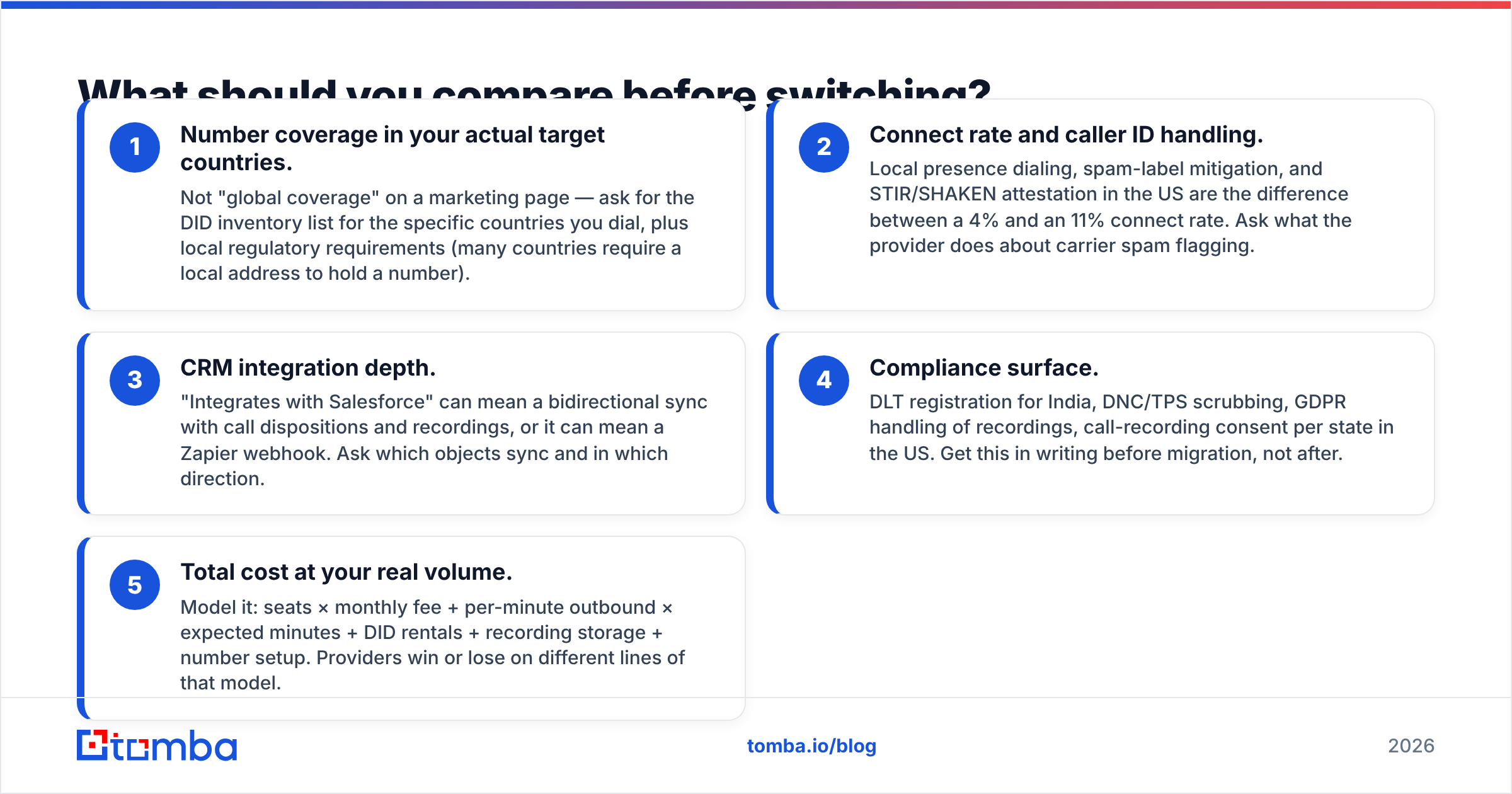
Run each of the Kookoo Ozonetel alternatives through the same five checks. Keep this order. Price goes last.
- Numbers in the countries you dial. Ask for the real number list, country by country. Many countries want a local address first.
- Connect rate and caller ID. Local numbers, spam-label help, and US STIR/SHAKEN can move you from a 4% to an 11% connect rate.
- CRM depth. "Works with Salesforce" can mean a two-way sync with call notes. It can also mean one webhook. Ask which records sync.
- Compliance. India DLT. Do-not-call scrubbing. GDPR rules for recordings. Get it in writing before you move.
- Real cost at your volume. Add up seats, per-minute charges, number rentals, storage, and setup fees.
Note what is not on that list. AI notes, sentiment scores, call summaries. They are nice. They do not close deals. Every vendor ships a version now. Do not let one demo pick your phone system for two years.
Which are the best Kookoo Ozonetel alternatives in 2026?#
These seven Kookoo Ozonetel alternatives cover both shapes of the problem: ready-made call centers, and raw voice APIs you build on.
Exotel#
The closest match to Ozonetel in India. Exotel covers cloud calling, contact center, and CPaaS. Coverage is strong in India, South East Asia, and the Middle East. The IVR tools are good and the API is well documented. Call Exotel first if you like Ozonetel's shape but want a second quote. Weak spot: the same regional focus, so it does not fix a global coverage gap.
Knowlarity (a Gupshup company)#
Knowlarity is now part of Gupshup. Voice sits next to WhatsApp, SMS, and chatbots. That helps if your outreach spans many channels and you want one vendor. Weak spot: the roadmap now leans toward messaging. Voice-only buyers can feel second in line.
MyOperator#
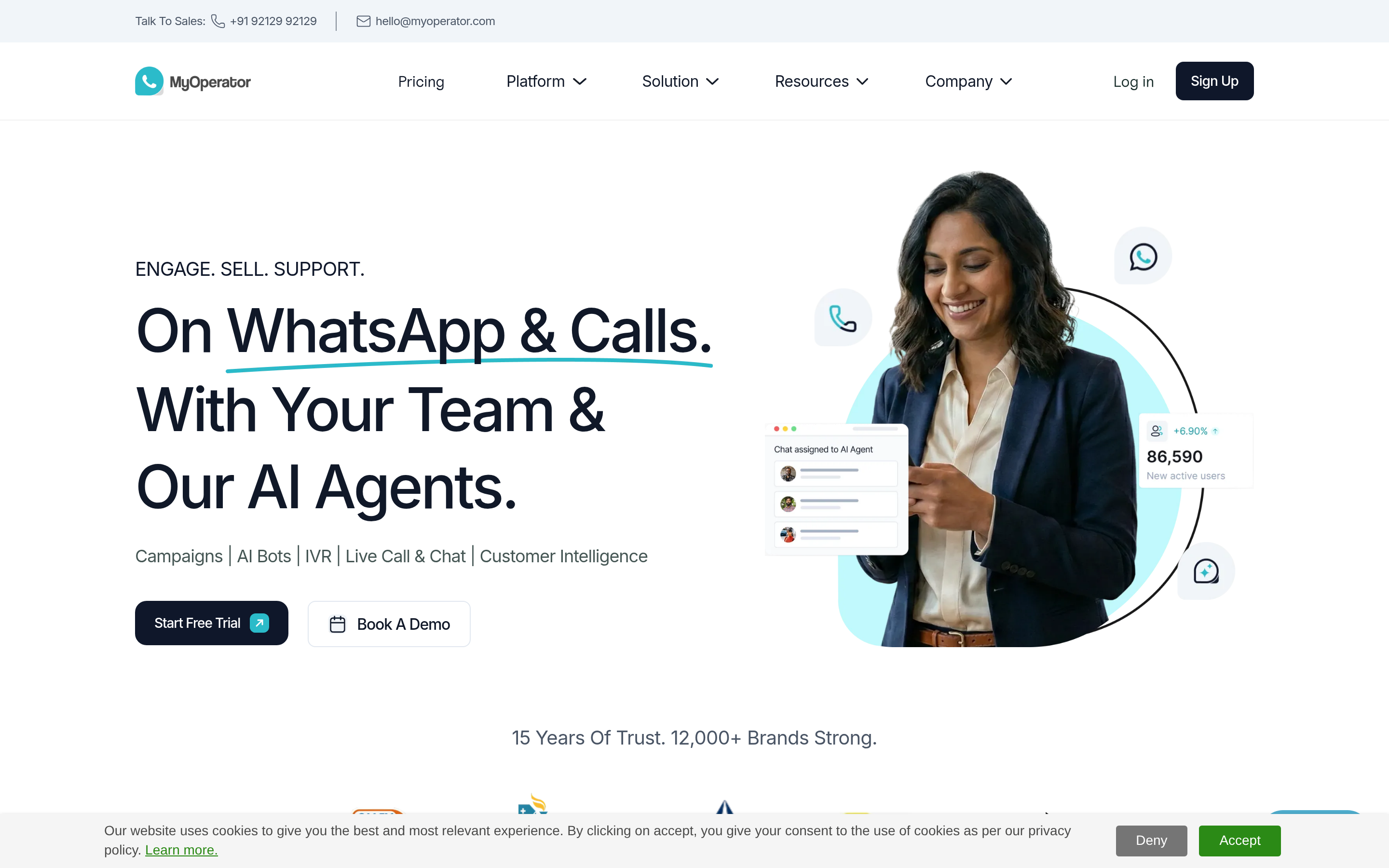
Smaller, simpler, cheaper. It is strong on IVR, call tracking, virtual numbers, and reports. Best fit: a team of 5 to 30 that needs to catch and route every inbound call. Weak spot: the outbound dialer and the API are thinner than Ozonetel's.
Acefone#
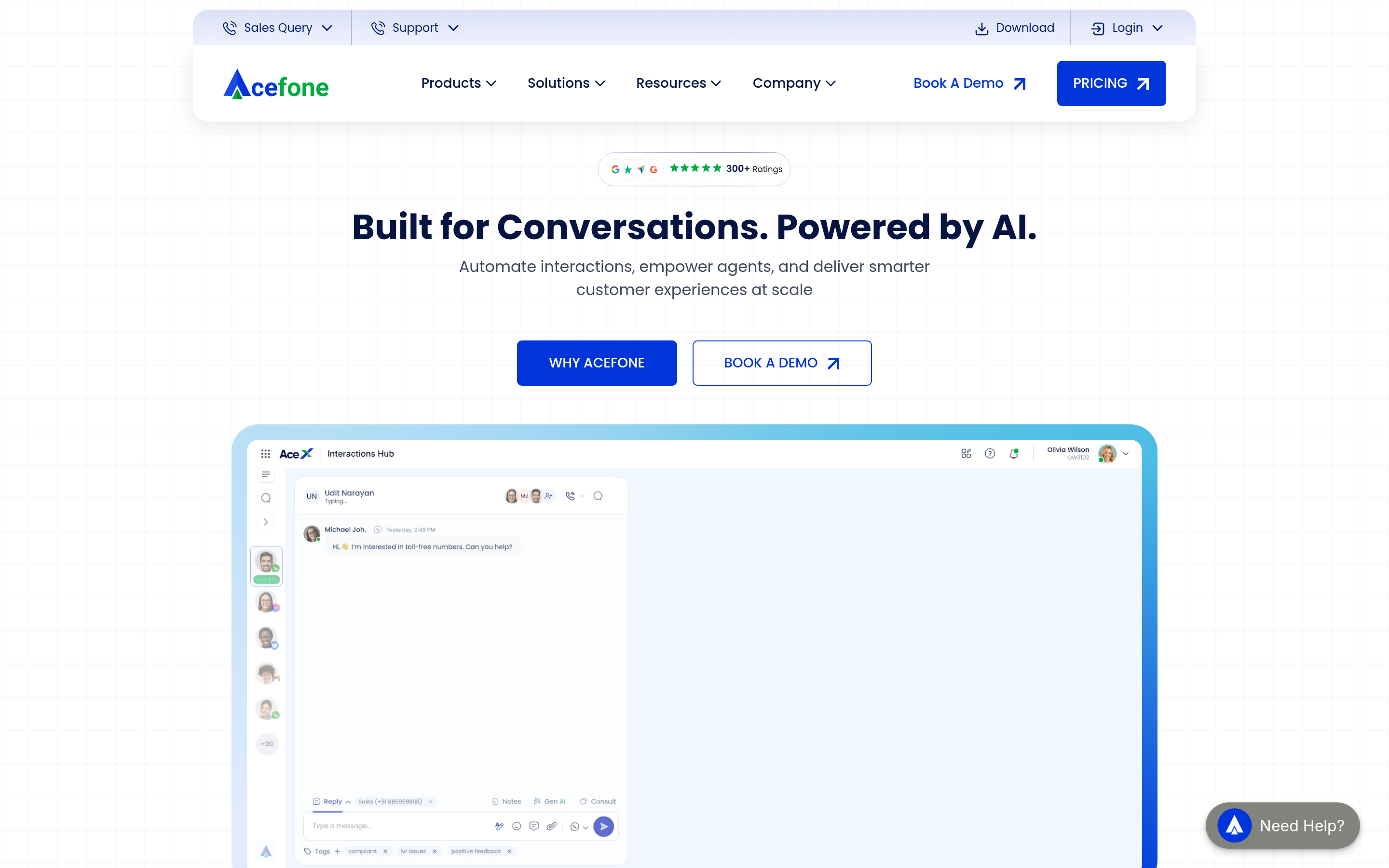
A solid mid-market pick. It covers the UK, the US, and India. You get hosted PBX plus contact center tools. Some plans include unlimited minutes, which makes budgets easy. Best fit: teams that want one flat price per user. Weak spot: the IVR builder bends less than Kookoo's on complex flows.
CloudTalk#
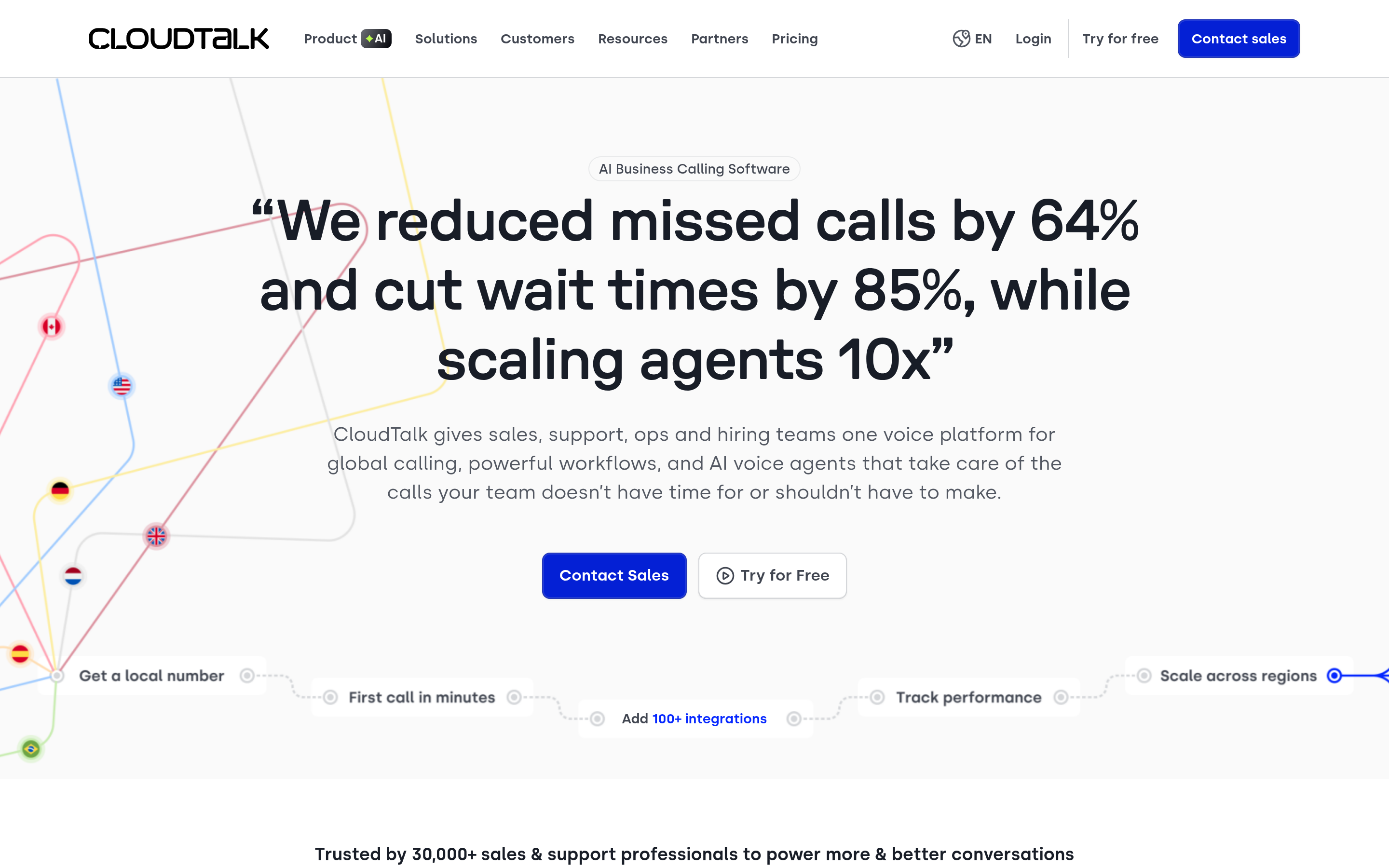
A sales-first cloud call center. You get numbers in 160+ countries, a power dialer, smart routing, and deep CRM links. Best fit: an outbound team that dials many countries from HubSpot or Pipedrive. Weak spot: it is not built for a 300-seat floor, and India rules are not its home turf.
JustCall#

The most sales-shaped tool here. You get a dialer, SMS, WhatsApp, recording, AI coaching, and a long list of CRM links. Pricing is per user. Best fit: revenue teams that want calls and texts in one place. Weak spot: per-user pricing gets steep past about 40 seats.
Twilio or Plivo#
The build-it-yourself camp. Twilio gives you voice APIs, numbers worldwide, and the widest SDK set. Plivo looks similar and often costs less per minute. Best fit: product teams that embed calling, or ops teams with spare engineers. Weak spot: you now own a phone app. There is no agent screen and no manager view unless you build one.
How do these alternatives compare on price and coverage?#
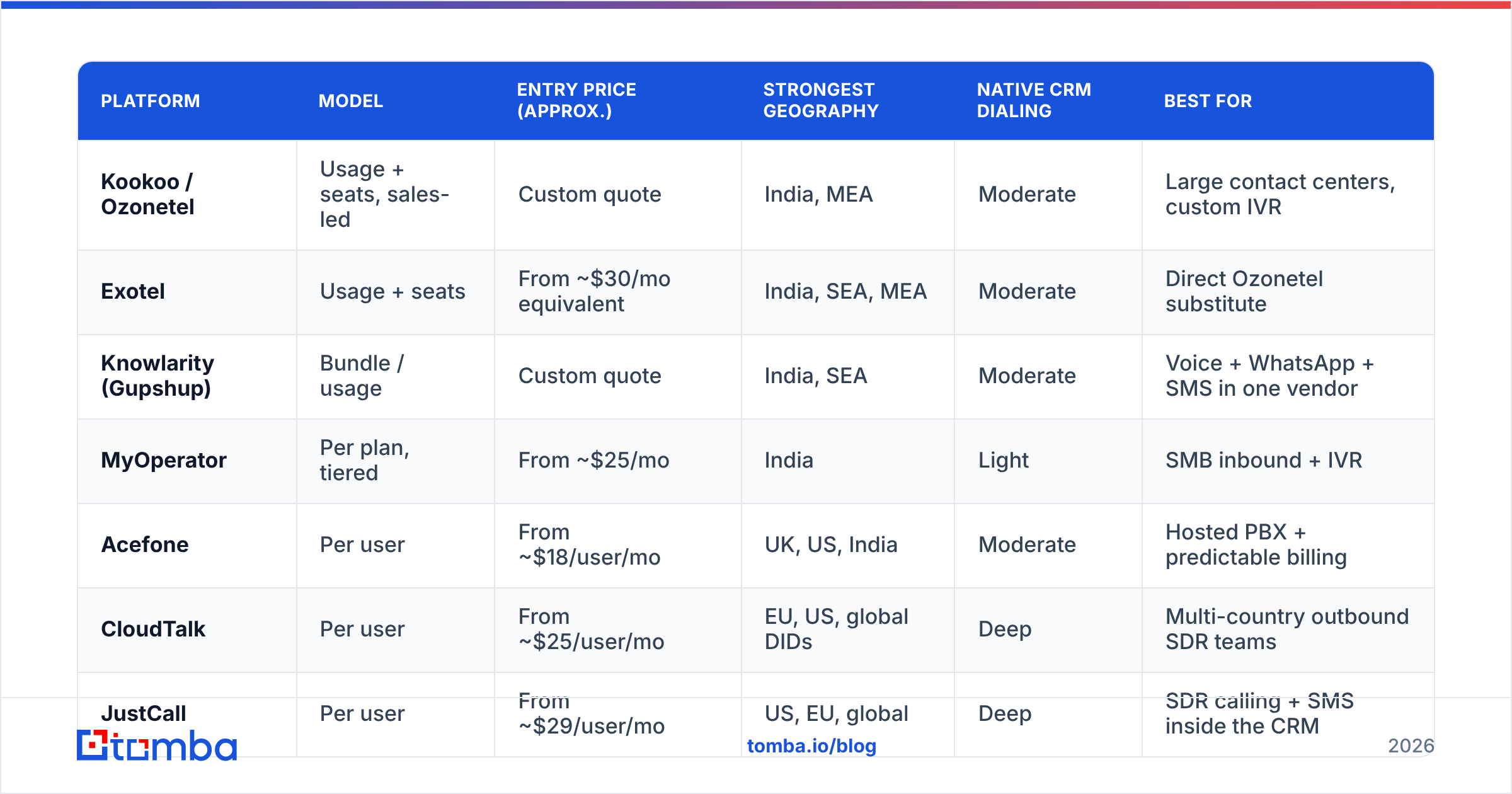
These are entry list prices for the Kookoo Ozonetel alternatives above, checked in early 2026. Phone pricing shifts often. It also varies by region and contract. Use the table to build a shortlist, then get quotes.
| Platform | Model | Entry price (approx.) | Strongest geography | Native CRM dialing | Best for |
|---|---|---|---|---|---|
| Kookoo / Ozonetel | Usage + seats, sales-led | Custom quote | India, MEA | Moderate | Large contact centers, custom IVR |
| Exotel | Usage + seats | From ~$30/mo equivalent | India, SEA, MEA | Moderate | Direct Ozonetel substitute |
| Knowlarity (Gupshup) | Bundle / usage | Custom quote | India, SEA | Moderate | Voice + WhatsApp + SMS in one vendor |
| MyOperator | Per plan, tiered | From ~$25/mo | India | Light | SMB inbound + IVR |
| Acefone | Per user | From ~$18/user/mo | UK, US, India | Moderate | Hosted PBX + predictable billing |
| CloudTalk | Per user | From ~$25/user/mo | EU, US, global DIDs | Deep | Multi-country outbound SDR teams |
| JustCall | Per user | From ~$29/user/mo | US, EU, global | Deep | SDR calling + SMS inside the CRM |
| Twilio / Plivo | Pay as you go | Per-minute, no seat fee | Global | None (build it) | Engineering-led custom voice |
Two things stand out. First, there is no single winner. The column that decides it for you is "strongest geography." The rest is a tiebreak. Second, per-user plans look cheap at five seats. They look costly at fifty. Model a full year, not a launch week.
Is a voice API better than a ready-made call center?#
Only if engineers will own it. Buying Twilio to save money is a classic false saving. You cut the platform bill. Then you spend three to six engineer-months on the agent screen, the manager view, call notes, and the CRM sync. A packaged tool ships all of that on day one.
A simple rule:
- Your product needs voice (call masking, in-app calls, code checks) → use an API. Twilio or Plivo.
- Your sales or support team needs voice → buy a ready tool. CloudTalk, JustCall, Acefone, Exotel, or Ozonetel CloudAgent.
- Both → run both. Many firms do. It costs less than forcing one tool to do two jobs badly.
What breaks when you migrate cloud telephony providers?#
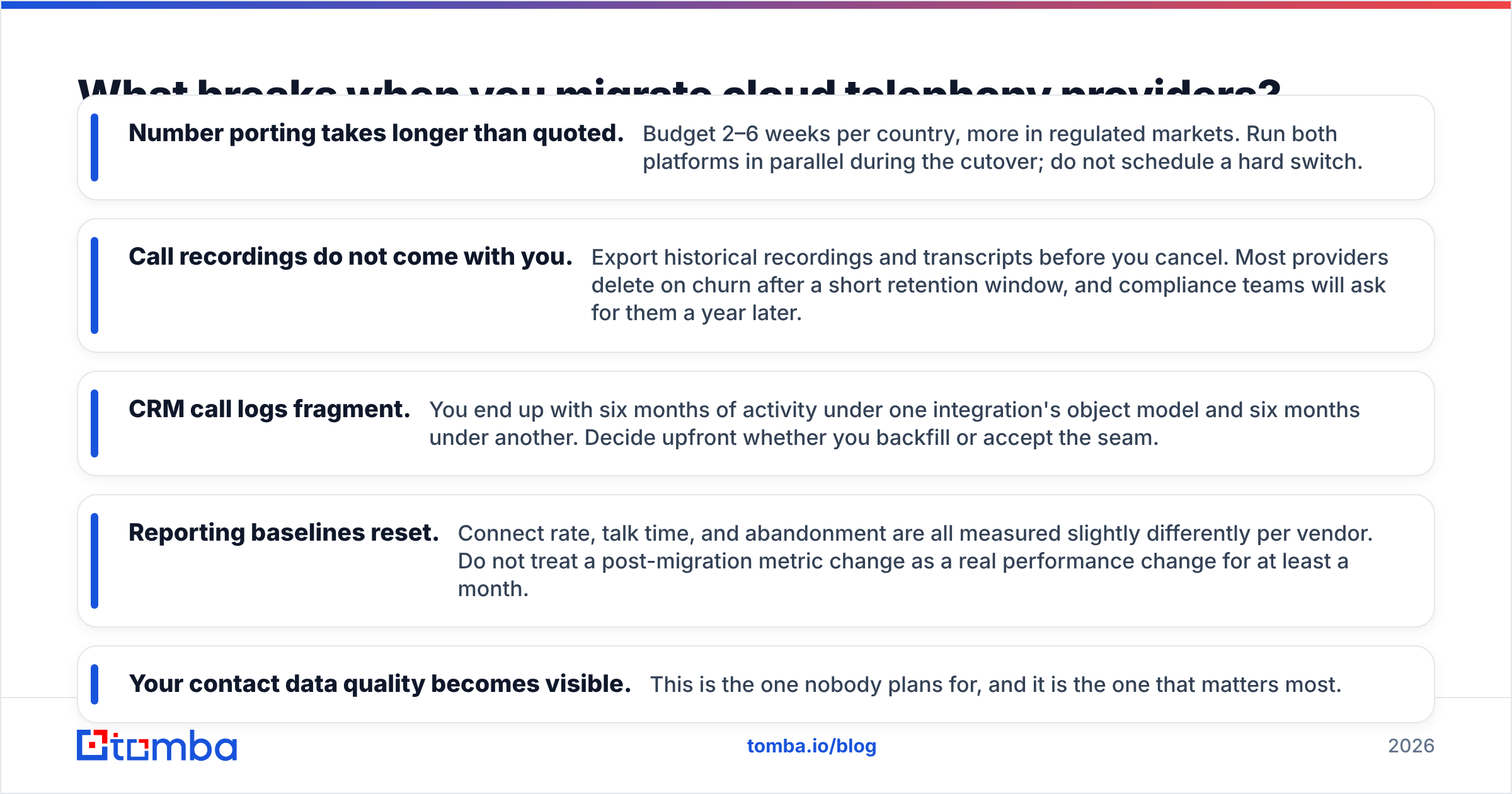
Plan for these five. Every move to one of the Kookoo Ozonetel alternatives hits at least three of them.
- Porting numbers runs late. Budget 2 to 6 weeks per country, and longer in strict markets. Run both systems side by side. Do not book a hard switch date.
- Recordings stay behind. Export old recordings and transcripts before you cancel. Most vendors wipe them soon after you leave. Legal will ask for them a year later.
- CRM call logs split. Six months of calls sit under one data model. Six months sit under another. Decide early: backfill, or live with the seam.
- Reports reset. Connect rate, talk time, and drop rate are each measured a bit differently. Give the new numbers a month before you judge them.
- Your data quality shows. Nobody plans for this one. It matters most.
Why does your contact data matter more than your dialer?#
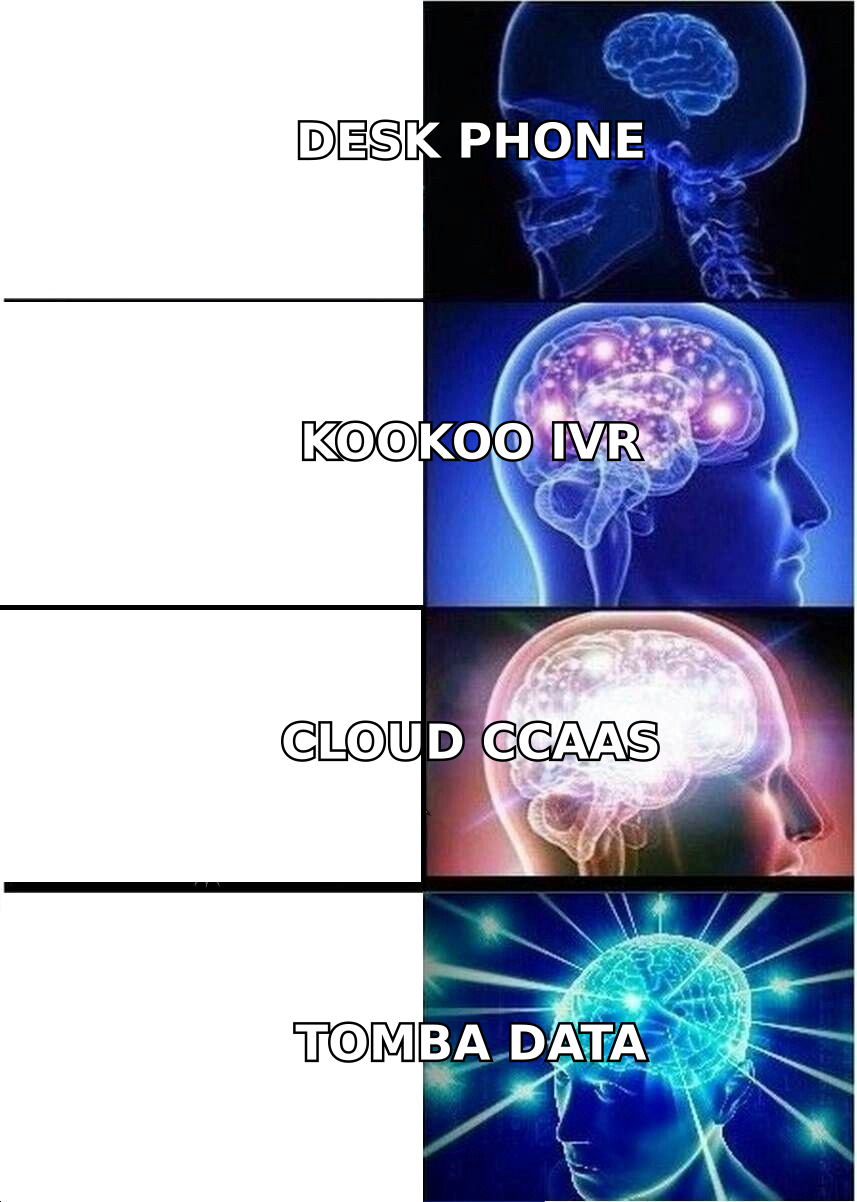
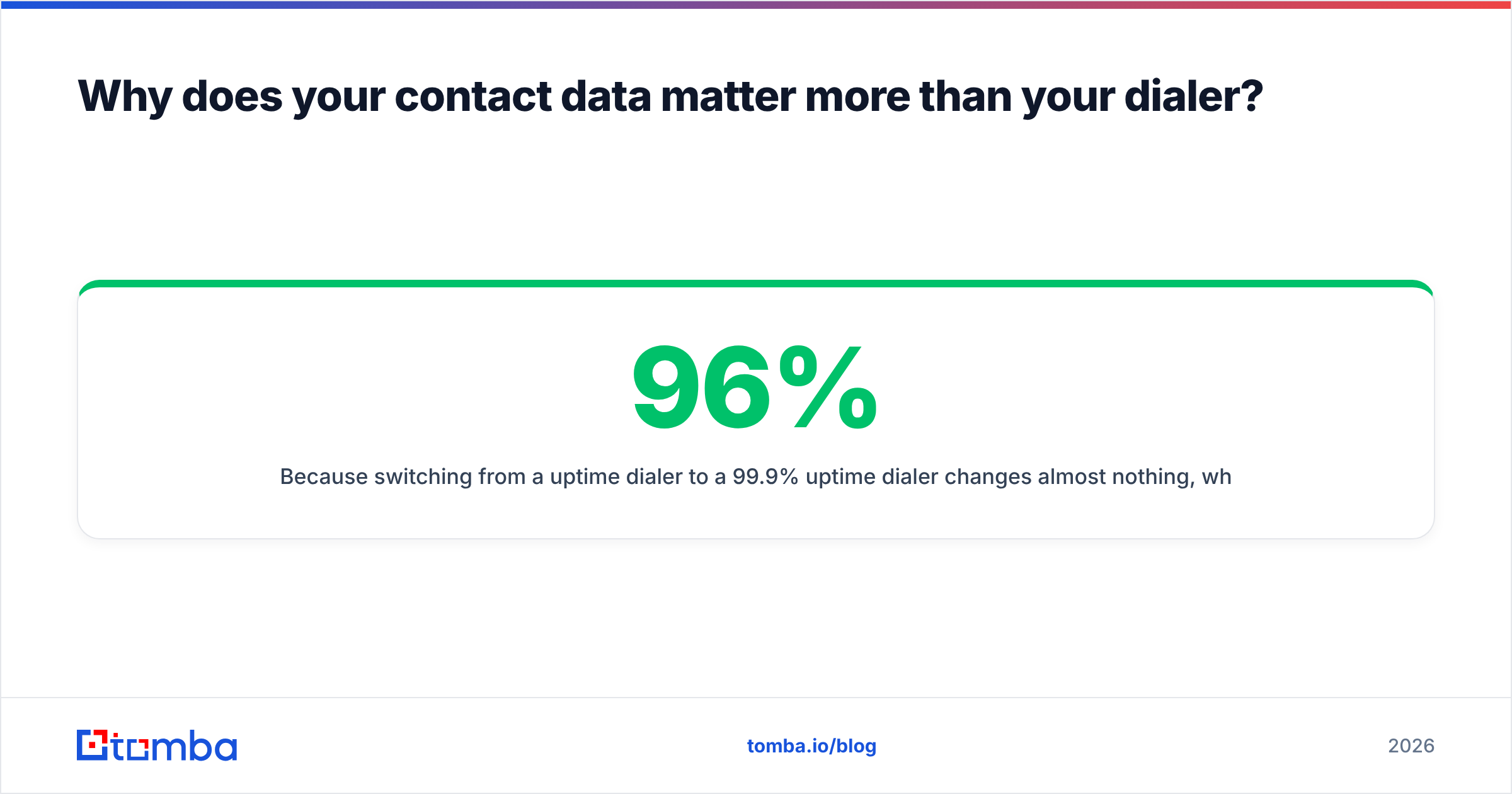
Moving from 96% uptime to 99.9% uptime changes little. Cutting dead numbers from 30% to 5% changes everything.
Do the math. A rep makes 80 calls a day. Three in ten numbers are wrong or dead. That is 24 wasted calls. That is about 90 minutes a day, every day. No IVR feature wins that time back. Dead numbers also raise your spam-flag risk. That quietly drags down connect rates on your good numbers too.
So fix the list first:
- Check the numbers you have. A phone validator shows line type, carrier, and whether the line is live.
- Fill the gaps. A phone finder finds direct dials, not the front desk number on the website.
- Add context, not just digits. Data enrichment adds job title, seniority, company size, and a verified email.
- Work more than one channel. Calls land better after an email lands. That is what email verification is for.
You have options for this data. BookYourData sells ready-made B2B lists, which suits a one-time file. API-first tools like Tomba suit teams who check and enrich data all the time. Both models work. Pick the one that matches your workflow.
Which Kookoo Ozonetel alternative should you pick?#
Here is the short version of the Kookoo Ozonetel alternatives above, by situation:
- India-first contact center, 50+ agents: stay on Ozonetel, or quote Exotel against it. The local compliance depth is real.
- Small Indian SMB, mostly inbound: MyOperator. It is the cheapest path to a clean IVR.
- Voice, WhatsApp, and SMS on one contract: Knowlarity and Gupshup.
- Flat per-user billing across the UK, US, and India: Acefone.
- Outbound team dialing many countries from a CRM: CloudTalk or JustCall. Pick CloudTalk for call center depth. Pick JustCall for SMS and sales workflow.
- Voice inside your own product: Twilio for reach, Plivo for cost.
One more thing. The phone system is the cheaper half of the problem. Check Tomba pricing. The free tier gives you 25 searches a month, so you can test data quality first. Starter is $49 a month. Growth is $99 a month. That is less than one wasted rep week.
Ready to stop dialing dead numbers?#
Whichever of the Kookoo Ozonetel alternatives you pick, it is only as good as the list you feed it. Start with the Tomba Email Finder. Build a verified list by domain, name, or company. Then add phone data and enrichment on top. Now every call has a real person, a real title, and a real reason behind it. Run a free search on your next target list. Compare it with what you dial today. The gap is usually the whole story.
Related guides#
// get started
Find, verify and enrich your first contacts today
Start on the free plan with 25 searches a month, then scale when your team is ready.
Free plan · No credit card required · GDPR & CCPA
// about the author