8 Best Leadberry Alternatives in 2026 (Free and Paid)
Leadberry turns Google Analytics traffic into company names, but GA4 limits, thin contact data, and per-seat pricing push teams to switch. Here are eight alternatives compared on price, data depth, and how far they take you toward a real contact.

TL;DR
- Leadberry is a Google Analytics-based visitor identification tool: it turns anonymous traffic into company names, then bolts on basic contact suggestions and CRM push.
- Most teams leave for one of three reasons — GA4 data gaps after the Universal Analytics sunset, company-level-only identification, or contact data that is too thin to actually email.
- The strongest 2026 alternatives split into three camps: enrichment-first platforms (Tomba, BookYourData), visitor-ID specialists (Dealfront, Albacross, Snitcher, Visitor Queue), and enterprise intent suites (Lead Forensics).
- Price range is wide: roughly $39/mo for lightweight visitor ID, $49/mo for Tomba's Starter plan, and four-to-five figures a year for enterprise intent platforms on annual contracts.
- Identification is worthless without a reachable contact. Budget for a finder and verifier stage, not just the reveal step.
What is Leadberry and who is it actually for?#
Leadberry is a B2B lead generation tool that reads your website analytics data, matches visiting IP addresses to company records, and shows you which businesses browsed which pages. Think of it as caller ID for your website: you do not get the person's name, but you learn which company dialled in and how long they stayed.
Its original selling point was integration simplicity. You connected Google Analytics, and Leadberry inherited your existing traffic data instead of asking you to install another script. It layered on filtering (by pages viewed, session duration, country), LinkedIn connection lookups, and CRM exports. For a small European SaaS or agency running modest traffic, that was a reasonable $30–$100/month purchase.
The problem is that the market moved. Universal Analytics was retired in 2023, which forced every GA-dependent vendor onto GA4's more restricted data model. At the same time, buyers stopped accepting "a company visited you" as a deliverable. They want a named contact, a verified email, and a reason to reach out this week. That gap is why searches for Leadberry alternatives keep climbing.
You can see the current feature set and plans on Leadberry's own site, and user sentiment on G2, which is worth skimming before you renew.
Why do teams look for Leadberry alternatives?#
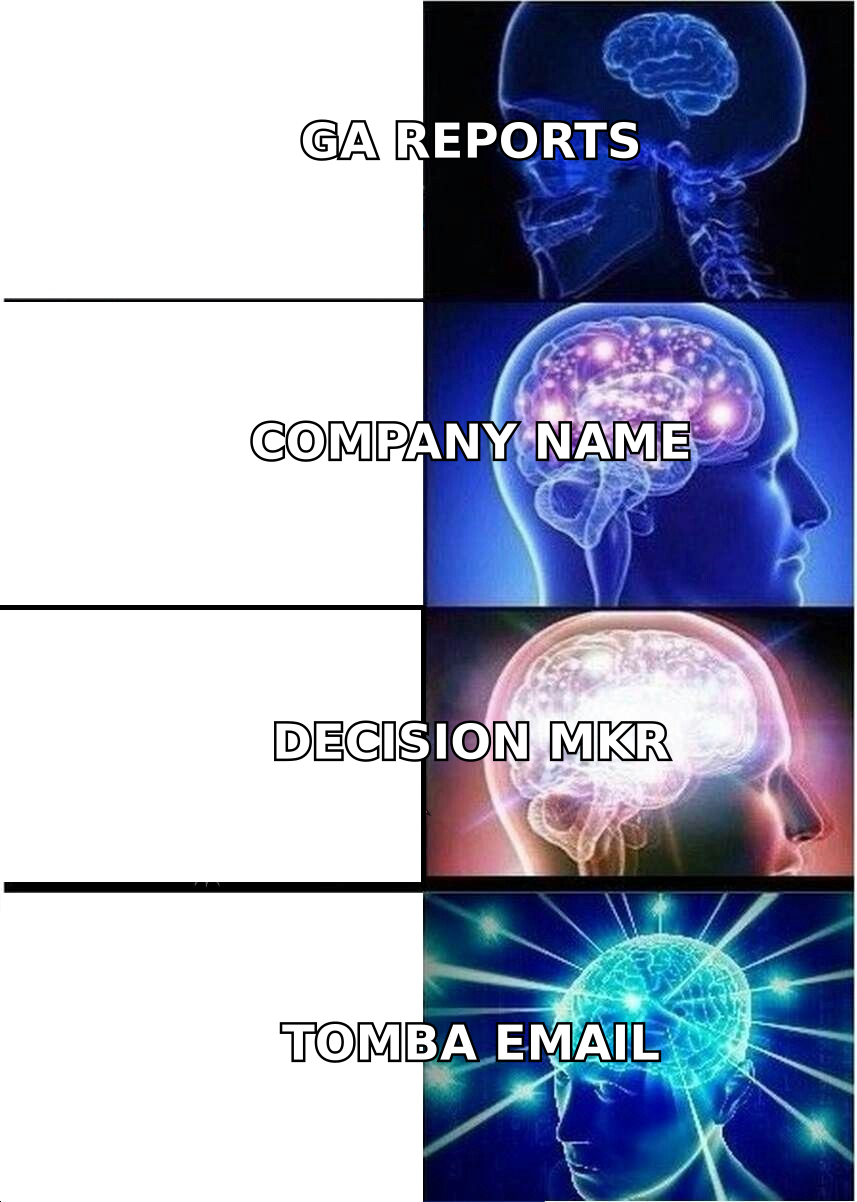
These five complaints show up repeatedly in switching conversations. Check which ones apply to you before shopping — they point to different replacements.
- Company-level only identification. You learn that a 400-person logistics firm read your pricing page. You do not learn who. Somebody on your team still has to figure out the buyer, find the email, and verify it — which is a second tool and a second workflow.
- GA4 dependency and data gaps. Tools that sit on top of Google Analytics inherit whatever GA4 samples, thresholds, or consent-mode gating removes. Cookie banners in the EU and iOS privacy defaults make that sample thinner every year.
- ISP and residential noise. IP-to-company matching returns a lot of telecom carriers, VPN exits, and coworking providers. Weak filtering means your "leads" list is padded with Comcast and Vodafone rows.
- Thin contact data. Suggested contacts from a firmographic database are frequently stale. Without an email verifier stage, you are shipping guesses to your sequencer and burning domain reputation.
- Pricing that scales with traffic, not value. Visitor-ID pricing is usually banded by monthly identified companies. A content-heavy site hits the ceiling fast, even if very few of those companies are ICP fits.
What should you compare in a visitor identification tool?#
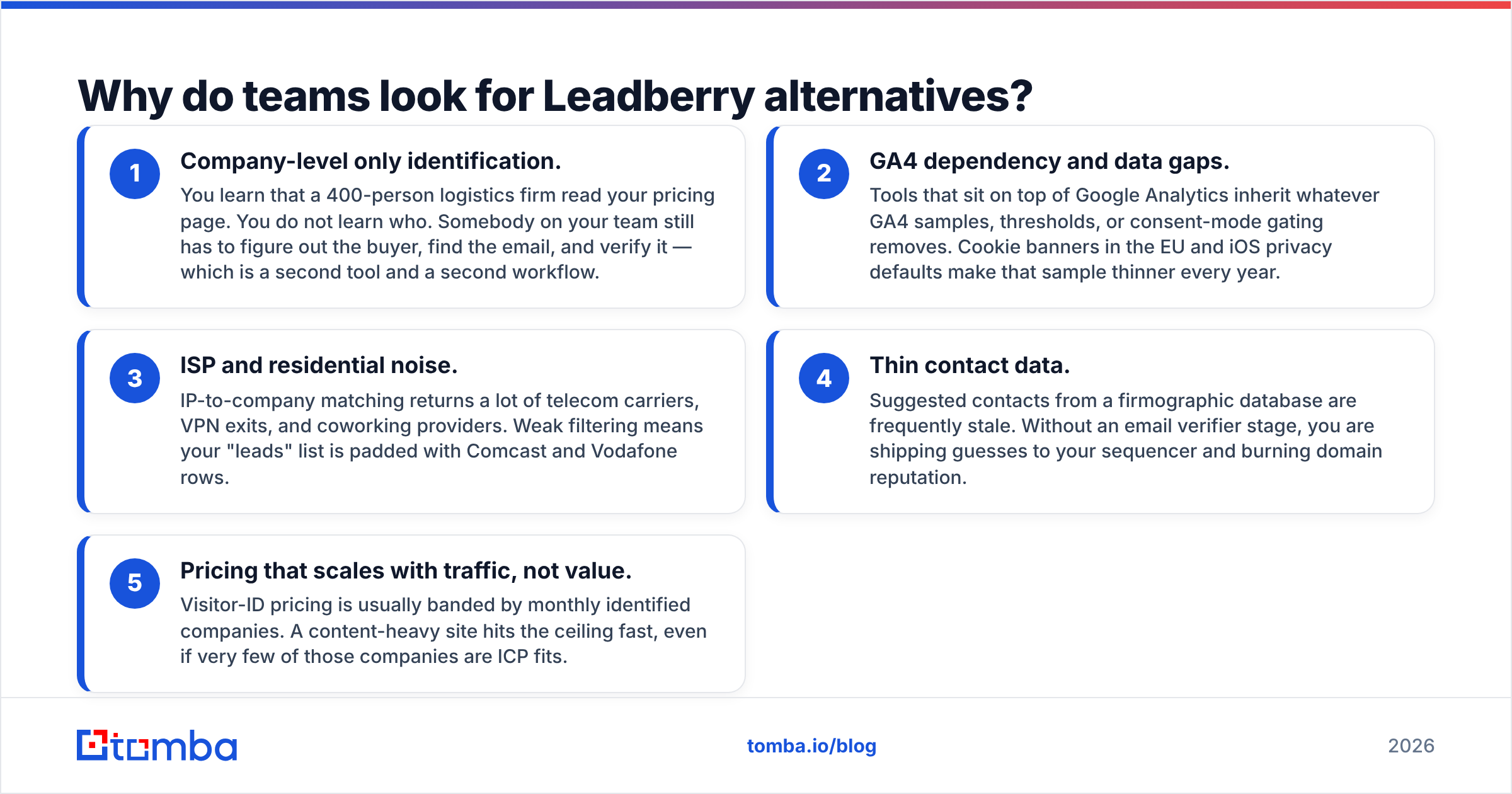
Before naming names, get the evaluation criteria straight. Most buyers over-index on the reveal rate and ignore everything downstream.
| Criterion | Why it matters | Where Leadberry sits | What to look for instead |
|---|---|---|---|
| Data source | GA-based tools inherit analytics gaps; script-based tools capture their own first-party data | Google Analytics integration | Native tracking script or reverse-IP + first-party cookie |
| Identification level | Company-level needs manual contact research; person-level does not | Company-level | Company + role-based contact discovery |
| Contact output | A company name is not a sendable lead | Suggested contacts, limited verification | Verified email, phone, LinkedIn URL |
| Geography | US-heavy databases miss EU mid-market; EU tools miss US SMB | Strong EU coverage | Match the database to your territory |
| Compliance posture | GDPR treats personal data differently from firmographic data | EU-based, GA-dependent | Documented lawful basis, DPA, EU hosting option |
| Pricing model | Traffic-banded pricing punishes content marketing | Tiered by identified companies | Credit-based or flat seat pricing you can forecast |
The last column is the real test. If a tool cannot hand your SDR a verified email address, it is a reporting product, not a lead generation product. That is why enrichment-first platforms now compete directly with visitor-ID specialists.
What are the 8 best Leadberry alternatives in 2026?#
1. Tomba — best for turning identified companies into verified contacts#
Tomba approaches the problem from the opposite end. Instead of stopping at "Acme Corp visited," it starts from a domain and returns the people you can actually email. Website visitor reveal identifies the companies in your traffic, then domain search and the email finder produce role-matched contacts with confidence scores, and the verifier confirms deliverability before anything leaves your outbox.
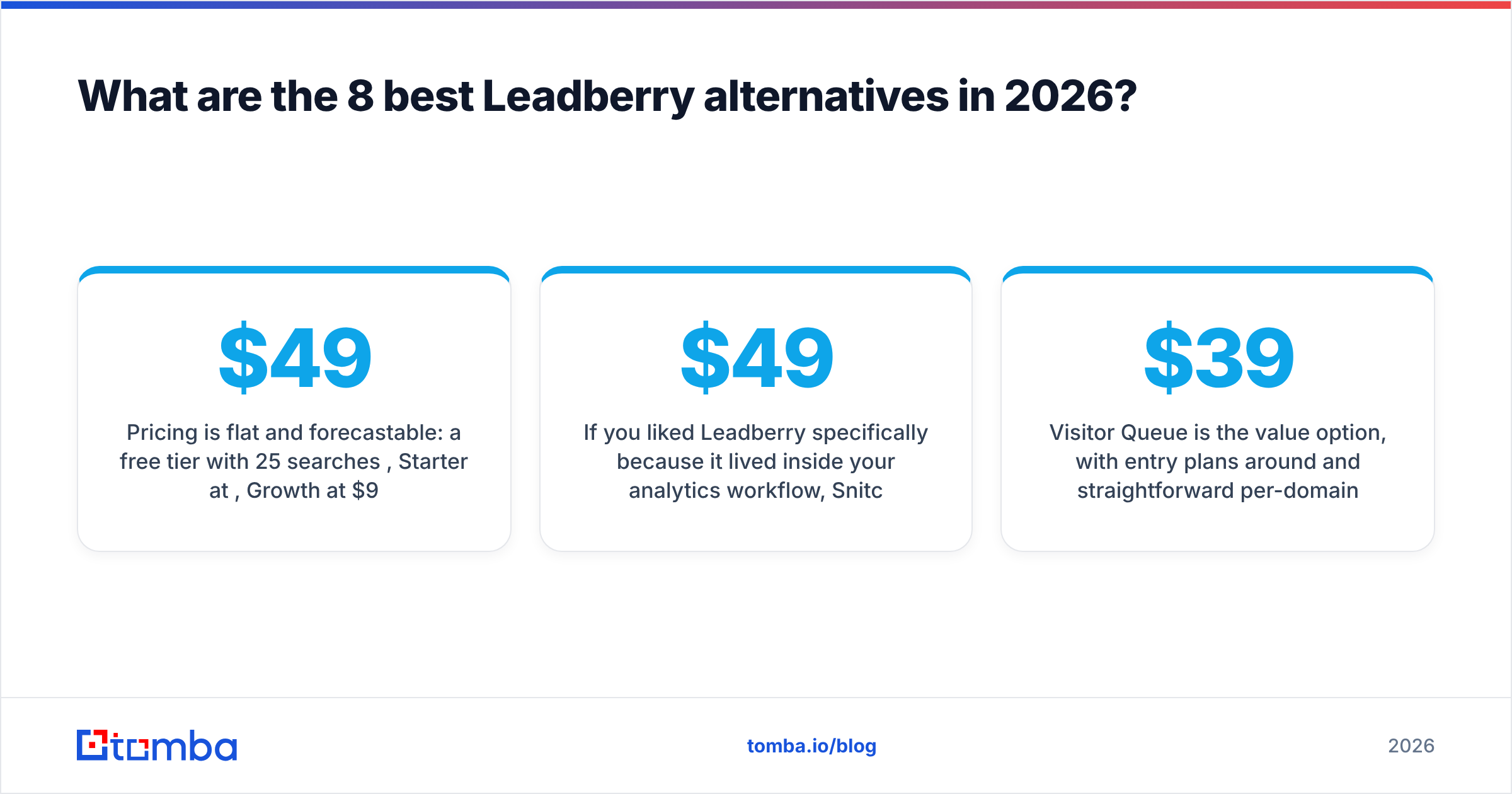
Pricing is flat and forecastable: a free tier with 25 searches/month, Starter at $49/mo, Growth at $99/mo, Pro at $249/mo, and custom Enterprise. There is a catch-all verifier for the domains that bounce every other tool, plus data enrichment, phone finder, and a full API if you want to wire identification into your own stack.
Best for: teams that want one vendor from anonymous visit to verified email. Weaker at: deep intent scoring and account-based advertising audiences.
2. Dealfront (formerly Leadfeeder) — best direct like-for-like swap#
Dealfront is the Leadfeeder + Echobot merger, and it is the closest functional replacement for Leadberry with more data behind it. You get visitor identification, a European company database, trigger events, and solid CRM integrations. A free Lite tier exists with a limited data window and company cap; paid plans start in the €99/mo range and scale by identified companies. See dealfront.com for current banding.
Best for: EU-focused teams that want visitor ID plus firmographic search in one subscription. Weaker at: price predictability on high-traffic sites.
3. Albacross — best for GDPR-sensitive European teams#
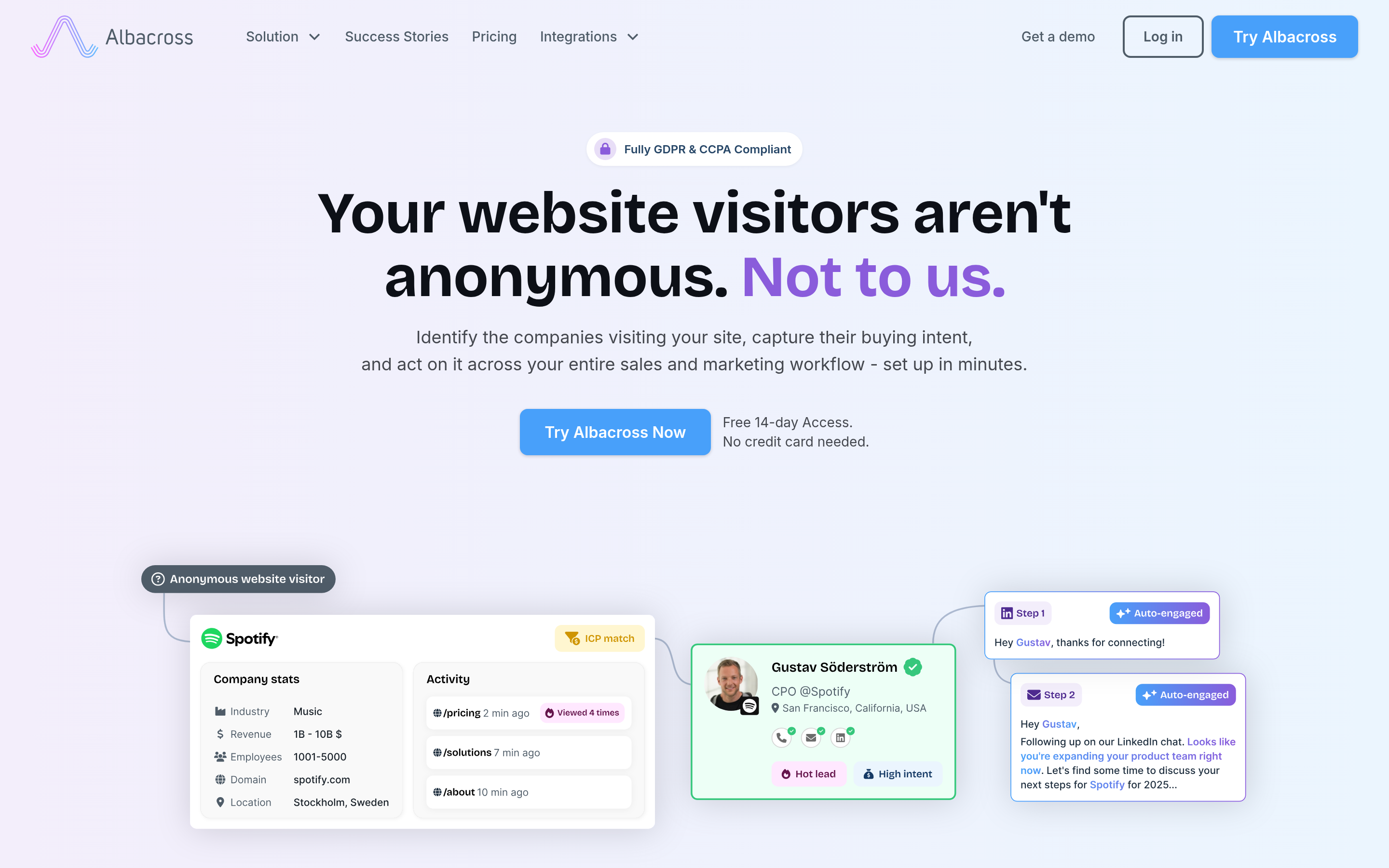
Albacross runs its own first-party network rather than depending on your analytics install, with strong European IP coverage and an explicit compliance posture. It also pushes audiences into LinkedIn and ad platforms, which makes it useful for retargeting identified accounts rather than only emailing them. Pricing is quote-based, which is a real drawback for small teams.
Best for: demand gen teams running account-based advertising in Europe. Weaker at: transparent self-serve pricing.
4. Snitcher — best GA4-native alternative#
If you liked Leadberry specifically because it lived inside your analytics workflow, Snitcher is the natural successor. It integrates natively with GA4, pushes identified companies back as a custom dimension, and prices in a similar mid-tier band (roughly $49/mo entry). The UI is tighter than most, and the ISP filtering is noticeably better than legacy tools.
Best for: analytics-led marketers who want company data inside GA4 reports. Weaker at: contact-level data — you will still need a finder.
5. Visitor Queue — best budget pick#
Visitor Queue is the value option, with entry plans around $39/mo and straightforward per-domain pricing. You get company identification, custom lead lists, page-level filtering, and Slack/CRM notifications. It does not pretend to be an intent platform, and that honesty is part of the appeal.
Best for: small teams replacing Leadberry without raising the budget. Weaker at: database depth outside North America and the UK.
6. Lead Forensics — best for enterprise pipelines with budget#
Lead Forensics is the heavyweight: large proprietary IP database, dedicated account management, contact records attached to identified companies, and enterprise reporting. It is also sold on annual contracts with quote-only pricing that typically lands in the four-to-five figure range per year. If you are a two-person team, this is not your tool.
Best for: enterprise sales orgs with a defined ABM motion. Weaker at: flexibility, trial access, and month-to-month commitment.
7. BookYourData — best when you want the list, not the traffic#
BookYourData solves an adjacent problem well: instead of waiting for your ICP to visit, you buy a targeted, verified contact list filtered by industry, title, geography, and company size. It works on a pay-as-you-go credit model with an accuracy guarantee, which makes it a clean complement to any visitor-ID tool. Many teams run both — reveal for warm demand, purchased lists for cold coverage of accounts that have not shown up yet.
Best for: filling pipeline gaps fast without relying on inbound traffic volume. Weaker at: intent signals — a purchased contact has not raised a hand.
8. Person-level tools (RB2B, Warmly, HubSpot Breeze Intelligence)#
A newer category identifies individual visitors rather than companies, usually via cooperative data networks. Coverage is heavily US-skewed and the compliance calculus is different in the EU, so read the DPA carefully. HubSpot's Breeze Intelligence (the successor to Clearbit) is the safest pick if you are already a HubSpot customer, since enrichment lands directly on existing records.
Best for: US-only outbound teams that want named individuals. Weaker at: EU coverage and regulatory simplicity.

How do the Leadberry alternatives compare on price and output?#
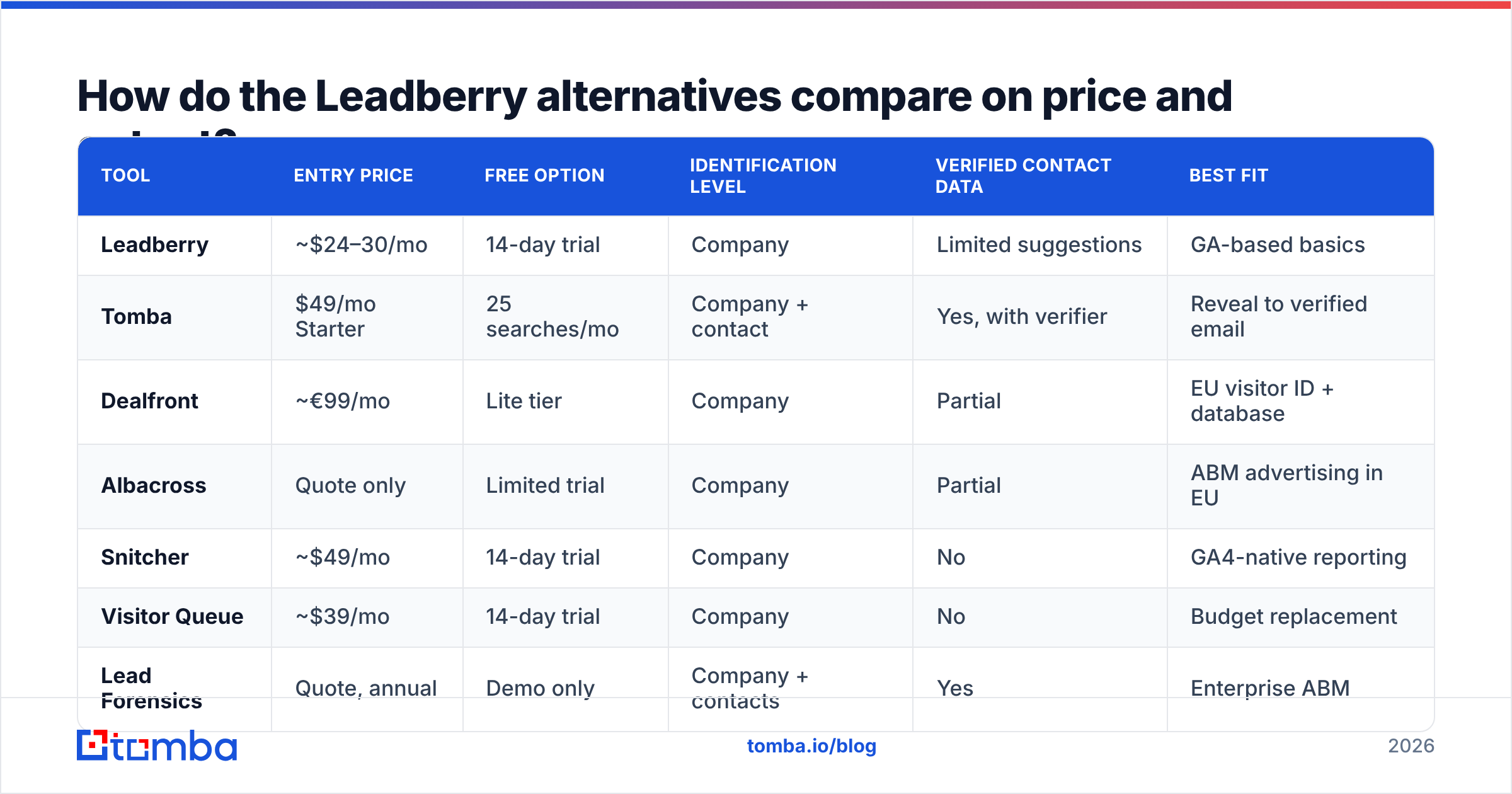
| Tool | Entry price | Free option | Identification level | Verified contact data | Best fit |
|---|---|---|---|---|---|
| Leadberry | ~$24–30/mo | 14-day trial | Company | Limited suggestions | GA-based basics |
| Tomba | $49/mo Starter | 25 searches/mo | Company + contact | Yes, with verifier | Reveal to verified email |
| Dealfront | ~€99/mo | Lite tier | Company | Partial | EU visitor ID + database |
| Albacross | Quote only | Limited trial | Company | Partial | ABM advertising in EU |
| Snitcher | ~$49/mo | 14-day trial | Company | No | GA4-native reporting |
| Visitor Queue | ~$39/mo | 14-day trial | Company | No | Budget replacement |
| Lead Forensics | Quote, annual | Demo only | Company + contacts | Yes | Enterprise ABM |
| BookYourData | Pay-as-you-go credits | Free sample credits | N/A (list purchase) | Yes, guaranteed | Targeted list building |
Prices move. Treat this as a shortlist filter, then confirm on each vendor's pricing page — including Tomba pricing, which is published in full rather than gated behind a demo.
Is person-level identification worth the compliance risk?#
Sometimes, and it depends entirely on your territory. Person-level reveal is genuinely useful for US mid-market outbound, where a named visitor plus a page view gives you a real opening line. In the EU and UK, identifying a named individual from anonymous traffic pulls you squarely into personal-data territory, and "we bought it from a vendor" is not a lawful basis on its own.
The pragmatic middle path most teams settle on: identify at company level, then find the right role deliberately. If a mid-market manufacturer spends eleven minutes on your integrations page, you do not need to know which employee it was — you need the VP of Operations. A bulk email finder run against that domain list gets you there with a defensible data trail and no cooperative-network gray area.
Which Leadberry alternative should you pick?#
- You want a drop-in replacement with better data: Dealfront.
- You want to stay inside GA4: Snitcher.
- You want to spend less than you do now: Visitor Queue.
- You are running EU-focused ABM ads: Albacross.
- You have enterprise budget and an ABM team: Lead Forensics.
- You need contacts, not just company names: Tomba.
- You need volume beyond your current traffic: BookYourData alongside any of the above.
One more piece of advice that applies regardless of choice: run a two-week parallel test. Keep Leadberry live, add the challenger, and compare identified companies against your actual CRM opportunities — not against each other. Reveal rates are marketing numbers. Matched pipeline is the only metric that decides a renewal.
Ready to turn identified companies into replies?#
Company names do not book meetings; people do. Point Tomba Email Finder at the domains your visitor-ID tool surfaces and get role-matched, confidence-scored, verifier-checked email addresses in the same workflow — starting free with 25 searches a month, then $49/mo when you are ready to scale. Run your last 50 identified companies through it today and see how many turn into contacts you can actually send to.
Related guides#
// get started
Find, verify and enrich your first contacts today
Start on the free plan with 25 searches a month, then scale when your team is ready.
Free plan · No credit card required · GDPR & CCPA
// about the author