Leadsforge vs Sourcescrub: Outbound Leads or Deal Sourcing Data?
Leadsforge and Sourcescrub both sell B2B data, but they're built for different buyers. One builds outbound lead lists for SDRs. The other maps private companies for dealmakers. Here's how to pick.
TL;DR
- Leadsforge is a self-serve, AI-driven lead generation tool. You describe your ideal customer in plain English and get a contact list with emails, ready for cold outreach. It's built for SDRs, agencies, and founders.
- Sourcescrub is an enterprise private-company intelligence platform. It's built for private equity, investment banking, and corporate development teams that need to find, track, and qualify acquisition targets.
- These tools compete less than the "vs" suggests. Leadsforge answers "who should I email this week?" and Sourcescrub answers "which founder-owned companies in this niche should we buy or invest in?"
- Leadsforge wins on price, speed to value, and outbound readiness. Sourcescrub wins on private-market depth, deal signals, and proprietary sourcing data like conference lists.
- Whichever one you pick, you'll probably still need a separate email finder and verifier to fill contact gaps before you hit send.
What is Leadsforge?#
Leadsforge belongs to the "Forge" family of outbound tools, next to Salesforge (sequencing), Mailforge and Infraforge (sending infrastructure), and Warmforge (warmup). Its job is to turn a description of your ideal customer profile into an exportable lead list.
The product's main feature is its chat-style search. You don't have to click through 40 filters. You type something like "Heads of RevOps at US-based B2B SaaS companies with 50–200 employees that raised a Series A in the last 18 months," and Leadsforge translates that into a query. You can refine the results conversationally, run lookalike searches from a sample company, and enrich contacts with emails (and phone numbers on some plans) using credits.
What you get:
- Natural-language ICP search that converts plain-English prompts into structured filters
- Lookalike company discovery, seeded from your best customers
- Contact enrichment with work emails that are verified before export
- Native handoff to Salesforge, plus CSV export for any other sequencer
- Credit-based self-serve plans, so you can start without a sales call
Leadsforge is designed for teams that measure success in meetings booked. Its data model is built around people at companies, and the whole workflow ends with a list you can load into a sequence.
What is Sourcescrub?#
Sourcescrub comes from the opposite corner of B2B data. It's a private-market intelligence platform used mostly by private equity firms, growth equity investors, M&A advisors, and corporate development teams. Its core use case is deal sourcing, meaning you find founder-owned and bootstrapped companies before they run a banker-led sale process.
Sourcescrub's data model is built around companies first. It tracks millions of private companies and adds signals that matter to investors: headcount growth, estimated revenue ranges, ownership status, and presence on third-party "sources" such as industry conference exhibitor lists, trade association directories, buyer's guides, and fast-growth rankings. The sources layer is its signature feature. A company exhibiting at a niche industrial automation trade show that isn't in any mainstream database is exactly the kind of target Sourcescrub is built to surface.
What you get:
- Private-company profiles with growth, size, and ownership signals
- Conference and tradeshow data, including exhibitor and attendee-side lists by industry
- Thematic market mapping that lets you build and monitor lists of companies in a sector
- Executive and founder contacts for outreach to owners
- CRM integrations (Salesforce and deal-management CRMs common in PE) so sourcing activity flows into the pipeline
- Enterprise contracts with onboarding and account management
Sourcescrub is a research platform that happens to include contacts. Leadsforge is a contact platform that happens to include some company research.
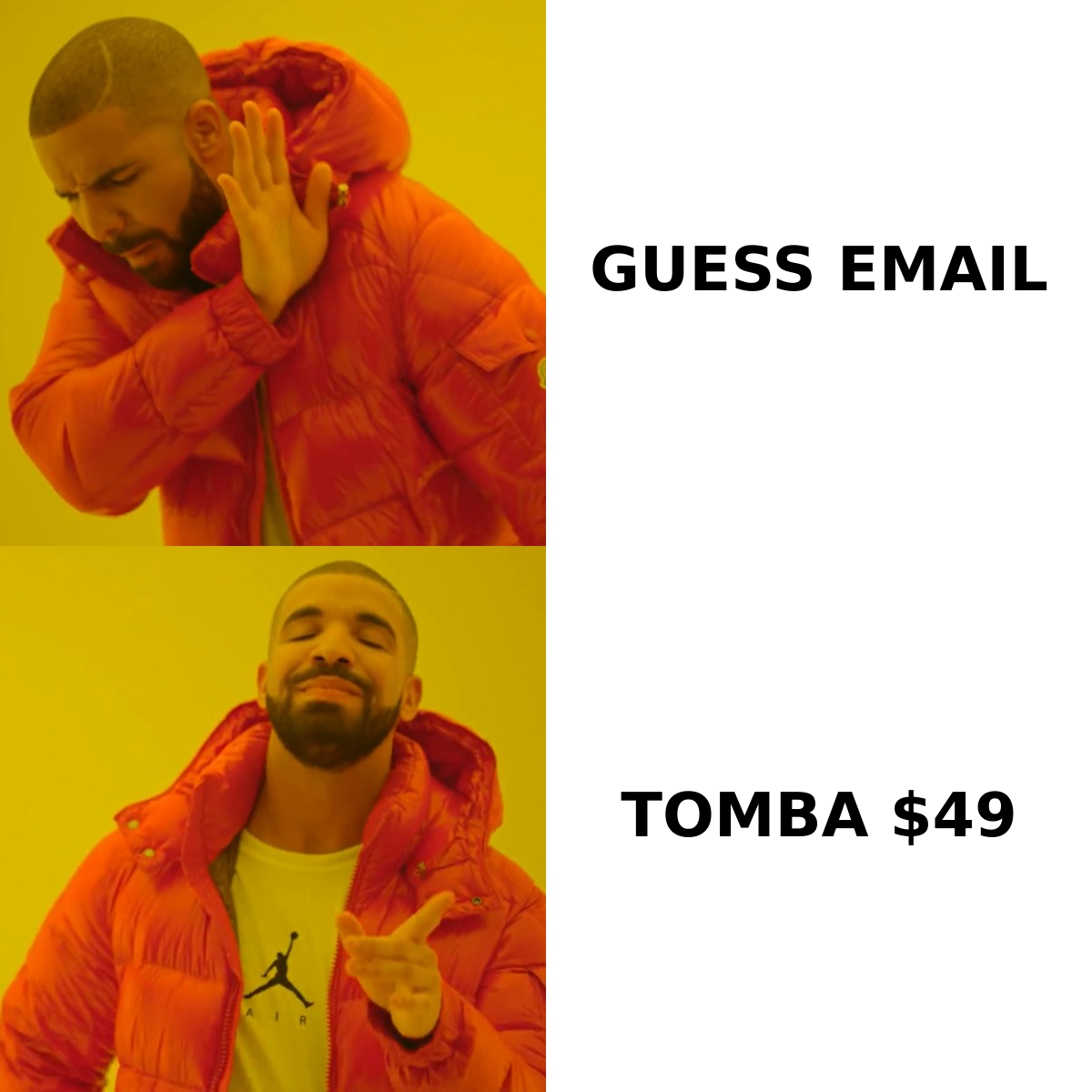
How do Leadsforge and Sourcescrub compare side by side?#
Here's the high-level comparison. Pricing details reflect publicly available information as of 2026. Sourcescrub doesn't publish list prices, so the figures below come from typical enterprise-contract reports, not a rate card.
| Attribute | Leadsforge | Sourcescrub |
|---|---|---|
| Primary buyer | SDRs, agencies, founders, growth teams | PE/VC investors, M&A advisors, corp dev |
| Core question answered | "Who should I contact?" | "Which companies should we acquire or back?" |
| Data orientation | People-first (contacts at companies) | Company-first (private-company profiles) |
| Search interface | AI chat / natural-language prompts | Advanced filters, saved searches, market maps |
| Unique data | Lookalike ICP matching, AI query refinement | Conference/tradeshow lists, sourcing signals, growth estimates |
| Email contacts | Yes, verified before export | Yes, focused on owners and executives |
| Pricing model | Self-serve monthly credits | Annual enterprise contract, quote-based |
| Typical entry cost | Tens to low hundreds of dollars/month | Commonly reported in the five-figure range per year |
| Free trial | Limited free credits to test | Demo-led; no self-serve free tier |
| Time to first list | Minutes | Days to weeks (onboarding + search setup) |
| Outbound integration | Salesforge native, CSV export | CRM sync; not built as an outbound sequencer feed |
| Best for | High-volume cold email pipelines | Proprietary deal flow and market mapping |
If you only read the table, the takeaway is that these tools overlap on "B2B company and contact data" and diverge on almost everything else.
Which tool has better data quality?#
"Better" depends on the question you're asking the data to answer.
For outbound contact accuracy, Leadsforge has the edge on paper, because its whole pipeline ends in a sendable email. Contacts are verified before export, which lowers your bounce rate and protects sender reputation. That matters a lot when you run outbound on the Forge infrastructure stack, where many mailboxes send at moderate volume. The trade-off is common to every aggregated people database: coverage thins out in niche verticals, at very small companies, and outside North America and Western Europe.
For private-company depth, Sourcescrub is in a different league. The details a PE associate cares about are hard to scrape from LinkedIn: whether the business is founder-owned, whether it has taken institutional capital, how fast headcount is growing, which trade shows it exhibits at, and how it ranks against peers in a niche. Sourcescrub's value lies in collecting and normalizing those signals across thousands of sources. Leadsforge doesn't attempt this.
Where Sourcescrub is weaker is contact-level completeness for anyone below the owner or C-suite. If your target account list comes from Sourcescrub and you need the VP of Operations or the CFO at 300 lower-middle-market companies, expect gaps. Most deal teams fill them with a dedicated email finder or a domain search that pulls every known address at a company's website.
A practical rule: judge each tool on the job it was built for. Leadsforge should be judged on bounce rate and reply rate. Sourcescrub should be judged on how many proprietary, off-market targets it surfaces that your competitors missed.
How does pricing compare?#
The pricing models show who each tool was built for.
Leadsforge is self-serve. You pick a monthly plan, receive a bucket of credits, and spend them on contact reveals and enrichment. Emails and phone numbers usually cost different amounts of credits. For a solo founder or a small agency, you can be building lists the same afternoon for less than the cost of one team lunch. At high volume, the credits add up, so model your cost per verified contact before you commit to an annual plan.
Sourcescrub sells annual enterprise contracts through a sales process. There's no public price list. Contracts are commonly reported in the five-figure range per year and scale with seats and modules, so check current quotes on G2 or directly with their team. For a PE fund where one proprietary deal can be worth millions in carried interest, that cost is easy to justify. For a five-person SaaS sales team, it would be hard to defend.
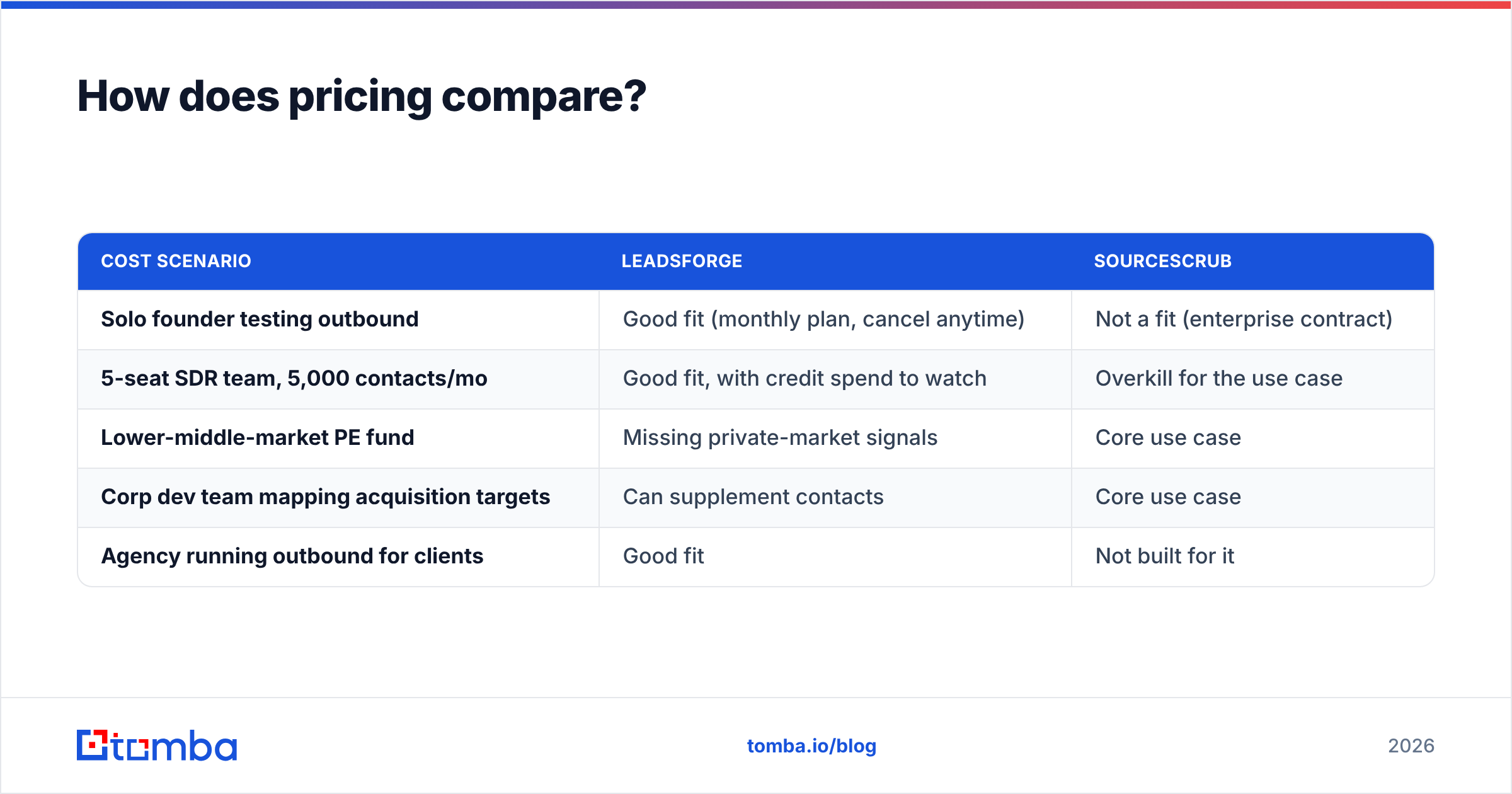
| Cost scenario | Leadsforge | Sourcescrub |
|---|---|---|
| Solo founder testing outbound | Good fit (monthly plan, cancel anytime) | Not a fit (enterprise contract) |
| 5-seat SDR team, 5,000 contacts/mo | Good fit, with credit spend to watch | Overkill for the use case |
| Lower-middle-market PE fund | Missing private-market signals | Core use case |
| Corp dev team mapping acquisition targets | Can supplement contacts | Core use case |
| Agency running outbound for clients | Good fit | Not built for it |
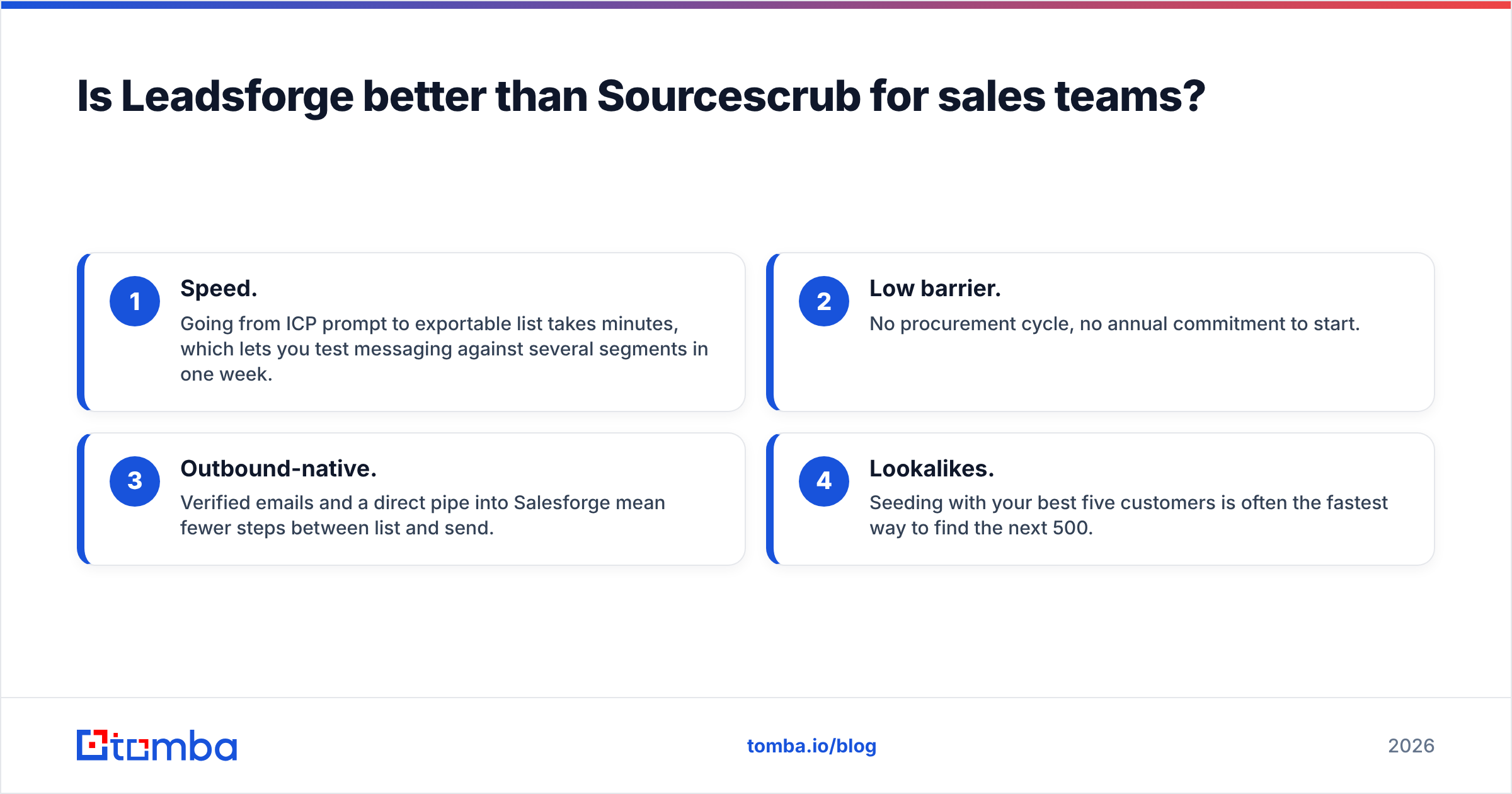
Is Leadsforge better than Sourcescrub for sales teams?#
Yes, for nearly every traditional B2B sales team. If your motion is "find ICP accounts, identify buyers, sequence them, book meetings," Leadsforge is built for that loop and Sourcescrub isn't.
What Leadsforge does well for sales:
- Speed. Going from ICP prompt to exportable list takes minutes, which lets you test messaging against several segments in one week.
- Low barrier. No procurement cycle, no annual commitment to start.
- Outbound-native. Verified emails and a direct pipe into Salesforge mean fewer steps between list and send.
- Lookalikes. Seeding with your best five customers is often the fastest way to find the next 500.
Where it falls short for sales:
- Buying signals are thinner than what intent-data platforms or trigger-based tools provide.
- Niche coverage can be patchy in verticals like manufacturing, construction, or local services.
- Credit math gets expensive if your team exports large lists without qualifying them first.
The one sales scenario where Sourcescrub makes sense is when your buyers are private-equity-backed companies or their operating partners. Some vendors that sell into PE portfolios use Sourcescrub-style data to find newly acquired companies right after a deal closes, since that's often when new tooling budgets open. That use case is narrow, though.
Is Sourcescrub better than Leadsforge for investors and M&A?#
Yes, clearly. If you're a PE associate building a thesis on "founder-owned HVAC service companies in the Southeast with 50–250 employees," Leadsforge can give you some company names and contacts. Sourcescrub gives you the market map, the growth signals, the conference circuit those companies show up on, and a workflow to track them over months until they're ready to talk.
What Sourcescrub does well for dealmakers:
- Proprietary sourcing signals. Conference exhibitor lists and niche directories surface companies that never appear in mainstream databases.
- Private-company financial context. Revenue and headcount estimates let you screen for fit before the first call.
- Thesis-driven workflows. You can build, save, and monitor sector lists as the market changes.
- CRM sync. Sourcing activity flows into the systems deal teams already use for pipeline and reporting.
Where it falls short:
- Cost puts it out of reach for independent sponsors, search funds, and small advisory boutiques.
- Contact depth below the founder or CEO level often needs supplementing.
- It's not an outbound engine. You still need sequencing, inbox infrastructure, and email verification if your team runs owner outreach at any volume.
Can you use Leadsforge and Sourcescrub together?#
You can, and some firms do, though most don't need both. The combined workflow looks like this:
- Sourcescrub identifies and qualifies the target companies (the "which").
- A contact layer, either Leadsforge or a dedicated email finder, fills in decision-makers beyond the founder (the "who").
- An email verifier cleans the list before anything is sent.
- A sequencer sends personalized owner outreach at a measured pace.
In practice, the cheapest version of this stack pairs Sourcescrub with a lightweight email finder instead of a second full lead-gen platform. You already have the company list, so you don't need AI prospecting on top. What you're missing is the contact data. That means domain-level email discovery, name-plus-domain lookups, and verification, all of which cost far less per contact than a second prospecting subscription.
What are the main pros and cons of each?#
Leadsforge pros
- Natural-language search makes list-building fast even for non-technical users
- Verified emails are ready for cold outreach
- Self-serve pricing with a low entry point
- Tight integration with the rest of the Forge outbound stack
Leadsforge cons
- Company intelligence is shallow compared with investor-grade platforms
- Credit consumption needs discipline at scale
- Coverage in niche and non-Western markets can vary
Sourcescrub pros
- Deep private-company data with sourcing signals competitors lack
- Conference and directory data surfaces off-market targets
- Built for thesis-driven deal workflows and long-term tracking
- Enterprise support and CRM integrations for deal teams
Sourcescrub cons
- Enterprise pricing without a self-serve entry tier
- Contact coverage below the executive level is limited
- Not designed as an outbound lead-gen engine
Which should you choose in 2026?#
It comes down to what a successful week looks like for your team.
- Choose Leadsforge if success means booked meetings. You're an SDR team, an outbound agency, or a founder doing your own prospecting, and you want verified contacts in a sequence by Friday.
- Choose Sourcescrub if success means a stronger deal pipeline. You're at a PE fund, growth equity firm, M&A advisory, or corp dev team, and your edge comes from finding companies before a banker does.
- Choose neither if you already have your account list (from a CRM, a Sourcescrub export, a conference attendee sheet, or a customer's referral list) and only need the emails. Then a dedicated finder and verifier is the leaner, cheaper option.
Many teams comparing these two are in that third group without realizing it. They have a good list of companies and a contact gap. Paying for a full prospecting platform or an enterprise intelligence suite to fill that gap is like buying a car to get a spare tire.
How do you close the contact gap without a second platform?#
Tomba fits here. Upload a list of domains, whether from a Sourcescrub market map or a Leadsforge lookalike export, and Tomba returns the known professional emails at each company, their sources, and the company's email pattern. For named individuals, a name-plus-domain lookup returns a single best-match address with a confidence score. Run everything through verification before sending, and you protect the inbox infrastructure you've spent weeks warming.
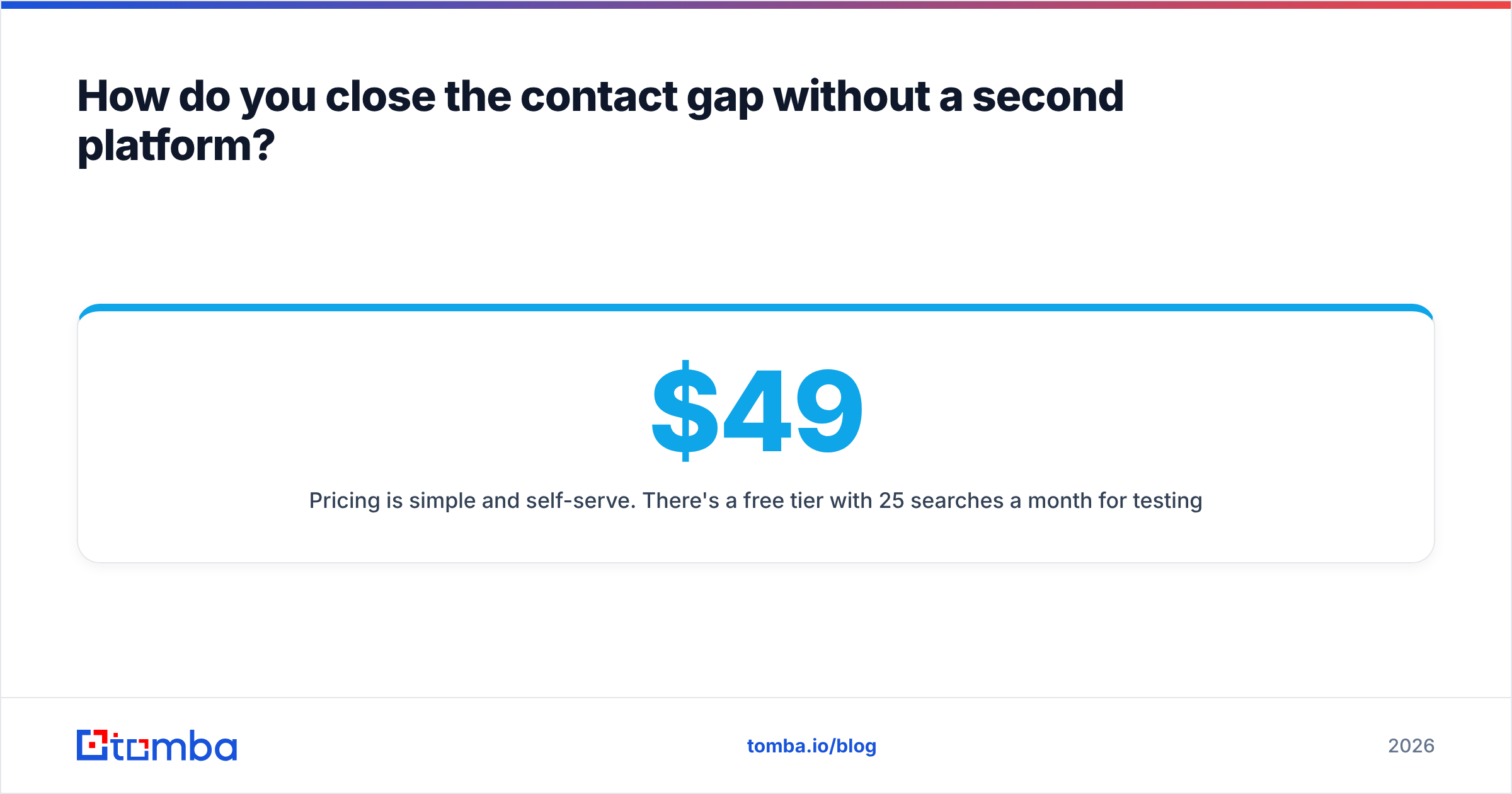
Pricing is simple and self-serve. There's a free tier with 25 searches a month for testing, then Starter at $49/mo, Growth at $99/mo, and Pro at $249/mo, with Enterprise plans for larger volumes. See the full Tomba pricing for credit breakdowns.
If you've picked your data platform and just need the missing decision-makers, start with the Tomba Email Finder. Paste a domain or a name, get verified professional emails in seconds, and send your outreach knowing it will actually land.
Related guides#
// get started
Find, verify and enrich your first contacts today
Start on the free plan with 25 searches a month, then scale when your team is ready.
Free plan · No credit card required · GDPR & CCPA
// about the author