Clodura.ai vs SalesIntel (2026): Which B2B Data Tool Wins?
Clodura.ai and SalesIntel both promise clean B2B contact data, but they price, verify, and cover the market very differently. Here's the honest head-to-head.
Choosing a B2B data platform is really a bet on two things: how accurate the contact records are, and how much you'll pay to keep them fresh. Clodura.ai and SalesIntel both sell that promise, but they aim at different buyers and back it with very different data models. This comparison breaks down where each one earns its price tag, where it falls short, and how to decide without a three-month trial.
TL;DR: Clodura.ai vs SalesIntel at a glance#
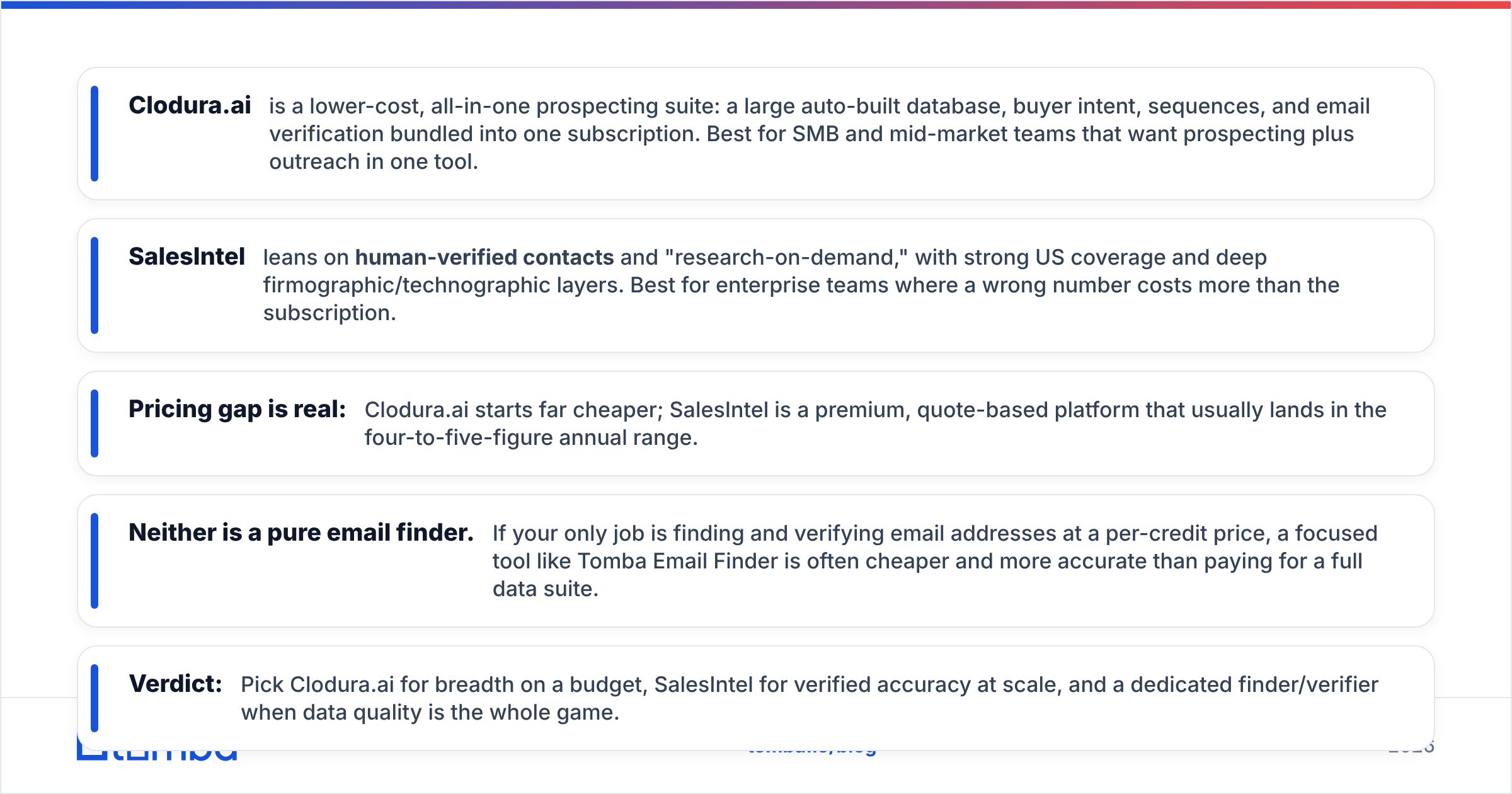
- Clodura.ai is a lower-cost, all-in-one prospecting suite: a large auto-built database, buyer intent, sequences, and email verification bundled into one subscription. Best for SMB and mid-market teams that want prospecting plus outreach in one tool.
- SalesIntel leans on human-verified contacts and "research-on-demand," with strong US coverage and deep firmographic/technographic layers. Best for enterprise teams where a wrong number costs more than the subscription.
- Pricing gap is real: Clodura.ai starts far cheaper; SalesIntel is a premium, quote-based platform that usually lands in the four-to-five-figure annual range.
- Neither is a pure email finder. If your only job is finding and verifying email addresses at a per-credit price, a focused tool like Tomba Email Finder is often cheaper and more accurate than paying for a full data suite.
- Verdict: Pick Clodura.ai for breadth on a budget, SalesIntel for verified accuracy at scale, and a dedicated finder/verifier when data quality is the whole game.
What is Clodura.ai?#
Clodura.ai is an AI-powered sales prospecting platform built around a self-updating B2B database. Instead of only licensing third-party data, it crawls and refreshes company and contact records automatically, then layers on tools most teams would otherwise buy separately: email sequences, buyer-intent signals, direct dials, and a built-in email verifier.
The pitch is consolidation. A rep can search for accounts, pull contacts, verify emails, and launch a cadence without leaving the app. For a smaller team, that removes the cost and glue-work of stitching a database to a separate sequencer. The trade-off is that an automated, breadth-first database tends to carry more stale or generic records than a human-checked one, so verification hygiene matters more before you hit send.
Clodura.ai advertises a large contact universe and a free tier to get started, which makes it a common entry point for startups and SMB sales teams testing outbound for the first time.
What is SalesIntel?#
SalesIntel is a B2B contact and company intelligence platform whose signature is human verification. A large share of its contacts are checked by researchers, and it re-verifies data on a rolling cycle to fight the natural decay of B2B records (people change jobs roughly every two to three years). Its "Research on Demand" service will go find a contact that isn't already in the database, which is a genuinely different model from purely automated providers.
SalesIntel also invests heavily in firmographics, technographics, and intent, and it integrates tightly with CRMs like Salesforce and HubSpot. The audience skews enterprise and revenue-operations teams that need dependable data for territory planning, ABM, and clean CRM enrichment — buyers who feel the pain of bounced sends and misrouted leads more acutely than a two-person startup does.
The catch is price and transparency: SalesIntel is quote-based, and access to its best features and credit volumes generally means an annual contract.
How do Clodura.ai and SalesIntel compare on features and pricing?#
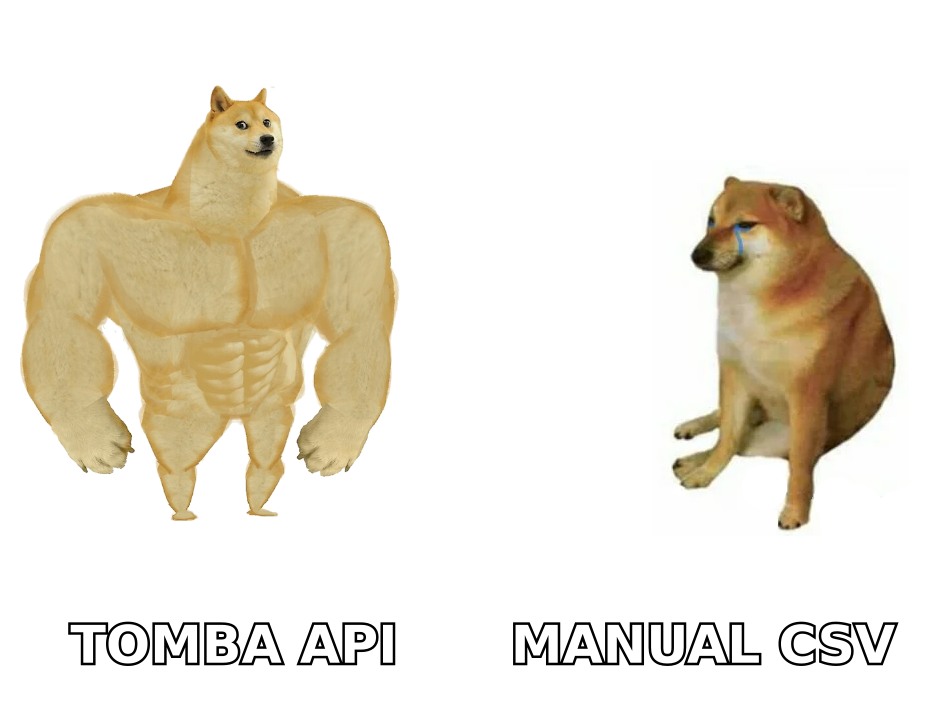
Here's the side-by-side on the attributes that actually change a buying decision. Public pricing for both moves and is often gated, so treat the figures as directional and confirm on a call.
| Attribute | Clodura.ai | SalesIntel |
|---|---|---|
| Core model | Auto-built AI database + outreach suite | Human-verified data + research on demand |
| Free tier | Yes, limited monthly credits | No true free tier (demo/trial only) |
| Entry pricing | Low-cost paid tiers, SMB-friendly | Quote-based, premium/enterprise |
| Email verification | Built-in verifier | Human + automated verification |
| Direct dials / phones | Yes | Yes, strong US coverage |
| Buyer intent | Included on higher tiers | Included, a core strength |
| Sequences / cadences | Native | Not the focus (relies on integrations) |
| Best-fit buyer | SMB & mid-market | Mid-market & enterprise |
Read the table as a fork in the road. Clodura.ai bundles more of the outbound workflow at a lower entry price, which is efficient if you want one login. SalesIntel strips the cadence tooling and spends that budget on verification and coverage depth, which is what enterprise data buyers actually pay for.
Which one has better data accuracy?#
SalesIntel generally wins on raw accuracy, and Clodura.ai wins on cost-per-record. That's the honest summary.
SalesIntel's human-in-the-loop verification and re-verification cycle is designed specifically to keep bounce rates low, and independent reviews on G2 consistently praise its data quality and US-based direct dials. If your outbound economics break when 15% of a list bounces, that verification premium can pay for itself.
Clodura.ai's automated database is broader and cheaper, but breadth-first crawling means more variance. Plenty of records are accurate; a meaningful slice will be outdated or role-based (info@, sales@) rather than a real person. That's not a knock unique to Clodura — it's the structural cost of any auto-built database — but it means you should verify before a campaign, not after.
Whichever platform you choose, run a verification pass on any list before you send. A cheap email verifier step catches job-changers, typos, and dead mailboxes that no database refreshes fast enough to guarantee. Treating verification as a separate, always-on step is the single biggest lever on deliverability, regardless of where the data came from.
When is a dedicated email finder the smarter buy?#
When your bottleneck is finding and verifying real email addresses — not managing a whole prospecting suite — a focused tool beats a bundled platform on both price and accuracy.
Think about what you're really paying for with Clodura.ai or SalesIntel. A big chunk of the subscription funds features you may never touch: intent scoring, cadence builders, org charts, technographics. If your workflow is "I have a list of companies and names, I need deliverable emails in my CRM," you're subsidizing modules you don't use.
A dedicated finder/verifier stack fits that job better in a few common situations:
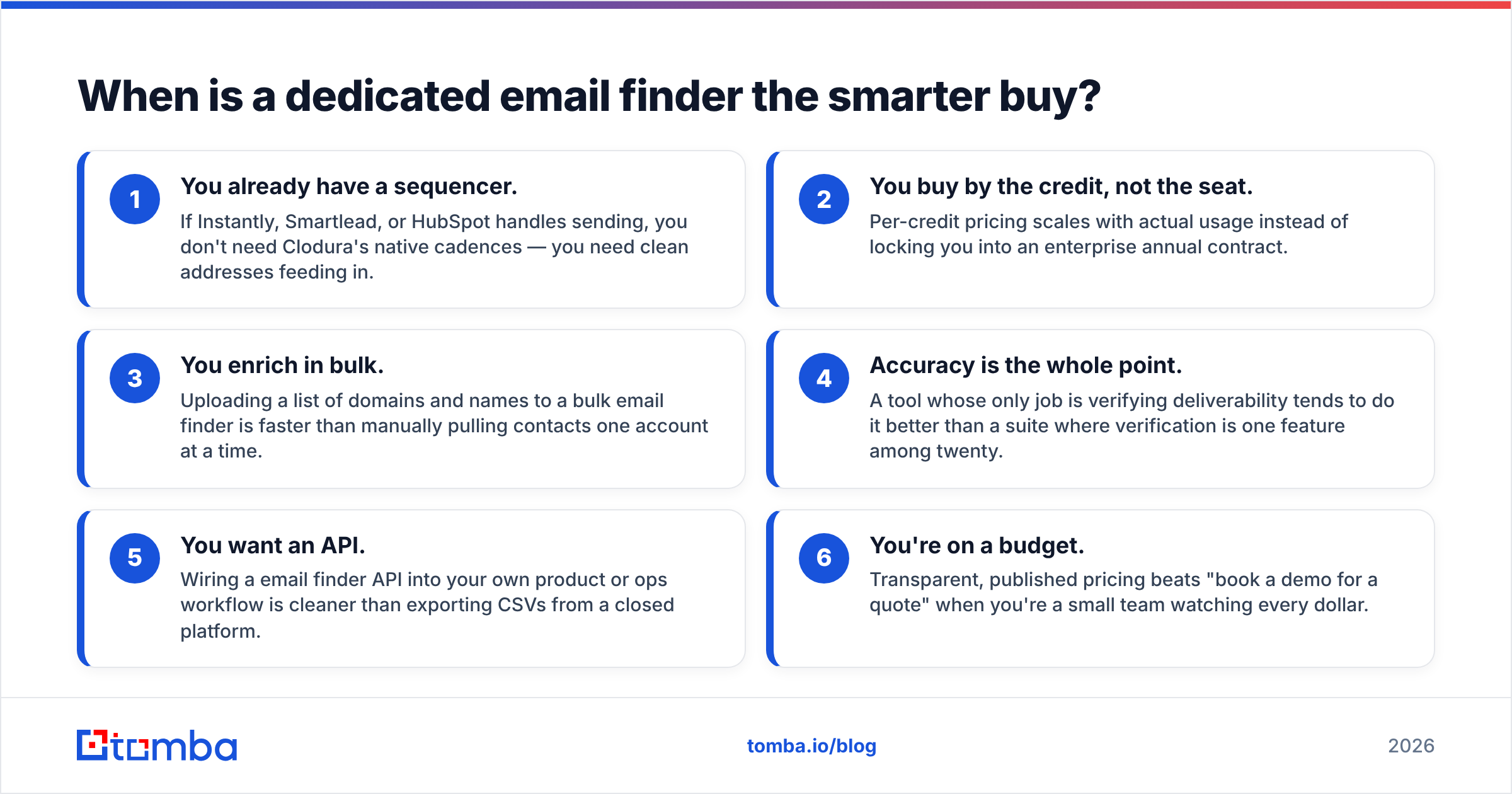
- You already have a sequencer. If Instantly, Smartlead, or HubSpot handles sending, you don't need Clodura's native cadences — you need clean addresses feeding in.
- You buy by the credit, not the seat. Per-credit pricing scales with actual usage instead of locking you into an enterprise annual contract.
- You enrich in bulk. Uploading a list of domains and names to a bulk email finder is faster than manually pulling contacts one account at a time.
- Accuracy is the whole point. A tool whose only job is verifying deliverability tends to do it better than a suite where verification is one feature among twenty.
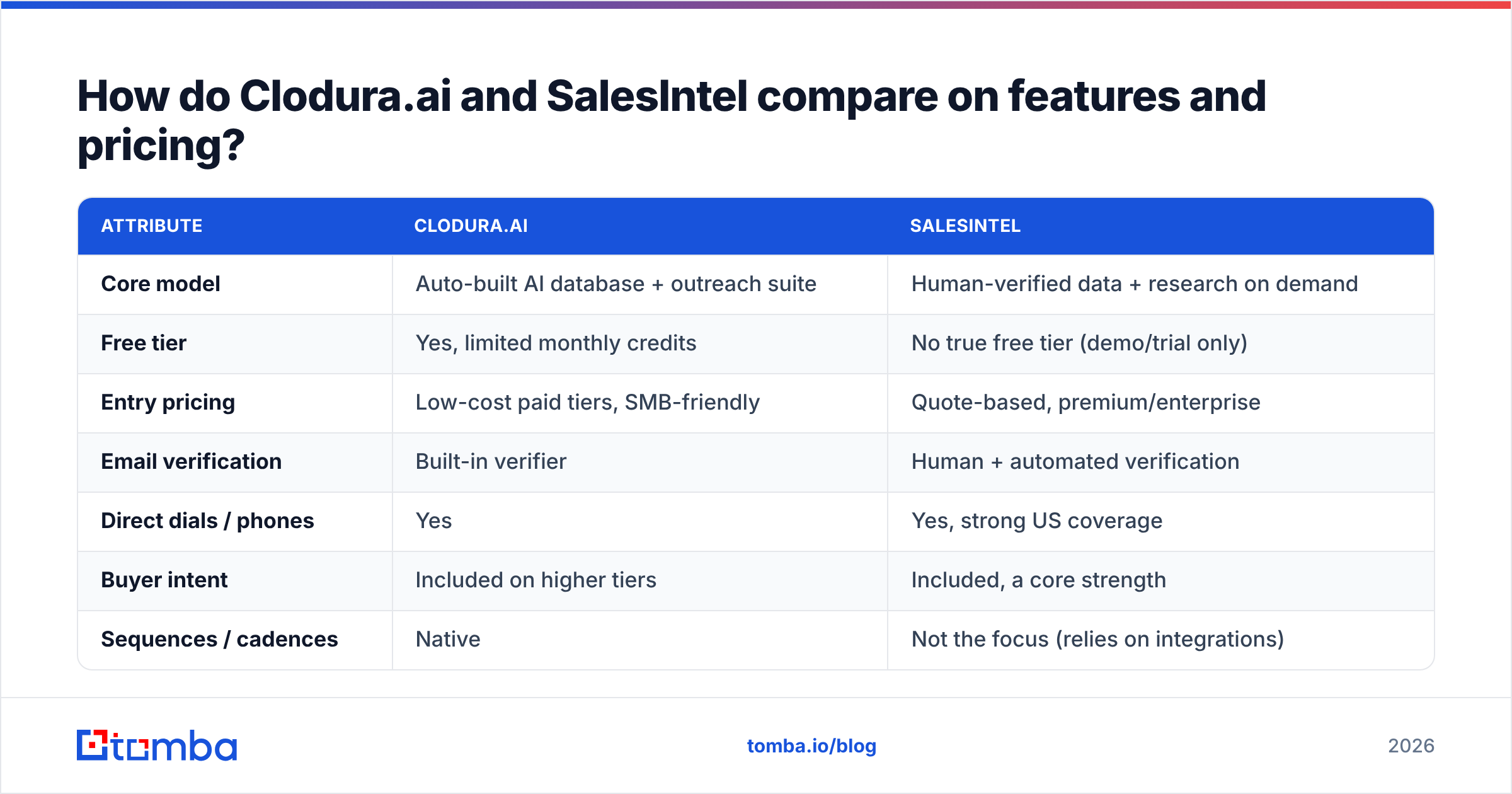
- You want an API. Wiring a email finder API into your own product or ops workflow is cleaner than exporting CSVs from a closed platform.
- You're on a budget. Transparent, published pricing beats "book a demo for a quote" when you're a small team watching every dollar.
This is exactly the gap Tomba fills. Instead of a broad database you rent, you pay for the specific action — find the email, verify it, enrich the record — with published Tomba pricing that starts with a free tier (25 searches/month) and a $49/mo Starter plan, not a five-figure contract.
Clodura.ai vs SalesIntel: pros and cons#
A quick gut-check on the trade-offs before you commit.
Clodura.ai — pros:
- All-in-one: database, verification, and sequences in one subscription
- SMB-friendly entry pricing and a genuine free tier
- Buyer intent and direct dials included without a separate vendor
Clodura.ai — cons:
- Auto-built data carries more stale/role-based records; verify before sending
- Feature breadth can feel shallow next to specialists in each category
- Global coverage is thinner than its US data
SalesIntel — pros:
- Human-verified contacts and re-verification lower bounce risk
- Research on Demand fills gaps the database doesn't already have
- Strong US direct dials, firmographics, and technographics
SalesIntel — cons:
- Premium, quote-based pricing that's hard to justify for small teams
- No lightweight self-serve or true free tier
- Not a cadence tool — you'll still need a separate sequencer
How should you decide between them?#
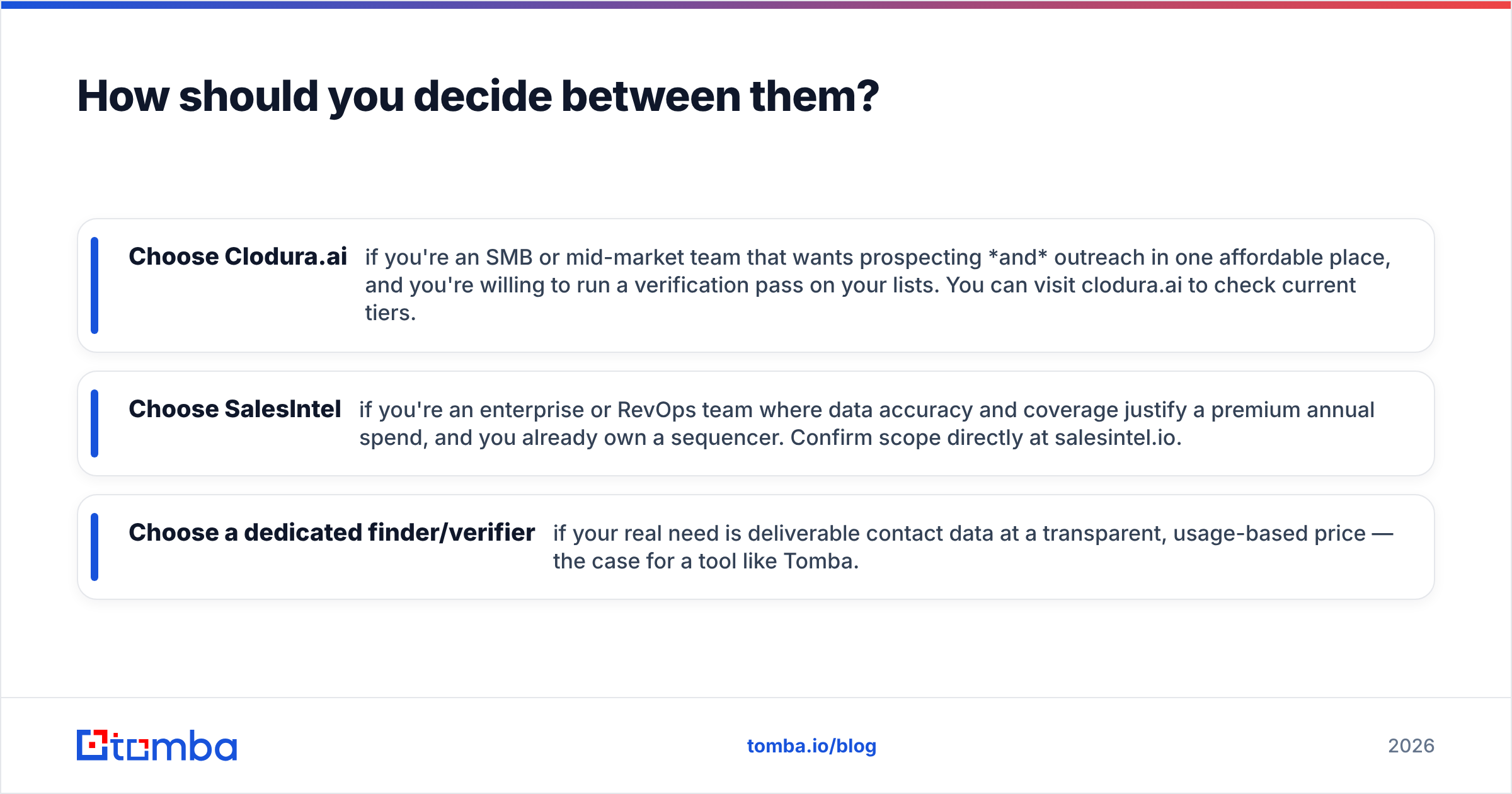
Match the tool to the job, not the marketing. Three clean paths:
- Choose Clodura.ai if you're an SMB or mid-market team that wants prospecting and outreach in one affordable place, and you're willing to run a verification pass on your lists. You can visit clodura.ai to check current tiers.
- Choose SalesIntel if you're an enterprise or RevOps team where data accuracy and coverage justify a premium annual spend, and you already own a sequencer. Confirm scope directly at salesintel.io.
- Choose a dedicated finder/verifier if your real need is deliverable contact data at a transparent, usage-based price — the case for a tool like Tomba.
A practical hybrid many teams land on: keep whichever database gives you account and intent coverage, then run every contact through a specialist for verification and data enrichment before it hits the CRM. You get the breadth of a platform and the accuracy of a focused tool without overpaying for either.
Frequently asked questions#
Is Clodura.ai cheaper than SalesIntel? Yes, in almost every case. Clodura.ai offers a free tier and low-cost paid plans aimed at SMBs, while SalesIntel is a premium, quote-based platform that typically requires an annual contract. The two aren't really priced for the same buyer.
Which has more accurate B2B data? SalesIntel generally leads on accuracy because of human verification and re-verification cycles, especially for US direct dials. Clodura.ai's database is broader and cheaper but more variable, so verification before outreach is important.
Do I still need an email verifier if I use one of these? Yes. B2B contacts decay constantly as people change jobs. Running a fresh verify emails step right before a campaign catches changes no database refreshes fast enough to guarantee, and it's the cheapest insurance against bounces.
Can I use these alongside a dedicated email finder? Absolutely — it's a common setup. Use the platform for account discovery and intent, then use a specialist finder/verifier for deliverable emails and enrichment feeding your sequencer and CRM.
The bottom line#
Clodura.ai and SalesIntel solve overlapping problems from opposite ends: Clodura.ai bundles broad, affordable prospecting for smaller teams, while SalesIntel sells human-verified accuracy to enterprises that can't afford bad data. Neither is wrong — they're priced and built for different buyers.
But if you strip the decision down to what most outbound teams actually need — real, deliverable email addresses and clean enrichment at a price you can predict — a dedicated tool is the sharper buy. Tomba Email Finder finds professional emails by name, domain, or company, verifies them, and enriches the record, with transparent pricing that starts free and scales by usage instead of by contract. Try it against your next list and compare the bounce rate for yourself — that number tells you more than any feature grid.
Related guides#
Ready to find emails that actually work?
Join 150,000+ professionals who stopped guessing and started sending. Free credits on signup — no credit card required.
Get the Tomba newsletter
Practical outbound tactics and product updates — once every two weeks.
About the author