Cloduraai vs Sendigram (2026): Which B2B Sales Tool Wins?
Clodura.ai bundles a B2B database with outreach, while Sendigram bets on cold email volume. Here's an honest, side-by-side look at data accuracy, deliverability, pricing, and which one actually fits your pipeline.
This Cloduraai vs Sendigram comparison comes down to one choice: sourcing contacts versus sending to them. The two tools get lumped together in "sales tool" searches. Yet they solve opposite ends of the same funnel. Below, we break down what each does well, where each falls short, and how to pick without wasting a trial month.
TL;DR#
- Clodura.ai is a B2B data platform first — a prospect database, intent signals, org charts, and a built-in email finder with light outreach on top.
- Sendigram is a cold email sending engine — sequences, inbox rotation, and deliverability tools. But it does not hand you the contacts.
- Data quality decides the winner. If your bounce rate is high, no sender saves you, and no volume fixes bad data.
- Best combo for most teams: a dedicated, accurate email finder for sourcing plus a purpose-built sender — not one tool stretched to do both.
- Pricing: both use tiered, credit-style models. Sendigram is cheaper for pure sending. Clodura.ai costs more because you pay for the database.
What is Clodura.ai?#
Clodura.ai is a sales-intelligence platform for outbound teams that want data and outreach in one place. At its core is a B2B contact database with direct dials, verified emails, technographics, and buyer-intent signals. On top sits a sales cadence tool, so you can email contacts without exporting them to another system.
Think of it like a grocery store with a small kitchen in the back. The main draw is the shelves (the data). The kitchen (the sequencer) is a convenience, not the reason you walked in. Teams pick Clodura.ai when they don't yet have a source of leads and want the database at the center. You can read verified user impressions on G2 and the vendor's own feature list on clodura.ai.
What is Sendigram?#
Sendigram is a cold email tool built around deliverability and volume. Its job starts after you have a list. Think multi-inbox sending, automatic inbox rotation, warmup, sequence logic, and reply detection. It assumes you already know who you're emailing.
To keep the analogy going, Sendigram is the delivery fleet — fast routes, careful not to get flagged. But it doesn't grow the produce. Feed it a clean, verified list and it performs. Feed it scraped guesses and it will send them straight to spam, torching your domain reputation on the way.
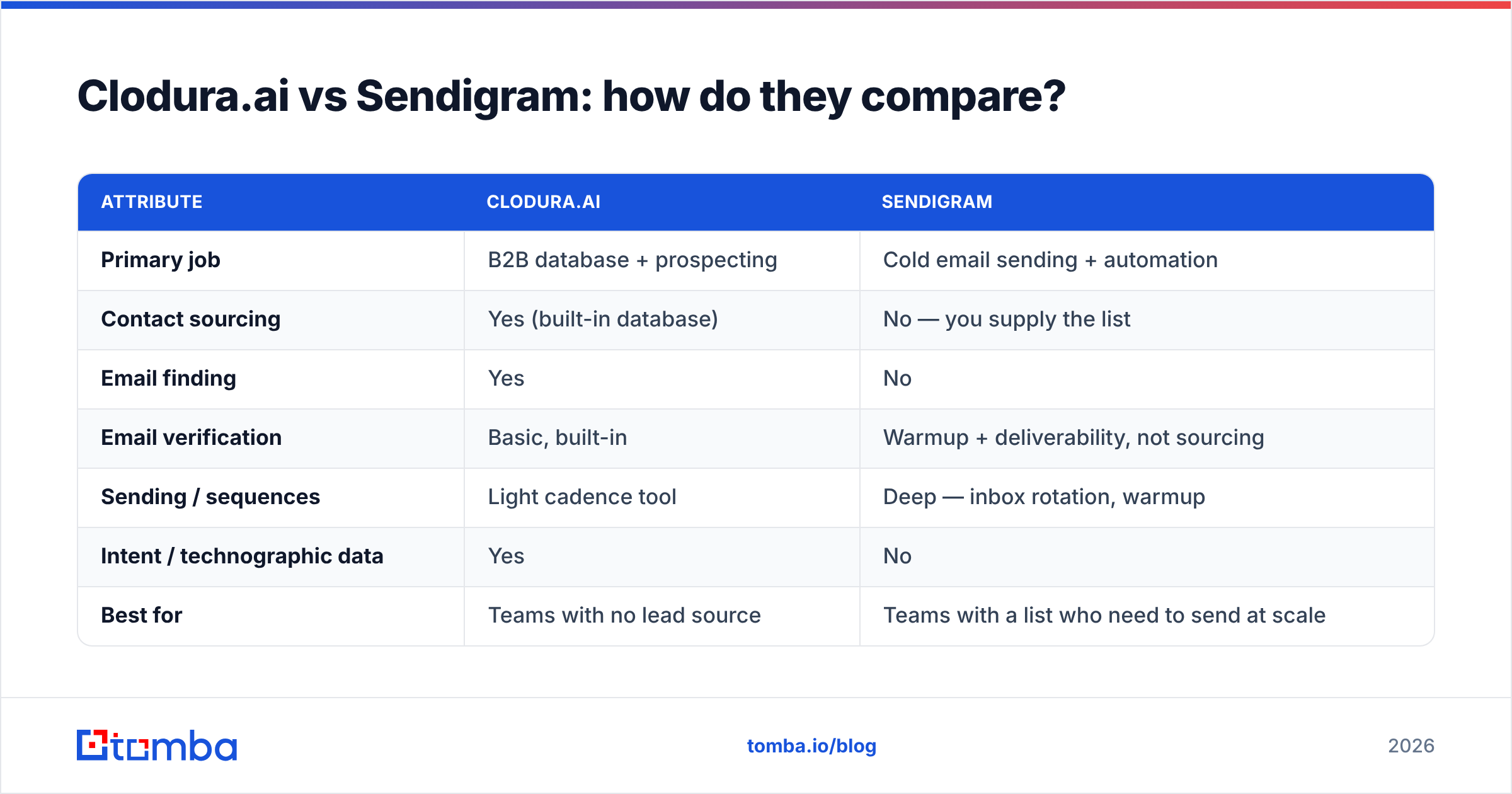
Cloduraai vs Sendigram: how do they compare?#
The honest headline: these tools are not true substitutes. One finds and stores contacts. The other sends to them. Still, buyers compare them because both market themselves as "outbound solutions." So here is where they actually overlap and diverge.
| Attribute | Clodura.ai | Sendigram |
|---|---|---|
| Primary job | B2B database + prospecting | Cold email sending + automation |
| Contact sourcing | Yes (built-in database) | No — you supply the list |
| Email finding | Yes | No |
| Email verification | Basic, built-in | Warmup + deliverability, not sourcing |
| Sending / sequences | Light cadence tool | Deep — inbox rotation, warmup |
| Intent / technographic data | Yes | No |
| Best for | Teams with no lead source | Teams with a list who need to send at scale |
| Weak spot | Sending depth is secondary | Zero data — garbage in, garbage out |
The pattern is clear. Clodura.ai wins the front of the funnel. Sendigram wins the back. Neither is complete alone, and pushing either past its lane is where teams get burned.
Which one has better data accuracy?#
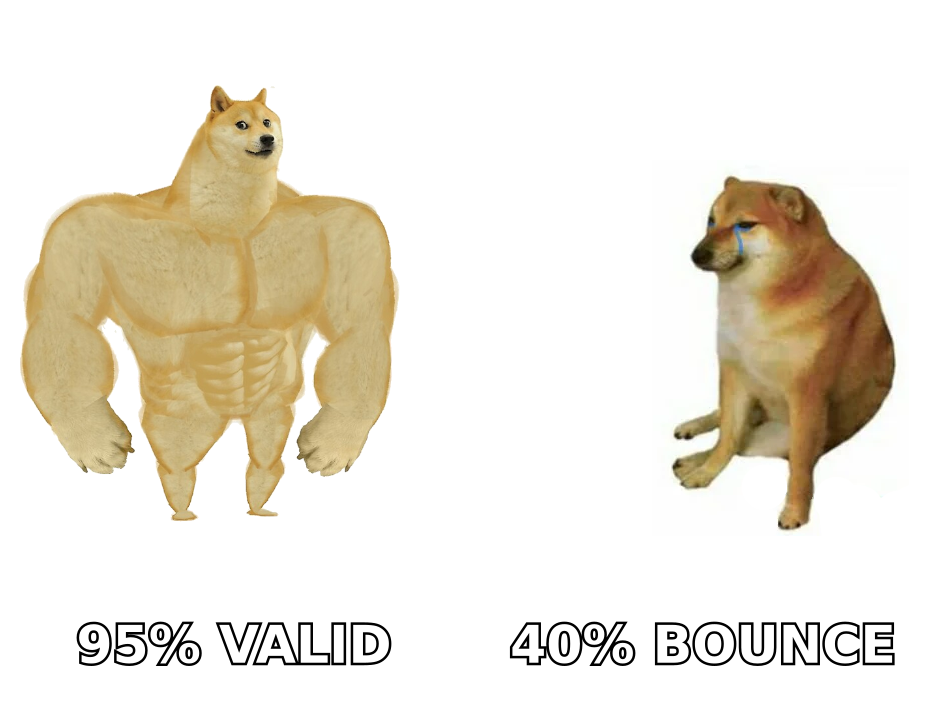
Clodura.ai wins by default here, because Sendigram offers no prospecting data at all. But "better than nothing" isn't the real bar. The question is whether Clodura.ai's database is accurate enough to keep your bounce rate low. Bounces are what get your domain blacklisted.
Bundled databases share a built-in weakness: records age. A contact verified 14 months ago may have changed jobs twice. When accuracy slips, every downstream tool suffers. Sendigram's polished sending engine will just deliver your bounces faster.
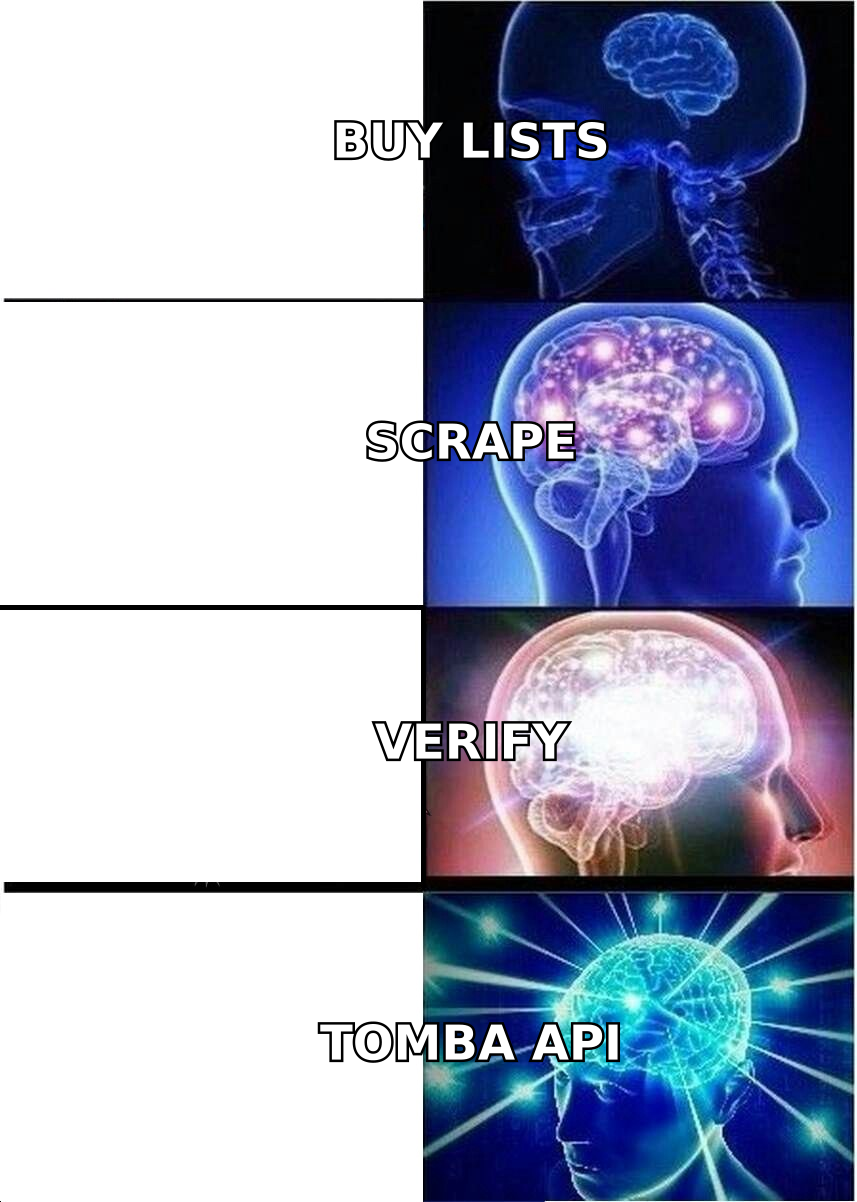
That's why many teams separate sourcing from sending. A specialized email finder verifies at the moment of lookup, not from a stale cache, so your list stays clean before it touches a sender. Tomba's email verifier runs SMTP-level checks and catch-all detection, so you know what's deliverable before you hit send. Its data enrichment then fills gaps a single database misses.
How do Clodura.ai and Sendigram price up?#
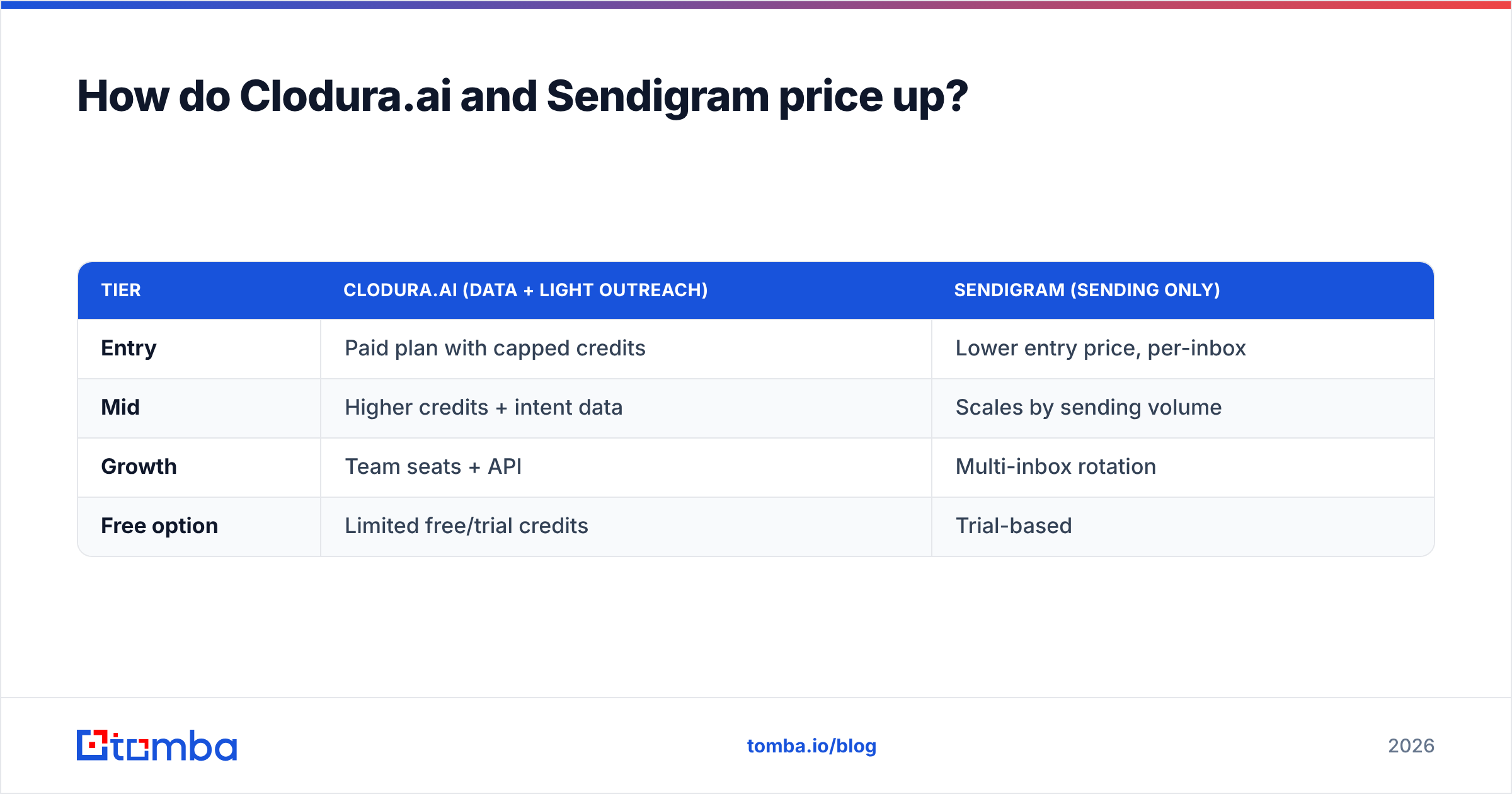
Both use tiered, usage-based pricing, but you pay for different things. Clodura.ai's cost reflects database access — you're renting the data. Sendigram's cost reflects sending capacity — inboxes and email volume. So a like-for-like comparison misleads. You're comparing a pantry to a delivery van.
Here's a representative structure. Always confirm current numbers on each vendor's page, since tiers change.
| Tier | Clodura.ai (data + light outreach) | Sendigram (sending only) |
|---|---|---|
| Entry | Paid plan with capped credits | Lower entry price, per-inbox |
| Mid | Higher credits + intent data | Scales by sending volume |
| Growth | Team seats + API | Multi-inbox rotation |
| Free option | Limited free/trial credits | Trial-based |
For pricing transparency in this category, a standalone finder like Tomba starts at a flat, predictable rate. There's a Free tier with 25 searches a month, Starter at $49/mo, Growth at $99/mo, and Pro at $249/mo. You can see full Tomba pricing without a sales call. Compare vendor claims on Capterra before you commit to an annual plan.
When should you pick Clodura.ai?#
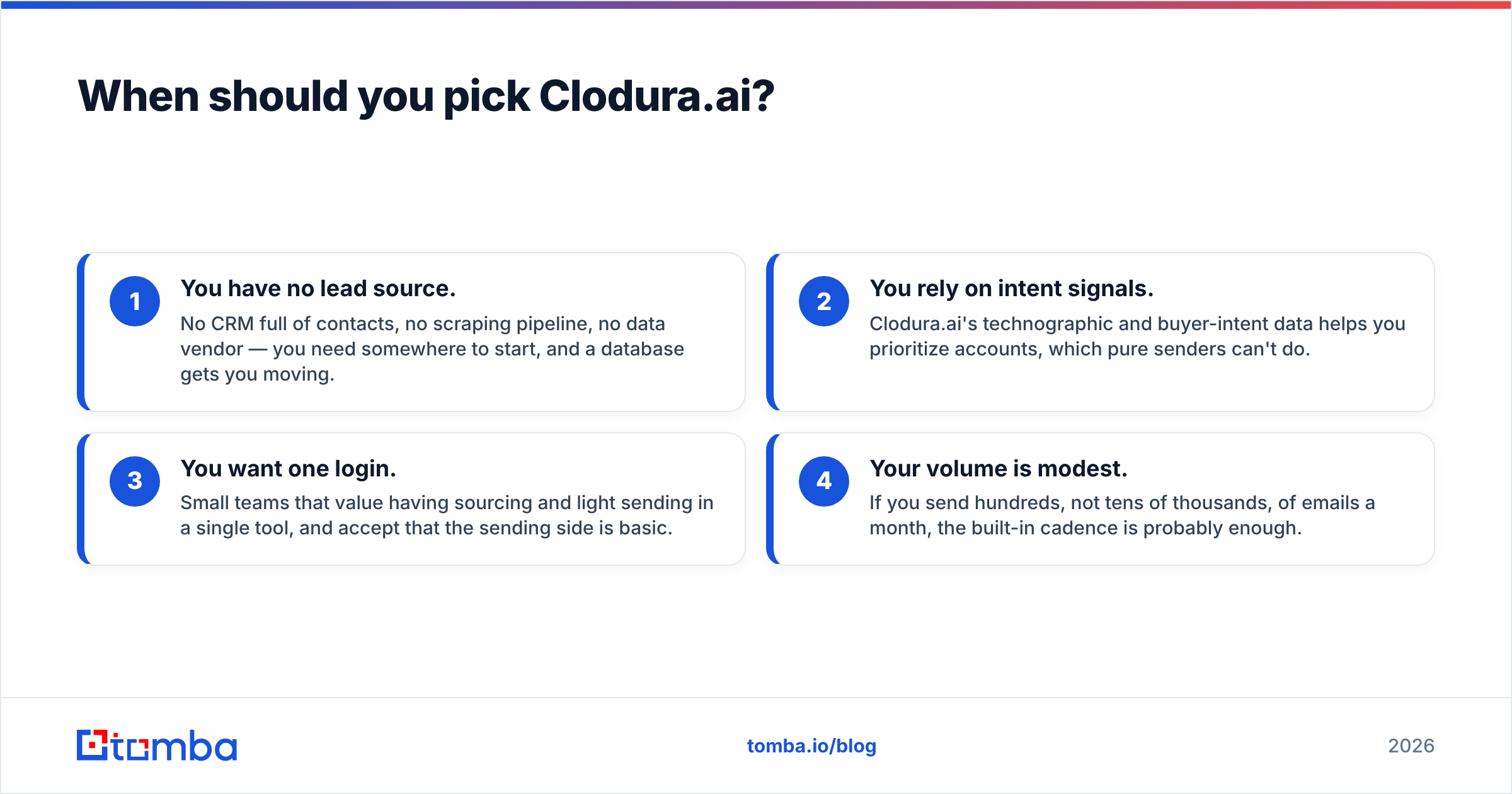
Pick Clodura.ai when your bottleneck is finding people, not emailing them. Specifically:
- You have no lead source. No CRM full of contacts, no scraping pipeline, no data vendor. You need somewhere to start, and a database gets you moving.
- You rely on intent signals. Clodura.ai's technographic and buyer-intent data helps you prioritize accounts. Pure senders can't do that.
- You want one login. Small teams like having sourcing and light sending in a single tool, and they accept that the sending side is basic.
- Your volume is modest. If you send hundreds of emails a month, not tens of thousands, the built-in cadence is probably enough.
The caveat: as your sending scales, you'll likely outgrow the outreach side and need a dedicated sender anyway.
When should you pick Sendigram?#
Pick Sendigram when your bottleneck is sending at scale without landing in spam. Specifically:
- You already have a list. From a finder, a CRM export, or a data partner — you know who to email and just need to reach them.
- You send high volume. Multi-inbox rotation and warmup are built for teams pushing thousands of emails a day across many domains.
- Deliverability is your KPI. If open and reply rates are your obsession, a specialized sender beats a database vendor's tacked-on cadence.
- You keep sourcing separate. You're happy to run a finder and verifier upstream and want the best possible sending layer.
The caveat: Sendigram is only as good as the list you feed it. Bad data in means bounces out. And bounces are the fastest way to wreck a sending domain.
What's the smarter setup for most teams?#
The best outbound stacks split the job in two: a precise sourcing layer and a focused sending layer. Bundle both into one tool and one half is usually a compromise. In outbound, the compromised half is the one costing you deliverability.
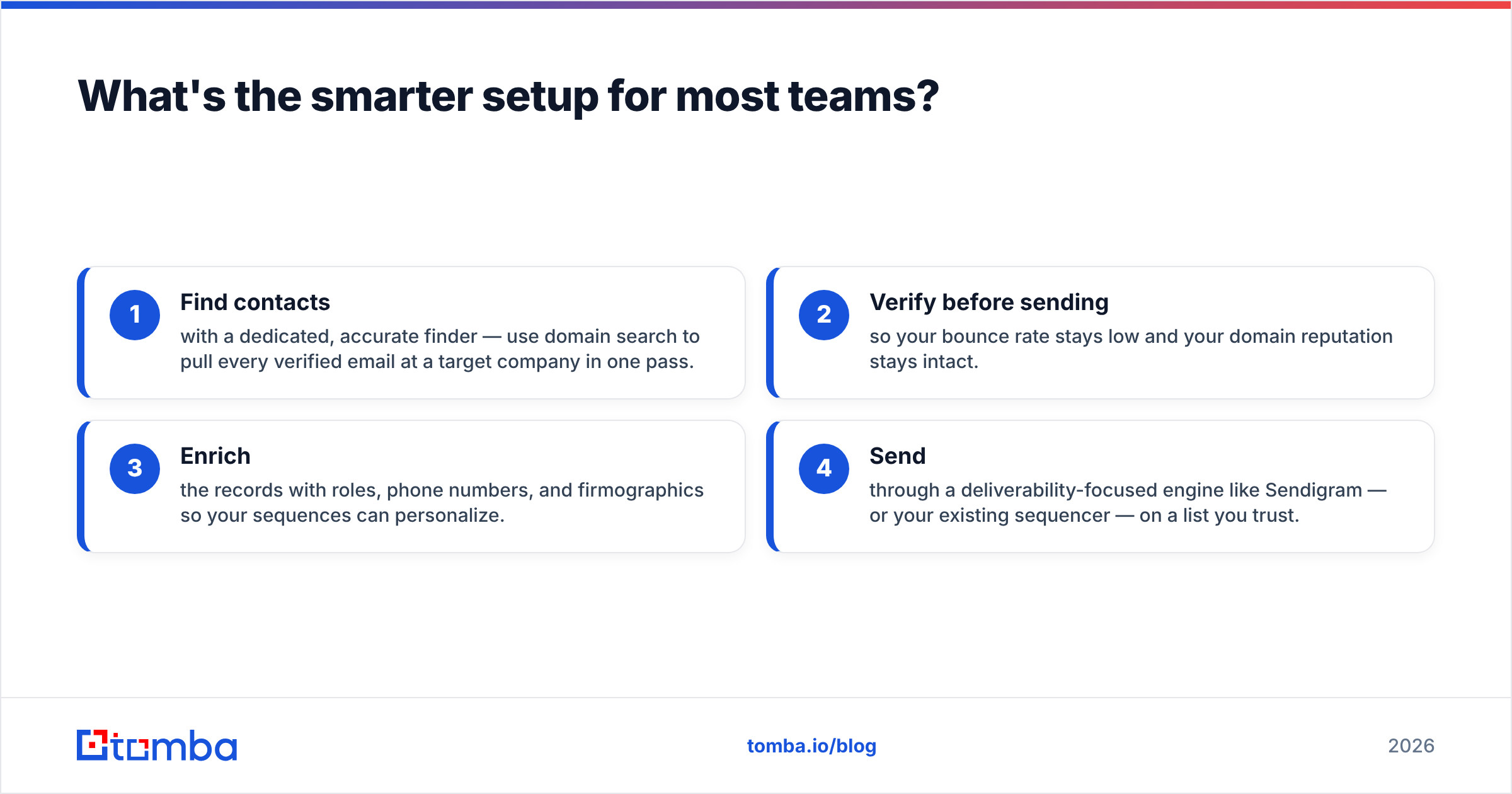
A clean workflow looks like this:
- Find contacts with a dedicated, accurate finder. Use domain search to pull every verified email at a target company in one pass.
- Verify before sending so your bounce rate stays low and your domain reputation stays intact.
- Enrich the records with roles, phone numbers, and firmographics, so your sequences can personalize.
- Send through a deliverability-focused engine like Sendigram — or your existing sequencer — on a list you trust.
This way, whichever sender you choose, it works with data that won't sabotage it. Clodura.ai can fill the sourcing role. But if accuracy is your priority, a specialized finder verified at lookup time is the safer input.
The verdict: Cloduraai vs Sendigram#
There's no single winner, because they're not really competing. They're two halves of the same job. Clodura.ai wins the sourcing half. It gives you contacts, intent, and org data no sender offers. Sendigram wins the sending half. It delivers at volume with rotation and warmup a database vendor's cadence can't match.
If you can only buy one, buy the one that solves your real bottleneck. No lead source? Start with the data platform. Drowning in a list you can't send cleanly? Start with the sender. But know that most serious outbound teams eventually run both a finder and a sender. The tool that's great at everything usually isn't.
Whichever way you go, the input decides the outcome. The most accurate, freshly verified contacts make every downstream tool look smarter. Start your list with Tomba's Email Finder. Find professional emails by domain, name, or company, verify them before they hit a sequence, and hand Clodura.ai's cadence or Sendigram's engine a list that actually converts. Try it free with 25 searches a month and watch your bounce rate drop.
Related guides#
Ready to find emails that actually work?
Join 150,000+ professionals who stopped guessing and started sending. Free credits on signup — no credit card required.
Get the Tomba newsletter
Practical outbound tactics and product updates — once every two weeks.
About the author