Cold Call Message Scripts: What to Say to Book More Meetings
A cold call message lives or dies in the first 15 seconds. Here are the openers, voicemail scripts, and frameworks that actually book meetings in 2026 — plus the data prep behind them.
Most cold calls fail in the first 15 seconds — not because the offer is bad, but because the cold call message is vague, self-centered, or aimed at the wrong number. This guide gives you the exact words to say, from the opener to the voicemail to the objection reply, plus the prep that decides whether the phone even rings the right person.
TL;DR#
- A cold call message is the structured script you deliver by phone or voicemail: opener, reason for calling, value hook, and a single clear ask.
- The opener carries the whole call. Lead with a permission-based line ("Did I catch you at a bad time?") and a reason tied to them, not you.
- Voicemails should be under 20 seconds, name-drop a relevant result, and end with one call to action — not three.
- Bad phone data kills good scripts. Verify numbers and reach the right title before you dial with a tool like a phone finder.
- Track connect rate, conversation rate, and meetings booked separately — a weak number in one spot tells you exactly what to fix.
What is a cold call message?#
A cold call message is the deliberate sequence of sentences you say when you reach a prospect (or their voicemail) who has never spoken with you before. Think of it like a boarding announcement at an airport: it has a fixed structure — who you are, why this matters to you the listener, and what to do next — delivered in seconds so nobody tunes out.
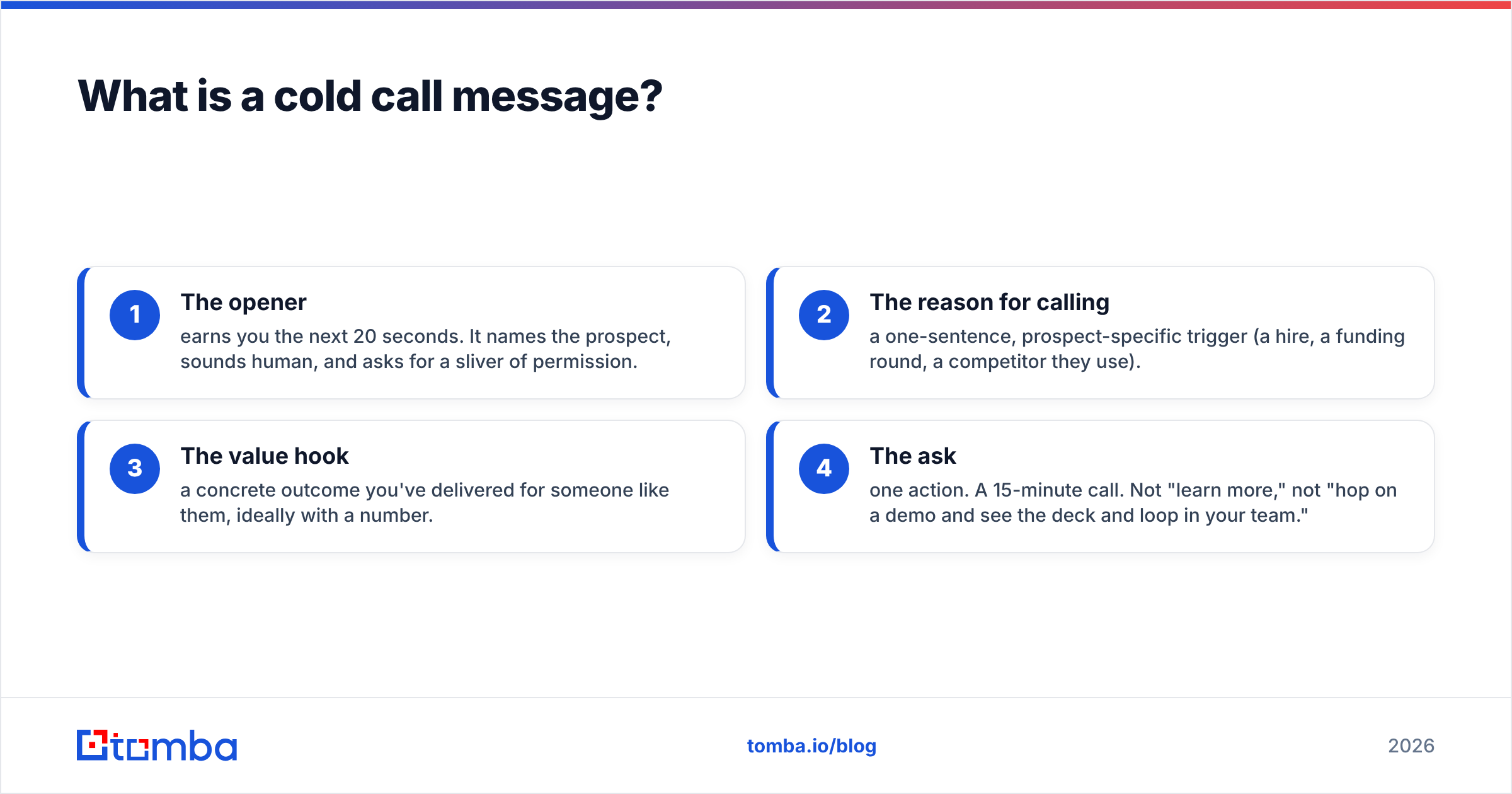
Technically, a strong cold call message has four parts:
- The opener — earns you the next 20 seconds. It names the prospect, sounds human, and asks for a sliver of permission.
- The reason for calling — a one-sentence, prospect-specific trigger (a hire, a funding round, a competitor they use).
- The value hook — a concrete outcome you've delivered for someone like them, ideally with a number.
- The ask — one action. A 15-minute call. Not "learn more," not "hop on a demo and see the deck and loop in your team."
The mistake most reps make is front-loading their company bio. The prospect doesn't care who you are yet. They care whether the next 30 seconds is worth their time. Everything in the message should answer that.
Why do most cold call messages fail?#
Three reasons, in order of damage.
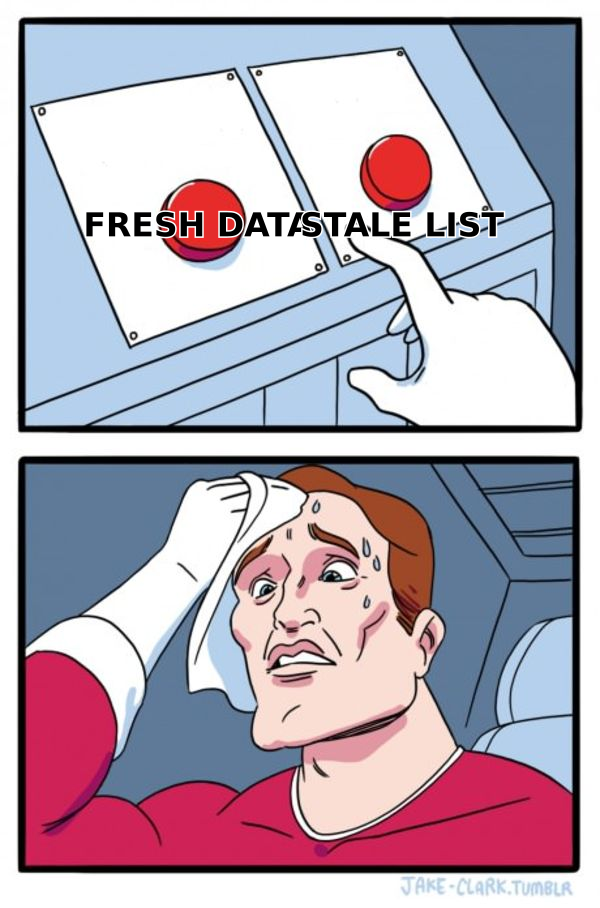
The data is wrong. You can have a perfect script and still burn a day dialing disconnected lines or gatekeepers who've never heard of the person you want. If your list is stale, nothing downstream matters. This is why prep — validating the number, confirming the title — is part of the message, not separate from it.
The opener is about you. "Hi, I'm calling from Acme, we're a leading provider of..." is where prospects mentally hang up. Compare that to a line that names a trigger they recognize.
There's no single ask. A muddy close ("maybe we could find some time, or I could send info, whatever works") gives the prospect nothing to say yes to. Give them one door.
The fix for all three is a repeatable framework, not charisma. Charisma doesn't scale across 60 dials a day.
What does a good cold call opener sound like?#
Here are three openers that consistently outperform the corporate bio. Read them out loud — if they sound like a human, they're right.
The permission opener
"Hey [Name], it's Jordan from Tomba — I know I'm calling out of the blue. Did I catch you at a bad time?"
Counterintuitively, acknowledging the interruption lowers the prospect's guard. Most say "I've got a minute, what's this about?" — and now you're in a conversation, not a pitch.
The trigger opener
"Hi [Name], I saw [Company] just opened three SDR roles this month. The reason I'm calling is that scaling a new outbound team is exactly when [problem] tends to bite. Mind if I take 30 seconds?"
This works because the reason is theirs. You did homework, and it shows.
The straight-shooter opener
"[Name], this is a cold call — you can hang up, or give me 30 seconds and then decide. Fair?"
Direct, a little disarming, and it respects their time. High performers love this one because it filters fast.
Whichever you pick, slow down. Reps rush the opener out of nerves, and speed reads as a telemarketer. Pace it like you're talking to a colleague.
What is the best cold call voicemail script?#
Most calls go to voicemail, so treat it as a first-class message, not an afterthought. The goal isn't a callback (you rarely get one) — it's to warm the name so your follow-up call or cold email lands with recognition.
Keep it under 20 seconds:
"Hi [Name], it's Jordan from Tomba, my number is [number]. I'm reaching out because [one-line trigger]. I helped [similar company] [specific result] — thought it might be relevant for [Company]. I'll follow up by email today, or you can reach me at [number]. Thanks [Name]."
Rules that make voicemails work:
- Say your number twice — once early, once at the end. If they do want to call back, don't make them replay the message.
- Name one result, not your whole catalog. Specificity ("cut their bounce rate to under 2%") beats vague benefit ("improve efficiency").
- Reference the next touch. "I'll follow up by email" primes them to open it, which lifts your whole sequence.
Cold call message frameworks compared#
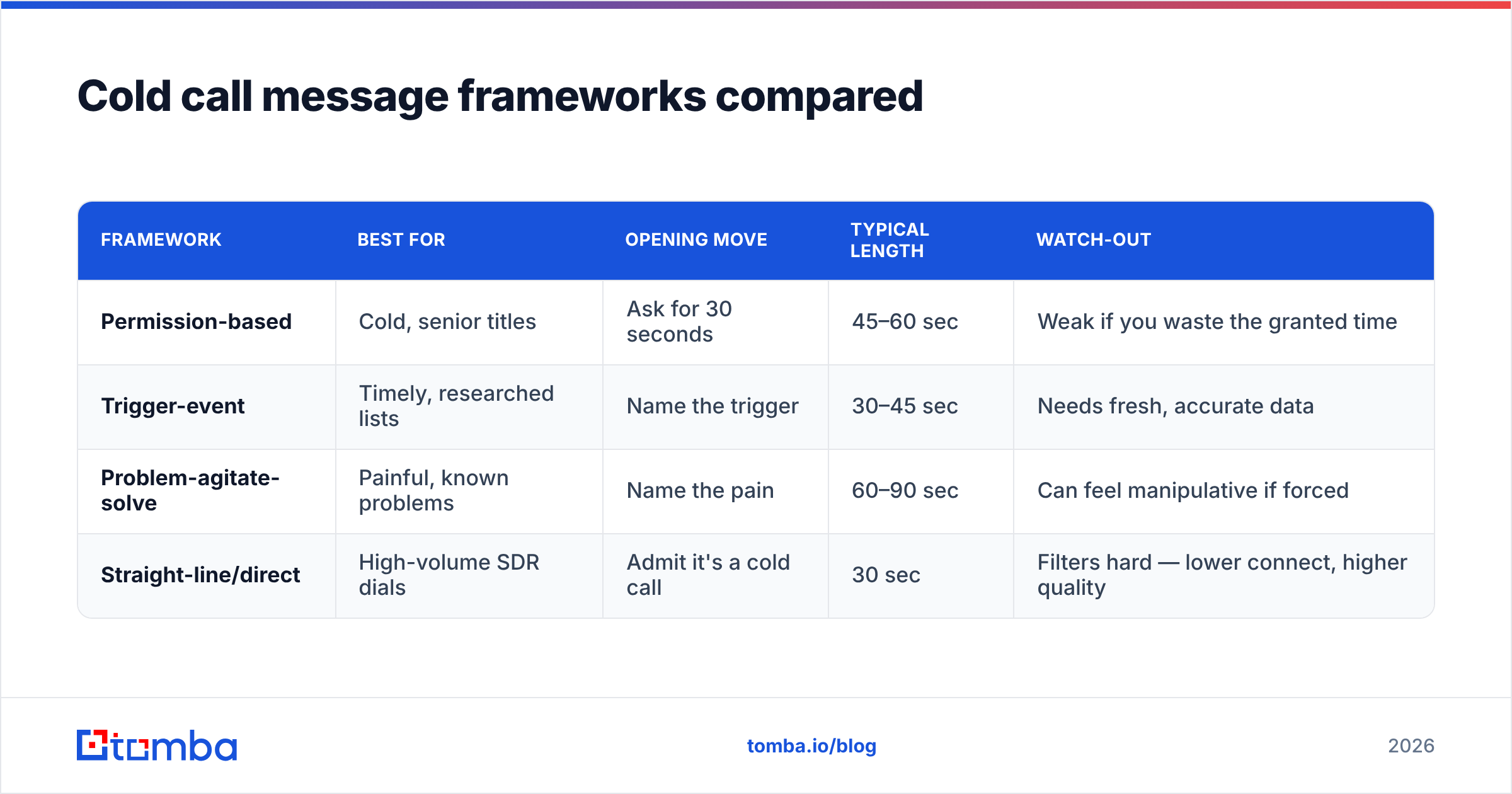
Different situations call for different structures. Here's how the four most common frameworks stack up, so you can match the message to the moment.
| Framework | Best for | Opening move | Typical length | Watch-out |
|---|---|---|---|---|
| Permission-based | Cold, senior titles | Ask for 30 seconds | 45–60 sec | Weak if you waste the granted time |
| Trigger-event | Timely, researched lists | Name the trigger | 30–45 sec | Needs fresh, accurate data |
| Problem-agitate-solve | Painful, known problems | Name the pain | 60–90 sec | Can feel manipulative if forced |
| Straight-line/direct | High-volume SDR dials | Admit it's a cold call | 30 sec | Filters hard — lower connect, higher quality |
No single framework wins everywhere. Volume SDRs lean direct; account executives working named lists lean trigger-event. The best reps keep two in their back pocket and switch based on how the opener lands.
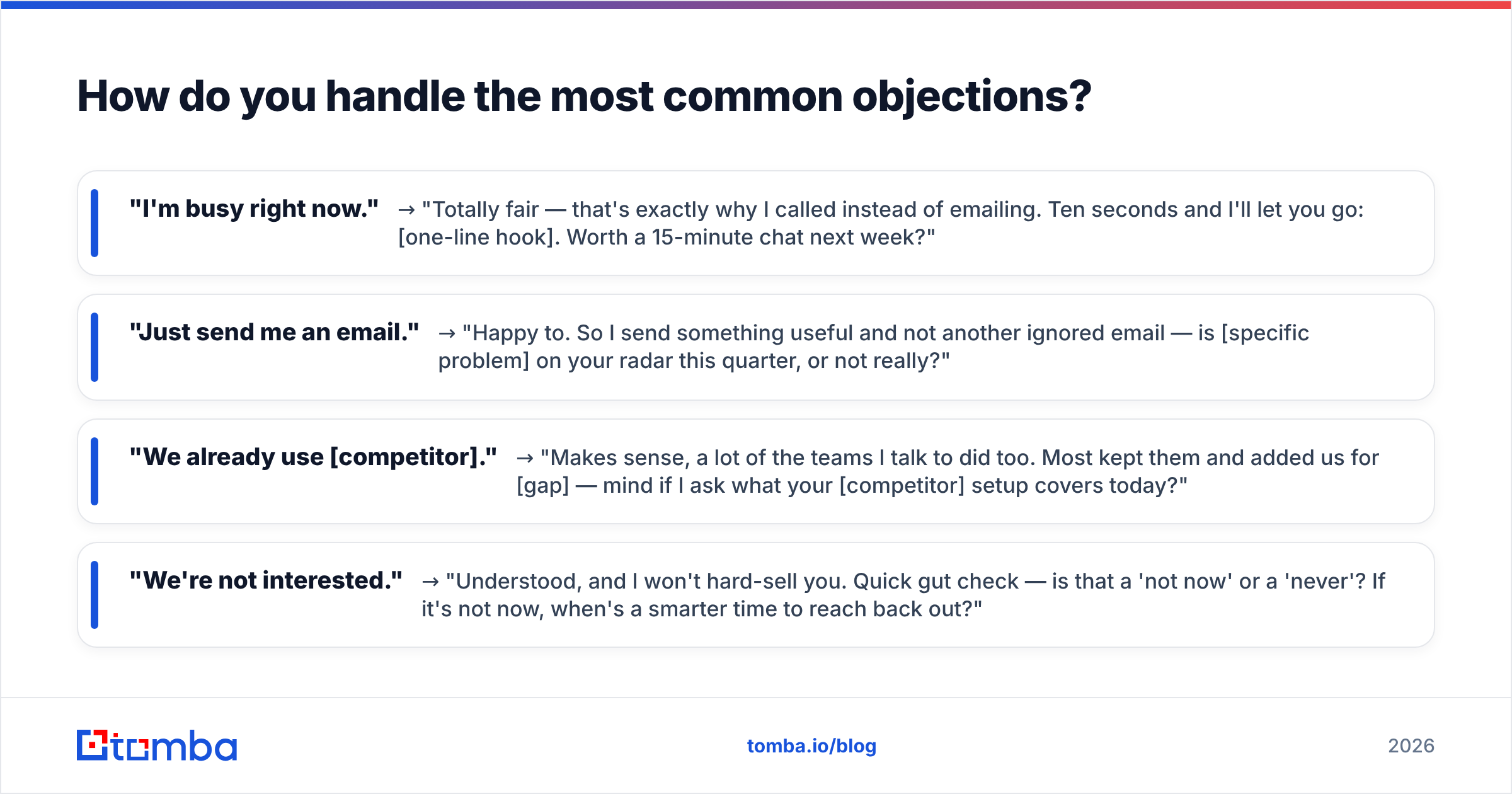
How do you handle the most common objections?#
Objections aren't rejection — they're the prospect telling you what stands between you and the meeting. Have a calm one-liner ready for each. Never argue; acknowledge, then pivot to the ask.
- "I'm busy right now." → "Totally fair — that's exactly why I called instead of emailing. Ten seconds and I'll let you go: [one-line hook]. Worth a 15-minute chat next week?"
- "Just send me an email." → "Happy to. So I send something useful and not another ignored email — is [specific problem] on your radar this quarter, or not really?"
- "We already use [competitor]." → "Makes sense, a lot of the teams I talk to did too. Most kept them and added us for [gap] — mind if I ask what your [competitor] setup covers today?"
- "We're not interested." → "Understood, and I won't hard-sell you. Quick gut check — is that a 'not now' or a 'never'? If it's not now, when's a smarter time to reach back out?"
The pattern is always: acknowledge → reframe → soft ask. You're keeping the conversation alive, not winning a debate.
How do you prepare the data behind the message?#
Here's the part most "cold call scripts" articles skip: the message only works if you're talking to the right person on a working line. Preparation is the unglamorous half of the job that decides the rest.
Before a calling block, get three things right:
- The right title. Confirm the person actually owns the problem you solve. Calling the wrong department wastes the best script in the world. Use domain search to map who does what at the account.
- A valid direct number. Switchboard numbers mean gatekeepers. Direct lines mean conversations. A phone validator confirms the number is live before you spend a dial on it.
- A trigger to reference. A recent hire, a product launch, a funding event. This is what turns a generic opener into a trigger opener.
According to research summarized by HubSpot, it takes an average of several touches to connect with a prospect — so accurate contact data isn't a nice-to-have, it's the difference between eight conversations and eighty dials into a void. Industry reviews on G2 consistently rank data accuracy as the top factor separating tools that reps actually keep from ones they abandon.
For teams building lists at scale, pairing verified emails and phone numbers up front means your caller isn't the one discovering the number is dead. Tools like BookYourData and Tomba both help here — the point is that whichever you use, verified data belongs before the dial, not after.
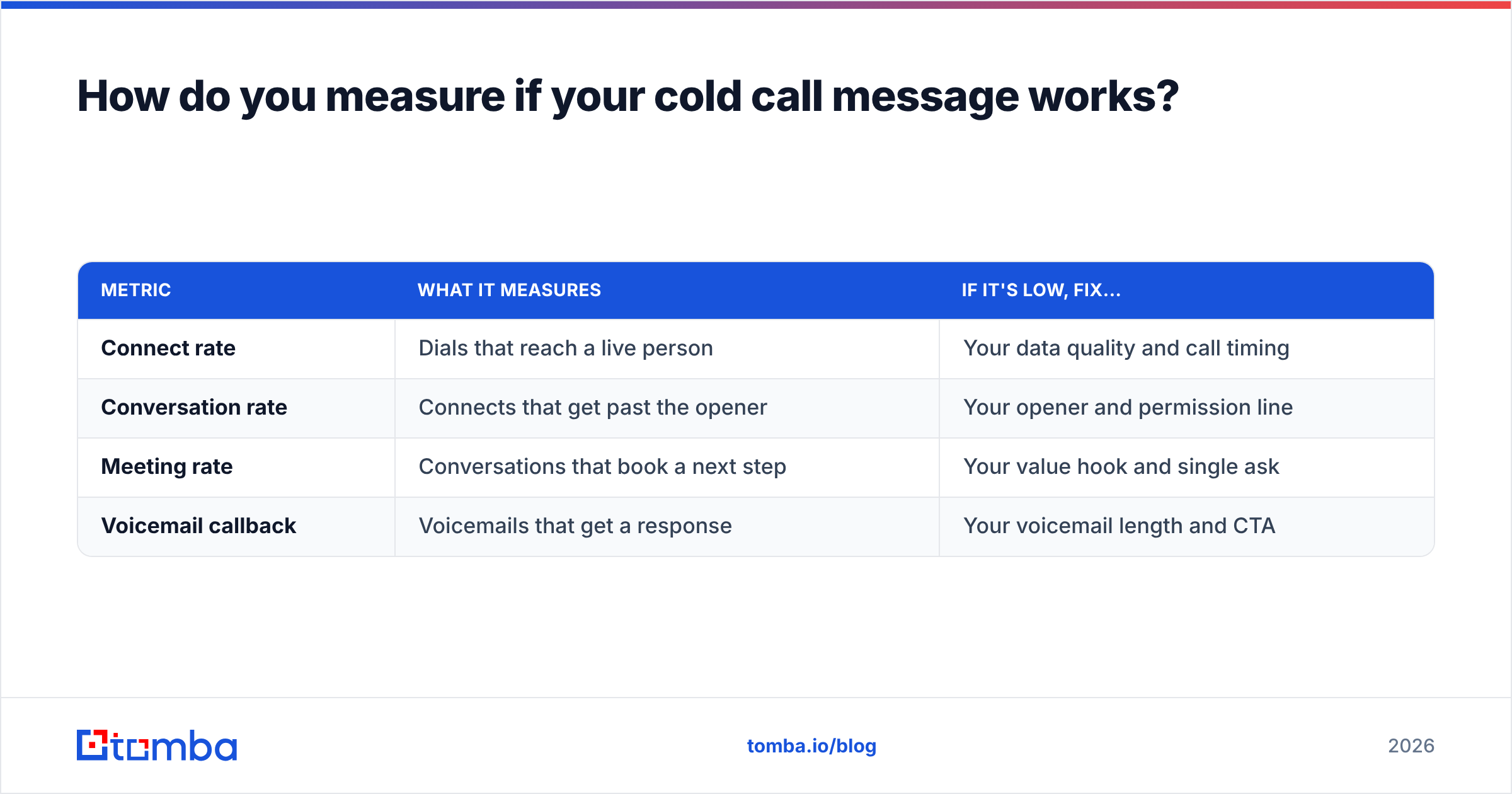
How do you measure if your cold call message works?#
Vague self-assessment ("that call felt good") is useless. Break performance into three numbers so you know exactly which part of the message to fix.
| Metric | What it measures | If it's low, fix... |
|---|---|---|
| Connect rate | Dials that reach a live person | Your data quality and call timing |
| Conversation rate | Connects that get past the opener | Your opener and permission line |
| Meeting rate | Conversations that book a next step | Your value hook and single ask |
| Voicemail callback | Voicemails that get a response | Your voicemail length and CTA |
If your connect rate is low, no script tweak will save you — go back to the data. If you're connecting but people hang up in five seconds, rewrite the opener. If you have great conversations that never book, your ask is muddy. Each number points at one fix, which is far more useful than "I need to get better at calling."
Track these weekly, change one variable at a time, and let the numbers — not your mood after a rough afternoon — tell you what's working.
Cold call message checklist#
Before your next block of dials, run this quick pass:
- Opener names the prospect and asks for permission or names a trigger
- Reason for calling is about them, in one sentence
- Value hook includes one specific, believable number
- Exactly one ask, with a concrete time frame
- Voicemail is under 20 seconds with the number said twice
- Phone numbers verified and titles confirmed before dialing
- You're tracking connect, conversation, and meeting rates separately
Put the right message in front of the right person#
A great cold call message is wasted on a wrong number. Before you write another word of script, make sure your list is built on verified contacts and direct lines — that's the multiplier under every framework above. Start with the Tomba Email Finder to build clean, accurate contact lists by domain or name, then layer in phone data so every dial reaches a real, relevant human. You can try it on the free tier (25 searches a month) and scale up only once the meetings start landing. The script gets you in the door — the data gets you to the door in the first place.
Related guides#
// get started
Find, verify and enrich your first contacts today
Start on the free plan with 25 searches a month, then scale when your team is ready.
Free plan · No credit card required · GDPR & CCPA
// about the author