Cold Calling Fear: How to Beat Call Reluctance in 2026
Call reluctance is normal, but it quietly kills quota. Here's a practical, research-backed system to beat cold calling fear and dial with confidence.
Cold Calling Fear: How to Beat Call Reluctance in 2026
You know the number is right there. Your finger is on the dial. And somehow, you find one more email to send, one more list to "clean," one more coffee to make. That gap between intention and action has a name: cold calling fear, also called call reluctance. It is one of the most expensive habits in sales, and almost nobody talks about it honestly.
The good news: it is a trained response, not a character flaw. Which means it can be untrained.
TL;DR#
- Cold calling fear is normal and near-universal — surveys consistently show reps rank prospecting calls as the most stressful part of the job.
- The fear is rarely about the call itself — it is about anticipated rejection, judgment, and loss of status. Naming the real trigger is step one.
- Behavior beats mindset — you don't think your way out of call reluctance, you dial your way out with small, structured reps.
- Good data lowers the fear — calling verified, well-matched contacts feels completely different from spray-and-pray dialing.
- A repeatable pre-call routine, a tight script, and a rejection-reframe cut anxiety fastest. This guide gives you all three.
What is cold calling fear, really?#
Cold calling fear is the anticipatory anxiety you feel before or during outbound calls to people who did not ask to hear from you. Psychologists who study sales call it "call reluctance," and it shows up as procrastination, over-preparation, or a sudden urge to do literally any other task.
Here is the useful reframe: your brain is not malfunctioning. It is running an old survival program. To a social primate, rejection by a stranger once meant a real threat to status and belonging. Your nervous system cannot tell the difference between "this VP hung up on me" and "the tribe cast me out." Same cortisol, same racing heart.
Think of it like standing at the edge of a cold pool. The dread is worst in the ten seconds before you jump. Once you're in, it's fine — often even good. Cold calling works the same way. The anticipation is the tax; the call itself is rarely as bad as the story in your head.

Why do so many salespeople dread the phone?#
Because the phone concentrates everything that triggers fear into a few seconds: an unknown outcome, an unscripted human, and immediate, unfiltered feedback. Email lets you hide behind a draft. A live call does not.
Research from sales training organizations has repeatedly found that the majority of reps experience some form of call reluctance, and that it directly suppresses activity volume. The mechanism is simple and brutal:
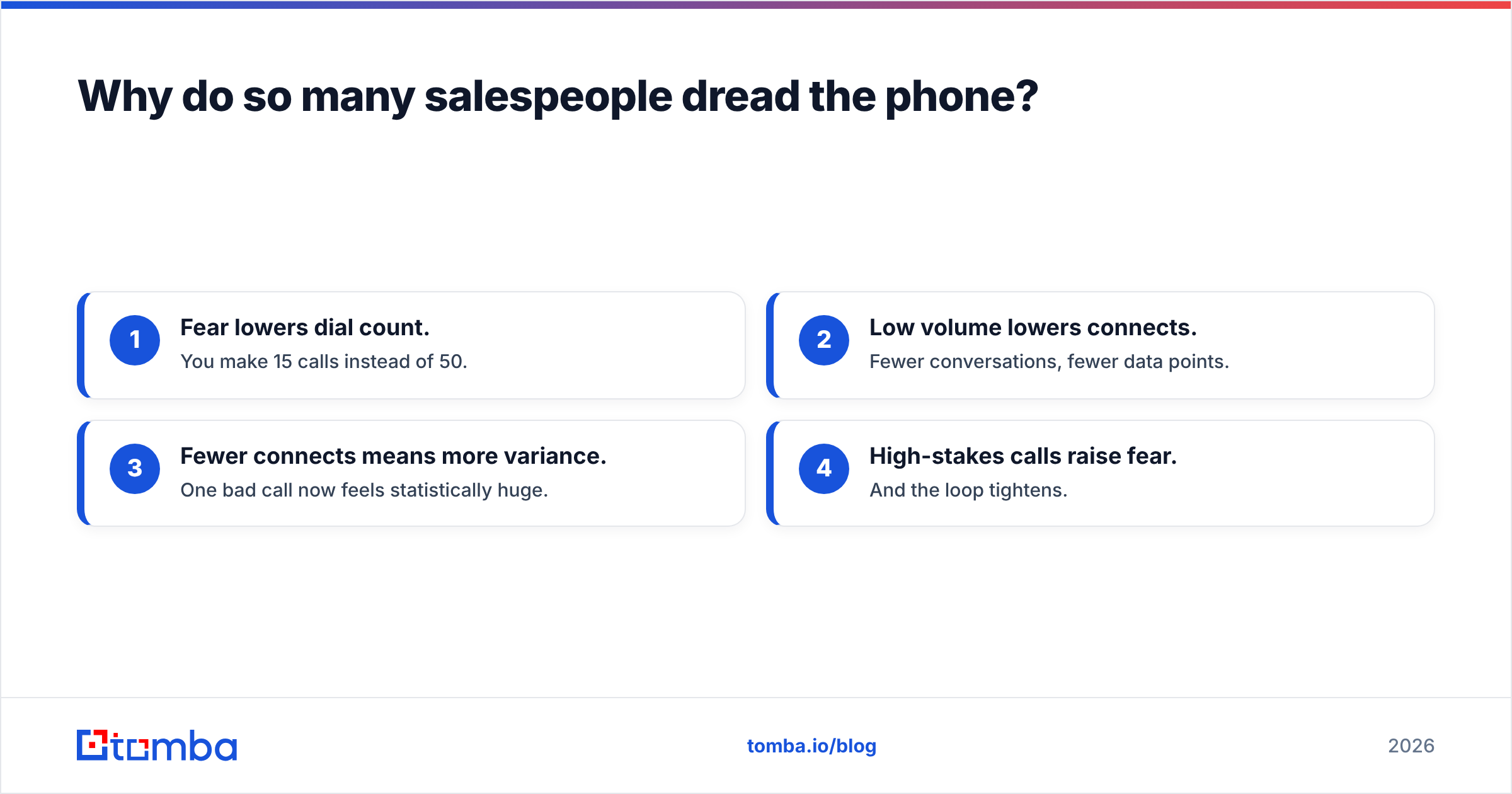
- Fear lowers dial count. You make 15 calls instead of 50.
- Low volume lowers connects. Fewer conversations, fewer data points.
- Fewer connects means more variance. One bad call now feels statistically huge.
- High-stakes calls raise fear. And the loop tightens.
The reps who look "naturally confident" usually just broke this loop early. They dialed enough that no single call carries much weight anymore.
The five faces of call reluctance#
Call reluctance is not one thing. Naming yours helps you fix it:
- Rejection sensitivity — you brace for the "no" and take it personally.
- Over-preparation — endless research becomes a socially acceptable way to avoid dialing.
- Fear of intrusion — you believe you're bothering people, so you soften into vagueness.
- Status threat — calling "beneath" or "above" your title feels uncomfortable.
- Perfectionism — if the call won't be flawless, you'd rather not make it.
Most people have a primary flavor and a backup. Circle yours before you read on.
How do you actually overcome cold calling fear?#
You overcome it with behavior first, mindset second. Waiting to "feel ready" is a trap — confidence is the result of action, not the prerequisite. Below is a system that works whether you're brand new or a burned-out veteran.
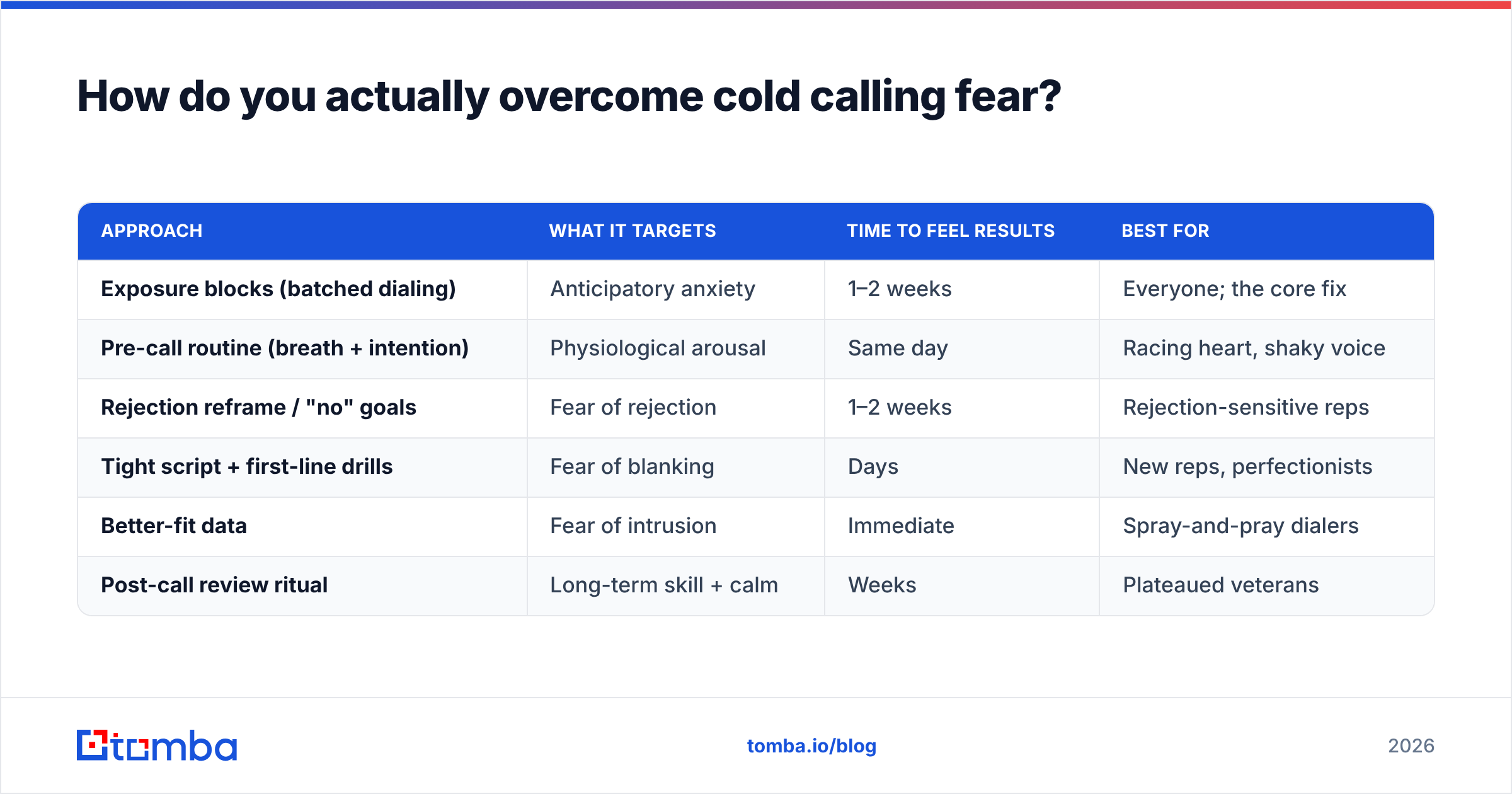
| Approach | What it targets | Time to feel results | Best for |
|---|---|---|---|
| Exposure blocks (batched dialing) | Anticipatory anxiety | 1–2 weeks | Everyone; the core fix |
| Pre-call routine (breath + intention) | Physiological arousal | Same day | Racing heart, shaky voice |
| Rejection reframe / "no" goals | Fear of rejection | 1–2 weeks | Rejection-sensitive reps |
| Tight script + first-line drills | Fear of blanking | Days | New reps, perfectionists |
| Better-fit data | Fear of intrusion | Immediate | Spray-and-pray dialers |
| Post-call review ritual | Long-term skill + calm | Weeks | Plateaued veterans |
Let's break down the ones that move the needle most.
1. Batch your calls into exposure blocks#
Scattering calls across the day means you re-pay the anticipation tax every single time. Instead, stack 25–50 dials into one uninterrupted block. Stand up. Turn off email. The first three calls will feel awful. By call ten, your nervous system habituates — this is textbook exposure therapy, the same principle used to treat phobias. The dread doesn't survive repetition.
2. Run a 60-second pre-call routine#
Your body's alarm system is physical, so calm it physically. Before your block: three slow exhales (longer out-breath than in-breath activates your parasympathetic nervous system), shoulders down, and one sentence of intent — "I'm here to find out if this is worth their time, nothing more." You are not there to close. You are there to have a conversation.
3. Set a rejection goal, not just a booking goal#
This one sounds backwards and works like magic. Instead of "book 3 meetings," aim to collect 20 no's. Now every rejection is progress toward a target, not a wound. Reps who gamify rejection — a tactic popularized in books like Jia Jiang's Rejection Proof — desensitize fast because the "no" stops being the enemy. Companies like HubSpot have written extensively on why volume-based activity goals beat outcome-only goals for exactly this reason.
4. Drill your first line until it's automatic#
Most call anxiety lives in the opening seven seconds — the moment you might blank. So remove the improvisation. Write one permission-based opener and say it out loud 20 times before your block: "Hey [Name], this is [You] with [Company] — I know I'm an interruption, can I take 30 seconds and you can tell me to buzz off?" When the words are muscle memory, your brain has spare capacity to actually listen.
Does better data reduce cold calling fear?#
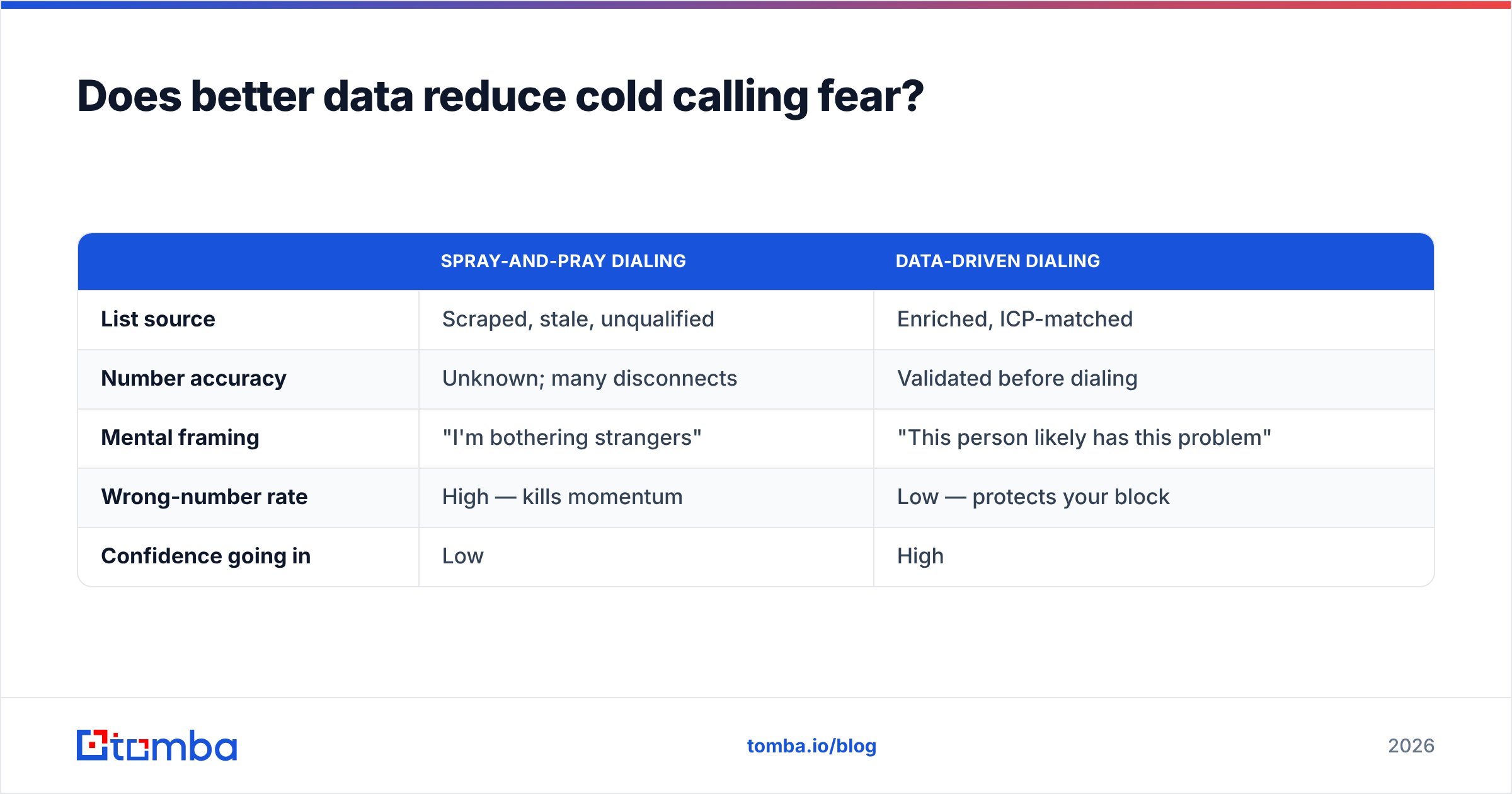
Yes — dramatically, and it's the lever most reps ignore. A huge chunk of call reluctance comes from a quiet suspicion that you're wasting a stranger's time. That suspicion is correct when you're dialing a random, unqualified, possibly-wrong number. It evaporates when you know the person is a genuine fit and the number is verified.
Compare the two realities:
| Spray-and-pray dialing | Data-driven dialing | |
|---|---|---|
| List source | Scraped, stale, unqualified | Enriched, ICP-matched |
| Number accuracy | Unknown; many disconnects | Validated before dialing |
| Mental framing | "I'm bothering strangers" | "This person likely has this problem" |
| Wrong-number rate | High — kills momentum | Low — protects your block |
| Confidence going in | Low | High |
When you dial a well-researched, verified contact, you're not interrupting — you're offering something relevant to someone who plausibly needs it. That single shift reframes the whole call. This is why sharpening your inputs matters as much as your mindset. Pulling accurate mobile numbers with a phone finder, confirming they're live with a phone validator, and enriching contacts against a real B2B database means every dial starts from a stronger, calmer place.
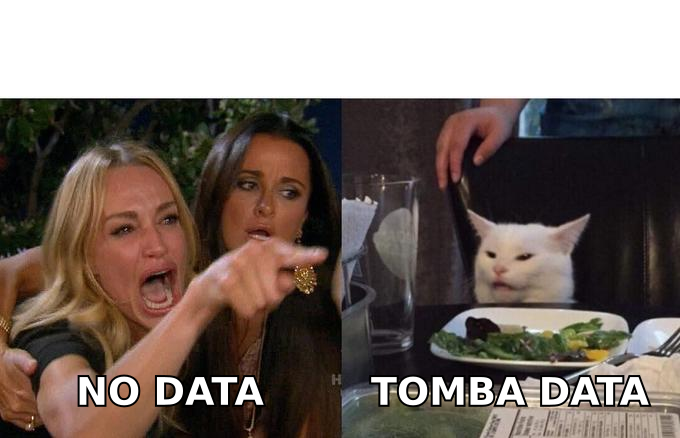
The cat is calm because the cat has good data.
What should you do during and after the call?#
During: talk slower and ask, don't pitch#
Anxiety speeds you up. Consciously slow down — a slower pace signals confidence and gives the prospect room to engage. Lead with a question, not a monologue. The best openers make the call feel like a peer conversation, not a performance. Modern conversation-intelligence platforms like Gong have published call analysis showing that top performers listen more and talk less, especially in the first minute.
If they push back, that's information, not defeat. "We already have a vendor" is a starting point, not a wall.
After: run a 30-second review ritual#
Right after each block, note two things: one thing that worked, one thing to tweak. That's it. This turns raw dials into deliberate practice and — crucially — gives your brain a sense of closure and control, which is the antidote to lingering anxiety. Over weeks, this ritual is what separates reps who improve from reps who just suffer.
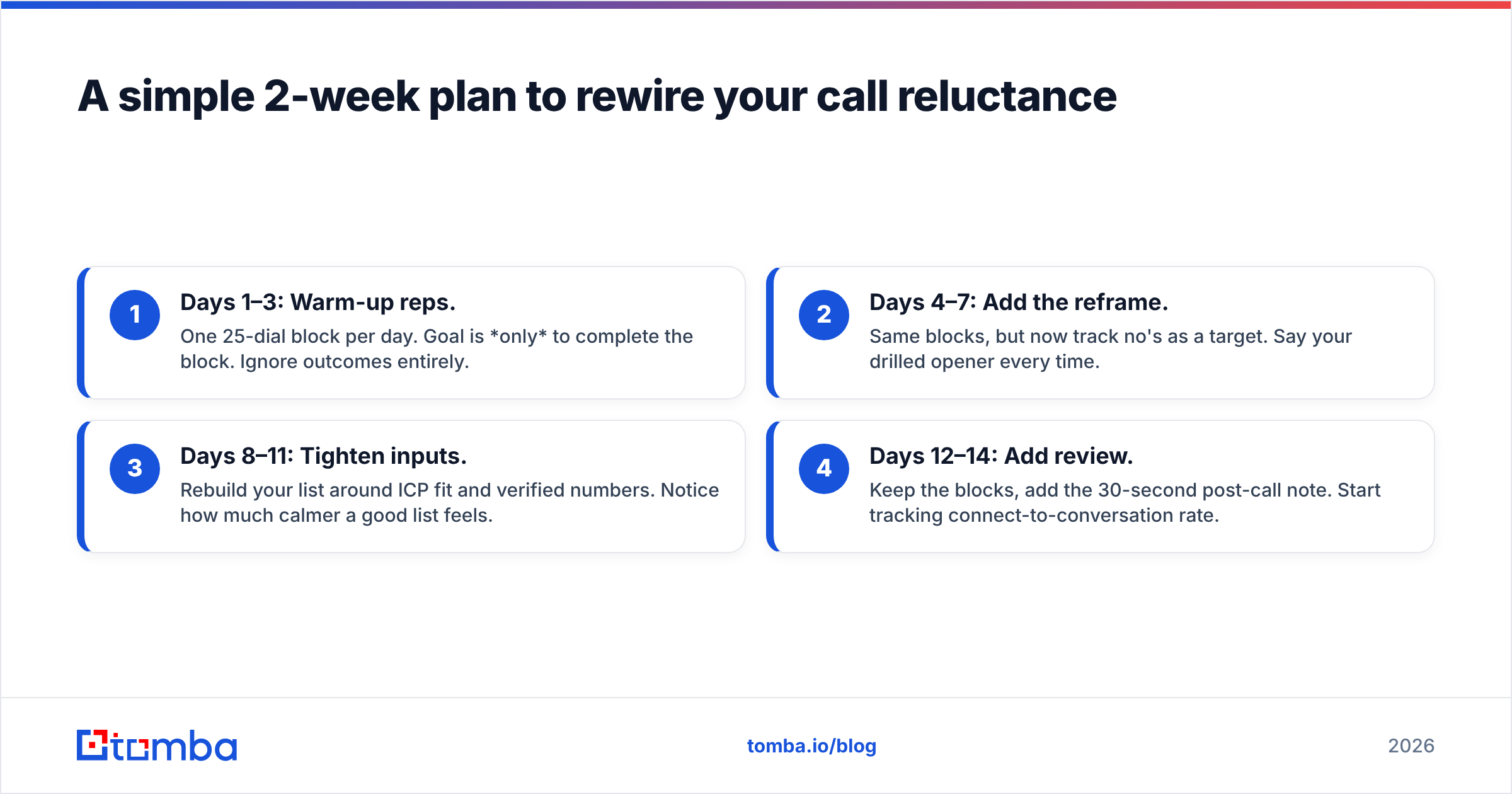
A simple 2-week plan to rewire your call reluctance#
Fear responds to structure. Here's a concrete ramp:
- Days 1–3: Warm-up reps. One 25-dial block per day. Goal is only to complete the block. Ignore outcomes entirely.
- Days 4–7: Add the reframe. Same blocks, but now track no's as a target. Say your drilled opener every time.
- Days 8–11: Tighten inputs. Rebuild your list around ICP fit and verified numbers. Notice how much calmer a good list feels.
- Days 12–14: Add review. Keep the blocks, add the 30-second post-call note. Start tracking connect-to-conversation rate.
By day 14, the goal isn't fearlessness — it's that the fear has shrunk from a wall into a speed bump. That's a permanent win.
Frequently asked questions#
Is it normal to be scared of cold calling? Completely. The majority of salespeople report call anxiety, including experienced ones. It's a wired-in response to anticipated rejection, not a sign you're bad at sales.
Does cold calling fear ever fully go away? The intense version does, through repetition. Most veterans keep a small pre-call flutter — and many say that mild edge actually keeps them sharp. The goal is management, not total elimination.
Will scripts make me sound robotic? Only if you read them. Use a script as a skeleton — a reliable opener and a few key questions — then improvise the muscle around it. Drilling the first line frees you to sound more natural, not less.
What's the fastest single fix? Batched exposure blocks. Nothing lowers anticipatory fear faster than making many calls in a row until your nervous system stops treating each one as a threat.
The bottom line#
Cold calling fear isn't a flaw to be ashamed of — it's a predictable response you can systematically dismantle. Batch your dials, calm your body, reframe the "no," drill your opener, and above all, call people who are actually worth calling. That last piece is where preparation quietly beats willpower.
Confidence on the phone is built on the ground beneath it: knowing the person is a real fit and the contact info is right. Start there. Use Tomba's Email Finder to build clean, verified, ICP-matched contact lists — with accurate emails and enrichment data — so every call in your block starts from a position of strength instead of a shot in the dark. Fix the inputs, and the fear gets a lot smaller. Then all that's left is to pick up the phone.
Related guides#
// get started
Find, verify and enrich your first contacts today
Start on the free plan with 25 searches a month, then scale when your team is ready.
Free plan · No credit card required · GDPR & CCPA
// about the author