Cold Calling for Freight Brokers: The 2026 Playbook That Books Loads
Cold calling for freight brokers still books loads in 2026 — if your list is clean, your script is tight, and you call the right shipper at the right time. Here's the full playbook.
Cold calling is still the fastest way for a freight broker to turn a stranger into a shipper — but only if the person who picks up actually ships freight, and your number actually reaches them. In 2026, the brokers who win on the phone aren't the ones who dial hardest. They're the ones who dial smartest: clean lists, a tight opener, and a reason to call that a traffic manager cares about.
This is the full playbook — scripts, objection handling, timing, metrics, and the data work that makes all of it convert.
TL;DR#
- Cold calling for freight brokers works in 2026 — but the win rate lives and dies on list quality. A verified, targeted shipper list beats a giant scraped one every time.
- The opener is 8 seconds. Lead with the lane or commodity you specialize in, not "How are you today?"
- You're calling the traffic manager or logistics coordinator, not the CEO. Get the right title and the right direct line before you dial.
- Track dials → conversations → quotes → booked loads. If you only track dials, you're flying blind.
- Pair the phone with verified email and direct-dial data so follow-up doesn't die in a voicemail loop.
Does cold calling still work for freight brokers in 2026?#
Yes — freight is one of the last B2B niches where the phone still outperforms almost everything else. Shippers move product on tight, perishable timelines; a broker who can quote a lane right now beats an inbox full of unread emails. Traffic managers live on the phone because their problems are urgent by nature.
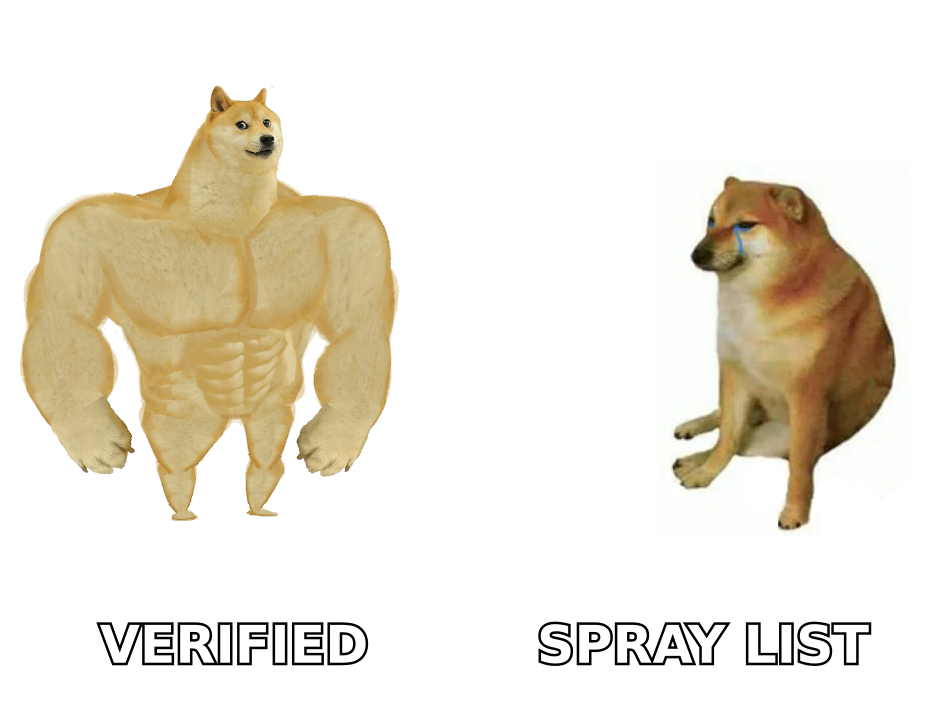
But "it works" comes with a caveat that trips up most new brokers: the phone only works when the list behind it is good. Dialing 300 random manufacturers from a scraped directory gets you 290 wrong numbers, gatekeepers, and disconnected lines. Dialing 60 verified shippers who actually move your lanes gets you conversations.
Think of your call list like a delivery route. A driver with an optimized route and correct addresses runs 20 stops a day. A driver with a bad address list burns the same fuel and completes six. Same effort, wildly different output — and the difference is entirely in the data.

What makes freight-broker cold calling different from generic B2B?#
Freight has its own physics, and your calls have to respect it.
- The buyer is specific and busy. You want the traffic manager, logistics coordinator, shipping manager, or supply-chain lead — not sales, not the front desk, and rarely the owner. Get the title right before you dial.
- Timing is everything. A shipper with a truck that just fell through will talk to you for 10 minutes. The same shipper with full capacity won't. You can't control that, so you increase at-bats with clean volume.
- Lanes and commodities are your credibility. "I move a lot of refrigerated freight out of the Central Valley" earns attention. "We're a full-service logistics provider" gets you hung up on.
- Trust is the whole sale. A shipper is handing you a $40,000 load of their product and their customer relationship. Your call has to signal reliability in the first minute.
- Rejection is constant. Most shippers already have brokers. Your job isn't to replace them today — it's to become the backup who gets the call when their primary drops a load.
What's the best cold call script for freight brokers?#
Keep it short, lane-specific, and built to earn the next 30 seconds — not to close on call one.
The opener (first 8 seconds):
"Hi [Name], this is [You] with [Brokerage]. I work with a lot of shippers moving [commodity] on the [origin]–[destination] lane, and I wanted to see who handles your outbound freight. Is that you?"
The value hook:
"The reason I'm calling — we've got consistent capacity on that lane and I'd rather be your backup than have you scrambling when a load falls through. Can I ask what you're shipping most weeks?"
The ask (don't oversell):
"Here's what I'd suggest — next time you've got a load that's giving you trouble, throw it my way and let me earn it. What's the best email and direct line to send you a quick intro and my rate on that lane?"
Notice the goal isn't "book a load now." It's to get on the backup list and capture a verified email and direct dial for follow-up. That second part is where most brokers leak revenue — they have a great call, then follow up to a personal Gmail nobody checks or a main line that dead-ends.
Who exactly should you be calling — and how do you find them?#
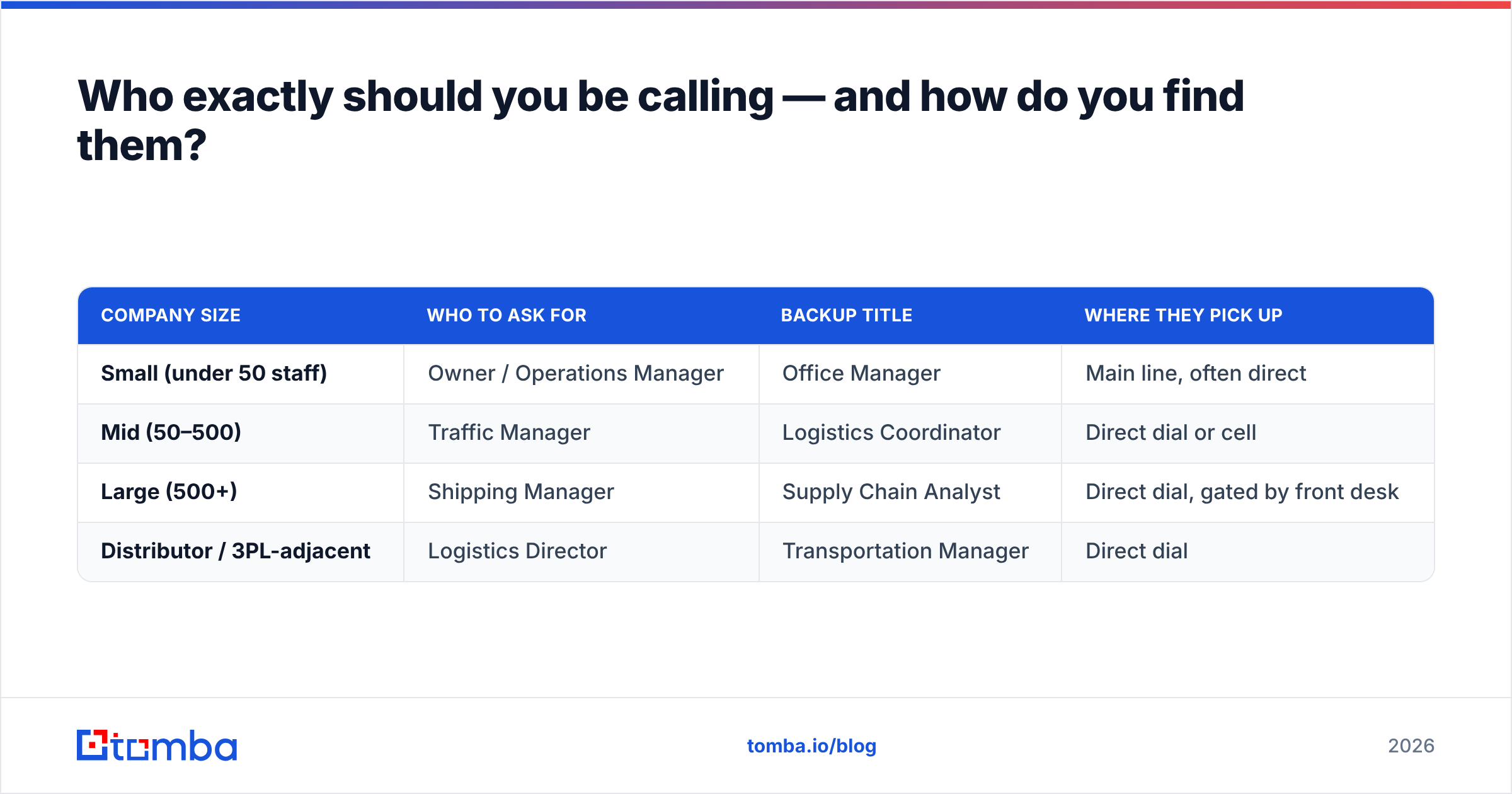
You're calling the person who owns outbound freight decisions. Titles vary by company size:
| Company size | Who to ask for | Backup title | Where they pick up |
|---|---|---|---|
| Small (under 50 staff) | Owner / Operations Manager | Office Manager | Main line, often direct |
| Mid (50–500) | Traffic Manager | Logistics Coordinator | Direct dial or cell |
| Large (500+) | Shipping Manager | Supply Chain Analyst | Direct dial, gated by front desk |
| Distributor / 3PL-adjacent | Logistics Director | Transportation Manager | Direct dial |
Getting from "a company that ships" to "the traffic manager's direct line" is the real work. Guessing the main number and battling the gatekeeper wastes your best calling hours. Instead, build the contact record first: company → decision-maker name → verified email → direct dial. A B2B phone finder gets you the direct line, and a phone validator confirms it's live before you burn a dial on a dead number. Layer in data enrichment to attach the right title and company details so you're never guessing who owns the freight.
For the email half of the follow-up, an email finder pulls the traffic manager's real work address, and running it through an email verifier keeps your intro out of the spam folder. The pattern is simple: verify before you dial or send, not after.
How do you handle the most common freight-broker objections?#
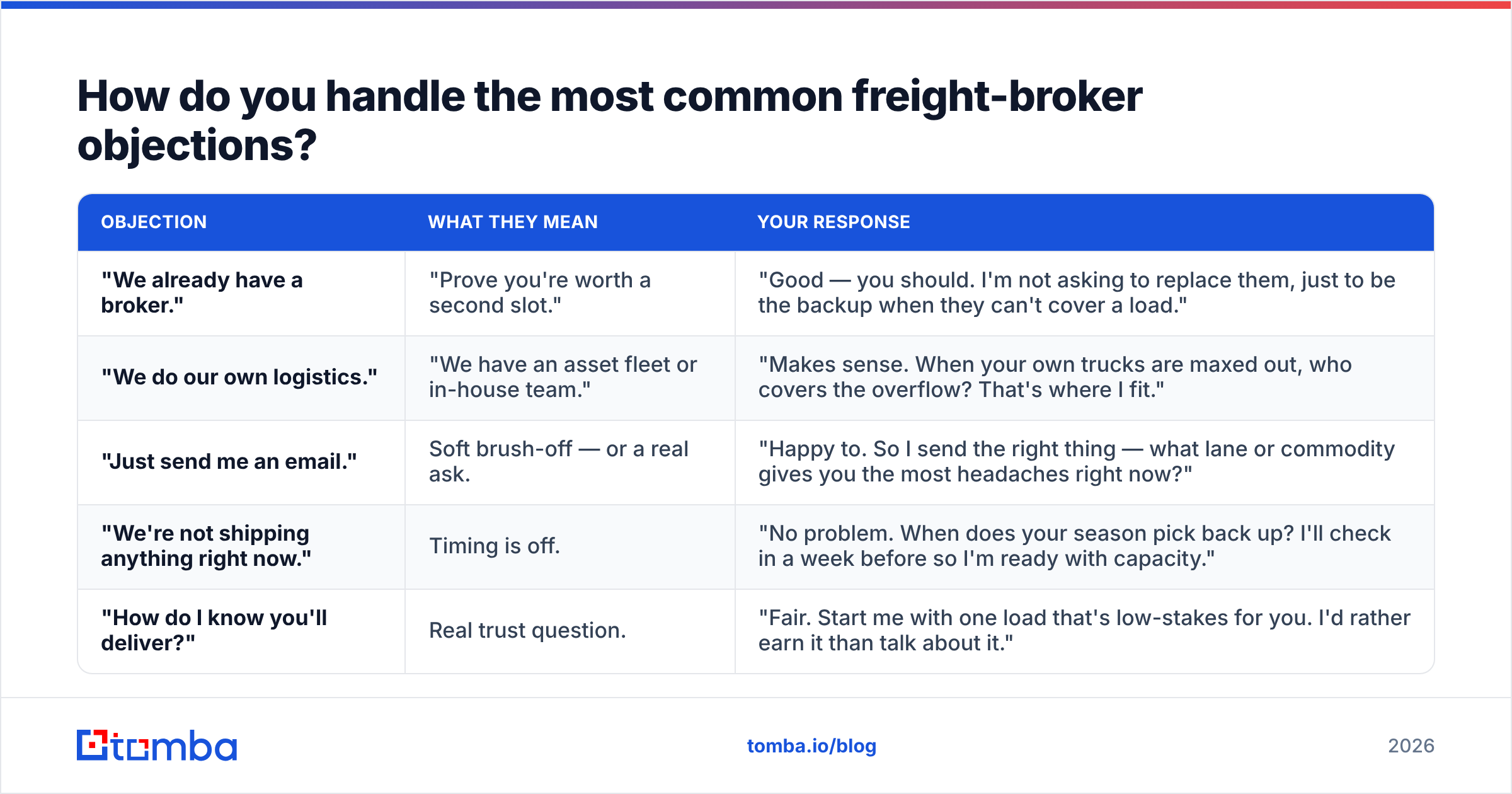
Every shipper says one of five things. Have a calm, non-defensive answer ready for each.
| Objection | What they mean | Your response |
|---|---|---|
| "We already have a broker." | "Prove you're worth a second slot." | "Good — you should. I'm not asking to replace them, just to be the backup when they can't cover a load." |
| "We do our own logistics." | "We have an asset fleet or in-house team." | "Makes sense. When your own trucks are maxed out, who covers the overflow? That's where I fit." |
| "Just send me an email." | Soft brush-off — or a real ask. | "Happy to. So I send the right thing — what lane or commodity gives you the most headaches right now?" |
| "We're not shipping anything right now." | Timing is off. | "No problem. When does your season pick back up? I'll check in a week before so I'm ready with capacity." |
| "How do I know you'll deliver?" | Real trust question. | "Fair. Start me with one load that's low-stakes for you. I'd rather earn it than talk about it." |
The "just send me an email" objection is the one brokers fumble most. Don't treat it as a win and hang up — treat it as permission to qualify. And when you do send that email, make sure it lands: verify the address first so your one shot at a written intro doesn't bounce.
What metrics should freight brokers track on cold calls?#
If you only count dials, you'll optimize for the wrong thing — noise. Track the funnel end to end so you know where you're actually leaking.
- Dials per hour — activity, not success. Useful only as a denominator.
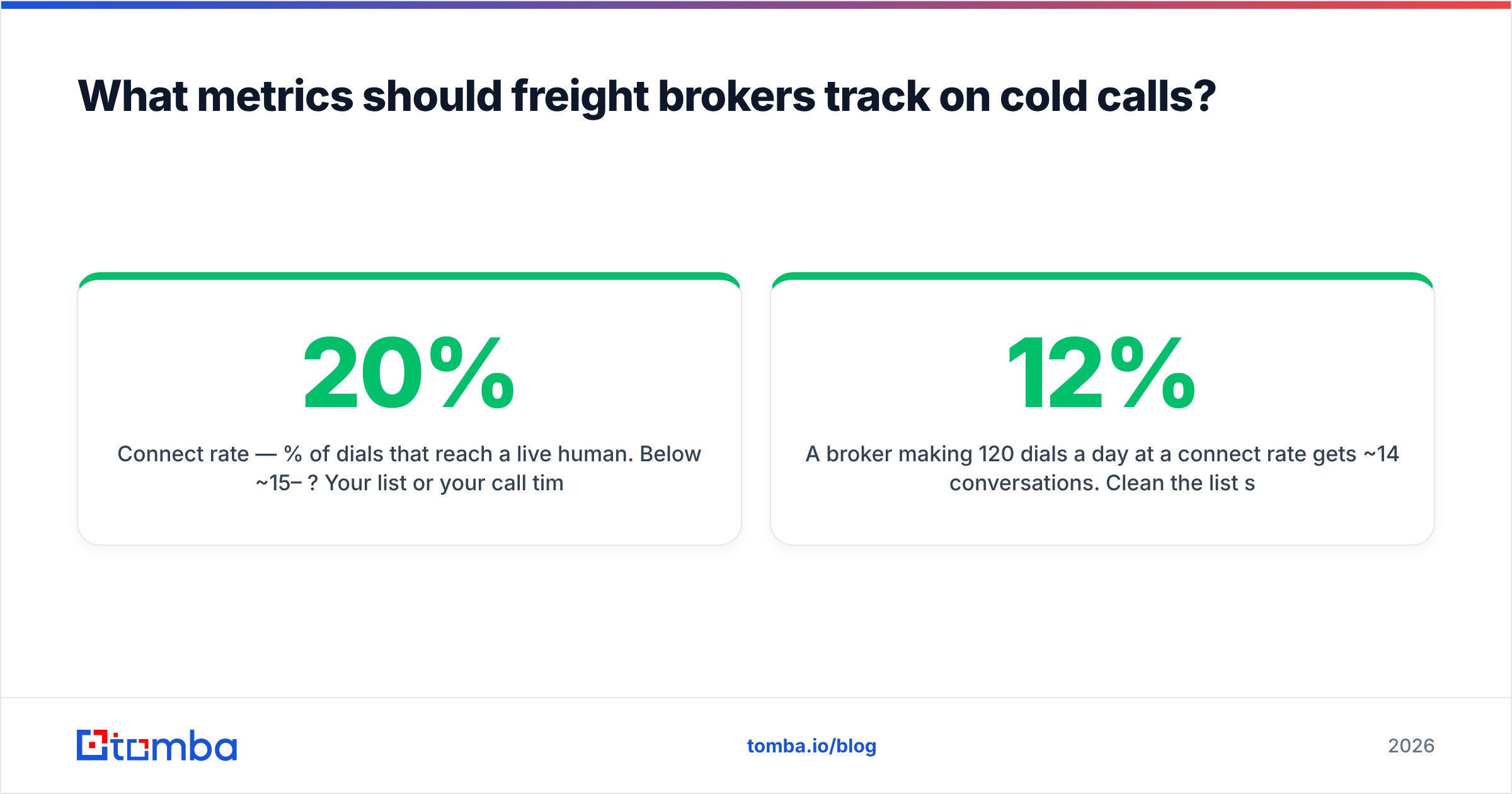
- Connect rate — % of dials that reach a live human. Below ~15–20%? Your list or your call times are the problem, not your pitch.
- Conversation rate — % of connects that become a real 2-way talk. This tests your opener.
- Quote rate — % of conversations that ask for a rate. This tests your qualifying.
- Booked-load rate — the only number that pays you.
- List accuracy — bounce/disconnect rate on your numbers and emails. This quietly caps every metric above it.
A broker making 120 dials a day at a 12% connect rate gets ~14 conversations. Clean the list so the connect rate hits 25%, and the same 120 dials produce ~30 conversations — you doubled your pipeline without dialing more. That's why data quality is the highest-leverage thing you can fix. Industry benchmarks from resources like HubSpot's sales statistics consistently show connect and conversion rates rising sharply with better targeting and timing.
When are the best times to cold call shippers?#
Freight desks run on the clock, so time your calls to when the traffic manager is at their desk but not underwater.
- Best windows: 8:00–10:00 a.m. and 3:30–4:30 p.m. in the prospect's local time zone. Early = before the day's chaos; late afternoon = booking tomorrow's trucks.
- Worst windows: Monday mornings (catching up from the weekend) and Friday afternoons (checked out).
- Mid-week wins: Tuesday through Thursday consistently connect best.
- Respect time zones. If you're on the East Coast calling West Coast shippers, your 8 a.m. is their 5 a.m. — you'll just annoy them.
Because you can't control whether a shipper has an open load the moment you call, the play is disciplined volume during the good windows, backed by a follow-up system that keeps you top of mind between calls.
How do you build the follow-up system that closes freight deals?#
The first cold call rarely books the load. The system around it does. Here's the loop that turns a one-time "send me an email" into a booked lane:
- Log the call with the lane, commodity, and pain point they mentioned — specifics you'll reference later.
- Send a verified intro email within the hour — rate on their lane, one line on your capacity, nothing bloated. Use cold email templates tuned for brevity.
- Add them to a call-back cadence based on what they told you (season start, contract renewal, "check back in two weeks").
- Track every touch in your CRM so no shipper falls through the cracks and you never repeat yourself.
- Be the backup that answers fast when their primary drops a load — speed on that first covered load is how you become the primary.
Modern outbound stacks connect the phone and inbox so a call outcome triggers the right email automatically. Tomba plugs into that flow through its integrations — push verified contacts straight into HubSpot, Pipedrive, or your sequencing tool without manual copy-paste.
Cold calling vs. email vs. LinkedIn for freight brokers#
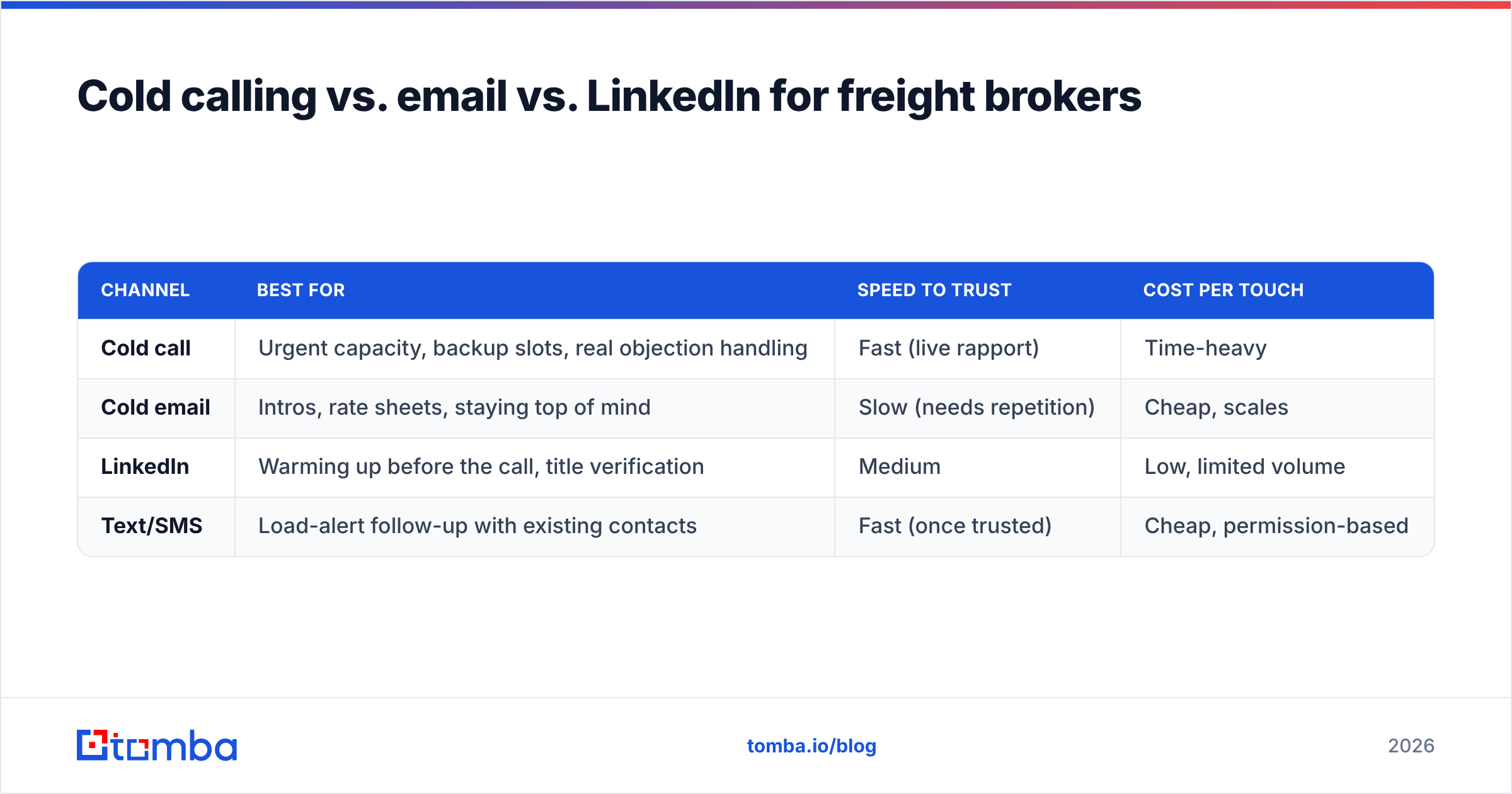
You don't pick one channel — you sequence them. But knowing each channel's job keeps you from wasting the wrong one on the wrong moment.
| Channel | Best for | Speed to trust | Cost per touch |
|---|---|---|---|
| Cold call | Urgent capacity, backup slots, real objection handling | Fast (live rapport) | Time-heavy |
| Cold email | Intros, rate sheets, staying top of mind | Slow (needs repetition) | Cheap, scales |
| Warming up before the call, title verification | Medium | Low, limited volume | |
| Text/SMS | Load-alert follow-up with existing contacts | Fast (once trusted) | Cheap, permission-based |
The call earns the relationship; email and LinkedIn keep it alive between loads. All three depend on the same foundation — accurate contact data. A perfect script against a bad number is zero calls that connect.
Common cold-calling mistakes freight brokers make#
- Buying a giant, stale list and calling it "scale." Volume of bad data is just faster failure.
- Pitching services instead of lanes. Shippers buy capacity on their freight, not your company overview.
- Talking past the close. Once they agree to a test load, stop selling and get the details.
- Skipping verification. Dialing dead numbers and emailing bounced addresses tanks every metric and your sender reputation.
- No follow-up system. The money is in the fifth touch, and most brokers quit at the first.
The bottom line#
Cold calling for freight brokers is alive and profitable in 2026 — the brokers complaining that "cold calling is dead" are almost always the ones working from a dead list. Fix the data, tighten the opener to a lane-specific hook, track the full funnel, and build a follow-up loop, and the phone becomes the most reliable pipeline you own.
Start with the foundation: get verified, on-target shipper contacts before you ever pick up the phone. Tomba's Email Finder — paired with the phone finder and validator — turns a company name into a traffic manager's verified email and direct line, so every dial and every follow-up reaches a real person who actually ships freight. Try it free (25 searches a month), then scale up on Tomba pricing as your call volume grows. Clean data in, booked loads out.
Related guides#
// get started
Find, verify and enrich your first contacts today
Start on the free plan with 25 searches a month, then scale when your team is ready.
Free plan · No credit card required · GDPR & CCPA
// about the author