Cold Calling for Recruitment: Scripts, Data, and Tools for 2026
Cold calling still fills roles when email and InMail go quiet. Here are the scripts, timing data, objection handling, and tools recruiters use to book more candidate and client calls in 2026.
Cold calling is not dead in recruitment — it is just crowded out by recruiters who never learned to do it well. When a candidate ignores your third InMail and your email bounces, a well-timed phone call is still the fastest way to a real conversation. This guide shows you how to run cold calling for recruitment in 2026: the scripts, the timing, the objection handling, and the data tools that keep your dial list clean.
TL;DR#
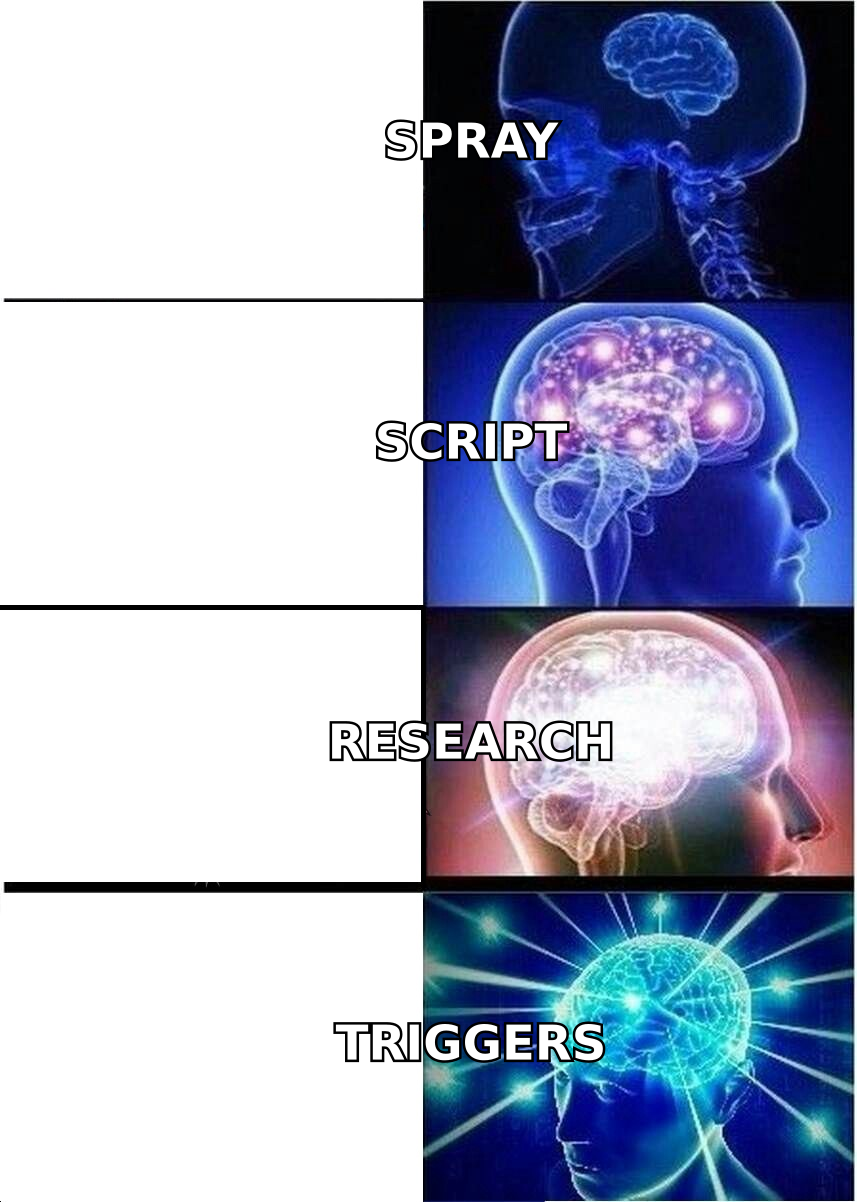
- Cold calling for recruitment works when you call the right person, at the right time, with a reason to call — not a spray-and-pray dialer session.
- A tight script beats improvisation. Open with a pattern interrupt, earn 20 seconds, then get to the point.
- Accurate contact data is the whole game. A perfect script dialed at a wrong number is zero placements. Verified B2B phone numbers and mobile-first data change your connect rate more than any opener.
- Combine channels. Cold calls that follow a warm email or LinkedIn touch connect far more often than cold-cold dials.
- Track connect rate, conversation rate, and booked-meeting rate — not just dials. Volume without measurement is just noise.
Does cold calling still work for recruiters in 2026?#
Yes — for a shrinking group of recruiters who actually pick up the phone. Most desks have quietly abandoned it because email and LinkedIn feel safer, which is exactly why the phone still cuts through. Your ideal passive candidate gets 30 InMails a week and one recruiter call a month. Being that call is an advantage, not a disadvantage.
Think of the phone like a fire escape in a crowded building. Everyone piles into the main stairwell (email, LinkedIn, job boards). The recruiter who knows where the side exit is gets out first. Cold calling is that side exit — less trafficked, faster when you know how to use it.
The catch is that cold calling for recruitment only works when three things line up: you reach a real, reachable number; you call someone who could plausibly care; and you have a reason for the interruption. Miss any one and you are just annoying people. Nail all three and you book meetings your competitors never even attempt.
What makes cold calling for recruitment different from B2B sales?#
Recruiters actually run two cold-call motions at once, and confusing them is the most common mistake on the desk.
- Candidate calls — reaching passive talent who are not looking. Emotional, career-driven, and highly sensitive to how you open. You are selling an opportunity, not a product.
- Client / business development calls — reaching hiring managers and HR leaders to win a new req. This is closer to classic B2B sales: you are selling your ability to fill roles faster and cheaper than the competition.
- Reference and referral calls — warm-ish calls that mine one conversation for three more names.
- Re-engagement calls — past candidates and dormant clients who already know you.
Each motion needs its own list, script, and success metric. A candidate call that "fails" (they are happy where they are) can still succeed if it produces a referral. Measure them separately or your reporting will lie to you.
What is the best cold call script for recruitment?#
The best script is short, honest about why you are calling, and built to earn the next 20 seconds rather than close on the first breath. Here is a candidate opener that works across most desks:
"Hi [Name], this is [You] from [Firm]. I know I'm calling out of the blue — do you have 30 seconds? … I recruit [role] specialists in [region], and I came across your work on [specific project / company]. I'm not going to pitch you a job on a cold call — I just wanted to see if it's worth a proper conversation later this week."
Why it works: it names the interruption (people relax when you acknowledge it), it is specific (you did homework), and it lowers the stakes (no hard pitch). For a business-development call, swap the hook:
"Hi [Name], [You] from [Firm]. Quick and honest — I place [role] candidates in [industry], and I noticed you've had a [role] req open for [time]. I have two people who might fit. Worth five minutes?"
Notice the trigger: an open req you found through research. A trigger event beats a generic pitch every time. HubSpot's own sales research has long shown that reference-based and trigger-based openers outperform cold generic scripts, and the same holds on the recruitment desk.
How do you handle the most common objections?#
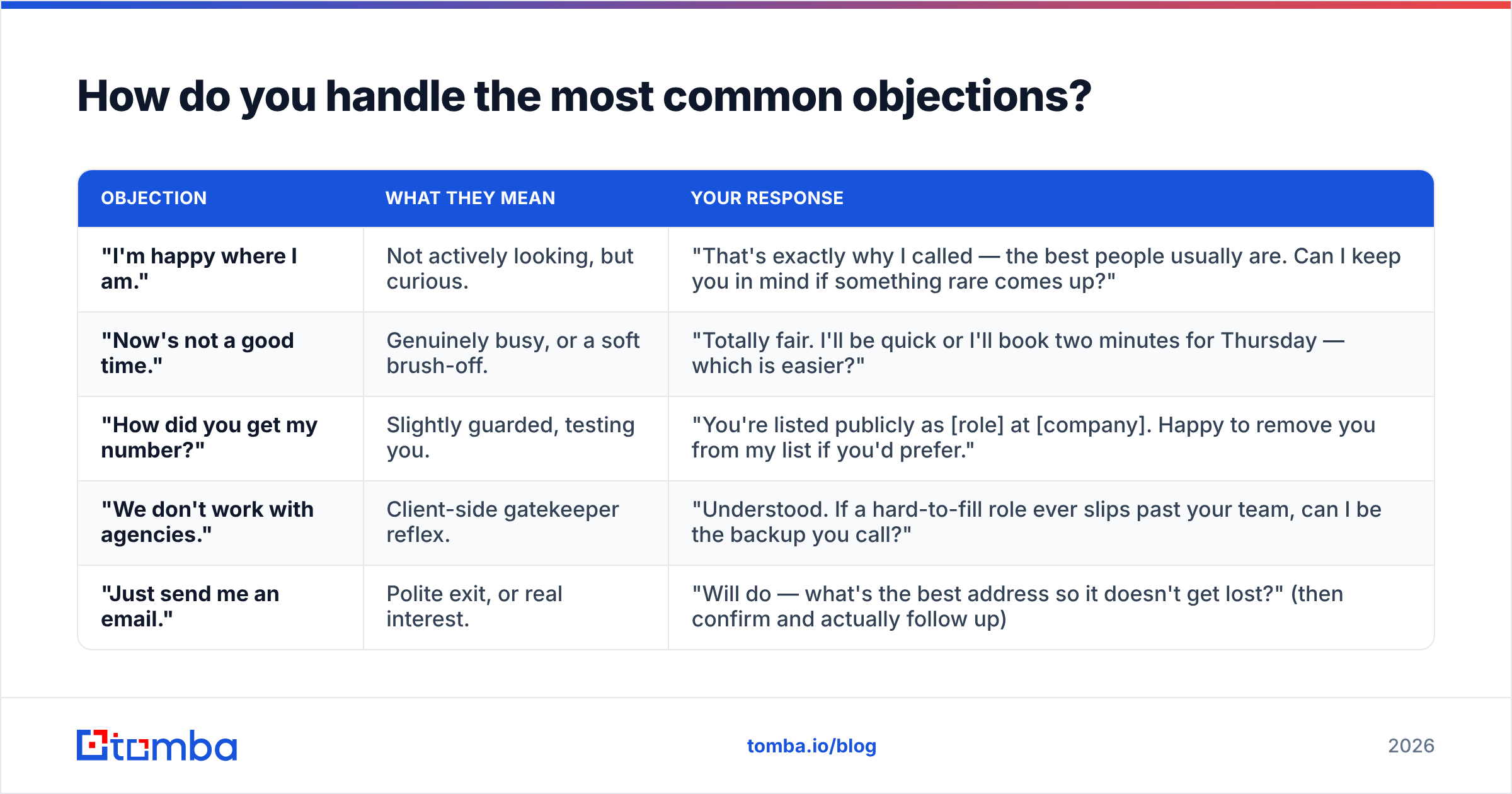
Objections on a recruitment cold call are not rejections — they are the actual start of the conversation. Have a calm, one-line response ready for each of the big four.
| Objection | What they mean | Your response |
|---|---|---|
| "I'm happy where I am." | Not actively looking, but curious. | "That's exactly why I called — the best people usually are. Can I keep you in mind if something rare comes up?" |
| "Now's not a good time." | Genuinely busy, or a soft brush-off. | "Totally fair. I'll be quick or I'll book two minutes for Thursday — which is easier?" |
| "How did you get my number?" | Slightly guarded, testing you. | "You're listed publicly as [role] at [company]. Happy to remove you from my list if you'd prefer." |
| "We don't work with agencies." | Client-side gatekeeper reflex. | "Understood. If a hard-to-fill role ever slips past your team, can I be the backup you call?" |
| "Just send me an email." | Polite exit, or real interest. | "Will do — what's the best address so it doesn't get lost?" (then confirm and actually follow up) |
Two rules. First, never argue — agree, then redirect. Second, always leave with a next step, even if that step is just permission to email. A "no" with permission to follow up is worth more than a "maybe" you can never reach again.
Why does contact data decide whether cold calling works?#
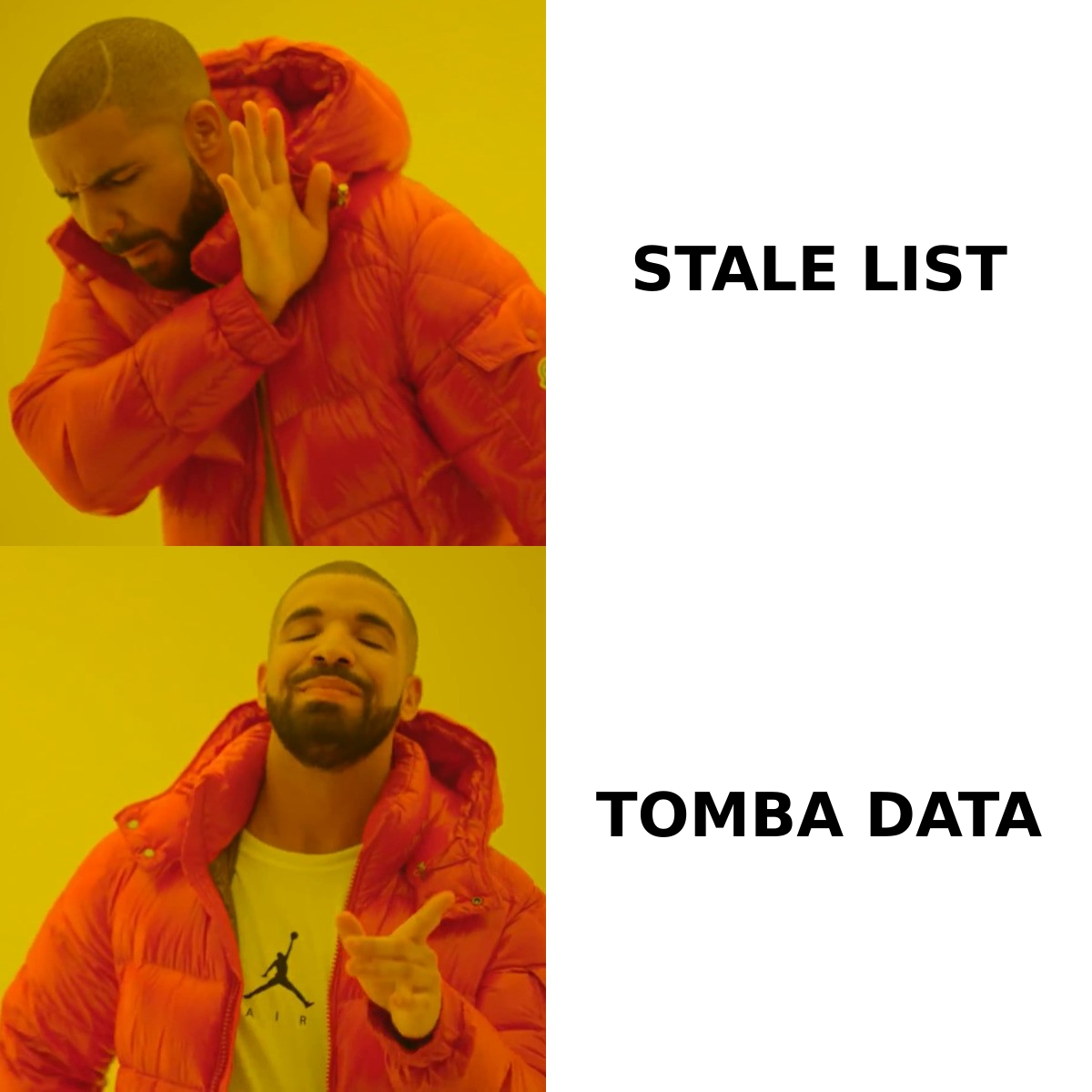
Because the fanciest script on earth dials a dead number the same as a bad one. Connect rate — the share of dials that reach a live human — is the single biggest lever in cold calling for recruitment, and it is almost entirely a data problem, not a talent problem.
Most recruiter dial lists rot fast. People change roles, switch mobile carriers, and update numbers constantly, so a list scraped six months ago is partly fiction. When your dialer burns through wrong numbers and voicemails, morale drops and so does volume. Clean, verified data fixes the top of the funnel before you ever open your mouth.
This is where a modern data stack earns its keep:
- Find current numbers. Use a phone finder to pull direct-dial and mobile numbers tied to a person and company rather than a switchboard.
- Validate before you dial. Run the list through a phone validator so you are not paying in time and morale for disconnected lines.
- Enrich the record. Layer in role, seniority, and company signals with data enrichment so every call has a trigger and a talking point.
- Bridge to email. When a call goes to voicemail, an accurate follow-up email doubles your odds — find it with an email finder and pair the two channels.
Independent buyers on G2 consistently rank contact accuracy as the top factor in prospecting-tool satisfaction — recruiters feel the same pain, just with mobile numbers instead of work emails.
What's the best time to make recruitment cold calls?#
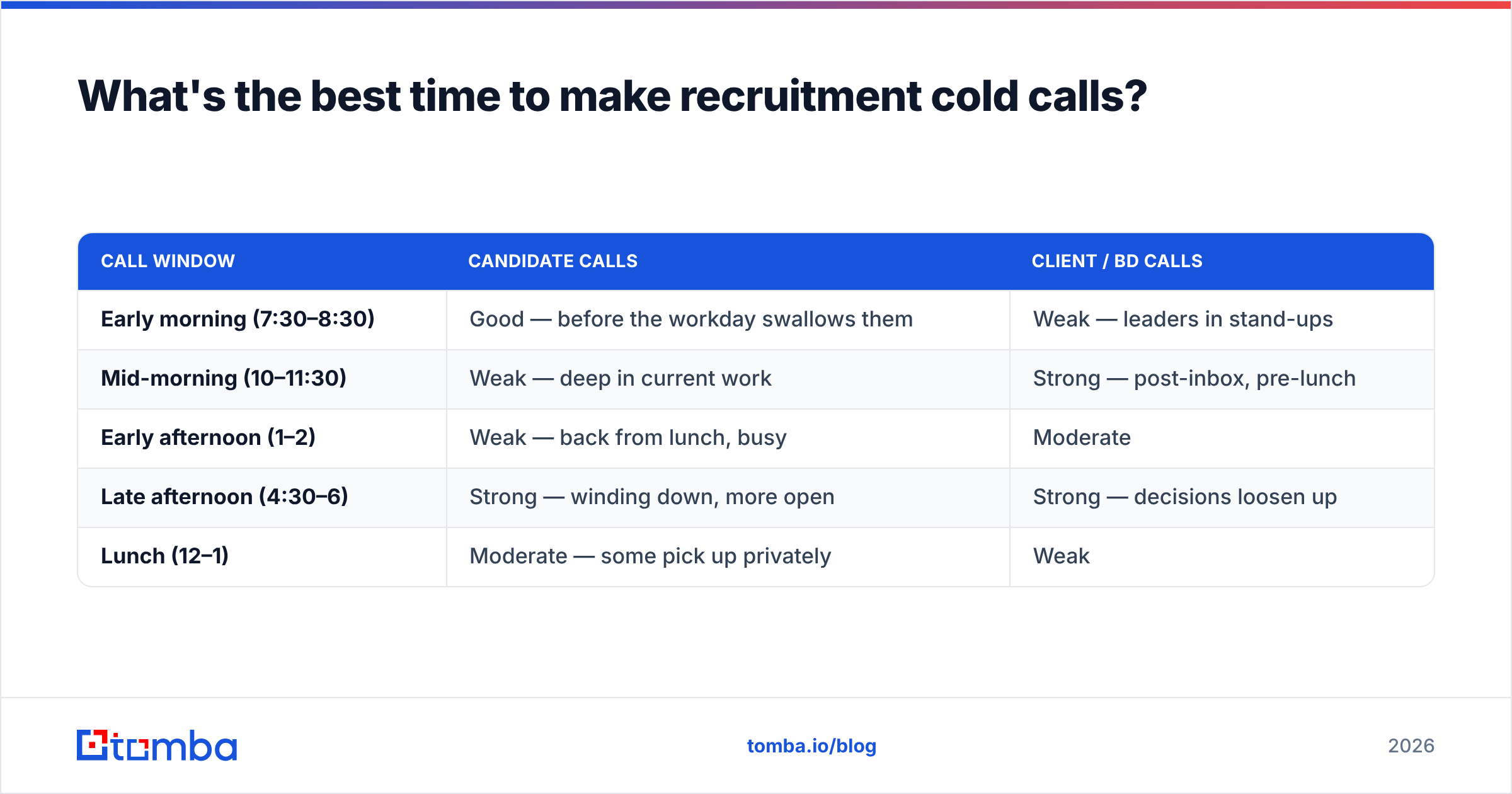
The best time is when your candidate can actually talk — which, for passive professionals, is rarely 10 a.m. on a Monday when they are heads-down at their current job. General cold-calling data points to mid-week and the edges of the workday, and recruitment skews even later because you are competing with someone's day job.
| Call window | Candidate calls | Client / BD calls |
|---|---|---|
| Early morning (7:30–8:30) | Good — before the workday swallows them | Weak — leaders in stand-ups |
| Mid-morning (10–11:30) | Weak — deep in current work | Strong — post-inbox, pre-lunch |
| Early afternoon (1–2) | Weak — back from lunch, busy | Moderate |
| Late afternoon (4:30–6) | Strong — winding down, more open | Strong — decisions loosen up |
| Lunch (12–1) | Moderate — some pick up privately | Weak |
Treat this as a starting hypothesis, not gospel. Every desk, region, and role has its own rhythm. Log the timestamp of every connect for a month, then let your own data tell you when to dial. The recruiters who win are not guessing — they are reading a spreadsheet.
How many touches does a placement really take?#
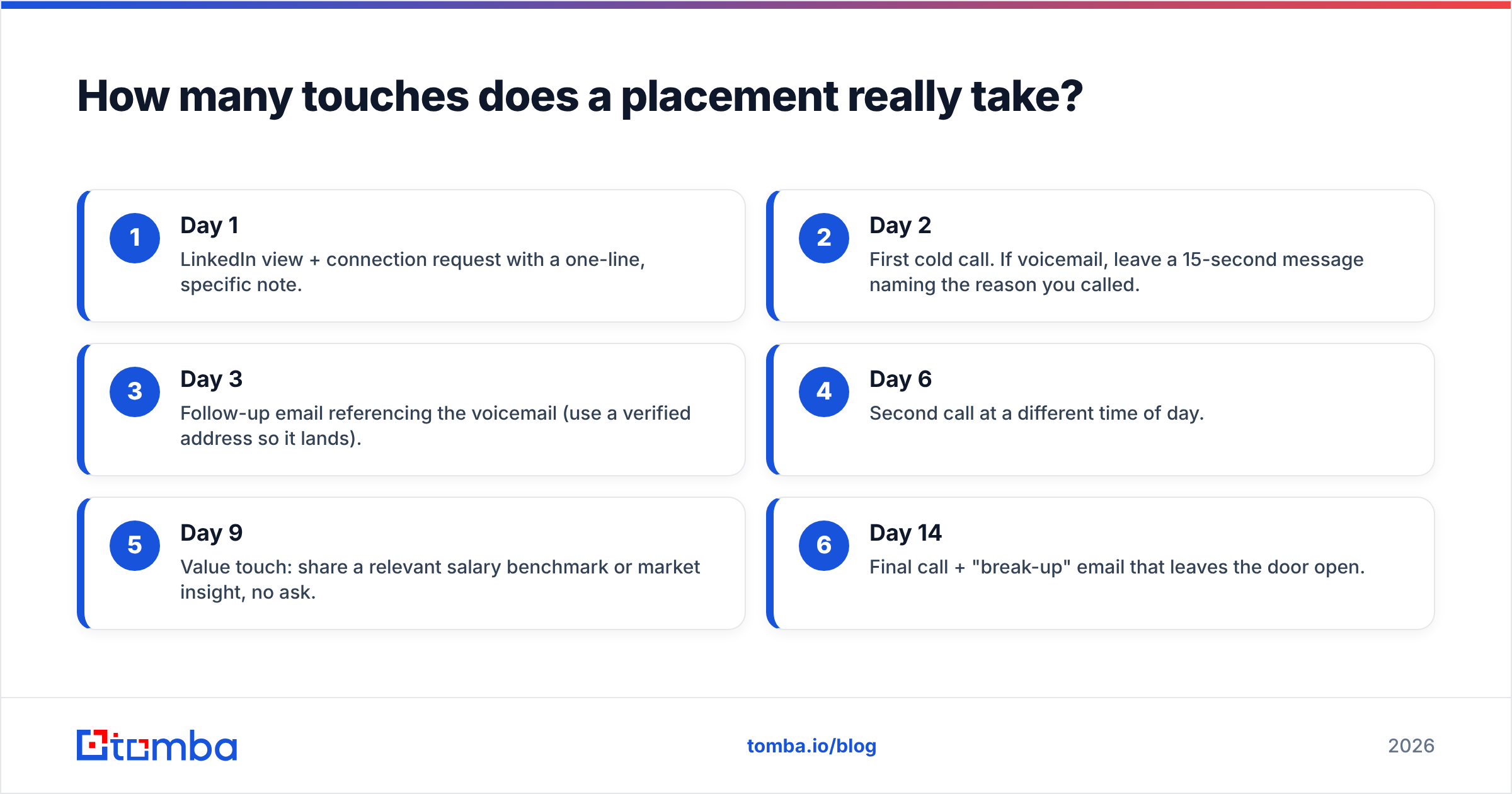
More than most recruiters have the patience for, which is precisely why persistence is an edge. A single cold call almost never books a placement; a coordinated sequence of calls, emails, and LinkedIn touches does. Salesforce and other CRM vendors have documented for years that most conversions require multiple follow-ups, and recruitment is no gentler.
A realistic multi-channel cadence for a passive candidate looks like this:
- Day 1 — LinkedIn view + connection request with a one-line, specific note.
- Day 2 — First cold call. If voicemail, leave a 15-second message naming the reason you called.
- Day 3 — Follow-up email referencing the voicemail (use a verified address so it lands).
- Day 6 — Second call at a different time of day.
- Day 9 — Value touch: share a relevant salary benchmark or market insight, no ask.
- Day 14 — Final call + "break-up" email that leaves the door open.
The point of the cadence is not to nag — it is to be present across the two or three channels where your candidate actually pays attention. That only works if your phone numbers and emails are current across all of them, which loops right back to data quality. If you want to sharpen the connective tissue between calls and social touches, the fundamentals of LinkedIn outreach pair naturally with a calling cadence.
What metrics should you track?#
Track the funnel, not the activity. Dials alone tell you how busy you were, not how effective. Watch these five numbers weekly:
- Connect rate — connects ÷ dials. Below ~15–20%? Your data is the problem, not your pitch.
- Conversation rate — real conversations ÷ connects. Low here means your opener is losing people.
- Booked-meeting rate — meetings ÷ conversations. This is where script and objection handling show up.
- Meeting-to-submission rate — did the conversation actually produce a candidate or client you could act on?
- Cost per conversation — total tool + time cost ÷ conversations, so you know what quality data is worth.
If connect rate is your weak link, no amount of role-play fixes it. Buy better data. If conversation rate is weak, record calls and refine the first 20 seconds. Diagnosing the right stage keeps you from "solving" a data problem with a script rewrite.
Cold calling vs. other recruitment channels#
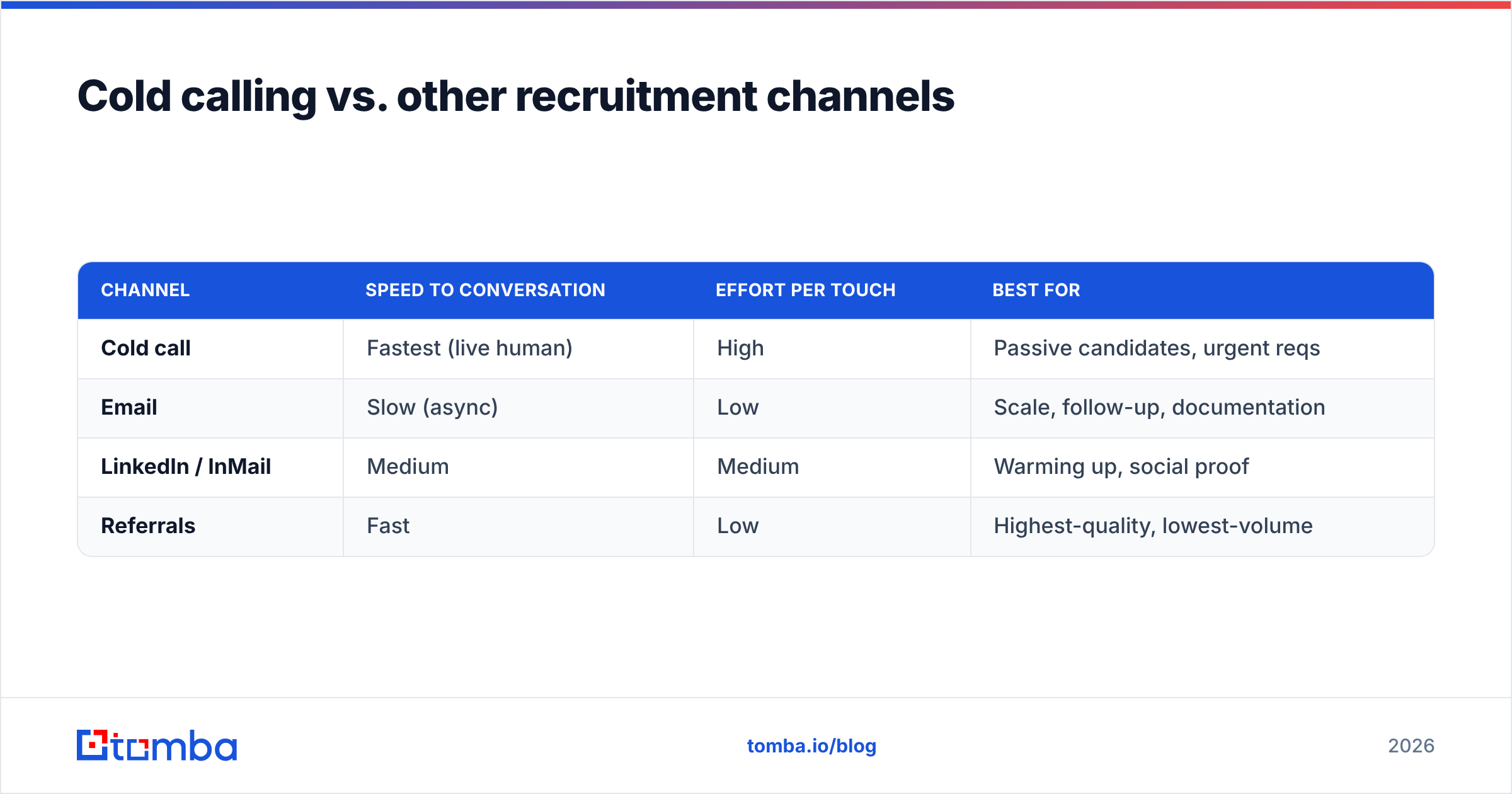
Cold calling is not a replacement for email or LinkedIn — it is the highest-intent channel in a stack, and it performs best when the others soften the ground first.
| Channel | Speed to conversation | Effort per touch | Best for |
|---|---|---|---|
| Cold call | Fastest (live human) | High | Passive candidates, urgent reqs |
| Slow (async) | Low | Scale, follow-up, documentation | |
| LinkedIn / InMail | Medium | Medium | Warming up, social proof |
| Referrals | Fast | Low | Highest-quality, lowest-volume |
The winning play is a blend: warm with a LinkedIn touch, reach out with the call, and reinforce with email — all pointed at the same verified contact record. Recruiters who lean on only one channel plateau. Those who orchestrate all three, on top of clean data, keep their pipeline full even when the market tightens.
Getting started: your cold-calling data foundation#
The strategy in this guide is only as good as the list you dial. Before you write a single script, get your contact data right: current direct-dial and mobile numbers, validated so you are not burning hours on dead lines, and enriched so every call has a reason. That foundation is what turns cold calling for recruitment from a demoralizing grind into a repeatable source of placements.
Tomba's Phone Finder helps you pull verified B2B phone numbers for the candidates and hiring managers on your target list, then pair each number with an accurate work email so your calls and follow-ups reinforce each other. Plans start on a free tier (25 searches a month) and scale to Starter at $49/mo and Growth at $99/mo — see full Tomba pricing for the tier that fits your desk. Fix the data, sharpen the script, work the cadence, and the phone becomes your most reliable channel again.
Related guides#
Ready to find emails that actually work?
Join 150,000+ professionals who stopped guessing and started sending. Free credits on signup — no credit card required.
Get the Tomba newsletter
Practical outbound tactics and product updates — once every two weeks.
About the author