Cold Email Outreach Tools in 2026: The No-Fluff Buyer's Guide
Most cold email outreach tools only solve one layer of the stack. Here's what each layer actually costs, where the overlap wastes money, and how to build a sending setup that lands in the inbox in 2026.
Cold email is four separate problems wearing one trench coat. Most tools solve one of them well, gesture vaguely at the other three, and price themselves as if they solved all four. That's why teams end up paying $600/month across five subscriptions and still get 0.4% reply rates.
This guide breaks the stack into its real layers, shows what each layer costs, and tells you where you can safely spend nothing.
TL;DR#
- Cold email outreach tools split into four layers: data (who to email), sending (the sequencer), infrastructure (domains, inboxes, warmup), and deliverability monitoring. Buying two tools from the same layer is the most common waste.
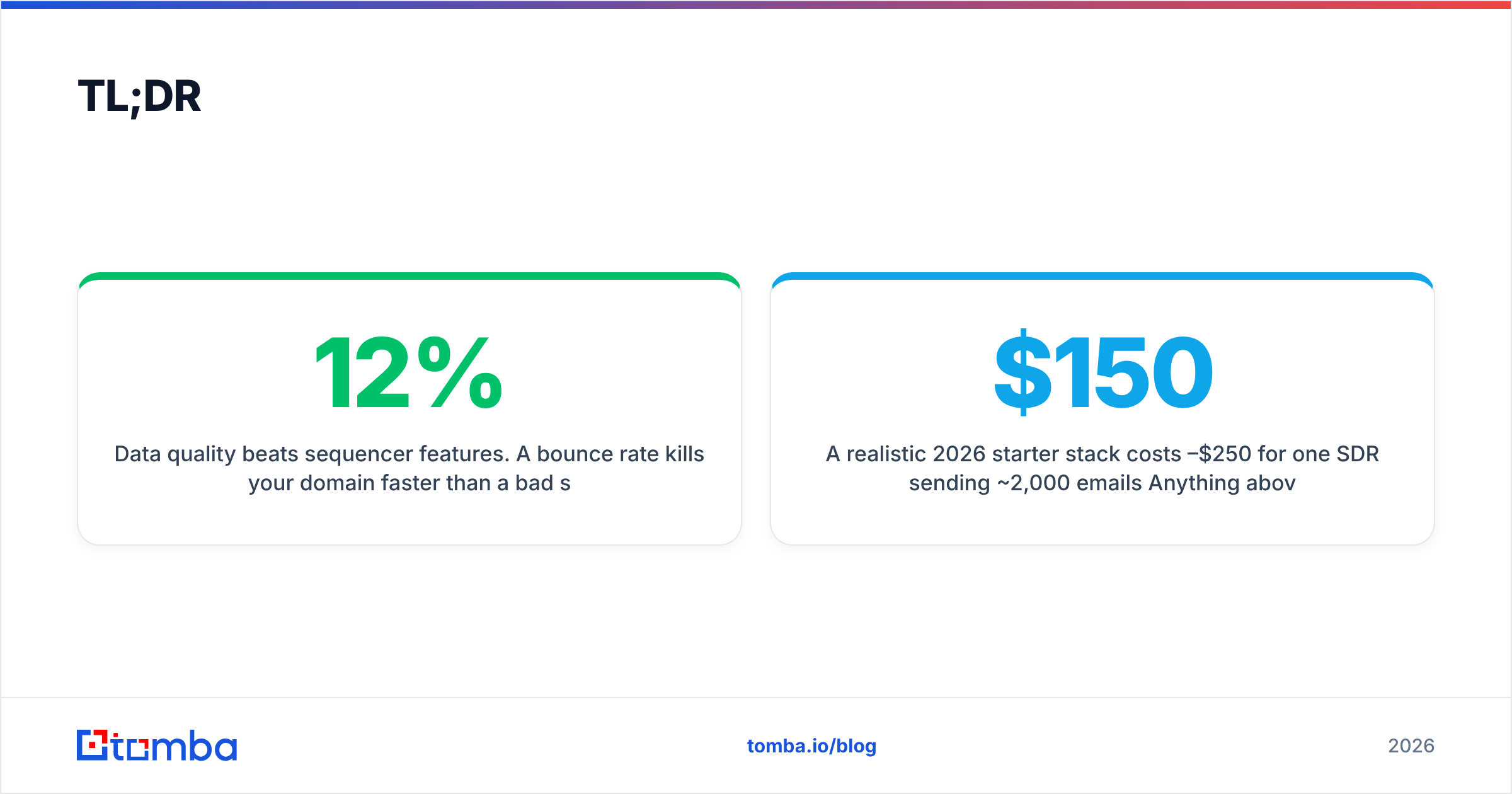
- Data quality beats sequencer features. A 12% bounce rate kills your domain faster than a bad subject line ever will. Verify before you send, always.
- Your sequencer is the least differentiated purchase. Instantly, Smartlead, Lemlist, and Reply.io all send email on a schedule. Pick on price and inbox rotation, not on AI features.
- Warmup is table stakes, not a moat. Every sequencer bundles it now. Don't pay separately unless you're running 50+ inboxes.
- A realistic 2026 starter stack costs $150–$250/month for one SDR sending ~2,000 emails/month. Anything above $500 means you're buying seats you don't use.
What are cold email outreach tools, exactly?#
"Cold email outreach tool" is a category label that got stretched until it stopped meaning anything. Vendors in this category include email finders, sequencers, warmup services, deliverability monitors, and full sales-engagement suites. They are not substitutes for each other, even when their landing pages use identical language.
Think of it like building a car. The engine, the fuel, the tires, and the dashboard gauge are four different purchases. Nobody sells you a "car tool." But in cold email, a warmup service will happily imply it's the whole vehicle.
Here's the honest decomposition:
- Data layer — Finding and verifying contact addresses. Tools: email finder platforms, B2B databases, LinkedIn scrapers. This is where deliverability is won or lost before you send a single email.
- Sending layer — Sequencers that schedule, personalize, rotate inboxes, and track replies. Instantly, Smartlead, Lemlist, Reply.io, Saleshandy, Apollo's built-in sequencer.
- Infrastructure layer — Secondary domains, mailbox providers (Google Workspace, Microsoft 365, or dedicated SMTP), SPF/DKIM/DMARC records, and warmup.
- Monitoring layer — Blacklist checks, spam-score testing, Google Postmaster Tools, seed-list inbox placement testing.
Most teams over-invest in layer 2 and under-invest in layer 1. That's backwards. Layer 2 is a commodity. Layer 1 is where the compounding damage lives.
Why does data quality matter more than the sequencer?#
Because mailbox providers score you on behavior, not on how clever your sequencer's AI is.
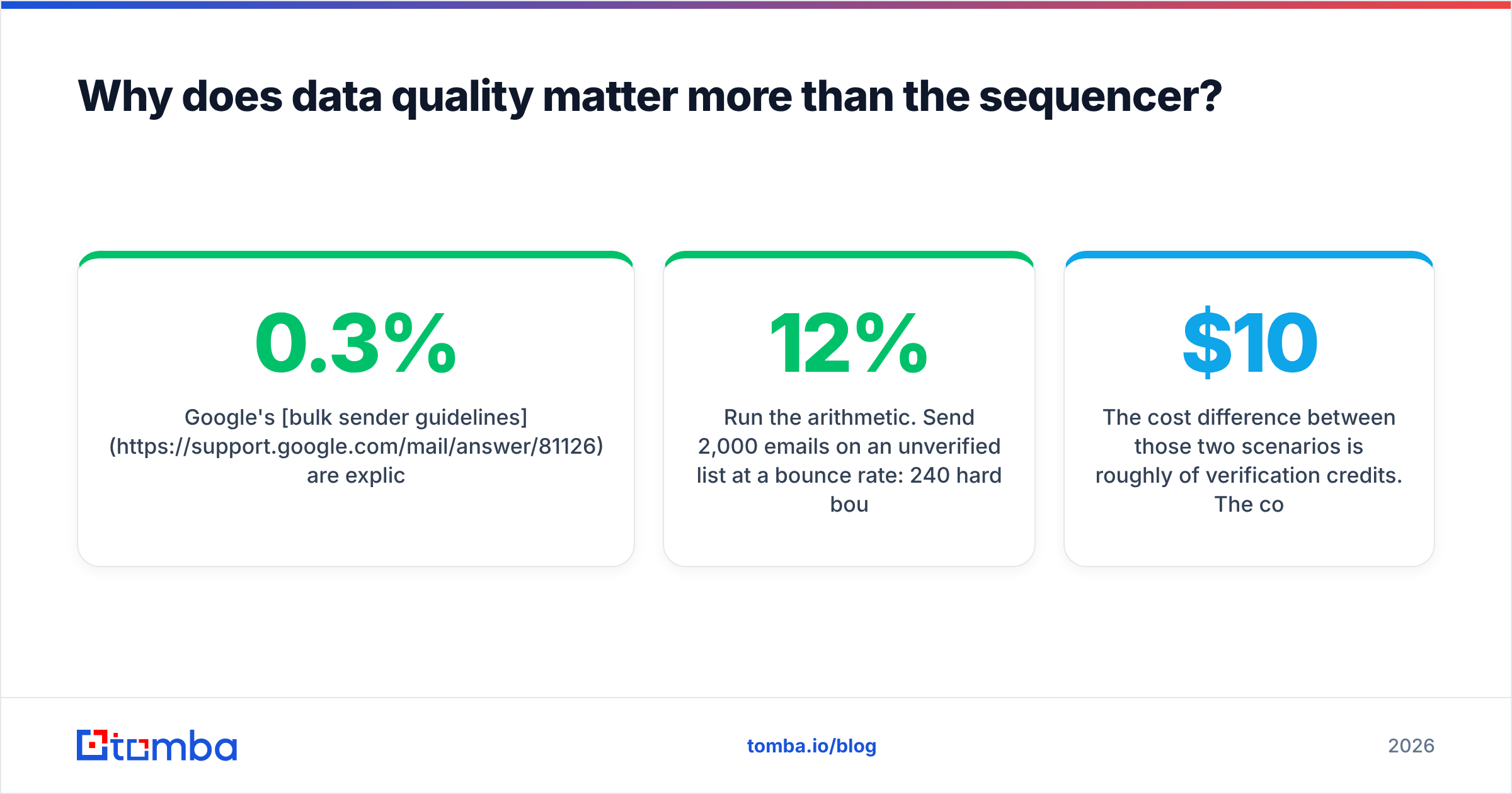
Google's bulk sender guidelines are explicit: keep spam complaint rates under 0.3%, authenticate with SPF and DKIM, and honor unsubscribes. What they don't say out loud, but every deliverability engineer will tell you, is that hard bounces are a reputational signal. A list with a 12% bounce rate tells Gmail you scraped it. A list with a 1% bounce rate tells Gmail you did your homework.
Run the arithmetic. Send 2,000 emails on an unverified list at a 12% bounce rate: 240 hard bounces. That's enough to tank a fresh domain in one week. Same 2,000 emails on a verified list at 1.5%: 30 bounces. Nothing happens. Your sender reputation stays clean, your open rates hold, and you get to keep sending next month.
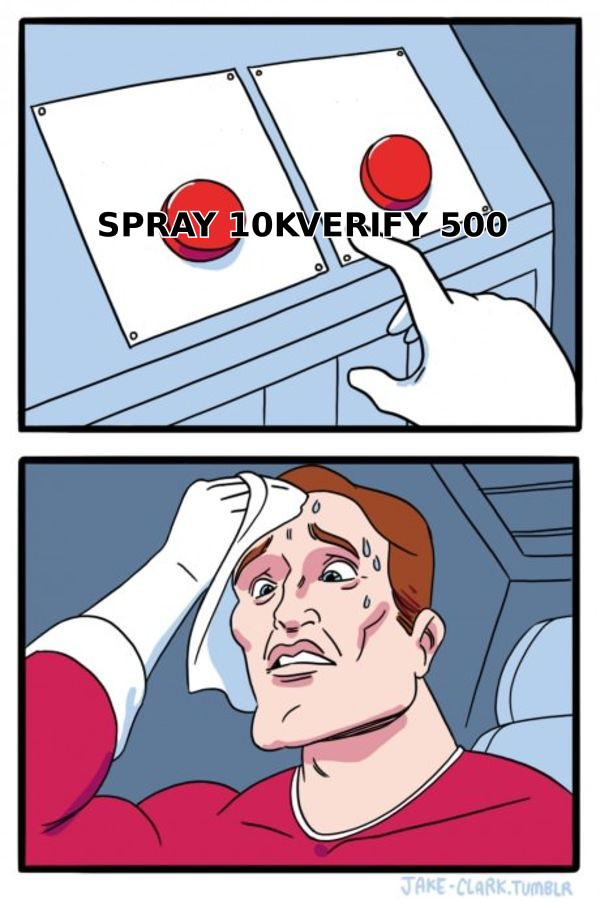
The cost difference between those two scenarios is roughly $10 of verification credits. The cost of a burned domain is a new domain, three weeks of warmup, and a dead pipeline month.
So: verify everything. Use an email verifier as a hard gate in front of your sequencer, not as an afterthought. If your data source can't tell you whether an address is deliverable, catch-all, or dead, it isn't a data source — it's a guess with a monthly invoice.
Which cold email outreach tools should you actually compare?#
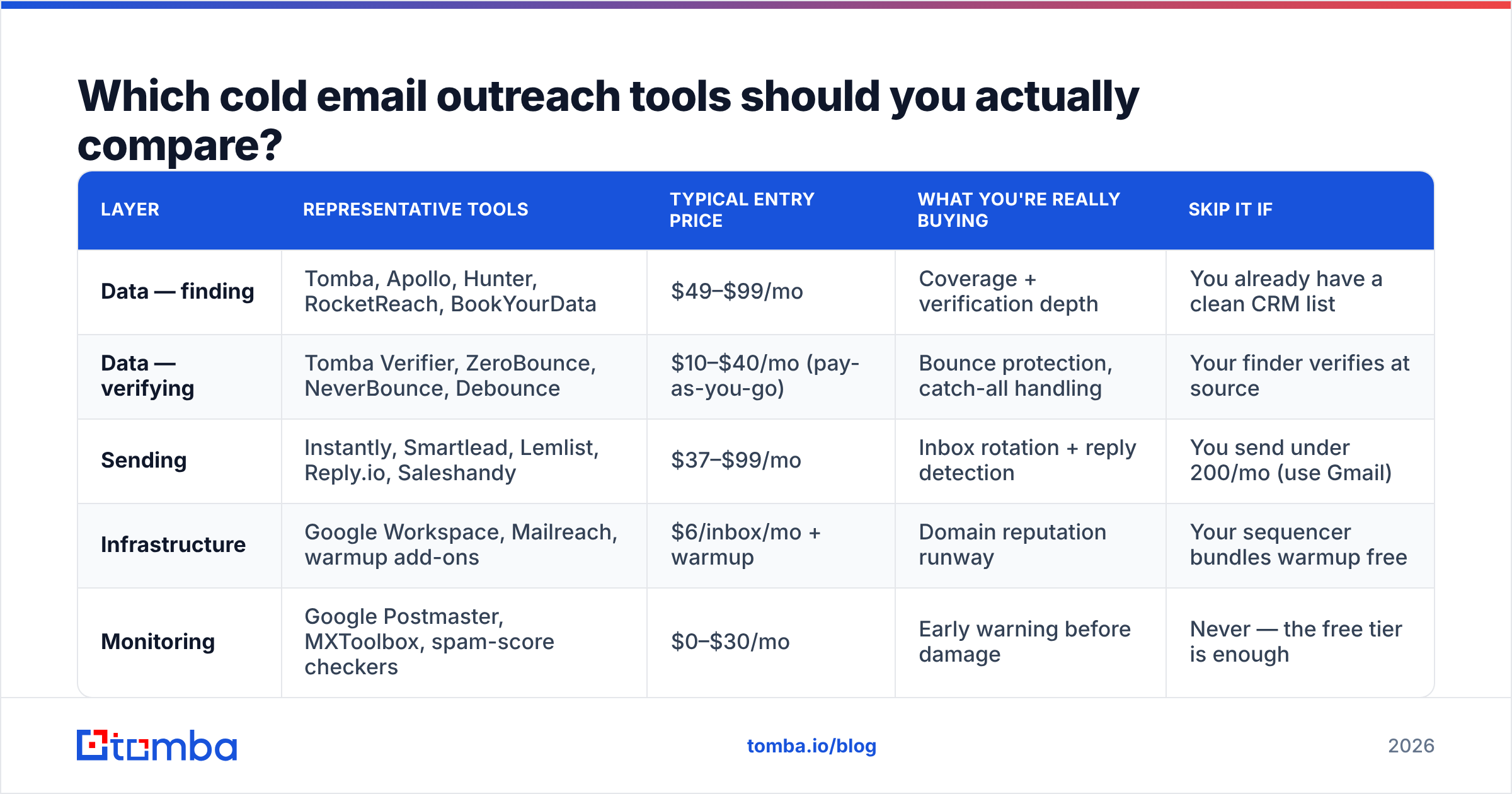
Compare within layers, never across them. Here's the layer-by-layer field as it stands in 2026.
| Layer | Representative tools | Typical entry price | What you're really buying | Skip it if |
|---|---|---|---|---|
| Data — finding | Tomba, Apollo, Hunter, RocketReach, BookYourData | $49–$99/mo | Coverage + verification depth | You already have a clean CRM list |
| Data — verifying | Tomba Verifier, ZeroBounce, NeverBounce, Debounce | $10–$40/mo (pay-as-you-go) | Bounce protection, catch-all handling | Your finder verifies at source |
| Sending | Instantly, Smartlead, Lemlist, Reply.io, Saleshandy | $37–$99/mo | Inbox rotation + reply detection | You send under 200/mo (use Gmail) |
| Infrastructure | Google Workspace, Mailreach, warmup add-ons | $6/inbox/mo + warmup | Domain reputation runway | Your sequencer bundles warmup free |
| Monitoring | Google Postmaster, MXToolbox, spam-score checkers | $0–$30/mo | Early warning before damage | Never — the free tier is enough |
A few notes on the field, since the pricing tables never tell the whole story.
Tomba sits in the data layer and stays there. Free tier gives you 25 searches/month, Starter is $49/mo, Growth $99/mo, Pro $249/mo. It doesn't try to sell you a sequencer, which is either a limitation or a virtue depending on whether you want one vendor or the best vendor per layer. Its domain search and catch-all verifier cover the two cases that break most lists: bulk company sweeps and catch-all domains that every cheap verifier marks "unknown" and silently passes through.
Apollo bundles data plus a sequencer plus a dialer. Convenient. The tradeoff is that its database is shared across every Apollo user, so the contacts you find have plausibly been emailed forty times this quarter. Convenience and exclusivity are inversely correlated.
BookYourData takes the opposite bet: human-verified, pay-per-record B2B lists with a bounce guarantee. If you want a defined list of 500 contacts in a narrow ICP and you'd rather buy than build, it's a legitimate route — and the accuracy guarantee is real, not marketing. It's less useful for continuous prospecting where you're enriching new accounts weekly.
Instantly and Smartlead dominate the sending layer for a reason: unlimited inbox connections at the low tiers, native warmup, and inbox rotation that doesn't fall over at scale. Instantly starts around $37/mo. Smartlead is comparable. Feature parity between them is close enough that switching costs, not features, should decide it.
Lemlist and Reply.io are the higher-touch options — better personalization tooling, multichannel steps, higher price. Worth it if your ACV justifies 40 emails a day instead of 400.
Check G2's sales engagement category if you want the crowd-sourced version of this ranking. Just read the reviews from companies your size; enterprise reviewers rate features you'll never touch.
How much should a working cold email stack cost?#
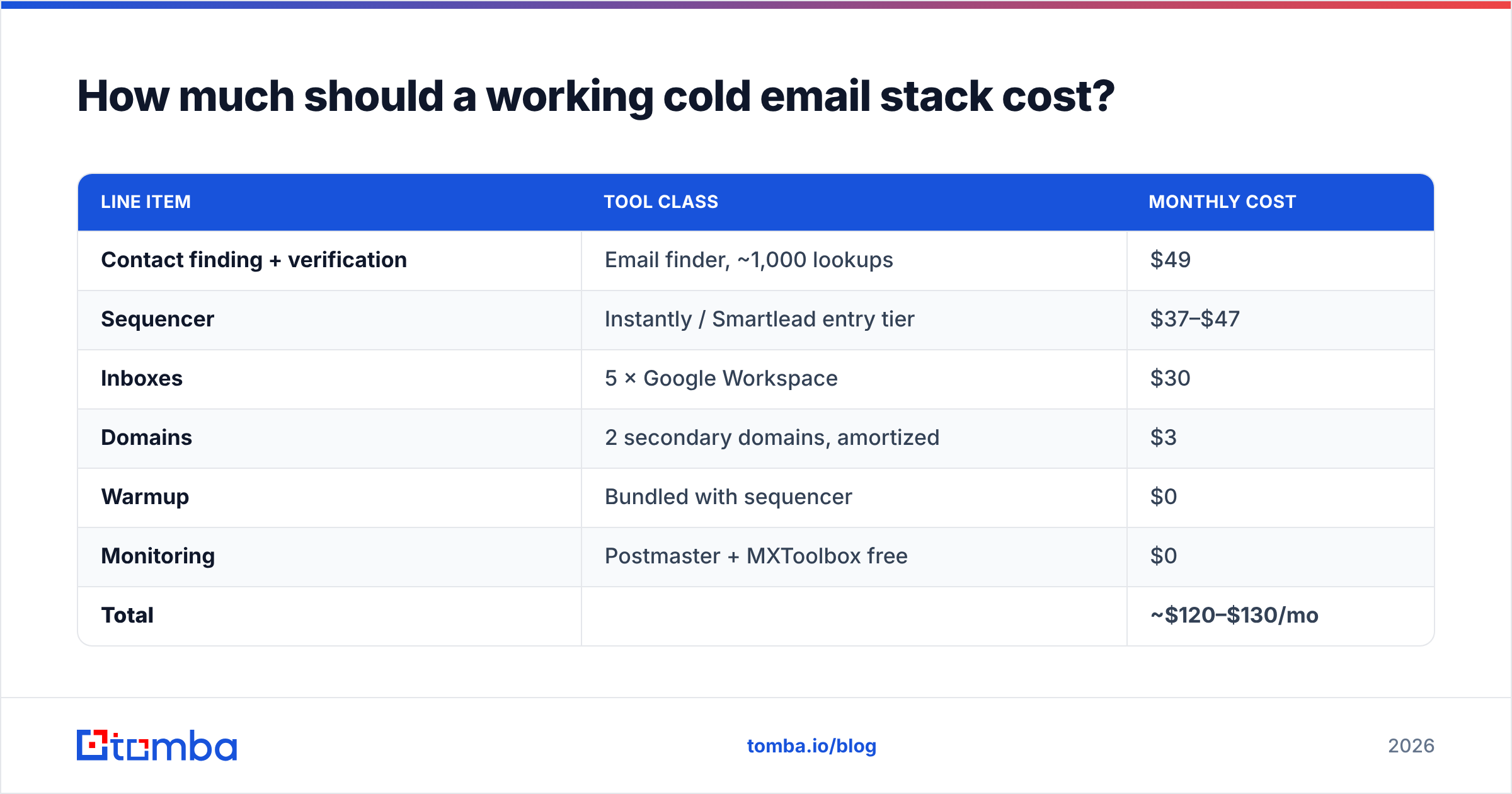
For one SDR sending ~2,000 emails per month across 5 inboxes on 2 secondary domains:
| Line item | Tool class | Monthly cost |
|---|---|---|
| Contact finding + verification | Email finder, ~1,000 lookups | $49 |
| Sequencer | Instantly / Smartlead entry tier | $37–$47 |
| Inboxes | 5 × Google Workspace | $30 |
| Domains | 2 secondary domains, amortized | $3 |
| Warmup | Bundled with sequencer | $0 |
| Monitoring | Postmaster + MXToolbox free | $0 |
| Total | ~$120–$130/mo |
That's the floor for a setup that actually works. Not $600. If your current spend is triple that, one of these three things is true: you're paying for CRM seats you call "outreach," you're paying two vendors in the same layer, or you're on an enterprise tier for a team of two.
The number that scales is the data line. Sending 10,000 emails/month means finding and verifying 10,000+ addresses, which is a Growth tier ($99/mo) not a Starter tier. Sequencer costs barely move. Compare Tomba pricing tiers against your monthly lookup volume, not against your headcount — credits are the unit that matters.
What breaks in real cold email campaigns?#
Ranked by how often it actually happens, based on what teams report when their reply rate craters:
- Bounce rate above 5%. Almost always an unverified or stale list. Fix: verify at send time, not at import time. Contacts go stale at roughly 2% per month as people change jobs.
- Catch-all domains treated as valid. Many verifiers return "accept-all" and your sequencer treats it as green. Some catch-alls silently drop mail; some route to a shared inbox nobody reads. Use a real catch-all finder to distinguish deliverable catch-alls from black holes.
- Missing or misconfigured DMARC. SPF and DKIM pass, DMARC is set to
p=noneor absent entirely, and Google throttles you. Costs nothing to fix, takes twenty minutes. - Sending volume ramped too fast. New domain, 300 emails on day three. Warmup exists precisely to prevent this. Give a fresh domain 3–4 weeks before you touch 50/day per inbox.
- One domain, one inbox, all eggs. When it burns — and it will eventually — your primary domain goes with it. Always send from secondary domains.
- No reply handling. Fifty percent of "low reply rate" complaints are actually "replies going to a monitored inbox nobody monitors."
Notice that four of six are data or infrastructure problems. Zero are sequencer problems. This is the whole argument for spending your marginal dollar on layer 1.
Do you need an all-in-one platform or a best-of-breed stack?#
Depends on one variable: whether anyone on your team owns deliverability.
All-in-one (Apollo, Outreach, Salesloft) makes sense when nobody owns it. One vendor, one bill, one support contact, defaults that are mostly sane. You'll pay 2–3× and your data will be the same data your competitors are emailing from, but the setup cost is near zero and nothing falls between the cracks.
Best-of-breed (finder + verifier + sequencer + monitoring) makes sense when someone does own it. You get better data, lower total cost, and the ability to swap a bad vendor without migrating your whole motion. The cost is that four dashboards need one person watching them.
The practical middle path most teams land on: best-of-breed for data, commodity for sending. Buy the sharpest B2B database and verification you can, then pipe it into whichever sequencer is cheapest this quarter. Data is where quality is durable. Sending is where quality is fungible.
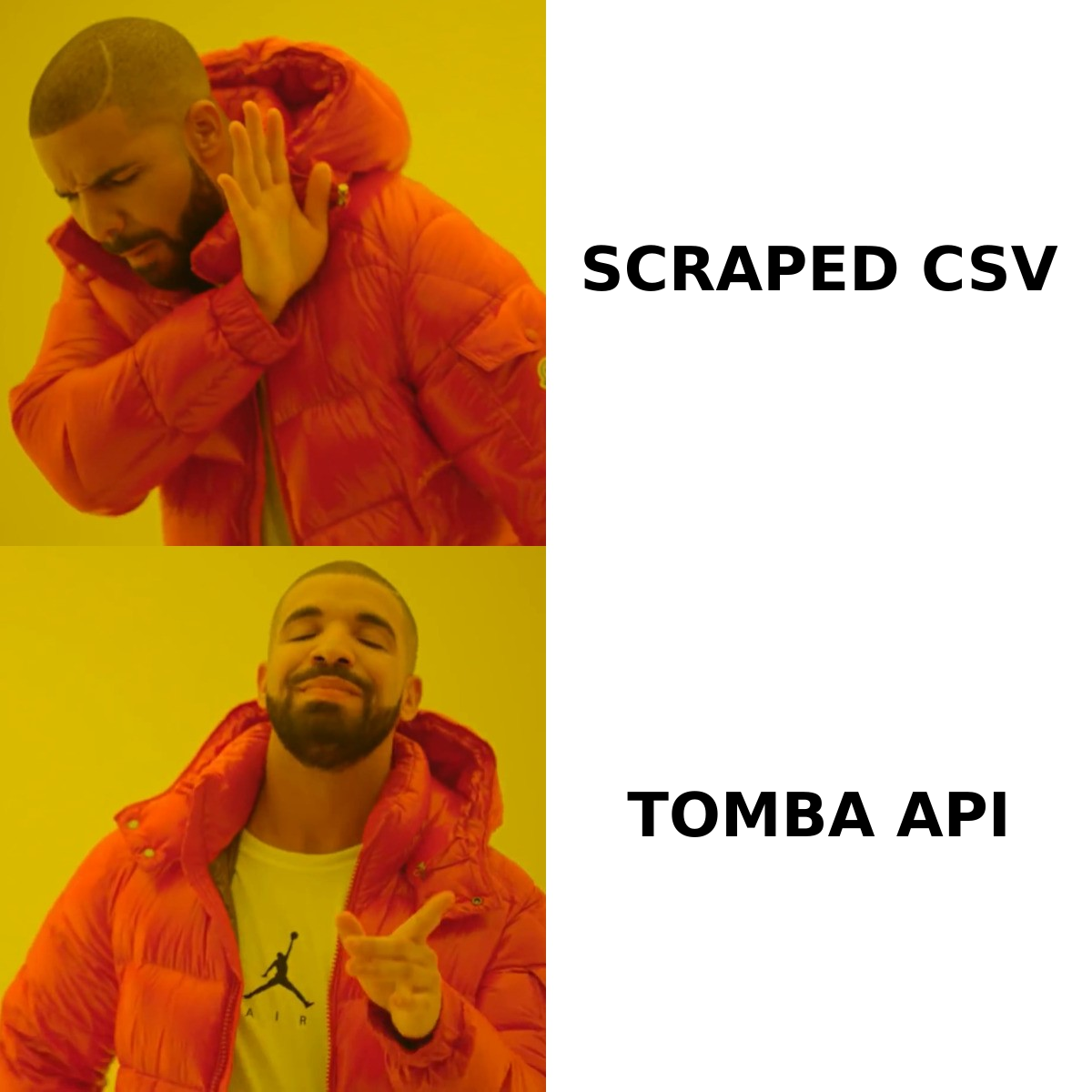
If you're wiring this together programmatically, the Tomba API handles find-then-verify in a single call, which means you can gate your sequencer's import step on a live deliverability check rather than trusting a CSV that was accurate in March.
What should you do this week?#
Four concrete moves, in order:
- Audit your bounce rate. Pull the last 1,000 sends. Above 3%? Your data layer is broken and no sequencer change will help.
- Check your DNS. SPF, DKIM, and DMARC on every sending domain. Free, fast, and the single highest-leverage fix if any are missing.
- Cut the duplicate layer. List every outreach subscription and tag it with its layer. If two tools carry the same tag, kill one this month.
- Verify at send, not at import. Move verification to the last step before the sequencer picks up the row. Stale data is the default state of B2B contact data, not the exception.
None of this is glamorous. All of it moves reply rate more than rewriting your subject line for the ninth time.
The bottom line#
Cold email outreach tools are not one market. They're four, and only one of them — data — has durable quality differences worth paying up for. Sequencers converged. Warmup got commoditized. Monitoring is free. What's left is knowing who to email and whether that address will actually deliver.
Get the data layer right and a $37/month sequencer will outperform a $600/month suite running on scraped contacts. Get it wrong and no amount of tooling saves you.
Start where the leverage is. Tomba's Email Finder gives you verified, source-cited email addresses by domain, name, or company — with the verification and catch-all handling built into the same lookup, so nothing unverified reaches your sequencer. Free tier covers 25 searches a month if you want to test the accuracy against a list you already trust. Do that first. Then decide what else you actually need to buy.
Related guides#
Ready to find emails that actually work?
Join 150,000+ professionals who stopped guessing and started sending. Free credits on signup — no credit card required.
Get the Tomba newsletter
Practical outbound tactics and product updates — once every two weeks.
About the author