CompanyData.com BoldData vs Oceanio: 2026 B2B Data Comparison
CompanyData.com, BoldData, and Oceanio all sell B2B company data — but they price, refresh, and deliver it very differently. Here's an honest head-to-head to help you pick.
Choosing a B2B data provider comes down to one question: are you buying a list, or a pipeline? This CompanyData.com BoldData vs Oceanio guide answers that. All three promise company records, contact data, and firmographics. But the way they package and deliver that data is where they split apart.
This is a neutral, hands-on comparison. No provider here is perfect. The best one depends on your need: a one-time export, a targeted marketing file, or a live data feed. Let's break it down.
TL;DR — Who Wins?#
- CompanyData.com is strongest for developers and RevOps teams. They get raw company records at scale via bulk files and an API, priced by volume.
- BoldData shines when you need a hand-picked, GDPR-conscious list built to a specific ICP. Think named-industry, named-country marketing files.
- Oceanio is a modern, enrichment-first platform with a lighter self-serve feel. It suits smaller teams that want plug-and-play data.
- None of them verify contact deliverability for you. Whatever you buy, run it through an email verifier before you send.
- If your real goal is finding and verifying decision-maker emails, a dedicated tool like Tomba beats all three on contact accuracy. That's different from buying static firmographics.
What Do CompanyData.com, BoldData, and Oceanio Actually Sell?#
They sound interchangeable, but they occupy three different corners of the B2B data market.
- CompanyData.com — the volume database. Its pitch is breadth. You get millions of company records with firmographics: industry codes, size, revenue bands, and location. These arrive as bulk datasets or through an API. You buy a wide net, then filter and enrich it yourself.
- BoldData — the custom list house. BoldData uses a consultative model: tell us your target, we build the file. You describe the audience, say manufacturing companies in Germany with 50+ staff. They then deliver a tailored export. It feels closer to a data agency than a self-serve tool.
- Oceanio — the self-serve enricher. Oceanio offers a cleaner, modern UI. Its enrichment and lookup tools target teams who want data without a sales call or a six-figure contract.
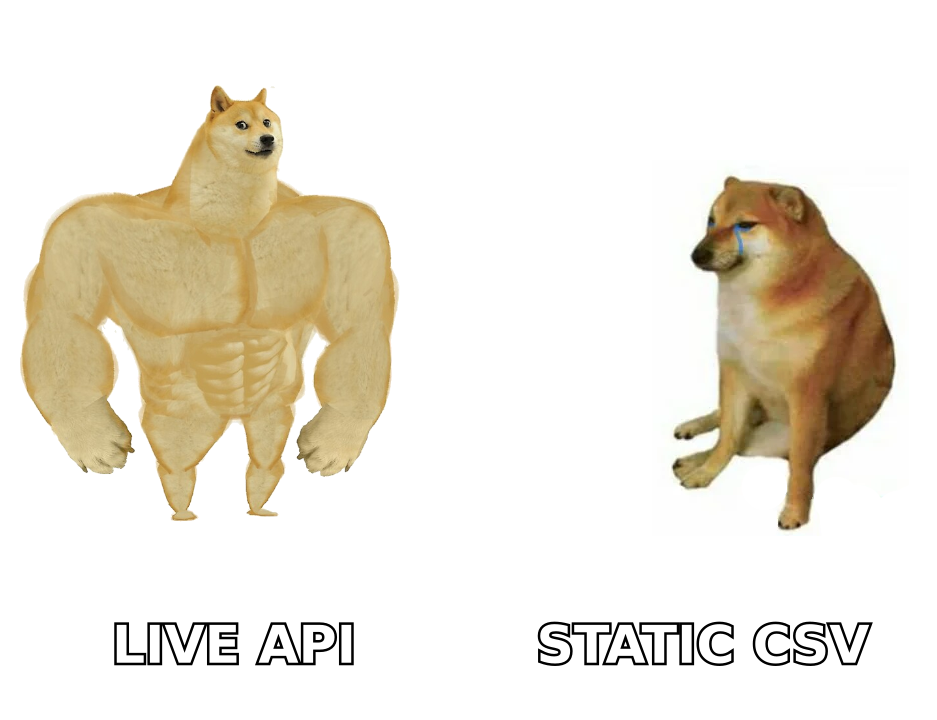
The practical difference is simple. CompanyData.com and Oceanio are products you log into. BoldData is a service you brief. That one distinction drives most of the pricing, speed, and flexibility gaps below.
CompanyData.com BoldData vs Oceanio: Head-to-Head#
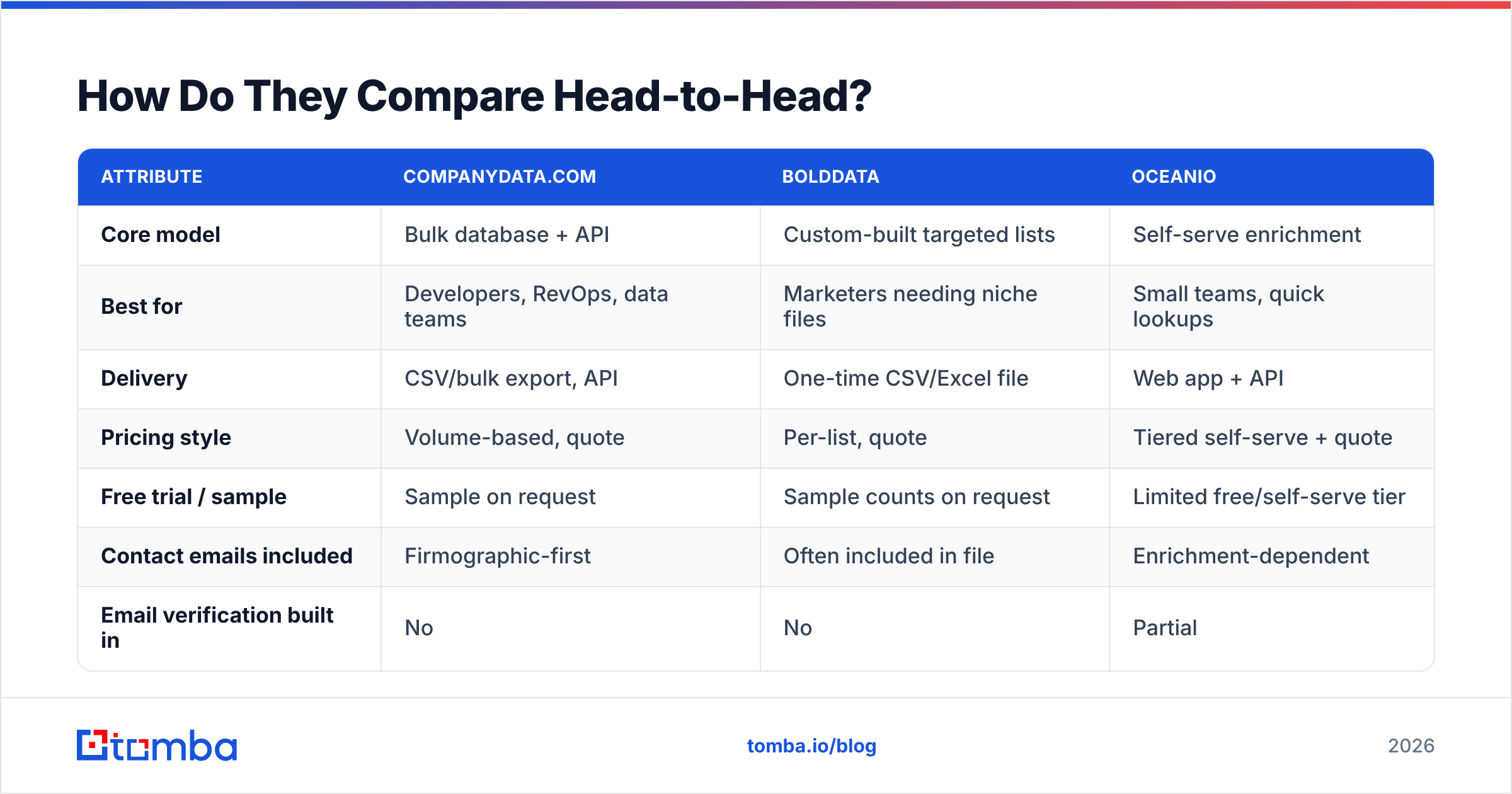
Here's the honest side-by-side. Pricing for all three is quote-driven. It changes by volume and geography, so treat the price column as directional, not a published rate card.
| Attribute | CompanyData.com | BoldData | Oceanio |
|---|---|---|---|
| Core model | Bulk database + API | Custom-built targeted lists | Self-serve enrichment |
| Best for | Developers, RevOps, data teams | Marketers needing niche files | Small teams, quick lookups |
| Delivery | CSV/bulk export, API | One-time CSV/Excel file | Web app + API |
| Pricing style | Volume-based, quote | Per-list, quote | Tiered self-serve + quote |
| Free trial / sample | Sample on request | Sample counts on request | Limited free/self-serve tier |
| Contact emails included | Firmographic-first | Often included in file | Enrichment-dependent |
| Email verification built in | No | No | Partial |
| GDPR positioning | Compliance stated | Strong EU focus | Compliance stated |
| Refresh cadence | Periodic bulk refresh | Point-in-time snapshot | Ongoing enrichment |
The pattern is clear. If you want raw scale, CompanyData.com. If you want a precise file someone else assembles, BoldData. If you want fast self-serve access, Oceanio. None of them guarantees the emails inside are still valid on the day you hit send.
Which One Has the Freshest, Most Accurate Data?#
Freshness is where static databases quietly fail you. B2B data decays fast. People change jobs, companies rebrand, and domains lapse. Industry estimates put B2B contact decay at roughly 25–30% per year. On review sites like G2 and Capterra, buyers report bounce rates on purchased lists far above the seller's advertised accuracy.
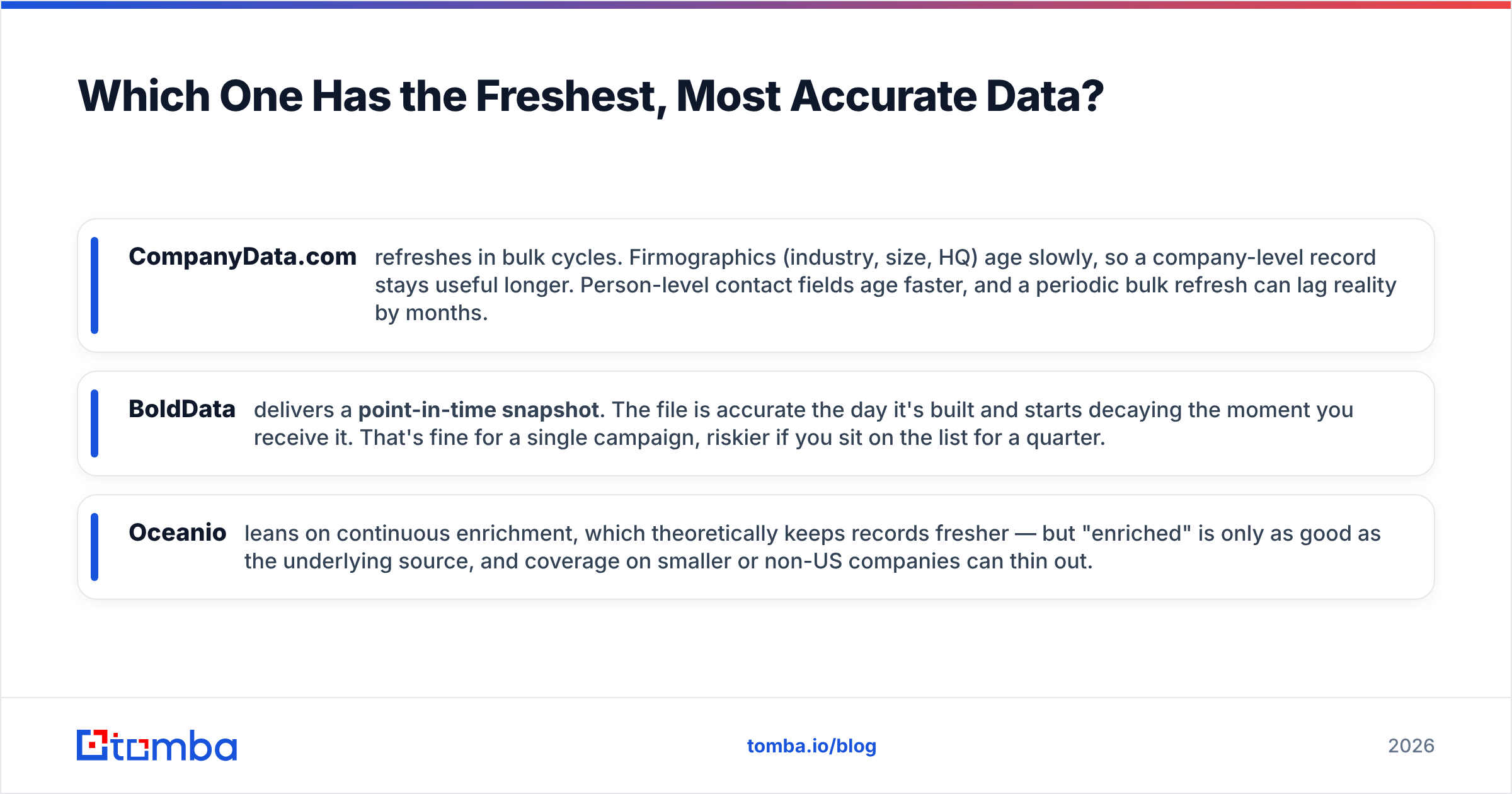
Here's how the three stack up on the freshness question:
- CompanyData.com refreshes in bulk cycles. Firmographics like industry, size, and HQ age slowly, so a company record stays useful longer. Contact fields age faster. A periodic bulk refresh can lag reality by months.
- BoldData delivers a point-in-time snapshot. The file is accurate the day it's built. It starts decaying the moment you receive it. That's fine for one campaign, riskier if you sit on the list for a quarter.
- Oceanio leans on continuous enrichment, which should keep records fresher. But enriched data is only as good as its source. Coverage on smaller or non-US companies can thin out.
The takeaway: none of these is a buy-once, trust-forever source. Company firmographics are fairly durable. Contact emails and phones are not. So treat any purchased list as a starting point. Re-verify contacts before outreach. Run the file through email verification and fill gaps with a live source instead of trusting the snapshot.
When Should You Pick Each One?#
Rather than crown a single winner, match the tool to the job:
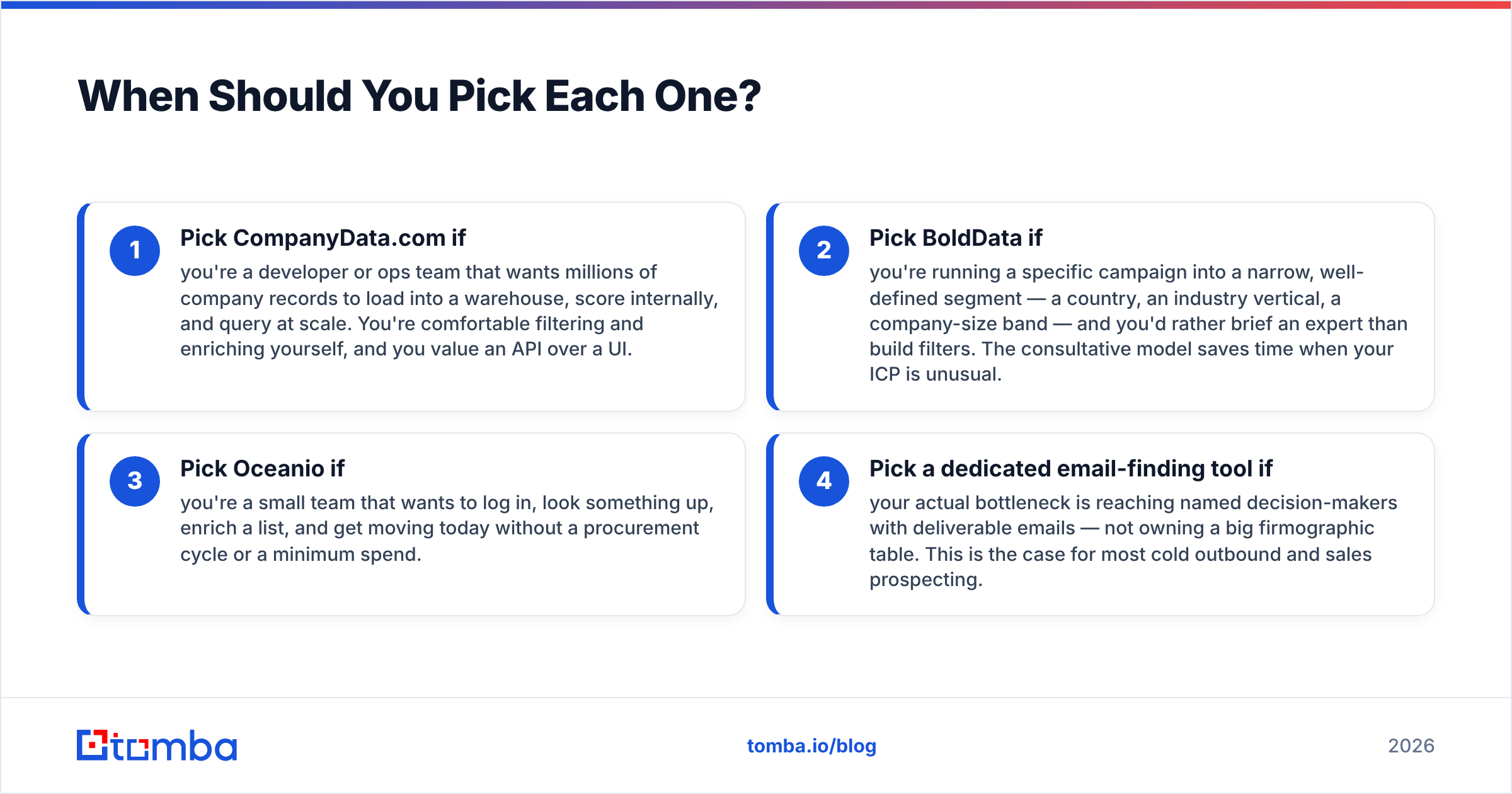
- Pick CompanyData.com if you're a developer or ops team. You want millions of records to load into a warehouse, score, and query at scale. You're happy to filter and enrich yourself, and you value an API over a UI.
- Pick BoldData if you're running a campaign into a narrow segment: a country, an industry, or a company-size band. You'd rather brief an expert than build filters. The consultative model saves time when your ICP is unusual.
- Pick Oceanio if you're a small team. You want to log in, look something up, enrich a list, and get moving today. No procurement cycle, no minimum spend.
- Pick a dedicated email-finding tool if your bottleneck is reaching named decision-makers with deliverable emails. Owning a big firmographic table isn't the goal. This fits most cold outbound and sales prospecting.
That fourth option matters more than most buyers realize. Many teams buy a company database. What they really needed was a way to find the right person's verified email.
What's the Catch With Buying Static B2B Data?#
Every provider on this list sells you a version of the same thing: a dataset that was accurate at the moment of extraction. Three catches follow from that.
First, the bounce tax. Say 20–30% of the emails are stale. Blast them without cleaning, and you torch your domain search reputation and sender score. High bounce rates get you throttled or blocklisted. That costs far more than the list did. Always clean before you send.
Second, coverage gaps you can't see. A headline like 50 million companies tells you nothing about depth in your niche. A list can be huge globally yet thin where you sell. Always request a sample scoped to your real target first.
Third, compliance is on you. BoldData stresses EU/GDPR alignment, which is genuinely useful. But compliant sourcing doesn't mean your use of the data is compliant. Consent, legitimate interest, and suppression are your job once the file lands. Analyst firms like Gartner note that governance failures, not sourcing, burn most B2B teams.

How Does Tomba Fit Into This Comparison?#
Tomba isn't a bulk firmographic database, and we won't pretend it is. It plays a different, complementary role. It finds and verifies professional email addresses for the companies you already care about.
So the honest framing is this — if you buy from CompanyData.com, BoldData, or Oceanio, Tomba is the layer that makes that data usable:
- Feed a list of company domains into Domain Search and pull the actual people and email patterns behind each one.
- Use the Email Finder to get a specific decision-maker's address by name and company instead of guessing.
- Run every purchased or found email through the email verifier to strip bounces before your campaign.
- Enrich thin records with data enrichment so a bare company name becomes a contactable lead.
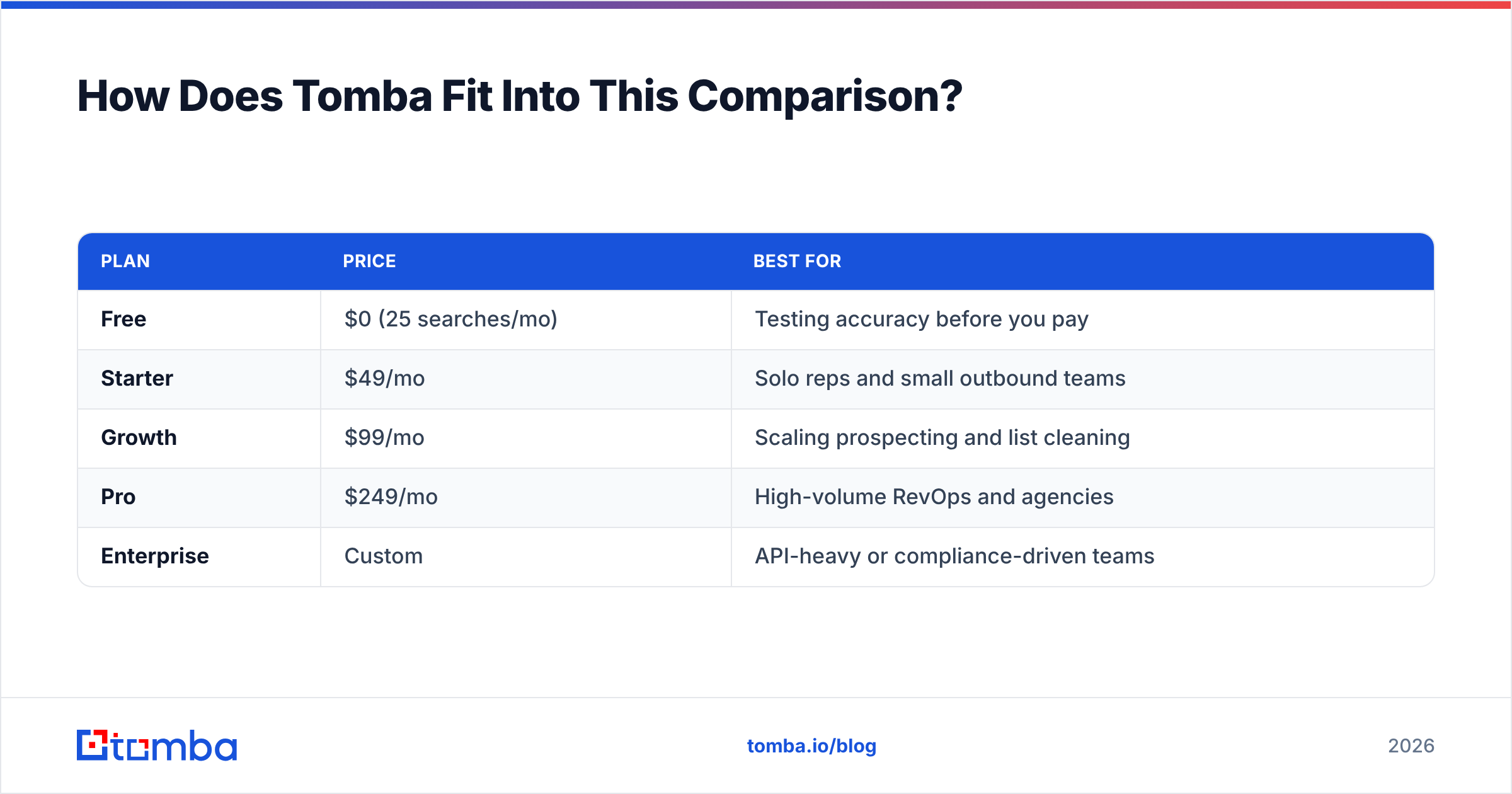
Here's how the pricing lands, since that's the question everyone actually asks. Tomba's plans are transparent and self-serve, unlike the quote-driven models above:
| Plan | Price | Best for |
|---|---|---|
| Free | $0 (25 searches/mo) | Testing accuracy before you pay |
| Starter | $49/mo | Solo reps and small outbound teams |
| Growth | $99/mo | Scaling prospecting and list cleaning |
| Pro | $249/mo | High-volume RevOps and agencies |
| Enterprise | Custom | API-heavy or compliance-driven teams |
You can see full Tomba pricing without a sales call. The Free tier lets you test contact accuracy against your own known-good contacts before spending a cent. That's the same proof the three list vendors make you request as a sample.
So Which Should You Actually Buy?#
Conclusion first: buy the firmographic database that matches your delivery preference, then layer a verification-and-finding tool on top. Don't expect one product to do both jobs well. In this CompanyData.com BoldData vs Oceanio matchup, there's no single winner.
- Need raw company scale and an API? CompanyData.com.
- Need a precise, done-for-you niche file? BoldData.
- Need fast, self-serve enrichment for a small team? Oceanio.
- Need deliverable emails for named people at those companies? A dedicated finder like Tomba.
The failure mode is common. You buy a big static list, trust the accuracy number on the sales page, and blast it. That's how good campaigns die on bounce rates. Whichever provider you choose, the safe workflow is the same. Buy the base data, verify every contact, enrich the gaps, and re-check before each send.
If your bottleneck is reaching the right people, not owning a giant table of firmographics, start with the Tomba Email Finder. Test it free against contacts you already trust. Confirm the accuracy yourself. Then decide how much static data you actually need. The cheapest list is the one you don't have to replace after it bounces.
Related guides#
Ready to find emails that actually work?
Join 150,000+ professionals who stopped guessing and started sending. Free credits on signup — no credit card required.
Get the Tomba newsletter
Practical outbound tactics and product updates — once every two weeks.
About the author