7 Best Consensus Alternatives for Demo Automation (2026)
Consensus is strong at automated video demos, but it isn't the only option. Here are 7 Consensus alternatives compared on pricing, interactive demos, analytics, and fit.
Consensus built its name on one idea: let buyers watch a personalized product demo whenever they want, then let that demo forward itself through the buying committee. It works. But it is priced for enterprise presales teams, the interactive-demo experience is not its strongest muscle, and plenty of teams want something lighter, cheaper, or more hands-on.
If you are evaluating Consensus alternatives, this guide compares seven tools that cover the same core job — scaling product demos without booking a live call for every prospect — and shows where each one wins.
TL;DR#
- Consensus is best for large presales orgs that need automated video demos with buyer-intent analytics, but pricing is custom and quote-gated.
- Storylane and Navattic are the strongest interactive-demo alternatives, with transparent pricing and fast setup.
- Walnut and Reprise target enterprise sales teams that need failproof, code-level demo environments.
- Supademo is the budget-friendly pick for startups and product teams that want quick screen-capture walkthroughs.
- No demo tool matters if your pipeline is empty — pair whichever you choose with an accurate email finder so demos reach real decision-makers.
What is Consensus and why look for alternatives?#
Consensus (goconsensus.com) is a demo automation platform built for presales. Instead of a sales engineer running the same live walkthrough fifty times, a rep sends an interactive video demo that adapts to what the buyer says they care about. The buyer can then share it internally, and Consensus tracks who watched what — surfacing the hidden stakeholders on the buying committee.
That "Demolytics" intelligence is genuinely useful. So why do teams shop around?
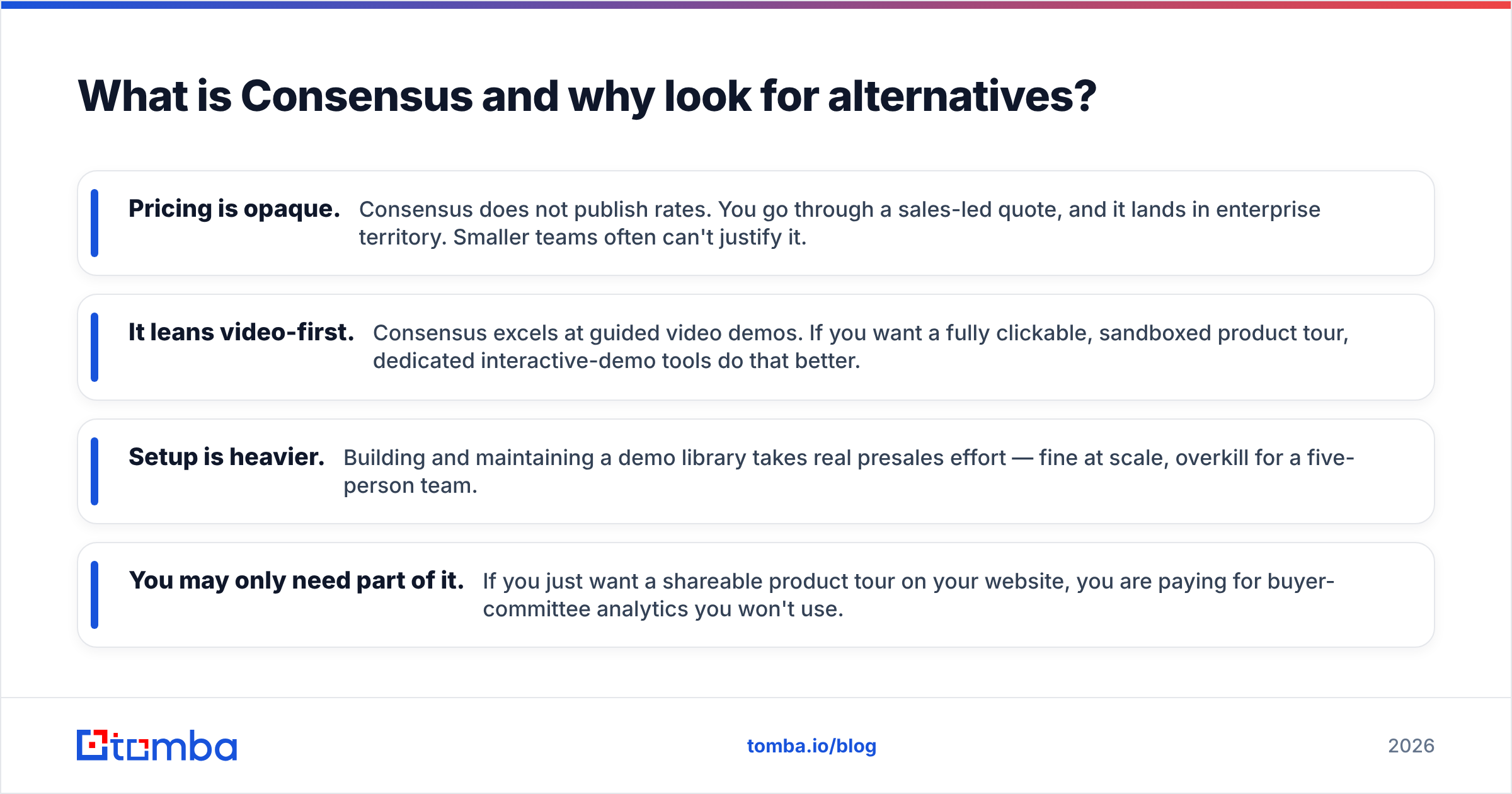
- Pricing is opaque. Consensus does not publish rates. You go through a sales-led quote, and it lands in enterprise territory. Smaller teams often can't justify it.
- It leans video-first. Consensus excels at guided video demos. If you want a fully clickable, sandboxed product tour, dedicated interactive-demo tools do that better.
- Setup is heavier. Building and maintaining a demo library takes real presales effort — fine at scale, overkill for a five-person team.
- You may only need part of it. If you just want a shareable product tour on your website, you are paying for buyer-committee analytics you won't use.
The good news: the demo-experience category has exploded. You have real choice now.
What should you look for in a Consensus alternative?#
Before comparing logos, get clear on which of these five dimensions actually matters for your team:
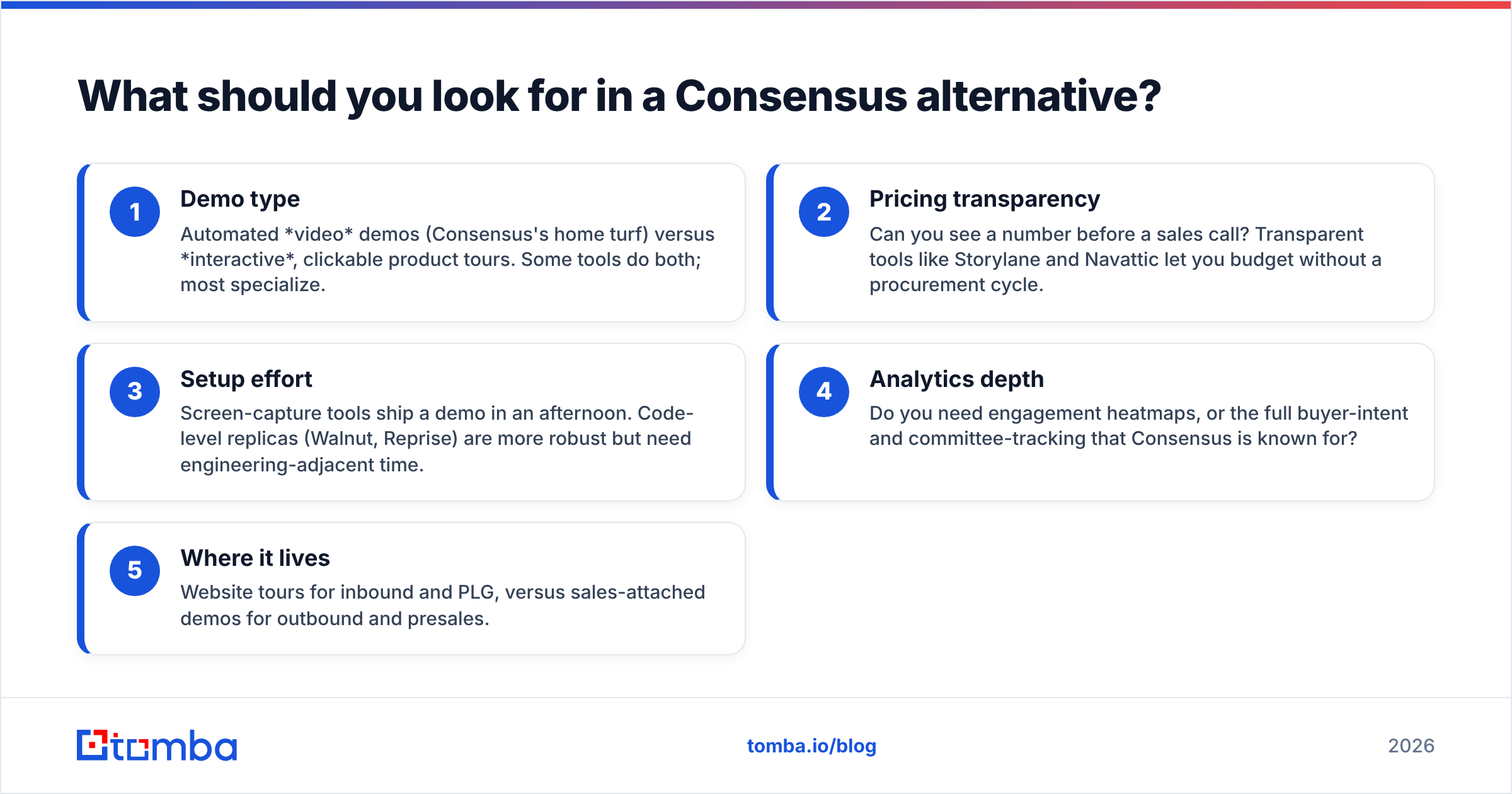
- Demo type — Automated video demos (Consensus's home turf) versus interactive, clickable product tours. Some tools do both; most specialize.
- Pricing transparency — Can you see a number before a sales call? Transparent tools like Storylane and Navattic let you budget without a procurement cycle.
- Setup effort — Screen-capture tools ship a demo in an afternoon. Code-level replicas (Walnut, Reprise) are more robust but need engineering-adjacent time.
- Analytics depth — Do you need engagement heatmaps, or the full buyer-intent and committee-tracking that Consensus is known for?
- Where it lives — Website tours for inbound and PLG, versus sales-attached demos for outbound and presales.
Match the tool to the motion. A product-led team embedding tours on a pricing page has different needs than an enterprise presales org qualifying six-figure deals.
Consensus alternatives: quick comparison#
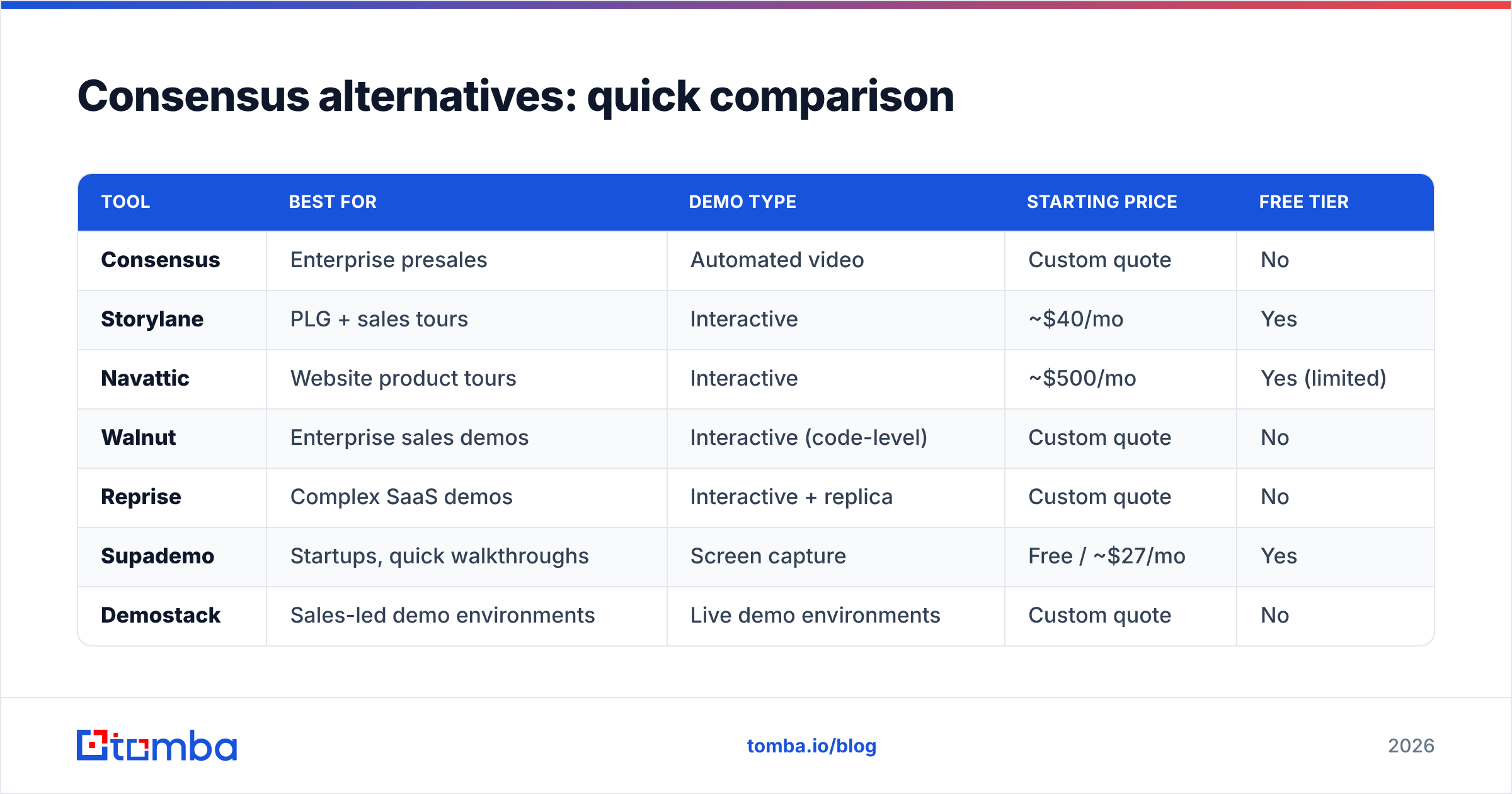
Here is how the seven alternatives stack up on the attributes that decide most evaluations. Pricing reflects publicly listed starting tiers as of 2026; enterprise plans are quote-based.
| Tool | Best for | Demo type | Starting price | Free tier |
|---|---|---|---|---|
| Consensus | Enterprise presales | Automated video | Custom quote | No |
| Storylane | PLG + sales tours | Interactive | ~$40/mo | Yes |
| Navattic | Website product tours | Interactive | ~$500/mo | Yes (limited) |
| Walnut | Enterprise sales demos | Interactive (code-level) | Custom quote | No |
| Reprise | Complex SaaS demos | Interactive + replica | Custom quote | No |
| Supademo | Startups, quick walkthroughs | Screen capture | Free / ~$27/mo | Yes |
| Demostack | Sales-led demo environments | Live demo environments | Custom quote | No |
| Tourial | Marketing-led demo centers | Interactive | Custom quote | No |
Use this as a shortlist filter, then read the detail on your top two or three.
Which are the best Consensus alternatives in 2026?#
1. Storylane — best transparent-pricing interactive demo tool#
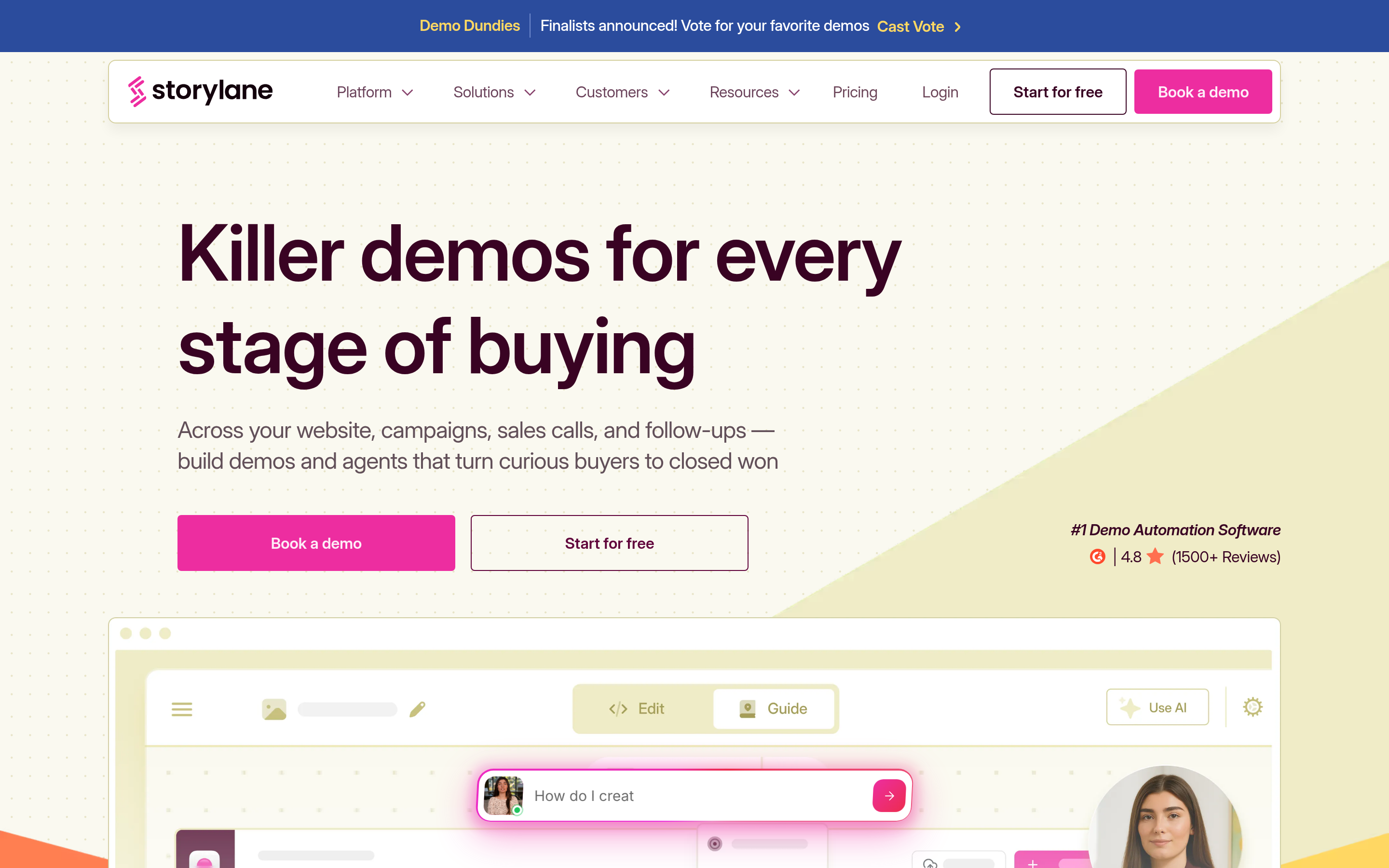
Storylane (storylane.com) is the alternative most teams land on when they want interactive demos and a public price. You capture your product, edit the flow, add guided tooltips, and share a clickable tour that lives on your site or inside a sales email. Starter plans begin around $40/month, and there is a free tier to test the workflow.
Where it wins over Consensus: transparent pricing, faster setup, and a genuinely clickable experience rather than video. Where Consensus stays ahead: deep buyer-committee analytics and automated demo qualification at enterprise scale.
2. Navattic — best for website product tours#
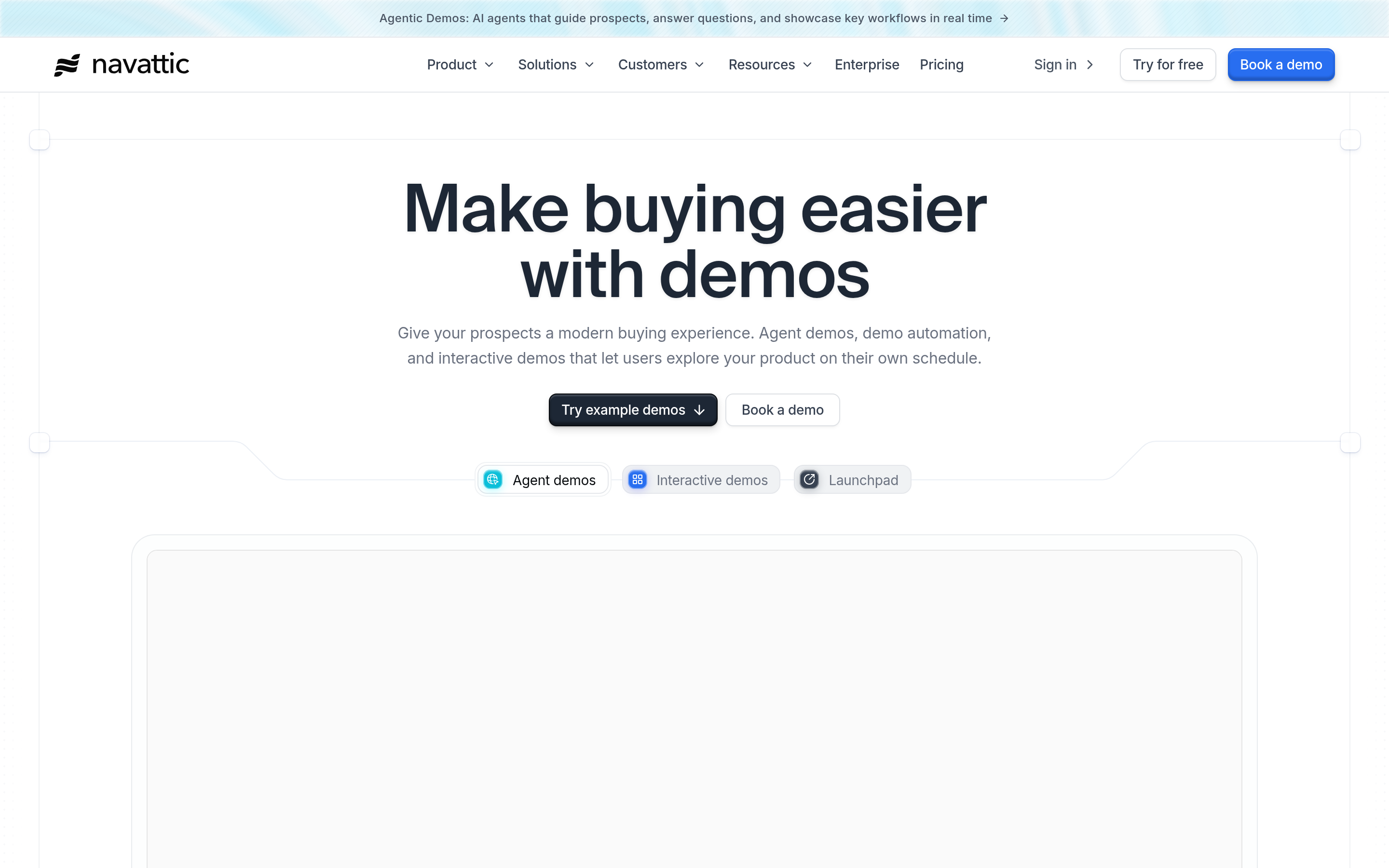
Navattic (navattic.com) is built for marketing and growth teams that want an interactive demo on the homepage or in a "see it in action" CTA. Its analytics tie tour engagement to your CRM and funnel, which is ideal for product-led motions. It is pricier than Storylane at the entry point but purpose-built for top-of-funnel capture.
Pick Navattic if your primary use case is inbound and self-serve, not sales-attached presales.
3. Walnut — best for enterprise sales demos#
Walnut (walnut.io) targets sales teams running high-stakes demos where nothing can break. It creates a controlled, personalized demo environment so reps never hit a loading spinner or a broken staging account mid-pitch. It is a closer parallel to Consensus in buyer profile — enterprise, sales-led, quote-based pricing — but leans interactive rather than video.
4. Reprise — best for complex, data-heavy products#
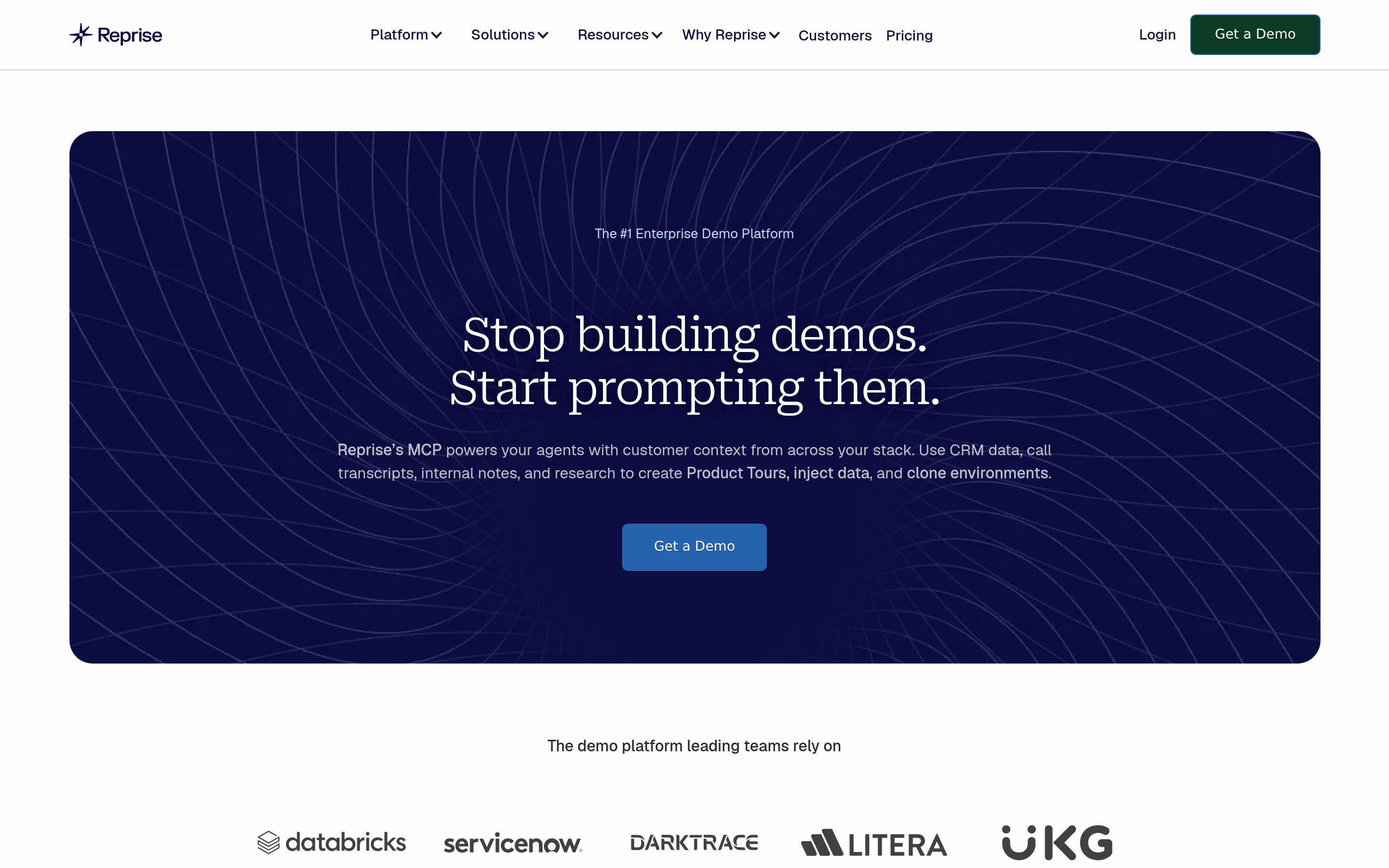
Reprise goes deep. It can capture and replicate application front ends, letting you build demos that behave like the real product with custom data. That makes it strong for complex SaaS where a screen-recording won't convey the value. Expect enterprise pricing and more setup investment in exchange for fidelity.
5. Supademo — best budget pick for startups#
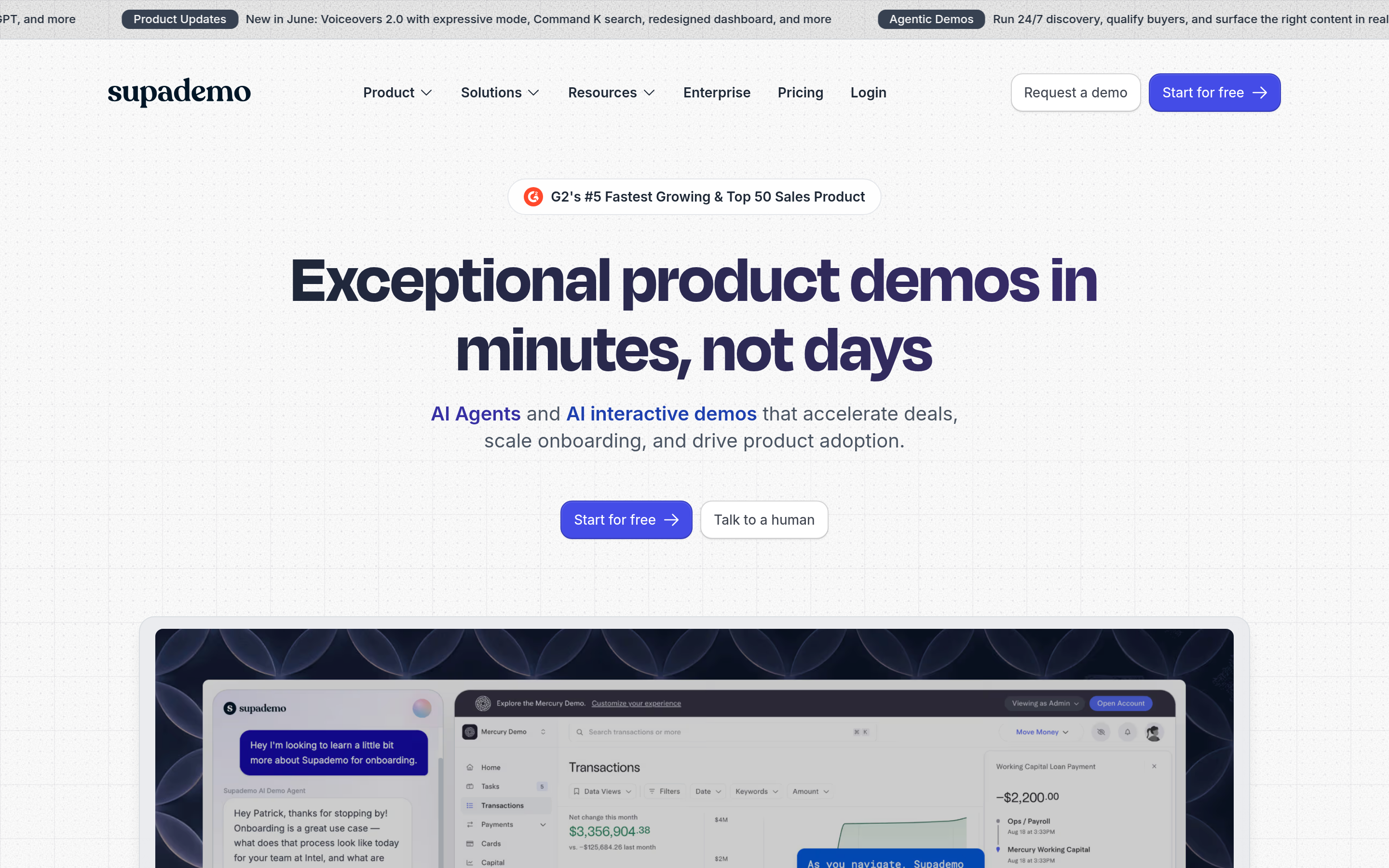
Supademo (supademo.com) is the scrappy, affordable option. Record your screen, and it auto-generates an interactive step-by-step walkthrough. It has a real free tier and paid plans starting around $27/month. You lose the enterprise buyer-intent analytics, but for a startup that just needs shareable demos fast, it is the best value on this list.
6. Demostack — best for live sales-led demo environments#
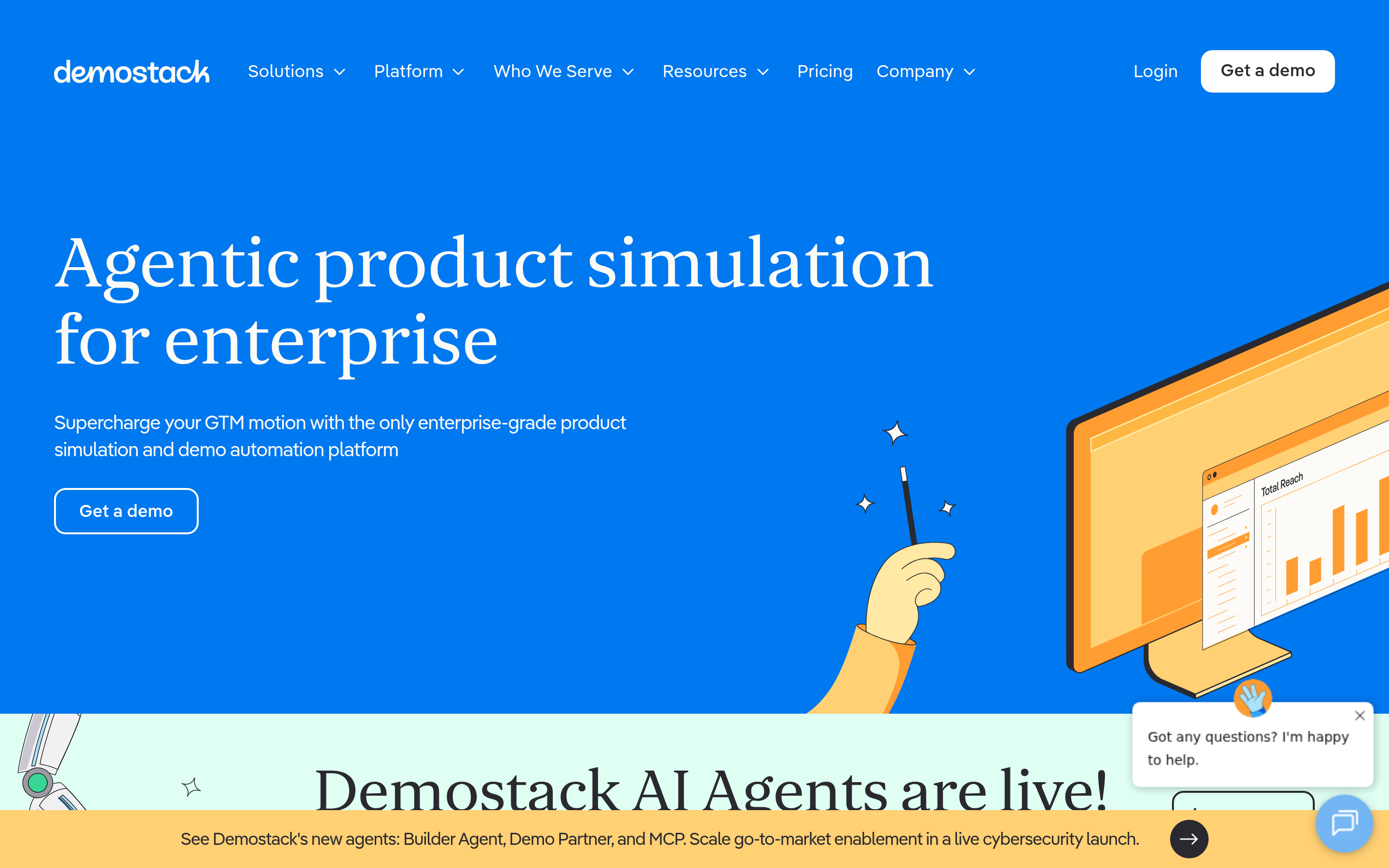
Demostack gives sales teams a fully customizable, always-on demo environment they can tailor per prospect without touching engineering. It sits closer to the "demo environment" end of the spectrum than the "self-serve tour" end, which suits sales-led enterprise motions.
7. Tourial — best for marketing-owned demo centers#
Tourial helps marketing teams build interactive "demo centers" and guided experiences that capture intent earlier in the funnel. If your demand-gen team owns the demo experience rather than presales, Tourial fits that org structure well.
How do Consensus alternatives compare on pricing?#
Pricing is the fastest way to narrow the field, because the demo-tool market splits cleanly into two camps:
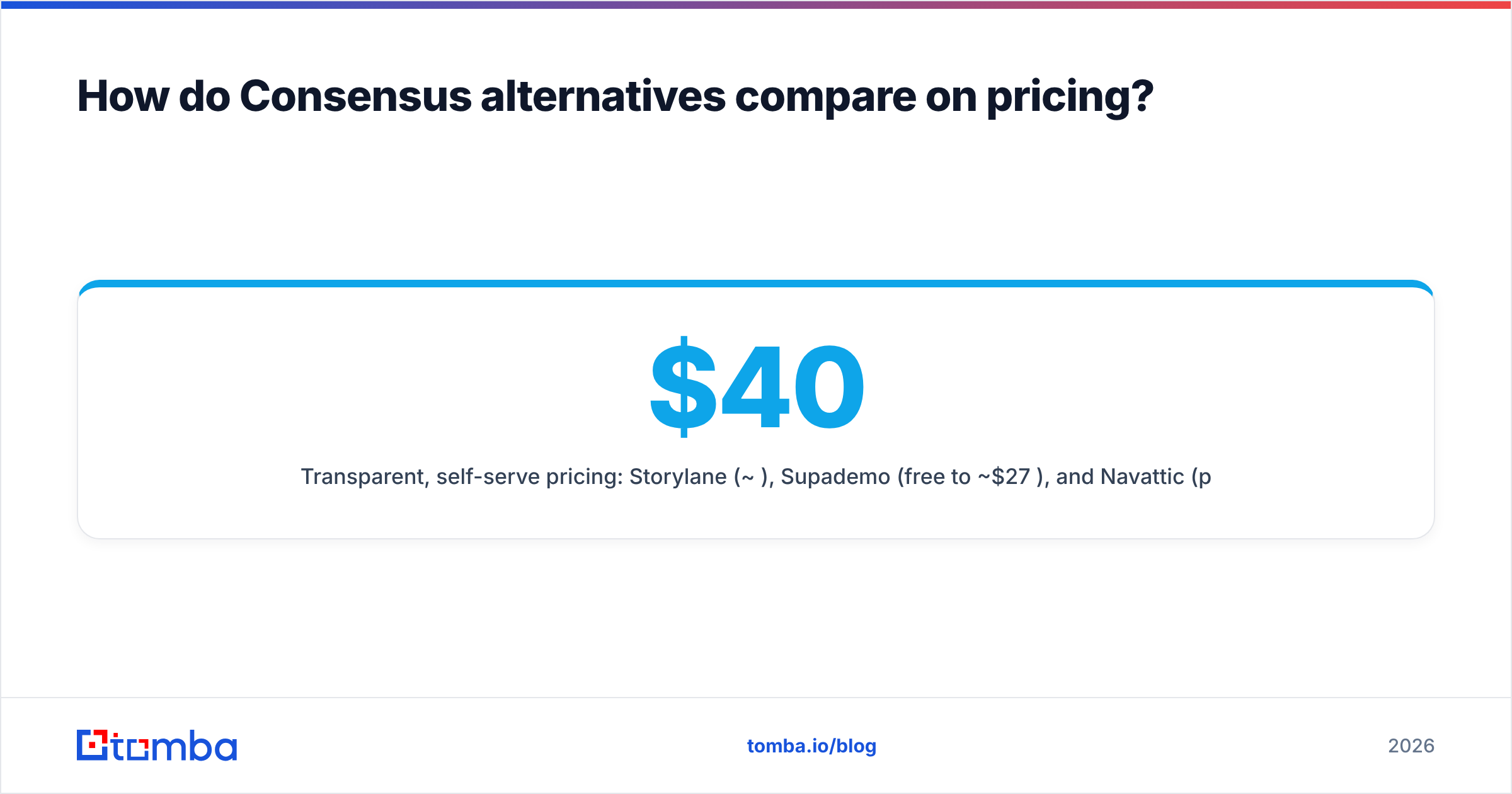
- Transparent, self-serve pricing: Storylane (~$40/mo), Supademo (free to ~$27/mo), and Navattic (published tiers from ~$500/mo). You can start today without a sales call.
- Quote-gated enterprise pricing: Consensus, Walnut, Reprise, Demostack, and Tourial. Expect a demo of the demo tool, a scoping call, and a custom number.
There is no universal "cheapest" — it depends on seats, demo volume, and whether you need CRM-grade analytics. But the rule of thumb holds: if budget certainty matters and your team is under ~20 people, start with a transparent-pricing tool and only move up-market when the volume justifies it. G2's demo-automation category (g2.com) is a useful place to sanity-check current pricing signals and verified reviews before you commit.
Which Consensus alternative is right for you?#
Match your situation to the shortlist:
- You're an enterprise presales team and price isn't the blocker — Consensus is still excellent; also demo Walnut and Reprise.
- You want interactive demos with a public price — Storylane first, Navattic if the use case is website-led.
- You're a startup on a tight budget — Supademo, full stop.
- Marketing owns the demo experience — Tourial or Navattic.
- Sales needs a bulletproof live environment — Demostack or Walnut.
Run a real trial with your actual product on your top two. A demo tool that feels great in a vendor's polished sandbox can feel very different when you load your own messy data into it.
Where does prospecting data fit into your demo strategy?#
Here is the part every demo-tool comparison skips: a demo only works if it reaches the right person. The best interactive tour in the world is worthless if it lands in the inbox of someone who left the company eight months ago, or never gets sent because you couldn't find the buyer's email at all.
That is the gap Tomba fills on the front end of the motion. Before your Consensus alternative ever renders a demo, you need accurate contact data:
- Use the domain search to pull every reachable contact at a target account, then map the buying committee your demo tool will later track.
- Run new contacts through the email verifier so your demo invites don't bounce and tank your sender reputation.
- Layer in data enrichment to add role, seniority, and company context — the same signals that make a personalized demo actually land.
- Grab direct B2B phone numbers for the high-intent viewers your demo analytics flag, so follow-up isn't stuck in email.
Demo automation scales the middle of the funnel. Clean prospecting data feeds the top of it. You need both, and Tomba's plans start at a transparent $49/mo — see full Tomba pricing rather than a quote-gated guess.
The bottom line on Consensus alternatives#
Consensus remains a top-tier automated-video demo platform for enterprise presales, but it is far from the only answer. If you want interactive tours with transparent pricing, look at Storylane and Navattic. If you're enterprise and demo fidelity is everything, evaluate Walnut and Reprise. If you're a startup counting every dollar, Supademo is the value pick.
Whatever demo tool you choose, don't let a thin pipeline undercut it. Start finding the exact decision-makers your demos should reach with the Tomba Email Finder — 25 free searches a month, no sales call required, so you can fill the top of the funnel while your new demo tool works the middle.
Related guides#
Ready to find emails that actually work?
Join 150,000+ professionals who stopped guessing and started sending. Free credits on signup — no credit card required.
Get the Tomba newsletter
Practical outbound tactics and product updates — once every two weeks.
About the author