Conversion Blitz vs LeadEngineAI: The 2026 Comparison
Two all-in-one lead engines, two very different bets. We break down pricing, data accuracy, deliverability risk, and which one actually belongs in a 2026 outbound stack — plus the case for unbundling both.
TL;DR
- Conversion Blitz is a bundle: email finder, chatbot, review widgets, daily lead credits, sales-automation extras — sold as one cheap subscription. Breadth is the pitch; depth is the trade-off.
- LeadEngineAI leans on AI-driven prospecting and intent signals. Its pricing and data provenance are far less transparent, which matters more than most buyers admit.
- The conversion blitz vs leadengineai decision usually comes down to one question: do you need more tools, or do you need contact data that doesn't bounce?
- Neither suite is a substitute for a dedicated verification layer. Bundled finders typically ship unverified or lightly-checked addresses, and Google/Microsoft now punish that fast.
- Best-value setup for most small outbound teams in 2026: one accurate finder/verifier (Tomba at $49/mo), one sender (Instantly, Smartlead, or your CRM's sequencer), and nothing else.
What are Conversion Blitz and LeadEngineAI, actually?#
Conversion Blitz is a multi-tool lead-generation suite. Under one login you get a B2B email finder, a domain/company search, a chatbot builder, social-proof and review widgets, a daily allocation of "fresh leads," and a light email-sending layer. It is aggressively priced and has historically been pushed through lifetime-deal and low-monthly channels, which tells you the positioning: volume, breadth, and a low barrier to entry. You can see the current lineup on conversionblitz.com.
LeadEngineAI sits in the newer "AI SDR / AI prospecting engine" category. The promise is that a model does the targeting for you: describe your ICP in plain language, and the system surfaces accounts, contacts, and (in the more ambitious versions of the pitch) intent signals and drafted messaging. It is a thinner public footprint — fewer reviews on G2, less published pricing, and a lot more "book a demo" between you and a number.
That asymmetry is the first honest finding of this comparison: you can evaluate Conversion Blitz in an afternoon. You cannot evaluate LeadEngineAI without a sales call. For a team that ships outbound this quarter, that friction is a real cost, not a footnote.
How do Conversion Blitz and LeadEngineAI compare on paper?#
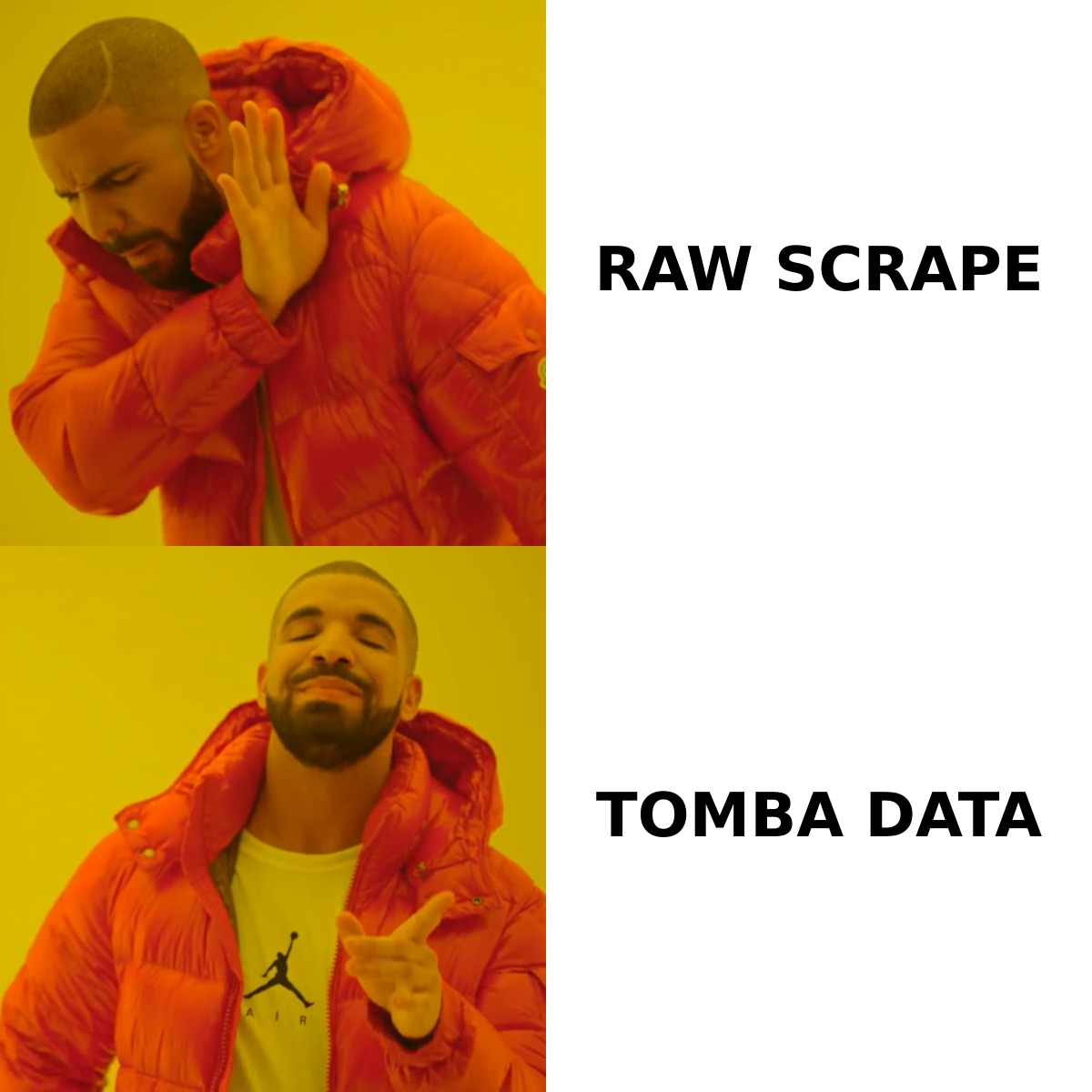
Here is the head-to-head. Treat every price as directional — both vendors move their packaging, and LeadEngineAI in particular quotes rather than publishes. Always confirm on the vendor's own page before you buy.
| Dimension | Conversion Blitz | LeadEngineAI | Tomba (unbundled reference) |
|---|---|---|---|
| Core promise | All-in-one lead + conversion toolkit | AI-driven prospecting and lead scoring | Accurate email finding + verification |
| Entry price | Low monthly / LTD-style tiers (typically double-digit $) | Quote-based; demo required | Free tier (25 searches/mo), Starter $49/mo |
| Mid tier | Bundled credits across tools | Not publicly disclosed | Growth $99/mo, Pro $249/mo |
| Email finder | Included, bundled credits | Included, AI-assisted | Core product |
| Verification | Basic / bundled | Unclear provenance | Dedicated verifier + catch-all handling |
| API access | Limited | Enterprise-gated | Full REST API on paid plans |
| Chatbot / widgets | Yes | No | No (out of scope by design) |
| Sending / sequences | Light, built-in | Varies by package | No — integrates with your sender |
| Transparency | High (public pricing) | Low (demo wall) | High (public pricing) |
| Best for | Solo founders wanting many tools cheaply | Teams buying into an AI-first workflow | Teams that need data quality above all |
Two things jump out. First, Conversion Blitz wins on surface area per dollar — nobody else on this list gives you a chatbot and a review widget for the price of a couple of lunches. Second, neither suite is built around the thing that determines whether your campaign lands: a verified, deliverable address. That's a specialist job, and both suites treat it as a feature checkbox.
Which one has better data accuracy?#
This is where the marketing gets slippery, so let's define terms.
Accuracy in email finding is not one number. It's three:
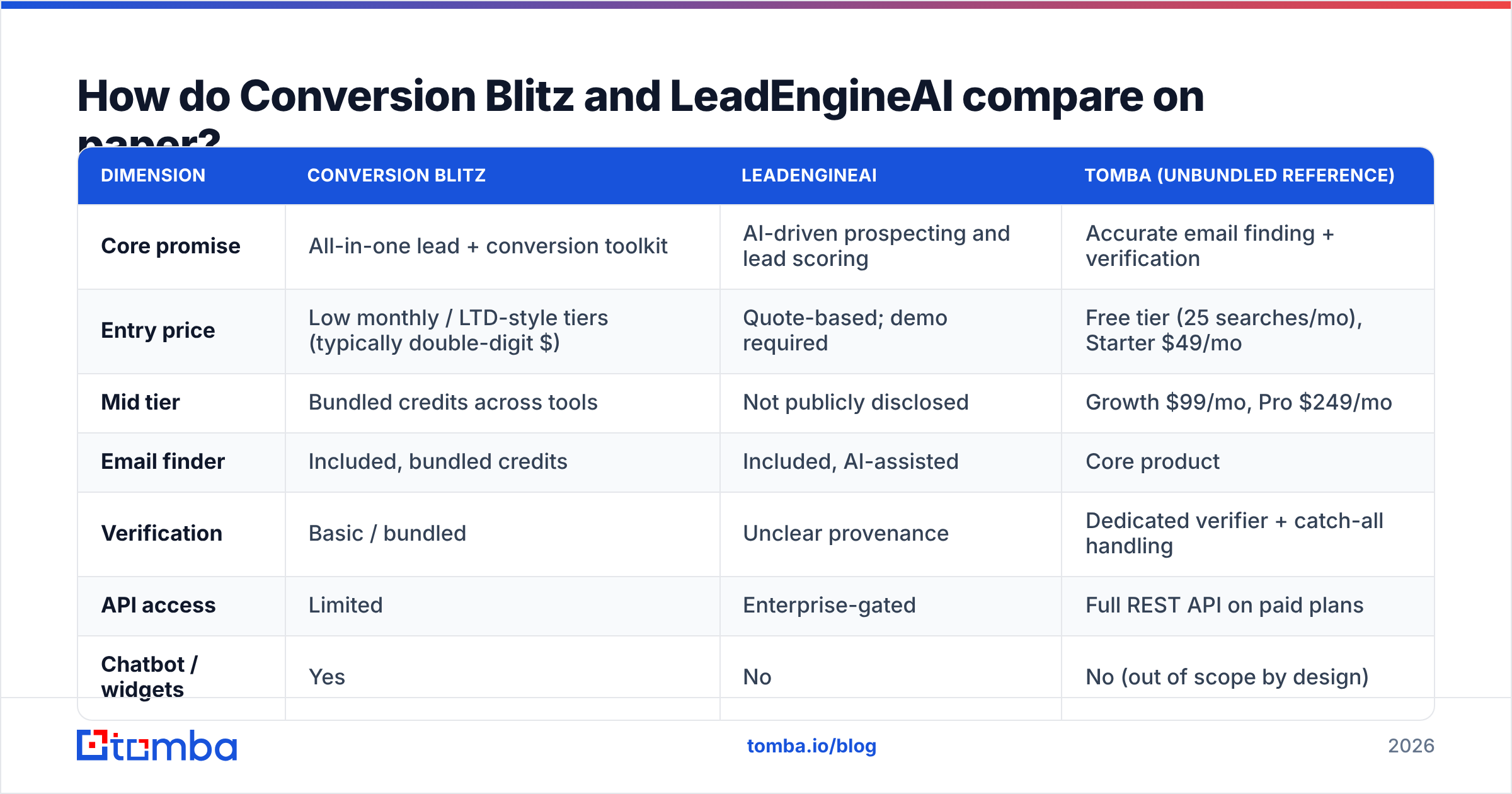
- Coverage (hit rate) — of the 1,000 prospects you searched, how many returned an address at all? A tool that finds 400 emails at 99% accuracy and a tool that finds 900 at 90% are not comparable on "accuracy" alone.
- Precision (validity) — of the addresses returned, how many are real, active mailboxes today, not in 2023?
- Catch-all handling — what does the tool do when a domain accepts everything? Guessing here is how good campaigns quietly die.
Bundled suites tend to optimize for #1, because "leads found" is the metric on the dashboard. Dedicated finders optimize for #2 and #3, because bounce rate is the metric that gets them fired. Conversion Blitz's daily-lead firehose is a coverage play. LeadEngineAI's AI-sourced contacts are, in practice, also a coverage play — an LLM sitting on top of scraped and third-party data does not make that data fresher.

If you take one thing from the conversion blitz vs leadengineai debate, take this: run your own sample. Pull 100 contacts you can independently confirm (your existing customers, your LinkedIn network, people whose email formats you already know), run them through each tool, and score the results yourself. Vendor-published accuracy numbers are marketing artifacts. Your list is the only benchmark that matters.
Then, regardless of which suite you pick, push the output through a real email verifier before it ever touches a sending domain. A 6% bounce rate on a bundled list will cost you more in domain reputation than the entire subscription saved you.
What does bad data actually cost you in 2026?#
More than it used to. Google and Yahoo's bulk-sender requirements — now table stakes rather than a novelty — put hard ceilings on spam complaints and treat bounce-heavy sending as a reputation signal. Microsoft tightened its own thresholds behind them. The practical effect is that the tolerance band for sloppy lists has collapsed.
Run the math on a modest campaign:
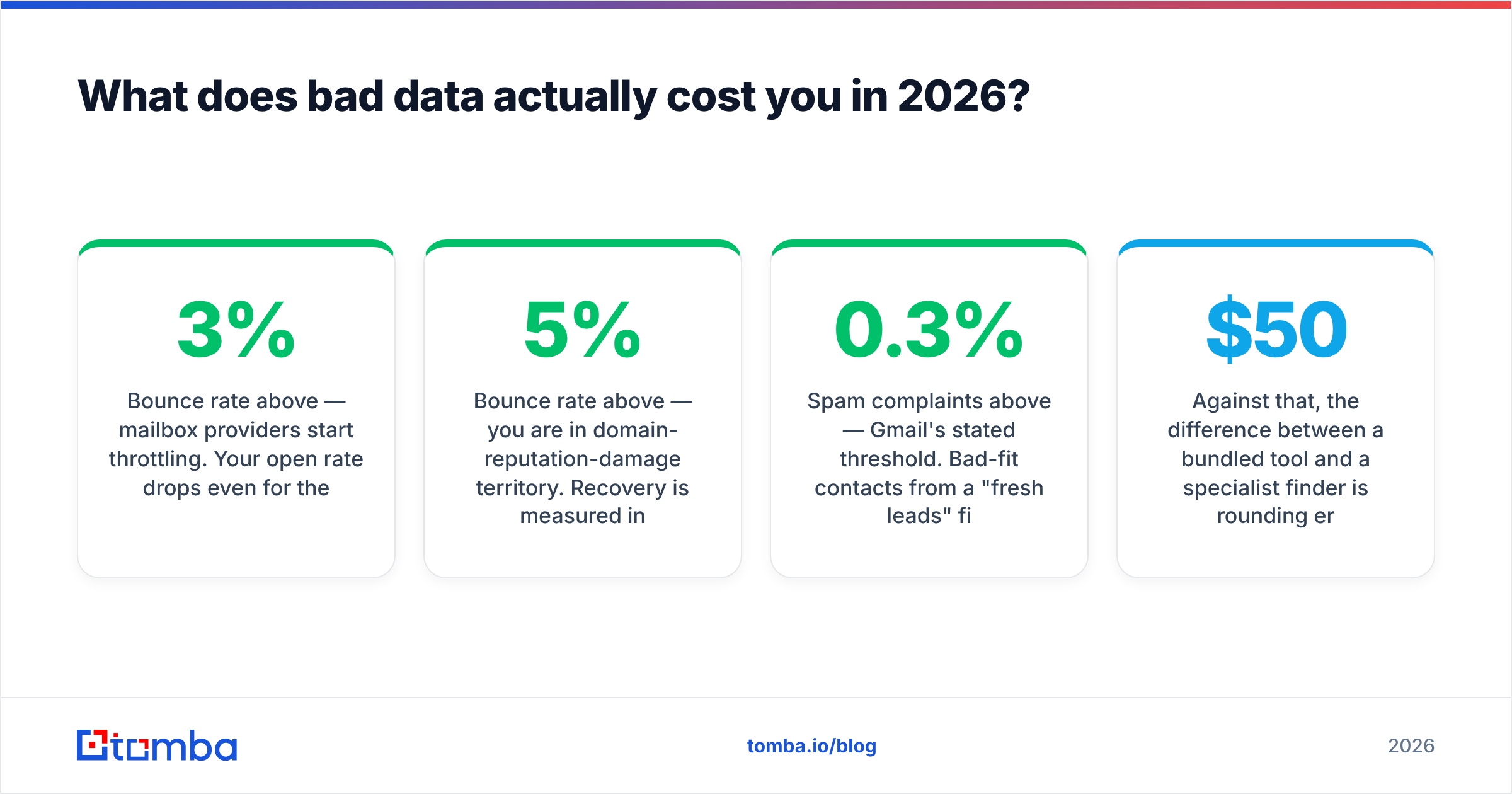
- Bounce rate above 3% — mailbox providers start throttling. Your open rate drops even for the addresses that are valid.
- Bounce rate above 5% — you are in domain-reputation-damage territory. Recovery is measured in weeks of reduced volume, not hours.
- Spam complaints above 0.3% — Gmail's stated threshold. Bad-fit contacts from a "fresh leads" firehose are complaint machines, because they never asked to hear from you and don't recognize the problem you're solving.
- Cost of a burned domain — new domain, new warmup cycle, 3–4 weeks before you can send at volume again, plus the sequences you had to pause.
Against that, the $50/month difference between a bundled tool and a specialist finder is rounding error. This is the core strategic argument, and it's why the "cheap all-in-one" logic breaks down for anyone sending more than a few hundred emails a month. Keep an eye on your sender reputation as the leading indicator — it moves before your reply rate does.

Is Conversion Blitz better than LeadEngineAI?#
For most buyers reading this, yes — but mostly for boring reasons.
Conversion Blitz wins on:
- Transparency. Published pricing, self-serve signup, no demo wall. You can test it today.
- Breadth per dollar. If you genuinely need a chatbot and review widgets and a finder, the bundle price is hard to argue with.
- Low switching risk. Cheap to try, cheap to abandon. The downside is capped.
- Time to first value. You can be searching domains within ten minutes of signup.
LeadEngineAI wins on:
- Workflow ambition. If the AI targeting layer works for your ICP, it compresses research time meaningfully — and research time is the real cost of outbound, not credits.
- Fit for AI-first teams. Organizations already rebuilding their GTM motion around agents will find the mental model native rather than bolted on.
- Upside on signal. Intent and scoring layers, when they're real, beat static lists.
Where both lose:
- Verification depth. Neither is a verification product, and neither should be trusted as one.
- Data provenance. Ask both vendors, in writing, where the data comes from and how it's refreshed. If the answer is vague, price that vagueness in. (Tomba publishes its data sources — hold every vendor to that bar.)
- API depth. If you plan to enrich inside your CRM or a workflow tool, check that the API isn't gated behind an enterprise tier you have no intention of buying.
The honest verdict: Conversion Blitz is the safer default because you can verify the claim yourself before paying. LeadEngineAI may well be the better engine — but it's asking you to take that on faith, and faith is expensive.

Should you unbundle instead?#
This is the option neither vendor's landing page will show you, and it's the one most 2–20 person revenue teams end up at.
An all-in-one suite is a bet that one company can be top-quartile at six things. That bet almost never pays. What actually happens is you use two of the six tools, tolerate mediocrity in both, and keep paying for four you forgot existed. The chatbot sits unconfigured. The review widget was never embedded.
The unbundled stack looks like this:
- Data layer — a dedicated finder + verifier. This is the piece that decides whether anything downstream works. Use domain search to map a target account's addresses, the bulk email finder for list building, and a catch-all check before anything ships.
- Sending layer — Instantly, Smartlead, Saleshandy, or your CRM's native sequencer. Pick on deliverability features (inbox rotation, warmup, throttling), not on UI.
- CRM layer — whatever you already have. HubSpot's free CRM is more than enough for teams under 10 reps.
- Nothing else — until a specific, measured bottleneck justifies it.
Total cost of that stack often lands below the "cheap" all-in-one once you account for the bundle upsells, and every layer is replaceable without a migration project. If you want a pure database rather than a search-and-enrich tool, peers like BookYourData are a legitimate option in that lane too — the point is to choose the specialist for each job rather than accepting one vendor's compromise across all of them.
The counterargument is real: unbundling means more logins, more invoices, more integration surface. For a true solo operator sending 50 emails a week, Conversion Blitz's bundle may genuinely be the right call. Below a certain volume, convenience beats optimization. Know which side of that line you're on.
How should you run the evaluation?#
Don't read reviews. Run a bake-off. It takes an afternoon.
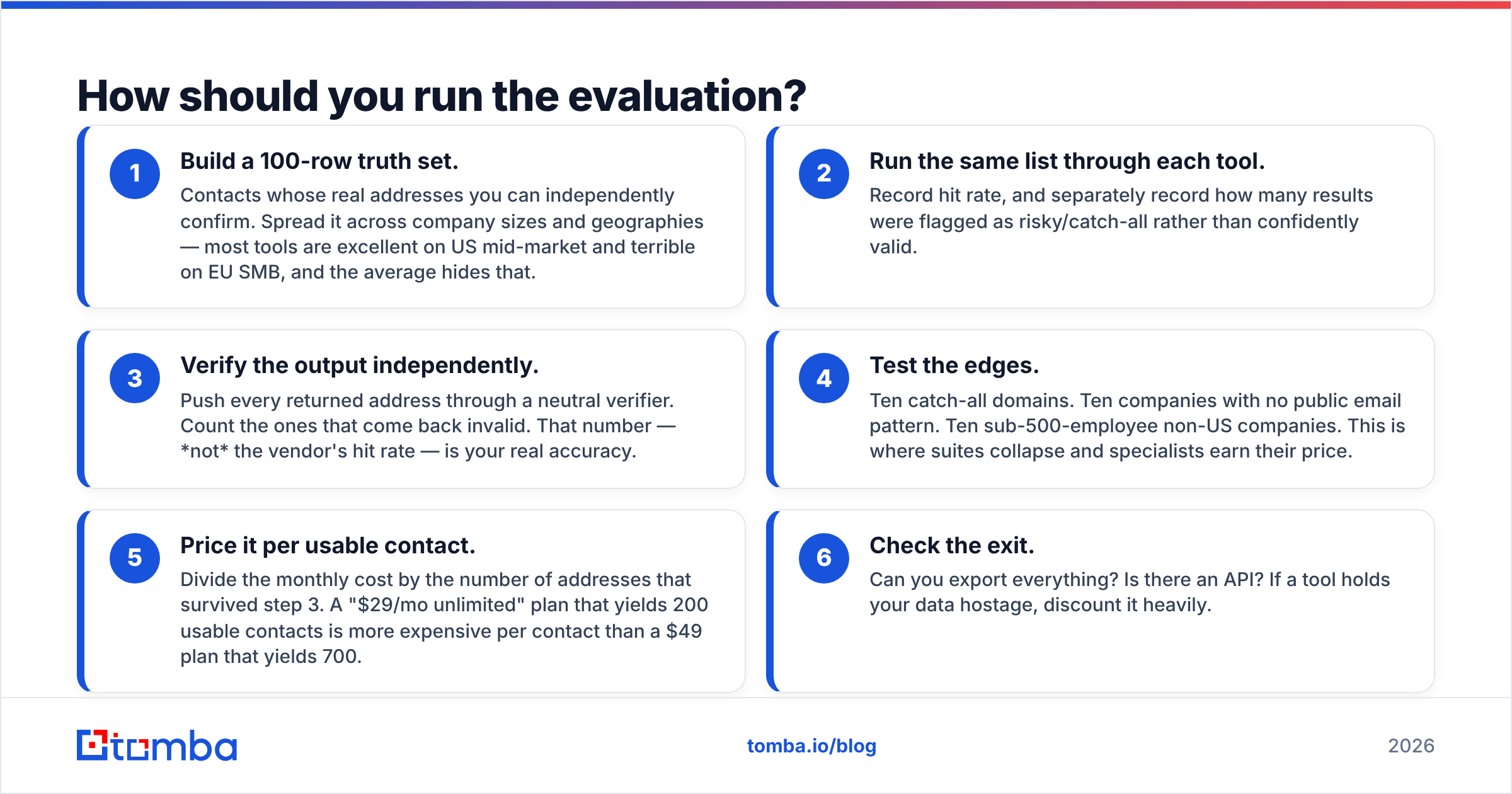
- Build a 100-row truth set. Contacts whose real addresses you can independently confirm. Spread it across company sizes and geographies — most tools are excellent on US mid-market and terrible on EU SMB, and the average hides that.
- Run the same list through each tool. Record hit rate, and separately record how many results were flagged as risky/catch-all rather than confidently valid.
- Verify the output independently. Push every returned address through a neutral verifier. Count the ones that come back invalid. That number — not the vendor's hit rate — is your real accuracy.
- Test the edges. Ten catch-all domains. Ten companies with no public email pattern. Ten sub-500-employee non-US companies. This is where suites collapse and specialists earn their price.
- Price it per usable contact. Divide the monthly cost by the number of addresses that survived step 3. A "$29/mo unlimited" plan that yields 200 usable contacts is more expensive per contact than a $49 plan that yields 700.
- Check the exit. Can you export everything? Is there an API? If a tool holds your data hostage, discount it heavily.
Step 5 is where the conversion blitz vs leadengineai question usually resolves itself, and it rarely resolves in favor of whichever one had the lower sticker price.
Get the data layer right first#
Whichever suite you land on, the tool that determines your campaign's outcome is the one that produces the address. Everything else — the sequencer, the chatbot, the AI scoring — is downstream of whether that mailbox exists and belongs to the person you think it does.
That's the job Tomba Email Finder is built for and the only job it tries to do. Find emails by domain, name, or company; verify them, including catch-all domains, before they ever hit your sender; enrich in bulk or through the API straight into your CRM. Start on the free tier (25 searches/month) to run the bake-off above against your own truth set, then move to Starter at $49/mo when the numbers convince you. Full Tomba pricing is public — no demo call required, which, as this comparison shows, is not a given in this category.
Run the test. Let your own bounce rate pick the winner.
Related guides#
Ready to find emails that actually work?
Join 150,000+ professionals who stopped guessing and started sending. Free credits on signup — no credit card required.
Get the Tomba newsletter
Practical outbound tactics and product updates — once every two weeks.
About the author