7 Best Dialing Innovations Alternatives for 2026 Sales Teams
Dialing Innovations is a solid hosted dialer, but it isn't the right fit for every team. Here are 7 alternatives compared on price, features, and who each one is actually built for.
Dialing Innovations has been quietly powering hosted PBX systems, call centers, and predictive dialers for years. It's cheap, flexible, and popular with agencies that want to resell VoIP. But "cheap and flexible" isn't the same as "right for your team" — and if you're running an outbound sales motion in 2026, you have better-integrated, better-supported options.
This guide breaks down the seven strongest Dialing Innovations alternatives, what each one costs, and which type of team should pick it. No fluff, no fake "winner" — just an honest map so you can stop overpaying for features you don't use or fighting a platform that wasn't built for your workflow.
TL;DR — Quick Verdict#
- Best for outbound sales teams: Kixie or JustCall — tight CRM sync, local presence, and click-to-call built for reps.
- Best for enterprise contact centers: Five9 — mature predictive dialing, compliance, and workforce management.
- Best all-in-one business phone: RingCentral — voice, SMS, meetings, and fax under one roof.
- Best for lean startups: CloudTalk or Aircall — fast setup, clean UI, generous integrations.
- The real bottleneck isn't the dialer — it's the data you feed it. Verified phone numbers and enriched contacts do more for connect rates than any autodialer.
Why Look for a Dialing Innovations Alternative?#
Dialing Innovations sells infrastructure. That's its strength and its weakness. You get a white-label hosted PBX, a predictive dialer, and per-extension pricing that undercuts most brand-name competitors. For a VoIP reseller or an IT-heavy shop that wants to build its own stack, that's genuinely attractive.
The friction shows up when a modern sales team tries to run daily outreach on it:
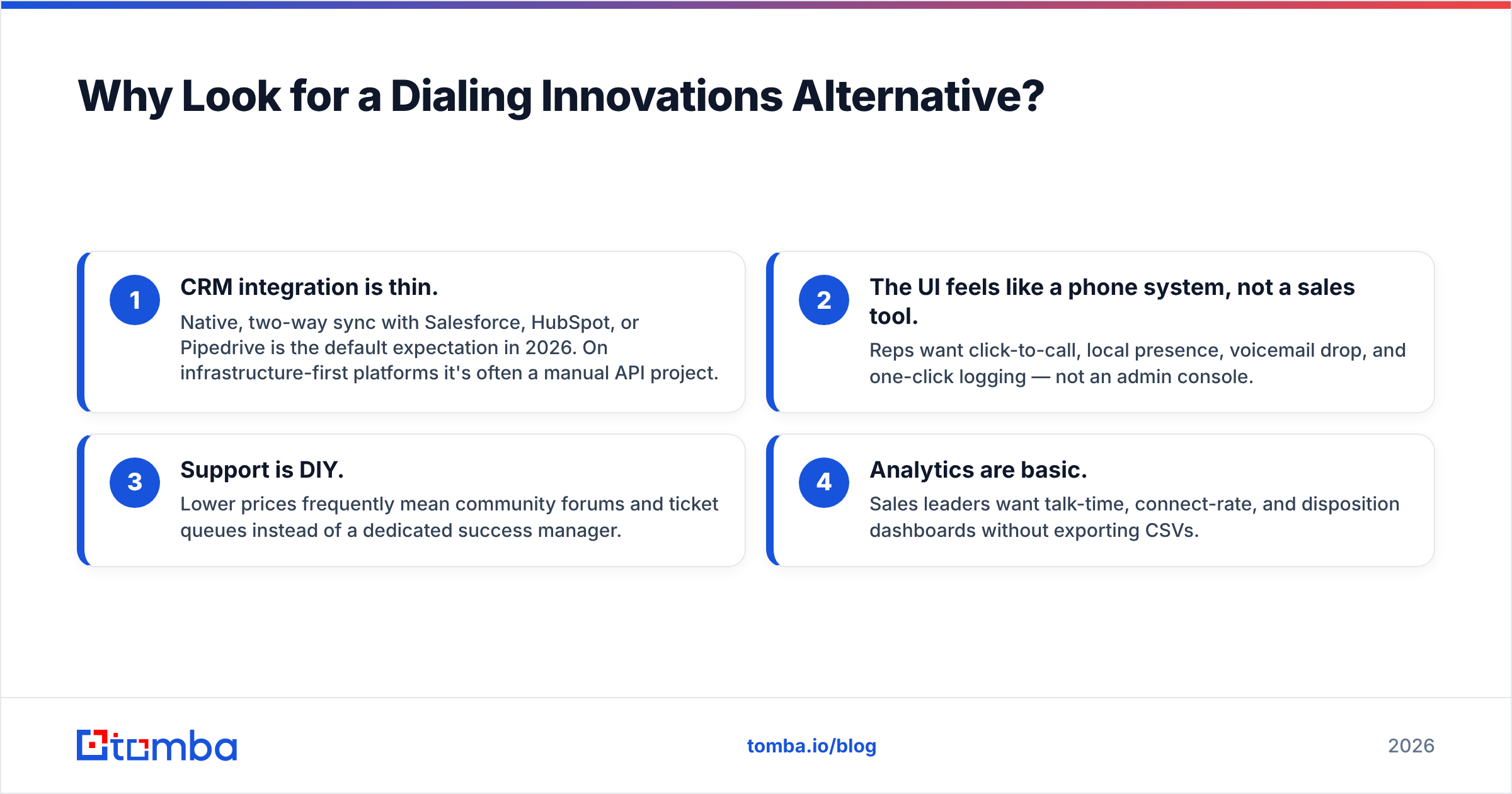
- CRM integration is thin. Native, two-way sync with Salesforce, HubSpot, or Pipedrive is the default expectation in 2026. On infrastructure-first platforms it's often a manual API project.
- The UI feels like a phone system, not a sales tool. Reps want click-to-call, local presence, voicemail drop, and one-click logging — not an admin console.
- Support is DIY. Lower prices frequently mean community forums and ticket queues instead of a dedicated success manager.
- Analytics are basic. Sales leaders want talk-time, connect-rate, and disposition dashboards without exporting CSVs.
If none of those bother you, Dialing Innovations may be fine. If two or more sting, keep reading.

What Should You Compare Dialing Innovations Alternatives On?#
Before the list, agree on what actually matters. Dialers are easy to demo and hard to live with, so weigh these:
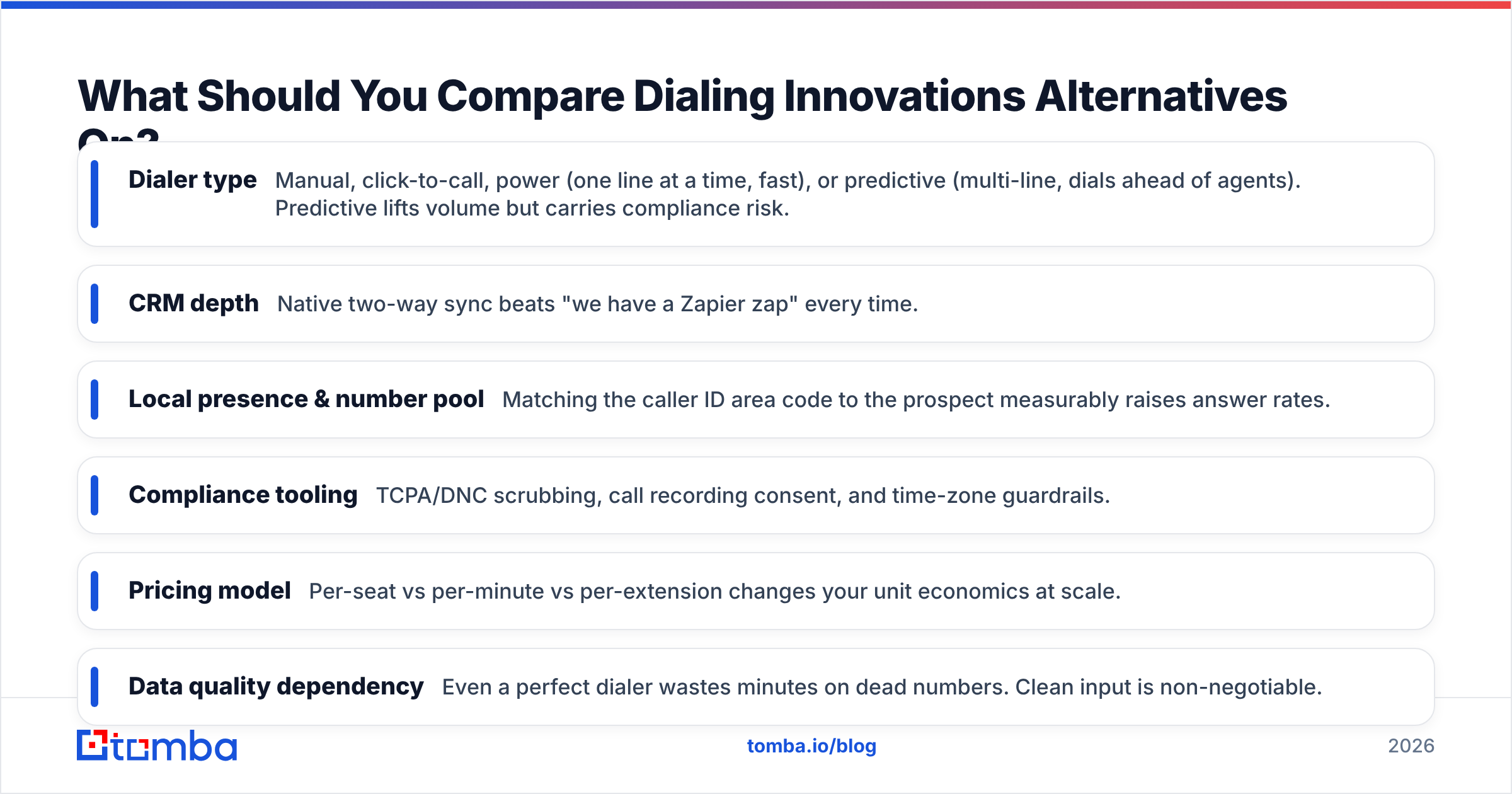
- Dialer type — Manual, click-to-call, power (one line at a time, fast), or predictive (multi-line, dials ahead of agents). Predictive lifts volume but carries compliance risk.
- CRM depth — Native two-way sync beats "we have a Zapier zap" every time.
- Local presence & number pool — Matching the caller ID area code to the prospect measurably raises answer rates.
- Compliance tooling — TCPA/DNC scrubbing, call recording consent, and time-zone guardrails.
- Pricing model — Per-seat vs per-minute vs per-extension changes your unit economics at scale.
- Data quality dependency — Even a perfect dialer wastes minutes on dead numbers. Clean input is non-negotiable.
Which Are the 7 Best Dialing Innovations Alternatives in 2026?#
Here's the shortlist, ranked by how well each fits a sales-led outbound team. Every one is a mature, well-supported platform — the "best" depends entirely on your size and motion.
1. Kixie — Best for Outbound Sales Teams#
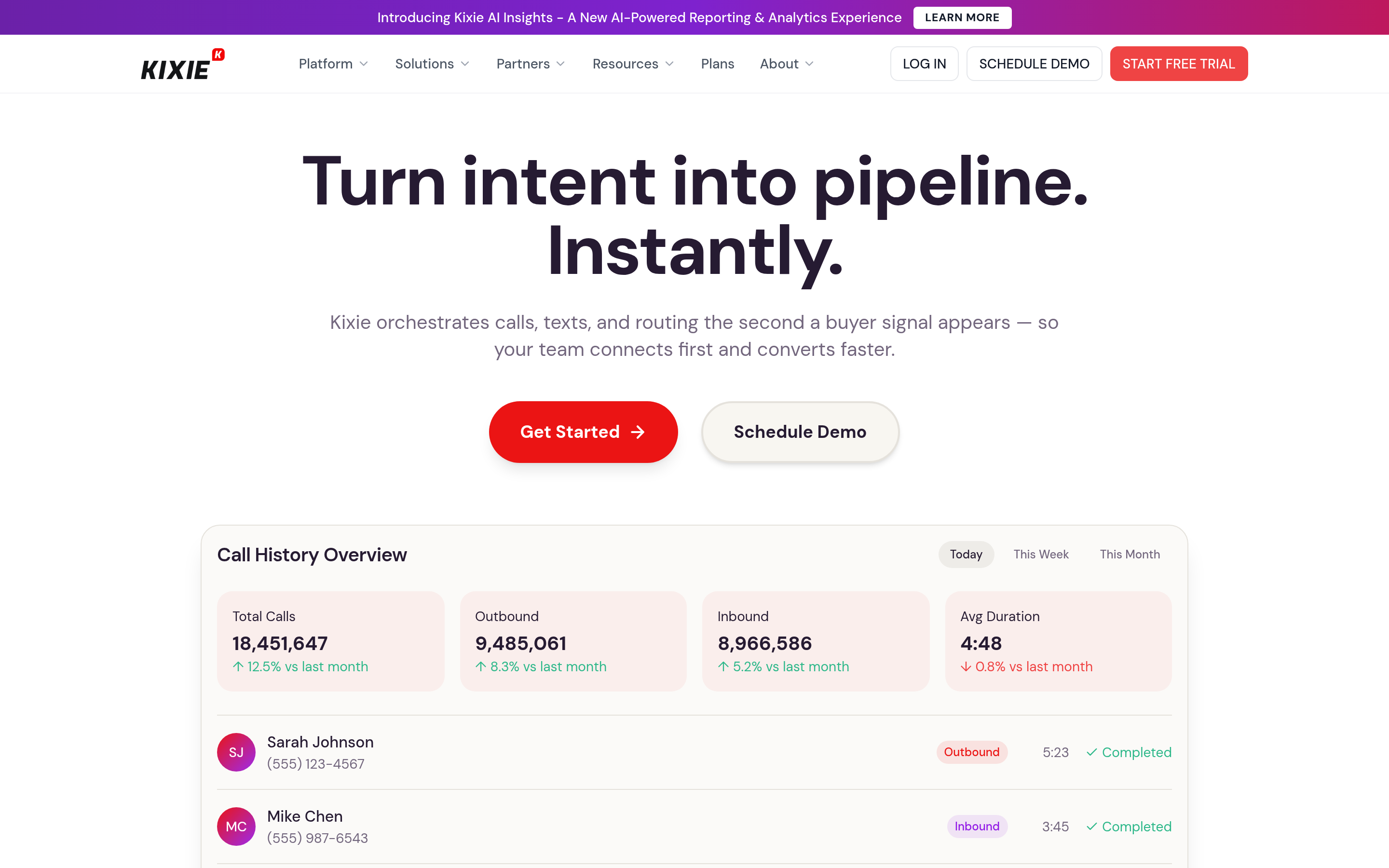
Kixie is a sales engagement platform first and a phone system second. Its PowerCall dialer plugs straight into HubSpot, Pipedrive, and Salesforce, auto-logs every call, and offers local presence out of the box. Voicemail drop, SMS templates, and connection-rate coaching make it feel built for reps rather than admins. If your team's KPI is dials-to-connects, this is the most natural upgrade from a bare dialer. Check current plans on the Kixie site.
2. JustCall — Best Dialer + SMS Combo#

JustCall pairs a solid auto/predictive dialer with genuinely strong texting and WhatsApp workflows. It supports 70+ countries for numbers, has a workflow builder, and syncs bidirectionally with most CRMs. Teams that blend calls and SMS in a single cadence get the most value here.
3. RingCentral — Best All-in-One Business Phone#
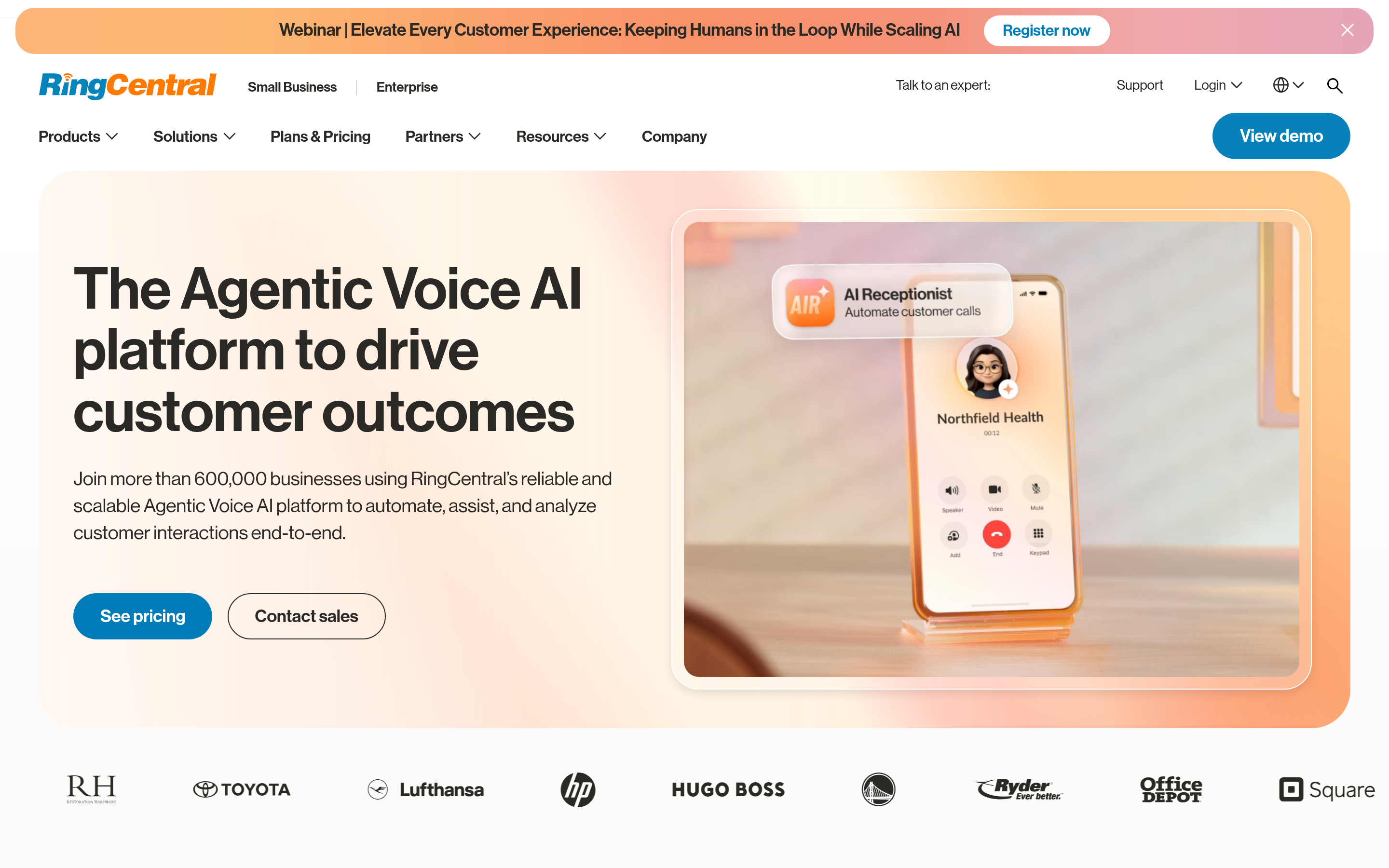
If you want one vendor for voice, video, SMS, and fax across the whole company — not just sales — RingCentral (RingEX) is the safe institutional choice. It's not a specialist sales dialer, but its reliability, global coverage, and app ecosystem are hard to beat. Add a dialer layer like Kixie or a dialer add-on if reps need power dialing. See the RingCentral homepage for tiers.
4. Five9 — Best Enterprise Contact Center#
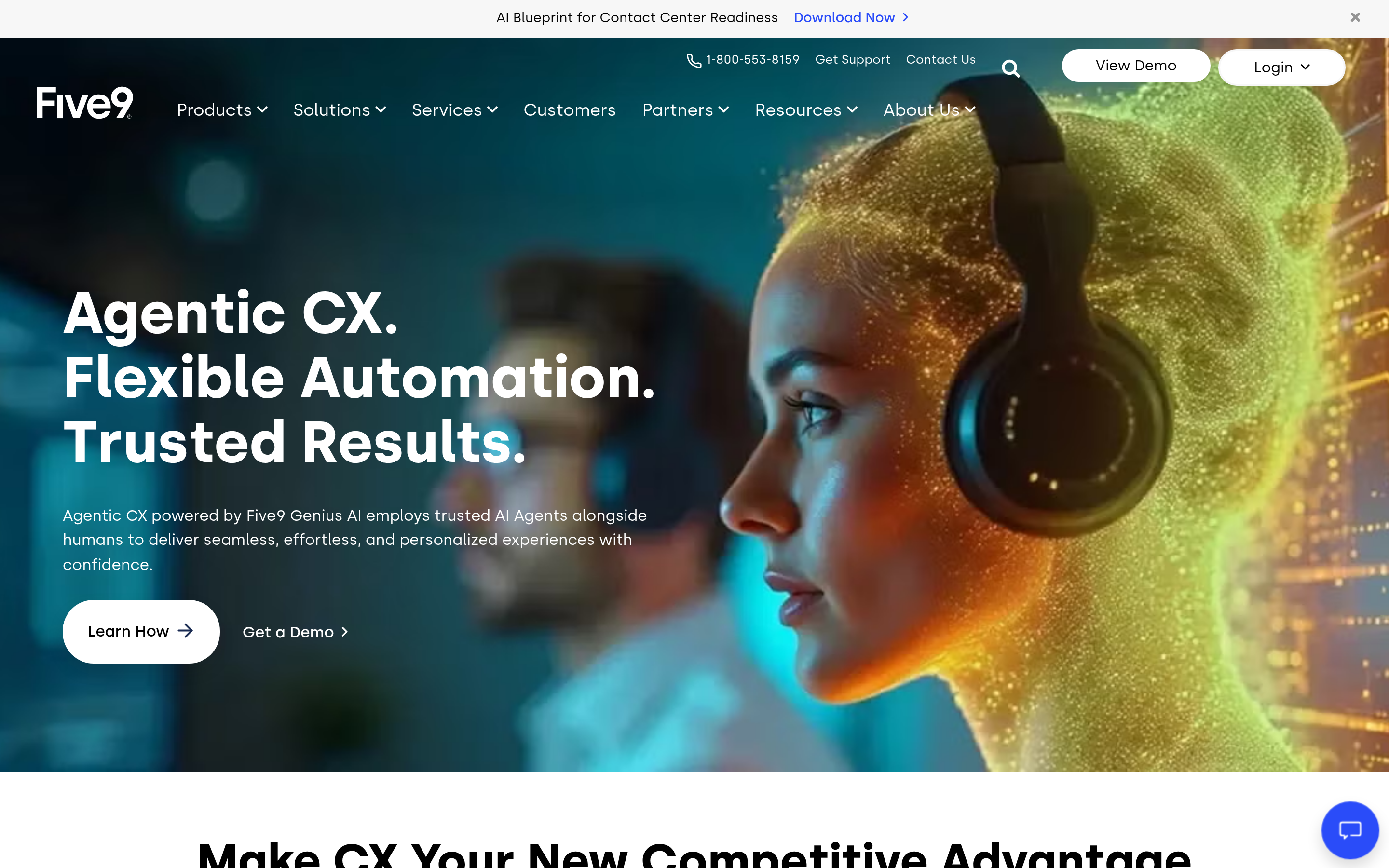
Five9 is the grown-up in the room for high-volume call centers. Predictive and progressive dialing, workforce management, IVR, and deep compliance controls make it the go-to when you're running dozens or hundreds of agents. It's overkill — and overpriced — for a five-person SDR team, but unmatched at scale.
5. Aircall — Best for Fast Setup#
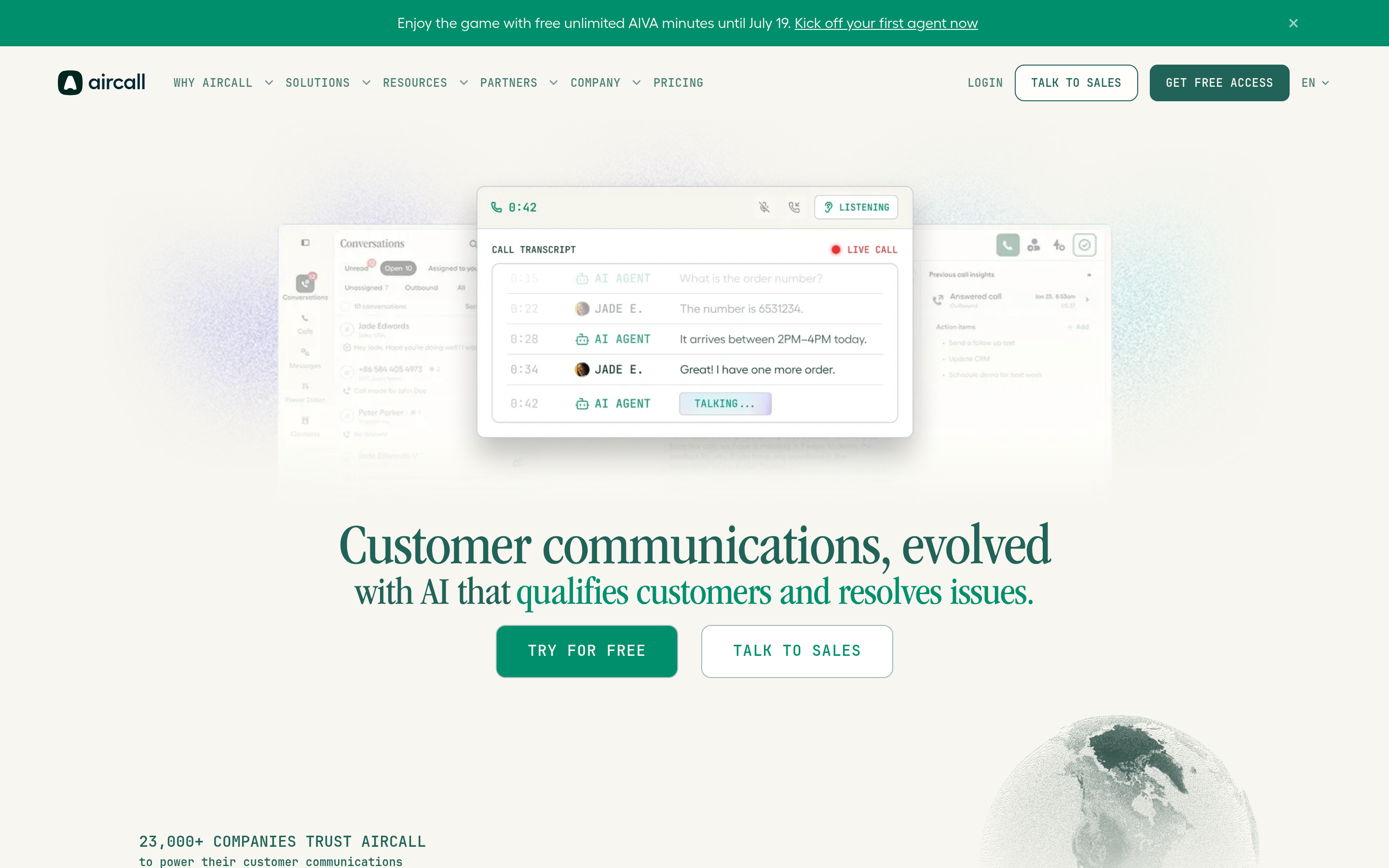
Aircall wins on time-to-value. You can provision numbers, build call flows, and connect your CRM in an afternoon. Its integrations marketplace is huge and its interface is genuinely pleasant. Power users may find advanced dialing features lighter than Kixie or Five9, but for SMBs it's a clean, modern replacement.
6. CloudTalk — Best for International Teams#
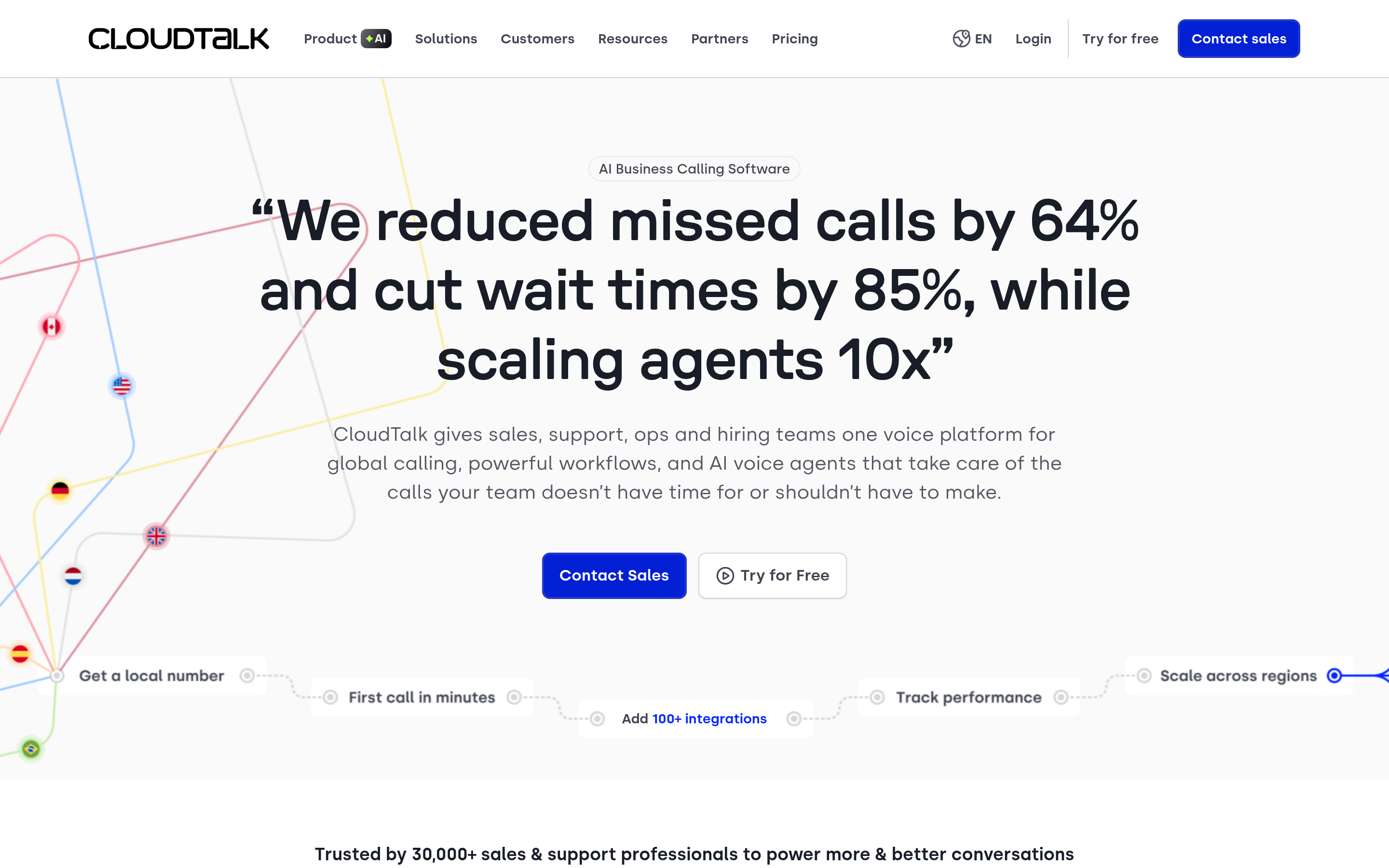
CloudTalk offers 160+ international numbers, smart routing, and a power dialer at a friendlier price point than the enterprise players. It's a strong pick for distributed or global teams that need local numbers in many markets without an enterprise contract.
7. PhoneBurner — Best Pure Power Dialer#
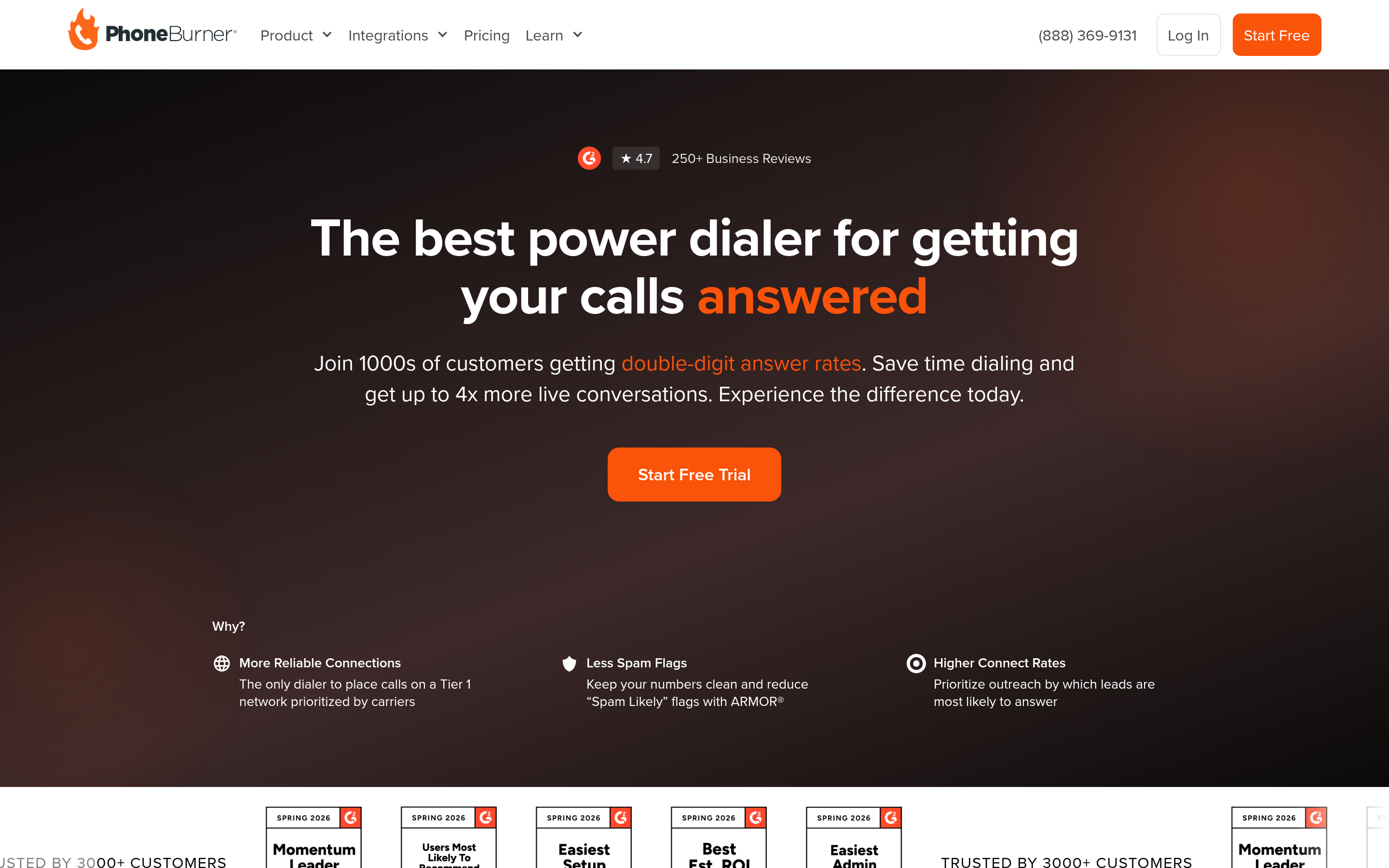
PhoneBurner focuses on one thing: getting reps through a list fast with zero awkward connect delay. No predictive multi-line risk, just a smooth power dialer with voicemail drop, email follow-up, and simple analytics. Ideal for high-touch, compliance-cautious teams that value conversation quality over raw volume.
How Do These Dialing Innovations Alternatives Compare on Price and Features?#
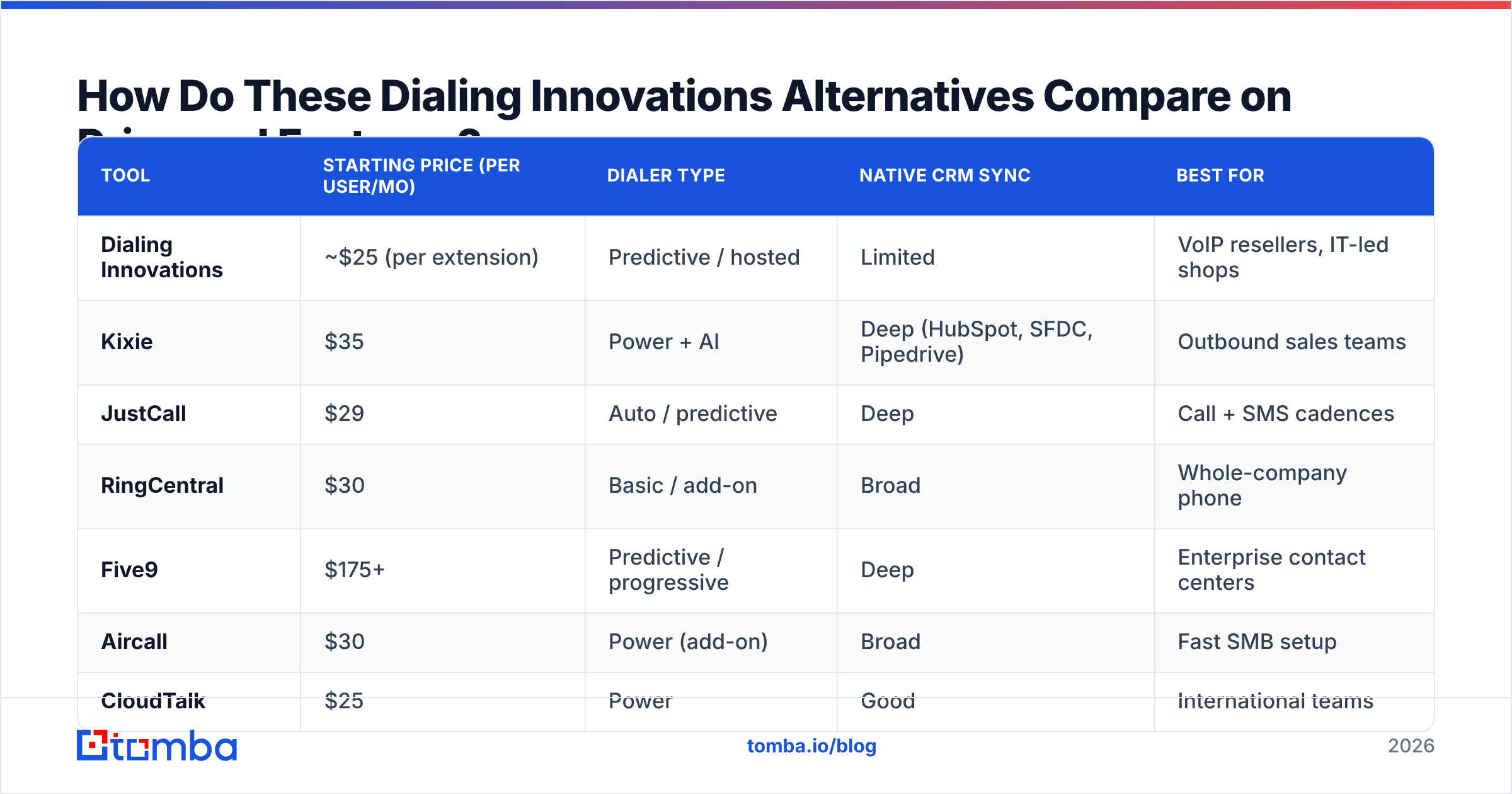
Pricing shifts often, so treat these as directional starting points and confirm on each vendor's site. What matters is the shape of each plan.
| Tool | Starting price (per user/mo) | Dialer type | Native CRM sync | Best for |
|---|---|---|---|---|
| Dialing Innovations | ~$25 (per extension) | Predictive / hosted | Limited | VoIP resellers, IT-led shops |
| Kixie | $35 | Power + AI | Deep (HubSpot, SFDC, Pipedrive) | Outbound sales teams |
| JustCall | $29 | Auto / predictive | Deep | Call + SMS cadences |
| RingCentral | $30 | Basic / add-on | Broad | Whole-company phone |
| Five9 | $175+ | Predictive / progressive | Deep | Enterprise contact centers |
| Aircall | $30 | Power (add-on) | Broad | Fast SMB setup |
| CloudTalk | $25 | Power | Good | International teams |
| PhoneBurner | $149 | Power | Good | High-touch power dialing |
A few honest takeaways from the table:
- Cheapest headline price rarely wins. Dialing Innovations and CloudTalk look cheap, but per-extension or per-minute add-ons can close the gap fast once you add numbers, recording, and integrations.
- Enterprise tools are priced for volume. Five9 and PhoneBurner's numbers only make sense when call volume is high enough to justify them.
- CRM depth is the real differentiator. If your reps live in HubSpot or Salesforce, "deep native sync" is worth more than a $5/seat discount.

What Do Most Dialer Comparisons Get Wrong?#
They obsess over the dialer and ignore the list. You can buy the best predictive dialer on earth, and if 30% of your numbers are wrong, disconnected, or belong to the wrong person, you've just automated your way to a lower connect rate and a faster path to spam flags.
Two data problems quietly sink outbound campaigns:
- Stale or invalid phone numbers. People change jobs, companies rebrand, and numbers get reassigned. Dialing a dead list burns rep hours and hurts your carrier reputation.
- Missing contact context. A name and a number aren't enough. Reps convert better when they know the title, company, and a reason to call.
This is where your data layer matters more than your dialer choice. Running your list through a phone validator before a campaign removes dead numbers so agents spend minutes on live conversations, not dial tones. And data enrichment fills in the title, company, and email that turn a cold dial into a relevant one.
Think of it like a race car: the dialer is the engine, but bad data is water in the fuel tank. The fastest engine in the world stalls on contaminated fuel.
How Do You Migrate Off Dialing Innovations Without Breaking Things?#
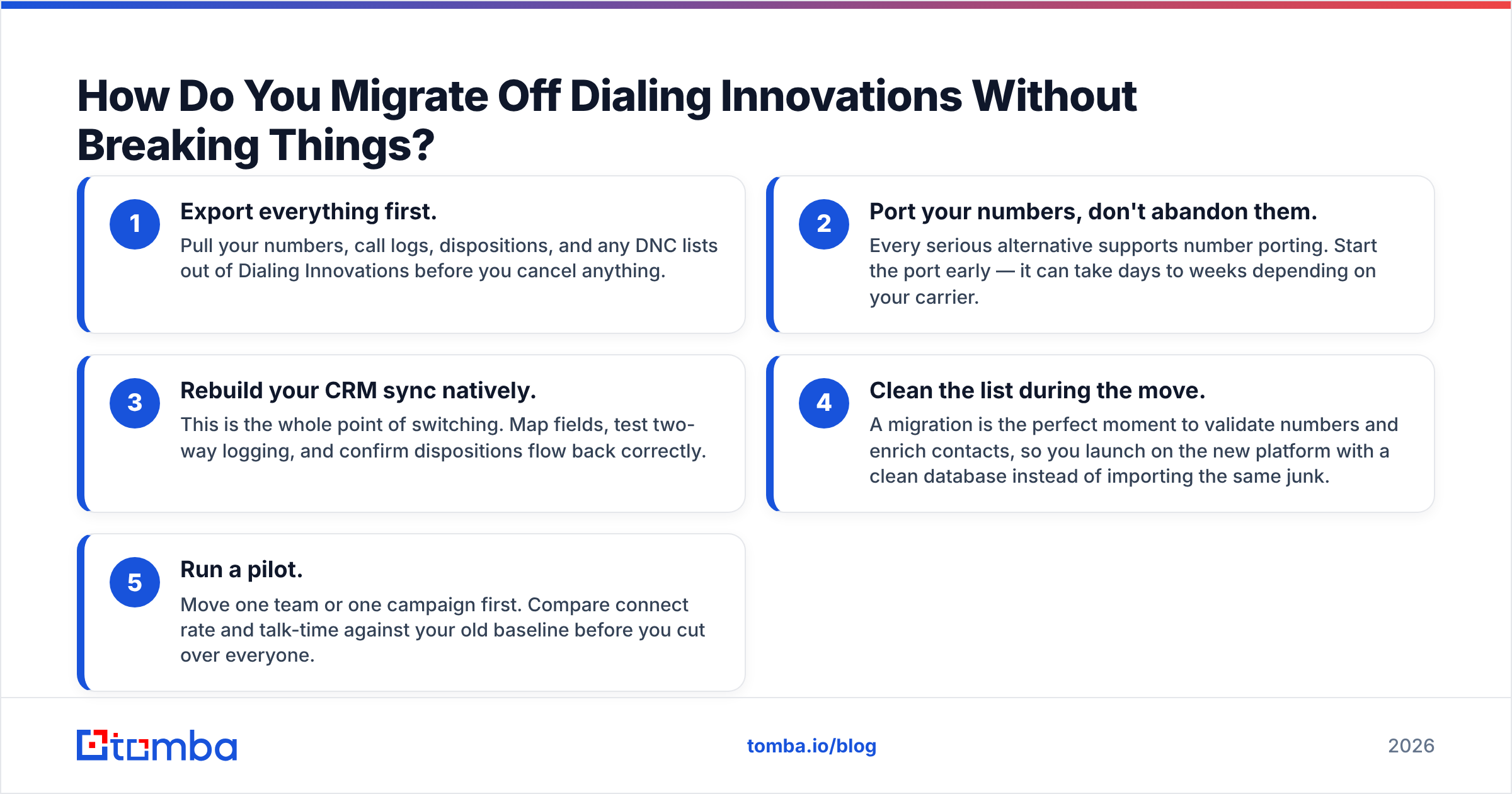
Switching phone systems sounds scary. It's mostly logistics if you sequence it right:
- Export everything first. Pull your numbers, call logs, dispositions, and any DNC lists out of Dialing Innovations before you cancel anything.
- Port your numbers, don't abandon them. Every serious alternative supports number porting. Start the port early — it can take days to weeks depending on your carrier.
- Rebuild your CRM sync natively. This is the whole point of switching. Map fields, test two-way logging, and confirm dispositions flow back correctly.
- Clean the list during the move. A migration is the perfect moment to validate numbers and enrich contacts, so you launch on the new platform with a clean database instead of importing the same junk.
- Run a pilot. Move one team or one campaign first. Compare connect rate and talk-time against your old baseline before you cut over everyone.
Do this in order and the risk is low. Skip the data-cleaning step and you'll carry your old problems into a shiny new tool.
Which Dialing Innovations Alternative Should You Pick?#
Match the tool to your motion, not the hype:
- You're an outbound sales team living in a CRM → Kixie or JustCall.
- You're an enterprise contact center → Five9.
- You want one phone vendor for the whole company → RingCentral.
- You're a lean startup that wants live today → Aircall or CloudTalk.
- You value conversation quality over volume → PhoneBurner.
- You're a VoIP reseller who wants to white-label → honestly, Dialing Innovations might still be your best bet.
For a broader field of user reviews across all of these, G2's contact center category is a useful sanity check against real buyer feedback.
The Fix Most Teams Overlook: Better Data In#
Whichever dialer you land on, its ceiling is set by the quality of the contacts you load into it. That's the part you control before you ever pay for a seat.
Tomba's Email Finder helps you build and enrich accurate outbound lists — verified professional emails, company context, and the contact details that make a call land. Pair it with a validated phone list and your reps stop dialing ghosts and start booking meetings. Start on the free tier (25 searches/month) and scale to the Starter plan at $49/mo when you're ready — full Tomba pricing is transparent, no per-extension surprises.
Pick the dialer that fits your team. Then feed it clean data, and watch your connect rate do the rest.
Related guides#
Ready to find emails that actually work?
Join 150,000+ professionals who stopped guessing and started sending. Free credits on signup — no credit card required.
Get the Tomba newsletter
Practical outbound tactics and product updates — once every two weeks.
About the author