Drift vs Qualified in 2026: Which Conversational Platform Wins?
Drift pioneered conversational marketing. Qualified rebuilt it inside Salesforce and bolted an AI SDR onto it. Here is how the two actually compare on pricing, routing, AI agents, and the data quality both of them quietly depend on.
TL;DR
- Drift invented the conversational marketing category and is now part of Salesloft. It is the better fit if you want chat plus a full outbound sequencing engine under one roof, and if you sell to a broad mid-market audience.
- Qualified is built natively on Salesforce and sells "pipeline generation" rather than chat. If Salesforce is your system of record and your ABM motion lives on account tiers, Qualified's routing and signal data are deeper.
- Both are expensive. Realistic annual commitments start around $30k–$40k and climb fast once you add AI agents, seats, and intent data.
- Neither tool creates contact data. They identify anonymous traffic and route conversations — the email addresses, phone numbers, and firmographics still have to come from somewhere accurate.
- Choose on your CRM and your traffic volume, not on the AI demo. Below ~15,000 monthly visitors, both are hard to justify.
What are Drift and Qualified, exactly?#
Drift launched in 2015 and effectively named the category. The pitch was simple: your website forms are a bottleneck, so replace them with a chat window that qualifies buyers in real time and books the meeting before the lead ever hits a nurture sequence. It worked well enough that "conversational marketing" became a line item in thousands of marketing budgets.
Drift was acquired by Vista Equity Partners and then merged with Salesloft in early 2024. Today it ships as part of the Salesloft platform — chat and AI agents sitting alongside cadences, dialer, forecasting, and deal management. That merger is the single most important fact in this comparison, and we will come back to it.
Qualified launched in 2018, founded by two former Salesforce executives, and took a narrower bet: build everything natively on Salesforce. Not "integrates with Salesforce" — built on it. Qualified reads and writes to your Salesforce objects directly, which means routing rules, account tiers, owner assignment, and reporting all inherit from the CRM you already maintain. The company later rebranded around "Pipeline Cloud" and pushed hard into AI with Piper, an AI SDR that handles inbound conversations, follow-up email, and meeting booking without a human in the loop.
So the framing that actually matters: Drift is a conversation layer that now lives inside a sales engagement suite. Qualified is a pipeline layer that lives inside Salesforce.
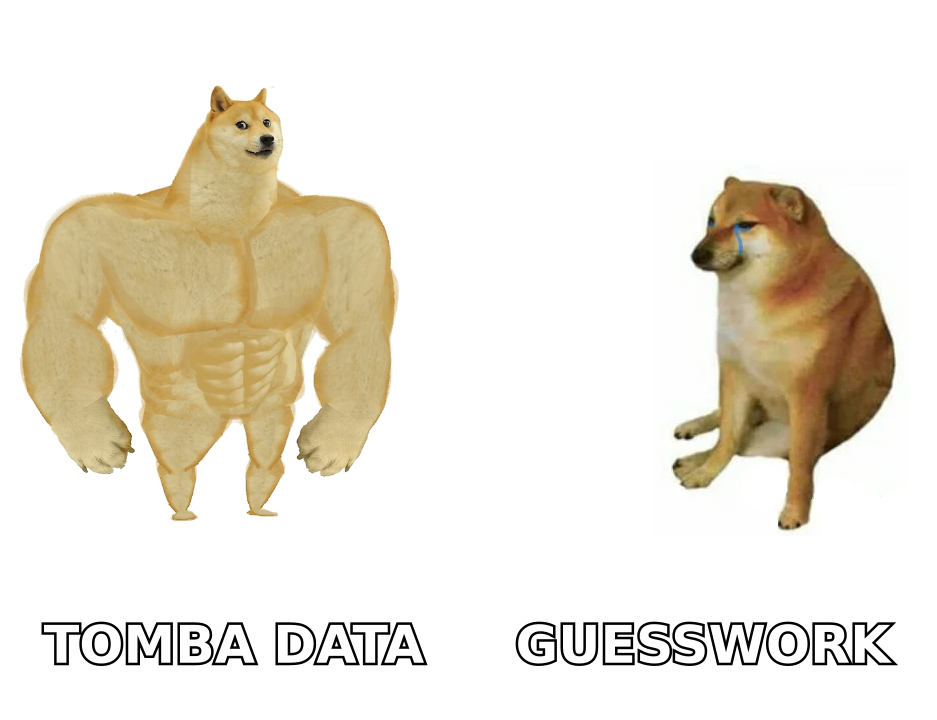
How do Drift and Qualified compare feature by feature?#
Here is the honest side-by-side. Both vendors move fast, so treat specific limits as directional and confirm in your own demo.
| Feature | Drift (Salesloft) | Qualified |
|---|---|---|
| Core positioning | Conversational marketing + sales engagement | Pipeline generation on Salesforce |
| CRM architecture | Bi-directional sync (Salesforce, HubSpot, Dynamics) | Native Salesforce app; HubSpot support added later |
| AI agent | Drift AI / Salesloft Rhythm agents | Piper the AI SDR |
| Visitor identification | Drift Intel (firmographic reveal) | Qualified Signals (account intent + reveal) |
| Live chat + video | Yes, including Drift Video | Yes, including voice and screen share |
| Meeting booking | Drift Meetings, calendar routing | Qualified Meetings, Salesforce-owner routing |
| Outbound sequencing | Included via Salesloft cadences | Not native — pairs with Outreach/Salesloft |
| ABM targeting | Account-based playbooks | Account tiers pulled straight from Salesforce |
| Best-fit CRM | Any | Salesforce (strongly) |
| Typical entry commitment | ~$2,500/mo, annual | ~$3,500/mo, annual |
The functional overlap on chat itself is close to total. Both do routing, both do playbooks, both do calendar booking, both do video, both surface a firmographic profile of the anonymous visitor. If you evaluate them on a chat-feature checklist you will end up with a tie and no decision.
The differences live one layer down:
- Data model. Qualified inherits Salesforce objects, so an account tier change in the CRM instantly changes routing on the website. Drift keeps its own model and syncs — which is more flexible if you are not on Salesforce, and one more thing to reconcile if you are.
- Scope. Drift ships as part of a suite that also handles outbound. Qualified deliberately does not sequence — it expects you to already own that.
- AI philosophy. Piper is positioned as a headcount replacement with its own dashboard and pipeline quota. Drift's AI is positioned as an assistant inside a rep's workflow.
- Buyer. Qualified is bought by demand gen and RevOps leaders with a Salesforce mandate. Drift, post-merger, is increasingly bought by whoever owns the Salesloft contract.
- Reporting. Qualified reports natively in Salesforce dashboards. Drift reports in Salesloft, then pushes to CRM — fine, but a second source of truth to reconcile at QBR time.
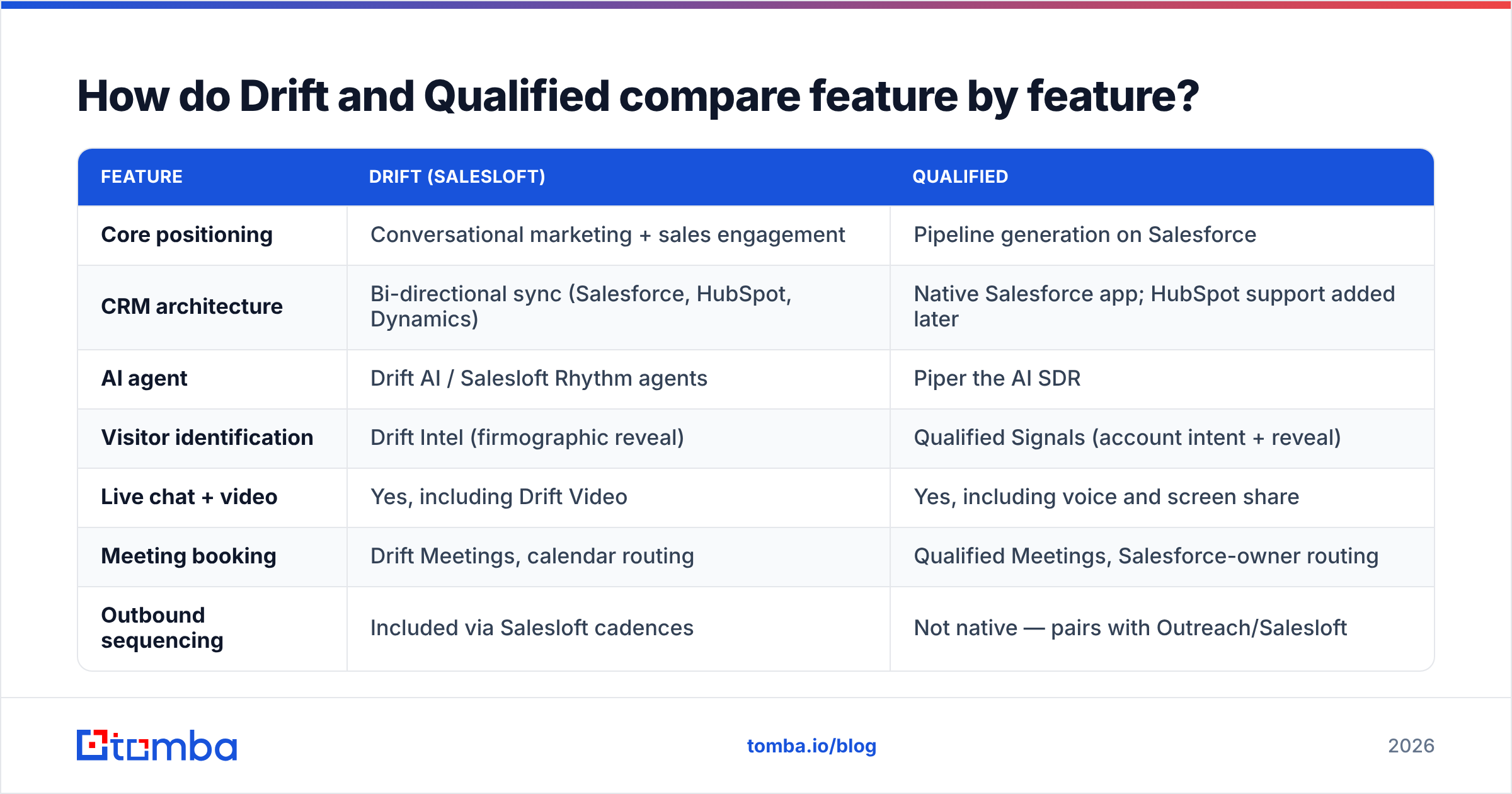
What does Drift vs Qualified actually cost?#
Neither vendor publishes a full price list, and both negotiate. What follows reflects commonly reported list pricing as of 2026 — you should expect discounting on multi-year deals and expect the number to rise when AI agents are included.
| Plan tier | Drift (Salesloft) | Qualified |
|---|---|---|
| Free / trial | Free trial; limited free plan historically | 30-day trial, no permanent free tier |
| Entry tier | ~$2,500/mo billed annually | Growth, ~$3,500/mo billed annually |
| Mid tier | Advanced — custom, commonly $5k–$8k/mo | Premier, ~$6,000/mo billed annually |
| Top tier | Enterprise — custom | Enterprise — custom |
| AI agent | Add-on pricing | Piper priced separately, often 5-figure annual |
| Contract length | Annual standard | Annual standard |
| Seat model | Per-seat for sales users | Per-seat, tier-capped |
Two things worth flagging before you build a business case.
First, the AI agent is where the real money is now. Both companies have repriced around AI, and the sticker price of the base platform is increasingly a door-opener. Budget for the agent from day one or you will be renegotiating in month four.
Second, usage caps bite. Qualified tiers gate on things like number of tracked accounts and Signals volume. Drift, inside Salesloft, gates on seats and AI interactions. High-traffic sites blow through entry tiers quickly, which is by design.
For context on how buyers rate both, the G2 conversational marketing category is the least biased public source — both tools sit in the leader quadrant with similar satisfaction scores and very different implementation-time complaints.
Is Drift still the right pick after the Salesloft merger?#
This is the question every Drift renewal conversation now starts with, and the honest answer is: it depends entirely on whether you want the suite.
The case for post-merger Drift is real consolidation. Inbound chat, outbound cadence, dialer, and forecasting in one contract means one vendor, one data model, one QBR. If your SDR team already lives in Salesloft, adding Drift is close to free from a change-management perspective. Handoffs that used to require a Zapier hop are now internal.
The case against is roadmap risk. Category-defining products absorbed into larger suites tend to get slower feature velocity and more attention on integration than innovation. Several Drift customers have reported exactly that pattern since 2024 — stability improved, the pace of new chat-specific capability did not. If chat is 80% of the value you need, you are now buying it from a company whose center of gravity is sequencing.
Qualified has spent that window shipping aggressively on Piper and Signals, which is why it now wins more head-to-head evaluations among Salesforce-first companies than it did three years ago.
Which one is better for Salesforce-heavy teams?#
Qualified, and it is not particularly close.
Being a native Salesforce application means Qualified does not maintain a shadow copy of your account and owner data. When a rep changes territory in Salesforce, routing changes on the website in the same moment. When marketing retiers accounts for the new fiscal year, the chat experience retiers with them. There is no sync lag, no field-mapping doc, no "why did this MQL route to the wrong AE" postmortem.
That advantage disappears the moment Salesforce is not your CRM. On HubSpot, Drift's integration is more mature and the Salesloft bundle is more useful. On Dynamics or a homegrown stack, Drift's flexible model is easier to bend.
There is a third scenario worth naming: teams that do not really need either. If your site does 5,000 monthly visitors and your ACV is $8,000, a $40,000 annual conversational platform will not pay back. A well-configured form, fast routing, and clean contact enrichment will get you most of the outcome for a fraction of the cost.
Where do Drift and Qualified both fall short?#
Both platforms are excellent at the moment of conversation and mediocre at everything that has to happen before and after it.
Anonymous traffic is only partially identifiable. Reverse-IP and cookie-based identification typically resolves a company, not a person. Match rates vary wildly by region and company size — strong for US enterprises, weak for European SMBs and anyone on a residential connection. Both vendors quote optimistic numbers; your mileage will be lower. If website visitor reveal is the primary reason you are buying, run a two-week pilot on your own traffic before signing anything.
The contact record is thin. Knowing that someone from Acme Corp visited your pricing page three times is a signal, not a contact. To act on it you need the right person's name, title, and a deliverable email address. Neither Drift nor Qualified is a contact database in any meaningful sense — they lean on partner data or your existing enrichment stack.
Follow-up dies on bad data. The single most common failure mode we see: a chat conversation surfaces a great account, an SDR builds a mini-list of five stakeholders, three of those emails bounce, the domain's sender reputation takes a hit, and the next campaign underperforms for reasons nobody connects back to the chat tool. The platform gets blamed for pipeline that was actually lost to a bad list.

That third problem is the cheapest one to fix and the one teams most consistently ignore. Whatever you decide on Drift vs Qualified, put a verification step between "we identified this account" and "we sent 200 emails." Running a list through an email verifier before a send costs cents per contact and protects the deliverability that every other channel depends on.
Which should you choose in 2026?#
Work through these in order. The first one that matches is your answer.
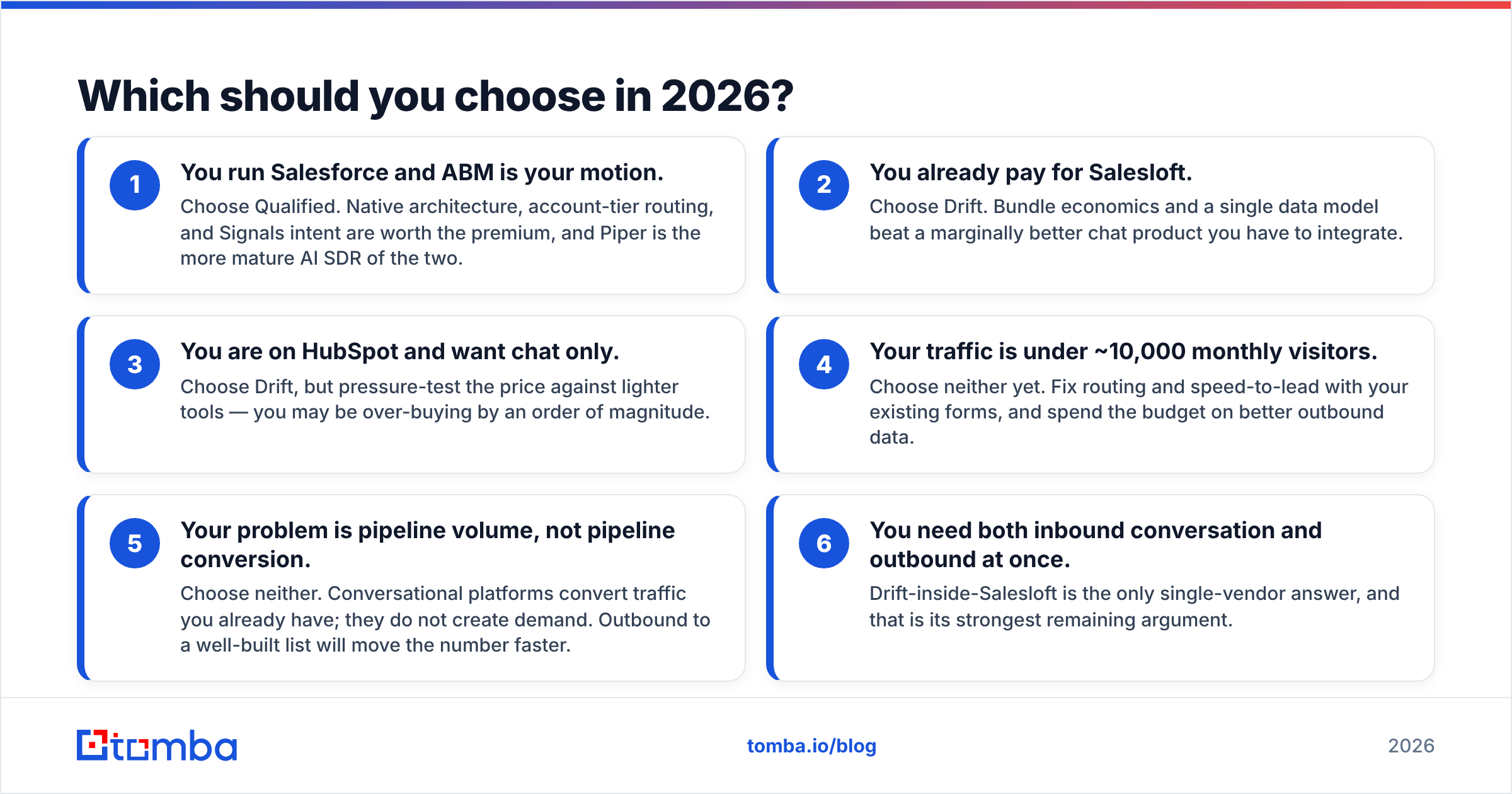
- You run Salesforce and ABM is your motion. Choose Qualified. Native architecture, account-tier routing, and Signals intent are worth the premium, and Piper is the more mature AI SDR of the two.
- You already pay for Salesloft. Choose Drift. Bundle economics and a single data model beat a marginally better chat product you have to integrate.
- You are on HubSpot and want chat only. Choose Drift, but pressure-test the price against lighter tools — you may be over-buying by an order of magnitude.
- Your traffic is under ~10,000 monthly visitors. Choose neither yet. Fix routing and speed-to-lead with your existing forms, and spend the budget on better outbound data.
- Your problem is pipeline volume, not pipeline conversion. Choose neither. Conversational platforms convert traffic you already have; they do not create demand. Outbound to a well-built list will move the number faster.
- You need both inbound conversation and outbound at once. Drift-inside-Salesloft is the only single-vendor answer, and that is its strongest remaining argument.
One process note regardless of which you pick: run the pilot on real traffic, not on the vendor's demo site. Ask for a two-week trial with your own tracking script installed, then measure identified-account rate and meetings booked, not chat volume. Chat volume always looks great.
How do you feed either platform with better data?#
Conversational tools are conversion multipliers. They multiply whatever you already send them. That makes the input layer — the accounts you target, the people you reach, the addresses you send to — the highest-leverage part of the stack and the cheapest to improve.
A practical setup that works alongside either platform:
- Identify the account from web signals in Drift or Qualified.
- Pull every relevant contact at that domain with domain search so the SDR is not guessing at who the buying committee is.
- Verify each address before it enters a sequence.
- Push enriched, verified records back into the CRM so routing and reporting stay honest.
That loop costs a rounding error next to a $40,000 platform contract, and it is the difference between a chat tool that produces meetings and one that produces a dashboard.
If you want that layer without another six-figure data contract, start with the Tomba Email Finder. Free tier gives you 25 searches a month to test accuracy on domains you already know, and paid plans start at $49/mo — see Tomba pricing for the full breakdown. Find the right person at the accounts your chat tool just surfaced, verify before you send, and let Drift or Qualified do the part it is actually good at.
Related guides#
Ready to find emails that actually work?
Join 150,000+ professionals who stopped guessing and started sending. Free credits on signup — no credit card required.
Get the Tomba newsletter
Practical outbound tactics and product updates — once every two weeks.
About the author