9 Best Dropcontact Alternatives in 2026: Tested and Ranked
Dropcontact is strong on GDPR-safe enrichment, weak on raw discovery volume and per-credit cost. Here are nine alternatives compared on price, coverage, verification depth, and API quality.
TL;DR
- Dropcontact is a French, GDPR-first tool. It rebuilds contact data with an algorithm instead of reselling a scraped database. That is its strength and its limit.
- Teams leave for three reasons: credit cost at scale, thin data outside Europe, and no search-plus-verify flow in one place.
- Need volume search and verification in one API? Tomba, Hunter, and Findymail are the closest swaps.
- Need US lists with company filters? BookYourData and Apollo cover ground Dropcontact never aimed at.
- The best Dropcontact alternatives depend on where your buyers are. Run the same 100-contact test list through two tools before you sign anything.
What is Dropcontact and who is it actually for?#
Dropcontact is an email finder and data cleaner with one clear rule: it does not sell you a scraped list. You give it a first name, last name, and company domain. Its algorithm tests likely patterns and checks public sources. Then it hands back a valid email plus tidy company data.
That approach sells well in Europe. Dropcontact does not keep a file on each person. It works the answer out on demand. So it can call itself GDPR-native, with servers in France and no US data transfer. For a German or French SaaS team whose lawyers vet every vendor, that beats a feature list.
It is good at the job it picked. Feed it a clean CRM export with names and domains and you get a high match rate. Company names come back tidy.
But the job is narrow. Dropcontact cleans records you already have. It cannot answer "give me every marketing decision-maker at 400 mid-market logistics firms" from scratch. That is where the hunt for dropcontact alternatives usually starts.
Why do teams look for Dropcontact alternatives?#
Five complaints show up again and again in G2 reviews and in migration calls:
- Credit math gets ugly at volume. You pay per record. A big CRM cleanup burns credits fast. Past 20,000 records a month, unit cost drives the decision.
- Coverage outside Europe is patchy. The method leans on signals that are richer in EU markets. US mid-market, LATAM, and APAC come back empty more often.
- There is no search layer. You cannot start from "SaaS firms in Texas, 50-200 staff" and end with contacts. You need a second tool, a second bill, a second API.
- No standalone verifier. Got 30,000 inherited addresses to check? That is a different job, so you buy a verifier too.
- No phone numbers. Teams that call as well as email need yet another source.
None of this makes Dropcontact bad. It makes it one part, not a platform. Most revenue teams end up wanting fewer parts.
How do the top Dropcontact alternatives compare on price and coverage?#
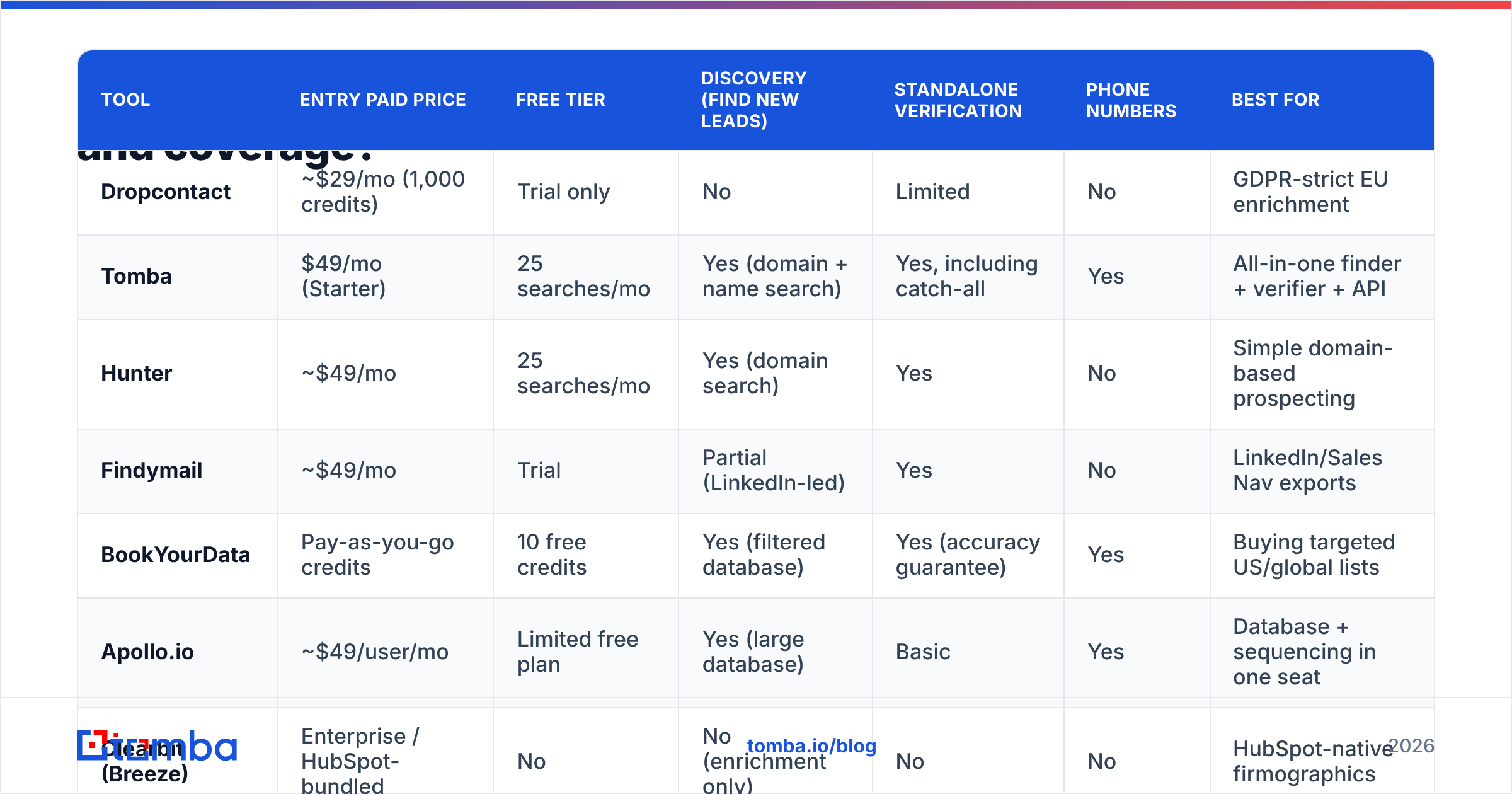
Here is the head-to-head. Prices are entry paid tiers at the time of writing. Always check the vendor's own pricing page, since credit bundles change every quarter.
| Tool | Entry paid price | Free tier | Discovery (find new leads) | Standalone verification | Phone numbers | Best for |
|---|---|---|---|---|---|---|
| Dropcontact | ~$29/mo (1,000 credits) | Trial only | No | Limited | No | GDPR-strict EU enrichment |
| Tomba | $49/mo (Starter) | 25 searches/mo | Yes (domain + name search) | Yes, including catch-all | Yes | All-in-one finder + verifier + API |
| Hunter | ~$49/mo | 25 searches/mo | Yes (domain search) | Yes | No | Simple domain-based prospecting |
| Findymail | ~$49/mo | Trial | Partial (LinkedIn-led) | Yes | No | LinkedIn/Sales Nav exports |
| BookYourData | Pay-as-you-go credits | 10 free credits | Yes (filtered database) | Yes (accuracy guarantee) | Yes | Buying targeted US/global lists |
| Apollo.io | ~$49/user/mo | Limited free plan | Yes (large database) | Basic | Yes | Database + sequencing in one seat |
| Clearbit (Breeze) | Enterprise / HubSpot-bundled | No | No (enrichment only) | No | No | HubSpot-native firmographics |
| Prospeo | ~$39/mo | 75 credits | Partial | Yes | Yes | LinkedIn email extraction |
| Icypeas | ~$29/mo | Limited free | Partial | Yes | No | Budget bulk enrichment |
| Cognism | Enterprise (annual) | No | Yes | Yes | Yes (Diamond verified) | Enterprise EU + US calling |

The table tells the whole story. Dropcontact wins on compliance and clean data, not on breadth. Most Dropcontact alternatives beat it on one axis and give something up on another.
Which Dropcontact alternatives are best for each use case?#
Tomba — best all-in-one replacement#
Tomba is the closest thing to a drop-in upgrade. Pick it if your complaint is "I need search, finding, and checking without three vendors." The email finder works from a name plus domain, just like Dropcontact. Next to it sits a domain search that returns every address it can find at a company. You also get an email verifier, a catch-all check for domains that accept everything, phone lookup, and data cleanup.
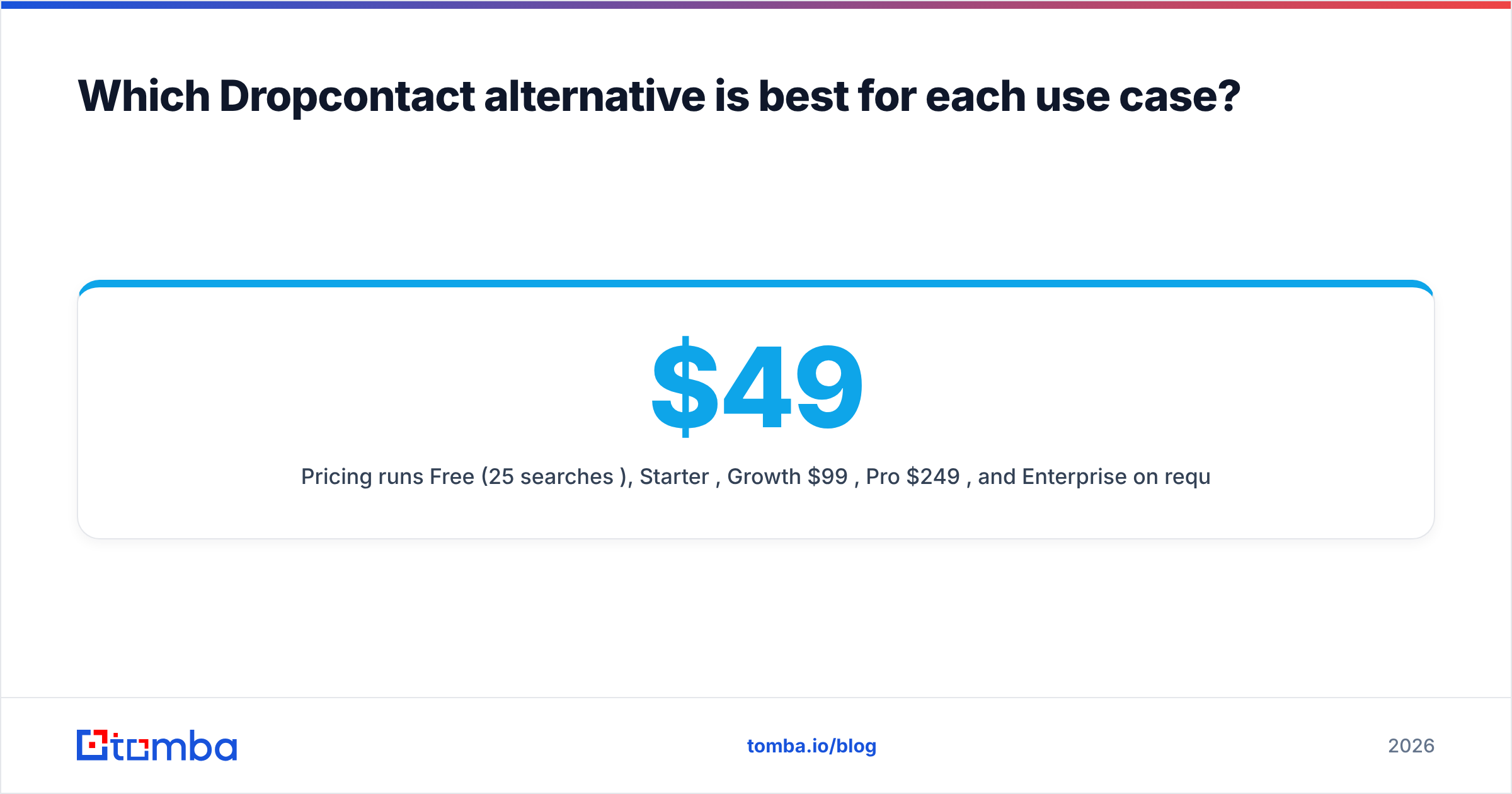
Plans run Free (25 searches a month), Starter $49/mo, Growth $99/mo, Pro $249/mo, and Enterprise on request. The Tomba API is the real draw for teams moving off Dropcontact. The request shape is familiar. One integration covers find and verify. Native connectors ship for Sheets, Excel, Airtable, HubSpot, and Zapier.
Where it wins: breadth per dollar, deeper checks, one API surface. Where Dropcontact still wins: if your lawyers demand EU-only processing with no stored contact records, Dropcontact is built for that argument.
Hunter — best for simple domain prospecting#
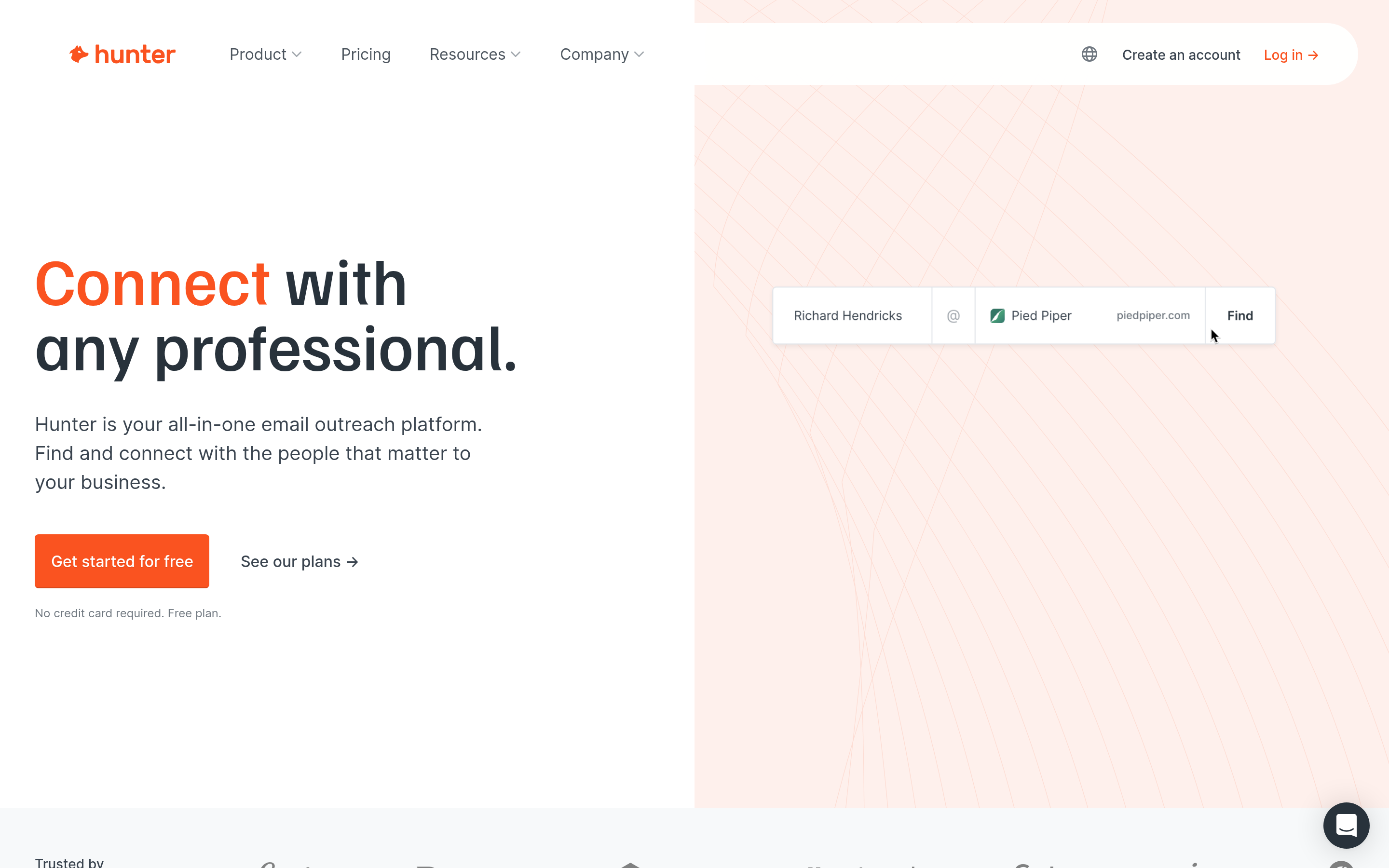
Hunter has the cleanest idea in the group: give it a domain, get the people. Its confidence scores are well tuned. The free tier is big enough to judge it properly. It will not clean a messy CRM export the way Dropcontact does, and it has no phone data.
Findymail — best for LinkedIn-led outbound#
Does your workflow start in Sales Navigator? Findymail's export-and-enrich path is tighter than Dropcontact's. It also guarantees against bounces, which is a real promise. Off LinkedIn, coverage narrows. It is a specialist, not a platform.
BookYourData — best for buying targeted lists outright#
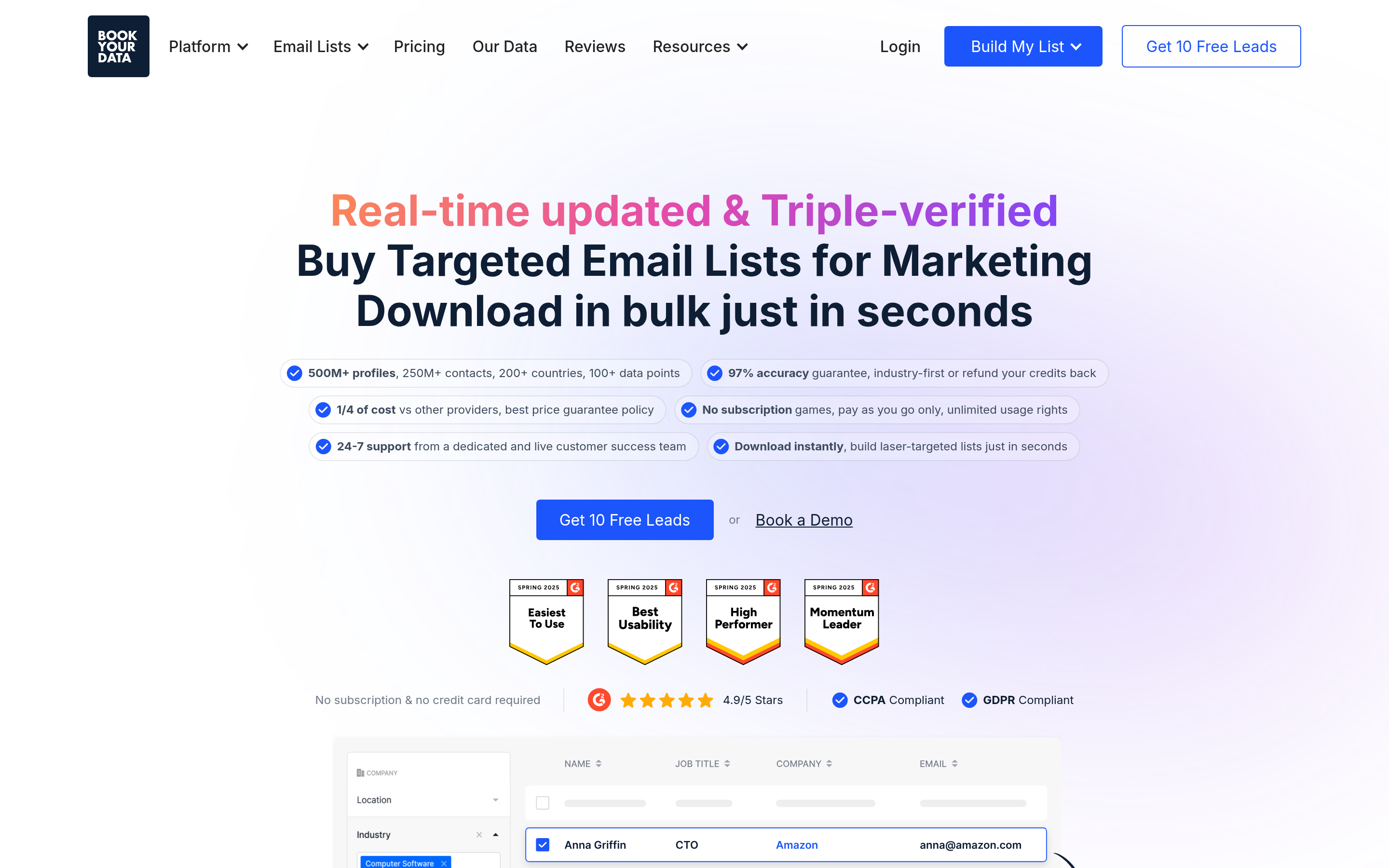
BookYourData solves a different problem. You are not cleaning records you own. You are buying records you lack, filtered by industry, title, place, and company size. Credits are pay-as-you-go and accuracy is guaranteed. For US campaigns, where Dropcontact's coverage thins out, it is a credible pick. The no-subscription model suits campaign-based buying. Verify the list before you send, as with any bought list.
Apollo — best if you also want sequencing#
Apollo bundles a big contact database with sequences and a dialer in one seat price. That is real leverage for small teams. The trade-off is stale data on long-tail firms. You also lean on one vendor for both data and sending. Teams that keep those layers apart often use an Apollo alternative for data and a separate tool to send.
Cognism — best for enterprise EU plus phone#
Cognism is the enterprise answer when you need EU data you can defend and human-checked mobile numbers. Expect annual contracts. The price only makes sense above a certain team size.
Prospeo and Icypeas — best budget picks#
Both undercut the field on entry price. Both handle bulk work fine. Support, dashboard polish, and integrations are where their size shows. Fine as a backup source. Riskier as your only one.
How accurate are these tools really?#
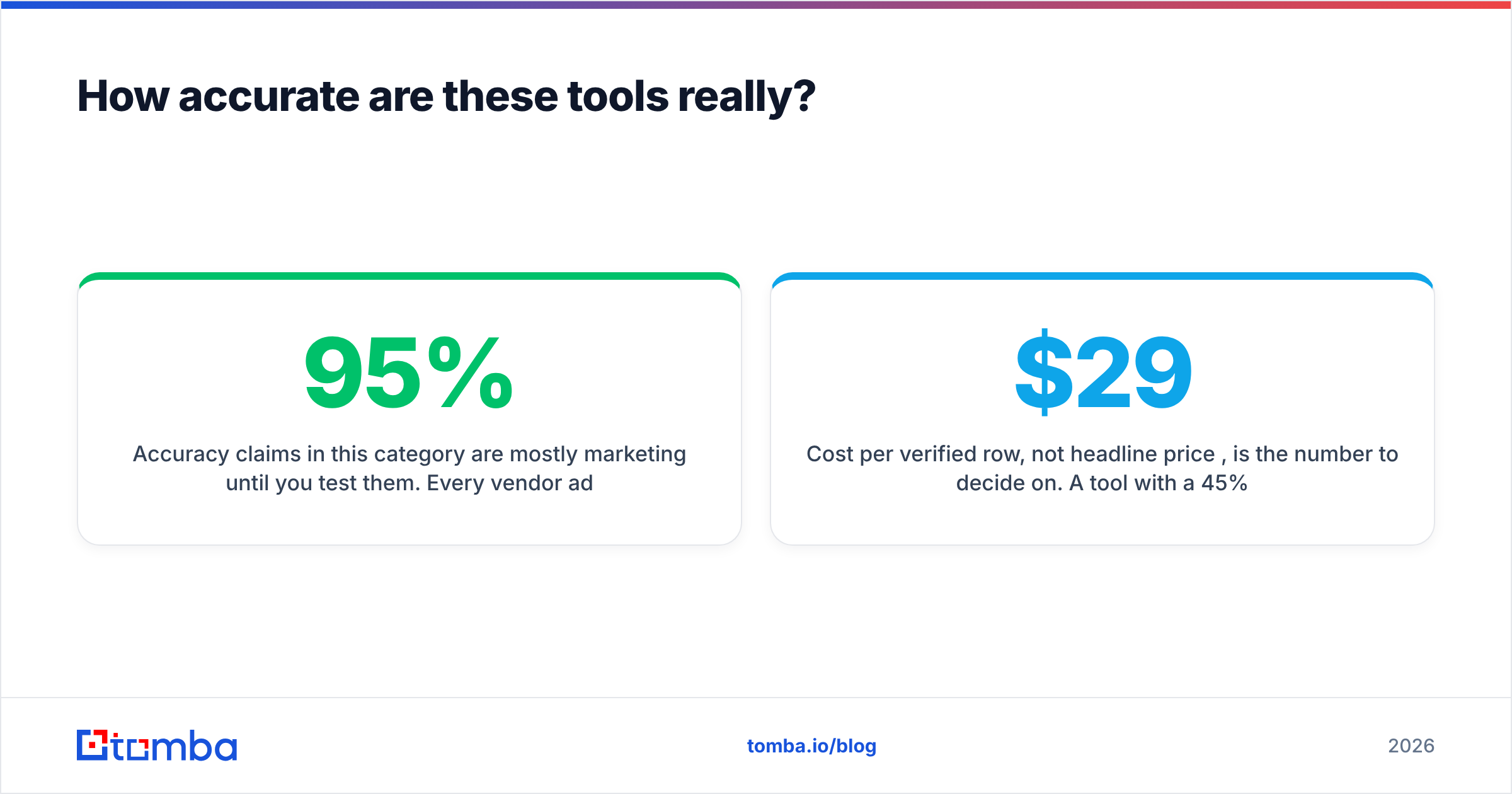
Most Dropcontact alternatives claim 95% or better. Treat those claims as marketing until you test them. Each number comes from the vendor's own sample, usually weighted toward big-name firms where every tool does well.

Run your own test instead. It takes an afternoon:
- Build a 100-row control list from your real buyers, not the Fortune 500. Include the small private firms where tools fail.
- Run it through two or three vendors on free tiers or trials. Do not let a vendor run it for you.
- Record three numbers per tool: match rate, verified rate, and cost per verified row.
- Send a warm-up batch of 20 addresses per tool and measure real bounces. This is the number that matters most.
- Check catch-all handling. Many B2B domains accept every address. Tools that call those "valid" inflate their score. A catch-all verifier tells you what is real.
- Test one non-English market if you sell abroad. The gap between tools is widest there.
Decide on cost per verified row, not headline price per credit. A $29/mo tool at a 45% verified rate costs more than a $49/mo tool at 78%.
How do you migrate off Dropcontact without breaking your pipeline?#
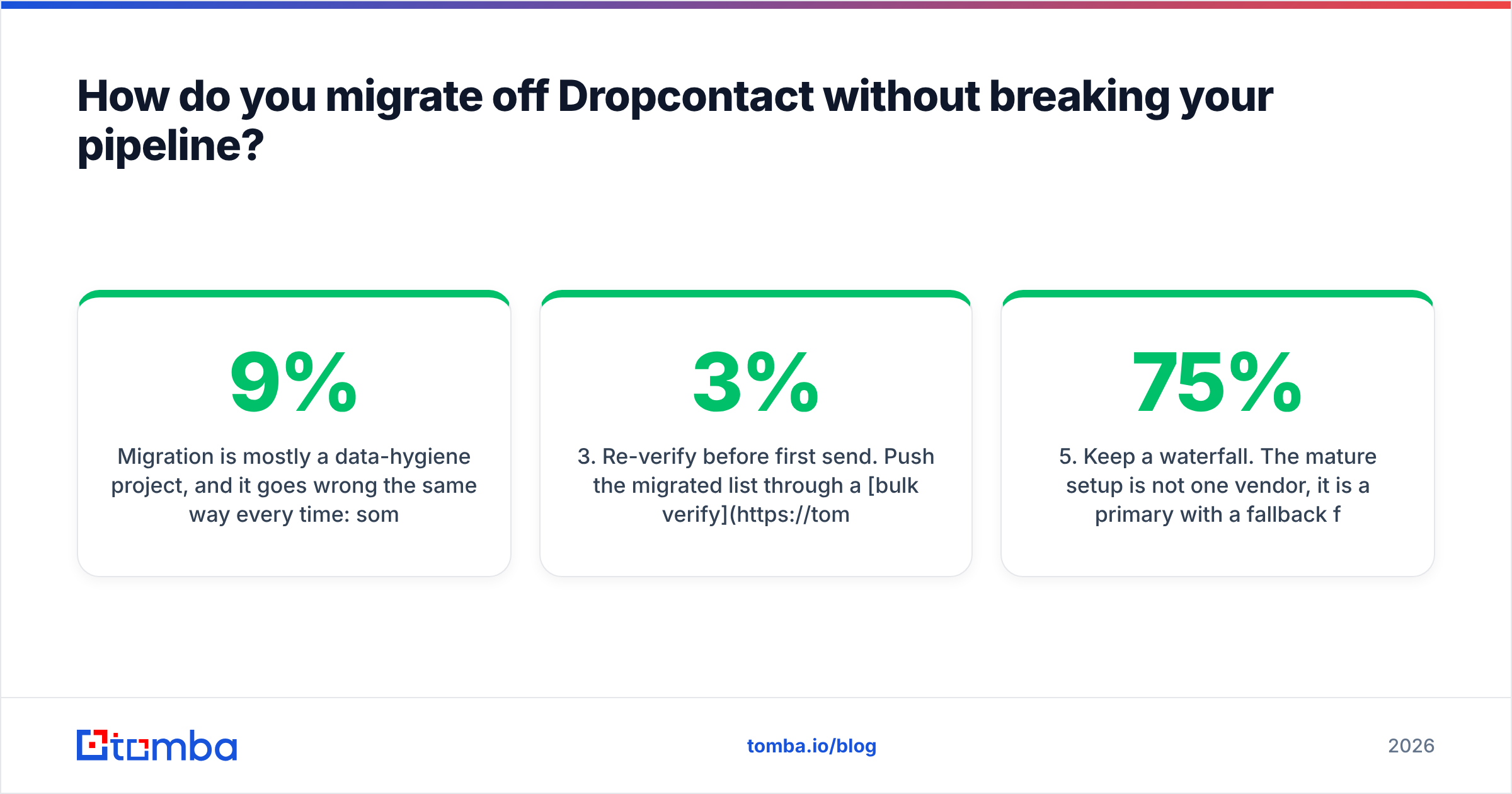
Moving to one of the Dropcontact alternatives is mostly a data-hygiene job. It goes wrong the same way every time. Someone swaps the API key on a Friday, and Monday's send bounces at 9%.
Do it in this order:
- Freeze and snapshot. Export your current records with the date each was last checked. Anything older than 90 days needs a fresh check.
- Run both tools for two weeks. Keep Dropcontact live while the new tool runs the same inputs. Compare 500 rows side by side.
- Re-verify before the first send. Push the list through a bulk verify pass. Drop anything not marked valid. Above a 3% bounce rate, inbox providers start to throttle you.
- Rewire integrations last. Update Zapier, HubSpot, or Sheets only after the API tests pass in staging.
- Keep a backup source. The mature setup is a main tool plus a fallback. Two tools at 75% each stack to about 88%.
Is Dropcontact still worth keeping in 2026?#
Yes, in one case. Your legal team approved Dropcontact for its EU processing model. Your buyers are European. Your volume is small enough that credit cost never becomes a line item someone questions. Under those terms, there is no strong reason to move.
Move if any of these are true:
- More than a third of your target accounts sit in the US.
- You already pay for a separate list tool and a separate verifier.
- Your monthly volume has crossed 20,000 records.
- You need mobile numbers for a calling motion.
- Your engineers keep more than one data API alive when one would do.
The honest framing: Dropcontact is a well-built specialist. Most of the dropcontact alternatives above are generalists. They trade a little compliance elegance for far more coverage and a single bill. Which one fits depends on your real bottleneck: legal risk or pipeline volume.
What should you do next?#
Pick two Dropcontact alternatives from the table. Build the 100-row control list above. Measure cost per verified row. That one test settles the debate faster than any roundup, including this one.
Want the widest coverage per dollar in a single account? Start with the Tomba Email Finder. The free tier gives you 25 searches a month with no card, which is enough for a real control test. Paid plans start at $49/mo. Email finding, verification, catch-all checks, data cleanup, and full API access are included, not sold separately. Check the current Tomba pricing tiers, run your list, and let your own bounce rate pick the winner.
Related guides#
Ready to find emails that actually work?
Join 150,000+ professionals who stopped guessing and started sending. Free credits on signup — no credit card required.
Get the Tomba newsletter
Practical outbound tactics and product updates — once every two weeks.
About the author