Exact Data Alternatives in 2026: 9 Better B2B Data Tools
Exact Data sells licensed mailing and email lists by the record. If you need fresher contacts, self-serve access, or an API, here are nine alternatives compared on price, accuracy, and how each vendor refreshes its data.
TL;DR
- Exact Data is a licensed list broker: you buy a file of records, often with order minimums and quote-based pricing, and the data is a snapshot of the day it was pulled.
- Most teams switching away are not switching because the file was bad. They switch because a static file decays, cannot be re-queried, and does not plug into a CRM or a sequencer.
- Self-serve finders and enrichment APIs (Tomba, BookYourData, Apollo, UpLead) usually beat a purchased list on cost-per-usable-contact once you account for bounces and re-buys.
- If you need US consumer/demographic data or postal mail, a broker like Exact Data or Data Axle still makes sense. If you need B2B work emails and phones, it usually does not.
- Compare on four things only: verification method, refresh cadence, licensing terms, and API access. Everything else is packaging.
What is Exact Data, and who is it built for?#
Exact Data is a Chicago-based list broker and data compiler. You tell them the audience — SIC/NAICS code, job title, geography, revenue band, or consumer demographics — and they quote you a file. You license it, download it, and use it. Some licenses are one-time-use; others are multi-use or perpetual, which changes the price significantly.
That model is legitimate and it predates every SaaS tool in this article. It works best when:
- You are running direct mail or a postal campaign and need physical addresses.
- Your ICP is consumer, not business — homeowners, new movers, age/income segments.
- You want one file, one invoice, and you have no interest in seat licenses or credit systems.
Where it starts to hurt is modern outbound. A licensed file is a photograph. B2B contact data does not sit still — roughly 25–30% of B2B contact records go stale every year as people change roles and companies rebrand domains. By month six, a chunk of the file you paid for is bouncing, and you cannot re-run the query without another purchase order.
That is the real reason people search for Exact Data alternatives: not accuracy at the moment of purchase, but accuracy over time, plus the ability to pull contacts on demand instead of in bulk batches.

Why do teams look for Exact Data alternatives?#
Five recurring complaints show up in buyer reviews of list brokers generally (see the B2B data category on G2 for the pattern across vendors):
- Quote-based pricing. You cannot self-serve a price. Every campaign starts with a sales conversation, which is fine for a $20k annual budget and painful for a $400 test.
- Order minimums. If you need 300 contacts at three named accounts, a list broker is the wrong shape of tool.
- Snapshot decay. No continuous re-verification means the file quality curve only goes down after delivery.
- License restrictions. One-time-use terms mean you cannot legally keep mailing the file, and some licenses restrict CRM upload entirely.
- No API. You cannot enrich a form fill in real time, cannot run a nightly job, cannot wire it into your RevOps stack.
If none of those five apply to you, stay where you are. If two or more do, keep reading.
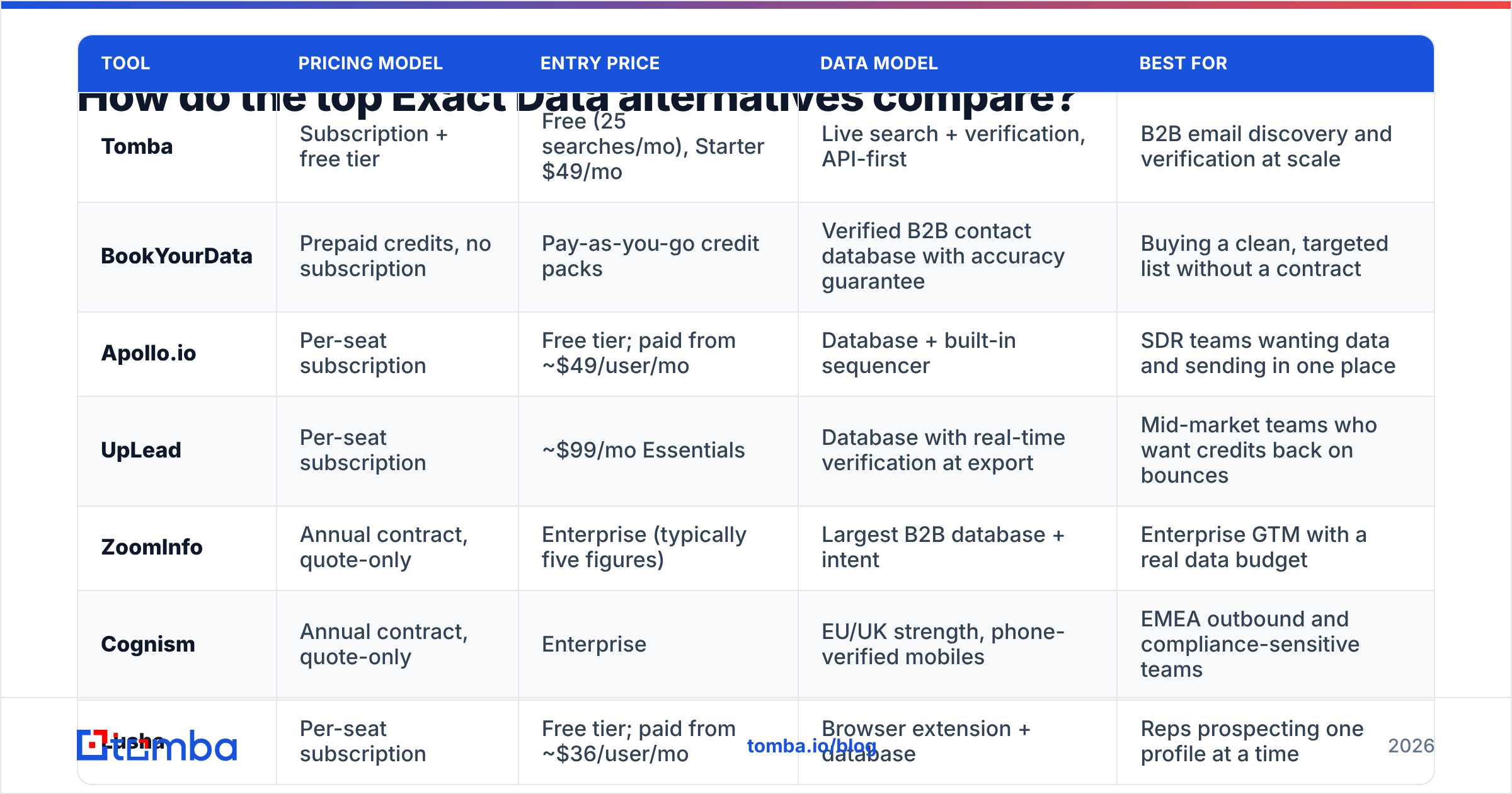
How do the top Exact Data alternatives compare?#
Here is the practical comparison. Prices are entry-level published rates as of early 2026 — always confirm on the vendor's own pricing page, since credit definitions differ wildly between tools.
| Tool | Pricing model | Entry price | Data model | Best for |
|---|---|---|---|---|
| Tomba | Subscription + free tier | Free (25 searches/mo), Starter $49/mo | Live search + verification, API-first | B2B email discovery and verification at scale |
| BookYourData | Prepaid credits, no subscription | Pay-as-you-go credit packs | Verified B2B contact database with accuracy guarantee | Buying a clean, targeted list without a contract |
| Apollo.io | Per-seat subscription | Free tier; paid from ~$49/user/mo | Database + built-in sequencer | SDR teams wanting data and sending in one place |
| UpLead | Per-seat subscription | ~$99/mo Essentials | Database with real-time verification at export | Mid-market teams who want credits back on bounces |
| ZoomInfo | Annual contract, quote-only | Enterprise (typically five figures) | Largest B2B database + intent | Enterprise GTM with a real data budget |
| Cognism | Annual contract, quote-only | Enterprise | EU/UK strength, phone-verified mobiles | EMEA outbound and compliance-sensitive teams |
| Lusha | Per-seat subscription | Free tier; paid from ~$36/user/mo | Browser extension + database | Reps prospecting one profile at a time |
| Data Axle | Licensed file / subscription | Quote-based | Compiled US business + consumer data | The closest like-for-like broker swap |
| Seamless.AI | Per-seat subscription | Free credits; quote-based paid | Real-time search engine for contacts | Volume-first teams comfortable verifying output |

What are the nine best Exact Data alternatives in 2026?#
1. Tomba — best for verified B2B email at a predictable price#
Tomba is an email finder and enrichment platform rather than a list broker. You search by domain, by person, or in bulk, and every result runs through verification before it lands in your export. The practical difference from a purchased file: you pull contacts when you need them, so what you get reflects the web today, not the quarter the file was compiled.
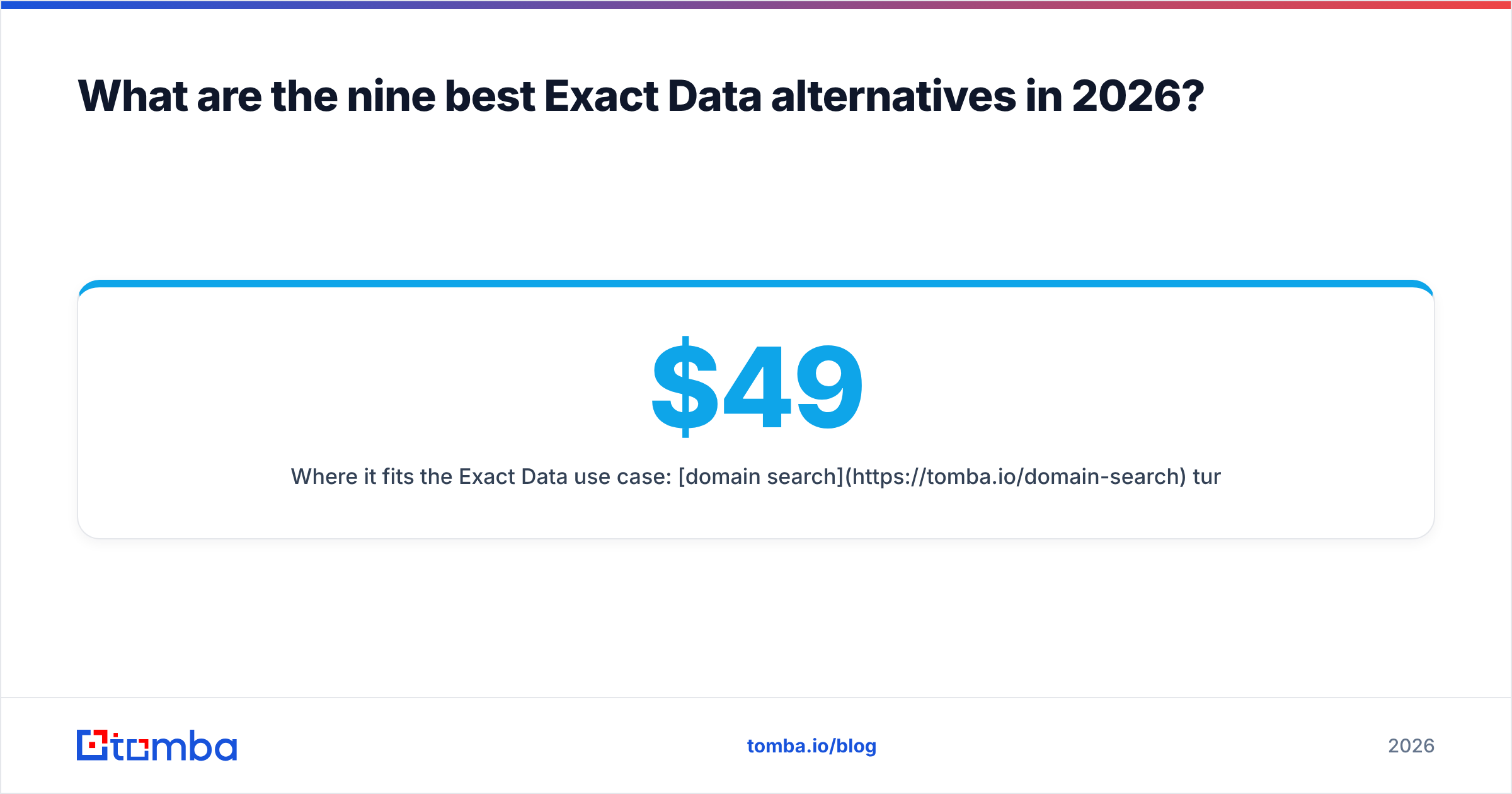
Where it fits the Exact Data use case: domain search turns a target account list into a contact list, and the bulk email finder handles the same volumes you would have bought as a file. Tomba pricing is public — free tier at 25 searches/month, Starter at $49/mo, Growth at $99/mo, Pro at $249/mo, Enterprise on request — so you can size a test without a sales call.
Watch out for: it is a B2B tool. There is no consumer demographic data, no postal-only files, no household segmentation.
2. BookYourData — best for a clean list without a subscription#
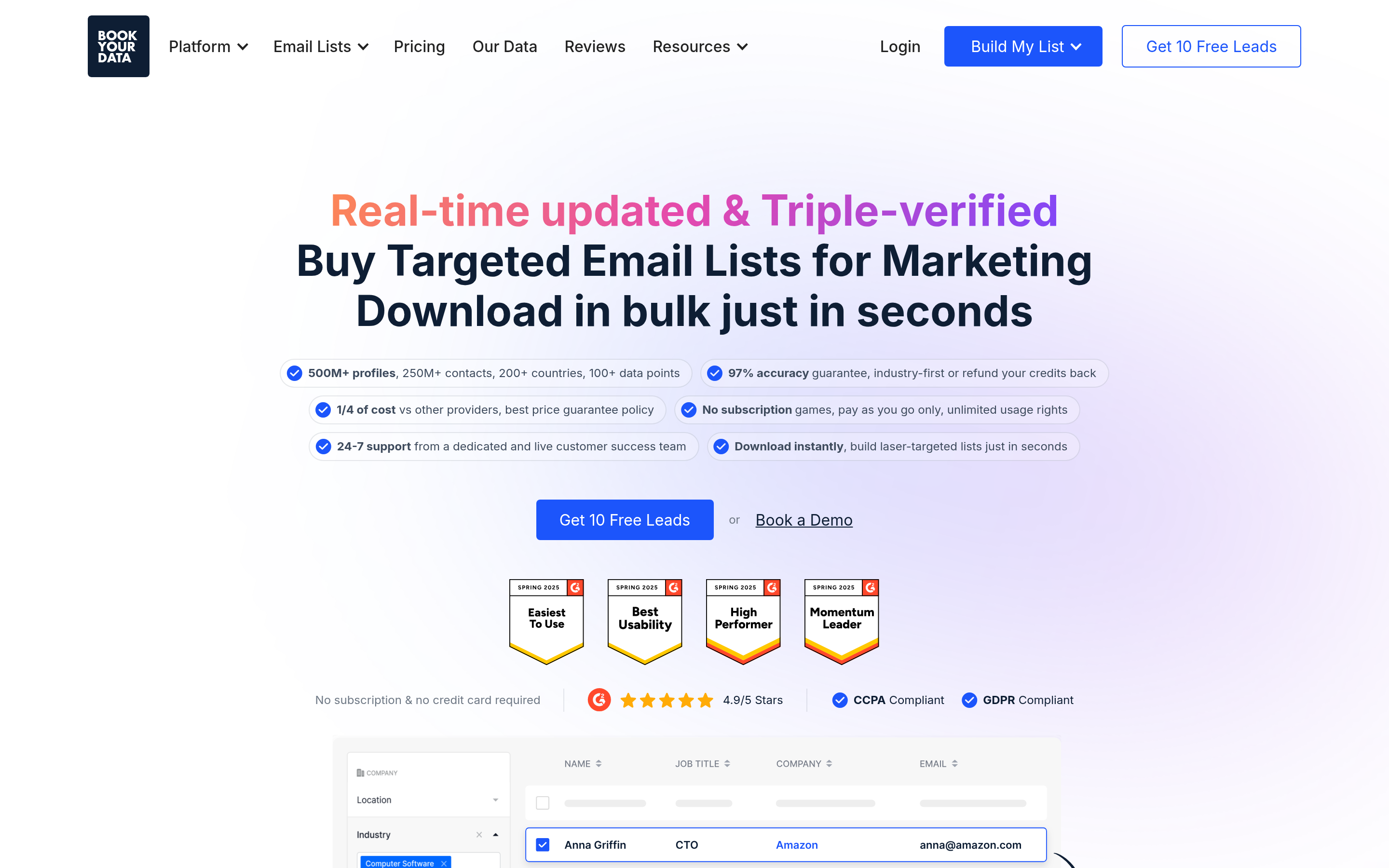
BookYourData sits between the broker model and the SaaS model, and it does that deliberately well. You build a targeted segment with filters, pay for credits up front, and download. No seat licenses, no annual commitment, and the vendor publishes an accuracy guarantee with credit replacement for bounces — which is exactly the assurance a licensed static file rarely gives you.
For a team that genuinely wants "give me a file of 2,000 contacts and leave me alone," BookYourData is the most direct spiritual replacement for a broker purchase, with the decay problem partly solved by continuous re-verification on their side.
Watch out for: credits are consumed on reveal, so tight filtering up front matters more than it does with an unlimited-search subscription.
3. Apollo.io — best all-in-one for SDR teams#
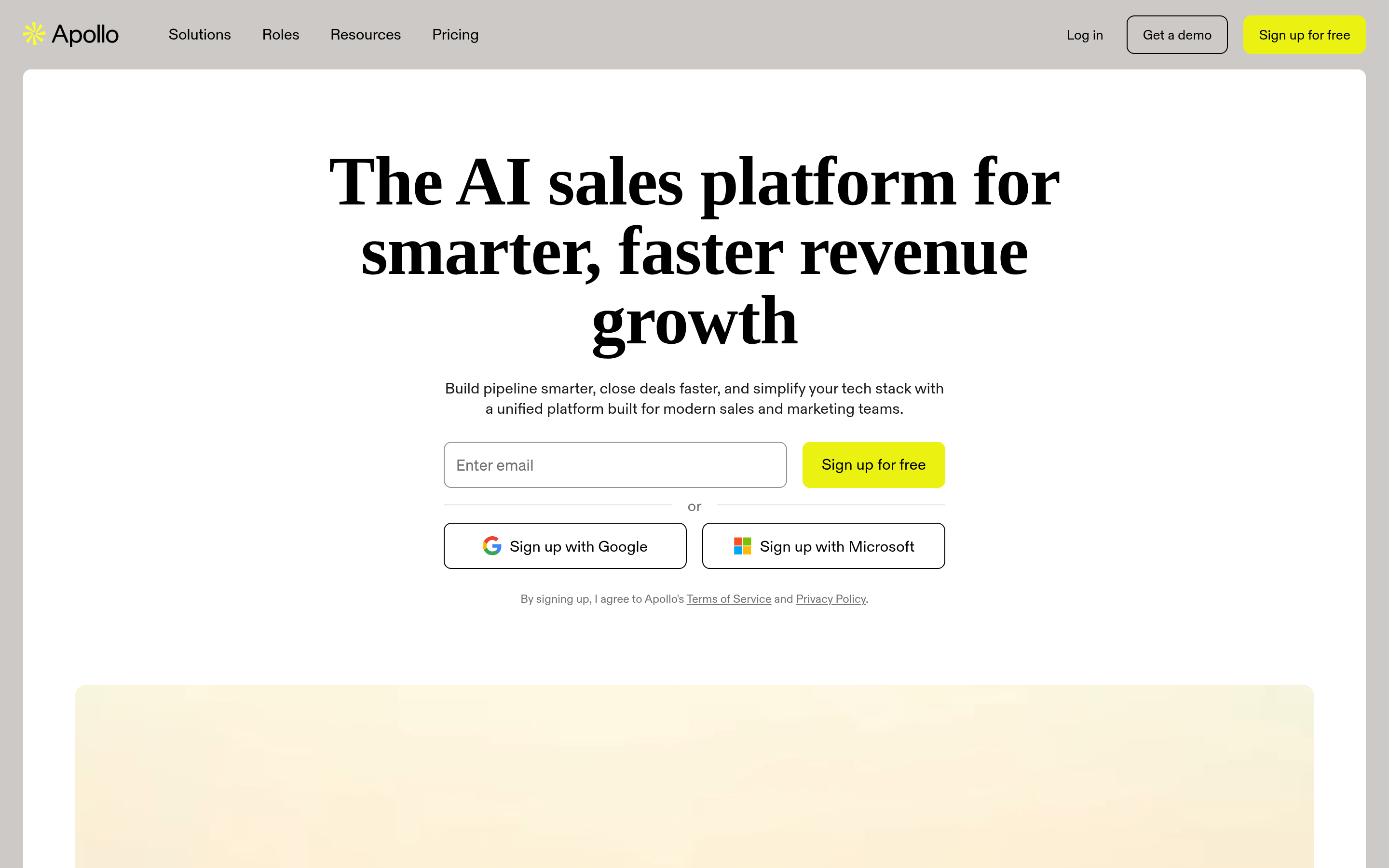
Apollo bundles a large contact database with sequencing, dialing, and basic CRM sync. If the reason you bought a list was "our reps need somewhere to get contacts and somewhere to send from," Apollo collapses both into one bill. The free tier is generous enough to sanity-check coverage on your ICP before paying.
Watch out for: database-sourced emails vary in freshness by segment, so verify before you send. Teams that outgrow the sequencer often keep Apollo for data and move sending elsewhere — at which point a dedicated Apollo alternative for the data layer alone is worth pricing out.
4. UpLead — best bounce protection#
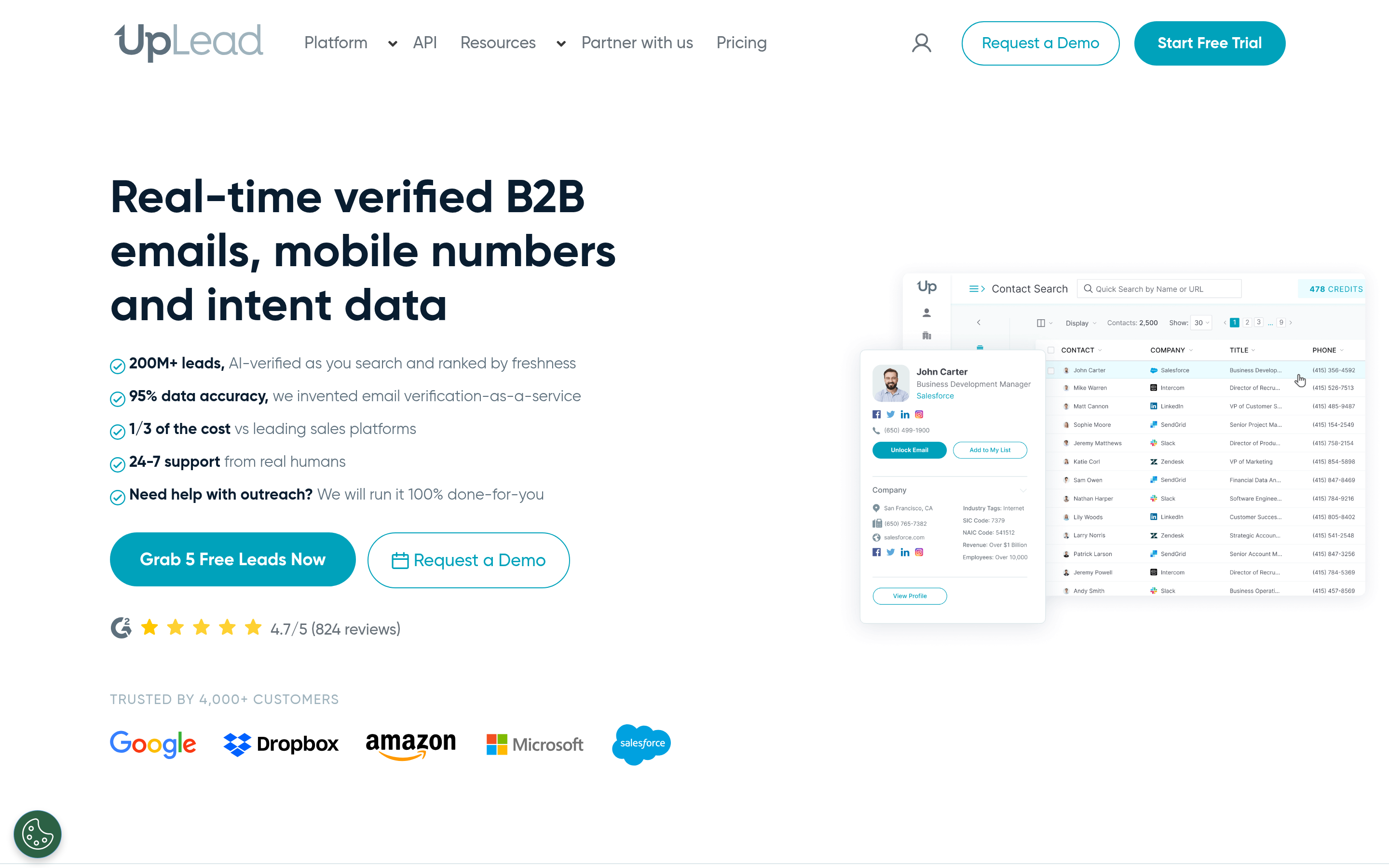
UpLead verifies at the moment of export and credits you back for bounces. That is a meaningful structural difference from a licensed file: the vendor carries some of the accuracy risk. Filters are strong on technographics and firmographics, which helps if your Exact Data selects were SIC-code driven.
Watch out for: entry pricing is higher than most per-credit tools, and coverage outside North America thins out.
5. ZoomInfo — best if you have enterprise budget#

ZoomInfo is the maximal version of what a broker sells: breadth, intent signals, org charts, and deep CRM integration. If your list buying is already in the tens of thousands per year, consolidating into ZoomInfo usually makes financial sense.
Watch out for: annual contracts, quote-only pricing, and real implementation effort. Overkill for a five-person team.
6. Cognism — best for EMEA and compliance#
Cognism's differentiator is phone-verified mobile numbers and a compliance posture built for GDPR markets, including notified DNC screening across European countries. If your outbound is UK/EU-heavy, US-compiled files will disappoint you and Cognism will not.
Watch out for: enterprise pricing and annual commitment.
7. Lusha — best for one-at-a-time prospecting#
Lusha's browser extension reveals contact details as reps browse LinkedIn or company sites. It is the opposite motion from buying a file: pull-based, rep-driven, low volume per session.
Watch out for: it does not replace list-building at volume, and per-seat costs add up across a team.
8. Data Axle — the closest like-for-like swap#
If you actually like the broker model and just want a second quote, Data Axle (formerly Infogroup) compiles both US business and consumer data, sells licensed files, and supports direct mail. Getting a competing quote on the same selects is the cheapest negotiation lever you have.
Watch out for: same structural issues — snapshot data, license terms, quote-based pricing.
9. Seamless.AI — best for raw volume#
Seamless.AI searches the web in real time rather than serving a fixed database, which helps on obscure or fast-changing accounts. Output quality is variable enough that you should run it through an independent email verifier before any send.
Watch out for: pricing is quote-driven and credit rollover rules have been a common complaint.

How accurate is the data behind each option?#
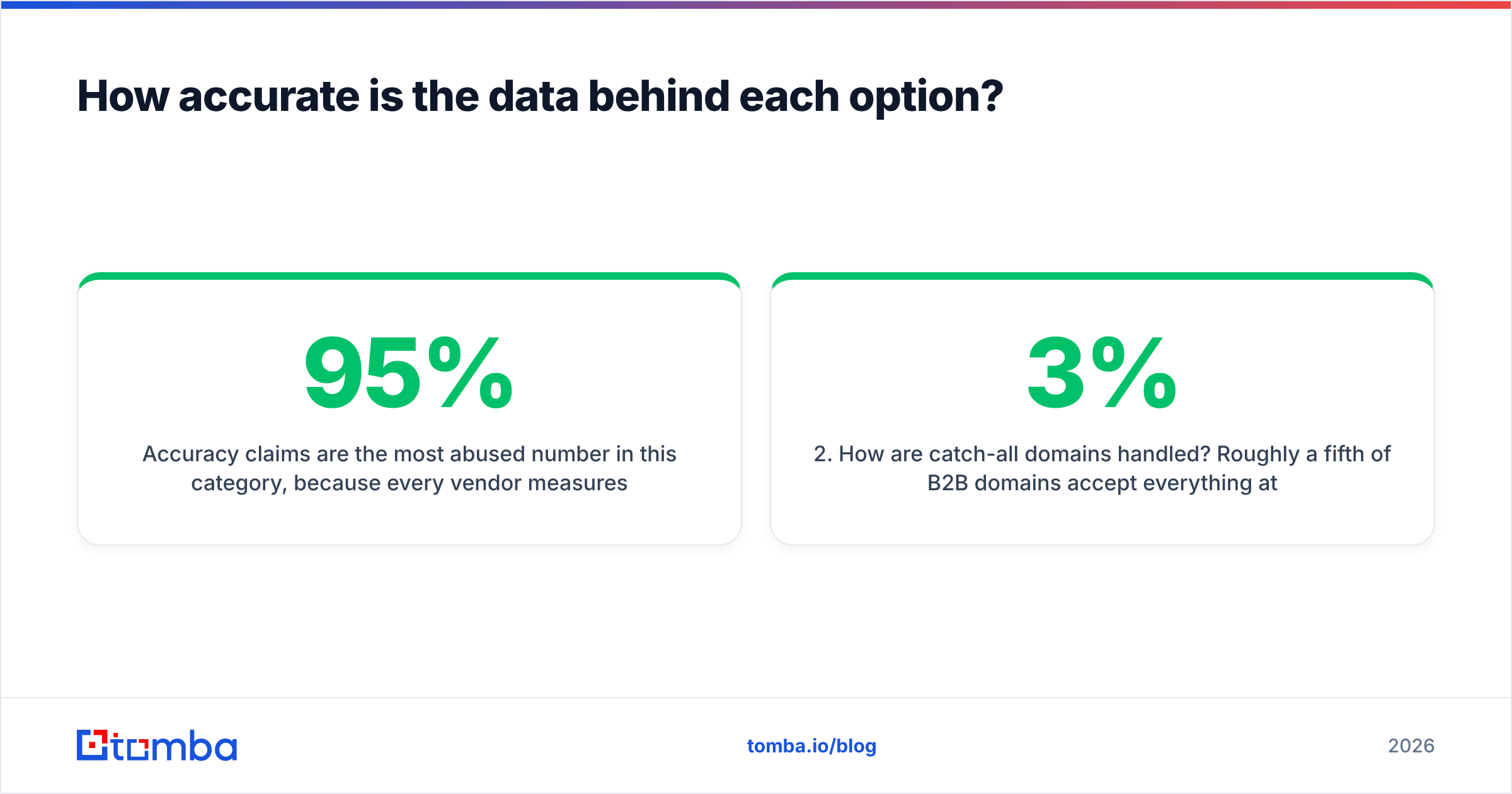
Accuracy claims are the most abused number in this category, because every vendor measures differently. A "95% accuracy guarantee" can mean syntax and domain validity, SMTP acceptance, or the person still works there — three wildly different bars.

Ask every vendor on your shortlist these four questions before you sign anything:
- What is the verification method? Pattern inference alone is a guess. SMTP-level checking plus source corroboration is a verification. Tomba publishes its data sources — ask for the equivalent from anyone else.
- How are catch-all domains handled? Roughly a fifth of B2B domains accept everything at the SMTP layer, which makes naive verification useless. A dedicated catch-all verifier is the difference between a 3% and a 12% bounce rate on enterprise lists.
- What is the refresh cadence? "Continuously re-verified" and "compiled quarterly" produce very different month-six results, no matter how identical they look on day one.
- Who eats the bounces? Credit-back policies (UpLead, BookYourData) transfer risk to the vendor. Licensed files almost never do.
Run the same 200-contact test set through every finalist. Send nothing; just verify the output with a neutral third-party checker and count hard bounces. That one afternoon of work is worth more than any vendor benchmark, including this one.
Is a list broker or a self-serve finder the better model for you?#
Neither model wins outright. Match the model to the motion:
- Direct mail or consumer targeting → stay with a broker. Exact Data or Data Axle. No SaaS finder covers households, ages, or postal delivery routes.
- Named-account B2B outbound → self-serve finder. You need 4–12 contacts per account, refreshed at the moment of outreach, not 50,000 records bought once.
- Inbound enrichment and routing → API-first tool. Form fills need real-time data enrichment; a CSV cannot do that at all.
- One-off campaign, no ongoing need → prepaid credits. BookYourData's no-subscription model or Tomba's free tier both let you run the test without a contract.
- Enterprise GTM with intent and org charts → ZoomInfo or Cognism. Expensive, but you are buying workflow and signal, not just rows.
What should you actually pay per usable contact?#
Stop comparing sticker prices and compute cost-per-usable-contact instead:
(total spend) ÷ (records × deliverability rate × ICP-fit rate)
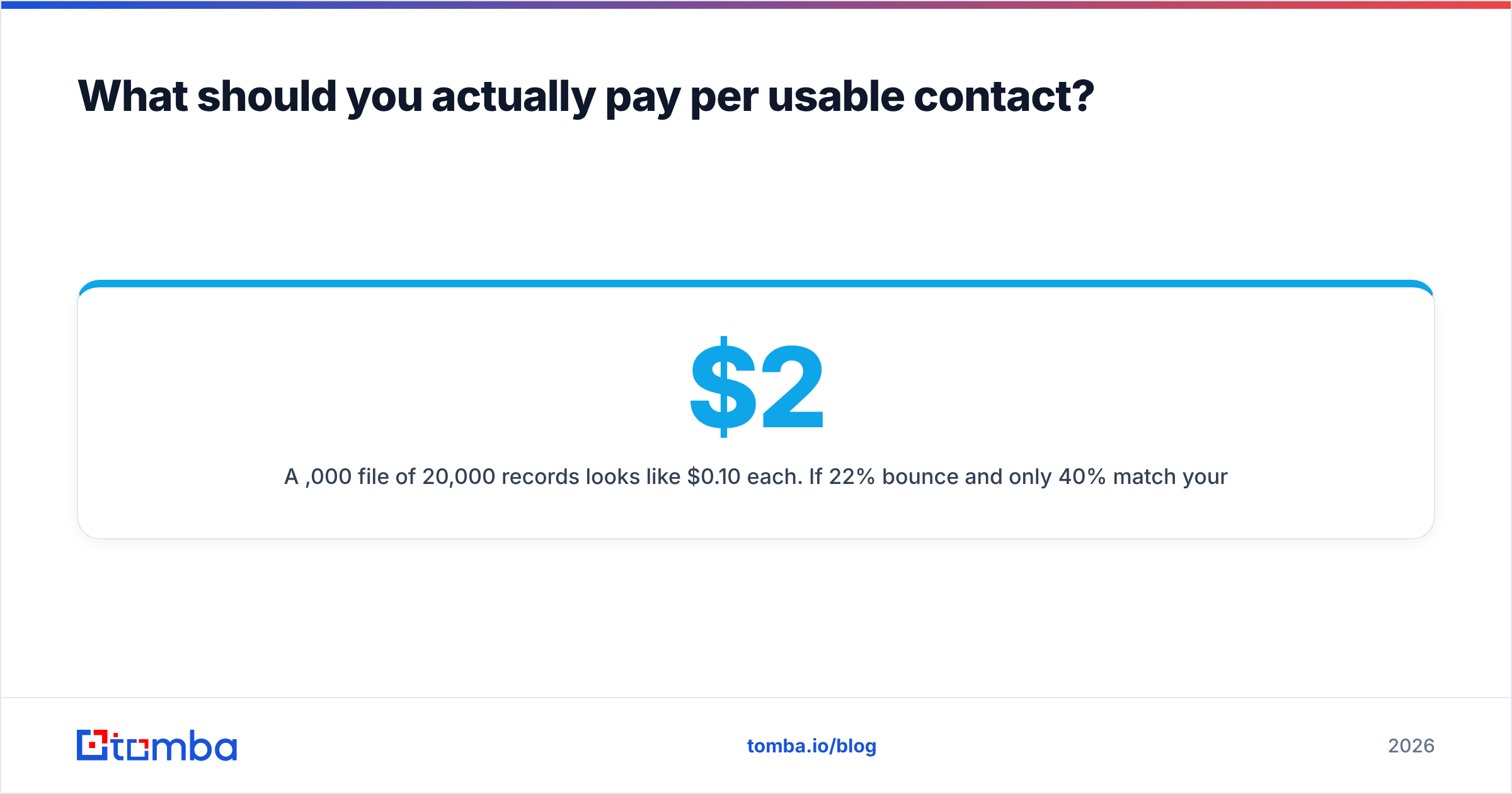
A $2,000 file of 20,000 records looks like $0.10 each. If 22% bounce and only 40% match your real ICP, you paid roughly $0.32 per usable contact — and you cannot re-query it next quarter. A $99/mo subscription that returns 5,000 verified, precisely-filtered contacts lands closer to $0.02–$0.04 per usable contact, and it is still there next month.
The exception is genuine volume with loose targeting. If you need 500,000 consumer records for a postal drop, no per-credit tool will beat a broker on unit economics. Know which of those two situations you are actually in before you take the meeting.
Which Exact Data alternative should you pick?#
- You want verified B2B emails, an API, and public pricing: Tomba.
- You want a clean list with no subscription and a bounce guarantee: BookYourData.
- You want data and sequencing in one seat: Apollo.
- You want the vendor to carry bounce risk on exports: UpLead.
- You sell into EMEA and need mobiles: Cognism.
- You have enterprise budget and want intent data: ZoomInfo.
- You genuinely need consumer or postal data: stay with a broker — Exact Data or Data Axle.
If you are moving off licensed files because they decay, start with the cheapest possible proof: take twenty target domains, run them through the Tomba Email Finder on the free tier's 25 searches, and compare the output against the same twenty companies in your last purchased file. You will know within an hour whether continuous search beats a snapshot for your ICP — and if it does, Starter at $49/mo replaces a purchase order and a six-month decay curve at the same time.
Related guides#
Ready to find emails that actually work?
Join 150,000+ professionals who stopped guessing and started sending. Free credits on signup — no credit card required.
Get the Tomba newsletter
Practical outbound tactics and product updates — once every two weeks.
About the author