Fac Intelligence vs Salesbot: Which AI Sales Tool Wins in 2026
Fac Intelligence sells signal. Salesbot sells conversation. Here's an honest, spec-by-spec look at where each one earns its seat in a 2026 outbound stack — and where neither replaces clean contact data.
Fac Intelligence vs Salesbot comes down to one question. Do you need to know who to call, or do you need someone to make the call? Here is the short answer first, then the detail.
TL;DR
- Fac Intelligence and Salesbot are not the same product. One sells knowledge about accounts. The other sells automated conversations with people. A head-to-head only makes sense if you have one budget line to spend.
- Pick Fac Intelligence-style tooling when the problem is "we don't know who to call." Pick Salesbot-style tooling when the problem is "we know who to call and nobody is doing it."
- Both vendors publish less public documentation than the big platforms. Get a written answer on data sourcing, refresh cadence, seat minimums, and contract length before you sign.
Two things nobody puts in the pitch deck:
- Neither category fixes the boring bottleneck that kills outbound programs: a verified email address for the right person. That stays a separate line item.
- Fix contact accuracy first. Intelligence and automation both multiply your data, including the bad parts.
What are Fac Intelligence and Salesbot?#
Short version: Fac Intelligence sits in the sales intelligence bucket. Salesbot sits in the conversational sales automation bucket. Buyers compare them because both market themselves as "AI for sales" in 2026. A team spending $20k–$60k a year tends to shortlist by outcome ("more pipeline"), not by category.
Sales intelligence tools answer who and why now. They pull together company data, tech-stack signals, hiring activity, funding news, and intent. Then they rank accounts, so a rep starts the day with a list instead of an empty CRM. The category is crowded. G2's sales intelligence category alone lists hundreds of vendors. That is why smaller names like Fac Intelligence compete on depth or price, not breadth.
Conversational sales automation tools answer what happens next. Salesbot-style products handle inbound chat. They qualify visitors against your ICP rules and book meetings straight into a calendar. Many now handle outbound replies with an LLM in the loop. The pitch is leverage: one SDR supervising a bot covers the volume of three SDRs typing by hand.
Here is the framing nobody puts on a landing page. Intelligence tools make your list smarter. Automation tools make your list louder. If the list itself is wrong, both make the problem worse, faster.
Wait — that's the point of the whole comparison, so let's put it properly:
Fac Intelligence vs Salesbot: how do they differ?#
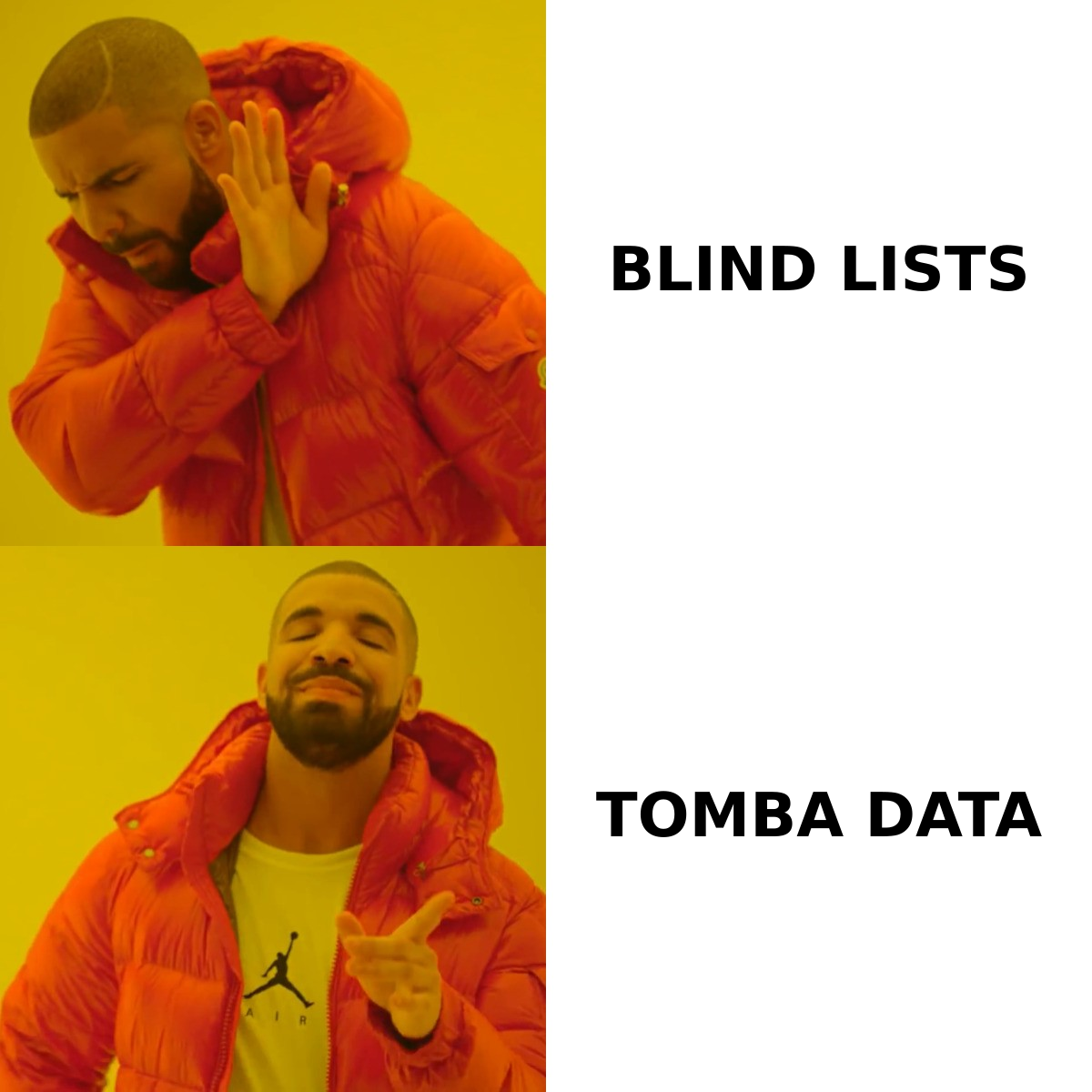
Here is the structural comparison. Treat the capability rows as category-level truths. Confirm the commercial rows in writing, because both vendors quote rather than publish, and quotes move.
| Dimension | Fac Intelligence | Salesbot |
|---|---|---|
| Primary job | Account and contact discovery, prioritisation | Conversation handling, qualification, booking |
| Core output | A ranked list plus context | A booked meeting or a qualified reply |
| Where it lives | Pre-outreach (list build, research) | Mid-funnel (chat widget, inbox, sequence replies) |
| Who uses it daily | SDR leaders, RevOps, demand gen | SDRs, AEs, inbound teams |
| Typical failure mode | Great signals, stale contact records | Fast replies to the wrong audience |
| Data ownership | You export records | You export transcripts and meeting data |
| Pricing shape | Seat + credit / record tiers | Seat + conversation volume |
| Public pricing | Quote-based at time of writing | Quote-based at time of writing |
| Replaces an email finder? | No — coverage varies by region | No |
| Best paired with | Verification + enrichment layer | A clean, verified contact list |
Two rows matter most. First, "replaces an email finder? No." Sales intelligence vendors do bundle contact data. But bundled data is a by-product, not the core product. Refresh cycles run slower, and coverage outside North America is usually the weak spot. Second, pricing shape. A seat-plus-credits model punishes you for big list builds. A conversation-volume model punishes you for success. Model both against your next 12 months of volume, not today's.
What does Fac Intelligence do well?#
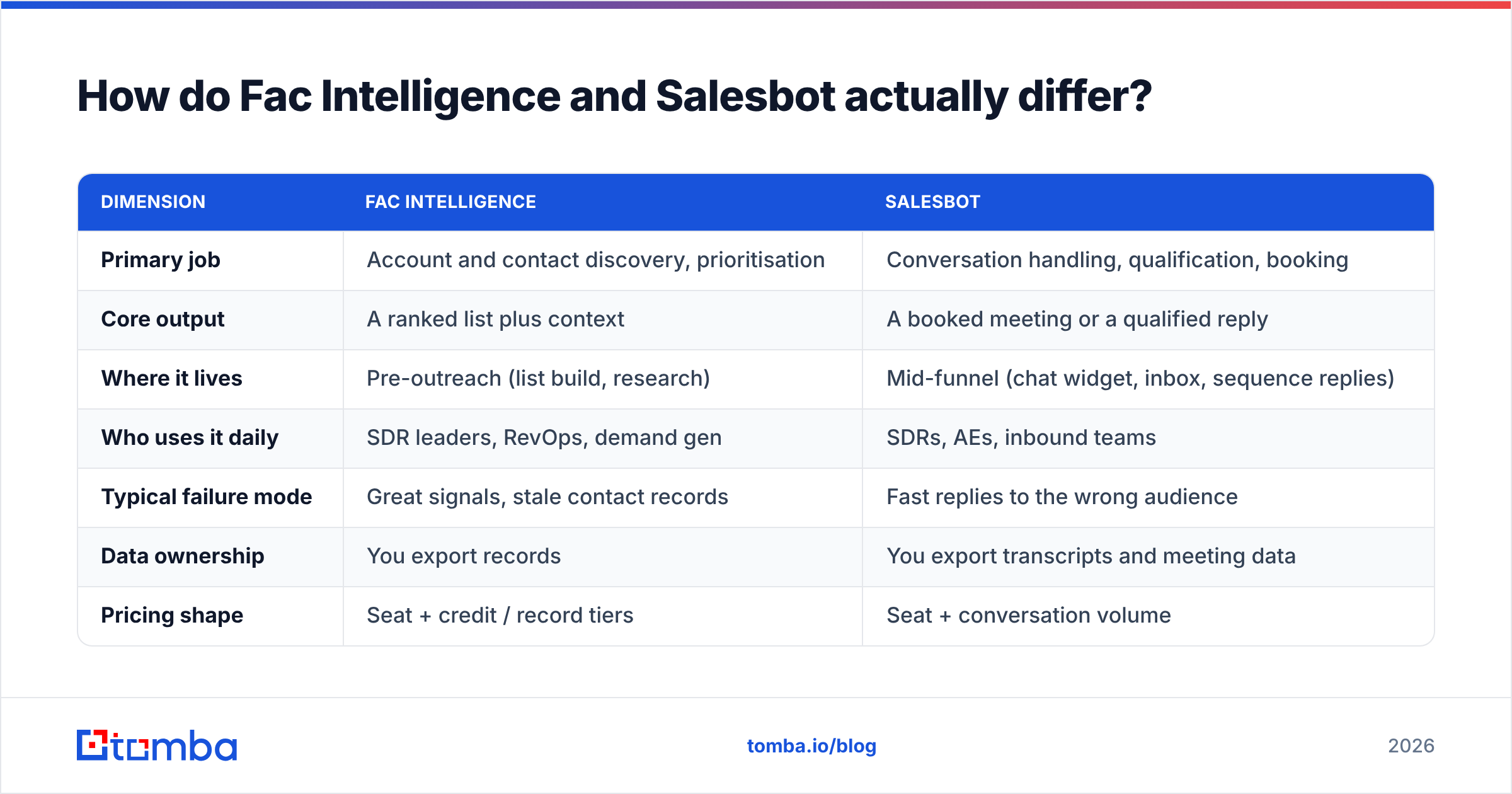
Judge any intelligence vendor, Fac Intelligence included, on these five things rather than on its feature page.
- Signal freshness. Ask how long a real event takes to reach your feed. A funding round, a new VP of Engineering, a tech-stack change. Anything slower than a week is a newsletter, not intent.
- Coverage where you sell. A vendor with 200M contacts means nothing if 180M are US SMB and you sell to DACH manufacturers. Ask for a coverage test on 500 of your target accounts before you sign.
- Scoring transparency. Can the model explain why an account scored 87? If not, reps stop trusting it, and untrusted scores get ignored within three weeks.
The last two decide whether the data is usable at all.
- Export and API access. Intelligence stuck behind a UI is worth far less than intelligence that lands in your CRM on its own. Check that the API is included, not a Pro-tier upsell.
- Contact-level accuracy. This is where intelligence platforms fall behind dedicated tools. Run their exported emails through an independent email verifier first. Then judge the quality.
Point five costs teams money quietly. A platform can tell you that Acme just hired a Head of RevOps. It can still hand you a role-based catch-all address that bounces. Two different data pipelines produce those two things.
What does Salesbot do well?#
Conversational automation earns its keep on three things you can measure. Ask for numbers on all three during the trial.
- Speed to first response. Inbound leads go cold fast. The classic lead-response research, still cited by HubSpot's sales blog, puts the drop-off in minutes, not hours. A bot that answers in nine seconds at 2am is worth real money.
- Qualification consistency. Humans skip the awkward budget question. Bots don't. If your MQL-to-SQL ratio swings because reps qualify differently, automation flattens it.
- Meeting throughput per SDR. Track meetings booked per SDR hour, before and after. If the number hasn't moved in 60 days, the bot is doing volume, not value.
The real risk in 2026 is not that bots sound robotic. LLM-driven replies read fine now. The risk is conversation drift that nobody tracks. The bot handles an objection in a way your team would never approve. Nobody reads the transcript until a deal dies. Ask about human review, confidence thresholds, and escalation rules. If the answer is vague, limit the bot to booking meetings.
Is Fac Intelligence better than Salesbot for outbound?#
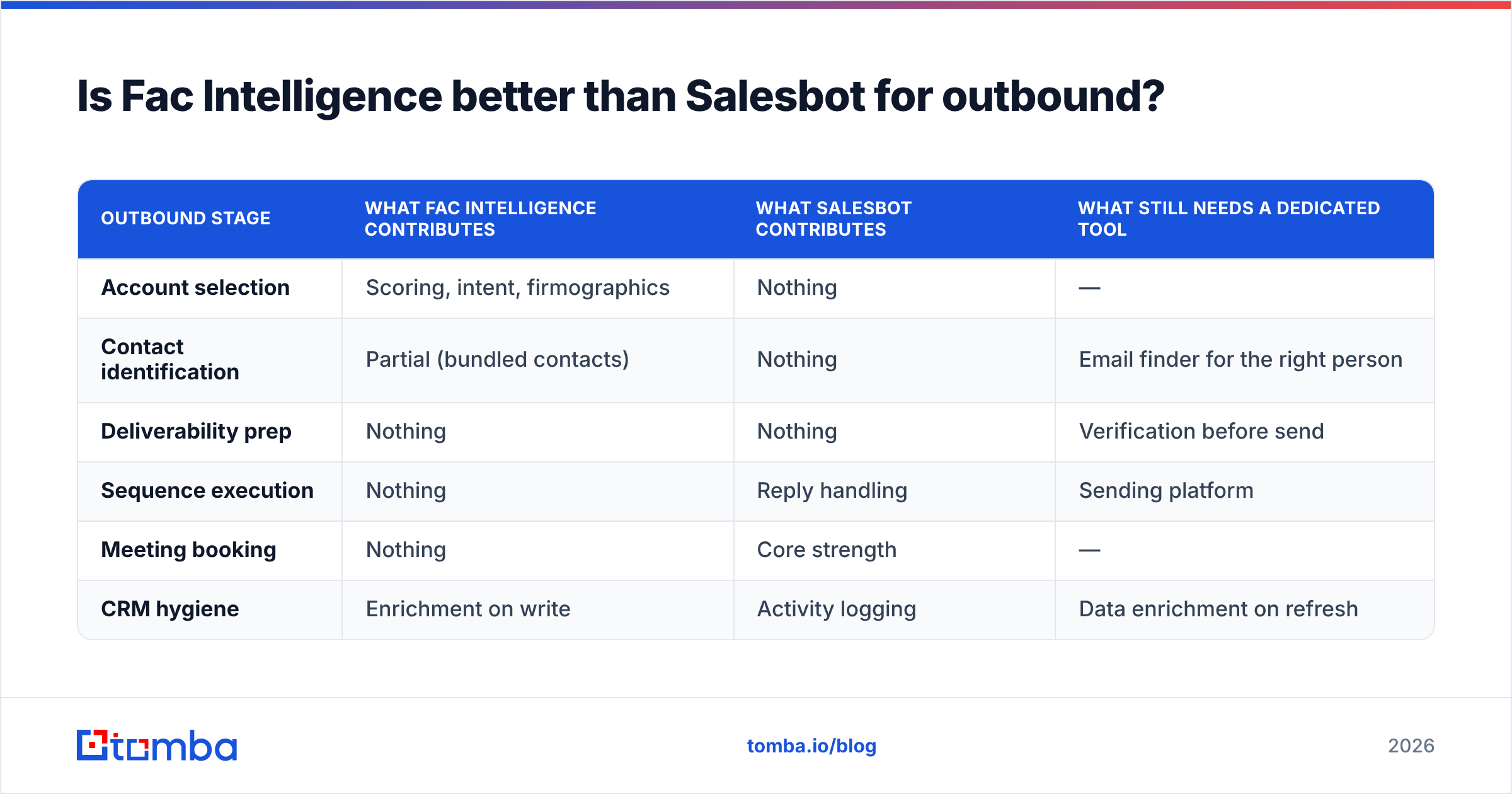
For pure outbound, intelligence usually wins the first dollar. One large caveat follows.
Outbound fails at the top far more often than at the bottom. Say your reply rate is 0.4%. The cause is rarely slow replies. It is that 60% of the list should never have been contacted, and 15% of the emails bounced. Automation on that list just produces more conversations with people who will never buy.
Intelligence alone doesn't close the gap either. "The right account" is not "the right person with a working address." That gap sits between the two categories, and it belongs to a dedicated data layer.
| Outbound stage | What Fac Intelligence contributes | What Salesbot contributes | What still needs a dedicated tool |
|---|---|---|---|
| Account selection | Scoring, intent, firmographics | Nothing | — |
| Contact identification | Partial (bundled contacts) | Nothing | Email finder for the right person |
| Deliverability prep | Nothing | Nothing | Verification before send |
| Sequence execution | Nothing | Reply handling | Sending platform |
| Meeting booking | Nothing | Core strength | — |
| CRM hygiene | Enrichment on write | Activity logging | Data enrichment on refresh |
Read that table left to right and one conclusion is awkward for both vendors. Neither product covers the middle of the row. That middle is a correct, deliverable address for a named human. It decides whether the other two investments return anything.
Fac Intelligence vs Salesbot: what does each one cost?#
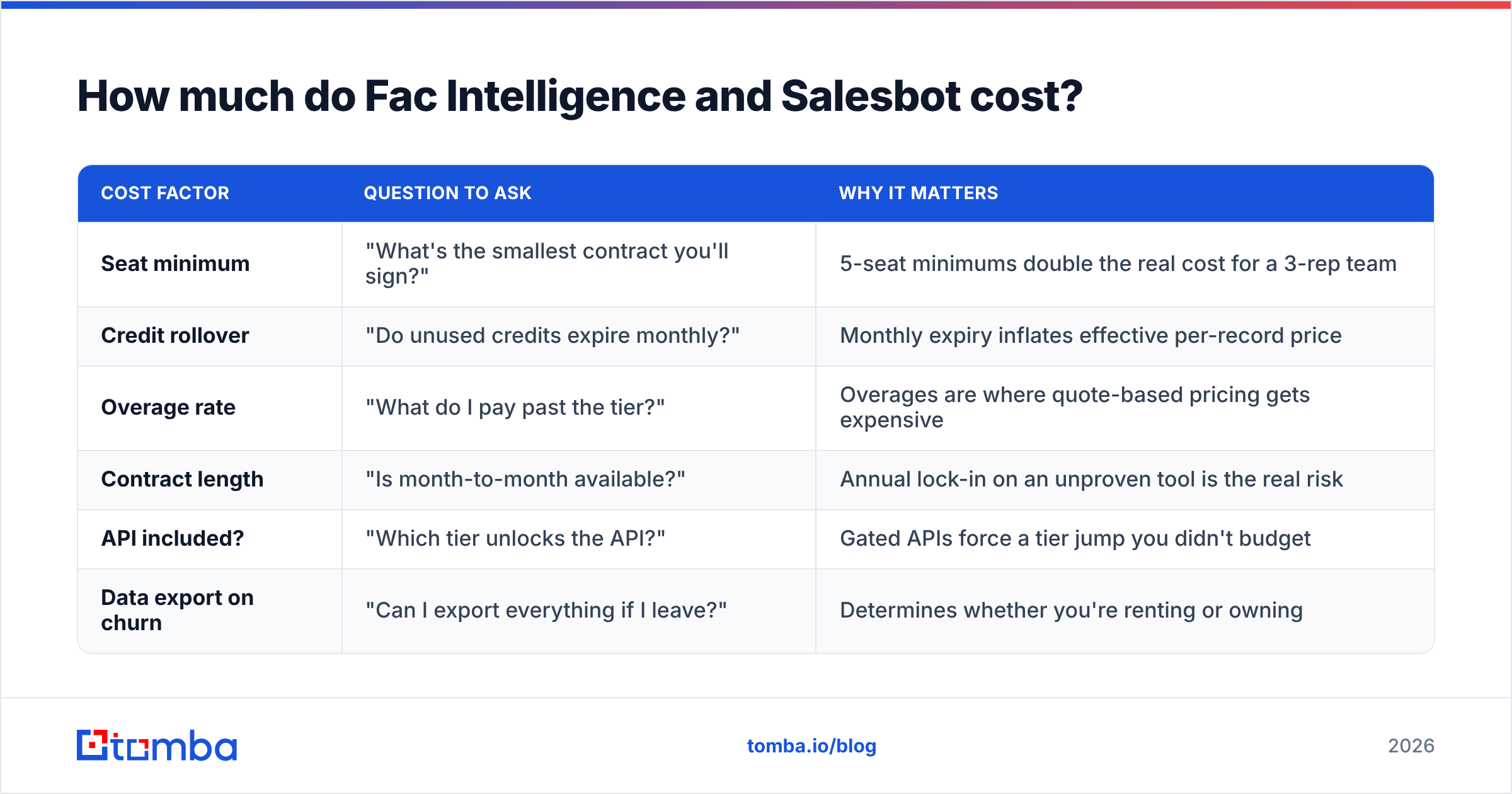
Both operate quote-first. That is normal for tools aimed at sales teams. It also means the price depends on how well you negotiate. Build your own sheet with these columns instead of taking a headline number.
| Cost factor | Question to ask | Why it matters |
|---|---|---|
| Seat minimum | "What's the smallest contract you'll sign?" | 5-seat minimums double the real cost for a 3-rep team |
| Credit rollover | "Do unused credits expire monthly?" | Monthly expiry inflates effective per-record price |
| Overage rate | "What do I pay past the tier?" | Overages are where quote-based pricing gets expensive |
| Contract length | "Is month-to-month available?" | Annual lock-in on an unproven tool is the real risk |
| API included? | "Which tier unlocks the API?" | Gated APIs force a tier jump you didn't budget |
| Data export on churn | "Can I export everything if I leave?" | Determines whether you're renting or owning |
For reference, here is what transparent pricing looks like. Tomba pricing publishes a free tier at 25 searches per month, Starter at $49/mo, Growth at $99/mo, and Pro at $249/mo. Enterprise is quoted. You don't have to prefer that model. But notice when a vendor won't show you any number before a demo call. Capterra's sales software listings make it easy to see who publishes and who doesn't.
Which one should you actually buy?#
Decide by constraint, not by category.
- Big TAM, no idea where to start. Intelligence first. It pays back when list-building is the bottleneck and reps burn hours in LinkedIn tabs.
- Strong inbound, slow response times. Automation first. It pays back fastest on traffic you already have.
- A defined 800-account target list. Neither, yet. Buy contact data and verification, then revisit.
- High bounce rates. Fix that before anything else. Bounces damage sender reputation, and a damaged domain makes every downstream tool look broken.
- A 2–4 person team. Skip seat-minimum platforms this year. Use per-credit tools you can stop paying for in a slow month.
There is also a fair "both, sequenced" answer. Intelligence in Q1 to fix targeting. Automation in Q3, once the list is worth automating against. Buy both at once and you can't tell which one moved pipeline. Analysts at Gartner's sales research group have been consistent here: unattributed stack additions get cut first in a budget review.
What about alternatives to both?#
The alternatives question is really a scope question. Strip the AI framing off both products and three separate jobs remain: find, verify, engage. No rule says one vendor has to do all three.
A lean 2026 stack beats most bundled suites. It looks like this.
- Find: a dedicated finder plus domain search to map an org chart to addresses.
- Verify: a real-time verifier in the pipeline, plus catch-all handling for the domains that always look ambiguous.
- Enrich: an API call on CRM write, so records don't rot in place.
- Engage: the sending platform your team already knows. Layer automation on only where volume justifies it.
The upside is replaceability. When one part underperforms, swap it for a few hundred dollars instead of renegotiating a suite contract. The downside is integration work. That is why an accessible Tomba API matters more than a longer feature list.
The bottom line#
Fac Intelligence vs Salesbot is not really one contest. The two tools answer different questions. The winner is whichever question is costing you pipeline right now. If reps can't decide who to contact, buy intelligence. If leads sit unanswered, buy automation. If emails bounce and the right contact is a guess, neither purchase will show up in your numbers. Both are multipliers on a data layer you haven't fixed yet.
Start with the layer everything else depends on. Tomba Email Finder finds professional email addresses by domain, name, or company. Verification is built into the same workflow. Your first 25 searches a month are free, and Starter is $49/mo when you're ready to scale. Get the contact data right first. Then decide whether your money buys knowing more or talking faster.
Related guides#
Ready to find emails that actually work?
Join 150,000+ professionals who stopped guessing and started sending. Free credits on signup — no credit card required.
Get the Tomba newsletter
Practical outbound tactics and product updates — once every two weeks.
About the author