First ECO Alternatives in 2026: 9 Tools for B2B Signal Leads
First ECO built its name on French business signals. If you need exportable contacts, wider European coverage, or pricing you can predict, these nine alternatives cover the same job — often for less.
TL;DR
- First ECO sells business signals — funding rounds, moves, expansions, hires, tenders — sourced from public and press monitoring, mostly across France and French-speaking markets. It tells you who to call, not how to reach them.
- Most teams shopping for First ECO alternatives want one of three things: exportable contact data, coverage beyond France, or a price they can forecast without a sales call.
- No single tool replaces it one-for-one. The realistic swap is a signal source + a contact layer — and the contact layer is where you'll save the most money.
- Cheapest credible stack in 2026: a free or open company-data source for signals, plus a per-credit email finder like Tomba at $49/mo, instead of a five-figure annual seat contract.
- Nine alternatives compared below on data type, coverage, pricing model, and export freedom — including Nomination, Kaspr, Cognism, Vainu, Apollo, Dropcontact and BookYourData.
What is First ECO and who is it actually for?#
First ECO is a French B2B lead service built around signaux d'affaires — business signals. Instead of handing you a static database of companies, it monitors public sources, the local and trade press, and official announcements, then packages what it finds into qualified alerts: this company just raised money, that one is opening a site in Lyon, this one just won a public contract.
The pitch is timing. A cold list tells you a company exists. A signal tells you something changed inside it in the last two weeks — and change is the single strongest predictor that a budget is about to move. That is genuinely valuable, and it's why regional sales teams in construction, industrial services, staffing, banking and professional services have paid for it for years. You can see the current product framing on first-eco.com.
Two structural things matter when you're comparing it to anything else:
- It's a subscription with seats and a quote. Pricing isn't published. You talk to sales, you get an annual figure, and that figure scales with users and territory.
- It's editorial, not a raw database. Signals are curated. That's a quality feature and a volume ceiling at the same time — you get what the editors surfaced, in the languages and regions they cover.
If your entire territory is France and your motion is "call the company that just announced something," it does its job. The friction starts when either of those conditions breaks.
Why do teams look for First ECO alternatives?#
Four complaints come up repeatedly when sales teams evaluate a renewal:
Coverage stops at the border. French and francophone coverage is the strength. If your 2026 plan includes DACH, Benelux, the Nordics, UK or US expansion, you're buying a second tool anyway — at which point you're paying twice for overlapping firmographics.
Signals aren't contacts. You learn that Groupe X is hiring 40 people in Nantes. You still don't have the operations director's email address. That last mile is a separate purchase, and for most teams it's the expensive one — because it's the part you consume every single day.
Quote-based pricing punishes small teams. A three-rep team and a thirty-rep team don't get remotely comparable per-seat economics. If you can't self-serve, you can't test cheaply, and you can't scale down in a slow quarter.
Export friction. Signal platforms are designed to be read inside their own UI. Getting the data into your CRM, your sequencer, and your enrichment pipeline — cleanly, on a schedule, via API — varies a lot by vendor and by contract tier.
What should a First ECO alternative actually replace?#
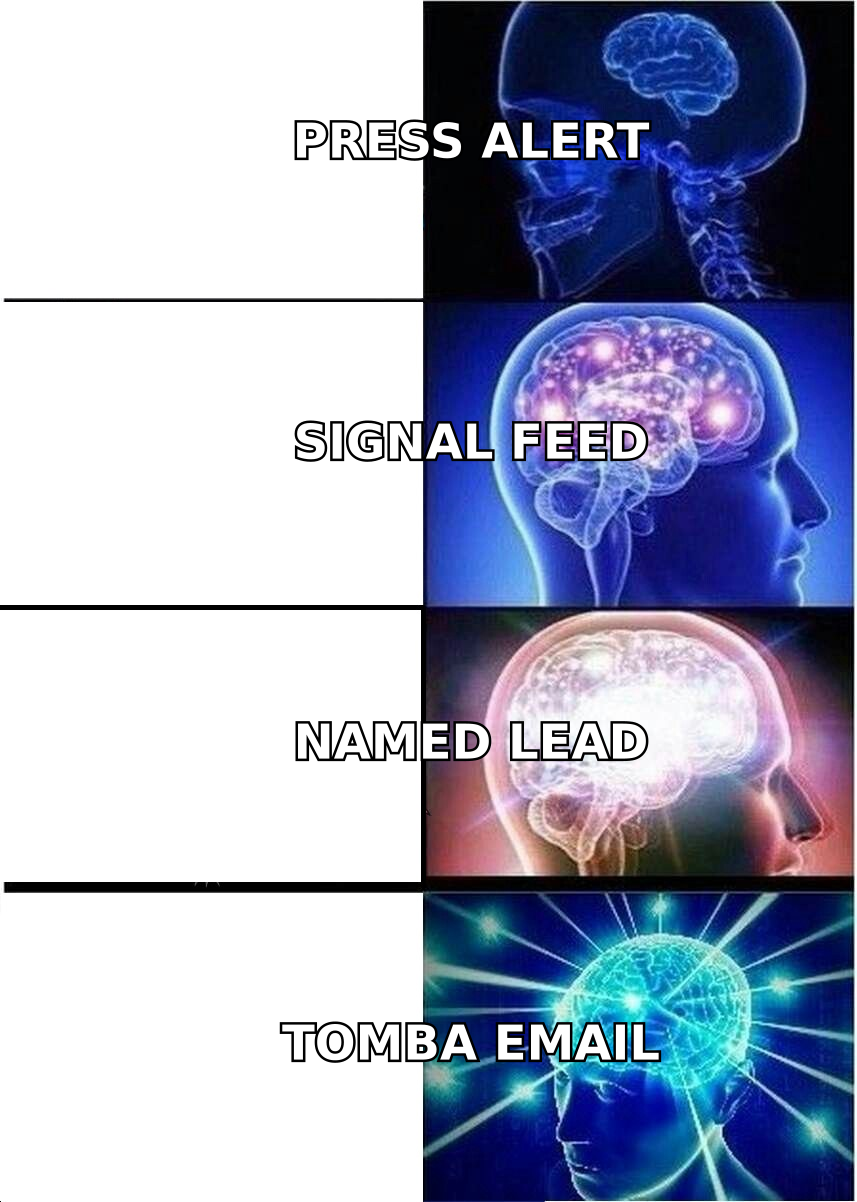
Before you shortlist anything, split the product into its jobs. Almost nobody needs all five, and pricing collapses once you stop paying for the ones you don't use.
- Trigger detection — knowing that something changed (funding, hiring, relocation, tender award, leadership change). Increasingly available free from public registries, job boards and news APIs.
- Company identification — resolving that trigger to a legal entity, SIREN/registration number, size band, and sector code. Open data covers this well in France; commercial data covers it better across Europe.
- Contact discovery — finding the specific human with authority. This is a name-and-title problem, best solved by LinkedIn-adjacent tools or a domain search against the company's website.
- Reachability — the verified email address and phone number. This is the layer that decides whether the whole stack produces revenue or bounces.
- Workflow — alerts, assignment, CRM sync, sequencing. Often already covered by your CRM or sales engagement tool.
Map your renewal quote against those five rows. Most teams discover they're paying signal-platform prices for rows 1 and 2 while row 4 — the one their reps actually touch — is either missing or bought separately.
Which First ECO alternatives are worth testing in 2026?#
Nine tools, grouped by what they actually replace. Pricing models are listed rather than exact figures where vendors don't publish stable public rates — always confirm on the vendor's own page before you budget.
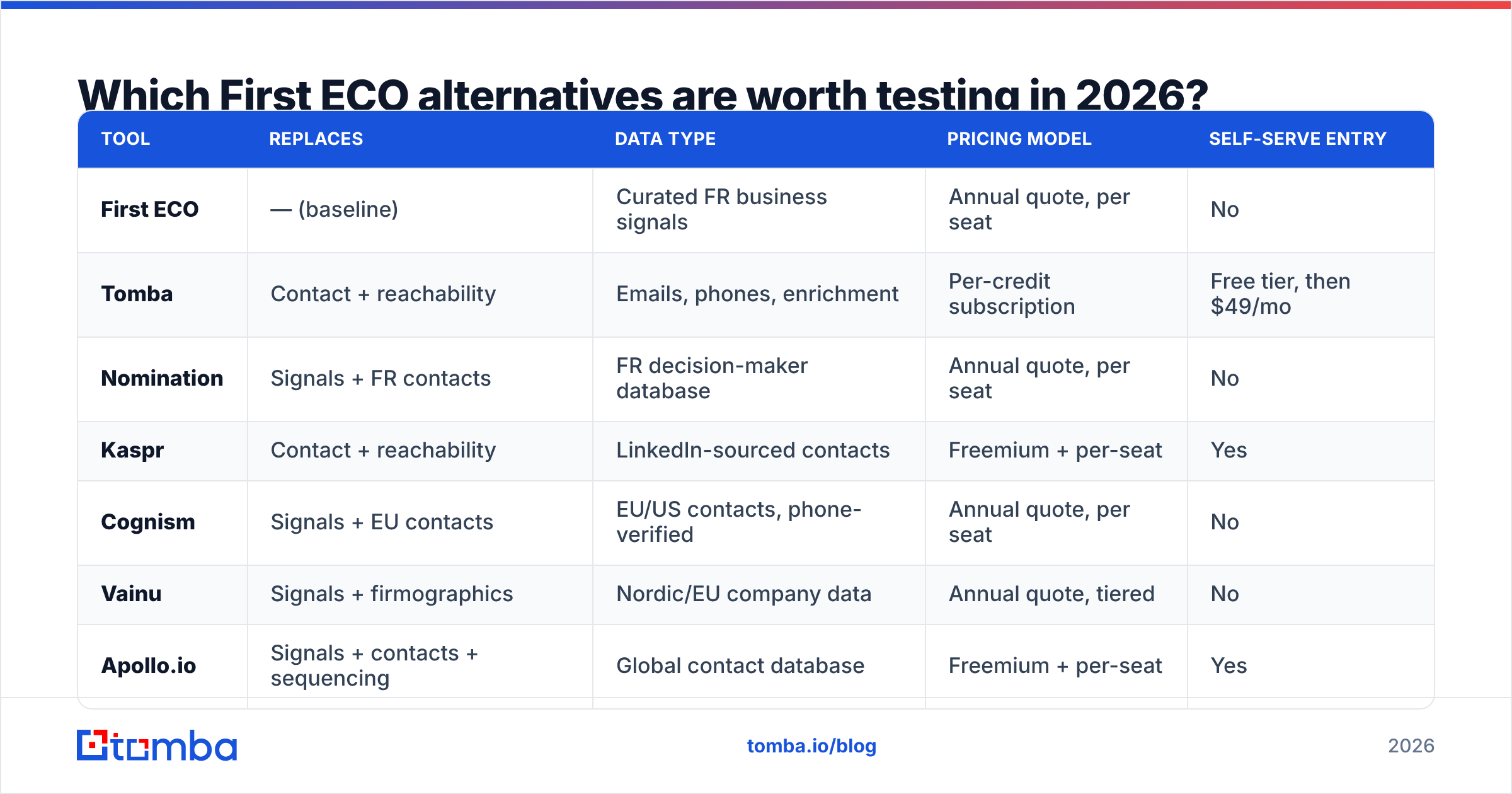
| Tool | Replaces | Data type | Pricing model | Self-serve entry |
|---|---|---|---|---|
| First ECO | — (baseline) | Curated FR business signals | Annual quote, per seat | No |
| Tomba | Contact + reachability | Emails, phones, enrichment | Per-credit subscription | Free tier, then $49/mo |
| Nomination | Signals + FR contacts | FR decision-maker database | Annual quote, per seat | No |
| Kaspr | Contact + reachability | LinkedIn-sourced contacts | Freemium + per-seat | Yes |
| Cognism | Signals + EU contacts | EU/US contacts, phone-verified | Annual quote, per seat | No |
| Vainu | Signals + firmographics | Nordic/EU company data | Annual quote, tiered | No |
| Apollo.io | Signals + contacts + sequencing | Global contact database | Freemium + per-seat | Yes |
| BookYourData | Reachability at volume | Verified B2B email lists | Pay-as-you-go per record | Yes |
| Dropcontact | Reachability (GDPR-first) | FR/EU email enrichment | Per-credit subscription | Yes |
| Pappers / open data | Company identification | Legal registry, filings | Free tier + API credits | Yes |
Tomba — the reachability layer, priced per credit#
Tomba doesn't pretend to be a signal editor. It solves rows 3 and 4: given a company domain or a person's name, it returns the professional email address, verifies it, and enriches the record. That's the part of the First ECO workflow that most teams end up buying separately anyway.
The economics are the argument. Tomba pricing runs from a free tier at 25 searches a month, to Starter at $49/mo, Growth at $99/mo, Pro at $249/mo, and custom Enterprise. You can start today without a call, and you can scale down next quarter. Bulk processing, data enrichment, and a documented API mean the signals you get from anywhere — a registry feed, a news alert, a scraped tender list — can be turned into contactable rows on a schedule.
Best for: teams that already have a signal source and need the last mile solved cheaply and predictably. Weakness: it won't tell you which company to target. That's your job, or your signal source's.
Nomination — the closest French like-for-like#
Nomination is the most direct French competitor: a decision-maker database with movement tracking (who changed roles, who joined which board) layered on top. If your objection to First ECO is the type of signal rather than the price, this is the obvious head-to-head — and it's stronger on named contacts.
Best for: French enterprise sales teams that want people-level intelligence, not just company events. Weakness: same commercial model — annual quote, seats, no self-serve trial to speak of.
Kaspr — LinkedIn-native contact capture#
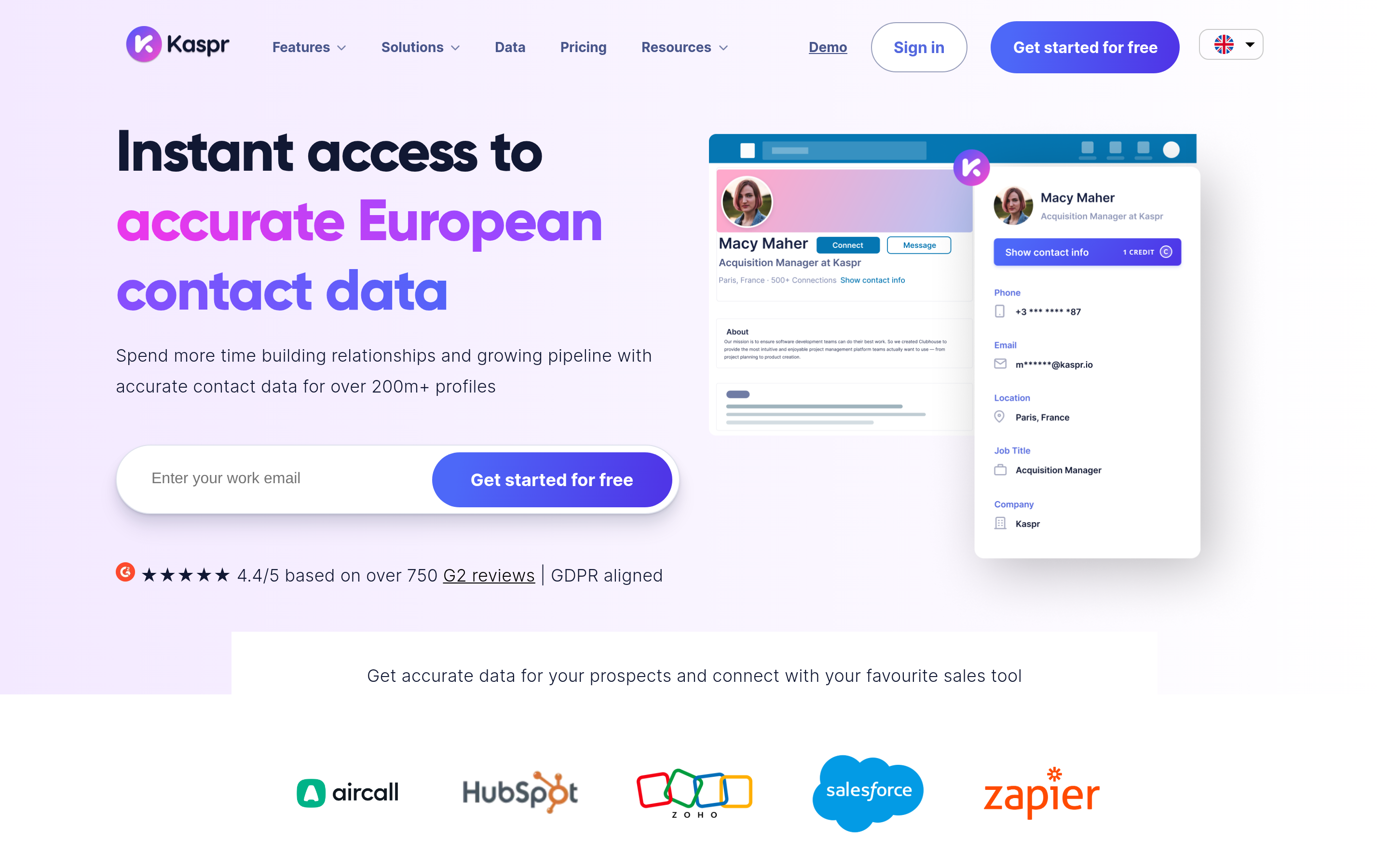
Kaspr sits in your browser and pulls contact details while you're on a LinkedIn profile. It's a workflow tool as much as a data tool, which is why SDRs like it. Coverage is strongest in France and Western Europe.
Best for: reps who prospect inside LinkedIn all day and want one-click capture. Weakness: per-seat costs multiply across a team, and browser-driven workflows don't scale to batch jobs the way an API does. Pair it with a bulk email finder for list work.
Cognism — European coverage with phone verification#
Cognism is the enterprise answer to "we need Europe, not just France." Its differentiator is human-verified mobile numbers, which matters if your motion is call-first rather than email-first. Compliance posture is built for EU markets.
Best for: funded teams running multi-country outbound with a real dialing motion. Weakness: enterprise pricing and annual commitment. If your First ECO quote already felt heavy, this won't feel light.
Vainu — signals done as company data#
Vainu built its business on the same insight First ECO did: company events predict deals. Its strength is Nordic and broader European company data with trigger-based filters you can wire into a CRM.
Best for: teams expanding north and east out of France who want signal logic, not just a list. Weakness: contact-level data isn't the core product; you'll still want an enrichment layer.
Apollo.io — all-in-one, generalist quality#
Apollo bundles a large contact database with sequencing and basic intent. The free tier makes it trivially testable, which is why it shows up on every shortlist. Coverage skews US-heavy, and European data quality is uneven by country — verify before you commit a quarter to it.
Best for: small teams that want database plus sequencer in one bill. Weakness: European accuracy varies. Many teams keep Apollo for workflow and run a separate email verifier before sending.
BookYourData — pay-as-you-go volume lists#
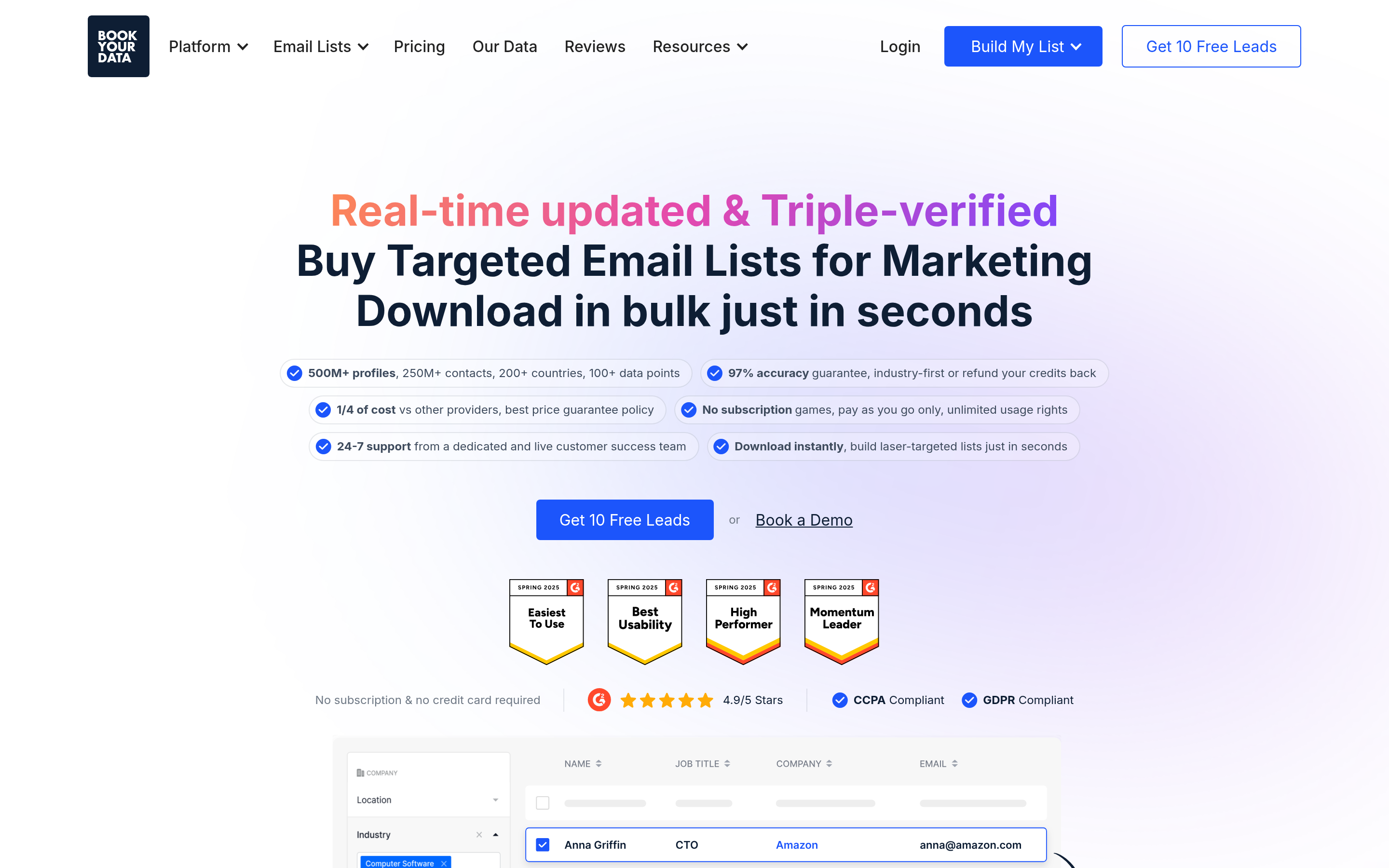
BookYourData takes a different route entirely: buy verified B2B records by the batch, filtered by industry, geography and job title, with no subscription. For a team that runs two or three campaigns a quarter rather than continuous outbound, the pay-per-record model can be dramatically cheaper than any seat licence, and the verification guarantee removes most of the bounce risk that usually comes with purchased lists.
Best for: campaign-based outbound, list top-ups, and teams that hate recurring contracts. Weakness: it's a list purchase, not a live signal feed — you're choosing coverage, not timing.
Dropcontact — GDPR-first enrichment for French data#
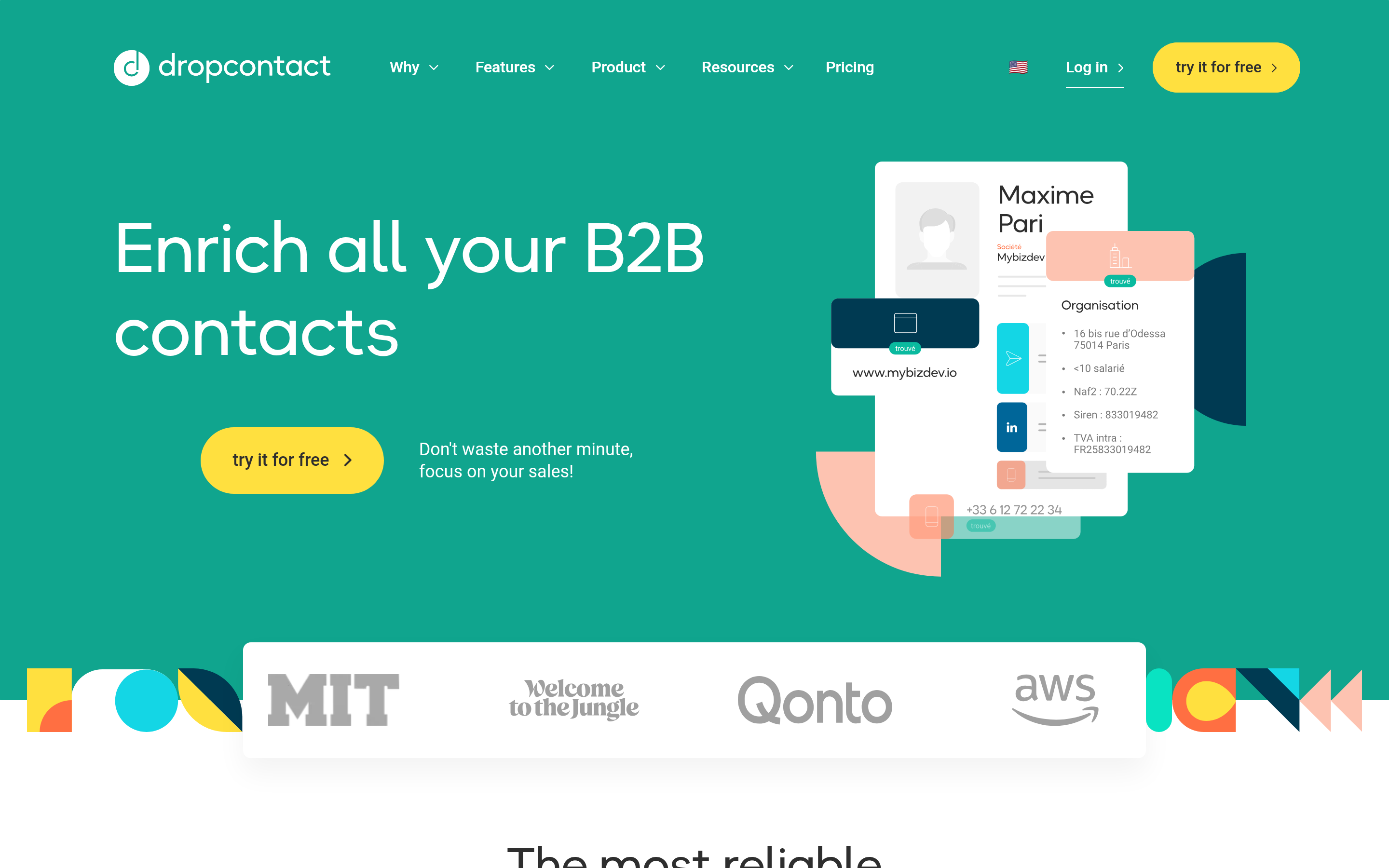
Dropcontact enriches and verifies without storing personal databases, which makes procurement and DPO conversations shorter in France. Strong on French corporate email patterns.
Best for: compliance-sensitive teams enriching an existing CRM. Weakness: narrower scope — enrichment only, no discovery of accounts you don't already know.
Pappers and open registries — the free signal floor#
Before paying for anything, know that French legal registry data (incorporations, filings, capital changes, insolvency) is publicly available and API-accessible. A lot of what a signal platform sells is this data, filtered and written up.
Best for: technical teams willing to build a small pipeline. Weakness: raw. No editorial, no contacts, no alerts unless you build them.
Is a cheaper stack actually better than one platform?#
Usually yes, on cost — and it depends, on effort.
The single-vendor argument is real: one contract, one login, one support channel, curated quality. If your team is five reps who won't touch a CSV, that convenience is worth paying for.
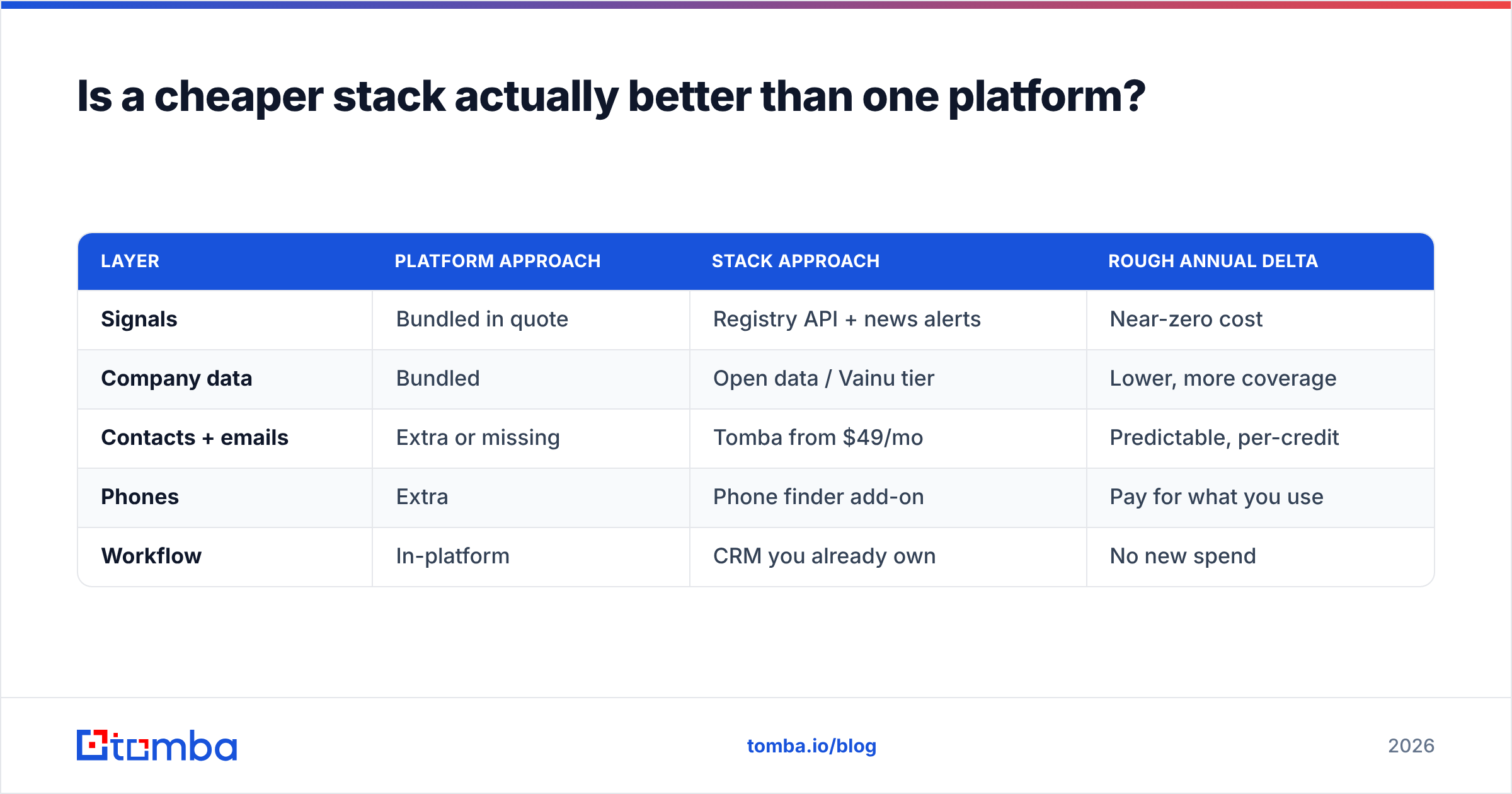
The stack argument wins on economics and control. A typical replacement looks like this:
| Layer | Platform approach | Stack approach | Rough annual delta |
|---|---|---|---|
| Signals | Bundled in quote | Registry API + news alerts | Near-zero cost |
| Company data | Bundled | Open data / Vainu tier | Lower, more coverage |
| Contacts + emails | Extra or missing | Tomba from $49/mo | Predictable, per-credit |
| Phones | Extra | Phone finder add-on | Pay for what you use |
| Workflow | In-platform | CRM you already own | No new spend |
The trade is one afternoon of setup — usually a Zapier or Make flow, or a few API calls — against a contract you can cancel. If nobody on your team can wire that up, price the platform. If someone can, the stack usually costs a fraction and travels with you when you change territories.

How do you migrate off First ECO without losing pipeline?#
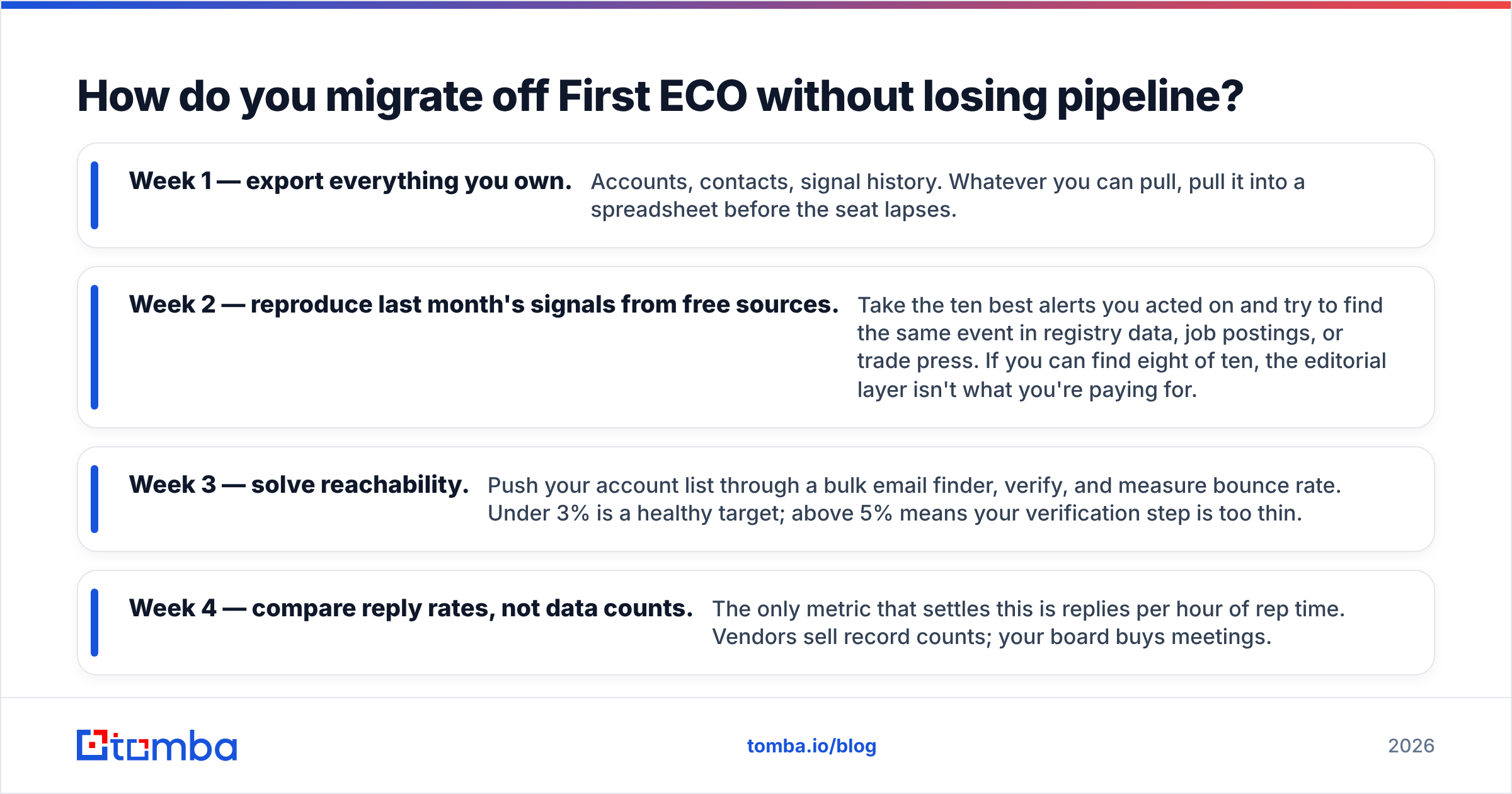
Run the swap in parallel for one full cycle. Cancelling first and rebuilding after is how teams lose a quarter.
- Week 1 — export everything you own. Accounts, contacts, signal history. Whatever you can pull, pull it into a spreadsheet before the seat lapses.
- Week 2 — reproduce last month's signals from free sources. Take the ten best alerts you acted on and try to find the same event in registry data, job postings, or trade press. If you can find eight of ten, the editorial layer isn't what you're paying for.
- Week 3 — solve reachability. Push your account list through a bulk email finder, verify, and measure bounce rate. Under 3% is a healthy target; above 5% means your verification step is too thin.
- Week 4 — compare reply rates, not data counts. The only metric that settles this is replies per hour of rep time. Vendors sell record counts; your board buys meetings.
For a broader framework on evaluating sales-intelligence vendors, the category reviews on G2 and the outbound benchmarks published on the HubSpot sales blog are useful third-party sanity checks against vendor claims.
Which First ECO alternative should you pick?#
Short answers by situation:
- France-only, enterprise, call-first: Nomination or Cognism. You're buying curation and coverage, and you'll pay for it.
- Expanding beyond France: Cognism or Vainu for the data, plus a contact layer.
- Small team, tight budget: open registry data for signals, Tomba for contacts. Roughly $49–$99/mo total for the paid part.
- Campaign-based, no subscriptions: BookYourData for the list, verified up front.
- Already have accounts, missing emails: Dropcontact or Tomba enrichment. Skip the signal platform entirely.
The pattern across all five: the signal layer is getting cheaper every year as public data opens up, while the contact layer stays the thing you consume daily. Pay accordingly.
Ready to fix the last mile?#
If your shortlist has narrowed to "we know which companies to chase, we just can't reach the right person," start with the Tomba Email Finder. Free tier gives you 25 searches a month to test accuracy against your own account list — no call, no quote, no annual commitment. If it holds up, Starter is $49/mo and the API drops straight into whatever signal source you end up choosing.
Test it on ten accounts you already know. That's the only benchmark that matters.
Related guides#
Ready to find emails that actually work?
Join 150,000+ professionals who stopped guessing and started sending. Free credits on signup — no credit card required.
Get the Tomba newsletter
Practical outbound tactics and product updates — once every two weeks.
About the author