Getro vs ReachStream: Talent Network or B2B Contact Data?
Getro builds talent networks and job boards for VC portfolios. ReachStream sells B2B contact lists. They get compared constantly — and they solve completely different problems. Here's the honest breakdown.
TL;DR
- Getro is not a lead database. It's talent-network and job-board software built for VC firms, accelerators, and communities that want to connect portfolio companies with candidates.
- ReachStream is a B2B contact database. You buy or subscribe to lists of decision-maker records — name, title, company, email, phone — and export them into your CRM or sequencer.
- They only look comparable because both promise "access to people." One gives you a network you host; the other gives you rows you download.
- Neither is an email-finding engine. If your bottleneck is verified addresses for a specific named list of companies, a dedicated finder plus verification layer beats both on cost per usable contact.
- The practical answer for most teams: use Getro if you run a portfolio or community, use ReachStream if you need bulk records fast, and use a real-time finder when accuracy on a targeted list is what actually determines revenue.
What are Getro and ReachStream, exactly?#
Start here, because the two products barely overlap.
Getro is community infrastructure. Its two main products — Getro Jobs (a hosted job board that aggregates open roles across a portfolio) and Getro Network (a talent-matching layer that connects vetted candidates to those roles) — are sold almost entirely to venture funds, accelerators, and membership organizations. The buyer is usually a platform or talent partner at a fund who has 40 portfolio companies asking "can you help us hire?" Getro's job is to make that scalable: crawl portfolio career pages, normalize the roles, surface them on a branded board, and route candidates in.
ReachStream is a data vendor. It sells access to a B2B contact and company database — filter by industry, job function, seniority, geography, employee count, and technology, then export the matching records. The buyer is usually a demand-gen or SDR lead who needs volume: 5,000 marketing directors in North American SaaS companies, in a CSV, this week.
So the honest framing of Getro vs ReachStream is not "which is better." It's "which problem do you actually have?" One is a system of engagement for a community you already own. The other is a system of supply for a pipeline you're trying to fill.
How do Getro and ReachStream compare head-to-head?#
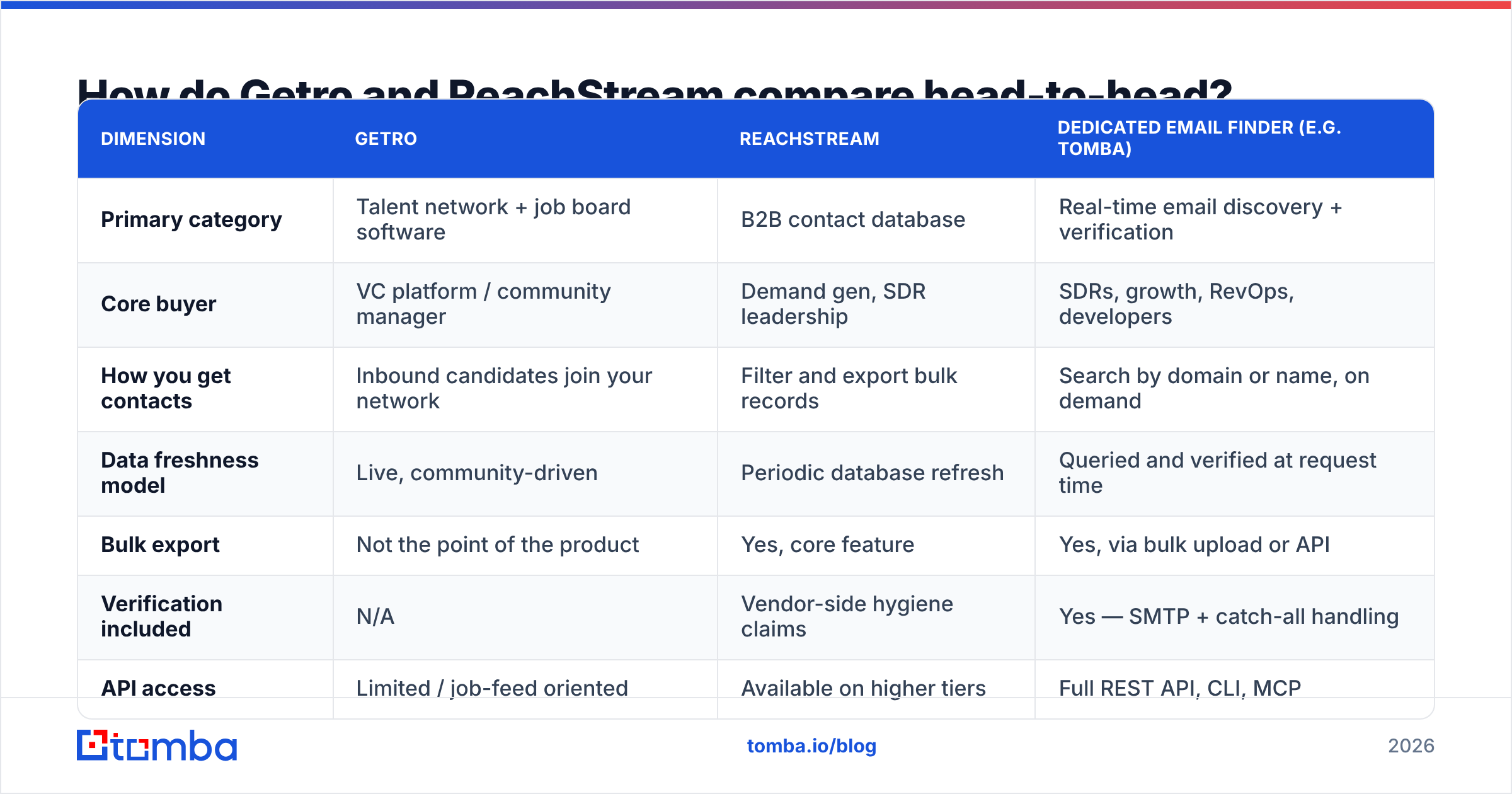
Here's the side-by-side, with an email-finder column for reference since most teams evaluating these two are really trying to solve the "how do I reach people" problem.
| Dimension | Getro | ReachStream | Dedicated email finder (e.g. Tomba) |
|---|---|---|---|
| Primary category | Talent network + job board software | B2B contact database | Real-time email discovery + verification |
| Core buyer | VC platform / community manager | Demand gen, SDR leadership | SDRs, growth, RevOps, developers |
| How you get contacts | Inbound candidates join your network | Filter and export bulk records | Search by domain or name, on demand |
| Data freshness model | Live, community-driven | Periodic database refresh | Queried and verified at request time |
| Bulk export | Not the point of the product | Yes, core feature | Yes, via bulk upload or API |
| Verification included | N/A | Vendor-side hygiene claims | Yes — SMTP + catch-all handling |
| API access | Limited / job-feed oriented | Available on higher tiers | Full REST API, CLI, MCP |
| Free entry point | Demo-based | Limited free credits | 25 searches/month |
| Typical pricing model | Annual contract, quoted | Credit or subscription packs | Published monthly tiers from $49 |
| Best at | Portfolio hiring at scale | Volume list building | Accuracy on a targeted named list |
Two things fall out of that table immediately.
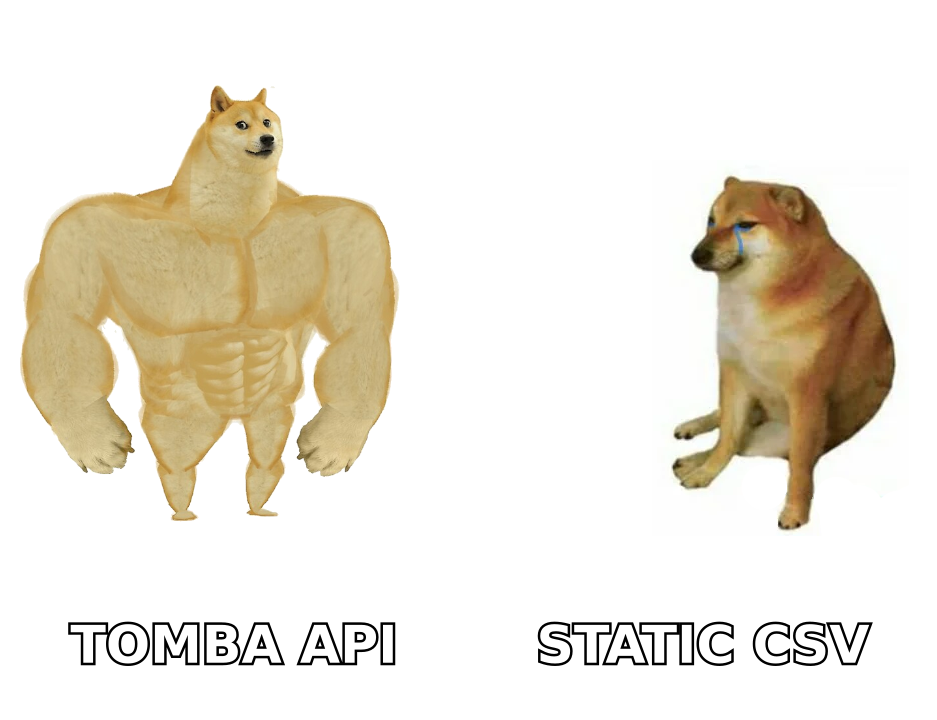
First, if you put Getro and ReachStream in a bake-off for "who gives me more sales-ready contacts per dollar," ReachStream wins by default — because Getro isn't playing that game. Judging Getro on export volume is like judging a CRM on how many emails it finds.
Second, if you put ReachStream against a purpose-built finder on accuracy for a specific target account list, the database model has a structural disadvantage that has nothing to do with vendor quality. We'll get to why.
What does Getro actually do well?#
If you manage a portfolio or a member community, Getro removes a genuinely annoying operational burden.
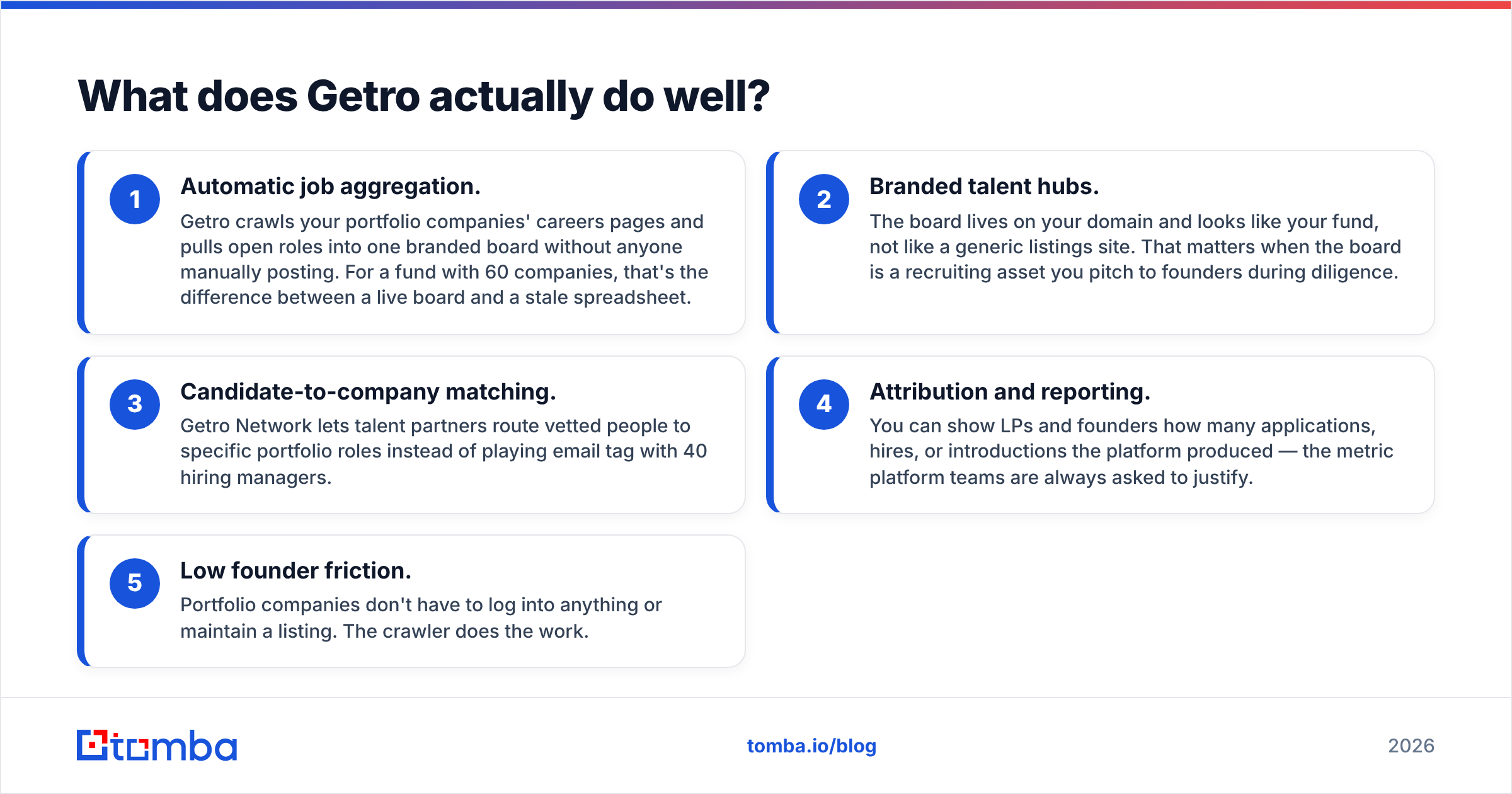
- Automatic job aggregation. Getro crawls your portfolio companies' careers pages and pulls open roles into one branded board without anyone manually posting. For a fund with 60 companies, that's the difference between a live board and a stale spreadsheet.
- Branded talent hubs. The board lives on your domain and looks like your fund, not like a generic listings site. That matters when the board is a recruiting asset you pitch to founders during diligence.
- Candidate-to-company matching. Getro Network lets talent partners route vetted people to specific portfolio roles instead of playing email tag with 40 hiring managers.
- Attribution and reporting. You can show LPs and founders how many applications, hires, or introductions the platform produced — the metric platform teams are always asked to justify.
- Low founder friction. Portfolio companies don't have to log into anything or maintain a listing. The crawler does the work.
Where Getro is the wrong tool: outbound sales. There's no "give me every VP of Engineering at Series B fintechs" query. That's not a limitation, it's a category boundary.
What does ReachStream actually do well?#
ReachStream competes in the crowded bulk-data tier alongside dozens of list vendors, and its pitch is straightforward — broad coverage at a price point below the enterprise data platforms.
- Fast list assembly. Filters plus export gets you from "we should target manufacturing ops leaders" to a working file in an afternoon.
- Company and contact records together. You get firmographic context (industry, size, location) attached to the person, which matters for segmentation and routing.
- Predictable cost per record. Credit-based pricing makes budgeting simple compared to seat-based enterprise platforms where you pay whether or not you pull data.
- Lower barrier than incumbents. For teams priced out of the largest B2B data suites, it's an accessible entry point — the same reason well-regarded list providers like BookYourData have carved out real share in this tier.
The tradeoff is the one every database vendor lives with: a database is a snapshot. Records were true when they were collected. Buyer-side reviews across G2 consistently show that bulk B2B data — from every vendor in this tier, not just ReachStream — degrades between refresh cycles. That's physics, not malpractice. Roughly 25–30% of B2B contact data goes stale annually as people change roles, companies rebrand, and domains migrate.
Which is why the smartest teams treat any purchased list as input, not truth.
Which one has better data accuracy?#
Wrong question — but here's the useful version of it: what kind of accuracy does each model give you?
- Getro's accuracy is relational. A candidate in your talent network opted in, gave you their own contact details, and updated them because they want to be found. That data is extremely accurate and extremely narrow. It covers people who raised their hand for your community.
- ReachStream's accuracy is statistical. A large database will be mostly right in aggregate. If you pull 5,000 records, a healthy chunk will be current. But you can't tell which chunk without testing, and the hit rate on any specific named account is unpredictable.
- A finder's accuracy is transactional. You ask for one person at one domain, and the system resolves the pattern and verifies deliverability at that moment. It's slower per record than a bulk export and dramatically more reliable per record.
The strategic implication: match the model to how targeted your motion is.
Running a broad, high-volume campaign across an industry vertical? Statistical accuracy is fine — you're playing a numbers game and bounce management is a cost of doing business. Running a 200-account ABM program where every named contact is on a whiteboard? Statistical accuracy is a disaster. One bounce at a target account can burn the domain reputation you need for the other 199.
That's the case where an email verifier running on top of whatever list you bought pays for itself in a single send. Run the ReachStream export through verification before it touches your sequencer, and you convert an unknown bounce rate into a known one.

How much do Getro and ReachStream cost?#
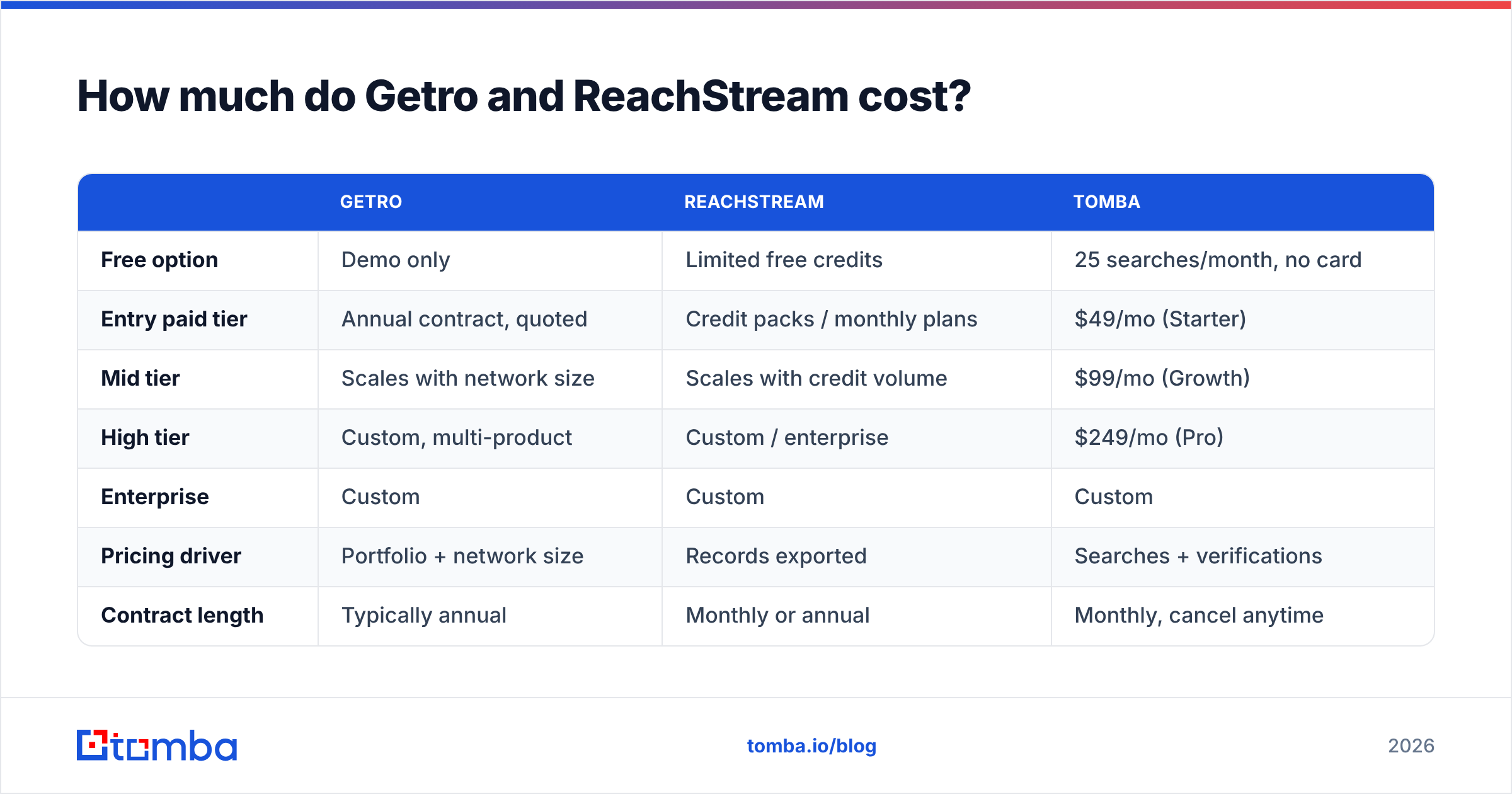
Neither vendor publishes fully transparent self-serve pricing, so treat the table below as a shape rather than a quote — check both sites before budgeting.
| Getro | ReachStream | Tomba | |
|---|---|---|---|
| Free option | Demo only | Limited free credits | 25 searches/month, no card |
| Entry paid tier | Annual contract, quoted | Credit packs / monthly plans | $49/mo (Starter) |
| Mid tier | Scales with network size | Scales with credit volume | $99/mo (Growth) |
| High tier | Custom, multi-product | Custom / enterprise | $249/mo (Pro) |
| Enterprise | Custom | Custom | Custom |
| Pricing driver | Portfolio + network size | Records exported | Searches + verifications |
| Contract length | Typically annual | Monthly or annual | Monthly, cancel anytime |
| API included | Feed-level | Higher tiers | All paid tiers |
The structural difference matters more than the numbers. Getro is a platform commitment — you're buying software your community lives on, and you're signing for a year. ReachStream is consumption — you're buying rows, and the meaningful metric is cost per usable row after bounces and role changes, not the sticker cost per record. A $0.03 record with a 70% hit rate costs more than a $0.06 record with a 95% hit rate.
That's the arithmetic most teams skip. Take your last purchased list, count how many contacts actually received a delivered email, and divide. The real number is usually uncomfortable.
Where does an email finder fit alongside either tool?#
Both Getro and ReachStream leave the same gap: turning a known company into a reachable person.
Getro gives you a portfolio of companies and a community of candidates — but if a platform partner wants to reach the Head of Talent at a company that isn't in the network yet, there's no lookup. ReachStream gives you records, but the moment your ICP shifts to a segment where coverage is thin, or a target account's contact turns out to have left in March, you're back to guessing at firstname@company.com.
A finder closes that loop in three ways:
- Domain-first discovery. Point domain search at a company URL and get the addresses and email pattern that actually exist there — useful when you have an account list but no contacts.
- Name-plus-domain resolution. You know the person from LinkedIn, a job board, or a portfolio page but not their address. The email finder resolves it against the domain's real pattern and verifies before returning it.
- List repair at scale. Push a purchased export through bulk verification and enrichment to strip dead records, fill missing fields, and flag catch-all domains before they wreck your sender reputation.
For engineering-led teams, the API matters more than the UI. If your RevOps stack enriches records at the moment a lead enters the CRM rather than in a monthly batch, you never ship a stale contact into a sequence — the enrichment happens against live data at write time. That's a fundamentally different reliability profile than any quarterly database refresh can offer.
Can you use Getro, ReachStream, and a finder together?#
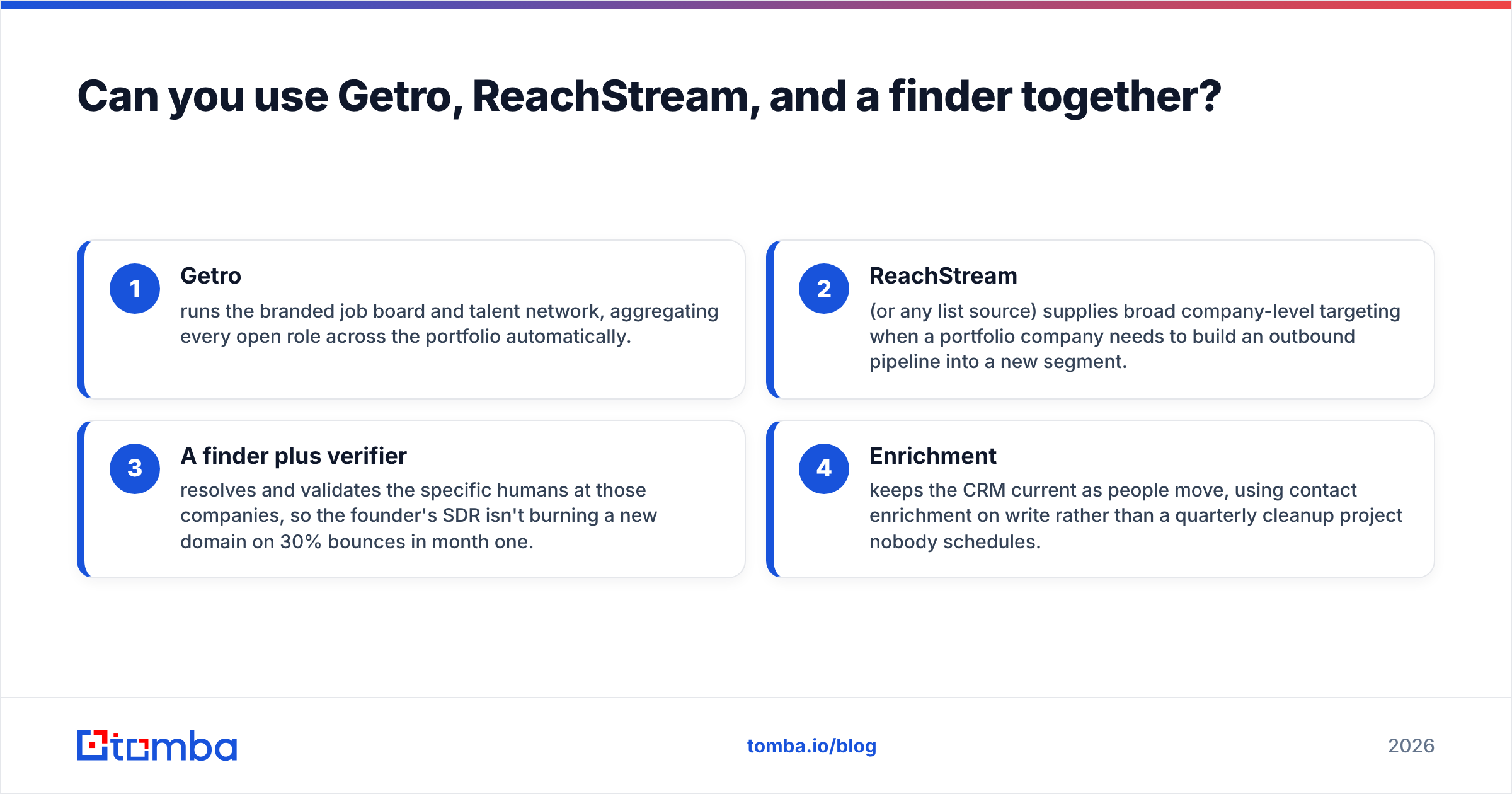
Yes, and for a VC platform team it's a genuinely strong stack.
The portfolio-support workflow:
- Getro runs the branded job board and talent network, aggregating every open role across the portfolio automatically.
- ReachStream (or any list source) supplies broad company-level targeting when a portfolio company needs to build an outbound pipeline into a new segment.
- A finder plus verifier resolves and validates the specific humans at those companies, so the founder's SDR isn't burning a new domain on 30% bounces in month one.
- Enrichment keeps the CRM current as people move, using contact enrichment on write rather than a quarterly cleanup project nobody schedules.
Each tool does the thing it's actually built for. The failure mode is trying to force one of them to cover all four steps — asking Getro to be a prospecting database, or asking a static list to behave like a real-time lookup.
So which one should you buy?#
Buy Getro if you run a fund, accelerator, studio, or professional community and your recurring pain is "our portfolio companies keep asking us for hiring help and we're doing it with spreadsheets." Nothing in the contact-database world substitutes for that. It's a platform purchase, judged on community engagement, not on record counts.
Buy ReachStream if you need volume B2B records at an accessible price point and your motion is broad enough that a statistical hit rate is acceptable. Test a small credit pack against 200 accounts you can independently verify before you commit to a large one — that's standard practice with any list vendor, and a good vendor won't flinch at it.
Buy neither — or buy a finder alongside one — if your real constraint is reaching specific named people accurately. That's a different job, and the tools that do it well are priced accordingly: you pay per lookup, not per seat or per thousand rows you may never use.
The honest summary of Getro vs ReachStream is that most people searching for this comparison have already mis-scoped their problem. Figure out whether you need a community platform, a data supply, or an accuracy layer. Then buy exactly that.
Ready to test the accuracy layer? Start with the Tomba Email Finder — 25 free searches a month, no card required, and every result is verified before it's returned. Point it at the same 50 accounts you'd feed a purchased list and compare hit rates yourself. Paid plans start at $49/month; see full Tomba pricing for API access, bulk processing, and enrichment limits.
Related guides#
Ready to find emails that actually work?
Join 150,000+ professionals who stopped guessing and started sending. Free credits on signup — no credit card required.
Get the Tomba newsletter
Practical outbound tactics and product updates — once every two weeks.
About the author