7 Best Go Skylevel Alternatives for Hiring Teams in 2026
Skylevel scores candidates through referrals — but it is not the only way to predict quality of hire. Here are seven alternatives compared on approach, pricing transparency, and how well they fit small recruiting teams.
TL;DR
- Go Skylevel (goskylevel.com) ranks candidates using a "Skylevel Score" built from referral feedback — it is a signal layer, not an ATS and not a sourcing tool.
- The best alternative depends on which job you are actually hiring the software to do: reference intelligence (Crosschq, HiPeople), skills assessment (TestGorilla, Vervoe), or talent search (SeekOut, hireEZ).
- Most tools in this category hide pricing behind a demo call. Budget $3,000–$15,000/year for a small team once you get a quote.
- Referral and reference scores only help after you have candidates. If your pipeline is thin, a sourcing plus contact-data stack does more for quality of hire than any scoring model.
- Tomba covers the contact layer — email finding, verification, and enrichment from $49/mo with a free tier — so outreach reaches real inboxes before any scoring tool matters.
What is Go Skylevel and what does it actually do?#
Skylevel is a referral intelligence platform. Instead of asking you to read another 400 resumes, it collects structured feedback from people who have worked with a candidate — former managers, peers, clients — and rolls it into a single Skylevel Score that sits next to the applicant in your pipeline.
The pitch is straightforward: resumes are self-reported and interviews are noisy, but people who watched someone work for two years have real information. Skylevel tries to capture that signal early, before you spend interview hours.
What it is not: an applicant tracking system, a sourcing engine, a CRM, or a contact database. It plugs into a hiring process you already run. That distinction matters a lot when you start shopping, because half the "alternatives" people recommend solve a completely different problem.
Why do hiring teams look for Go Skylevel alternatives?#
Four reasons come up repeatedly in buyer conversations and on review sites like G2:
- Referrer response rates. The score is only as good as the number of referrers who actually respond. Teams hiring for junior, high-volume, or contract roles often find that candidates cannot produce enough credible referrers to make the score meaningful.
- Opaque pricing. Like most of this category, there is no public price list. You get a demo, a discovery call, and then a number. Small teams frequently discover the number is built for a 50-recruiter org.
- It sits too late in the funnel. Scoring assumes a full pipeline. If you get 11 applicants for a niche role, a ranking layer does nothing — you need more candidates, not a better sort.
- Overlap with the ATS. Greenhouse, Ashby, and Lever have all pushed harder into structured scorecards and quality-of-hire reporting. If your ATS already does 70% of it, paying for a second seat is hard to justify.
If reason 3 is your reason, skip ahead to the sourcing section — that is where the leverage is.
What should you compare when evaluating Go Skylevel alternatives?#
Before you sit through five demos, write down which of these you actually need. Every vendor in this space is strong on two or three and weak on the rest.
- Signal source — Does quality data come from referrers, structured references, work-sample tests, or public profile data? These are genuinely different predictions and they fail in different ways.
- Funnel position — Pre-application (sourcing), post-application (screening), or post-offer (onboarding intelligence)? Buying two tools for the same stage is the most common waste in a hiring stack.
- Pricing model — Per seat, per hire, per assessment, or per credit. Per-hire pricing punishes high-volume teams; per-seat punishes small ones.
- ATS integration depth — Two-way sync or a CSV export with a nice logo? Ask to see the field mapping during the demo, not after.
- Compliance posture — EEOC/adverse-impact reporting, GDPR handling of referrer data, and whether scores are auditable. Anything that ranks humans needs a defensible answer here.
- Time to first value — Weeks to configure a scorecard model versus an afternoon to run your first assessment.
What are the best Go Skylevel alternatives in 2026?#
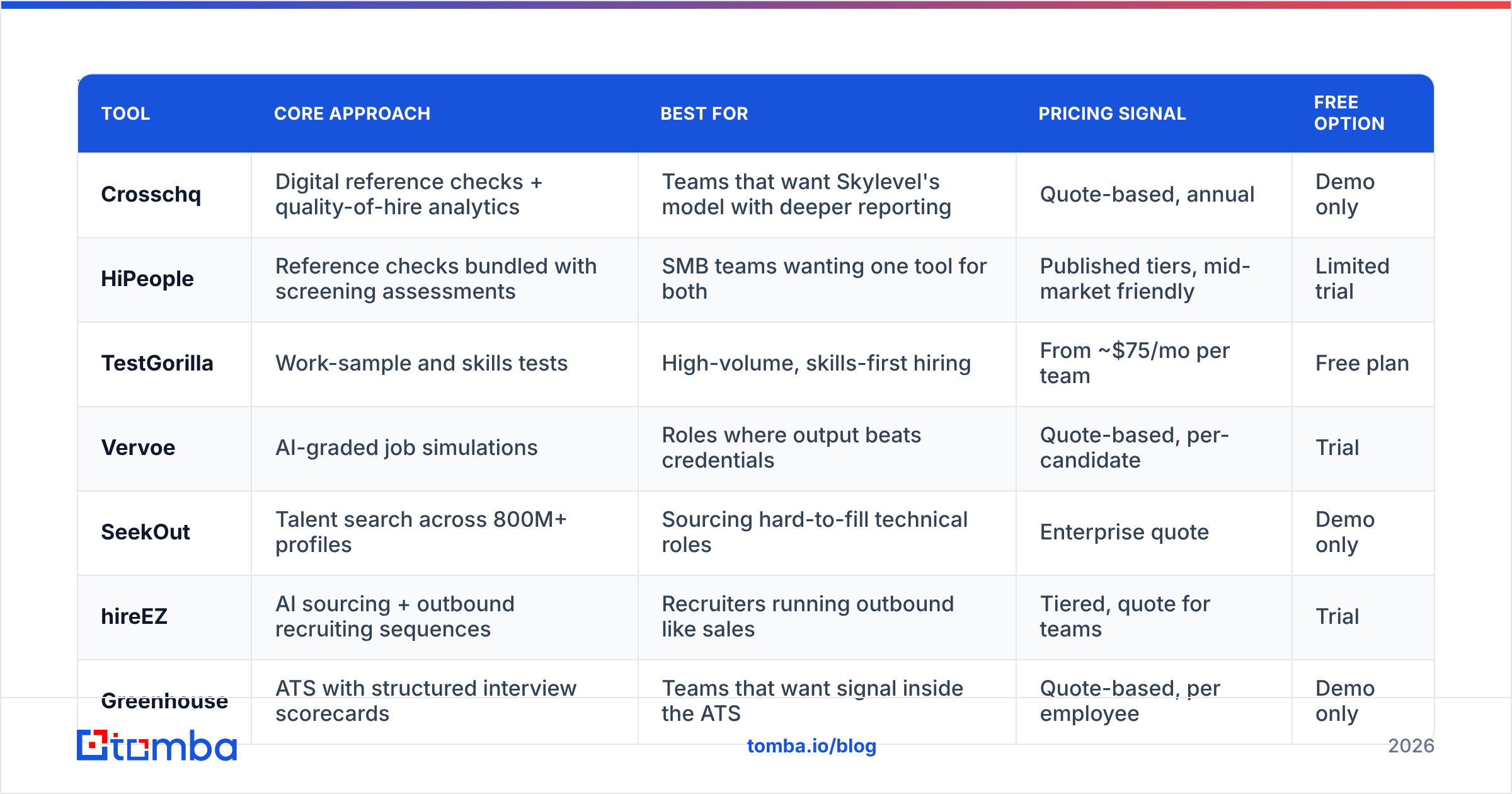
| Tool | Core approach | Best for | Pricing signal | Free option |
|---|---|---|---|---|
| Crosschq | Digital reference checks + quality-of-hire analytics | Teams that want Skylevel's model with deeper reporting | Quote-based, annual | Demo only |
| HiPeople | Reference checks bundled with screening assessments | SMB teams wanting one tool for both | Published tiers, mid-market friendly | Limited trial |
| TestGorilla | Work-sample and skills tests | High-volume, skills-first hiring | From ~$75/mo per team | Free plan |
| Vervoe | AI-graded job simulations | Roles where output beats credentials | Quote-based, per-candidate | Trial |
| SeekOut | Talent search across 800M+ profiles | Sourcing hard-to-fill technical roles | Enterprise quote | Demo only |
| hireEZ | AI sourcing + outbound recruiting sequences | Recruiters running outbound like sales | Tiered, quote for teams | Trial |
| Greenhouse | ATS with structured interview scorecards | Teams that want signal inside the ATS | Quote-based, per employee | Demo only |
| Tomba | Verified contact data for candidate outreach | Filling the top of the funnel cheaply | Free, $49, $99, $249/mo | 25 searches/mo |
Crosschq — the closest direct swap#
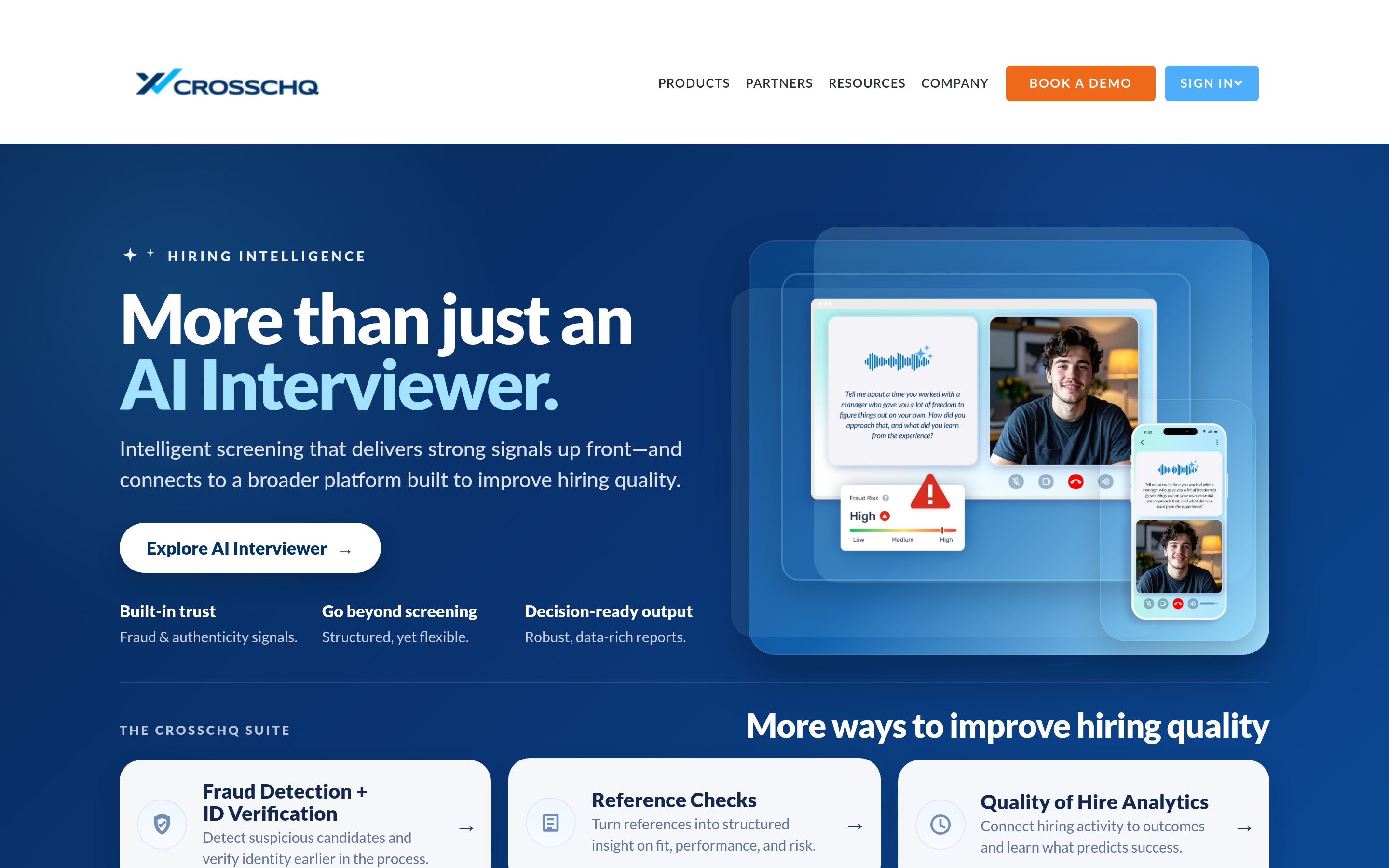
Crosschq does what Skylevel does — structured feedback from people who worked with the candidate — and layers on quality-of-hire analytics that tie back to post-hire performance. If your objection to Skylevel is "I want the same idea with more reporting," this is the first demo to book. Expect an annual contract and a real implementation conversation.
Trade-off: the same referrer-response dependency applies. If candidates cannot supply references, the platform has nothing to score.
HiPeople — references plus screening in one seat#

HiPeople merges reference collection with pre-hire assessments, which means one vendor covers both "what do others say" and "what can they do." For a 5–20 person talent team that cannot justify two contracts, this consolidation is the whole argument. Pricing is more transparent than most of the category.
Trade-off: neither half is as deep as a specialist. Reference workflows are lighter than Crosschq's; assessment libraries are smaller than TestGorilla's.
TestGorilla — replace the signal instead of sourcing it#
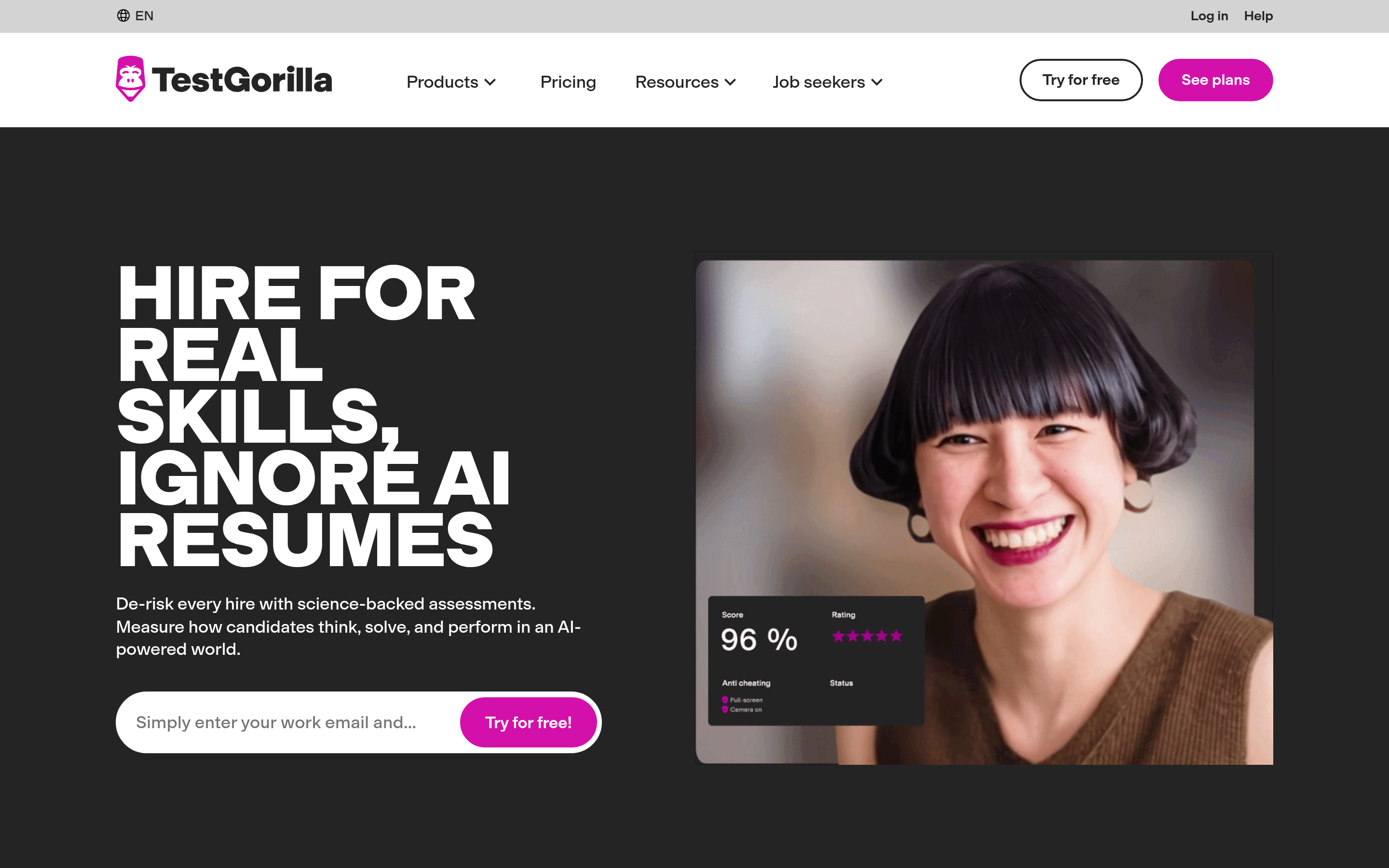
Rather than asking people about the candidate, TestGorilla asks the candidate to do the work. Cognitive tests, role-specific skills tests, and short work samples produce a score with no referrer dependency at all — which is exactly why volume hirers prefer it.
Trade-off: completion rates drop when tests run long. Keep total assessment time under 30 minutes or you will lose strong passive candidates who were never that motivated.
Vervoe — job simulations for output-first roles#
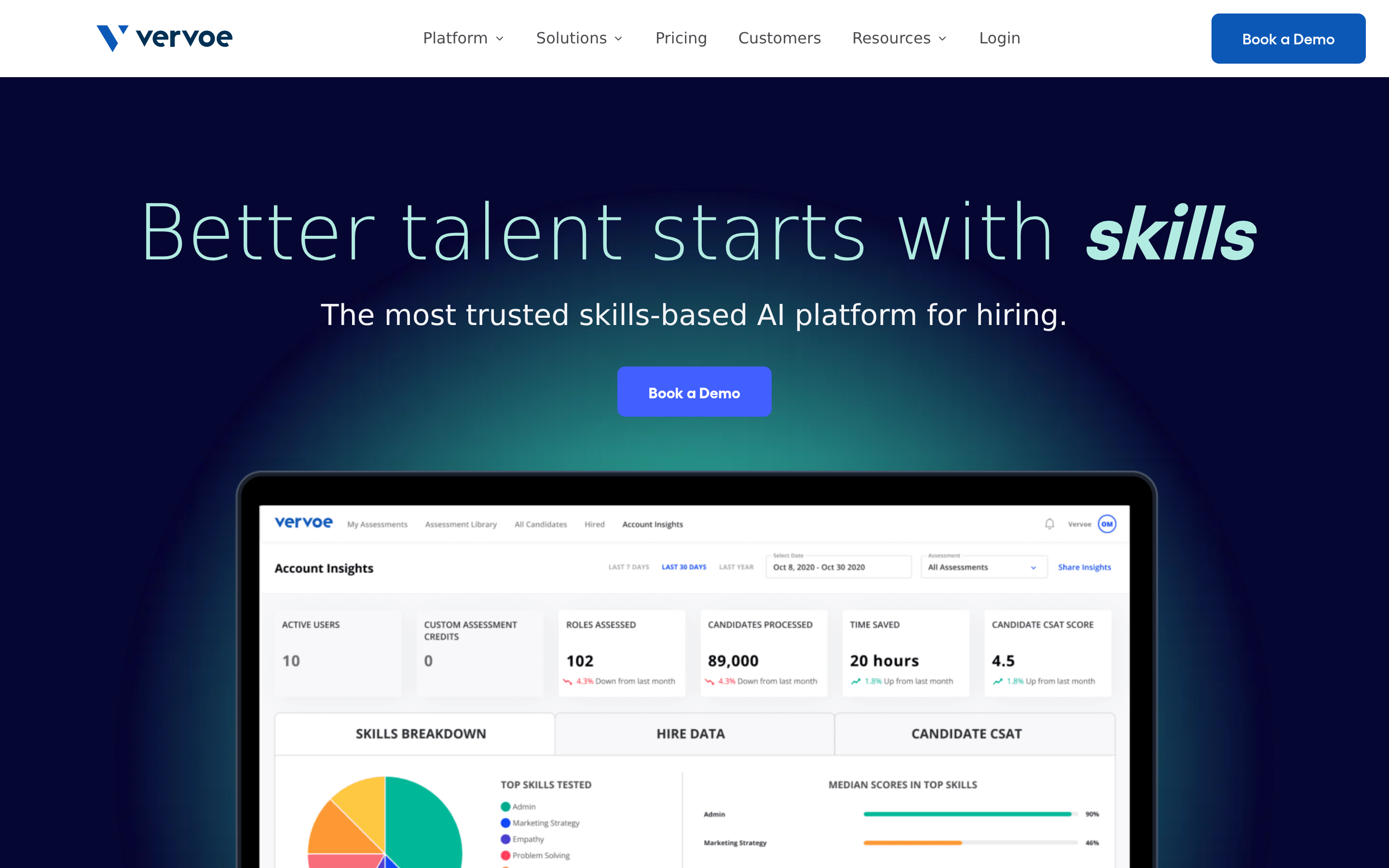
Vervoe leans further into simulation: candidates perform tasks resembling the actual job, and the AI grades against your top performers' patterns. It is strong for support, sales, and operations roles where the work is observable.
Trade-off: building good simulations takes real effort from a hiring manager. Budget a few hours per role.
SeekOut and hireEZ — solve the pipeline, not the ranking#
SeekOut and hireEZ both index hundreds of millions of public profiles and let you search by skill, clearance, diversity attribute, or GitHub activity. Neither one scores candidates the way Skylevel does. They matter because most teams that think they have a ranking problem actually have a supply problem.
Trade-off: enterprise pricing, and the contact data attached to profiles varies in freshness — plan on verifying before you send anything.
Greenhouse — check what your ATS already ships#
Greenhouse has invested heavily in structured interview kits, scorecards, and hiring analytics. Before adding a scoring vendor, run a full quarter using your ATS's scorecards as designed. A surprising number of teams find the gap they were trying to close was a process gap, not a software gap.
How do referral scores compare to skills assessments?#
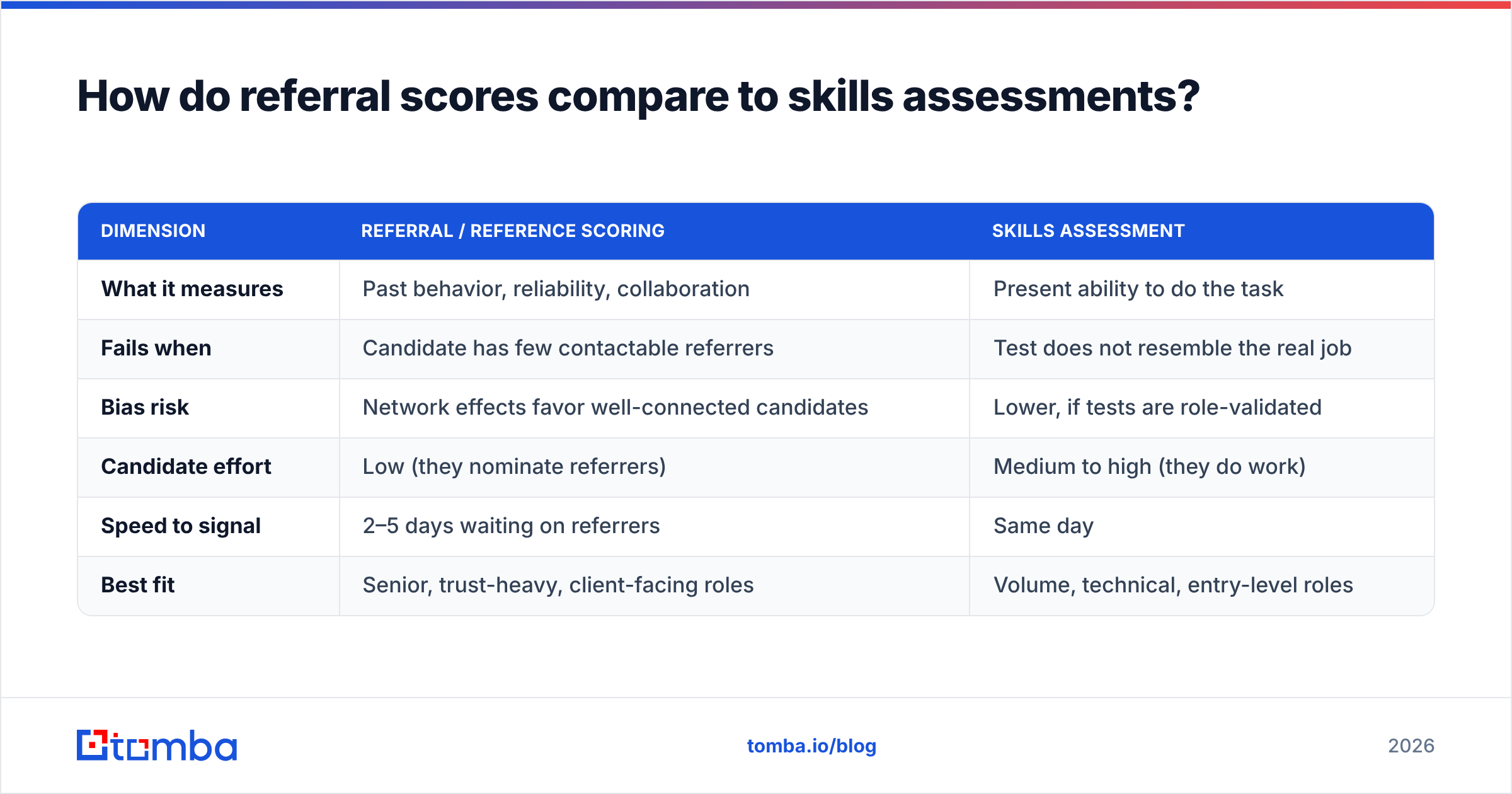
They predict different things, and mixing them up is the most expensive mistake in this category.
| Dimension | Referral / reference scoring | Skills assessment |
|---|---|---|
| What it measures | Past behavior, reliability, collaboration | Present ability to do the task |
| Fails when | Candidate has few contactable referrers | Test does not resemble the real job |
| Bias risk | Network effects favor well-connected candidates | Lower, if tests are role-validated |
| Candidate effort | Low (they nominate referrers) | Medium to high (they do work) |
| Speed to signal | 2–5 days waiting on referrers | Same day |
| Best fit | Senior, trust-heavy, client-facing roles | Volume, technical, entry-level roles |
Senior sales leadership hire? References tell you more. Fifty customer support agents? Assessments, every time.
Where does contact data fit into a Skylevel replacement?#
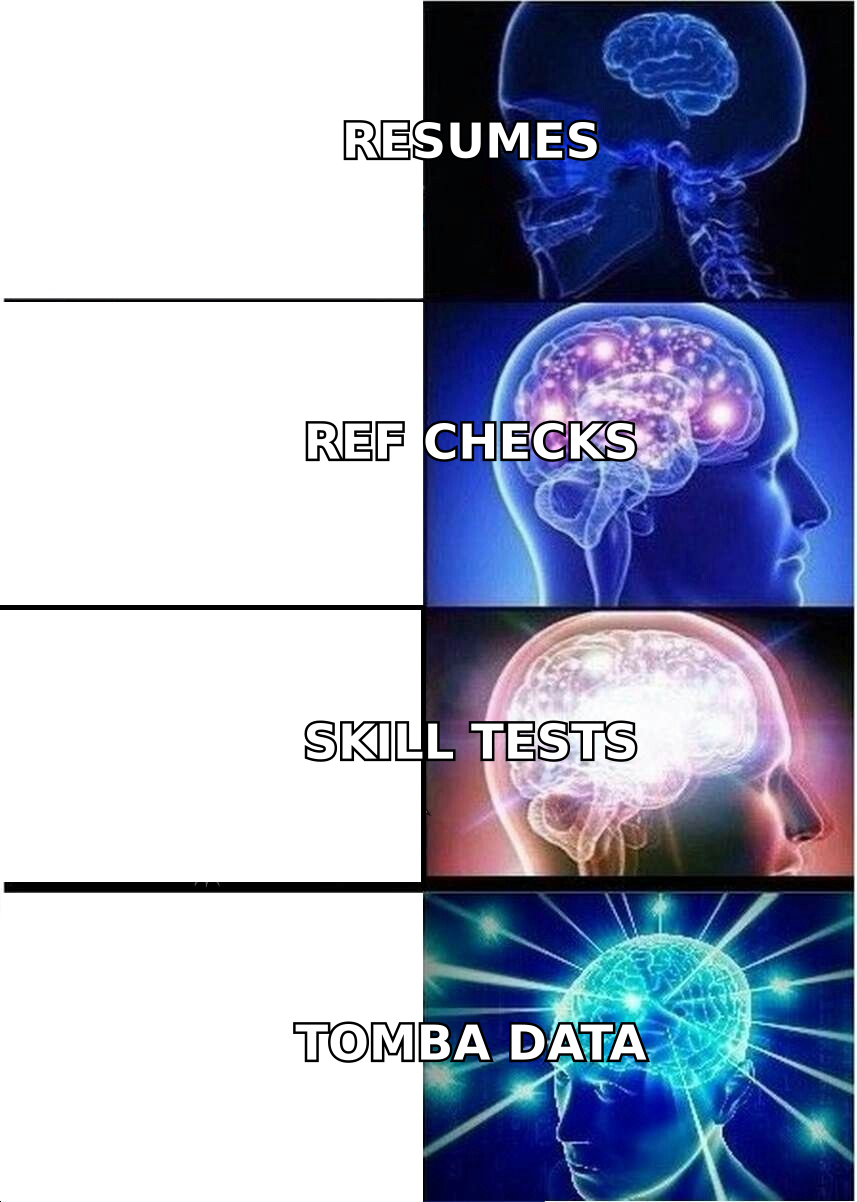
Here is the part vendors in this category never bring up: scoring software assumes candidates already exist in your pipeline. If you are sourcing passively — which almost every team hiring for niche roles now does — the binding constraint is reaching people, not ranking them.
That is a data problem. You pull a shortlist from LinkedIn, GitHub, a conference speaker list, or an industry publication, and then you need working contact details for people who never applied to anything.

A practical sourcing stack looks like this:
- Build the target list — LinkedIn Recruiter, SeekOut, GitHub search, or a conference agenda.
- Resolve contact details — an email finder turns a name plus a company domain into a professional address, and domain search returns every discoverable address at a target employer along with the company's email pattern.
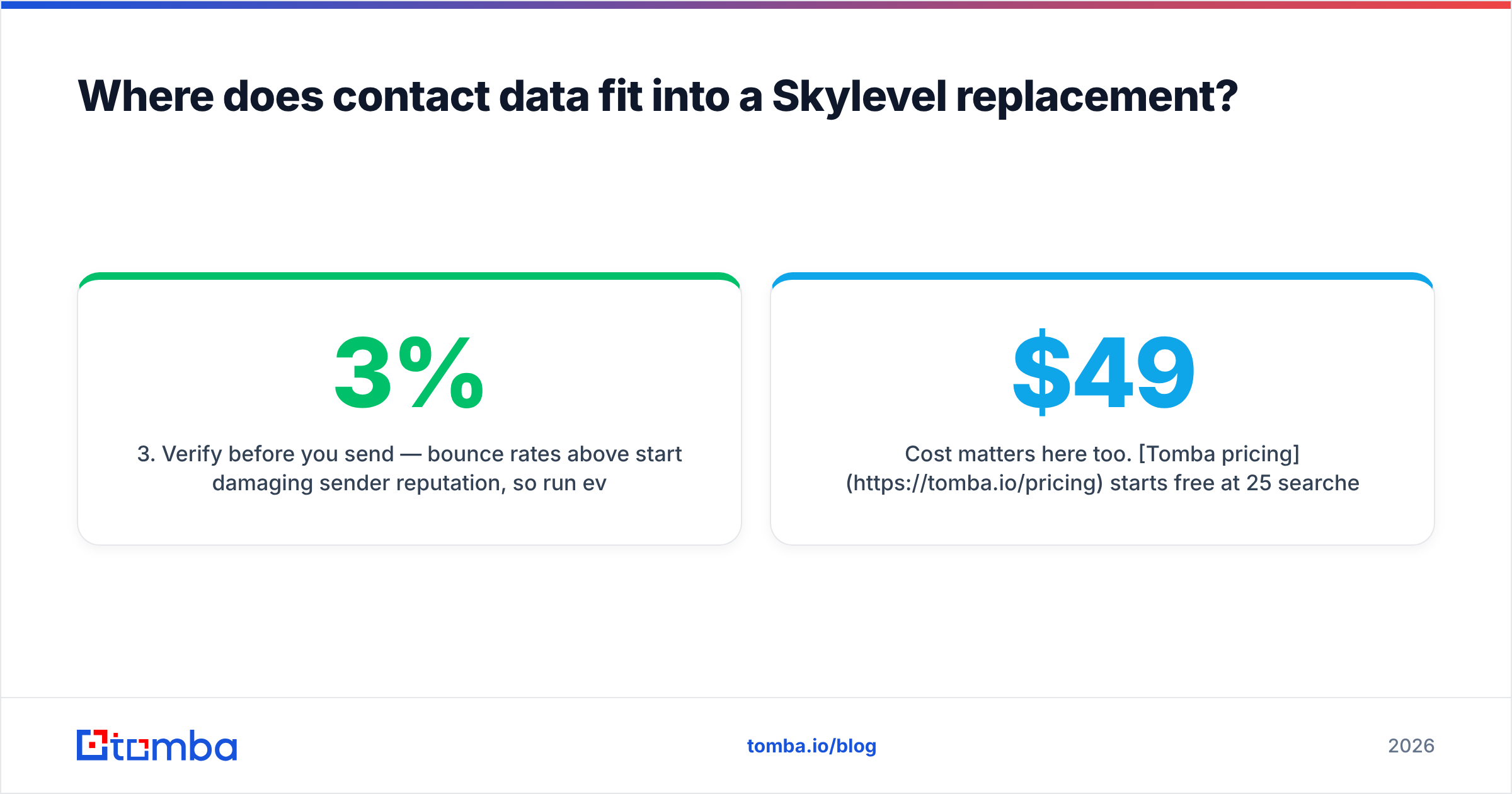
- Verify before you send — bounce rates above 3% start damaging sender reputation, so run everything through an email verifier first. This is not optional if you are sending from your company domain.
- Enrich and route — push clean records into your ATS or CRM with data enrichment so recruiters see title, seniority, and company context without a tab switch.
- Score what replies — now your referral or assessment tool has something to work on.
For teams sourcing at volume, contact databases like BookYourData offer a solid pre-built B2B dataset, and pairing a static database with a live finder-and-verifier covers both breadth and freshness. The two approaches complement each other: databases give you scale, real-time lookup gives you accuracy on the specific person you actually want.
Cost matters here too. Tomba pricing starts free at 25 searches/mo, with Starter at $49/mo, Growth at $99/mo, and Pro at $249/mo — an order of magnitude below the annual contracts most candidate-intelligence vendors quote, and you can run it alongside whichever scoring tool you pick.
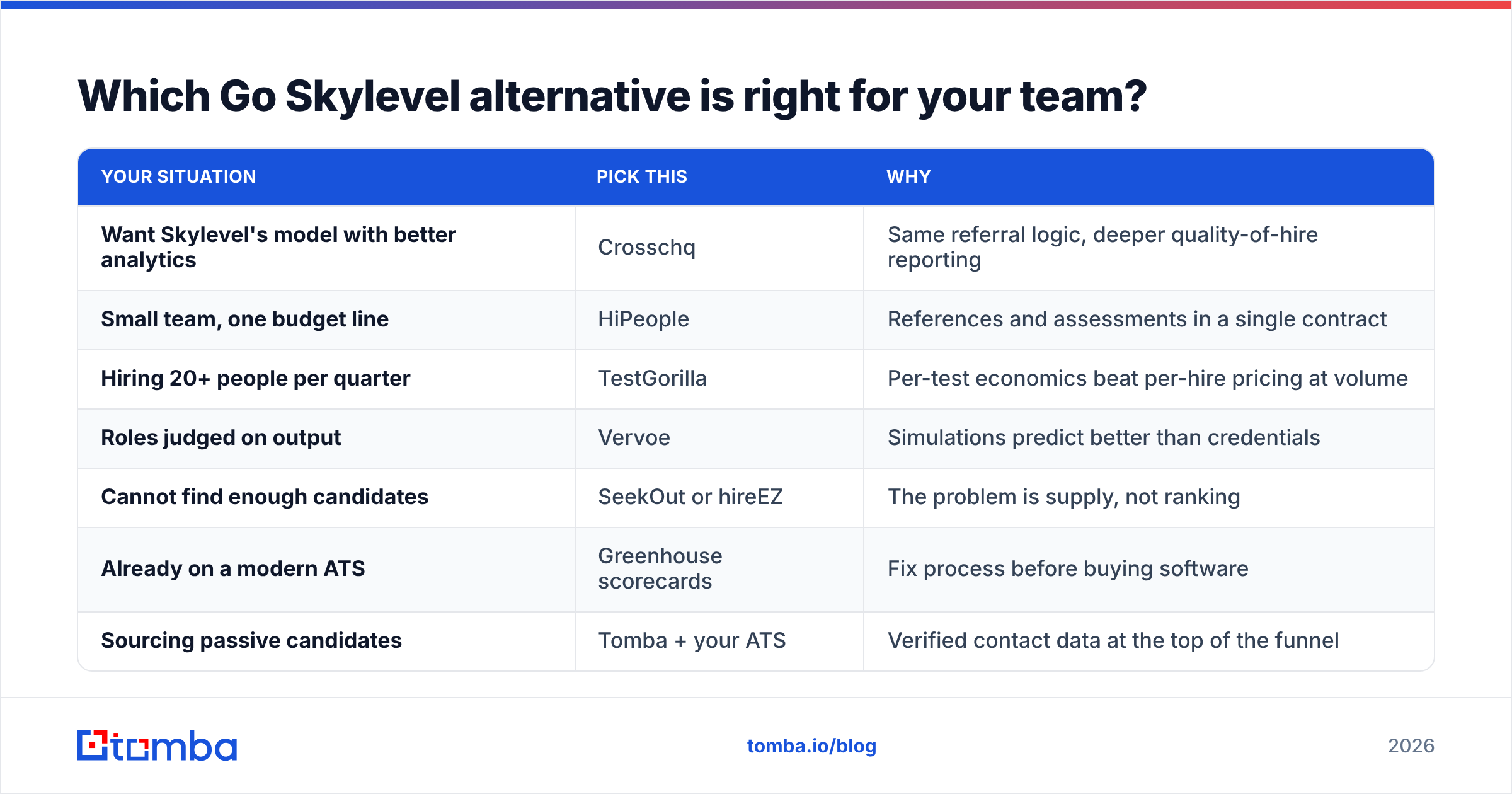
Which Go Skylevel alternative is right for your team?#
| Your situation | Pick this | Why |
|---|---|---|
| Want Skylevel's model with better analytics | Crosschq | Same referral logic, deeper quality-of-hire reporting |
| Small team, one budget line | HiPeople | References and assessments in a single contract |
| Hiring 20+ people per quarter | TestGorilla | Per-test economics beat per-hire pricing at volume |
| Roles judged on output | Vervoe | Simulations predict better than credentials |
| Cannot find enough candidates | SeekOut or hireEZ | The problem is supply, not ranking |
| Already on a modern ATS | Greenhouse scorecards | Fix process before buying software |
| Sourcing passive candidates | Tomba + your ATS | Verified contact data at the top of the funnel |
What questions should you ask on the demo call?#
Bring these five and you will cut the evaluation cycle in half:
- What is the referrer or candidate completion rate for roles like mine? Ask for the median, not the best case.
- What does year two cost? Discounts on year one are standard; the renewal number is the real number.
- Show me the ATS field mapping live. Integration slides are not integrations.
- How do you handle adverse impact reporting? If the answer is vague, your legal team will find it eventually.
- What happens to referrer data if we churn? Deletion policy, export format, timeline.
Ready to fix the top of your funnel first?#
If you have read this far, you probably suspect what most talent teams discover after a year with a scoring platform: ranking is the cheap part, and reaching the right people is the expensive part. Better candidates rarely come from a better sort — they come from contacting more of the right people, with messages that actually land.
Start there. Tomba Email Finder turns a name and a company into a verified professional email address, with a free tier of 25 searches per month so you can test it against your current shortlist before spending anything. Run twenty names through it, send twenty messages, and compare that to what a five-figure scoring contract would have bought you this quarter.
Related guides#
Ready to find emails that actually work?
Join 150,000+ professionals who stopped guessing and started sending. Free credits on signup — no credit card required.
Get the Tomba newsletter
Practical outbound tactics and product updates — once every two weeks.
About the author