GPTBots.ai Pricing, Reviews, Pros and Cons (2026 Guide)
A clear look at GPTBots.ai pricing: what the plan fee covers, how credits burn, what reviewers praise and fault, and the pros and cons to weigh before you commit budget in 2026.
TL;DR
- GPTBots.ai pricing has two parts: a flat plan fee plus credits. The plan fee is the small line on your bill.
- Credits burn per message, per agent run, and per model token. Your traffic sets your spend.
- Reviews praise the build speed and the choice of models. They fault weak cost control and thin docs.
- Buy it for a customer-facing agent that answers from your own docs. It is not a source of contact data.
- A sane 2026 stack: GPTBots for the agent layer, plus a data tool like Tomba for contacts.
What is GPTBots.ai?#
GPTBots.ai is a low-code tool for building AI agents. The agents answer from your own company files. You upload documents. You connect data sources. You pick a model — OpenAI, Anthropic, Google, or open-weight, based on your plan. Then you ship the agent to a web widget, WhatsApp, Slack, a phone line, or an API.
It sits on the same shelf as Voiceflow, Botpress, Sierra, Ada, and the agent builders now baked into CRM suites. Its edge is breadth. Text agents, voice agents, and back-office agents all live in one console. The search layer copes well with messy PDFs and files in many languages.
What it is not: a lead database, an email finder, or a sequencer. GPTBots will happily run an agent that scores an inbound lead. It will not hand you the email of a VP you have never met. Teams that mix up the two pay agent prices for sales data, and get neither.
How does GPTBots.ai pricing actually work?#
Three layers stack on your invoice. Only the first one is easy to find.
- Plan fee — a monthly or yearly fee. It unlocks a tier: how many agents, how many knowledge bases, how many seats, which channels, and what support you get. There is a free tier for testing. Paid tiers climb into the hundreds per month. Above that, you ask for a quote.
- Credits — the real variable. Every chat, every lookup, every tool call, and every model token eats credits. Voice agents burn them far faster than text agents. On each turn you pay for speech-to-text, the model, and text-to-speech.
- Overages and add-ons — extra credit packs, more seats, premium models, private hosting, and data residency. Each one is billed on top.
Published numbers move. GPTBots has cut prices more than once as model costs fell. So treat any figure in a blog post, this one too, as a rough guide. Check the official GPTBots pricing page before you sign. The shape of GPTBots.ai pricing is stable. The digits are not.
Here is the catch. Your plan fee is a poor guide to your real spend. A mid-tier team with a busy support widget can see credits run two to four times the plan fee by month two, once real traffic lands. Model your traffic first.
What drives your credit burn?#
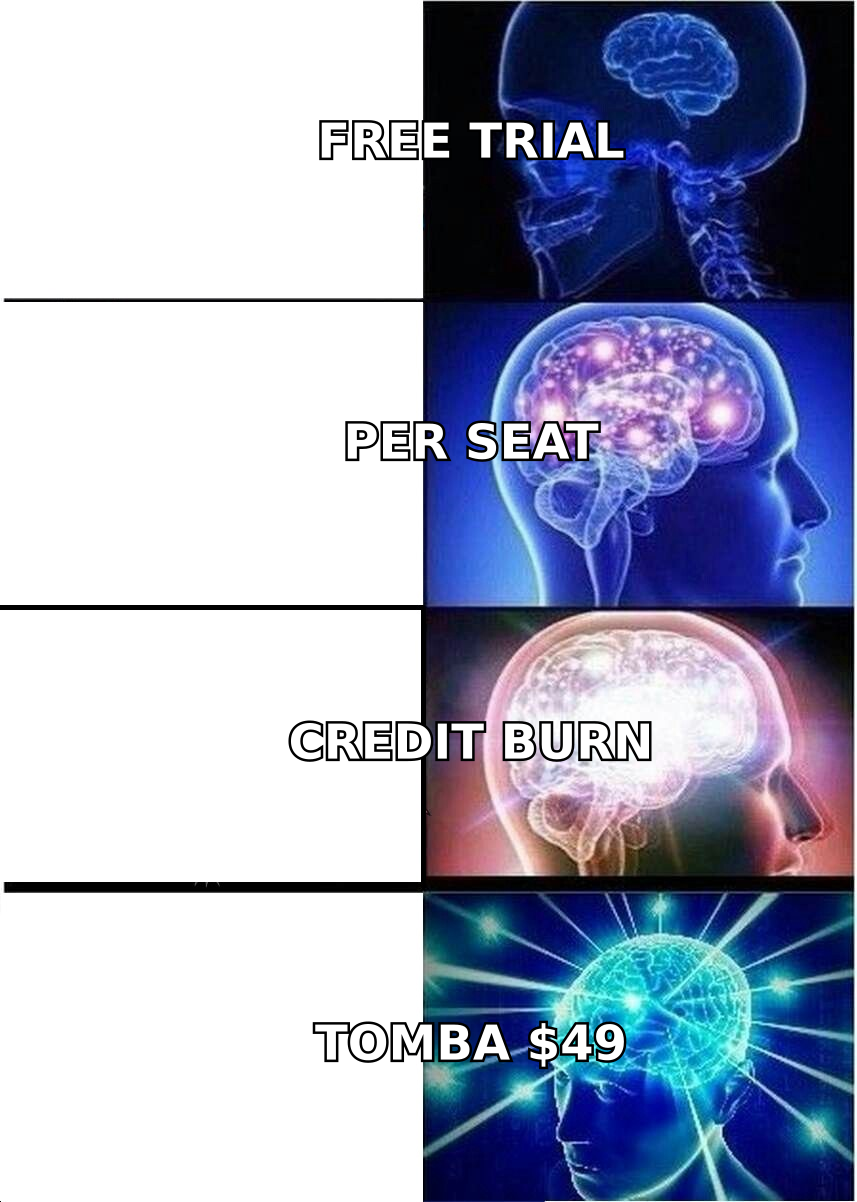
- Chat volume. The obvious one. Sessions per month, times turns per session.
- Context size. An agent that stuffs 8,000 tokens of docs into every prompt costs far more per turn than one that sends 1,500. How you chunk files is a cost lever, not just a quality one.
- Model choice. Frontier models cost many times more than small ones. Smart setups send easy questions to a cheap model and escalate only when they must. If yours does not, you are paying too much.
- Voice over text. Voice minutes drain a credit pool fastest. Budget for them on their own.
- Tool calls. Every outside API the agent hits is one more metered action.
Is GPTBots.ai pricing competitive in 2026?#
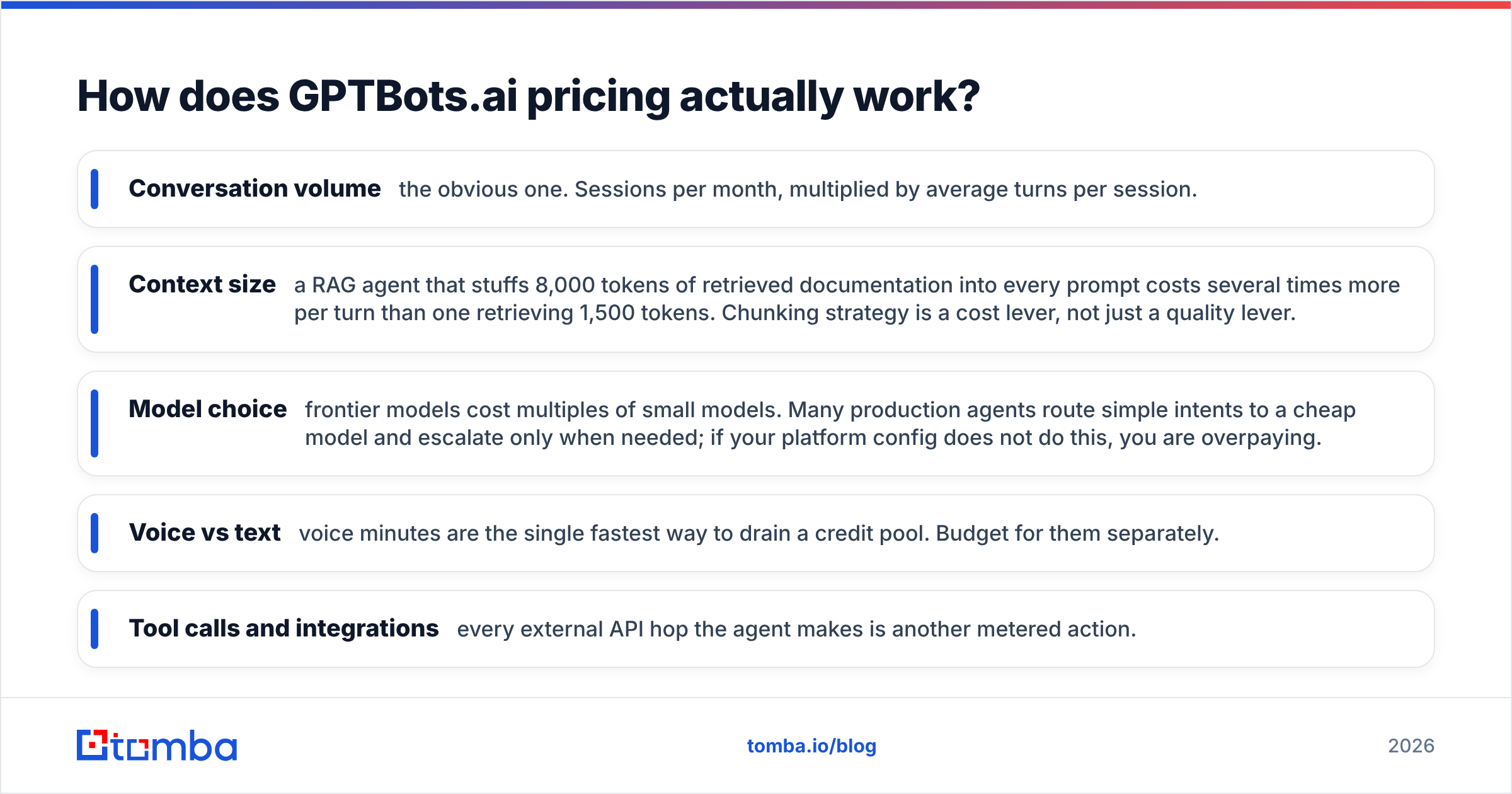
Against other agent platforms, it lands mid-market. It costs less than the big CX suites. It costs more than self-hosting, once you add up credits. Here is how the shapes compare.
| Factor | GPTBots.ai | Voiceflow | Botpress | Self-hosted (LangGraph/Dify) |
|---|---|---|---|---|
| Free tier | Yes, evaluation-scale credits | Yes, limited workspace | Yes, small monthly AI spend | Free software, you pay infra |
| Entry paid plan | Low-to-mid hundreds/mo | ~$60–$100/mo per editor | Usage-based from ~$89/mo | $0 licence + hosting |
| Metering model | Plan fee + credits | Seat + usage | Pay-as-you-go AI spend | Raw model API cost |
| Voice agents | Native, credit-metered | Native | Via integrations | DIY (Twilio + STT/TTS) |
| RAG quality out of the box | Strong, minimal tuning | Good | Good | Depends entirely on you |
| Time to first agent | Hours | Hours | Hours | Days to weeks |
| Enterprise controls (SSO, residency) | Enterprise tier | Enterprise tier | Enterprise tier | Yours to build |
| Cost predictability | Low — usage dominated | Medium | Low | High but engineering-heavy |
Read the table as a trade-off, not a scoreboard. GPTBots buys you speed and a managed search stack. Self-hosting buys you a steady bill and full control, but it eats engineering time. Most teams under 200 staff should not build their own agent runtime in 2026. The one exception: when the agent is the product.
For outside views, the G2 category listings are the best free source. Filter reviews by company size. The enterprise reviews and the SMB reviews describe two different products.
What do GPTBots.ai reviews actually say?#
Across review sites and forums, the pattern is steady.
What reviewers praise:
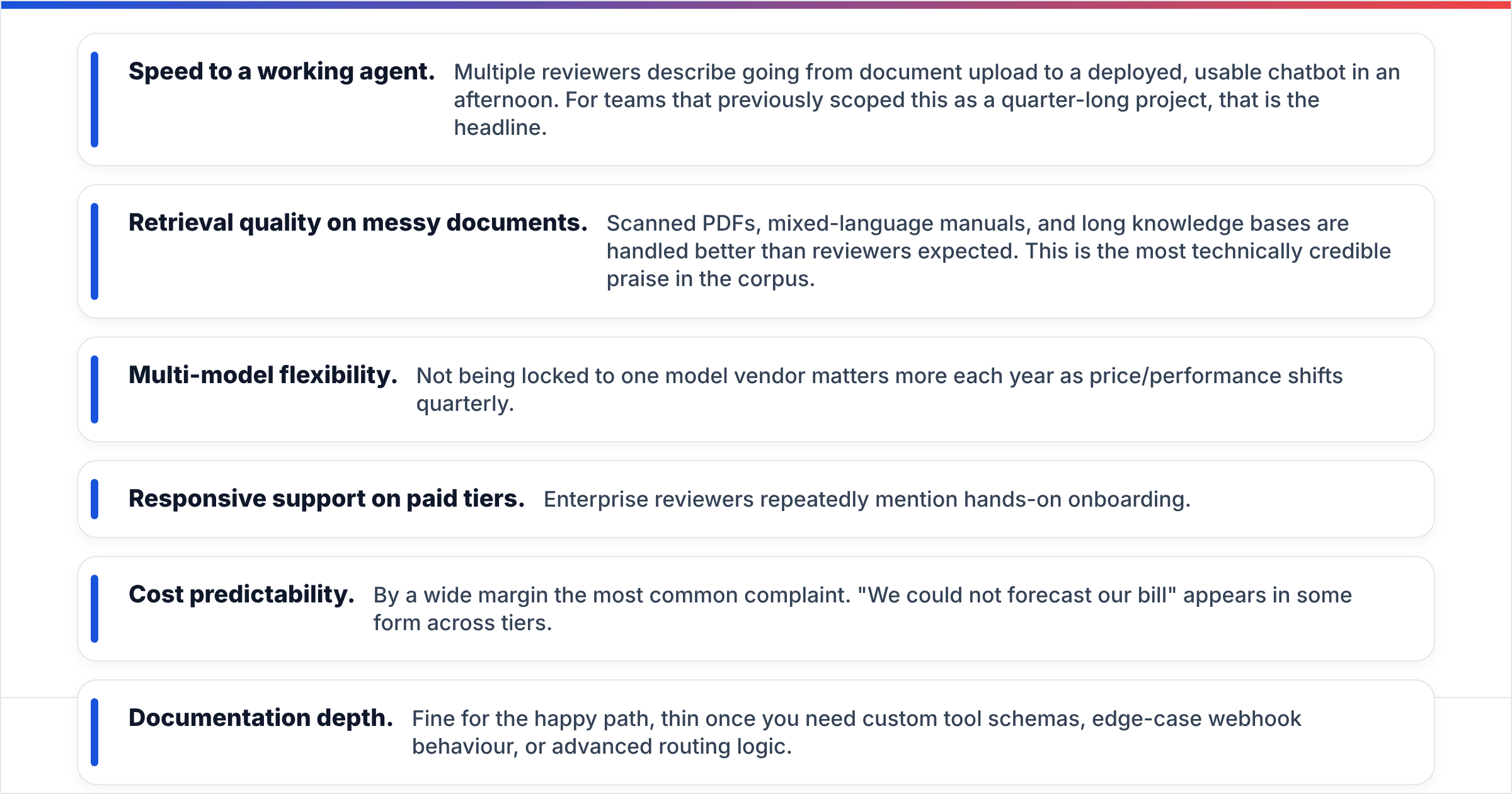
- Speed to a working agent. Many describe going from file upload to a live chatbot in an afternoon. Teams used to scoping this as a quarter of work find that striking.
- Search quality on messy files. Scanned PDFs, mixed-language manuals, and huge doc sets hold up better than people expect. This is the most credible praise in the set.
- Model choice. Not being locked to one vendor matters more each year, as price and quality shift every quarter.
- Fast support on paid tiers. Enterprise buyers often mention hands-on onboarding.
What reviewers criticise:
- Cost control. By a wide margin, the top gripe with GPTBots.ai pricing. "We could not forecast our bill" shows up at every tier.
- Thin docs. Fine for the happy path. Sparse once you need custom tool schemas, odd webhook cases, or advanced routing.
- Weak analytics. Buyers want cost by agent and by intent. Many end up building it from exports.
- Lag on complex chains. Multi-tool agents can feel slow in live chat, and users watch the typing dots.
Treat the reviews with care. Review sites over-count happy new buyers and under-count quiet churn. A framework like Gartner's guidance on conversational AI evaluation beats any star rating.
What are the real pros and cons of GPTBots.ai?#
Pros
- Fast time to value. If your bottleneck is engineering time, this clears it for the agent layer.
- One console for text, voice, and workflow. One place for logs, roles, and prompt versions.
- Strong search out of the box. You get a solid retrieval setup without hiring a search expert.
- Model-agnostic. That shields you from a price hike at one vendor.
- Real enterprise controls up top. SSO, audit logs, and residency options exist when procurement asks.
Cons
- Hard to forecast. GPTBots.ai pricing is usage-based, and budget owners hate a line they cannot cap.
- Voice gets costly at volume. Do the math on minutes before you launch a voice agent.
- Docs run out before your edge cases do. Expect support tickets on a complex build.
- No contact data of its own. The agent can score a lead. It cannot find one.
- Soft lock-in. Your files are portable. Your chunking, prompts, routing rules, and test history are less so.

Who should buy GPTBots.ai — and who should not?#
Good fit:
- Support teams that answer the same tickets all day against a stable doc set.
- Companies with customers in many languages, where search quality is the hard part.
- Ops teams that automate internal Q&A: HR policy, IT runbooks, buying rules.
- Product teams that need an in-app assistant this quarter, not next year.
Poor fit:
- Outbound sales teams. An agent platform does not solve prospecting. Your limits are accurate contact data and email deliverability. GPTBots fixes neither.
- Very low volume. At 200 chats a month, the plan fee rules the bill. A simpler tool wins.
- Hard budget caps. GPTBots.ai pricing rewards steady, planned volume. It clashes with a fixed annual budget.
- Strict data custody rules. Possible on Enterprise, but check before you build.
How does the agent layer fit with your data layer?#
Most GTM teams get this wrong, so let us be blunt. An AI agent is a chat engine, not a data source. It reasons well over what you give it. It has no idea who works at your target accounts.
A working 2026 revenue operations stack keeps the two apart:
- Data layer — company and contact records, verified work emails, phone numbers, firm details. This is where an email finder and an email verifier live. Cost is per record, and you can predict it.
- Agent layer — GPTBots or a peer. It handles chat, scoring, and routing. Cost is per chat, and it moves.
- Execution layer — your sequencer, dialer, and CRM.
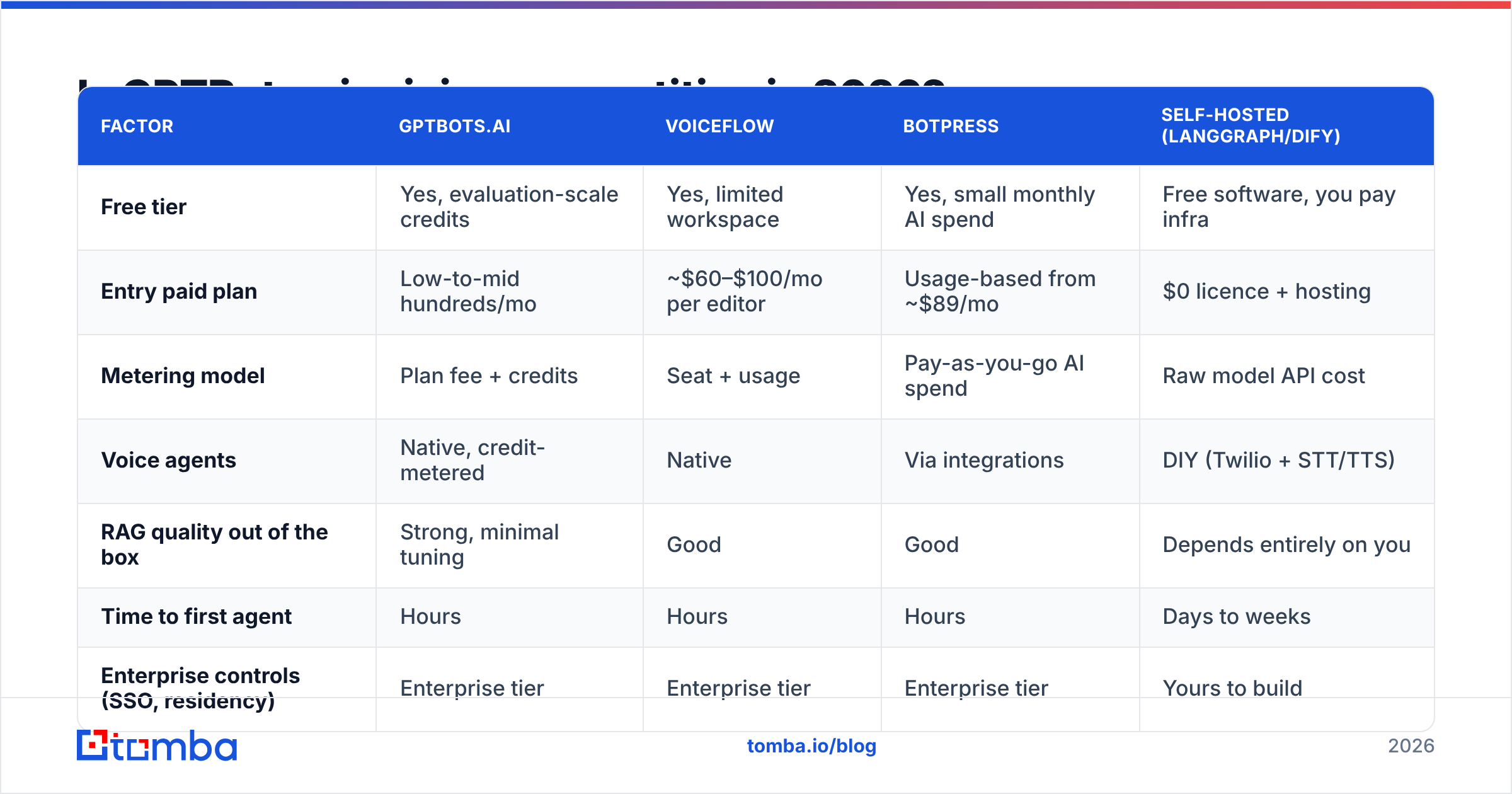
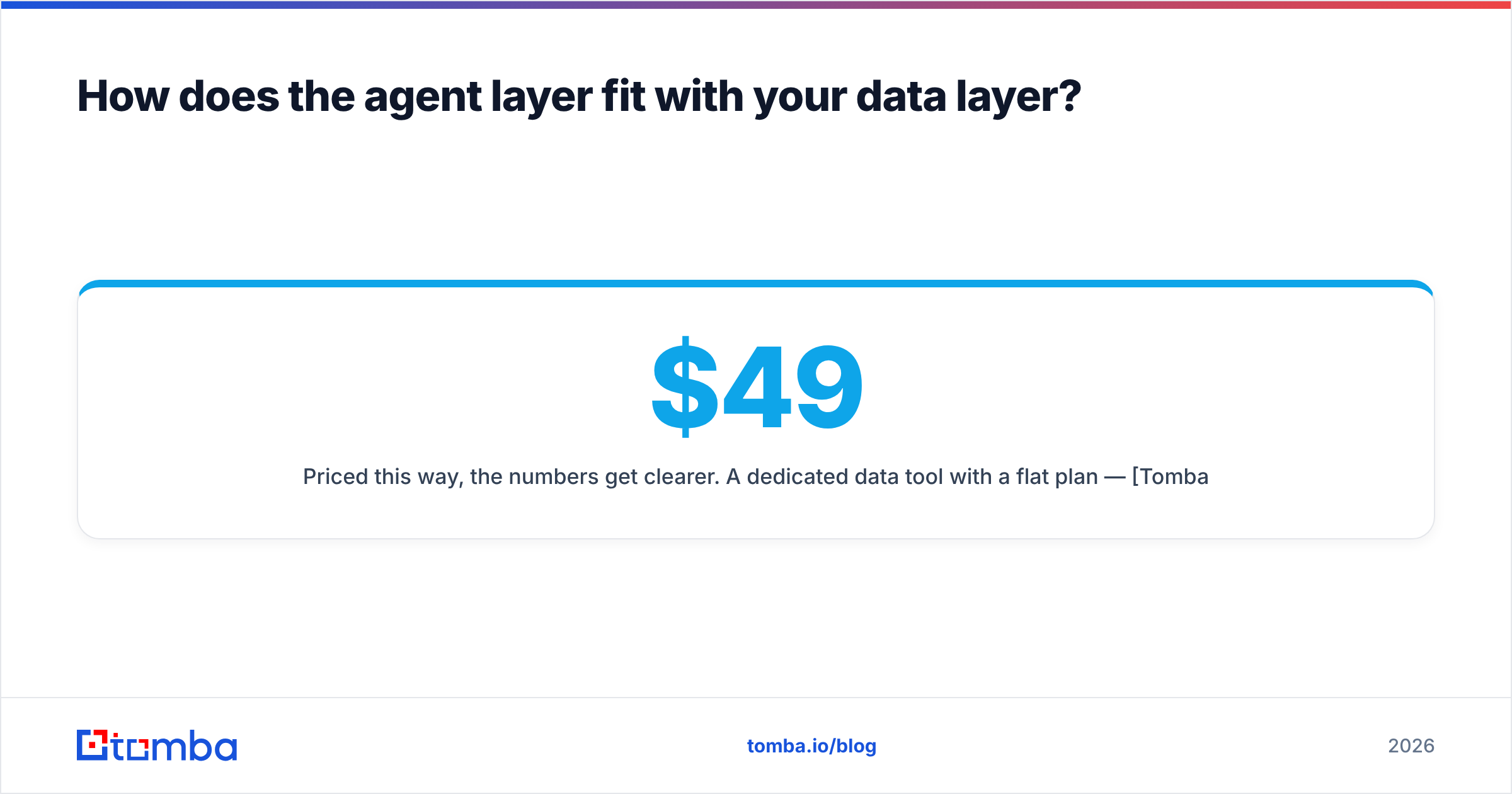
Split that way, the math gets clear. A flat data plan gives you a fixed line: Tomba pricing starts free at 25 searches a month, then Starter at $49/mo, Growth at $99/mo, and Pro at $249/mo. Set that next to GPTBots.ai pricing, which stays scoped to chat volume alone.
Blend the two into one metered pool and you end up paying top model rates to look up an email address.
On the data side, it is worth checking BookYourData too. It sells verified records pay-as-you-go, which suits buyers who prefer credits they own over a subscription. The right pick depends on whether your volume is spiky or steady.
What questions should you ask before signing?#
Take these GPTBots.ai pricing questions into the demo. Vague answers tell you a lot.
- What is my all-in cost at three times my current chat volume? Ask for the model, not the reassurance.
- Can I set a hard credit cap that stops spend, rather than quietly degrading service?
- Which models are included at my tier? What is the surcharge for the premium ones?
- How do I export prompts, routing logic, and test sets if I leave?
- What does a voice agent cost per minute at my expected call volume?
- Does the built-in reporting show cost by agent and by intent, or do I build that?
Run a paid pilot on real traffic for 30 days before you commit to a year. Free-tier usage tells you almost nothing about production cost. Trial traffic is short, clean, and cheap. Real traffic is long, messy, and dear.
The honest verdict#
GPTBots.ai is a solid, fast-moving agent platform. Its billing rewards teams that watch their usage, and it punishes teams that do not. The software is not the risk. GPTBots.ai pricing is only as safe as your forecast. Model your chat volume, cap your context size, and route easy questions to cheap models. Do that and the numbers work, and the build speed is a real win. Skip it and you will spend three months arguing with finance over a line nobody can explain.
One more thing. Whatever you pick for the agent layer, do not let it eat your prospecting budget. Chat software converts demand. It does not create it.
Building the pipeline that feeds those agents? Start with accurate contact data. The Tomba Email Finder finds verified work emails by name, domain, or company. There is a free tier, so you can test accuracy on your own list before you pay. Flat pricing, no credit-burn surprises, and an API that plugs into whatever agent stack you choose.
Related guides#
Ready to find emails that actually work?
Join 150,000+ professionals who stopped guessing and started sending. Free credits on signup — no credit card required.
Get the Tomba newsletter
Practical outbound tactics and product updates — once every two weeks.
About the author